
Growing out a mohawk is absolutely doable, but it helps to know what you're signing up for before you put down the razor and step back from the clippers. The honest answer is this: it takes roughly 12 to 18 months to get from a classic mohawk to something most people would call a "normal" or versatile hairstyle, depending on how much length the strip has and how short the sides were shaved. The good news is that every single phase along the way is manageable with the right approach, and you won't be stuck looking unintentional for as long as you fear.
How to Grow a Mohawk Out: Timelines for Straight, Curly, and Female Hair

Marcus Vickers
20 Apr 2026

What a mohawk grow-out actually looks like
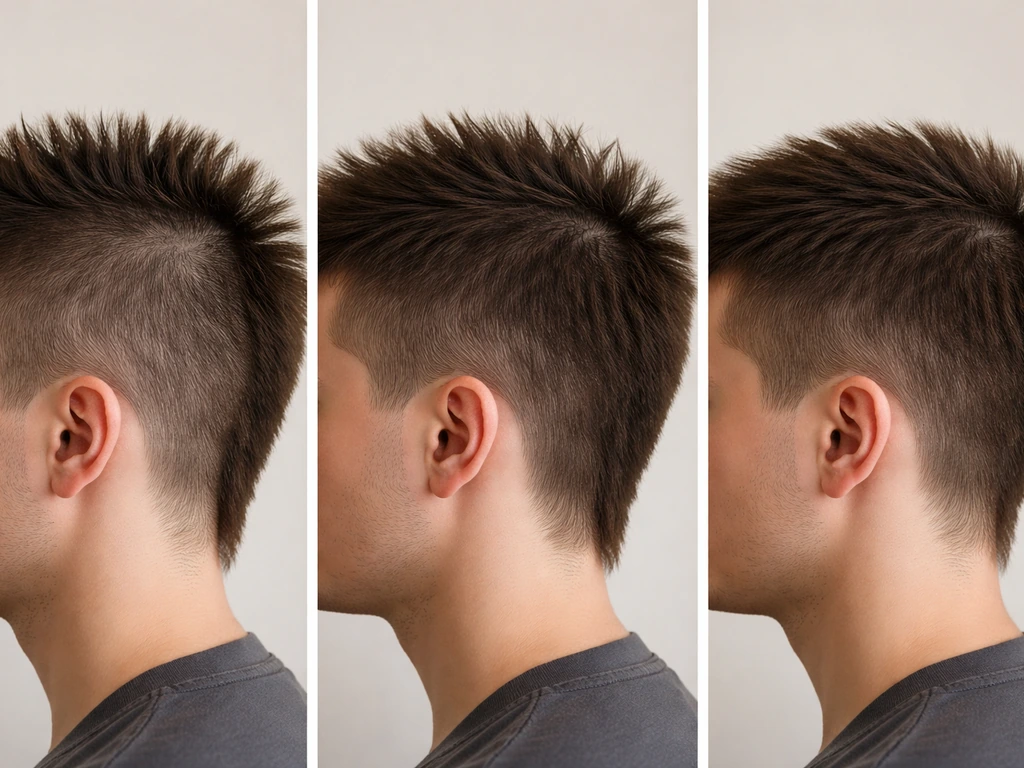
The first thing to understand is that a mohawk grow-out isn't one awkward phase, it's several. The experience depends heavily on two things: how long the strip on top is, and how short the sides were cut or shaved. A fully shaved-side mohawk with a short strip is going to take longer and feel more noticeably "in between" than a mohawk with longer sides and a taller strip. Knowing this upfront helps you set the right target.
Here's what the grow-out typically looks like in broad strokes. In the first couple of months, the sides start showing a soft stubble or fuzz, and the strip on top begins to lose its dramatic height. By months three to five, the sides start looking like a very short undercut or a fade that's growing out, which is actually one of the more manageable stages. Around months six to nine, the sides reach enough length to tuck behind the ear or blend into a short all-around style. After month nine, most people can achieve a recognizable style like a textured crop, a short bob (if the strip was long), or a grown-out shag, depending on what they're going for.
The goal isn't to white-knuckle your way through the awkward parts. It's to stay intentional at each stage so that the in-between looks deliberate, not neglected. That's the whole game.
Step-by-step plan to grow your mohawk out
blank" rel="noopener noreferrer">Hair grows about half an inch per month on average, which gives you a reliable benchmark for planning. Hair grows about half an inch per month on average, which gives you a reliable benchmark for planning blank" rel="noopener noreferrer">American Academy of Dermatology average scalp hair growth rate of about 0.5 inches per month. If the sides were shaved to the skin, you're starting from zero. If they were clipped to a number two or three, you have a small head start. Use this math to estimate where your sides will be at specific checkpoints.
- Stop shaving and clipping the sides immediately. This sounds obvious, but it's the number one step people delay because the grow-out looks messier before it looks better. The sides need to catch up to the strip on top, and that only happens if you stop interrupting the process.
- Decide on your target style before you start. Are you growing into a full head of medium-length hair, a textured short cut, a long style, or something else? This determines whether you clean up the strip on top during the grow-out or leave it to catch up to the sides.
- Month 1 to 2: Do nothing dramatic. Let the sides fill in with stubble and short fuzz. Use a matte pomade or clay to keep the strip on top styled flat or textured so it looks intentional rather than just tall and pointy. If the strip is more than three inches, consider one small trim to reduce bulk while sides catch up.
- Month 3 to 4: The sides are now roughly half an inch to an inch long. This is a good time to visit a barber or stylist for a shape-up that blends the sides into the strip more gradually, essentially converting the look into a wide fade or undercut rather than a hard mohawk line.
- Month 5 to 6: Sides are approaching two to three inches and can be swept or slicked to blend with the top. This is often the best time to try a low side part or a textured all-back style that unifies everything.
- Month 7 to 9: You now have enough length across the whole head to cut into an intentional short style if that's your goal, or to continue growing toward medium length. A single reshaping cut at this stage can make the whole head look cohesive instead of grown-out.
- Month 10 to 18: The maintenance phase. You're growing toward a target length and doing occasional trims every six to eight weeks to manage split ends and keep the shape clean. Split ends don't repair themselves, so trimming damaged sections regularly prevents them from traveling up the shaft and causing more breakage.
Growing out a female mohawk: what's different
The biology of hair growth is the same regardless of gender, but the social experience and styling options during a female mohawk grow-out are genuinely different, so it's worth addressing directly. Women growing out a mohawk often face a narrower window of "acceptable" in-between looks, which makes the middle months feel more pressured. The strategies below help bridge that gap.
One of the biggest advantages for women growing out a mohawk is the wider range of accessories and styling tools that read as intentional rather than accidental. Wide headbands, fabric wraps, and decorative clips can disguise uneven lengths between the sides and the strip for months three through seven, which is usually the hardest window. A wide headband placed at the hairline, for example, makes the different lengths on the sides less visible and gives the whole look a polished finish.
Another useful tactic for women is leaning into the fauxhawk shape during the grow-out. As the sides get longer (around months four to six), you can gather them up and pin them toward the center to recreate a soft, rounded fauxhawk look. This style works especially well with longer strips and reads as deliberately styled rather than in-between. It also gives the sides time to grow without the pressure of looking "finished."
For women with longer strips (four inches or more), the grow-out can move toward a short bob or a lob (long bob) on the top section while the sides are catching up. You won't have full perimeter length until the sides fill in, but you can style the top section into curtain bangs, a center-parted look, or loose waves that draw the eye upward and away from the shorter sides.
One thing to avoid: over-trimming the strip on top in an attempt to make it "match" the sides. It's tempting, but it sets your length back and makes the whole grow-out take longer. The strip is almost always longer than the sides during a mohawk grow-out, and that's fine. Work with it rather than cutting it back to even things up.
Growing out a curly mohawk: shrinkage, definition, and detangling
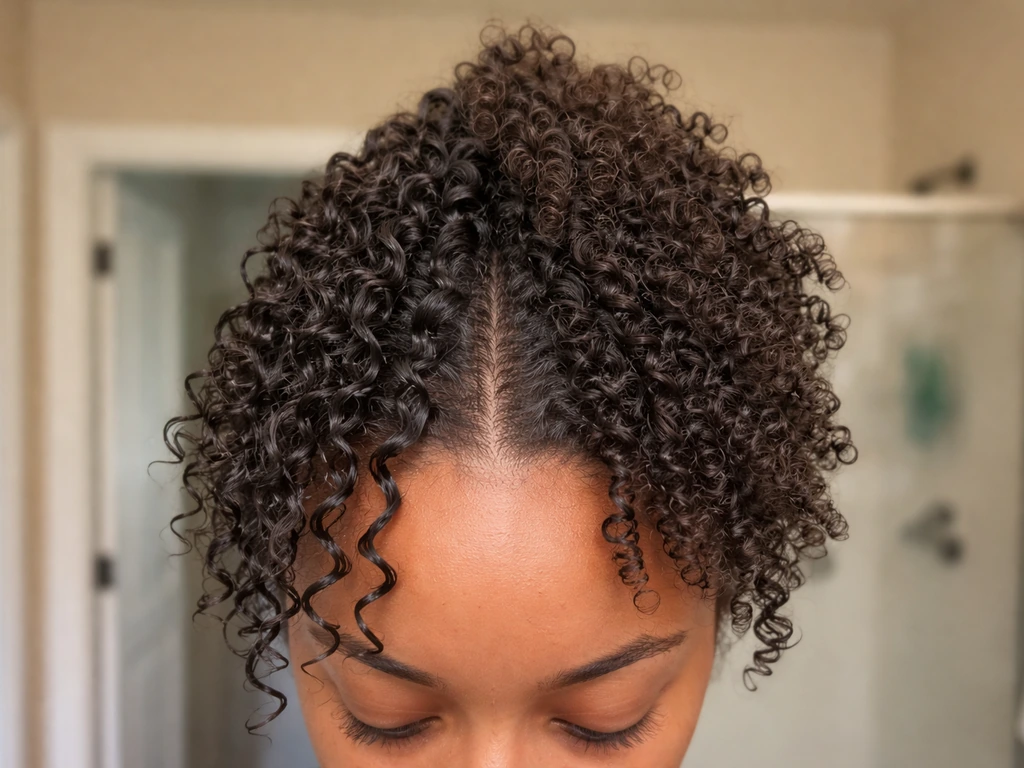
If your hair is curly or coily, the grow-out process has some extra layers to manage, specifically shrinkage, moisture retention, and detangling. These aren't obstacles so much as variables you need to account for when planning your timeline and your daily routine.
Shrinkage and what it means for your timeline
Shrinkage happens because of the way hydrogen bonds in your hair work: when your hair is wet, those bonds temporarily relax and the curl loosens, making hair appear longer. As it dries, the bonds reform and the hair springs back to its natural curl pattern, which can make it appear significantly shorter than its actual length. Tightly coiled hair can shrink to 50 percent or less of its stretched length.
This means your sides might actually be growing right on schedule, but they'll look shorter than they are when dry. Don't panic and don't make decisions about trims based on dry, shrunken hair if you can help it. Stretch the hair gently with a wide-tooth comb or your fingers while damp to get a more accurate read on actual length.
Keeping curls defined and healthy during the grow-out
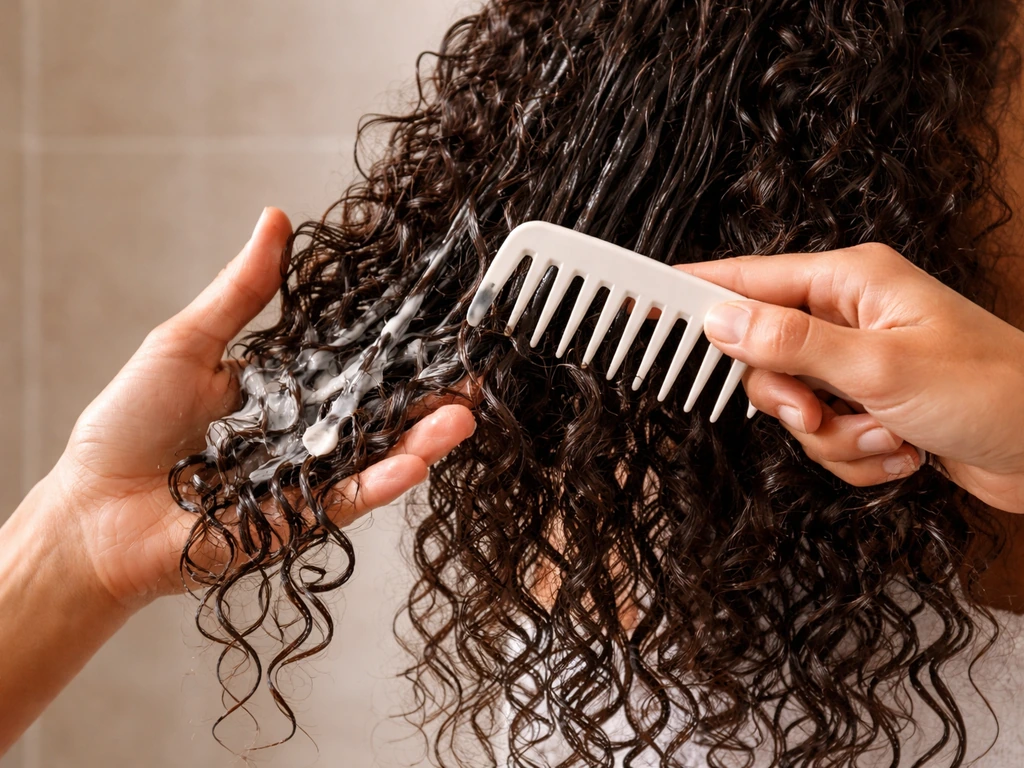
As the sides grow in, keeping the curl pattern defined is what separates a purposeful grow-out from a frizzy mess. The key is moisture. Use a sulfate-free or conditioning shampoo to avoid stripping natural oils, which curly hair needs more of since the curl shape makes it harder for sebum to travel down the shaft. After washing, apply a leave-in conditioner or detangling spray to damp hair, then seal it with a light oil to lock that moisture in. This combination reduces frizz and supports the curl pattern as the sides come in.
For washing frequency, curly and coily hair generally does better with less frequent washing, somewhere around once a week or once every week and a half, depending on your scalp and lifestyle. Over-washing strips moisture and can make the curl pattern look undefined and poufy during the grow-out, which is the opposite of what you want when you're trying to look intentional.
Detangling without breaking your progress
As the sides grow in from short to medium length, they become more prone to tangling, especially where the shorter new growth meets the longer strip on top. Finger detangling is the gentlest method and the one least likely to cause breakage. Work from the ends up toward the roots, holding the hair above the section you're detangling to avoid yanking on the scalp. If you need a tool, a wide-tooth comb on damp, conditioned hair is the next best option. Detangle on wash days while conditioner is still in the hair for maximum slip.
The awkward in-between stages: sides, blending, and undercuts

The hardest part of growing out a mohawk is the middle window, roughly months three through seven, when the sides are long enough to notice but not long enough to style properly. If you're aiming for a mullet instead, the middle awkward stage works the same way, so plan your checkpoints and styling for that “not quite there” window grow a mullet. This is where most people give up and shave back down, which is completely understandable but also completely avoidable with the right approach.
If you are also wondering whether you can grow a mullet successfully, the same patience and styling mindset apply can anyone grow a mullet. If you specifically want a mullet outcome, this guide on how to grow a mullet successfully can help you plan the awkward in-between months.
If you want your end result to be a mullet, plan the same grow-out patience while keeping the sides and top lengths blended with a mullet-friendly shape as you go mullets.
The main tension in this phase is that the sides and the strip are at noticeably different lengths, and the hard line of the original mohawk is now a soft, growing-out edge that can look unintentional. The fix for this is a blending trim, not a full cut. A good barber or stylist can taper the sides into the strip using scissors and a comb, softening the line from the shorter sides into the longer strip without taking off significant length from either. This is the single most useful appointment you can make during the grow-out.
If you had an undercut (shaved or very short sides with longer hair on top), the process is similar but the sides take longer to grow into a blendable length, since undercuts tend to be cut very close. In this case, patience is the main ingredient. You can use the fauxhawk pinning technique mentioned above, or press the sides flat with a strong-hold product and a blow dryer on low heat while they're still too short to style freely. This makes them look deliberate rather than just grown out.
One thing worth saying plainly: there will be a few weeks in this phase where nothing looks that great. That's real. It's not a sign you're doing something wrong or that you should quit. Everyone growing out a mohawk hits this window. The goal is to get through it with your length intact, not to look perfect every single day.
Styling strategies while you wait
Waiting for hair to grow doesn't mean doing nothing. The way you style your hair during the grow-out can make a significant difference in how manageable and intentional each phase looks. Here are the strategies that actually work at different stages.
Months 1 to 3: keep it flat and defined
In the earliest stages, the goal is to make the strip look styled rather than spiky-by-default. A matte clay or pomade worked through damp hair and combed flat or to one side gives a textured, intentional look. Avoid gel in this phase, since it can make short stubble on the sides look crunchy and even more uneven. For curly hair, a curl cream or twist-out technique on the strip keeps definition sharp while the sides grow in.
Months 3 to 6: use accessories and transitional styles
This is the phase where accessories earn their keep. Headbands (thick fabric ones work especially well) sit over the hairline and disguise the length difference between the sides and the strip. Hair clips, bobby pins, and barrettes can pin the sides in ways that look styled rather than just growing out. For longer strips, braiding or twisting the top section into a single braid or two parallel braids down the center creates a purposeful look that also keeps the hair protected and growing.
Months 6 to 9: transitional cuts that help rather than hurt
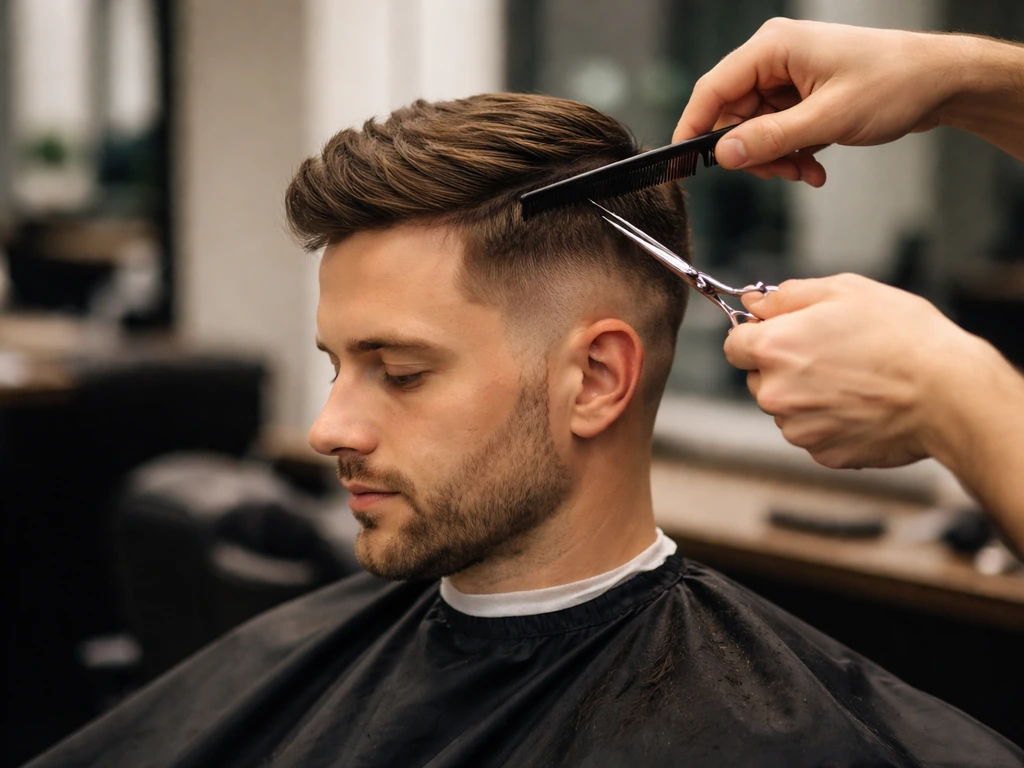
This is the window where a single intentional haircut can transform the grow-out experience. Rather than cutting back to a shorter style, ask a stylist for a "shape-up" that blends the sides into the top while keeping as much length as possible. A textured crop, a French crop, or a soft taper can work with what you have rather than against it. For women, this is often when a short pixie-ish shape emerges naturally from the grow-out, which is a completely wearable look in its own right.
Training your hair also matters in this phase. If you want your sides to lay flat or sweep to one side as they grow, consistently styling them in that direction while damp conditions the hair over time. A soft-hold mousse or a light pomade, applied while damp and then dried in the direction you want, reinforces the direction consistently enough that you'll need less product as months go on.
Timeline and checkpoints: when things start looking normal
Here's a realistic timeline based on average growth of half an inch per month. Individual results vary depending on genetics, health, and hair type, but this gives you a practical map.
| Timeframe | What the sides look like | What to do | Milestone marker |
|---|---|---|---|
| Month 1 to 2 | Stubble to about 1 inch | Stop all shaving and clipping; style strip flat | Sides are visibly filling in |
| Month 3 to 4 | 1 to 2 inches, soft fuzz | Get a blending trim; use accessories | Hard mohawk line softening |
| Month 5 to 6 | 2 to 3 inches | Try side parts, slick-backs; fauxhawk pins | Sides can tuck behind ears |
| Month 7 to 9 | 3 to 4 inches | Optional shape-up cut; train hair direction | Full head looks intentional |
| Month 10 to 12 | 4 to 5 inches | Trim every 6 to 8 weeks for split ends | Most people see a recognizable style |
| Month 12 to 18 | 5 to 9 inches | Continue growing toward target length | Medium length achieved across full head |
For curly hair, add a mental buffer of a few months to each stage because shrinkage makes the sides appear shorter than they are. The actual growth rate is the same, but the visual effect lags behind straight hair at every checkpoint.
If you're not hitting these checkpoints, the most common culprits are breakage from dryness, split ends traveling up the shaft (which is why regular trims matter even when you're trying to grow), and inconsistent care routines. If the sides feel like they're stalling, increase moisture, reduce heat styling, and make sure you're not inadvertently snapping off length during detangling or brushing.
The finish line looks different for everyone. Some people are happy at month nine with a textured short style. Others are growing toward shoulder length and need the full 18 months or more. Neither is wrong. The only real rule is to stay intentional at every stage rather than letting the grow-out happen to you. That mindset, more than any product or technique, is what gets you from mohawk to whatever comes next.
FAQ
Will trimming the strip on top to match the sides make the grow-out faster?
If you started from skin-shaved or an undercut close to the scalp, you cannot realistically “match” the sides and top without losing top length. Plan to keep the strip longer, and treat any early attempts to even things up as a delay (you reset the timeline by cutting too much).
What should I ask my barber for during the “blending trim” so I do not lose progress?
A blending trim is meant to soften the transition, but it still removes hair. Ask for a light taper or dusting only along the edge line, and keep the bulk on top untouched so you do not erase the length that carries you through the middle window.
How can I tell if my hair is actually growing on schedule if I have curly hair?
Yes, but only if you are consistent about how you measure. Do your “checkpoint” check when hair is damp and gently stretched with your fingers or a wide-tooth comb, not after it has fully dried into its shrunken state (especially for curls).
My sides seem stuck at the same length, what should I check first?
If your sides look like they are barely moving, first rule out dryness and breakage. Increase conditioning, detangle with slip on wash days, and avoid pulling at the scalp when the new short hairs are meeting the longer strip. If you still see no improvement after several weeks, consider getting a quick professional assessment for split-end damage.
What’s the fastest way to look intentional during the hardest in-between months?
In the middle months (about three to seven), aim for “direction and shape” rather than perfect blending. Use matte styling for straighter hair, and for curls keep moisture and definition so the sides read intentional when you pin, band, or tuck them.
Is it okay to use a blow dryer or hot tools while growing out a mohawk?
Heat can help if it is controlled, but it can also worsen dryness and cause breakage that slows your timeline. If you blow-dry to press sides flat, use low heat, avoid daily high-heat sessions, and always pair with leave-in conditioning.
How do I decide what final haircut I’m growing toward while I’m still in the awkward stage?
It usually depends on your goal. If you want the easiest path back to a versatile cut, keep a longer strip and use styling tricks for the sides until they catch up, then choose a short crop, bob, or shag shape that matches your final length needs.
How often should I wash my hair during the grow-out if it’s curly?
For curly or coily hair, washing less often reduces frizz and helps curls stay defined as lengths converge. Start around once a week (or every week and a half for some people), then adjust based on scalp oiliness and how your hair behaves in humidity.
Are headbands and pins safe to use daily during months three to seven?
If you use pins or headbands, remove them gently and change up placement so you do not create the same tension point every day. Also make sure the styling is protective (not pulling tight on the fresh shorter hairs) to minimize breakage.
What are the most common mistakes that actually prevent mohawk grow-outs from succeeding?
If the grow-out is not progressing, the most common reason is hair loss from breakage, not slow growth. Look for signs like increased tangling at the transition area, roughness after detangling, and more flyaways than before, then adjust moisture and detangling before you consider more cutting.