
Growing out the top of your hair takes patience, but it's completely manageable if you know what to expect at each stage. Hair grows roughly 1 to 1. 5 cm per month on average, so going from a close-cropped crown to something you can actually style takes anywhere from 3 months (for a little movement) to 12 to 18 months (for real length).
How to Grow Out the Top of Hair Step by Step

Marcus Vickers
21 May 2026
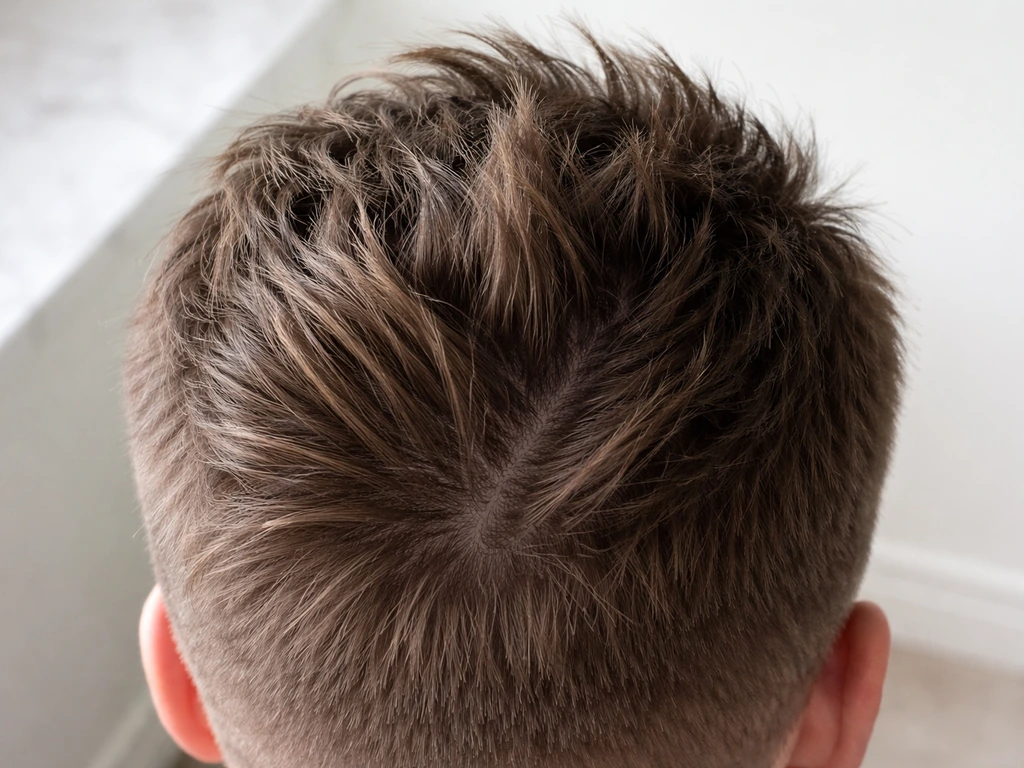
The key is keeping the top growth intact while managing the sides, handling the awkward in-between phases with smart styling, and not panic-cutting when things look patchy or uneven. To get the look in a practical way, focus on growing your top out while keeping a taper on the sides so your afro gradually takes shape manage the sides, handling the awkward in-between phases.
What 'top of hair' actually means for your cut
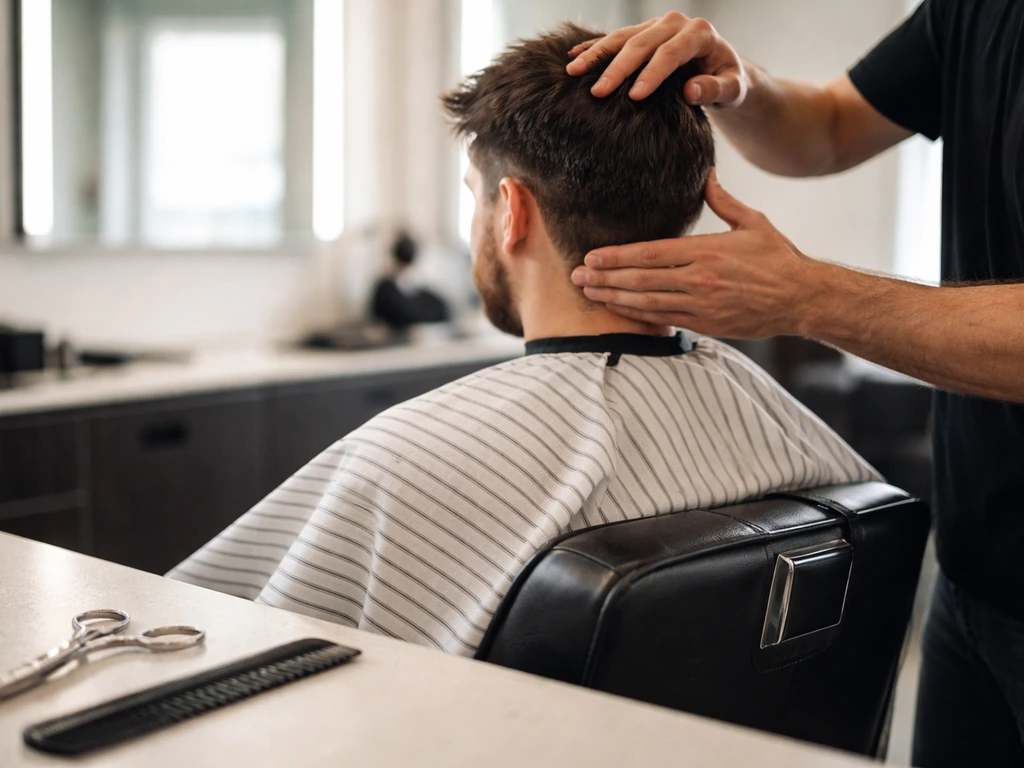
In barber and stylist language, the 'top' is everything above the defined side and neckline, the section that gets combed and cut with shears rather than clipped down to the skin. It's separate from the sides (which run around the ears), the nape (tapered toward the neck), and any edge work. Knowing this matters because 'I want to grow out the top' means something different depending on what you're starting from.
If you're coming from a buzz cut or clipper-all-over cut, your top and sides are roughly the same starting length, and you're growing everything together. If you have an undercut or fade, your sides are already much shorter than your top zone, and the challenge is growing the crown section long enough to actually connect or blend.
If you want a smooth look while growing it out, learn how to grow out a fade by planning the blend and timing for your next cuts undercut or fade. If you're growing out bangs or a fringe, the top of your hair includes that front section that sits at or above the forehead. Identify which situation you're in before anything else, because your plan will look different.
- Buzz/clipper cut: top and sides at similar starting length; everything grows together
- Pixie cut: top has a little more length already; sides and nape need trimming to keep focus on top growth
- Undercut or fade: top is longer, sides are very short; growing the top out means managing the disconnection
- Bob or lob: top/crown may be layered shorter than the perimeter; grow-out blurs the shape
- Bangs or fringe: the 'top' includes the front section; grows forward then sideways before it blends
What growing out the crown actually feels like (realistic timelines)
Here's the honest version of the timeline. Hair grows at roughly 1 to 1.5 cm per month, about half an inch. Some people hit the higher end of the natural range (up to around 3 cm per month in rare cases), but most land in the 1 to 1.5 cm window. That means you'll wait about 3 to 4 months before the crown has enough length to lie flat or part cleanly, and closer to 6 to 12 months before it's genuinely versatile.
| Stage | Approximate Length | What It Looks Like | Main Challenge |
|---|---|---|---|
| Month 1–2 | 1–3 cm | Fuzzy, upright, patchy texture visible | Hair stands up or pokes out; no real styling options yet |
| Month 3–4 | 3–5 cm | Enough to part or push to one side | Crown sticks up in some spots; sides may look disconnected |
| Month 5–7 | 5–9 cm | Can be brushed back, pinned, or textured | Awkward length—too short to tie back, long enough to be annoying |
| Month 8–12 | 9–15 cm | Real styling flexibility begins | Managing layers, undercuts, or colored roots becomes more obvious |
| Month 12+ | 15 cm+ | Full versatility; styles like top knots, slicked looks, or waves | Maintaining shape while holding onto length |
The most frustrating stage for most people is months 3 through 6. This is when the top is just long enough to get in your way but not long enough to do much with. Bangs specifically take about 4 to 6 months to grow out enough to tuck behind the ear or pin away cleanly. Stick it out, this is when most people give up and end up cutting back to square one.
One thing worth knowing: not every hair on your crown is in the same growth phase at the same time. Hair cycle basics include that follicles spend years in the anagen growth phase, then shift through catagen (transition) and telogen (rest and shedding), which helps explain why regrowth can look uneven at any given time 6 Ways to Make Your Hair Grow Faster and Stronger. Some follicles are actively growing (anagen phase), some are transitioning (catagen), and some are resting and about to shed (telogen). This is why regrowth can look uneven across the crown even when you haven't had any cuts. It's normal and it smooths out as the active follicles catch up.
How to actually support growth (without overcomplicating it)
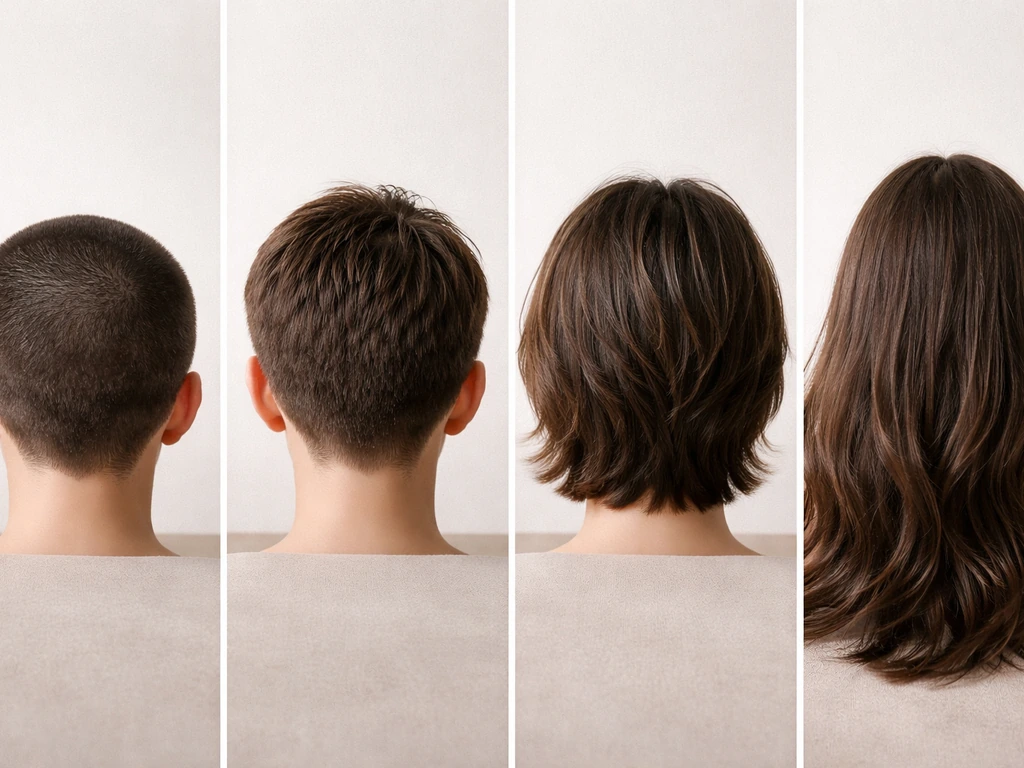
You can't make hair grow faster in any dramatic way, but you can absolutely stop it from breaking before it reaches the length you want. Breakage is the main reason people feel like their hair 'isn't growing', it is growing, but it's snapping off at roughly the same rate. Here's what to focus on.
Scalp care
A healthy scalp is the foundation. If you have dandruff, itching, or flaking, deal with it, scalp inflammation and scratching create friction that damages emerging hair. A 2% ketoconazole shampoo used twice a week is a clinically supported option for seborrheic dermatitis and dandruff. Beyond that, keep your scalp clean but not stripped: washing every 2 to 3 days works for most people, or daily with a gentle sulfate-free formula if your scalp is oily.
Detangling and handling
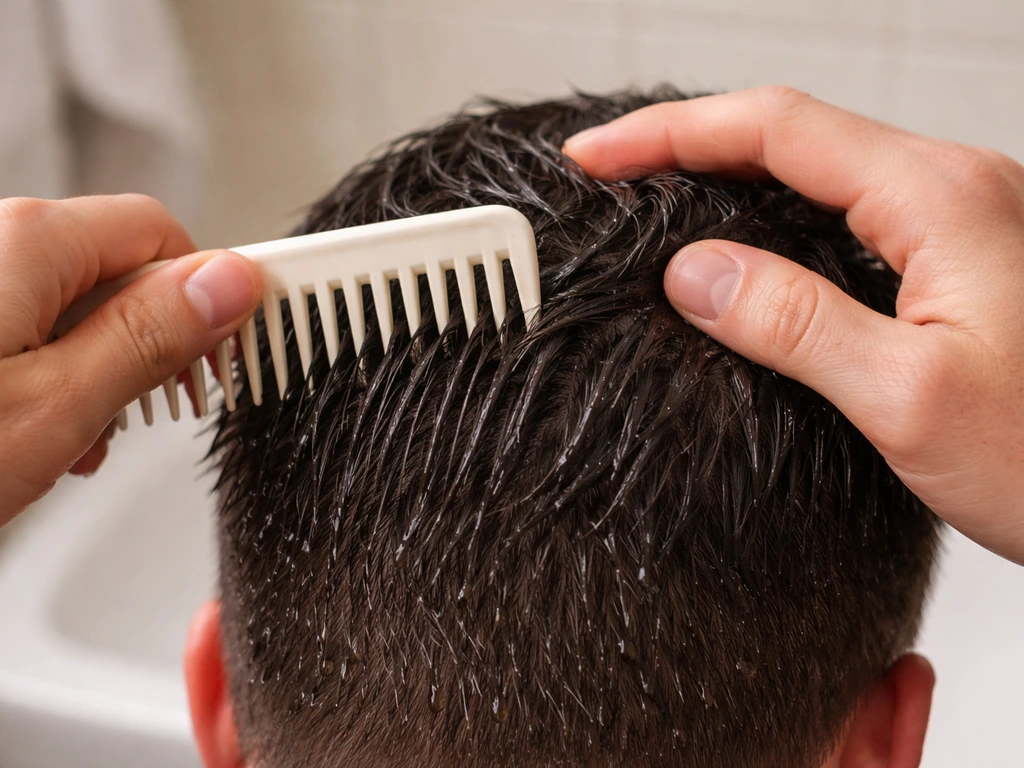
How you handle short growing hair matters more than most people think. Wet detangling reduces short-segment breakage compared to dry detangling, use a wide-tooth comb or your fingers when hair is damp and has some slip from conditioner. Don't tug or yank, especially on the crown where short hairs are most vulnerable. Avoid tight elastics directly on the top of the head during grow-out; they cause traction breakage right at the base of the hairs you're trying to keep.
Product basics
Keep it simple. A lightweight leave-in conditioner or a small amount of hair oil works well on the crown during the short-to-medium stage to add moisture and reduce friction. Once your top is long enough to blow-dry in sections (around 5 cm+), use a heat protectant every single time before applying heat, apply it to damp hair before you start drying. Skip heavy waxes and pomades in the early stages; they build up on the scalp and can clog follicles or make patchy growth more obvious.
Styling the top at every length stage
This is where most guides fail people, they give one or two tips without acknowledging that what works at 2 cm is useless at 8 cm. Here's a stage-by-stage breakdown.
Months 1–2: Very short, upright growth (under 3 cm)
At this stage you mostly can't style the top much, hair is too short to lie flat or hold product cleanly. The best move is keeping the sides and nape neat so the contrast between the groomed perimeter and the growing top looks intentional. A very small amount of matte clay or pomade can encourage the crown hairs to sit rather than stand, but don't overdo it. Let the growth happen and focus on scalp health.
Months 3–4: Short but workable (3–5 cm)
Now you have options. Try a side part pushed with a fine-tooth comb and a light hold product, even a short side part can make the top look intentional rather than in-between. Bobby pins and small clips are your best friends right now: use them to push the front of the crown to one side or pin back any pieces that stick up. A flat cap, beanie, or structured headband can also buy you time through rough days. If you're growing out bangs specifically, this is the stage where a clip at the side hairline keeps them out of your face while they grow.
Months 5–7: The awkward middle (5–9 cm)
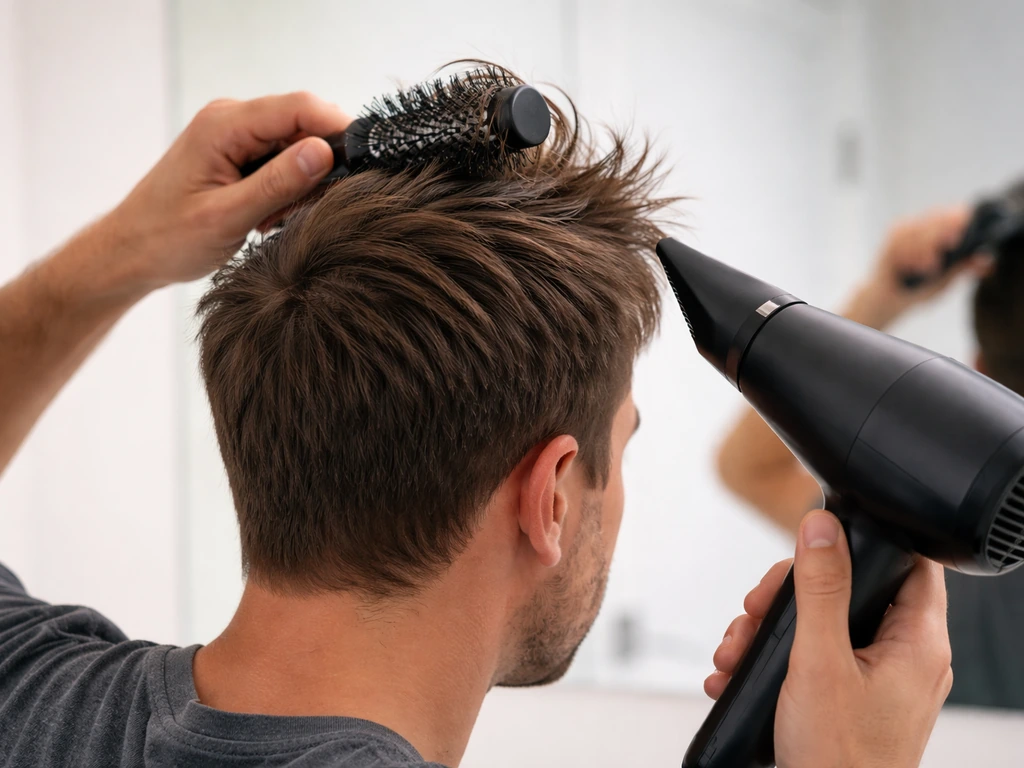
This is the hardest phase. The top is long enough to flop, poke, or separate, but not long enough to tie back or fall into a clean shape. Blow-drying becomes genuinely useful here. Rough-dry your hair to about 70% dry first, then work in sections using a round brush or just your fingers and the dryer nozzle to smooth and direct the top in the direction you want it to grow.
Keep the nozzle pointing downward to seal the cuticle and reduce frizz. A 'cool shot' at the end sets the shape. Texturizing spray or light wax can separate and define shorter crown hairs without weighing them down. Side-swept styling, pushing everything to one side with some hold product, continues to be one of the best looks through this stage.
Months 8–12: Real length arrives (9–15 cm)
At this length the top has real versatility. You can slick it back, part it cleanly, create volume with a round brush blowout, braid it, or start building toward a top knot. This is also when styles like a pompadour, faux hawk, or skater-style look become achievable depending on your texture. Work in sections when blow-drying, sectioning into quadrants gives you control and prevents the crown from drying unevenly. Use a leave-in or smoothing cream for wavy and curly textures before drying to manage frizz. Straight hair benefits from a light serum to keep the crown from looking flat.
Managing the disconnect between the top and sides
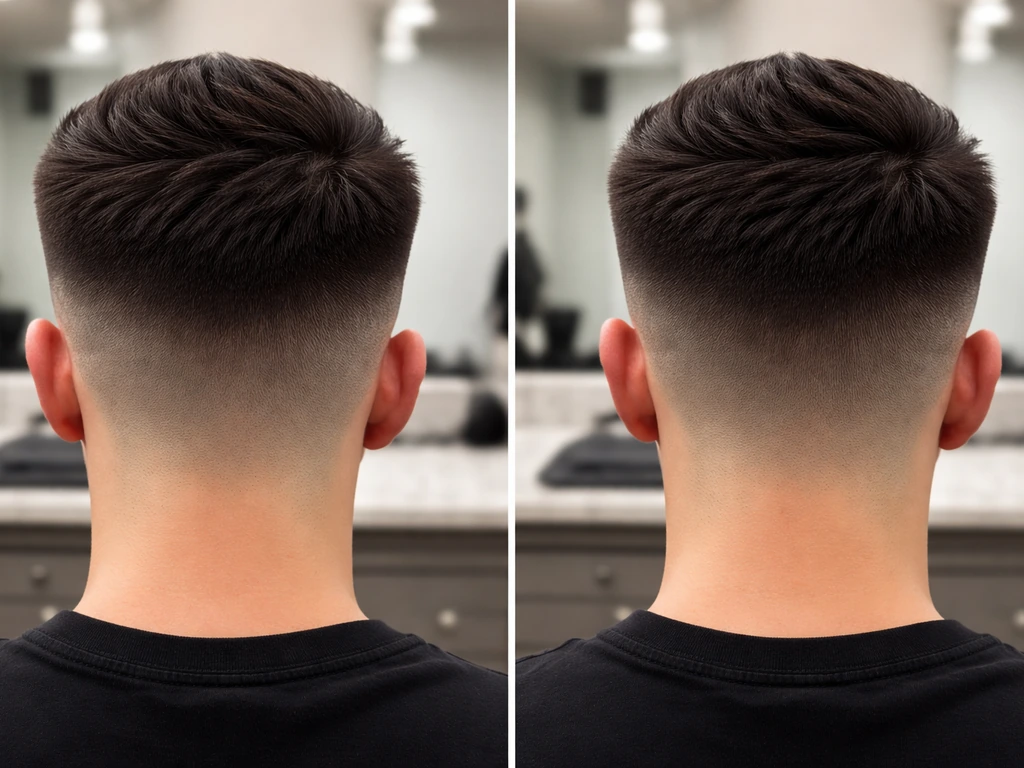
If you have an undercut, fade, or any cut where the sides were taken significantly shorter than the top, you'll hit a point where the growing crown looks almost absurdly disconnected from the short sides. This is one of the most common reasons people bail and cut back down. Don't. There's a smarter path.
The strategy is to gradually fade the sides upward as the top grows, rather than leaving both extremes in place. Your barber can do this by slowly raising the fade line or transitioning from a skin fade to a #1 or #2, then to a #3, over several appointments spaced 3 to 4 weeks apart. This 'blending up' approach connects the two sections progressively instead of creating a hard line between a short side and a noticeably longer top. You're not cutting the top, you're just reducing the contrast at the transition zone.
If your top is growing out unevenly, one side faster than the other, or a patchy patch at the crown, a small shape-up from a stylist who understands grow-out work can level things without sacrificing length. Ask specifically to 'even up the top without removing length' and show them where the unevenness is. Most experienced stylists can do this with point-cutting or very minimal trimming of outlier hairs.
For those growing out layers where the top is shorter than the perimeter (common in bobs and lobs), the approach is the reverse: trim the perimeter slightly every 8 to 10 weeks to keep it from getting too far ahead while the top catches up. You want both zones to arrive at your target length around the same time.
Special situations: bangs, color, and different hair textures
Growing out bangs or a crown fringe
Bangs are the most complained-about part of any grow-out, and for good reason, they grow forward into your face, then sideways before they're long enough to blend into the top. Budget about 4 to 6 months for side or curtain bangs to grow long enough to tuck behind your ear cleanly. During that time, use a blow-dryer and round brush to train them sideways from the start: direct heat and tension to one side every time you style. A small amount of styling cream and a clip held in place for a few minutes after styling helps set the direction. French pins, barrettes, and headbands are all legitimate tools, not desperate measures.
Colored or chemically treated hair on top
If your hair is colored, growing out the top adds a visible regrowth band at the root zone. For permanent all-over color, that band typically shows within 3 to 4 weeks and [needs addressing every 4 to 6 weeks if you want seamless coverage](https://www. allaboutsalon. com.
au/how-regrowth-is-best-managed-by-professionals). For bleached or lightened hair, root touch-up appointments are typically spaced 5 to 8 weeks apart. If you're trying to transition away from color while growing the top, ask your colorist about blending techniques, a balayage or shadow root can diffuse the contrast between natural regrowth and the colored mid-lengths so the line isn't harsh.
Chemically treated hair (relaxed, permed) is more fragile during grow-out, so minimize heat, use a protein treatment monthly, and be extra careful with detangling at the point where the new growth meets the treated hair, that's the most breakage-prone spot.
Adjusting for your hair texture
Straight hair tends to show length progress most visibly but can look limp and flat when the crown is growing through the mid-length stage. Light volumizing mousse and a round brush blowout help a lot. Wavy hair can look chaotic when the crown is short, it won't form a proper wave pattern until it has at least 5 to 8 cm of length.
Be patient and use a curl-enhancing cream or gel with a diffuser to encourage wave formation rather than fighting it with a brush. Curly hair appears shorter than it actually is because of shrinkage, your progress may look slower than it is, but you're still gaining length. Stretch the curl with a denman brush or finger coil during styling to see where you actually are.
For coily or 4C textures, shrinkage can be as much as 50 to 75%, so the crown may need significantly more actual growth before it reads as 'longer' in styling. Protective styles like two-strand twists on the crown are genuinely useful here, they protect the growing ends, reduce daily manipulation, and look intentional through the awkward phase.
When to get a trim, and when to see a professional
Getting a trim while growing out the top might sound counterintuitive, but strategic trims help. The rule is simple: trim the sides and perimeter to maintain shape and reduce the contrast disconnect, but protect the top. A shape-up every 3 to 4 weeks that focuses only on the neckline, sideburns, and side perimeter keeps you looking intentional without touching your top length. If split ends are appearing on the crown (more likely if it's been colored or heat-styled heavily), a micro-trim of just the very tips, literally 0.5 to 1 cm, every 8 to 10 weeks prevents breakage from traveling up the shaft.
Signs that you're genuinely not progressing and should see a professional include: a section of the crown that shows zero new growth after 3 or more months, round patchy areas that appear suddenly, hairs that break off with black dots at the scalp level, or significant shedding that started 2 to 3 months after a major stressor (illness, surgery, diet change). That last pattern is telogen effluvium, a temporary condition where a large portion of hairs enter the resting phase after a trigger event, causing shedding months later. It typically resolves within 3 to 6 months, but a dermatologist can confirm the cause. Conditions like alopecia areata, tinea capitis, or scarring alopecia require professional diagnosis and treatment rather than waiting it out, and they won't resolve with better shampoo or styling habits.
If you've been at it for 4 to 6 months and the top is clearly stalled while the sides keep growing, or your crown continues to look patchy despite healthy habits, book a dermatology appointment rather than just trying another product. Most growth problems that feel like bad luck have a diagnosable cause.
The bigger picture: committing to the grow-out
Growing out the top of your hair is genuinely one of the slower transitions you'll go through, but it's one of the most manageable if you treat it as a series of stages rather than one long uncomfortable wait. Each month you'll have slightly more options than the month before. If you want that emo-inspired look, focus on styling the top with piecey texture and controlled fringe as it grows how to grow emo hair. The awkward phase is real, months 3 through 6 are the hardest, but they end. The goal isn't to look perfect at every stage; it's to get through each stage without cutting the top back down and losing the progress you've made.
Depending on where you want to land, growing out the top opens the door to a lot of directions: a longer top with faded sides connects naturally to styles like a pompadour or faux hawk, while getting the crown to a uniform medium length can transition you toward something like skater hair or a top knot. Whatever the goal, the foundation is the same: protect the growth, manage the blend with the sides, style smartly through each phase, and resist the urge to start over. If you're aiming specifically for skater hair, use these same grow-out stages and pair them with the right top styling to keep the shape as it lengthens how to grow skater hair.
FAQ
What’s the fastest realistic timeline to get enough top length to style without it looking awkward?
Most people need about 6 to 12 months from a short buzz or clipper start to get a crown that can be blow-dried into a shape (part, slick-back, or controlled volume). If you only want a small amount of movement (light side-sweeping), expect closer to 3 to 4 months, but it still may not stay put all day without pinning or drying it correctly.
Can I wash my hair daily while growing out the top, or will it slow progress?
Washing frequency does not slow growth, but it can affect breakage. If your scalp gets oily, daily washing with a gentle, non-stripping shampoo is fine. The key is conditioner slip during detangling and avoiding rough towel rubbing, especially when the crown hairs are short.
How often should I trim during the grow-out if I want to keep maximum length on the top?
Plan trims for shape around the perimeter, not cutting the crown. A common approach is a shape-up every 3 to 4 weeks (neckline, sideburns, and side perimeter only). If your crown is heat-styled or color-treated, do a micro-trim of just the very tips (about 0.5 to 1 cm) every 8 to 10 weeks to prevent split ends from traveling upward.
What should I do if one side of the top grows faster or flips in a different direction?
First, don’t try to “fix” it with extra product. Use the next appointment to ask for an even-up that removes minimal outliers while keeping length. Then, style consistently by directing the faster-growing side to match the direction you want (using a blow-dry with the nozzle downward and small clips while it cools).
Is it better to grow out the top by maintaining a taper, or should I stop getting side cuts entirely?
If your goal is a natural-looking longer top, you usually want a taper on the sides. Going too long without perimeter control can create a harsh contrast line and make the crown look disconnected, even if the top is growing correctly. Keeping the sides tidy while you protect the crown is what makes the transition look intentional.
How do I avoid traction breakage when I need to use clips or elastics?
Avoid pulling directly on the top of the head. If you use elastics, don’t place them on the crown base, and switch to soft, low-tension options (or pins) when possible. For pinned looks, place clips to guide direction without tightening around the scalp, and release them after styling rather than leaving them on for long periods.
My top looks patchy even though I’m not cutting it, is that normal?
Yes, uneven density can happen because different follicles are in different growth phases. What’s not normal is a sudden, round patch or rapid worsening. If you notice a clear “bald spot” appearance, scaling, or a scalp pain or itch pattern, get evaluated rather than assuming it’s just awkward stage growth.
How can I tell the difference between awkward short-length styling issues and real hair loss?
Awkward stage issues usually improve with styling and drying direction, and hair doesn’t show obvious breakage at the scalp line. Real shedding or hair loss often looks like increased hair in the shower or on your pillow, or you may see broken hairs with very short stubs near the scalp. If shedding begins 2 to 3 months after stress (illness, surgery, diet change), that pattern can match telogen effluvium and may need medical assessment.
Should I use wax, pomade, or clay while the top is still short?
In the earliest months, go light. Heavy waxes and thick pomades can build up on the scalp and make patchiness more obvious while the crown is short and fragile. A small amount of matte clay or a lightweight leave-in, then blow-drying to train direction, is usually easier to manage than thick styling products.
When is blow-drying actually necessary, and what technique matters most?
Blow-drying becomes genuinely useful once the top is long enough to take shape, often around 5 cm or more. The biggest technique is directing heat downward with the dryer nozzle, working in sections, and using a cool shot at the end to set the direction (especially if the top flops or separates).
If I color or bleach my hair, how do I handle the regrowth band while growing out the top?
Expect a visible band near the roots within about 3 to 4 weeks for many permanent all-over colors. For lighter hair, root touch-ups are often spaced 5 to 8 weeks. If you want to transition away from full color, ask about blending methods like shadow roots or balayage so the regrowth line is diffused instead of harsh.
What’s the best way to train bangs or a fringe so they don’t keep falling into my face?
Start training early. Use a round brush and a blow-dryer to direct them to the side every time you style, then hold the position briefly with a clip while they cool. Budget around 4 to 6 months for side or curtain bangs to tuck behind the ear cleanly, and expect the middle awkward phase to be when the clip is most helpful.
My hair is curly or coily, why does the crown look shorter than it should, and what should I do?
Shrinkage can make your growth appear slower. Instead of measuring by how it “looks” in the mirror, stretch your curls during styling (for example with a denman brush or finger coiling) to see the real length. Coily textures can show very high shrinkage, so protective styles on the crown (like two-strand twists) can help you protect ends while the true length catches up.