
To grow a faux hawk from shorter hair, you need roughly 3 to 4 inches of length on top and shorter, tapered sides. At the average growth rate of about half an inch per month, most people get there in 6 to 9 months from a close cut, though the good news is you can start styling a recognizable faux hawk shape much sooner, around the 2 to 3 month mark, once the top strip hits 1.
How to Grow a Faux Hawk From Short Hair: Timeline and Plan

Marcus Vickers
21 May 2026
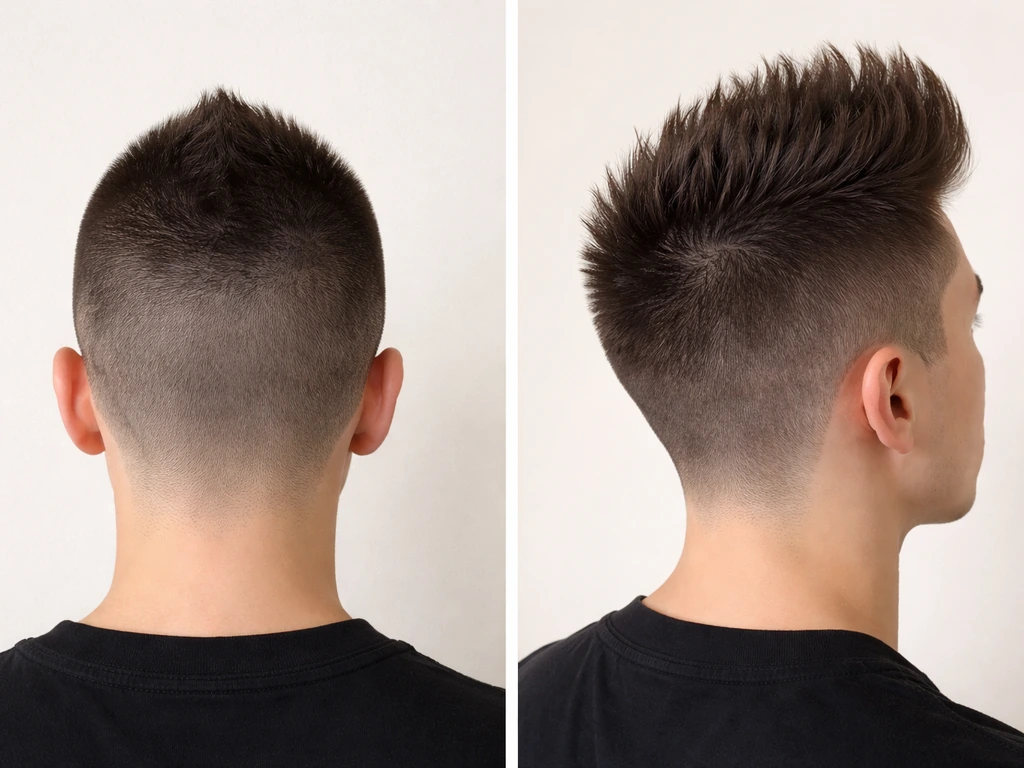
5 to 2 inches. The key is protecting that top section from over-trimming while keeping the sides managed so the contrast stays sharp. If you want a similar mid-to-long top upgrade with a different silhouette, see how to grow a pompadour for an adjacent option.
What a faux hawk actually needs
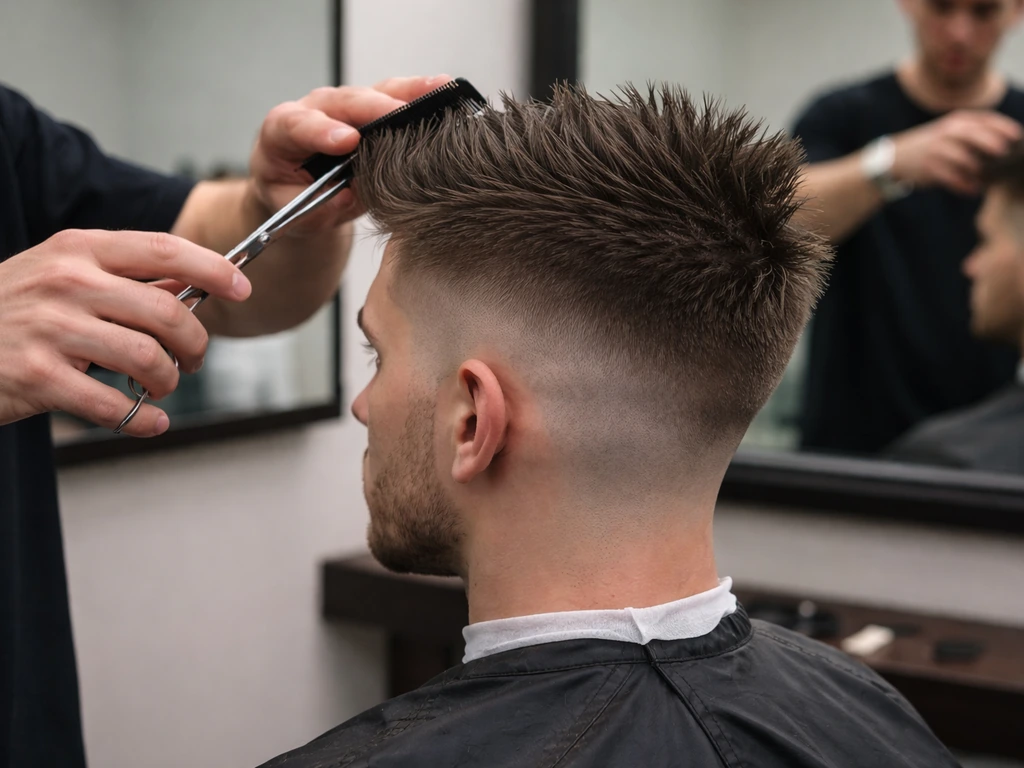
A faux hawk is built on one simple contrast: longer hair running down the center of the head, with noticeably shorter sides. The classic version has the top strip sitting about 1 to 2 inches longer than the sides, which are typically kept at a quarter to three-quarters of an inch (or faded even shorter). The top doesn't need to be extremely long, even 2 to 3 inches is plenty to get a convincing shape. What matters more than raw length is that the hair on top has enough body and structure to push upward and hold.
Texture plays a real role here. Naturally thick, coarse, or wavy hair tends to hold a faux hawk shape with minimal product. Fine, straight hair can absolutely work too, but it needs a little more product support (more on that below). Curly and natural hair actually takes beautifully to this style since the texture does a lot of the lifting work on its own. If your hair is very fine and currently short, you can also use clip-in pieces or the ponytail-pinning method temporarily to fake the height while the real growth catches up, this is genuinely useful if you're at an event or just impatient in the early months.
How long it actually takes to grow one
Hair grows roughly half an inch per month on average, though you'll meet people who grow faster (closer to three-quarters of an inch) and others who hover around a third of an inch. Here's what the timeline typically looks like starting from a close short cut like a buzz or tight fade:
| Growth Stage | Approx. Top Length | What's Possible |
|---|---|---|
| Month 1 | ~0.5 inch | Too short to style upward yet; sides need a cleanup trim only |
| Month 2 | ~1 inch | Can begin pushing hair toward center; shape is emerging |
| Month 3 | ~1.5 inches | Basic faux hawk shape is achievable with product and a blow dryer |
| Month 4–5 | ~2–2.5 inches | Solid faux hawk; height and definition are noticeably better |
| Month 6–9 | ~3–4 inches | Full, versatile faux hawk; can create more dramatic height or a softer version |
If you're starting from something like a longer pixie or a short bob where the top already has an inch or more, you can realistically hit the functional faux hawk zone within 2 to 4 months. The timeline shifts depending on your starting point, so measure what you have now and work forward from there.
What to ask your barber or stylist while growing it out
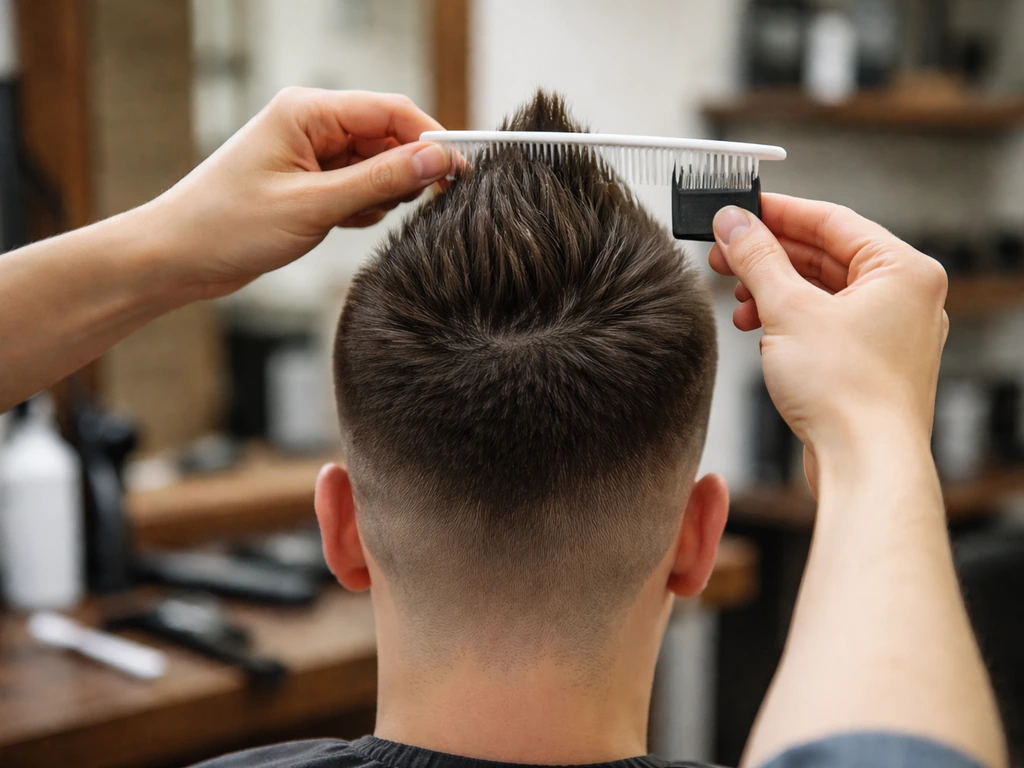
This is where most people accidentally set themselves back. They go in for a tidy-up and come out with too much taken off the top. When you're growing a faux hawk, the top section is your most protected asset. Here's the simple rule: trim the sides and taper, leave the top alone until it genuinely needs a shape-up.
In practical terms, plan to visit a barber or stylist every 2 to 4 weeks during the growth phase, but the visits are mostly for side maintenance. Ask specifically for a skin fade, taper, or low fade on the sides while keeping the top length intact. Once you're at 3 or more inches on top, a very light dusting (removing split ends only, not length) can help the hair sit more cleanly.
If you're not sure how to describe it, say: 'I'm growing the top out for a faux hawk, please keep the top length and just clean up the sides and blend. If you’re focused on how to grow out top of hair, the key is keeping enough length on the center strip while you manage the sides grow the top out for a faux hawk. '
- Sides: taper, fade, or clipper cut every 2 to 4 weeks to maintain contrast
- Top: no trimming until you're at least 3 inches, then only a light dusting for shape
- Blend: ask for a gradual blend from short sides into the longer top strip — this prevents a harsh ledge that looks unintentional
- Neckline: keep this cleaned up; a tidy neckline makes even mid-growth stages look intentional
Styling the faux hawk at every stage of growth
Even during the awkward middle phase, you can shape your hair to look intentional rather than unkempt. The technique you use shifts slightly depending on how much length you're working with.
The 1 to 1.5 inch stage (months 1 to 3)
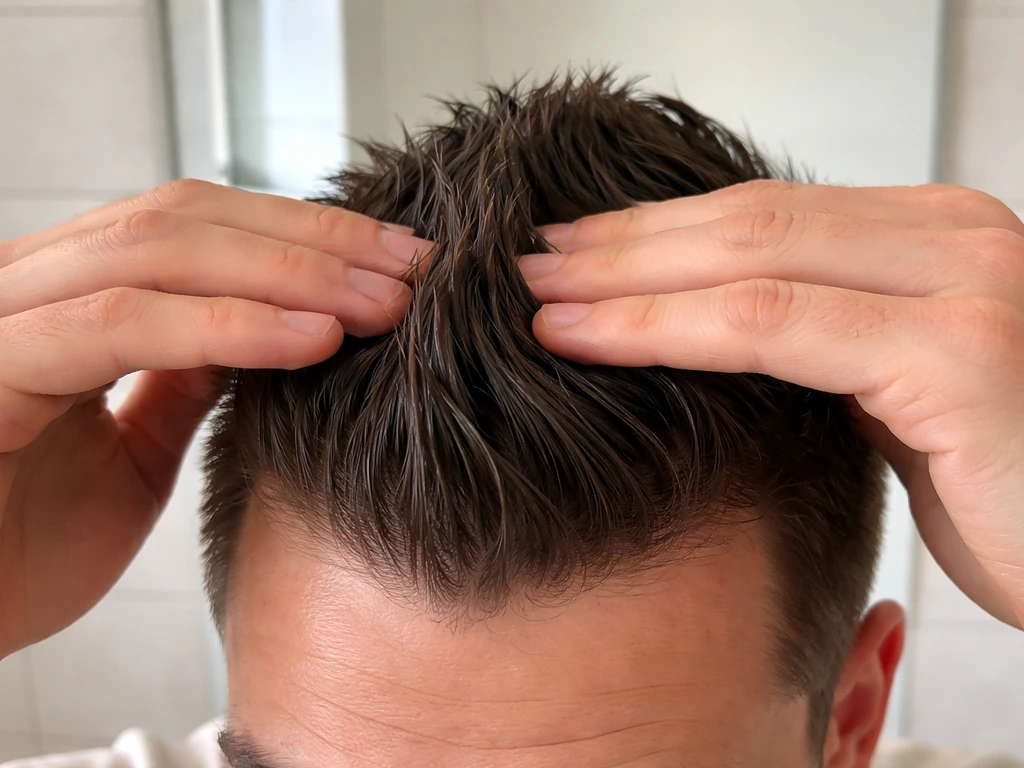
At this length, you're aiming for a low, compressed version of the faux hawk rather than dramatic height. Apply a small amount of pomade or clay to damp hair, then use your fingers to push hair from the sides inward toward the center strip. A light blow dry with your fingers helps set the direction. Don't fight the hair's natural lean, work with it by pushing the sides inward consistently every day. This daily habit actually trains the hair over weeks to fall in the direction you want.
The 2 to 3 inch stage (months 3 to 6)
Now you've got real material to work with. This is when mousse becomes your best friend: apply it to towel-dried hair from roots to mid-lengths, then blow dry using a nozzle attachment pointed toward the crown. Woman & Home notes that [blow-drying works best when your hair is already dry](https://www. womanandhome.
com/beauty/hair/do-hair-dryers-damage-hair/), since it reduces the time and heat exposure needed. Use a round brush or just your fingers to lift the center strip upward while drying. Once it's about 80 percent dry, switch to a medium-hold pomade or wax to define the shape. Finish with a flexible-hold hairspray, which can keep the shape for up to 24 hours.
If your hair tends to fall flat, apply the hairspray while still holding the hair upright, let gravity work against you here.
The 3 to 4 inch stage (months 6 to 9)
At this length, you have options. You can do a taller, more dramatic spike using strong-hold gel or fiber paste on dry hair. Or you can go for a softer, more textured faux hawk by applying medium-hold cream to damp hair and letting it air-dry with the center section pushed up. The Wella-style pinning method also works well here: section the top strip, twist it upward, and use bobby pins to hold sections in place while everything dries. Then remove the pins and you get a textured, set shape without relying entirely on product weight.
Common problems and how to fix them
Cowlicks and stubborn growth patterns
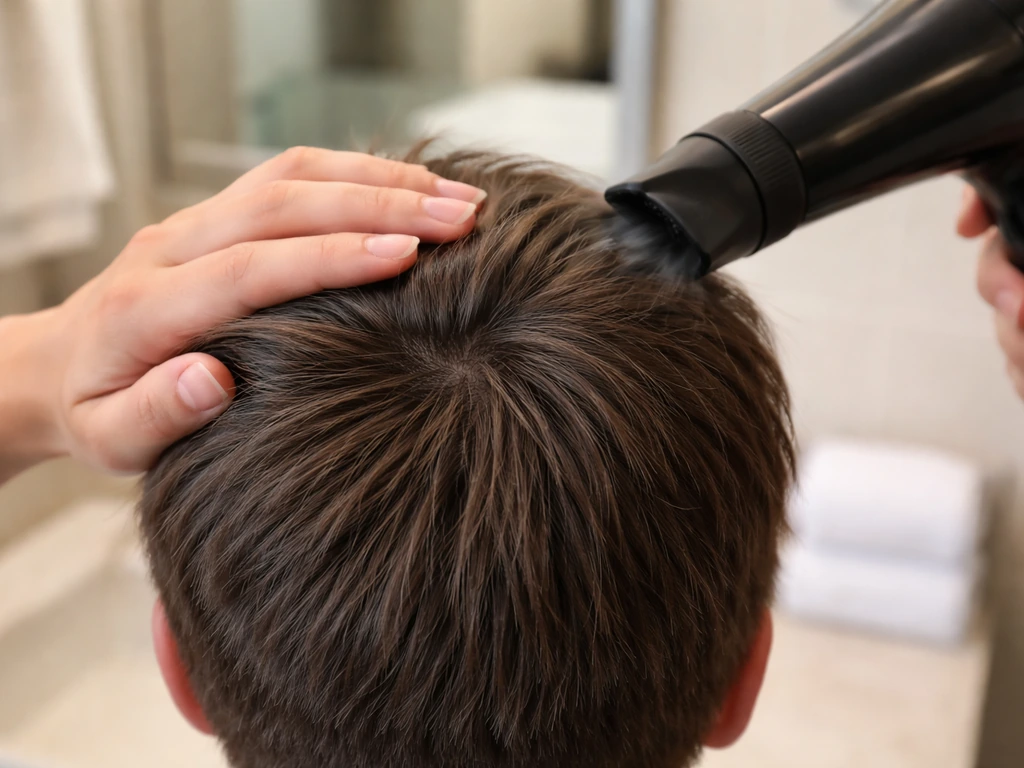
Cowlicks near the crown are the most common obstacle when growing a faux hawk. The hair spirals out from a growth point and refuses to go where you push it. The fix is to blow dry against the cowlick direction first, blast the root in the opposite direction to disrupt the set pattern, and then redirect. Start when hair is about 80 percent dry rather than soaking wet, since hair won't mold properly when fully saturated. If the cowlick is at the very crown, sometimes leaning the faux hawk's peak slightly forward (toward the forehead) bypasses the stubborn spot entirely.
Uneven growth and density
It's normal for hair to grow faster or thicker on one side of the head. If one section of your top strip is noticeably shorter or thinner, don't try to trim the faster side down to match, that just sets you back. Instead, use styling product to blend the shorter area into the taller center and keep visiting the barber for regular side touch-ups. The difference usually evens out within a cycle or two of growth.
Undercut and taper regrowth on the sides
If you had an undercut or very close fade before you started growing, the sides regrow in an awkward middle zone, long enough to see but short enough to stick out. This is the most common frustration and honestly one of the trickier parts of growing out any style with a contrast cut (similar challenges come up when growing out a fade).
If you started with a fade, the key steps are similar: protect the longer top as the sides regrow and keep side touch-ups so the contrast stays clean. The cleanest solution is to keep visiting the barber specifically for side cleanups every 2 to 3 weeks while the top grows. If you’re also trying to grow a taper afro, keep the sides cleaned and gradually blend them so the afro mass stays balanced as it lengthens.
Don't try to grow the sides and top at the same rate, maintain the contrast deliberately and the growth will look intentional rather than neglected.
Fine hair that won't hold the shape
Fine hair needs a slightly different product strategy. Skip heavy pomades and waxes, which pull fine hair down under their own weight. Instead, use a volumizing mousse at the root on damp hair, blow dry for lift, and then set with a light-hold spray. Salt spray applied to damp hair before drying can add texture that gives fine strands something to grip onto. Layering two lighter products (mousse plus light spray) almost always outperforms one heavy product on fine hair.
Color-treated hair concerns
If your hair is bleached or color-treated, it's more porous and prone to dryness, which can make the faux hawk look frizzy or dull rather than sleek. Prioritize a weekly deep conditioning treatment and always use a heat protectant before blow drying, it creates a barrier between the heat and your hair shaft, and using lower heat with more passes does less damage than blasting high heat once. This matters more as your hair gets longer and has more length to maintain.
When the hair just won't cooperate: training and smoothing strategies
Hair can be trained over time, and this is genuinely one of the most underused tools in the growing-out process. If you style the center strip upward and toward the middle every single morning, the hair begins to remember that direction within 4 to 6 weeks. It's not magic, it's the hair's natural tendency to set in repeated patterns. The key is consistency. Skip a week of styling and the pattern resets.
For days when you want the shape without heat, the pinning method works well: section the top strip while hair is about 80 to 90 percent dry (damp enough to mold, dry enough to set), twist it gently upward, and pin it with bobby pins or duck-bill clips. Leave it in while you finish getting ready or let it sit for 20 to 30 minutes. When you take the pins out, the shape holds without any blow drying. This is also a great option if you're trying to protect color-treated hair from heat stress on lighter styling days.
Parting plays a bigger role than most people expect. A sharp center part reinforces the faux hawk's structure and makes even moderate-length hair look intentionally styled. Try parting the hair cleanly from front to back before pushing each side inward, it gives the center strip a defined edge to work against.
Finishing and keeping the faux hawk once you've grown it
Once you've hit the 3 to 4 inch mark on top with well-maintained sides, you're at the goal. The final shape is usually refined at a single dedicated appointment where you ask for the top strip to be shaped (cleaned up, not shortened), the sides brought to your preferred fade or taper, and any bulk removed from the interior of the top strip if the hair feels heavy or won't lift easily.
For ongoing upkeep, the 2 to 4 week barber visit cadence is your anchor. The sides grow fast and the contrast blurs quickly, staying on top of this is what keeps the style looking sharp rather than grown-out. The top can go longer between trims, usually every 6 to 8 weeks, with just a light clean-up each time.
Your daily routine at this stage is pretty low-maintenance once you've got the right products dialed in. Mousse on damp hair, blow dry for lift using your fingers or a brush, a touch of pomade or wax to define the center strip, and a light hairspray to lock it. The whole thing takes under 10 minutes once you've done it a few dozen times.
If you want to grow from here into something with even more length on top, the same patience-and-protect approach that got you to the faux hawk will carry you further, whether that's a fuller top knot, a pompadour shape, or just more length to play with. Once your hair is long enough, you can use these same steps for how to grow emo hair into a style that keeps volume and sharp contrast.
If you want to take the same growth and patience further, you can learn how to grow top knot next. If you’d rather take the next step into a fuller pompadour look, the same growth-and-protect approach applies while you adjust your styling height and product.
FAQ
How soon will I actually be able to style a faux hawk that looks “real” from short hair?
Not immediately. A faux hawk usually starts looking intentional when the center strip is about 1.5 to 2 inches long, but you should only ask the barber to clean up the sides. If you need it to look good sooner, use temporary height tricks (pinning or a clip-in) rather than cutting the sides higher and risking a reset on the contrast.
What should I do if I trimmed the top too short during the growth phase?
If you accidentally trim the top too short, stop cutting the top entirely and switch your focus to shaping with product instead of shears. You can still maintain the silhouette by keeping the sides tightly managed, then reintroduce a light top shaping only after you’re back near the 1.5 to 2 inch center length.
Which products work best if my hair is fine versus thick?
Use product based on texture. For fine hair, rely on root lift mousse first, then a light spray to keep strands grippy, avoid heavy wax and thick pomade that can weigh hair down. If your hair is coarse or wavy, pomade or clay usually works with less effort to hold the center strip up.
Can I grow and shape a faux hawk without blow drying every day?
Yes, especially for days you want minimal heat or for keeping color from fading. Pinning works best when hair is about 80 to 90 percent dry, then leave the pins in long enough to set (roughly 20 to 30 minutes) before removing. If the shape drops, increase setting time rather than adding more product.
How do I deal with crown cowlicks when my faux hawk won’t hold?
Cowlicks are easiest to manage slightly wet-to-set, not soaking. Blow dry against the cowlick direction first, redirect once the root is disrupted, and start when the hair is around 80 percent dry. If the cowlick sits at the crown, tilting the peak slightly forward can help the style bypass the stubborn spiral.
Does the part really matter, and how should I place it for the best faux hawk shape?
A center part is your structure. Part cleanly from front to back, then push each side inward toward that line so the center strip has a clear boundary. If you see the center merging with the sides, your part is likely too messy or too far off-center.
When should I ask for trimming or bulk removal on the top, and what exactly should I request?
Work in stages: taper or fade the sides, leave the top untouched, and only remove split ends once you’re at about the 3 inch plus zone. If the top feels heavy but long enough, ask for bulk removal inside the top strip rather than shortening the center length so you keep lift.
What if one side of my faux hawk top grows faster than the other?
If one side grows faster, don’t cut the faster side down to “match.” Keep visiting for side cleanups, then use styling to blend, pushing the shorter area into the taller center strip with the same daily direction training.
My fade regrowth looks messy in the middle, is that normal and how do I prevent it from looking worse?
Expect an awkward middle as your fade or undercut regrows, that period is normal. The fix is cadence: keep sides refreshed every 2 to 3 weeks so the contrast stays deliberate, while the top grows without interruption.
How do I keep a faux hawk looking sleek if my hair is bleached or processed?
If you have bleached or color-treated hair, frizz control becomes part of the styling plan. Add heat protection before drying, use lower heat with more passes, and prioritize weekly deep conditioning so the center strip stays flexible enough to lift instead of drying out and puffing.
How long does it take to train the hair to stay up, and what happens if I miss a few days?
Usually yes. With the faux hawk, you’re training direction, not forcing a permanent spike. Style daily toward the center strip for 4 to 6 weeks, then you can reduce frequency. If you skip styling for a week, the pattern may loosen and you’ll need a few days to re-set it.