
To grow a true pompadour, you need roughly 3 to 5 inches of length on top and the patience to get there, which takes anywhere from 6 months to over a year depending on where you're starting. The sides can stay shorter throughout the process, which actually helps you look intentional even during the awkward middle stages. The real work isn't just growing the hair out, it's training it to go in the right direction from day one and knowing how to fake the shape while you wait. If you're aiming for emo hair, the key is using the same grow-out patience but focusing on fringe and shape so you can sweep or part it the way you want.
How to Grow a Pompadour: Timeline, Tips, and Styling

Marcus Vickers
2 May 2026
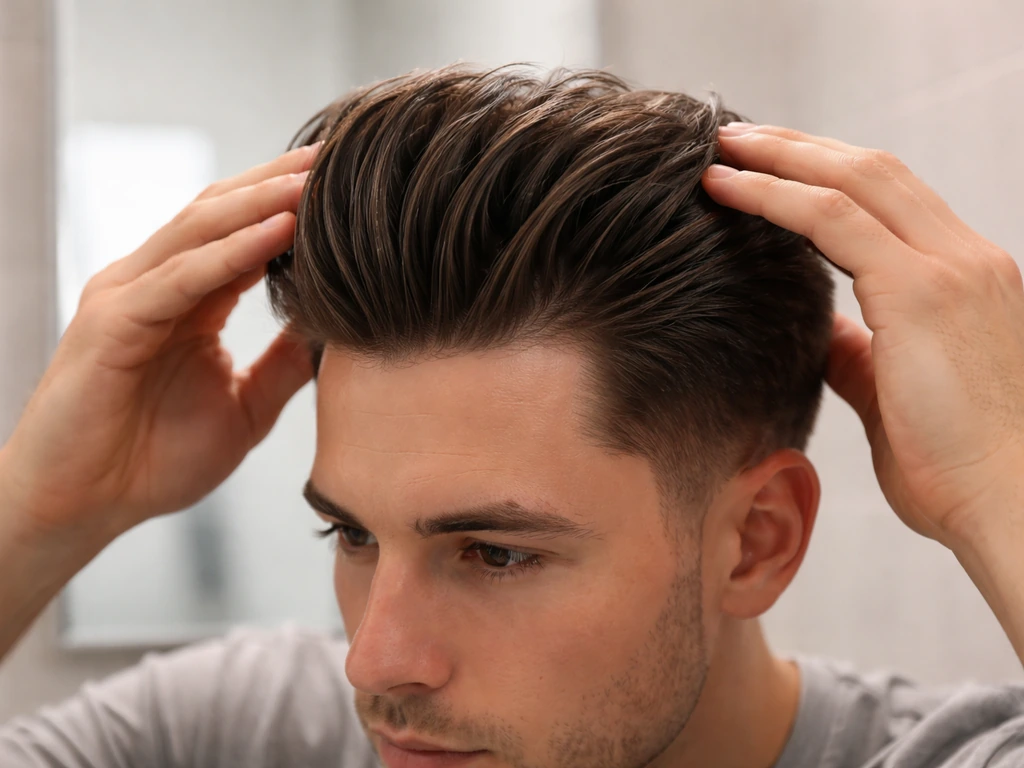
What a pompadour actually is (and how to plan for it)
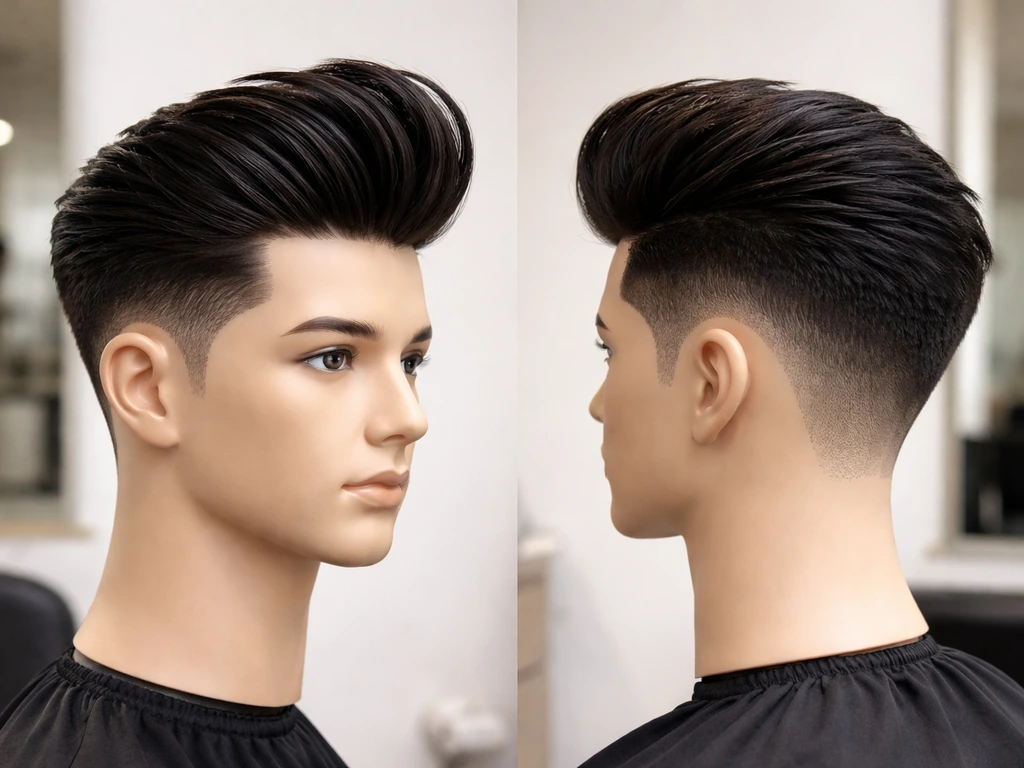
A pompadour is built by sweeping the hair up and back from the forehead, creating height and volume at the front and crown. The sides and back are shorter than the top, sometimes tapered, sometimes faded, and in the more modern version, cut with a hard undercut line that creates a sharp contrast between the longer top section and cropped sides. The front fringe area is the key: that's where your length lives, and it's what gets lifted and swept back to create the signature shape.
Before you start, it helps to decide what kind of pompadour you're after. A classic or vintage pomp is a softer, more rounded shape with a medium-hold finish. A modern or disconnected pompadour usually pairs the long top with a skin fade or hard undercut and uses a firmer, higher-shine product. Knowing which direction you're heading changes how you manage your sides during the grow-out and what kind of barber work you'll need along the way.
Planning the grow-out also means thinking about your current cut. If you have a fade or undercut already, you're essentially growing the top while maintaining or letting the sides relax. If you're starting from a uniform short cut, you'll have more flexibility but also more of an awkward middle phase to navigate. Either way, the grow-out is a process with distinct stages, not a single endpoint you arrive at all at once. If you want a taper afro specifically, focus on keeping the afro as your volume base while tapering the sides gradually to blend it into the shape.
How long it takes to grow the top: timelines by starting point
Hair grows about half an inch per month on average, which is the single most useful number to keep in mind. Some people grow slightly faster (closer to 3/4 inch per month) and some slower, but half an inch is a reliable planning baseline. You need at least 3 inches on top to pull off a basic pompadour, and 4 to 5 inches gives you real volume and sweep. Here's how long that takes from common starting points:
| Starting point | Length needed to add | Estimated time |
|---|---|---|
| Buzz cut or very short crop (under 1/2 inch) | 3–4.5 inches | 6–9 months |
| Short textured cut or tight taper (1–1.5 inches on top) | 1.5–3 inches | 3–6 months |
| Pixie or short fringe (2 inches on top) | 1–2.5 inches | 2–5 months |
| Bob or medium length (3+ inches) | Already workable; refine shape | Ready now or 1–2 months |
If you're coming from a buzz or very short crop, expect the first two months to feel like not much is happening. Months three and four are where it gets genuinely awkward, the top has some length but no real control, and the sides may be catching up in ways you don't want. Months five through seven are usually the breakthrough window, where the top is long enough to blow-dry into a real shape. Stick with it through the messy middle.
If you're growing from a pixie or short fringe, the timeline is more forgiving. You may already have some length at the front that you can start training immediately. The challenge is usually that the layers are uneven, the top is shorter than the sides or the back, so the grow-out involves waiting for everything to catch up rather than just adding raw length. Growing out a fade follows a similar logic: the sides need careful management while the top takes shape.
Managing the sides while everything grows
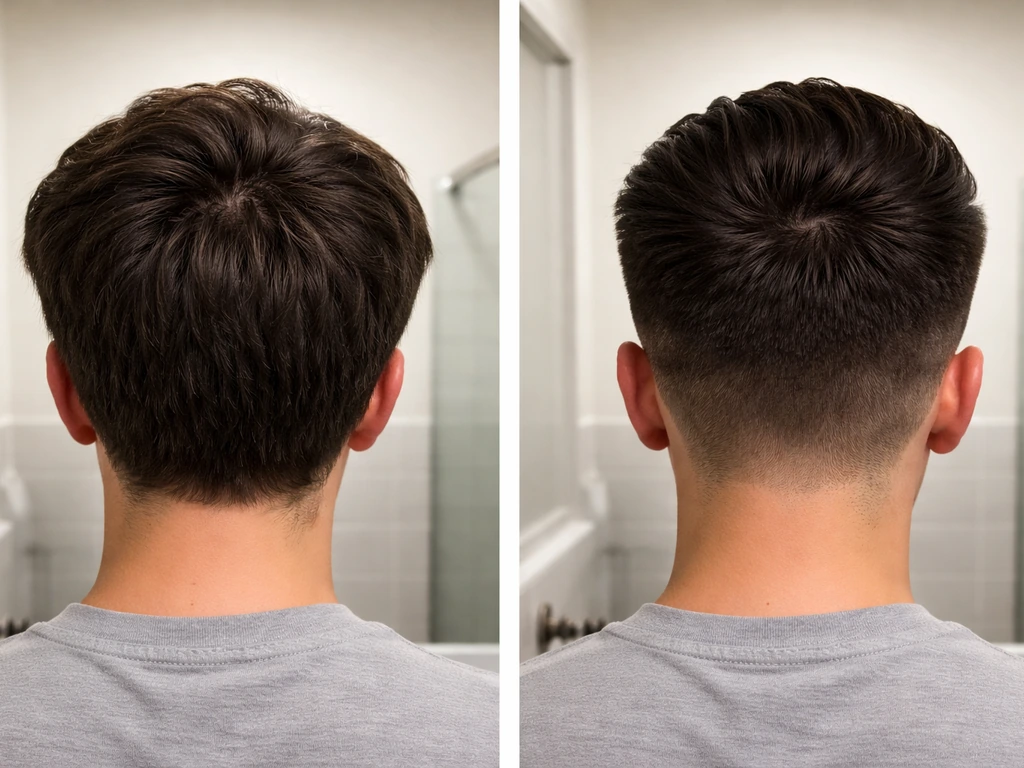
This is where a lot of people go wrong. They let the sides grow unchecked along with the top, and end up with a puffy, rounded shape that looks nothing like a pompadour. The sides of a pompadour are supposed to be shorter and controlled, that contrast is what makes the style work. If you want a faux hawk instead, the same ideas about letting the top grow and controlling the sides still apply pompadour. So even during the grow-out, you're not growing everything uniformly.
If you want a classic pompadour with a tapered or faded side, keep the sides maintained every 2 to 4 weeks. This doesn't mean cutting the top, it means keeping the sides from expanding outward. Your barber can taper or fade the sides while leaving the top entirely untouched. This is one of the best things you can do during the grow-out: it keeps you looking intentional and prevents the dreaded mushroom head phase.
If you're planning a disconnected or undercut pompadour, the strategy is the same but more pronounced. Keep that hard line maintained at the sides and back every 3 to 4 weeks. The undercut area essentially becomes a frame that makes the top look longer and more dramatic even when it's still building length. This is the one case where regular barber visits during the grow-out actually make the process easier, not harder.
Training the sides to lie flat and sweep back is also part of this phase. After washing, use a light product or even just your hands to push the side hair backward, not downward or outward. Blow-dry the sides first, directing them back and slightly up, before you tackle the top. Reuzel's approach to pompadour styling specifically sequences the sides first for this reason, the direction your hair dries is the direction it wants to stay.
Styling tools and how to build height during the grow-out
The pompadour is almost entirely built through blow-drying. You can't just air-dry and comb it into shape, the lift and structure come from heat and technique at the root, and this applies even when your hair is only 2 inches long. Starting this habit early means your hair is already trained in the right direction by the time it's long enough to fully style.
The blow-dry technique that actually creates lift
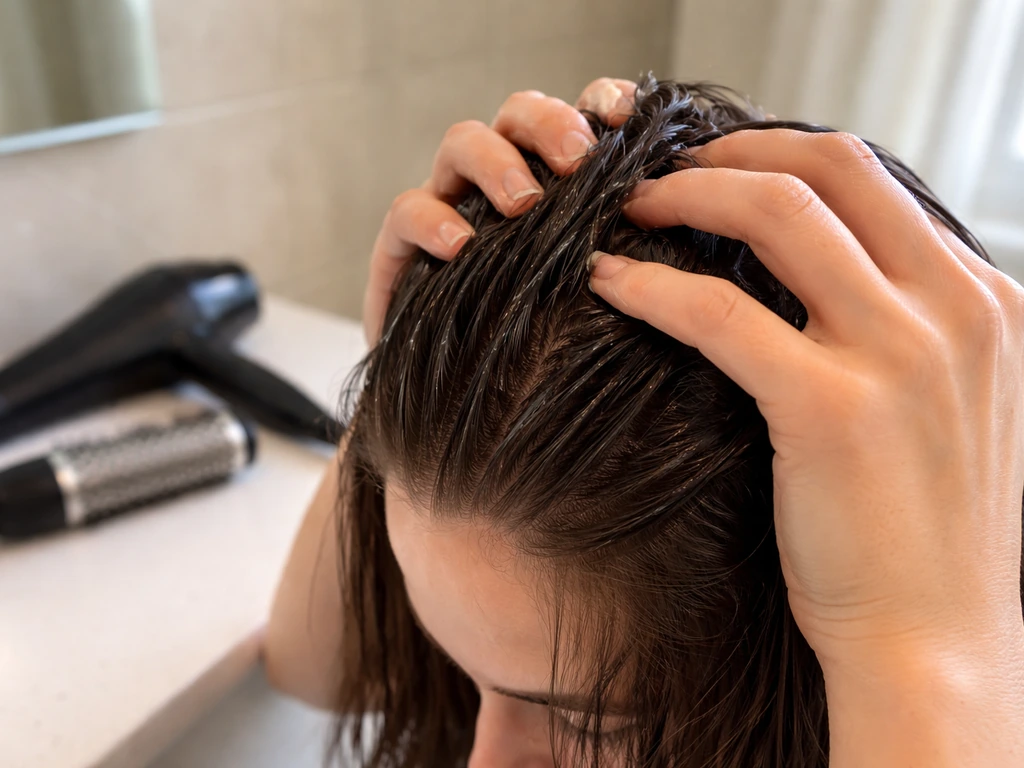
Root lift is everything. Start by applying a small amount of product, a light pomade, a clay, or a volumizing mousse, through damp hair, coating from root to tip. Then, using a round brush or vent brush, get underneath the hair at the front hairline and roll the brush upward while directing heat at the base. You're lifting the root away from the scalp, not just smoothing the surface. Keep the heat focused there for a few seconds, then move back through the crown using the same motion.
When the hair is fully dry, don't touch it immediately. Let it cool for 30 seconds to a minute while holding it in position. This step sounds minor but it locks in the shape, the heat sets it, the cool air holds it. After that, you can apply a finishing product and sweep everything back into place. If you skip the cooling step, the volume tends to collapse within an hour.
Products to use at each stage
In the early grow-out phase (under 2 inches), a light clay or fiber works well because it adds texture and a little grip without weighing short hair down. As your hair gets to 2 to 3 inches, you can introduce a medium-hold pomade, water-based if you want easier washout, oil-based if you want a higher shine and stronger hold through the day. For longer, fully formed pompadours, a strong-hold clay for a matte finish or a shiny water-based pomade for the classic slicked look are both solid choices depending on your target style.
- Early stage (under 2 inches): light clay, fiber, or texturizing spray
- Mid stage (2–3 inches): medium-hold pomade, paste, or mousse for blow-drying
- Full length (3+ inches): strong-hold clay (matte) or water-based pomade (shine)
- For fine hair: add a volumizing mousse before blow-drying to boost root lift
- For thick/coarse hair: a controlling cream or pomade helps manage bulk without stiffness
Avoid heavy oils or greasy products during the early stages, they weigh down short hair instantly and eliminate any chance of lift. If your pompadour keeps falling flat, the problem is almost always either insufficient root lift during blow-drying or too much product applied to the ends rather than the roots.
Trims, maintenance cuts, and not undoing your progress
The fear of cutting hair during a grow-out is real, but strategic trimming is actually part of the process. The goal is to remove bulk and split ends without taking off length, and to keep the sides and shape looking clean so you don't feel like you've given up on the style entirely.
For the top, you can go 6 to 8 weeks between trims easily during the grow-out, and sometimes longer. There's no reason to cut the top at every visit. When you do trim it, ask specifically for a dusting, just the very ends, no more than 1/4 inch, to remove splits without sacrificing length. If your stylist or barber instinctively wants to tidy up and cut more, be specific: "I'm growing the top, just clean the ends."
For the sides and back, the maintenance schedule is more frequent. A tight fade or undercut needs freshening up every 2 to 3 weeks. A softer taper can go 3 to 5 weeks. Some Reddit commenters describe maintaining a fade on roughly a two-week cadence, though it can vary depending on hair growth and access to a barber maintaining a fade on a roughly two-week cadence. Letting the sides go too long between visits is what causes the blurry, grown-out look that makes the whole style look unintentional. Consistent side maintenance is the single biggest visual difference between "growing a pompadour" and "just growing hair out."
Dealing with common problems: cowlicks, flatness, frizz, and uneven growth
Cowlicks at the hairline or crown
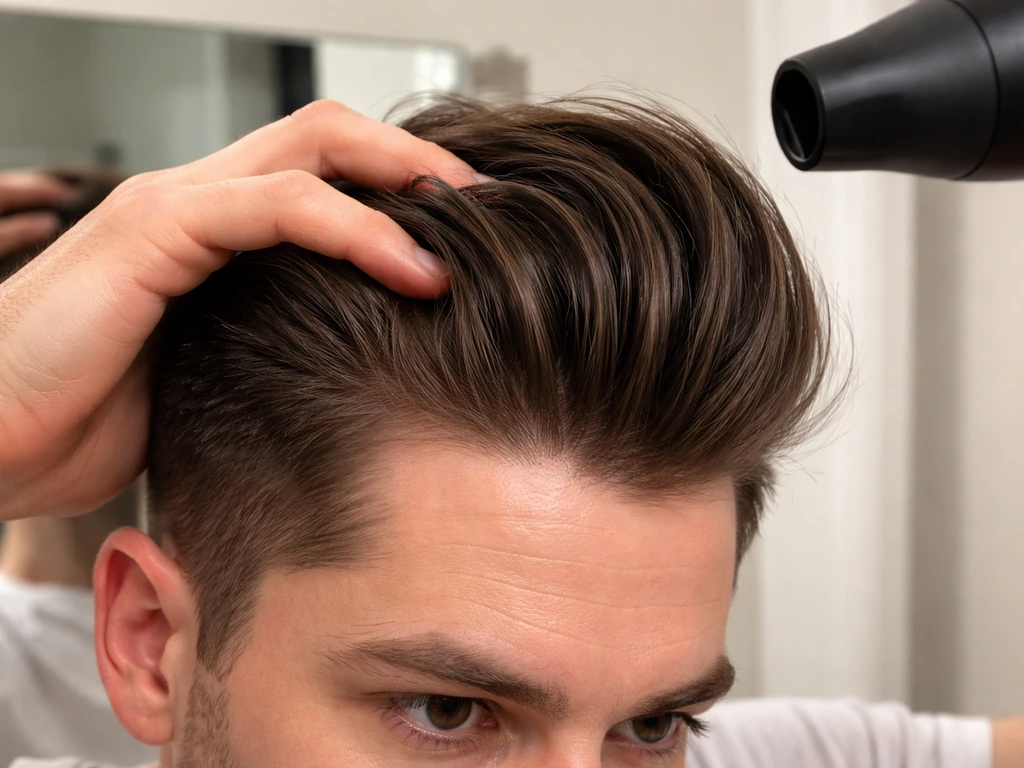
A cowlick at the front hairline is one of the most common obstacles for pompadour growers because it pushes the hair in the opposite direction you need it to go. The fix is heat and tension during blow-drying. Use your thumb or the brush to create tension at the root, pulling the hair against its natural direction while applying heat directly at the base. Hold it there for several seconds, then let it cool before releasing. Doing this consistently over several weeks actually starts to retrain the growth direction over time. It's not instant, but it works.
Flat roots and no lift
If your pompadour falls completely flat by midday, it's almost always a product or technique issue rather than a hair type issue. Make sure you're lifting at the root during blow-drying and not just smoothing the surface. Try switching to a volumizing mousse applied before blow-drying if you haven't already. Also check that you're letting it fully cool before releasing, this one step makes a noticeable difference in how long the shape holds.
Frizz and flyaways
Frizz during the grow-out usually peaks in the 2 to 3 inch range, when the hair is long enough to have texture but not heavy enough to lie down. A small amount of smoothing serum or lightweight cream applied to damp hair before blow-drying tames most of it. Avoid drying on high heat, use medium heat with high airflow instead, which reduces frizz without stripping moisture. A finishing product with a light shine helps seal flyaways once the style is set.
Uneven or patchy length
Uneven growth is more common than most people expect. The front hairline and crown often grow faster than the sides, or the hair from a previous cut has layers that haven't caught up yet. The honest answer is that some of this just takes time. In the meantime, a slight pompadour sweep can actually disguise uneven length well, because you're moving everything in the same direction and using volume to blend rather than expose the unevenness.
If you're aiming for hippie hair instead of a classic pompadour look, use the same grow-out patience but focus on softer texture and loose, natural movement as the length comes in. If specific sections are dramatically shorter, ask your barber to point-cut or soften those edges at your next maintenance visit rather than trying to even everything out aggressively.
When you can actually wear a pompadour (and keeping it going)
You can start practicing a soft pompadour shape once your front hair is around 2.5 to 3 inches. It won't be the full, dramatic version yet, but the sweep and some height will be there. At 3.5 to 4 inches, you have a real pompadour that holds shape through the day. At 4 to 5 inches, you're in full territory, height, sweep, and volume are all possible with the right technique.
Once you're at full length, your routine settles into something consistent. Wash 2 to 3 times per week to avoid stripping the natural oils that help with hold and manageability. Blow-dry every time you style, using the root-lift technique. Apply your product of choice, sweep and shape, let it cool. The whole process takes about 10 minutes once you've done it enough times to have it dialed in.
For ongoing maintenance, keep the sides fresh every 2 to 4 weeks depending on how defined you want the contrast. Let the top grow until the length starts to feel heavy or loses its ability to hold shape, then get a light trim.
If you want the clearest path for how to grow out top of hair, focus on consistent training and regular side control so the style can actually take shape Let the top grow until the length starts to feel heavy or loses its ability to hold shape. Most people find they're back to the barber for a proper top trim every 6 to 10 weeks, while the sides get touched up more often in between.
That rhythm keeps the pompadour looking sharp without losing the length you worked to grow.
If you decide later to change directions, going longer into something more flowing, experimenting with a top knot, or shifting toward a different swept style, the length you've built gives you real options. A top knot works great when your length is already there, so you can transition from a pompadour to tying it up and still look intentional. The grow-out is never wasted even if the destination changes. The technique, the training, and the styling habits you build along the way all transfer directly to whatever comes next.
FAQ
How do I trim during the grow-out without ruining the length on top?
If you do not want to lose progress, ask for “dusting only” (1/8 to 1/4 inch max) and to remove only splits. Schedule trims based on ends health (every 6 to 10 weeks on top) and rely on blow-drying for shaping instead of cutting bulk out of the front fringe.
Can I grow a disconnected or undercut pompadour if my hair is short?
Yes, but only if you keep the sides controlled and rely on heat. A true disconnected pompadour still needs enough top length to sweep, about 3 to 5 inches. Let the undercut or hard line stay sharp with barber touches every 3 to 4 weeks, and use stronger product later since short hair will not hold height as easily.
My pompadour falls flat quickly, how can I fix it without starting over?
Try a “reset” product plan: wash or clarify if you have buildup, then use a light product during early stages, apply it from root to ends, and focus on lifting at the base with a round or vent brush. Also confirm you are cooling in place before releasing, because that is often the difference between morning hold and midday collapse.
What’s the best way to retrain a stubborn front cowlick for a pompadour?
If your cowlick is stubborn, keep the heat and tension consistent for several weeks. Pull the hair in the direction you want at the root (against its natural lay), heat the base for a few seconds, then cool while holding tension. Avoid combing against the set after you finish, that breaks the shape.
Can I start training a pompadour before I have 3 inches of top length?
For very short stages, you can use a blow-dryer with a round brush while hair is still under 3 inches, but treat it like training, not styling. Focus on setting the direction of the front fringe, then stop aiming for maximum height until you have enough length to roll and sweep back.
Why does my product make my hair look oily or limp during the grow-out?
If you are using a pomade or clay and it looks greasy or heavy, you are likely applying too much or putting it on the ends instead of starting at the roots. Use less product, start at the root line, then lightly work through. In early stages, switch to a lighter clay or fiber to preserve lift.
What changes should I make if my hair is wavy or curly instead of straight?
If your hair is wavy or curly and will not lay back, reduce friction and boost control at the root. Use a smoothing serum or lightweight cream on damp hair before blow-drying, then dry with medium heat and higher airflow while directing the hair backward from the hairline.
How do I know when it is time to trim the top because it is getting too heavy?
If the top feels “too heavy” and does not hold, it is usually time for a light top dusting or a change in product hold level. Schedule a small trim when volume collapses consistently, then increase hold slightly (medium to strong) rather than adding more product.
Will trimming really affect my timeline, and how do I prevent breakage during the wait?
Split ends and breakage can slow the look of progress. If you notice frizz plus roughness at the tips, do not keep waiting for the final length, get a dusting and consider a more consistent conditioning routine. Even if you keep length, preventing breakage helps the sweep develop sooner.
What should I say to my barber to maintain the side contrast correctly?
Choose your barber targets: sides maintained every 2 to 4 weeks for tapered versions, and every 3 to 4 weeks for harder undercut lines. The goal is contrast, not equal length. Bring a photo of the exact version you want (classic, modern, or disconnected) so they do not “tidy” the top unintentionally.