
Growing out an angled bob takes roughly 6 to 18 months depending on how dramatic your angle is, and the biggest challenge is not the length itself but managing the imbalance between the longer front pieces and the shorter back while both are in transition. The good news: with a clear plan, a few strategic trims, and the right products, you can get through every awkward stage without feeling like you have to cut it all off and start over.
How to Grow Out an Angled Bob Without Frustration

Marcus Vickers
17 Jun 2026
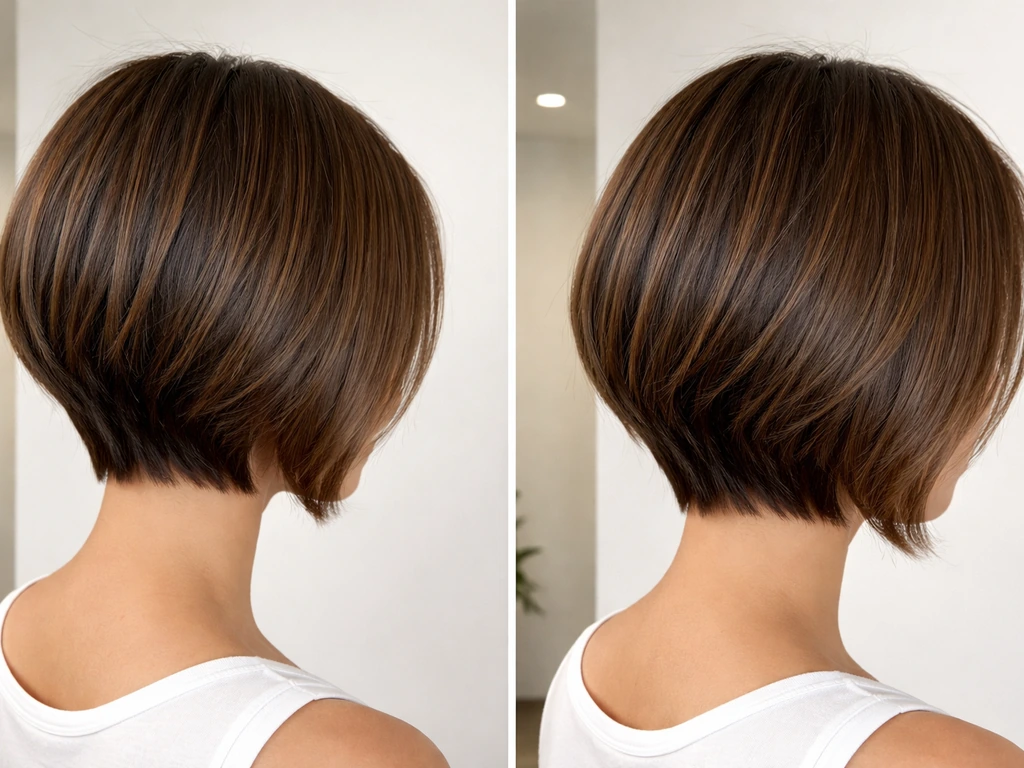
Figure out exactly where you're starting from

Before you do anything else, you need a realistic picture of your current bob shape. An angled bob is longer in the front and shorter at the back, and that angle can range from subtle (maybe 1 to 2 inches of difference) to dramatic (4 or more inches of difference between the front and nape). The more dramatic the angle, the longer the grow-out and the more planning it requires.
Stand in front of a mirror with a second mirror behind you and actually measure. Check the length of your front pieces at the jaw or collarbone, then check the length at the nape. Write both numbers down. That difference is your starting point. Hair grows approximately half an inch per month on average, though it varies quite a bit person to person. Some people see closer to a quarter inch per month; others push toward three quarters. Typical average hair growth is often cited as about 0.5, 1.7 cm per month, but it varies from person to person blank" rel="noopener noreferrer">typical average hair growth of about 0.5–1.7 cm per month. Use half an inch as your baseline estimate and adjust from there once you've tracked a month or two. Hair.com by L’Oréal notes that hair typically grows about half an inch per month, and that micro-fringe length can become noticeable after around six months Use half an inch as your baseline estimate.
While you're assessing, check a few other things that will affect your strategy: Are there layers? Is there an undercut or disconnected nape? Has the hair been chemically colored, bleached, or heat-damaged? All of these complicate the grow-out in different ways, and knowing about them now saves you from being surprised later.
Estimating your timeline
If you want the back to catch up to the front, you don't need the back to grow the full difference. You can also trim the front slightly as you go to close the gap faster. A rough way to calculate: take the length difference between front and back, divide it in half (assuming you'll allow some front trimming), and divide that by 0.5 inch per month. A 3-inch angle with some front maintenance is roughly a 3-month timeline to reduce the dramatic drop. A 5-inch angle with no trims could take well over a year. Write that estimate down somewhere you'll actually see it. Having a timeline makes the awkward phases feel temporary rather than permanent.
Choose your growth plan before your next appointment
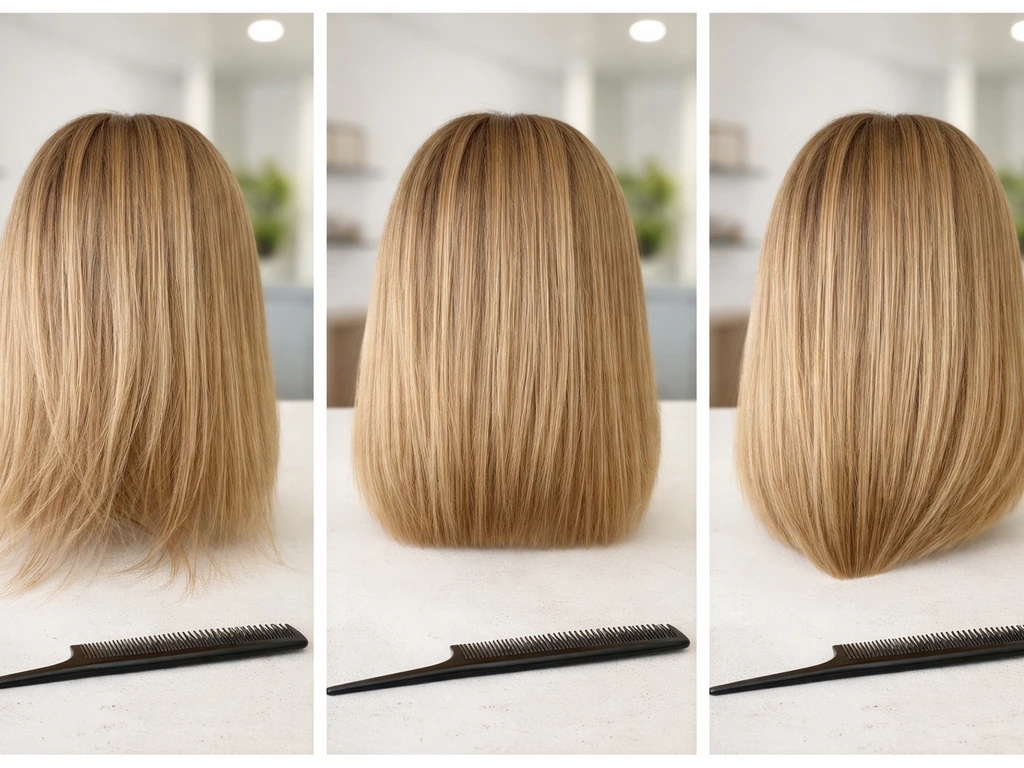
There are three real options when growing out an angled bob, and the right one depends on how dramatic your angle is, how patient you are, and what your hair does naturally. None of them is wrong, but mixing them up without a clear intention is where most people get frustrated.
| Approach | What it means | Best for | Timeline impact |
|---|---|---|---|
| Leave it alone | No trims, just let all lengths grow freely | Subtle angles (under 2 inches), low-maintenance preference | Fastest length gain, longest awkward phase |
| Micro-trims only | Trim the front pieces by a small amount every 6–8 weeks to reduce the angle gradually | Moderate angles, people who want it to look intentional throughout | Slightly slower but cleaner-looking transition |
| Strategic shaping | Regular appointments to reshape the back and sides, remove bulk, and close the angle deliberately | Dramatic angles (4+ inches), layered or undercut bobs, or texture-heavy hair | Slowest overall length gain, but smoothest visual transition |
For most angled bobs in the moderate range (2 to 4 inches of difference), micro-trims are the most practical choice. You walk into the salon every 6 to 8 weeks and ask for a very small amount off the front pieces (no more than a quarter inch) while leaving the back alone completely. This gradually narrows the angle without sacrificing the length you're working hard to grow.
If you had a very dramatic stacked or sharply angled bob, strategic shaping makes more sense. The difference between this and a standard layered bob grow-out is significant enough that it's worth reading about how those two experiences compare. If you want a deeper sense of how a standard layered bob grow-out compares, that context can help you plan your trims and timeline more confidently. The key point here: if you had stacking at the back, you have extra bulk and graduation to manage, not just length.
Styling through each awkward stage
The grow-out happens in roughly three phases, and each one has its own specific challenge. Knowing what to expect at each stage removes a lot of the frustration.
Stage 1: Still clearly a bob (months 1 to 3)

In the first few months, your bob still reads as intentional. The back is just starting to grow out, the front pieces are maybe at the collarbone or jaw, and the whole thing still looks like a hairstyle. This stage is actually pretty easy to manage. Your main jobs are to keep the shape looking clean with a blow-dry or roller set, use a light hold product to keep the front pieces from flipping outward, and resist the urge to cut anything unless you're doing a planned micro-trim.
The flip is the thing that starts in this stage and gets worse before it gets better. When the back hair hits a certain length (usually around the ear or just below), it wants to curl outward instead of laying flat. This is normal and frustrating. The fix at this stage is a round brush blow-dry directing the ends downward, or a flat iron with a slight inward curl at the ends. Don't fight the flip with product alone since that just makes the hair feel sticky and stiff.
Stage 2: The awkward in-between (months 3 to 8)
This is the stage people hate. The back of your hair no longer looks like a bob, but it doesn't look like a lob or longer style either. It's that frustrating neck-length zone where the hair sits on the collar, flips out at the sides, and the front pieces look disproportionately long by comparison. The angle looks more dramatic, not less, even though you're technically growing it out.
Half-up styles are genuinely your best friend here. Pulling the top and crown sections up into a small clip or twist distracts from the uneven perimeter and keeps the flip from being the focal point. Loose braids, low ponytails, and textured waves also camouflage the awkward length at the back. If you fight it and try to wear it down every day looking perfectly smooth, you will have a bad time. Work with what it's doing rather than against it.
For wash-and-go days, scrunching in a lightweight curl cream or wave spray and letting the hair air dry with its natural texture is much more forgiving than trying to blow it perfectly straight. This is one of those stages where embracing a bit of texture actually makes the grow-out look more deliberate.
Stage 3: Just past the bob (months 8 to 18+)

Once the back clears the neckline and the overall length is somewhere between a lob and a proper mid-length, things get easier fast. The angle is much less dramatic because the back has enough length to start behaving. Styling options open up significantly. Ponytails that actually hold all the hair, half-up updos that look balanced, loose waves that fall evenly instead of flipping at different heights. The main styling concern in this stage is managing any remaining bulk or graduation from the original cut. Layers that were stacked or graduated at the back may still create a slightly rounded or puffy silhouette until they grow out enough to blend with the top sections. If your original cut was a stacked bob, the layers can take longer to blend as the angle softens.
Dealing with the flip, cowlicks, and uneven bulk as lengths merge
The angled bob creates a specific problem that a symmetrical bob or lob does not: the front and back are at different growth stages simultaneously. When the back hits the flip zone, the front is already past it and laying nicely. This means you can't style the whole head the same way at the same time.
For the flip, the most reliable fix is to blow-dry the back section downward and slightly inward using a medium round brush, while the front can be dried however you prefer. If you don't want to blow-dry at all, pin the back sections downward while they're still damp using duckbill clips, let them dry, and then remove the clips. The hair will dry into a flatter shape. This takes about 10 minutes of setup and is genuinely effective.
Cowlicks at the nape are common with angled bobs because the hair at the nape was cut very short and grew out without the weight of longer hair to keep it down. Blow-dry against the cowlick's direction while the hair is still damp, then switch directions at the end. A small amount of pomade or wax worked into the nape area while it's still slightly warm from the dryer helps hold it in place without looking greasy.
Uneven bulk appears when the graduation or layers in the back grow out at different rates. You'll often see a puffy or rounded section at the occipital bone (the bump at the back of the head) while the rest lays flatter. This is a sign that the graduation built into the original cut hasn't fully grown out yet. At this point, a stylist can remove that built-up weight with point-cutting or texturizing shears without taking off length. Ask specifically for that rather than just asking for a trim, because a standard blunt trim won't fix bulk.
Smart haircut moves during the grow-out
Knowing what to ask for at the salon is just as important as knowing what not to ask for. Here are the adjustments that actually help during an angled bob grow-out.
- Ask for point-cutting or texturizing on the back sections to remove bulk without reducing length.
- Request a very small trim on the front pieces only (a quarter inch or less) to gradually close the angle difference.
- If you have fringe or side pieces growing out alongside the bob, ask for blended shaping around the face frame to keep transitions gradual rather than abrupt.
- If you had an undercut at the nape, ask the stylist to let it grow in rather than maintaining it, but consider a cleanup of the very edges so the grow-out looks intentional.
- Avoid: asking for a full reshape of the back. Once you commit to growing it out, reshaping the back resets your timeline.
Undercuts deserve a specific mention. If your angled bob had an undercut or disconnected nape, you have an extra layer of grow-out happening underneath. The undercut hair needs to catch up to the outer lengths before the back will lay smoothly. This can add 3 to 6 months to the awkward phase. The temptation is to keep tidying up the undercut at appointments, but every time you do that, you reset the grow-in. Let it grow unless the contrast is genuinely extreme.
Face-framing layers and side pieces that were part of the original bob cut can actually help you through the grow-out if you use them intentionally. Keep them blended and slightly tapered toward the face so they frame naturally as the overall length grows. Blunt, choppy face framing that made sense in the short bob can start to look disconnected as the rest of the hair gets longer, so ask for soft blending around those pieces at every appointment.
Handling color, bleach damage, and texture changes
Color complicates a grow-out in two ways: visible roots create a timeline pressure you don't actually need, and chemically processed hair behaves differently from virgin hair as it grows. If your bob was heavily bleached or color-treated, the ends of your growing hair may be drier, more porous, and more prone to breakage than the new growth coming in.
If you had a single-process color, you have more flexibility. Root touchups or a root smudge can extend the time between appointments and reduce the amount of chemical overlap on already-processed hair. Ask your colorist about a root shadow or blended root technique if harsh grow-out lines are bothering you. This is especially useful for the front pieces, where the contrast is most visible.
If you had highlights or balayage on the angled bob, the grow-out is visually more forgiving because the color isn't uniform to begin with. The bigger concern is the condition of the highlighted ends as they grow longer. Protein treatments every 4 to 6 weeks and a bond-building product used weekly (like an in-shower treatment or leave-in) will meaningfully reduce breakage and help the ends survive long enough to reach a length where you can eventually trim them off cleanly.
Texture changes are common and often surprising. A short angled bob doesn't show curl pattern the same way longer hair does. As the back grows out, you may find that your hair is curlier, wavier, or coarser than you expected. This is especially noticeable at the nape. Don't panic and don't try to fight it with extra heat. Instead, adjust your routine to accommodate the texture that's showing up. If waves are forming, lean into a diffuser-dry or wave-enhancing styling routine rather than fighting it with daily flat ironing, which slows growth by causing breakage at the ends.
The products, tools, and daily routine that actually help
You don't need a cabinet full of products to get through this. You need a few things that actually solve the specific problems of an angled bob grow-out.
- A medium round brush (1.5 to 2 inches): the most important tool for controlling the flip during blow-dry. A small barrel just curls the ends more; you need a wider barrel to smooth them.
- Duckbill clips: use them to pin damp back sections downward while air-drying. Cheap and genuinely effective.
- A lightweight leave-in conditioner: helps with frizz, softens ends, and makes it easier to style without buildup. Apply to damp hair before drying.
- A low-hold cream or serum for the ends: keeps the front pieces from flipping or frizzing without the stiffness of gel or spray.
- A flat iron or wand with adjustable heat (under 350°F for fine or color-treated hair, up to 400°F for coarser hair): use for finishing on days when the blow-dry isn't quite cooperating.
- A satin pillowcase or loose braid at night: reduces the friction frizz and tangles that make mornings harder, especially once hair starts approaching neck length.
- A weekly deep conditioning mask: non-negotiable if you have color-treated, bleached, or heat-damaged hair trying to grow out long enough to trim cleanly.
Your daily routine matters more than any single product. In the morning, a quick spritz of water on the back sections followed by smoothing with a comb and a small amount of leave-in, then clipping down while you do other things, takes about 5 minutes and solves 80 percent of the flip problem on non-wash days. On wash days, prioritize blow-drying the back first while the product is still active and the hair is most pliable.
When your current plan isn't working
Not every grow-out goes smoothly, and there are real signs that you need to reassess rather than push through. Recognizing them early saves months of frustration.
- The angle is getting more dramatic, not less, after 3 months of growth. This often means the back sections are breaking off at the ends rather than growing. Check for split ends and increase your conditioning routine before assuming it's just slow growth.
- The hair is breaking at the nape consistently. This can indicate heat damage, color damage, or mechanical damage from friction. Reduce heat tool use and switch to a gentler detangling routine immediately.
- You have a significant undercut that isn't catching up to the outer lengths after 6 months of growth. At this point, it may be worth discussing with a stylist whether to blend or remove the undercut rather than wait another 6 months.
- You've been growing it out for over a year and the angle still looks dramatic. This usually means the front pieces need to be trimmed more aggressively at appointments, not just quarter-inch micro-trims. A larger trim on the front to close the gap faster is sometimes the more practical call.
- You genuinely dislike how it looks at every stage and feel worse about your appearance than before. Growing out hair is a legitimate choice, but so is deciding the bob is the right length for you right now. There is no failure in deciding to keep a shorter length intentionally.
If you're reassessing, the most useful next step is a consultation appointment (not a cut, just a consultation) with a stylist you trust. Describe your goal explicitly: you want to grow out the angled bob to a specific length, you want the angle balanced, and you want to know if the current condition of your ends will support that. A good stylist will give you a realistic assessment, not just tell you what you want to hear.
One thing worth noting: growing out a general bob or a lob involves similar principles but without the specific front-back angle problem that makes this style trickier. If you are also dealing with growing out shorter layers or an actual lob, the same timeline logic can still help guide your next trims grow out a lob. The angled bob grow-out is its own thing, and the strategies that work for a blunt or one-length bob don't always translate directly. If you've been following generic grow-out advice and it hasn't worked, that may be why.
The most important thing you can do this week is take those measurements, set a realistic timeline, and decide which growth plan fits your life right now. Once you know your starting point, you can focus on how to grow out a bob fast by choosing the right trims and styling plan for your specific angle. Once you have that framework, every awkward phase has a name and an estimated end date, and that alone makes it much easier to get through.
FAQ
My front flips out while the back is still growing, should I trim or just style differently?
If your front pieces are flipping outward but the back still looks flat, focus on styling control rather than length changes. Blow-dry only the back first (downward with a slight inward direction), then keep the front lightly held and smooth, clipping it down while it cools. This prevents you from trimming the wrong section and “resetting” the angle too early.
How do I measure my angled bob grow-out accurately between salon visits?
Track progress by re-measuring front and nape every 4 to 6 weeks, using the same landmarks (jaw/collarbone for the front, nape at the same point each time). Don’t measure right after a cut or right after you’ve heavily stretched or dried with heat, because temporary shape changes can make the angle look better or worse than it really is.
Can I use micro-trims to stop the flip sooner, and where should they be taken?
Yes, but be strategic: if the back is entering the flip zone and is visibly uneven, a micro-trim can stop the flip from turning into a permanent shape. Ask for a very small, targeted reduction only on the outer back layer or the densest area, not a blunt “evening out” of the whole bob, and keep the front untouched that appointment.
Will blow-drying or flat ironing slow down my growth or damage the hair too much during a grow-out?
You can, but it usually prolongs the awkward phase if the goal is to soften the angle evenly. Focus heat on controlling the back while it is damp, then minimize daily straightening or high-heat drying on the ends that are still growing. If you need a non-heat option, pin the back sections down while damp (then let them fully dry) so you get shape without constant thermal stress.
I’m color-treated, should I prioritize covering roots or protecting the ends first during an angled bob grow-out?
When you have heavy staining or a darker root band, root shadow or a blended root is often the most low-maintenance choice because it reduces the visible “line” as the front grows longer. If your issue is dryness and breakage, prioritize bond-building and protein maintenance before adding more color, since fragile ends can force more trimming than you planned.
How often should I trim the front if I’m trying to reduce the angle without losing too much length?
A good rule is to avoid letting the back become significantly shorter again. If you’re already doing micro-trims to the front, keep them under about a quarter inch and only when the front is clearly delaying the angle catch-up. If the front looks long but you haven’t yet hit the flip zone on the back, you may be able to correct with styling alone.
My hair changes a lot with texture, should trims be based on wet hair or my natural dry pattern?
If your hair is curly or wavy, the “angle” may look different when dry versus stretched. Plan trims based on your preferred wearing state (fully dry curl/wave shape, not wet or blow-dried straight), otherwise you can end up cutting less or more than intended and it makes the next phase feel worse.
What should I do if my nape cowlick keeps flipping even after styling?
Cowlicks are easiest to manage when you correct them at the damp stage, then lock shape as the hair cools. Blow-dry against the cowlick direction first, switch at the end, then apply a small amount of light pomade or wax to the nape only while the hair is still warm. If it still pops up, use duckbill clips for 10 to 20 minutes while it dries to fully reset the direction.
There’s a puff at the back of my head, is it a trim problem or a shape problem?
If you see a puffy or rounded bump at the occipital bone, don’t just ask for “a trim” because that often removes length without fixing the graduation. Ask for point-cutting or texturizing shears specifically to remove built-up weight while preserving length, then re-check in two weeks to confirm the shape didn’t just temporarily settle.
I have an undercut/disconnected nape, how should that change my grow-out appointment plan?
If your undercut or disconnected nape is growing out, the outer layer often looks smoother while the inner shorter layer stays hidden until later, which can make the angle feel inconsistent. Let it grow longer between “tidying” appointments, and when you do schedule trims, tell your stylist you are trying to match the inner growth to the outer lengths, not remove contrast.