
Growing out a lob takes roughly 6 to 12 months to reach shoulder length or beyond, depending on where your lob sits right now and how fast your hair grows. At the average rate of about half an inch per month, a lob that grazes your collarbone needs around 3 to 4 months to hit your shoulders and closer to 8 to 12 months to reach mid-back. That sounds like a long time, but with the right trimming strategy, a solid hair care routine, and some go-to styles for the awkward in-between phases, the grow-out is genuinely manageable. Here's exactly what to do from today forward.
How to Grow Out a Lob: Timeline, Trims, and Styling

Marcus Vickers
24 May 2026
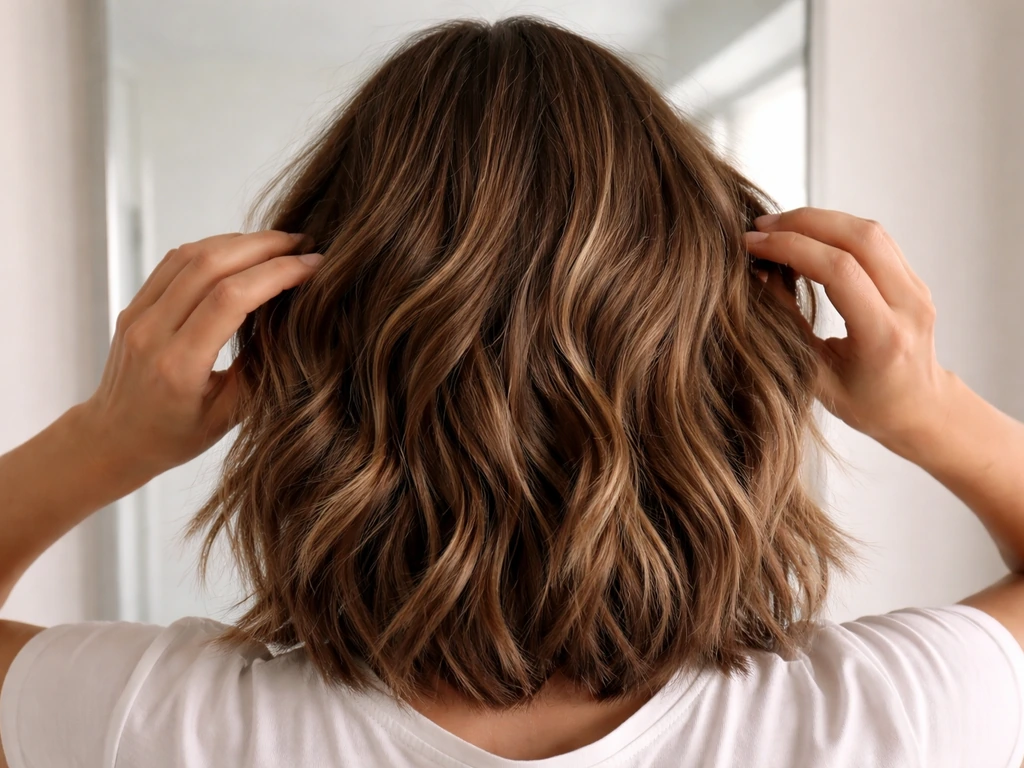
Figure out where you're starting and where you're going
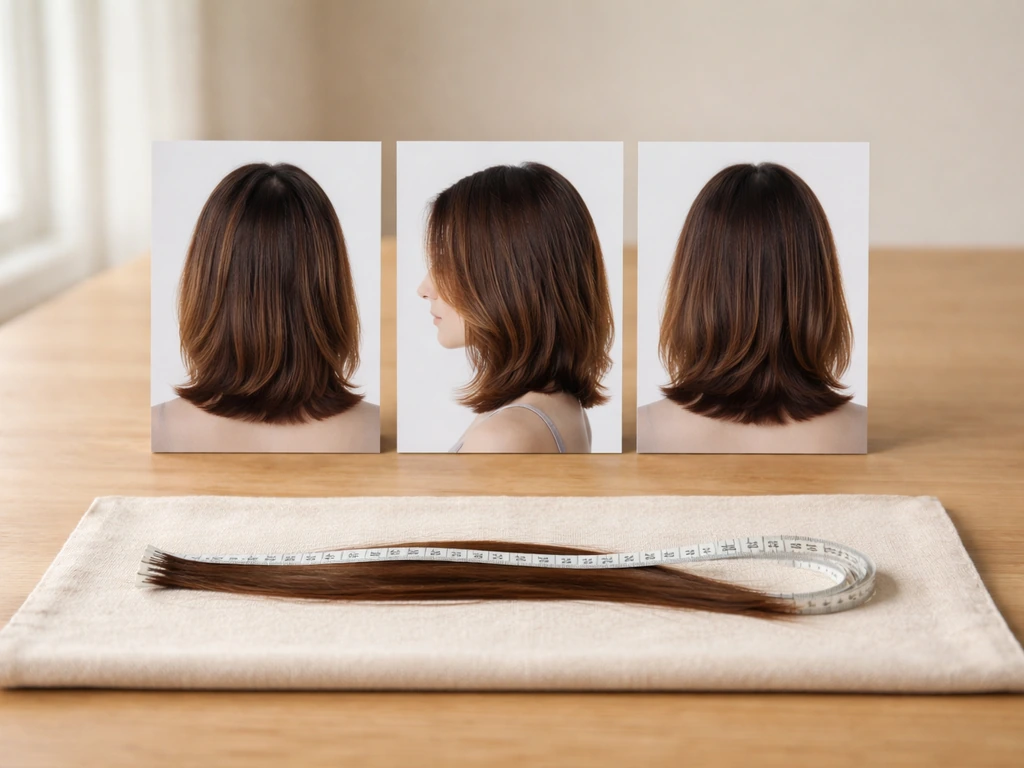
Before you do anything else, take a photo in natural light from the front, side, and back. Measure the length of your shortest layer from your scalp to the tip. Write it down. This matters because "lob" covers a range of cuts: some lobs sit just below the jaw, others hit the collarbone. That 2 to 3 inch difference changes your timeline significantly.
Then get specific about your goal. "Longer" isn't a plan. Pick a landmark: shoulder-length, collarbone, mid-back, waist. Once you have a starting measurement and a target, you can do the math. Divide the inches between where you are and where you want to be by 0.5 (the average monthly growth rate) and you have a realistic month count. Most people are surprised that the number is smaller than they expected when they actually measure it out.
It's also worth noting whether your lob has any structural features that complicate the grow-out: blunt ends, heavy layers, side-swept or full bangs, a stacked or angled back, an undercut neckline, or a color line. Each of those needs its own mini-strategy, which is covered below. If you're coming from a stacked or angled bob that was cut into a lob, the back and sides will likely be at different stages, so tracking multiple points is useful. If you started with a stacked bob, focus on tracking the shorter layers in the back so they blend smoothly as the rest of the bob length catches up grow out a stacked bob.
What to expect month by month
Hair grows at roughly 0.5 inches per month on average, and that rate is consistent enough to plan around, even if your personal rate varies slightly. On average, hair grows about 0.5 to 1.7 centimeters per month according to general health summaries 0.5 inches per month. Here's what actually changes at each stage so you know what you're walking into.
| Month | Approximate new growth | What you'll notice | Main challenge |
|---|---|---|---|
| Month 1–2 | 0.5–1 inch | Ends may look a little ragged; the shape starts losing its crispness | Blunt ends fraying, loss of lob shape |
| Month 3–4 | 1.5–2 inches | Hair is approaching or hitting the shoulder; layers become more obvious | Layers flipping or poking out, shoulder-length awkwardness |
| Month 5–6 | 2.5–3 inches | Collar-length to a few inches below shoulder; hair may feel limp or poofy | Volume imbalance, front vs. back unevenness |
| Month 7–9 | 3.5–4.5 inches | Approaching mid-shoulder or longer; layers start to blend | Growing out bangs, managing bulk |
| Month 10–12 | 5–6 inches | Approaching goal length for most people starting at a mid-lob | Patience, heat damage from daily styling |
The months 3 to 5 tend to be the hardest. The hair is long enough to feel in your way but not long enough to pull back cleanly. This is the phase where most people give up and go back to the salon for a trim that sets them back. Planning for it now means you won't be blindsided when it arrives.
Build a hair care routine that actually supports growth
Hair can only grow as long as it doesn't break off at the ends. The grow-out is less about making hair grow faster and more about keeping what you've grown. Breakage is the enemy, and most of it comes from heat damage, rough handling, and neglected ends.
Washing and conditioning
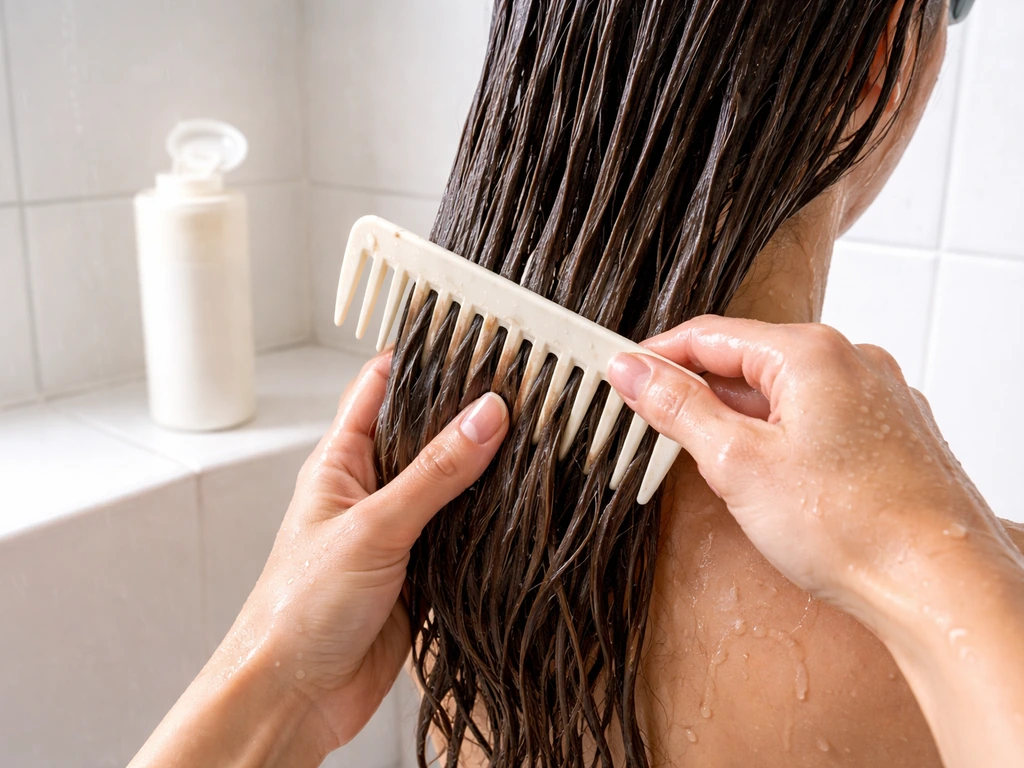
Wash as often as your scalp needs it, not on a rigid schedule. Over-washing strips natural oils that protect the length; under-washing leads to buildup that can clog follicles and make hair more fragile. Most people with a lob find every 2 to 3 days works well. Use a sulfate-free shampoo on the scalp only and let it rinse through the length without scrubbing the ends. Conditioner goes on the mid-lengths and ends every single wash, and a deep conditioning mask once a week is genuinely worth the extra 10 minutes. If your hair is dry, coily, or color-treated, push that to twice a week.
Detangling without breaking
Always detangle on wet, conditioned hair, starting from the ends and working up toward the roots. A wide-tooth comb or a wet brush does far less damage than a regular brush on wet hair. Don't rake from the root down. It takes an extra 90 seconds to do it right and it makes a real difference in how much hair you lose during styling.
Heat protection and reducing heat use

If you flat iron or curl your hair regularly, a heat protectant is non-negotiable during a grow-out. Apply it to damp hair before drying and again before direct heat tools. More importantly: try to drop your styling tool temperature. Most hair styles beautifully at 300 to 350°F. Pushing past 400°F for anything other than extremely coarse hair is unnecessary and compounds damage over months. On non-event days, embrace air-drying with a small amount of leave-in conditioner. The break from heat adds up.
Nutrition and scalp health
Hair growth starts at the scalp, so keeping it healthy matters. Make sure you're eating enough protein (hair is mostly keratin), staying hydrated, and not running a significant nutrient deficit. If you've noticed increased shedding alongside slow growth, it's worth checking iron, ferritin, vitamin D, and B12 levels with your doctor. Biotin is widely marketed but only meaningfully helps if you have a genuine deficiency. Scalp massages (2 to 4 minutes, a few times a week) increase circulation and are easy to work into your wash routine.
How to style through the awkward stages
The awkward phase of a lob grow-out has a few distinct problems: the front doesn't match the back, layers flip in different directions, and the hair is too short for a ponytail but too long to just leave alone. Here's how to handle each zone.
Front: keep it intentional

As the front pieces grow past your chin, they tend to either fall flat or curl outward awkwardly. A light mousse or curl cream on damp hair helps control this depending on your texture. If you have a center part, consider switching to a side part temporarily: it gives the hair more visual weight and disguises uneven lengths better. Bobby pins, small claw clips, and half-up styles are genuinely useful here, not just pretty. They move the front pieces out of the "in between" zone visually.
Back: the trickiest spot
The back of a lob often reaches the shoulder before the front does, which creates an odd A-line effect if you're not watching for it. Once the back starts grazing the collar, it may flip outward (the classic "bracket" flip) or tuck under unevenly. A round brush blow-dry directing the ends under helps during this phase. Alternatively, a soft wave set with a 1-inch barrel iron takes the attention away from raw ends and makes the length look more intentional. At this stage, the back becomes the best candidate for trimming (a small dusting, not a reshape) so the front can catch up.
Sides: managing the ear-length awkward zone
If your lob had shorter layers around the face or a slight angle, the sides will pass through the ear-length zone where they stick out or curl unpredictably. If your angled bob is the one you are growing out, focus on managing the side panels as they pass the ear-length stage so the shape stays intentional. This is where a lightweight serum or anti-frizz cream applied to the sides while hair is still damp makes a big difference.
Tucking the sides behind the ears also works surprisingly well as a styling move during this phase and is not a cop-out. It's a deliberate look. Headbands, thin scarves tied at the top, and small clips at the temple are your toolkit here.
Ponytail threshold: when you can finally pull it back
Most people can get a low ponytail together around month 4 to 6, though it'll be short and some pieces will fall out. A low bun works a little earlier, especially with bobby pins to tuck in the escaping bits. Don't underestimate these styles: having one reliable way to pull your hair up on a bad day makes the grow-out dramatically less frustrating.
Trim smart: grow without giving up inches
The biggest fear people have during a grow-out is trimming. The concern is real: an overzealous trim can erase months of progress. But skipping trims entirely leads to split ends that travel up the hair shaft and cause even more breakage over time. The goal is a trimming strategy that maintains the shape enough to keep things looking intentional without resetting your length.
The rule that works: trim every 10 to 12 weeks, and ask your stylist to take no more than a quarter inch (half an inch at absolute most). Be specific. Say "I want to dust the ends only, please don't reshape the layers or remove significant length." If your stylist tends to take more than you asked, start saying half of what you actually want removed and you'll usually land closer to your goal.
Between trims, you can spot-treat obvious split ends yourself with small hair scissors (not regular scissors). Snip just the split section, not the whole strand. Doing this every few weeks keeps fraying under control between appointments. A bond-building treatment like a protein mask or a product containing ingredients like hydrolyzed keratin can also slow down how quickly ends split in the first place.
Special cases: bangs, layers, undercuts, and uneven growth
Growing out bangs with a lob
If your lob included full or side-swept bangs, those are now on their own grow-out timeline that's separate from the rest of the length. Full fringe takes about 9 to 12 months to blend into the rest of the hair. During that time, the most useful moves are: sweeping them to one side with a small amount of product, using a center part to split them in half as they get longer, or pinning them back with a small clip or barrette. Avoid the temptation to trim them back to a full fringe just because they're awkward at brow level. That restarts the clock completely. Side-swept bangs are easier: as they grow, they transition naturally into front layers.
Dealing with layers
Heavily layered lobs have the most dramatic grow-out, because different sections are at completely different lengths. The good news is that as everything grows, the layers start to blend naturally. The bad news is that the shortest layers can look choppy and stick out while the longest sections are growing. A texturizing spray or light pomade can break up the too-clean line between layers and make the choppiness look deliberate. After about 6 months, the gap between layers usually closes enough that the effect becomes minimal. Growing out a layered lob is a similar journey to growing out a layered bob: patience and good styling products carry you through.
Undercut or neckline growth
If your lob included an undercut or a very high, clean neckline, you have a separate growth zone to manage at the back. Undercut regrowth can create a visible line of shorter, stubbly hair under longer lengths. Options: keep it neatly cleaned up every 4 to 6 weeks while the rest of the hair grows (this maintains the look but extends the grow-out slightly), or let it grow in and use the longer top sections to cover it until the undercut hair is long enough to blend. The second approach is more common for full grow-outs and works fine as long as the top sections are at least a few inches longer.
Uneven growth and cowlicks
Most people's hair doesn't grow perfectly evenly. One side grows faster, or a cowlick at the crown creates a section that sticks up or refuses to blend. For uneven sides: measure both every month and flag the discrepancy to your stylist at your next trim. A tiny trim on the faster-growing side keeps things balanced. For cowlicks: work with them rather than against them. Blow dry in the direction the cowlick wants to go, using a round brush to guide the hair. Fighting a cowlick with product and heat every day is more exhausting than adjusting your part slightly to accommodate it.
Color and texture during the grow-out
Managing a color line
If your lob was colored (highlights, balayage, a single-process all-over, or vivid color), growing it out adds a visual layer to manage. The easiest approach for most people is asking their colorist to use a shadow root or smudge technique: blending the natural root color into the colored length so the grow-out line is soft and intentional rather than harsh. This works especially well for balayage and highlights. For vivid or fashion colors, the regrowth is more obvious and the best plan is usually to gradually tone the color toward something closer to your natural shade over several sessions rather than stopping color suddenly.
Color-treated hair during a grow-out also needs extra moisture. Colored hair is more porous, which means it dries out and breaks faster. Deep condition every week minimum, use a color-safe shampoo to slow fading, and add a leave-in conditioner before heat styling. This keeps both the color looking better and the ends stronger.
Adapting to your hair texture
Straight hair shows every awkward length and uneven piece clearly, so styling products that add body (volumizing mousse, texturizing spray) are your friends during the grow-out. Wavy hair tends to be more forgiving because the wave pattern disguises length discrepancies, but it also puffs outward before it has enough weight to wave properly, usually around months 3 to 5. A curl-defining cream or lightweight gel applied to soaking wet hair and air dried helps control this.
Curly and coily hair shrinks significantly, so the actual length is always more than it looks: a lob on curly hair may already be several inches longer than it appears. Protective styles (braids, twists, updos) are especially valuable for curly and coily textures during the grow-out because they reduce daily manipulation and breakage significantly. Focus on moisture, sealing with an oil, and low-tension styling.
Your monthly action plan
Here's a concrete routine you can start today and repeat each month. Keep it simple and consistent: that's what actually produces results over a 6 to 12 month grow-out.
- Take a photo and measure your length on day 1 of each month, from scalp to tip at the shortest layer and the longest layer. Write both numbers down.
- Wash with a sulfate-free shampoo 2 to 3 times per week, conditioning every time and doing a deep mask once a week.
- Apply heat protectant every time before any hot tool use. Try to have at least 2 to 3 heat-free days per week.
- Detangle only on wet, conditioned hair using a wide-tooth comb from ends to roots.
- Every 2 to 3 weeks, inspect your ends in natural light. Snip any obvious splits with hair scissors without taking length.
- Every 10 to 12 weeks, book a trim appointment and ask specifically for a quarter-inch dusting, no reshaping.
- At month 3, reassess your trimming schedule based on how fast your hair is actually growing (compare your measurements). Adjust timing if needed.
- At month 6, compare your current length photo to day 1. Most people find they've gained 2.5 to 3 inches and are meaningfully closer to their goal than they expected.
The one thing that derails most grow-outs is a bad week in month 4 where everything feels shapeless and you book a full cut out of frustration. Knowing that month 4 is almost always the low point helps you ride it out. Take the photo on day 1, hold onto it, and look at it on the days when the grow-out feels like it's going nowhere. The progress is usually more visible than it feels from the inside.
Growing out a lob is one of the more manageable grow-out journeys compared to starting from a pixie or buzz cut, where the in-between phases are longer and harder to style. If you want a fast bob grow-out, focus on reducing breakage and planning strategic trims so the length you gain actually stays.
If you're also wondering how to grow out a bob, the same principles apply, but you may need a bit more patience with the in-between styling grow out a lob. The lob already gives you enough length to work with. Your job from here is mostly about protecting the progress you make each month and not accidentally cutting it away.
Stay consistent with the routine, keep the trims minimal, and pick two or three go-to styles for the hard months. That's genuinely all it takes.
FAQ
Can I trim split ends at home during a lob grow-out without ruining my shape?
Yes, but aim for a “dusting” only. If you do it yourself, section the hair and trim just the visibly split ends (usually 1 to 3 millimeters), then reassess after the next wash because dry ends can look shorter than they are. Avoid trimming the shortest layer, since that is what slows your silhouette match when the rest catches up.
What should I ask my stylist for if the front and back lengths look badly mismatched at month 4 or 5?
If your lob is already past the chin and you are frustrated, you can still manage without resetting length by choosing a targeted fix. Ask for a dry consultation (or bring photos) and request “end blend” only, meaning removing bulk from the ends so the front and back hang closer, without cutting the overall perimeter.
If my lob feels dry during the grow-out, should I switch to only masks or change my routine differently?
A deep conditioner helps, but it does not replace regular conditioning and detangling. For most people, keep standard conditioner every wash, and add a mask on a weekly cadence. If your ends feel rough but your scalp is fine, focus the mask lower on the hair, keep it off the scalp, and extend the time to 10 to 20 minutes.
How often is too often to trim a lob while growing it out?
No, and overly frequent trims are a common mistake. If you trim more often than every 10 to 12 weeks, you can remove up to the same total length you would have lost to split ends, but without the benefit of longer hair growth. If you have to intervene sooner because of heavy breakage, do it as a tiny dusting and then resume the normal schedule.
What is the best way to track progress if my hair grows unevenly on each side?
Watch for uneven growth patterns at the shortest layers, but measure in the same conditions each month. Use the same photo spot and lighting if possible, and measure from scalp to tip on the shortest visible layer, not the longest strand. Tracking one “shortest layer” number is more useful than comparing your hair at rest.
Can I wear ponytails or buns while growing out a lob, and will it cause breakage?
Yes, but only if the styling is low-tension. A claw clip, low bun with a soft scrunchie, or a loose braid that does not pull at the root can reduce tangles and breakage. Avoid tight elastic bands and high ponytails, especially during months 3 to 6 when the front pieces are shorter and more prone to snapping.
How do I handle visible regrowth lines if my lob is highlighted or balayaged?
Color lines usually grow out faster visually than the hair grows, so treating regrowth intentionally matters. If you get highlights or balayage, ask about a shadow root or glaze rather than a full recolor, and request a tone that matches your natural level so the line softens as the length builds.
How do I know whether my hair needs protein or moisture during a lob grow-out?
A protein mask can be helpful if your ends feel weak or gummy, but too much protein can make hair feel stiff and more prone to snapping. If you are unsure, alternate: one week moisturizing mask, the next week protein-based treatment, and stop protein if hair becomes rough, not just stronger.
If my hair gets greasy, should I wash more during the grow-out or use dry shampoo?
For many people, washing less often can worsen buildup and increase friction during detangling, which leads to more breakage. Instead of changing the wash schedule drastically, adjust technique: apply shampoo only to the scalp, rinse thoroughly, use conditioner generously, and detangle with wet, conditioned hair using a wide-tooth comb.
My lob looks puffy and awkward while growing out, how can I style it without using more heat?
It depends on your texture and thickness, but you can reduce the “puff” without killing volume. Use a leave-in plus curl cream or a light gel, then air-dry, do not overbrush once it starts setting, and refresh with a mist plus a small amount of product instead of adding more heat.
What is the safest way to deal with full bangs while the rest of the lob is growing?
If bangs make you want to “reset,” give yourself a plan instead. Keep bangs pinned or swept to one side most days, then trim only micro amounts to remove obvious wisps (not brow-level shaping). Full fringe typically blends later than the main lob length, so consistency beats repeated mini-recuts.
Is it harder to grow out a stacked or angled bob into a lob, and how should I set trim goals?
Yes, but be practical about expectations. If you already have a stacked or angled cut, you may need to track multiple lengths, and the stylist should focus on blending the shortest back layers first. Bring a photo of the desired end goal (shoulder, collarbone, or mid-back) so trims maintain the overall progression rather than flattening the shape.