
Growing out tapered natural hair means letting the shorter sides and back catch up to the longer top, without repeatedly going back to the barber or stylist to "clean it up" and accidentally resetting your progress. It takes roughly 6 to 12 months to go from a tight taper to a shape that starts feeling even and intentional, and the middle stretch (months 2 through 5) is genuinely awkward. But with the right moisture routine, a few blending styles, and a clear plan for when to trim versus when to leave it alone, you can get through it without losing your mind or your edges.
How to Grow Out Tapered Natural Hair Step by Step

Marcus Vickers
29 May 2026
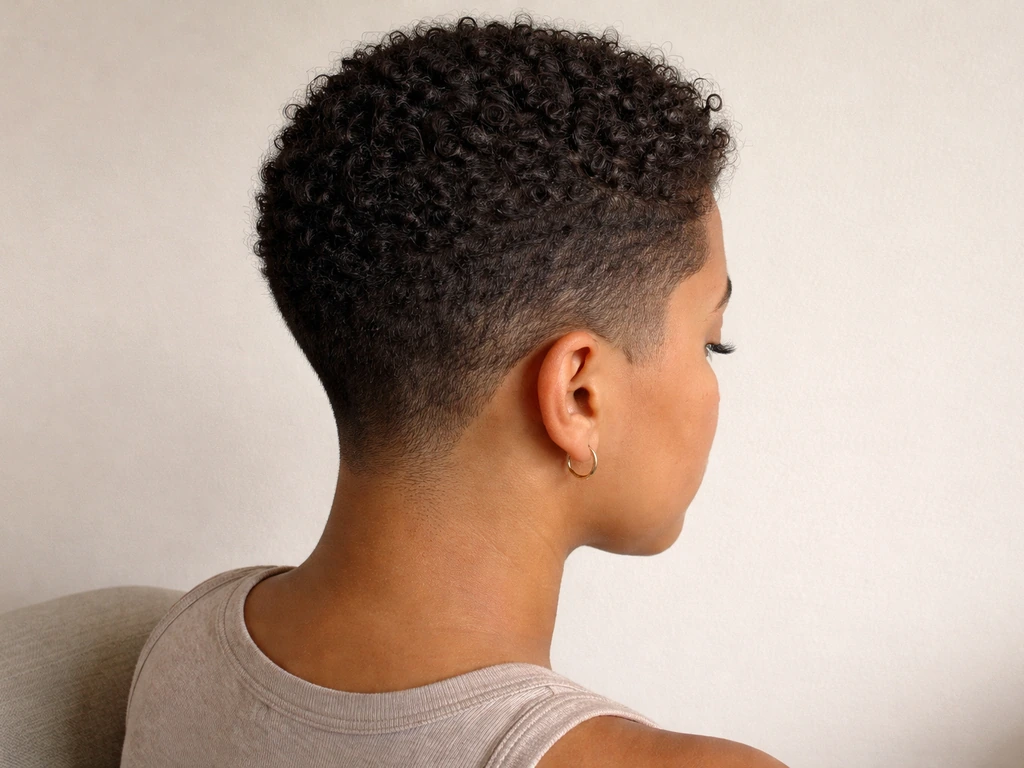
What growing out a tapered natural actually involves
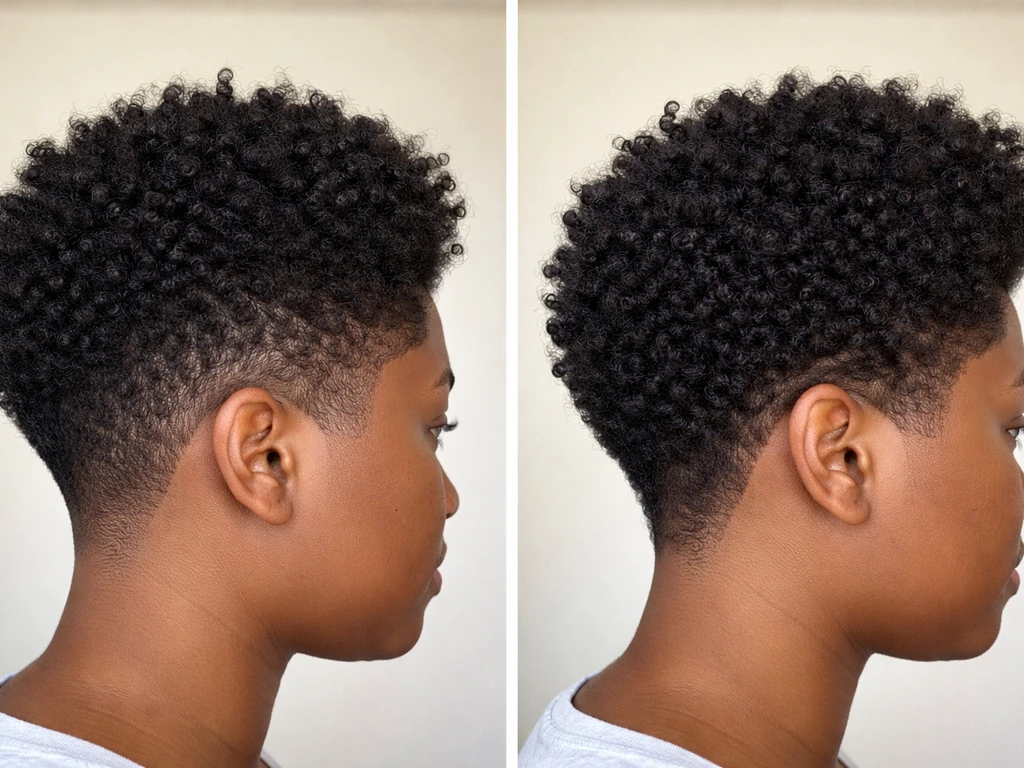
A taper on natural hair usually means the sides and back are cut close (sometimes faded to skin, sometimes just graduated shorter) while the top keeps more length and texture. When you decide to grow it out, you're managing two very different zones of hair at once: the longer top, which may already have a defined curl pattern, and the shorter sides and back, which are still emerging and don't have enough length yet to blend or style in the same way.
The challenge is that natural hair also has shrinkage. Your actual growth might be half an inch per month, but because coils and curls contract when dry, the visible length gain looks much smaller. This makes it really hard to tell if the sides are "catching up" or just sitting there looking puffy and unfinished. That puffing-out phase, where the sides have grown past the fade but don't have enough length to lay down or style, is the heart of the awkward phase.
If you've also got color-treated or previously relaxed hair in the mix, the grow-out is a little more layered. You're dealing with two different textures: the processed or colored sections and the new growth coming in with your natural curl pattern. That line of demarcation (where old meets new) is a weak point that needs extra moisture and gentle handling so it doesn't snap off.
Realistic timeline and what to expect at each phase
Scalp hair grows about half an inch per month on average, which means visible length at the sides takes a few months to become meaningful. Here's an honest breakdown of what to expect:
| Phase | Approx. Timeline | What's Happening | What to Do |
|---|---|---|---|
| Early | Weeks 1–6 | Fade starts softening, hairline grows in, shape still looks intentional | Enjoy it—this is the easiest stretch. Keep your line-up fresh if you want. |
| Awkward | Months 2–5 | Sides puff out, no defined shape, top and sides feel mismatched | Focus on blending styles and moisture. Resist the urge to cut it all off. |
| Turning point | Months 5–7 | Sides have enough length to twist, braid, or coil into the overall shape | Transition to unified protective or textured styles across the whole head. |
| Even-out | Months 8–12 | Length is closer to even, shrinkage looks consistent, shape is yours to define | Optional light dusting trim to remove splits; decide on your target style. |
The awkward phase is real, and it's worth acknowledging rather than pretending it won't happen. The sides don't just quietly grow in, they balloon, they have opinions, and they often refuse to cooperate with whatever the top is doing. This is normal. The goal during this phase isn't to look perfect; it's to keep the hair healthy so you don't lose the length you're working hard to gain.
The moisture and detangling routine that actually protects your length
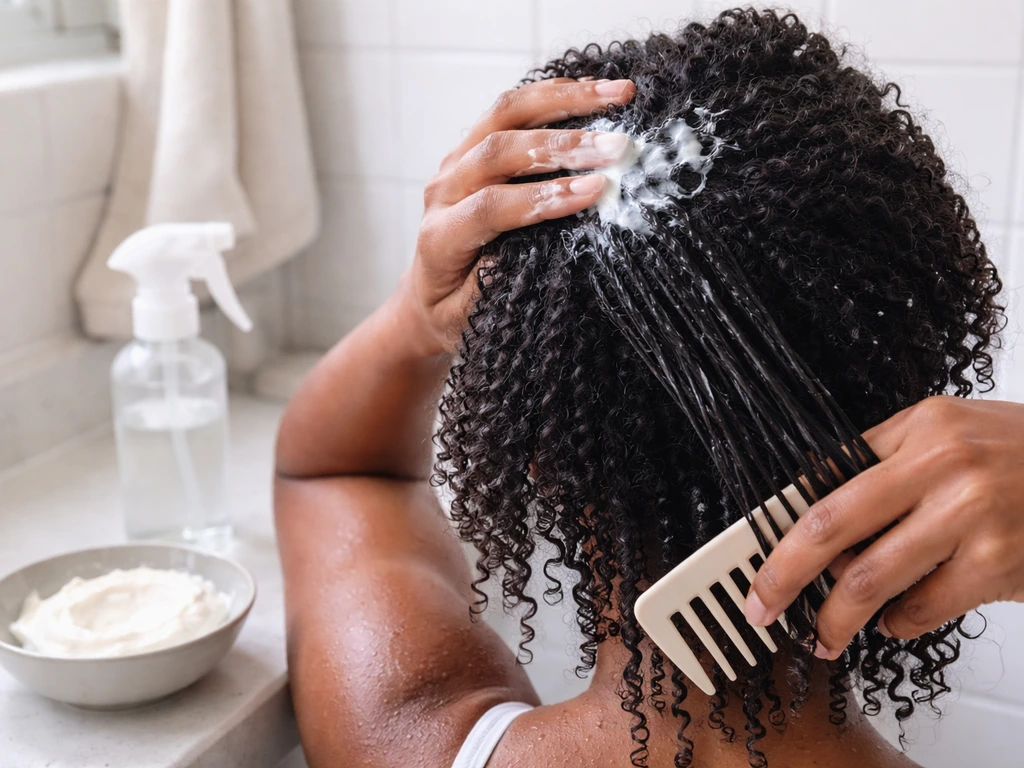
Natural hair, especially coily and kinky textures, tends toward dryness, and dryness leads directly to breakage. Breakage during a grow-out is the main thing that kills progress, so your wash routine is genuinely the foundation of this whole process. For more NHS detangling and traction guidance, use the NHS document index to locate the relevant resources and leaflets. This isn't about buying the most expensive products; it's about being consistent and intentional with what you do every wash day.
Wash day basics
- Detangle before you shampoo, not after. Dry or damp hair with a slippery conditioner applied first is much easier to work through than soaking wet freshly-washed hair, which is more fragile and prone to snapping.
- Use conditioner every single wash. Not as an occasional treat—every time. Apply it along the length of the hair (not directly on the scalp if you're prone to buildup) and let it sit for a few minutes before detangling.
- Detangle from the ends up to the roots. Grab a section, start at the tip, work out the knots at the bottom first, then move your fingers or a wide-tooth comb gradually upward. Never drag from root to tip in one stroke.
- Use your fingers first, then a wide-tooth comb. Fingers are gentler and let you feel a tangle before you force through it. A wide-tooth comb or detangling brush comes after, once the worst of it is out.
- Handle wet hair as little as possible after washing. Wet hair is at its weakest point. Stretch it, style it, or gently apply product, then let it be.
For leave-in products, look for anything with good slip that encourages your curl pattern rather than fighting it. Leave-in conditioners formulated for curly or coily hair (like Ouidad Moisture Lock or similar products) add hydration and make subsequent styling easier. The LCO or LOC method (liquid, cream, oil or liquid, oil, cream) works well for keeping moisture sealed in between wash days, especially on the drier sides and back where the hair is shorter and more exposed.
If you have color-treated or bleached sections, conditioner matters even more. Chemical processing increases how easily hair breaks during combing, and conditioner measurably reduces that breakage risk. Treat those sections like they're fragile, because structurally, they are.
How to style the taper while it grows, blending strategies that actually work
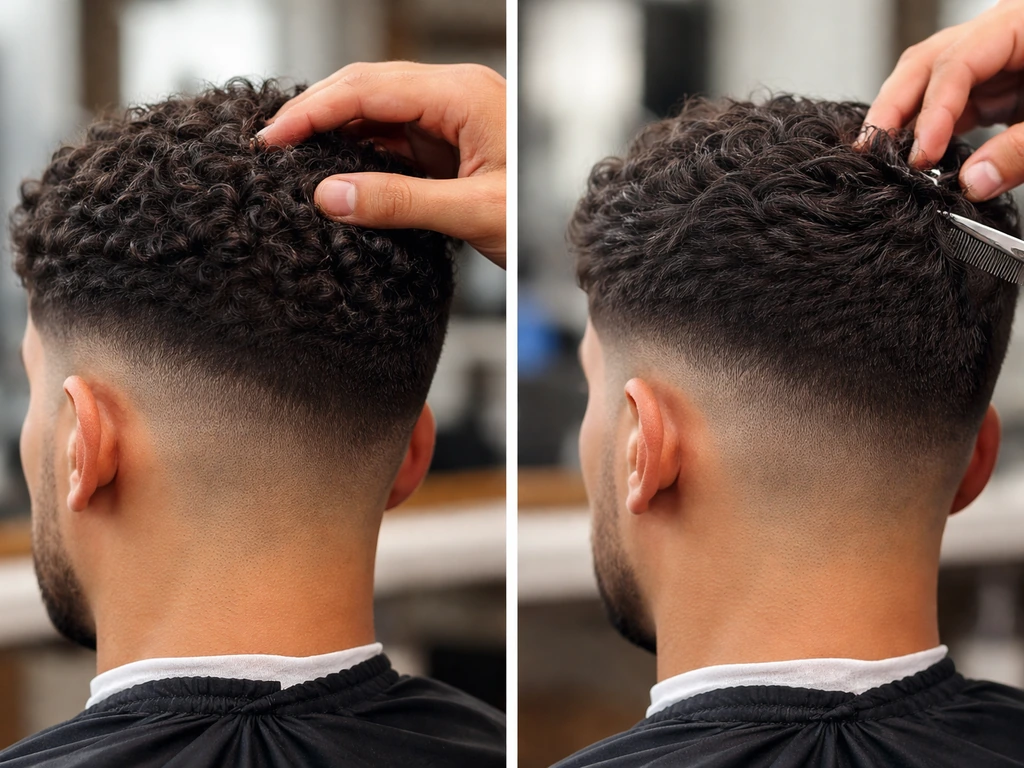
The whole art of the tapered grow-out is making the hair look like it's one intentional style rather than two zones of hair at war with each other. Here are the strategies that work at different stages:
Early stage: keep the line-up, soften the fade
In the first six weeks or so, you can still visit your barber or stylist for a line-up refresh along the hairline without losing grow-out progress. Ask them specifically to maintain the shape of the line without taking any length off the sides or back. A clean edge makes the rest of the hair look more intentional even as the fade starts to soften. Once the fade has fully grown in and the sides have a consistent length, stop the line-up visits too, you'll want that hairline length as part of the unified grow-out.
Awkward phase: use texture and definition to your advantage
When the sides are between about half an inch and two inches, a wash-and-go with defined coils or curls is your best friend. A well-defined texture across the whole head reads as intentional and unified even when the lengths are different. Apply your curl-defining cream or gel to both the top and the sides while hair is soaking wet, scrunch upward, and diffuse or air dry without touching. The shrinkage actually helps here, it brings the longer top closer in visual length to the shorter sides.
Finger coils on the sides and back (where the hair is shorter) can be a great option during this phase. They give definition to hair that isn't long enough for most styles, and they blend naturally with a twist-out or coil-out on the top. This is time-consuming but worth it if you want to feel put-together during the most frustrating part of the grow-out.
Stretching without heat to reduce shrinkage and show length
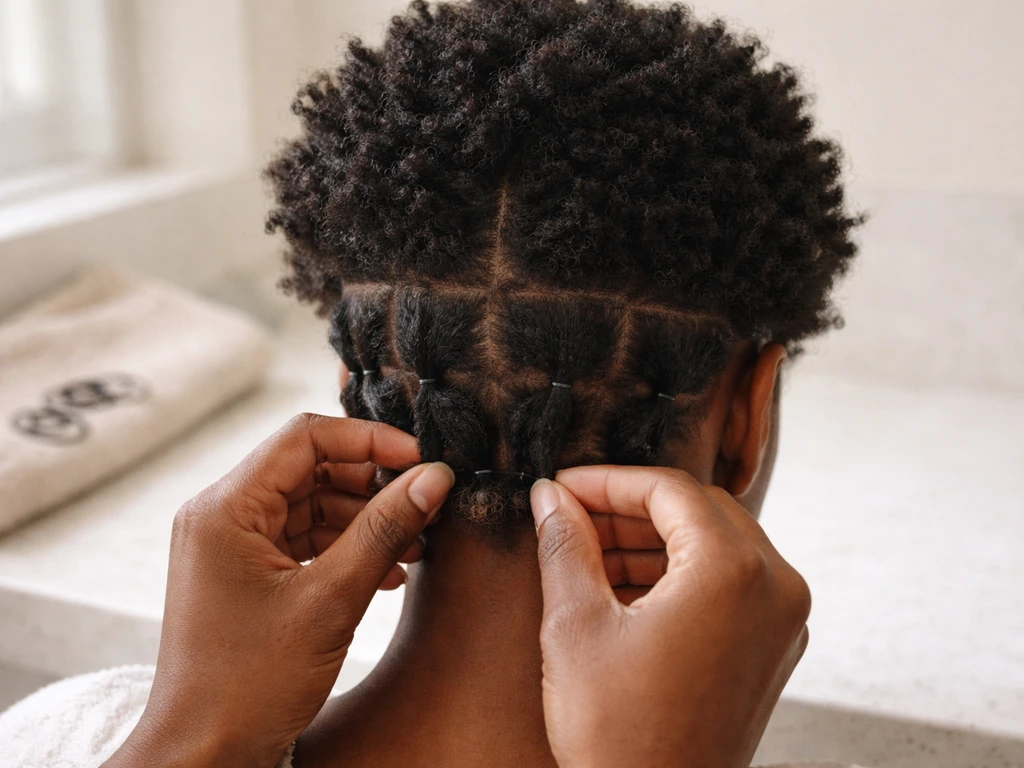
Shrinkage makes the grow-out look like it's not progressing, even when it is. Stretching your hair without heat is a reliable way to show the actual length you have and to blend the different zones more effectively. Banding is one of the best methods: divide hair into sections, wrap a soft hair tie or band at the root, then space additional bands down the length every inch or so, and sleep or air dry like that. When you remove the bands, the hair is elongated without any heat damage. On shorter sections, just one or two bands is enough to get some stretch.
African threading works on similar principles and can give even more dramatic elongation. Roller sets (using flexi rods or perm rods) are another heat-free option that stretches while also defining the curl. All of these methods are especially useful in months three through six when you want to show progress and blend the taper into the top.
Protective and low-manipulation styles for the uneven stage
Protective styles reduce how often you're touching, manipulating, and stressing the hair, which directly lowers your breakage rate. During a grow-out, less daily manipulation means more length retention. The key is choosing protective styles that work with your current length and don't create new problems while solving old ones.
- Two-strand twists: work on the top as soon as you have enough length, and on the sides once they're about an inch or more. Twist-outs also make a great everyday style that blends zones visually.
- Mini twists or flat twists: good for keeping ends tucked and reducing daily manipulation during the awkward phase. They can be worn for one to three weeks at a time.
- Braids (individual or cornrow): work well once the sides and back have enough length to grip. Keep braids around the hairline loose, not tight—tight styles at the hairline over time can cause traction alopecia, which is real hair loss and a genuine setback during a grow-out.
- Low bun or puff: once the top has enough length and the sides are starting to catch up, a loose puff or bun keeps everything contained without tension. Use a satin-wrapped scrunchie rather than a tight elastic.
- Satin bonnet or scarf at night: not a style, but this is non-negotiable. Cotton pillowcases pull moisture out of natural hair and create friction that causes breakage while you sleep.
One important note on protective styles: any style that causes scalp pain, itching, or bumps along the hairline is a sign it's too tight. Remove it. blank" rel="noopener noreferrer">Persistent traction on the hairline is one of the most common causes of traction alopecia, and edges that thin during a grow-out can take much longer to recover than the rest of the hair. This is especially relevant if you're also working on growing out your hairline or dealing with previously thinned edges. If you are specifically working on how to grow out a tapered hairline, stick to gentle line-up guidance and avoid trims that take length off the sides too early.
The general recommendation is to avoid wearing the same tight braided or pulled style for longer than about two to three months continuously. Rotate your styles, give your scalp breaks between installs, and choose knotless or low-tension installation methods whenever possible.
When to trim, when to leave it alone, and what to tell your stylist
This is where a lot of grow-outs get derailed. You go in for a "little trim" and come out two months behind. The truth is, during a tapered grow-out, you want to trim as infrequently as possible, and only for specific, good reasons.
Valid reasons to trim during a grow-out
- You have visible split ends that are traveling up the shaft. Splits don't heal—they only get worse. A small "dusting" trim (taking off as little as a quarter inch) stops the damage from spreading.
- A section is noticeably more damaged than the rest—for example, a color-treated or heat-damaged area that keeps snapping. Removing the weakest part protects the healthy growth above it.
- The shape is so uneven it's causing styling problems and frustration that might make you want to cut it all off. A minor shape-up that doesn't take off length, just evens out the perimeter, can keep you motivated.
What to actually say to your barber or stylist
Be specific and firm before they pick up anything sharp. Say: "I'm growing out my taper and I do not want any length taken off the sides or back. I want a line-up only" or "I need a small dusting on the ends only, no more than a quarter inch, and nothing touched on the sides.
If your widow's peak is growing out unevenly, focus on softening the hairline with moisturizing finger-coil styling instead of trimming to “match” too early. " If you're visiting a new person, show a reference photo of what you're growing toward, not what your hair looks like now. Stylists and barbers are trained to neaten, which often means cutting, make clear that your goal is length, not neatness, and that you're willing to tolerate some unevenness to get there.
If you're maintaining yourself at home, invest in a good pair of hair shears (not regular scissors), and only use them for dusting ends. Never cut the sides or back to "balance" them with the top, the sides need every millimeter they can get.
Common problems and how to fix them
Edges thinning or not filling in
If your edges are slow to grow or look sparse, the most likely cause is traction from previous tight styles. Stop any pulling at the hairline immediately, no tight cornrows, no slicked edges pulled back hard, no tight headbands. Give the hairline area the most gentle treatment of any part of your head. If thinning is significant, a dermatologist can assess whether there's underlying traction alopecia and recommend treatment options. Edges are also closely connected to growing out your hairline more broadly, which is its own process with its own timeline.
Shrinkage making everything look shorter than it is
This is frustrating but normal. Coily and kinky textures can shrink to 50 to 75 percent of their actual length. The fix isn't to fight your curl pattern, it's to stretch strategically when you want to see or show your length, and to accept that your hair looks shorter than it is when fully shrunk. Track your length by stretching one section gently and measuring, not by how it looks when dry and natural. Progress is happening even when it doesn't look like it.
Unevenness between sides, back, and top
The top will always be ahead. That's just the nature of a grow-out from a taper. The goal is to let the sides and back catch up, which means resisting every temptation to trim the top to "match." Instead, use styles that visually compress the top (defined wash-and-gos, flat twists, banding) and styles that visually elongate the sides (finger coils, two-strand twists). If you want a cleaner look, you can use the same grow-out logic as how to grow v-taper to gradually blend the sides into a sharper overall shape. Over time, the gap narrows.
Breakage at the line of demarcation (color or relaxer)
If you have a line where processed hair meets new growth, that junction is structurally weak. It needs more conditioner, more careful detangling, and less heat or tension than the rest of your hair. Consider doing protein treatments every four to six weeks in this zone to reinforce the hair shaft. If the breakage is severe, a targeted trim to remove the most damaged portion might actually help more than struggling to retain length that keeps snapping anyway.
Flyaways, cowlicks, and the sides that won't behave
Short natural hair growing out often has sections that grow at odd angles, especially at the nape or temples. Eco-style gel, flaxseed gel, or a similar strong-hold product applied while the hair is wet can coax those sections into a direction while they dry. A satin scarf tied loosely around the perimeter for 15 to 20 minutes while styling sets can help train those sections temporarily. As the length grows, gravity and weight do more of the work for you.
Your next steps, right now
Start this week by locking in your wash routine: conditioner every wash, fingers-first detangling from ends to roots, leave-in applied to damp hair before any styling. That alone removes the most common source of grow-out setbacks. Then pick one blending style to practice, a wash-and-go with defined coils is the most accessible starting point for most natural textures during the early awkward phase. If your goal is how to grow out TWA, start with a simple routine and one blending style so you can stay consistent during the awkward months.
Set a loose monthly check-in with yourself: measure a stretched section, note whether your edges feel comfortable (no soreness or tightness), and assess whether your current style is creating tension anywhere. Adjust as needed. This grow-out doesn't have to be perfect every day, it just has to be consistent, low-damage, and patient. The hair will get there.
FAQ
What if my barber keeps trimming the top to “blend” instead of letting the sides catch up?
If your stylist trims the top to “match” while you are trying to grow out the taper, you can lose months of side catch-up time because the visual length gap stays small even as the sides still need more growth. The fix is to stop any top trims until the sides are within about 1 to 1.5 inches of the top length. Focus only on end dusting (on the ends only) or line-up maintenance at the hairline.
Can I wear protective styles while growing out a taper, or will they damage the new growth?
Yes, you can use a protective style, but the key is avoiding tension at the perimeter where the taper is shortest. If you notice edge soreness, bumps, or itching along the hairline, the style is too tight even if it looks neat. Reinstall looser, switch to low-tension methods, and keep the style time to the rotation window you can tolerate comfortably, not a fixed number of weeks.
How do I know the taper is actually growing out when shrinkage makes everything look the same length?
Track progress on stretched hair, not fully shrunk hair. A simple method is to stretch one representative section (banding, roller sets, or a gentle stretch) and measure with a ruler from root to end once every 2 to 4 weeks. If you measure only when your hair is dry and shrunken, you can misread actual growth as stagnation.
How often should I do protein treatments at the line where old growth meets color-treated hair?
Protein can help, but timing matters. In the weak junction where processed or colored hair meets new growth, do protein every 4 to 6 weeks only if your hair feels strong but not hard or rough afterward. If your hair starts to feel stiff, tangled, or more prone to breakage, switch to moisture-focused wash days for a couple of cycles and delay the next protein until the texture softens.
What should I request when I need a trim during a tapered grow-out?
A “dusting” still counts as cutting length, so ask for an exact, minimal amount (for example, no more than a quarter inch) and only on the ends. Also ask them to avoid touching the sides and back at all, because those areas are what you are trying to preserve for catch-up. If they can’t confirm that, reschedule or do not proceed.
My sides are snapping during detangling, what am I doing wrong?
If you detangle and your sides keep knotting or snapping, it usually means the hair is too dry or you are losing slip during the wash. Use conditioner on soaking wet hair, detangle from ends to roots with your fingers first, and only add gel or styling products after the conditioner rinse-out so you preserve moisture. If you must add a detangler, apply it to damp sections rather than detangling dry.
My sides are growing unevenly. Should I trim to fix the shape?
If your taper grow-out is uneven, the quickest improvement is not trimming, it is consistent visual blending. Use one method across your whole head, such as a defined wash-and-go on wet hair (top and sides together), or finger coils on the shorter perimeter. Keep the same styling sequence each time so you can see real length changes instead of changing methods every wash day.
What should I do if I suspect traction or my edges are getting thinner during the grow-out?
If your edges look like they are thinning, the first move is to remove any pulling at the hairline immediately, switch to lower-tension styles, and stop slicking back tight. Give the hairline more gentle handling during detangling and styling, and avoid styles that press or rotate traction around the perimeter. If thinning continues or scalp symptoms show up, a dermatologist can assess for traction alopecia and advise on treatment.
What are good blending styles when the sides are still very short?
If your sides are too short for most styles, use options that don’t require length, such as finger coils, mini flat twists, or a curl-defining wash-and-go where the product is applied while hair is soaking wet. For temporary training, use banding or loosely fitted scarf sets for 15 to 20 minutes while styling sets, then let the hair dry without further handling.
How can I make the taper look intentional without trimming the sides or top?
If you want a cleaner look, choose styling that compresses the top and elongates the sides without cutting. Defined wash-and-go, flat twists, or banding can visually pull the top together, while finger coils or two-strand twists on the perimeter elongate the shorter zones. Keep the top slightly more controlled and let the sides take longer to catch up, that prevents accidental “matching” through trimming.