
Growing out a TWA takes roughly 12 to 18 months to reach a short bob or shoulder-grazing length, depending on your natural growth rate (about half an inch per month on average) and how well you retain that length. The real challenge isn't getting hair to grow, it's keeping the inches you already have by cutting down on breakage, staying consistent with moisture, and surviving the awkward in-between stages without giving up and grabbing the clippers again.
How to Grow Out TWA Hair: Step-by-Step Timeline

Marcus Vickers
20 May 2026
What a TWA is and where you are in the journey
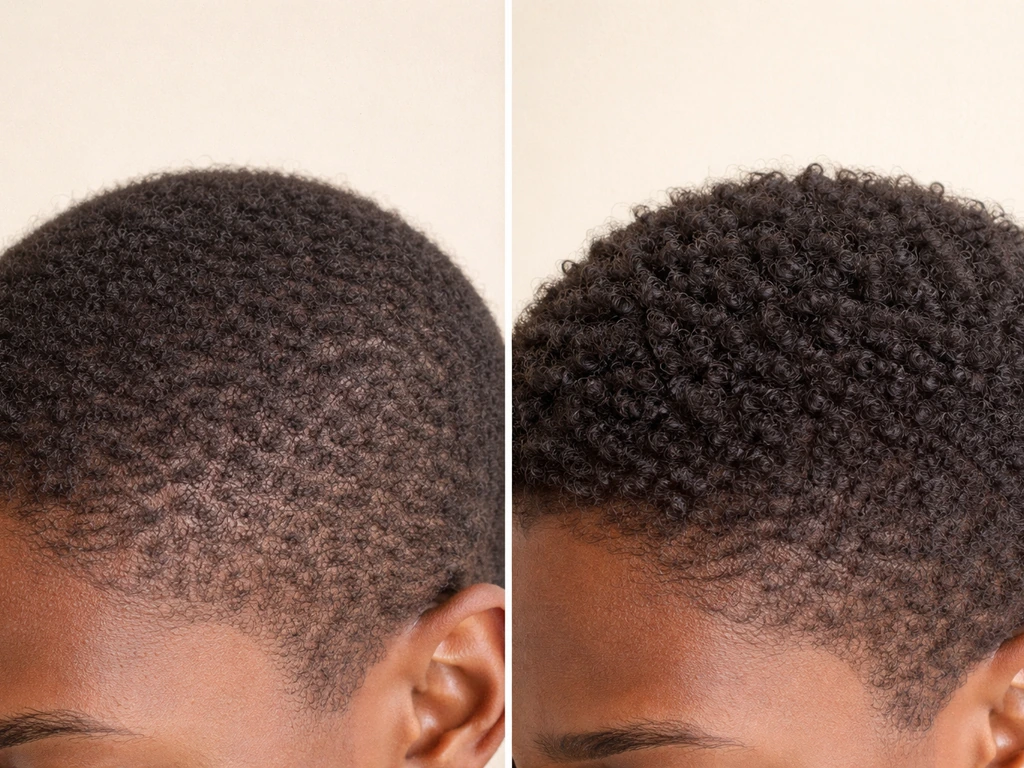
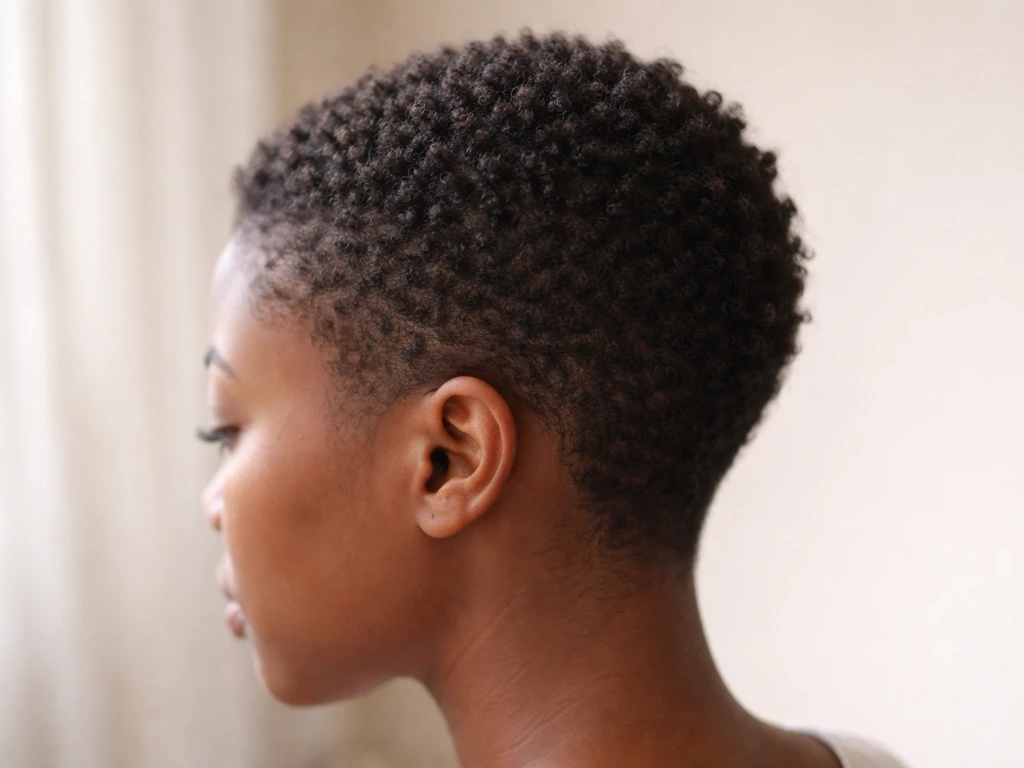
TWA stands for teeny weeny afro. NaturallyCurly/Beautycon clarifies that TWA stands for teeny weeny afro, using the term for hair too short to coif into a ponytail.
It's the very short, close-cropped natural hair stage that most people land at either after a big chop (cutting off relaxed or heat-damaged ends to start fresh) or after years of wearing a very short fade or tapered cut. Hair at the TWA stage is typically one to three inches long, too short to pull into a ponytail, but long enough to show curl or coil pattern.
If you have a tapered version, the sides and nape are shorter than the top, which makes the grow-out look even more uneven as those zones catch up.
Understanding where you are matters because it changes your strategy. Someone at half an inch of growth has different styling options than someone at two and a half inches. And if your TWA came from a tapered cut or fade, you're essentially managing two different lengths at once, which connects to some of the same challenges people face when growing out a tapered natural hairline or a tapered cut more broadly. If you are focused on how to grow out tapered natural hair, you will want to manage those two lengths and prioritize length retention while they catch up. The good news: the core routine is the same regardless of where you're starting.
The realistic growth timeline: week by week, month by month
Hair grows roughly half an inch per month on average. That's the number almost every dermatologist and trichologist lands on, and it holds up in practice for most people. Some people grow a bit faster (closer to three-quarters of an inch), some slower. What makes natural coily and kinky hair feel like it's not growing is shrinkage, your hair might grow a full inch but shrink back to look the same length due to curl contraction. Here's roughly what to expect:
| Timeframe | Approximate Length | What You'll Notice |
|---|---|---|
| Weeks 1–4 | 0.5 inch added | Slight puffiness, shape starts to loosen |
| Months 2–3 | 1–1.5 inches added | More curl definition, taper zones grow noticeably uneven |
| Months 4–6 | 2–3 inches added | First real styling options (twist-outs, small puffs); shrinkage becomes more obvious |
| Months 7–9 | 3.5–4.5 inches added | Wash-and-go takes shape; protective styles like mini twists become easier |
| Months 10–12 | 4.5–6 inches added | Short afro or small puff; approaching medium-length TWA territory |
| Months 12–18 | 6–9 inches added | Short bob range if length is retained well; shoulder length still ahead |
Keep in mind: these are growth numbers, not guaranteed length. If you're losing half an inch per month to breakage, you'll stay in place. Length retention, keeping the hair you grow, is the whole game here.
The care routine that actually builds length
Short natural hair dries out faster than longer hair because the scalp's natural oils (sebum) have very little length to travel down. That means your TWA needs more frequent moisture than you might expect. This is the foundation everything else builds on.
Wash day basics
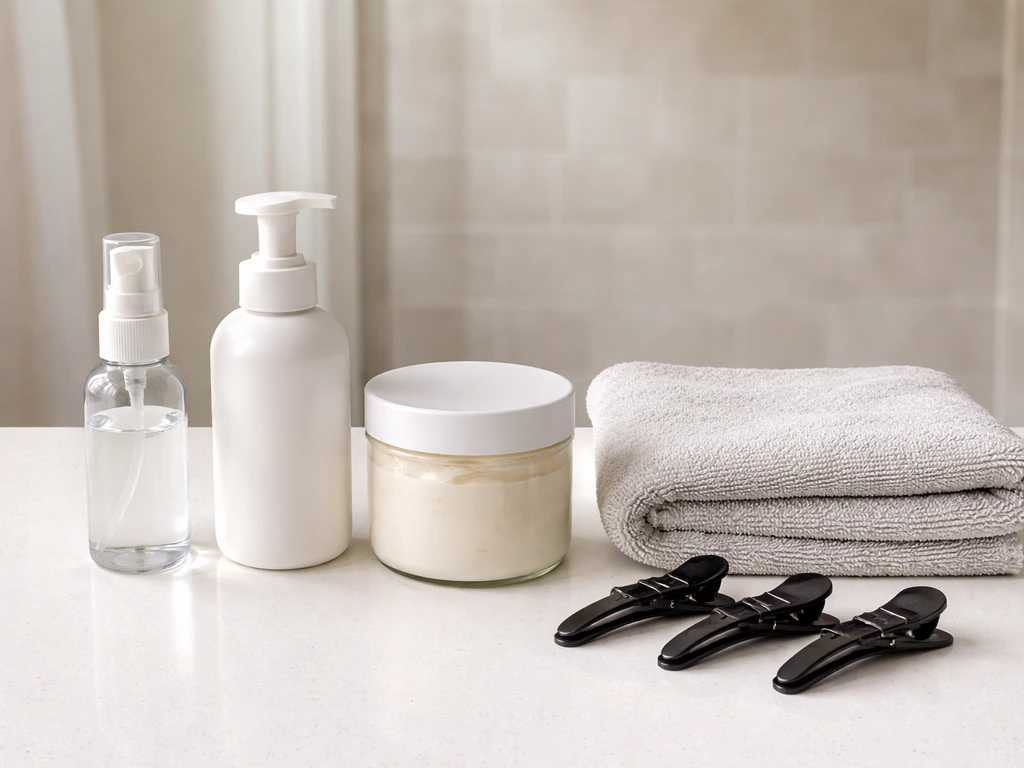
For a TWA, washing once a week to every 10 days works well for most people. If your scalp produces a lot of oil or you work out regularly, twice a week is fine, short hair handles frequent washing better than long hair because there's less length to stress and tangle. Use a sulfate-free shampoo to cleanse without stripping moisture, then follow with a moisturizing conditioner every single wash. Deep condition with heat (a hooded dryer or a plastic cap for 20–30 minutes) at least every two weeks to keep the hair pliable and reduce breakage.
Daily moisture: the LOC or LCO method
The LOC method (Liquid, Oil, Cream) is the most practical daily moisture routine for a TWA. Spritz hair lightly with water or a water-based leave-in, seal with a light oil (jojoba, grapeseed, or argan work well on short hair without weighing it down), and layer a curl cream or butter on top to lock everything in. Some people prefer LCO (Liquid, Cream, Oil) if their hair is very porous and the cream absorbs too fast. Either way, doing this once a day or every other day keeps the hair from becoming brittle and snapping off at the ends.
Detangling short hair
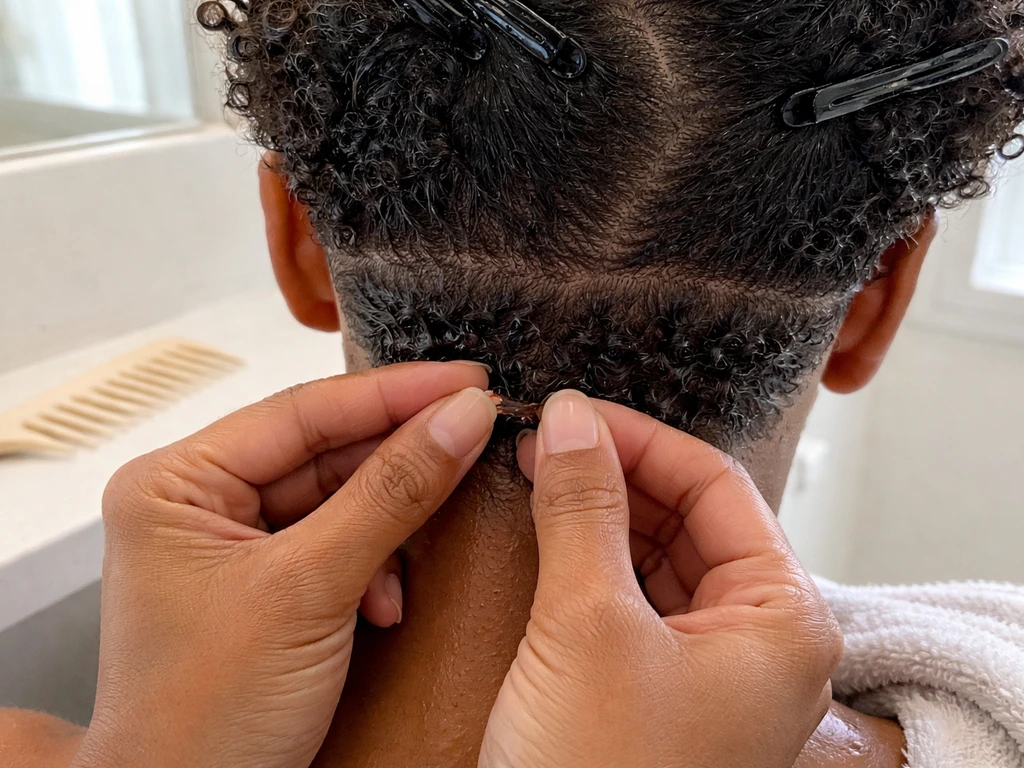
Even very short natural hair tangles and forms single-strand knots (the dreaded fairy knots). The safest approach is to detangle on wash day when hair is wet and saturated with conditioner, using your fingers first to gently separate clumps, then a wide-tooth comb if needed. Never detangle dry. On a TWA, forcing a comb through dry hair breaks off tiny sections at a time, it's one of the main reasons people feel like their hair isn't growing. If fairy knots become a recurring problem, trimming them off as you spot them (a tiny snip, not a real trim) is less damaging than letting them tangle into breakage.
Controlling breakage
The edges and the nape are the most fragile zones on any head, and on a growing TWA they're also the shortest sections. Avoid anything tight around the hairline, headbands with teeth, tight scarves, or elastic bands directly on those areas. Sleep on a satin or silk pillowcase, or wear a satin bonnet or scarf. Cotton pillowcases create friction all night and pull tiny hairs off at the crown and edges while you sleep. That alone makes a noticeable difference in about four weeks.
Scalp health and what actually supports growth
Hair grows from the follicle, which lives in the scalp. Keeping that scalp healthy is one of the few things you can actually control when it comes to growth rate. The basics matter more than most products do.
- Scalp massage: Even 3–5 minutes of gentle finger massage a few times a week increases blood circulation to the follicles. Do it during wash day or before bed. You can use a small amount of a scalp oil like peppermint-infused jojoba, but plain oil or no oil works too.
- Protein in your diet: Hair is made of keratin, which is a protein. If you're not eating enough protein (aim for 40–60g per day minimum), growth can slow and hair can become fragile. Eggs, lentils, chicken, and Greek yogurt are easy sources.
- Hydration: Chronic dehydration shows up in dry, brittle hair. Drink water consistently — it's not glamorous advice, but it works.
- Stress management: Prolonged high stress (physical or emotional) can trigger shedding (telogen effluvium), which feels like sudden hair loss. This is temporary but can derail a grow-out.
- Scalp buildup: Product buildup on the scalp clogs follicles and can slow or disrupt growth. If you use heavy butters or pomades at the root, clarify monthly with a clarifying shampoo.
- What doesn't help: Most growth serums and hair vitamins do very little if your diet and health are already decent. They're not harmful, but they're not magic either. Skip the biotin overload unless a doctor has found a deficiency.
If you notice your hairline thinning or your edges not filling back in as you grow, that's worth paying specific attention to, edge care is a whole topic on its own and often comes down to the same basics: less tension, more moisture, and gentle handling.
Styling through the awkward stage
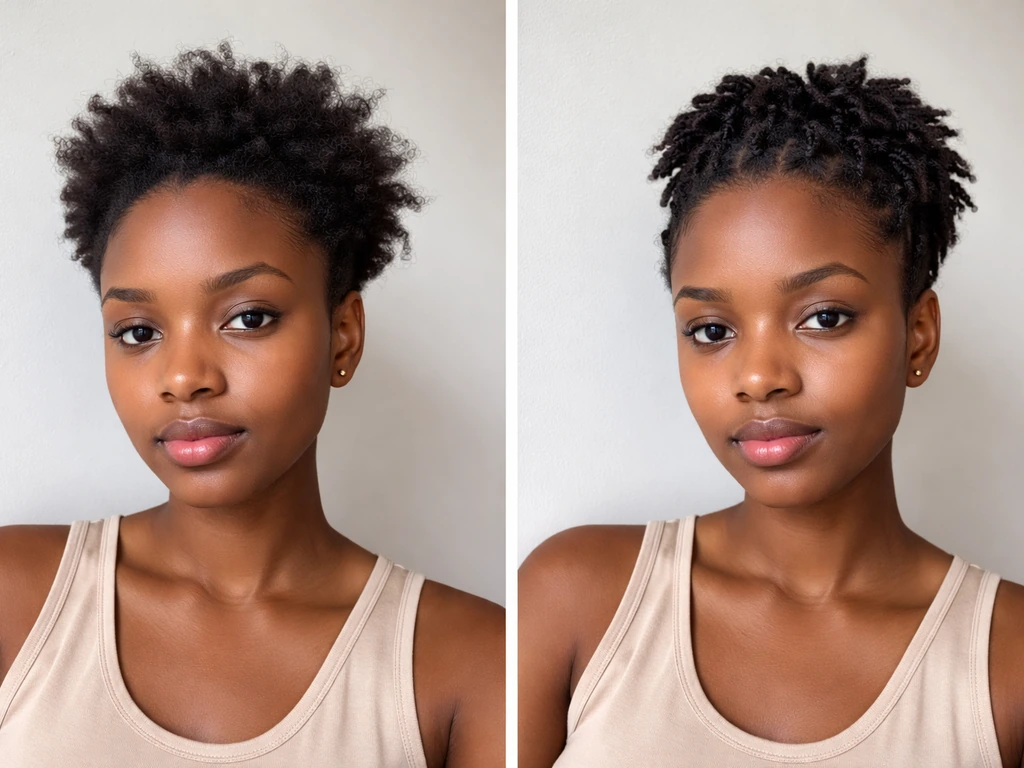
The awkward stage for a TWA usually hits hardest between months two and six, when the hair is long enough to stick out in every direction but too short to lay flat or be controlled into a defined style. This is when most people either love their hair or immediately want to cut it back. Here are styles that actually work at each mini-stage:
Very short (under 1.5 inches)
At this length, wash-and-go is your best friend. Apply leave-in and a light curl cream to damp hair, scrunch, and let it air dry or use a diffuser on low heat. You can also use a soft-bristle brush to shape the edges and get a cleaner look. A lineup or edge shapeup at the barbershop every 3–4 weeks keeps the hairline crisp without cutting length off the top.
Medium short (1.5 to 3 inches)
This is where things get fun. Finger coils, flat twists, and mini twists become possible and give you a lot of definition and shape. A twist-out on this length creates a gorgeous, full look. You can also try a defined wash-and-go using a gel over your leave-in for more hold and less frizz. Avoid pulling this length into a tight elastic puff, it's possible but puts stress on fragile edges.
Getting longer (3 to 5 inches)
Puffs, small buns, and two-strand twist-outs become your staple styles. At this point the shrinkage is significant, so your hair might look like it hasn't grown much, but stretched styles (braid-outs, twist-outs, or a simple stretch using the African threading method with no heat) will show you the real length. Headbands and turbans work well here too, but again, avoid anything with tight elastic at the hairline.
Should you get a trim or reshape?
Getting a trim does not make your hair grow faster, that's a persistent myth. But a light dusting (removing split ends and fairy knots without taking real length) every three to four months keeps the ends healthy and prevents the damage from traveling up the shaft. If your tapered sides are catching up to the top unevenly, a professional can blend them without resetting your length progress on top. Communicate clearly: you want shape, not length removed.
Protective styles and refresh strategies for short hair
Protective styles work on a TWA, you just have different options than someone with longer hair. The goal is the same: reduce the amount of daily manipulation, shield the ends, and let your hair rest.
- Mini twists: Work from about 1.5 inches and up. Keep them in for 1–2 weeks, refresh with a light oil or water spritz every 2–3 days, and detangle gently when you take them down.
- Flat twists: Great from about 2 inches. Can be worn as a style on their own or unraveled for a twist-out.
- Finger coils: Best on 1–3 inches of hair. They last 3–5 days and can be refreshed with water and a little cream.
- Low manipulation styles: Simple wash-and-gos that you don't re-do daily are technically protective — you're reducing the number of times you're touching and stressing the hair.
- Wigs and clip-ins: A wig over your TWA is a fully valid protective strategy, especially for people who like to switch up looks. Just make sure the wig cap isn't rubbing constantly on your edges. A satin-lined cap or satin wig band is worth the small extra cost.
- Sew-ins and braids: These require enough hair to braid or sew into, so they become accessible around months 4–6 depending on your growth. Don't let anyone braid your edges too tight — the risk to the hairline isn't worth the style.
For wash day between protective styles, you can co-wash (conditioner wash only) instead of shampooing every time, it's gentler and refreshes moisture without stripping the hair. If you have mini twists in, dilute your conditioner with water in a spray bottle and saturate the scalp and twists before rinsing. Follow with a light oil on the scalp.
When things go wrong: common problems and how to fix them
Uneven growth
If one section of your hair is noticeably longer than another, it's usually one of two things: either that section is retaining length better (less friction, less manipulation, better moisture), or there's an underlying scalp issue in the slower zone. First, look at your sleep position and styling habits, the side you sleep on and the places where your hair rubs on fabric or a collar are almost always the slower-growing spots. Equalizing your routine (same moisture, same protection) across all sections usually evens things out over two to three months. If it doesn't, see a dermatologist to rule out scalp inflammation or follicle issues in that area.
Shrinkage making it look like nothing is happening
Shrinkage on coily and kinky hair can be 50% to 75%, meaning four inches of actual length can shrink back to one inch. This is normal and healthy. It means your hair has elasticity, which is a sign of good moisture. To track real growth, do a monthly stretched length check: take a small section, gently stretch it straight (no pulling, just hold it taut), and measure. You'll see the actual growth even when the shrinkage makes it look invisible day to day.
Edges and breakage at the hairline
Thin or breaking edges are almost always caused by tension and friction. Stop using edge control products that require brushing the edges tight. Stop sleeping without a bonnet. Stop wearing anything with a tight elastic band around the hairline.
If your edges are already thinning, switch to very gentle treatment: water-based moisturizer, light oil, and no manipulation other than gentle fingertip pressing. Most edges fill back in within a few months once the tension source is removed. If you're also experiencing issues with your hairline or widows peak area, those follow the same principle.
If your tapered hairline looks uneven as it grows out, focus on reducing tension at the edges and keeping your moisture routine consistent until everything catches up. If your widows peak feels especially stubborn, focus on reducing tension at the hairline and improving length retention with gentle, consistent moisture widows peak area.
Dryness that keeps coming back
If you're moisturizing daily and your hair still feels dry by the next morning, you likely have high-porosity hair, meaning moisture goes in fast but leaves just as fast. The fix is to seal better: after your leave-in, use a heavier oil (castor oil or shea butter blend) rather than a light oil. Protein treatments every four to six weeks also help by temporarily filling gaps in the hair shaft so moisture stays in longer. If you've recently done any chemical processing or had heat damage before the big chop, high porosity is very common until that hair grows out completely.
Hair growing but length not showing
If your stretched length is showing growth but your overall length looks the same over months, you're experiencing breakage that's keeping pace with growth. This is frustrating but fixable. Audit your routine for anything with mechanical stress: rough towel drying (switch to a microfiber towel or a cotton T-shirt), detangling dry hair, tight styles, or using fine-tooth combs. Cut any of these out and give it 60 days. In most cases that's enough to tip the balance toward retention.
Your next steps and what to track
Start simple and stay consistent. The first thing to do is nail the basics: satin protection at night, moisture routine every one to two days, gentle detangling on wash day, and no tight tension on the edges. Those four things alone will change what happens over the next 90 days.
- Take a photo and a stretched length measurement today, then repeat monthly. Seeing the actual numbers prevents the shrinkage illusion from discouraging you.
- Set up your wash day routine: sulfate-free shampoo, deep conditioner with heat, leave-in plus sealant after every wash.
- Get a satin bonnet or pillowcase this week if you don't have one. It's a small investment with immediate impact.
- Decide on your style approach: wash-and-go, twist-outs, or a protective style like mini twists. Stick with it for at least a month so you can judge results fairly.
- At month three, reassess. If your edges are thin or one section is lagging, address it specifically. If everything is even and the hair is healthy, you're on track — stay the course.
- At month six, consider a light dusting if your ends feel rough or you're seeing a lot of fairy knots. This is optional, not required — only do it if the ends are genuinely damaged.
- By month nine to twelve, you'll have enough length to start experimenting with the styles that originally inspired the grow-out. That's when you start thinking about whether you want to shape toward a bob, let it keep growing, or try a tapered shape again on your own terms.
The grow-out is genuinely slow, and there will be a stretch somewhere around months two to four where you'll wonder if it's worth it. It is. The hair that comes in with a consistent routine is noticeably stronger, longer, and easier to style than the hair that had no routine. Keep going.
FAQ
Does trimming a TWA make it grow faster, and how often should I trim?
Aim for a light trim or “dusting” only when you see splits or single-strand tangles that keep repeating. Measure progress from a monthly stretched-length check, then dust in between those checkpoints (often around 3 to 4 months) so you remove damage without resetting how far you already grew.
Can I keep protective styles while growing out my TWA, and what’s too tight?
Yes, but treat it like a temporary style choice, not your default. If you use twist-outs, twists, or mini styles, keep them loose, avoid gel that leaves hair crunchy, and do not install protective styles so tight that the hairline looks pulled. If you notice edge thinning after a style, switch the installation method before you keep trying the same style.
What if I forget my daily moisture routine, will my hair stop growing?
If you cannot keep a defined routine for moisturizing, co-wash, and gentle detangling, your hair will likely snap and you will feel like it is not growing. A good workaround is to commit to wash day (conditioner saturation, finger detangle) and then do LOC or LCO every other day with light spritzing, even if you skip more elaborate styling.
How do I know whether I’m growing, or just experiencing shrinkage and breakage?
Try to base it on retention, not just growth length. Take a monthly stretched-length measurement from the same spot (top of the hair) and compare to your last check. If stretched length rises but your overall look stays flat, you are dealing with breakage or heavy shrinkage, and you should adjust handling (towel drying, detangling method, style tension).
What should I do if I get fairy knots and I can’t detangle on wash day?
For very short hair, dry detangling is a common mistake, even with “gentle” combs. If you must detangle outside of wash day, only finger-separate with hair fully dampened using water plus leave-in, then detangle at the clump level. If fairy knots keep forming, shorten the time between wash days or detangle more thoroughly on wash day.
Will a satin bonnet fix edge breakage, or is it only about the pillow?
If you are using a bonnet or scarf, keep it secure enough that it does not slide and rub. For many people, the biggest improvement comes from covering the edges and crown consistently every night, not from the product alone. If the bonnet slips, switch to satin-lined options that stay in place or use a looser wrap method.
My scalp gets buildup or flakes fast, how should I adjust my TWA routine without overdrying?
If your scalp is flaky but your hair feels moisturized, the issue might be buildup or product residue rather than not washing enough. Use a sulfate-free shampoo regularly, but consider clarifying occasionally and focus cleansing on the scalp only. Then go back to your standard conditioner-focused routine so the hair stays pliable.
How can I tell if my TWA is high porosity, and what’s the best fix?
For high-porosity hair, use a heavier oil after your leave-in, and consider a protein step every 4 to 6 weeks (not weekly) to reduce moisture loss. If your hair becomes stiff after protein, reduce frequency and pair with deeper conditioning after. Also check for heat or chemical history, high porosity is common after a big chop.
My sides are growing unevenly, how long should I wait before changing my plan?
Yes, and the key is to avoid combing or pulling on the shortest areas. Use a wet, saturated conditioner base and finger-detangle first, then place a wide-tooth comb only where needed. For uneven sides or a tapered starting point, keep the same moisture and protection on both zones for at least 2 to 3 months before assuming one section won’t catch up.
What’s the easiest way to refresh a TWA between washes without causing buildup?
If you need to refresh between wash days, do “spritz and seal,” meaning light water (or water-based leave-in) first, then oil, then a thin layer of cream if needed. Avoid adding heavy product every day, that can cause buildup, which can make your hair feel dry even when it is coated.
My edges are thinning, what’s the first thing to change in my routine?
If your edges look thinner even with good moisture, tension is usually the root cause. Stop tight edge-brushing, loosen or remove any headband or scarf pressure at the hairline, and avoid hairstyles that pull the front and nape. Most people see improvement over a few months after removing the tension source, but persistent thinning warrants a dermatologist check.