
Yes, you can often grow out or regrow a receding hairline, but whether you get true follicle regrowth or just a better-looking transition depends almost entirely on what caused the recession in the first place. That distinction matters more than any product, routine, or styling trick, so let's start there and work through everything else in order.
How to Grow Out Your Hairline: Regrowth and Styling Tips

Marcus Vickers
3 Apr 2026
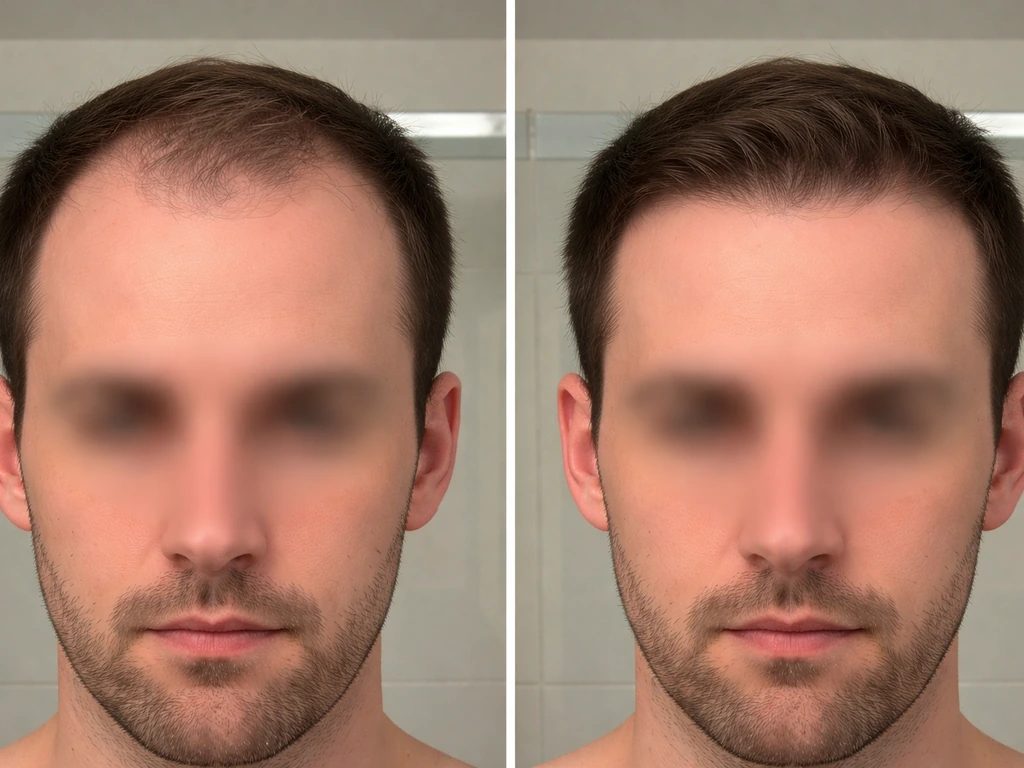
Is a hairline "regrowth" actually possible?
The short answer: sometimes yes, sometimes no, and often somewhere in between. Whether your hairline can genuinely come back depends on whether your follicles are still alive. Follicles that are miniaturized (producing thinner, shorter hairs over time) can often be rescued or at least stabilized. Follicles that have been permanently destroyed by scarring cannot regenerate, full stop.
In scarring (cicatricial) alopecia, inflammation damages the follicle structure and causes fibrosis, meaning the follicle is gone and hair cannot grow back from that spot. That's a hard biological limit, not pessimism. But the much more common causes of a receding hairline, including androgenetic alopecia (pattern hair loss), traction from tight styles, and stress-related shedding, are non-scarring, which means follicles are still present and potentially functional.
The other big variable is how long the recession has been happening. In androgenetic alopecia, terminal follicles progressively miniaturize, and in severe, long-standing cases some follicles can transition toward deletion entirely. Catching it early, meaning while follicles are still producing even fine vellus hairs, gives you a much better shot at meaningful regrowth. If the skin at your hairline looks smooth, shiny, and completely bald for years, the follicles may already be gone.
Step one: figure out why your hairline is receding
This is the step most people skip, and it's the one that changes everything. The cause of your recession determines whether regrowth is realistic, which interventions will help, and how fast you can expect results. Treating traction alopecia the same way you'd treat androgenetic alopecia is like using sunscreen on a broken bone.
The main causes to know
- Androgenetic alopecia (pattern hair loss): gradual miniaturization driven by hormone sensitivity (DHT), with a recognizable pattern, common in both men and women. Hair thins progressively at the temples, crown, or part line.
- Traction alopecia: caused by prolonged tension from tight braids, locs, ponytails, extensions, or relaxers. Early cases are often reversible once tension is removed. Chronic traction can lead to permanent scarring, so time matters.
- Telogen effluvium: diffuse shedding triggered by stress, illness, crash dieting, surgery, or hormonal shifts (including postpartum). It's a shedding disorder, not true recession, and usually resolves when the trigger is removed.
- Alopecia areata: an autoimmune condition causing patchy hair loss that can include the hairline. Many people see spontaneous regrowth within a year, though the condition can relapse.
- Scarring alopecias: rarer conditions (like lichen planopilaris or frontal fibrosing alopecia) where inflammation destroys follicles. These need dermatology involvement urgently because early intervention limits permanent damage.
- Mechanical damage: over-processing, excessive heat, or chemical treatments at the hairline zone causing breakage that mimics recession.
A useful self-check is the pull test: gently grasp about 40 to 60 hairs between your fingers, apply light traction, and count what comes out. More than roughly 4 to 6 hairs (about 10% of the grabbed bundle) suggests active shedding, pointing toward something like telogen effluvium or alopecia areata rather than pure pattern loss. That said, a dermatologist or trichologist can do this properly and pair it with trichoscopy (scalp dermoscopy) to see miniaturization patterns, hair density, and follicle health without a biopsy. If your cause is genuinely unclear, or if you see smooth, scarred-looking skin at the hairline with no peach-fuzz regrowth, get a professional evaluation before spending money on products.
For women specifically, growing out a tapered hairline after years of tight styling is one of the most common scenarios, and the good news is that most traction cases caught before scarring do respond well to a consistent recovery plan.
Building your natural support plan
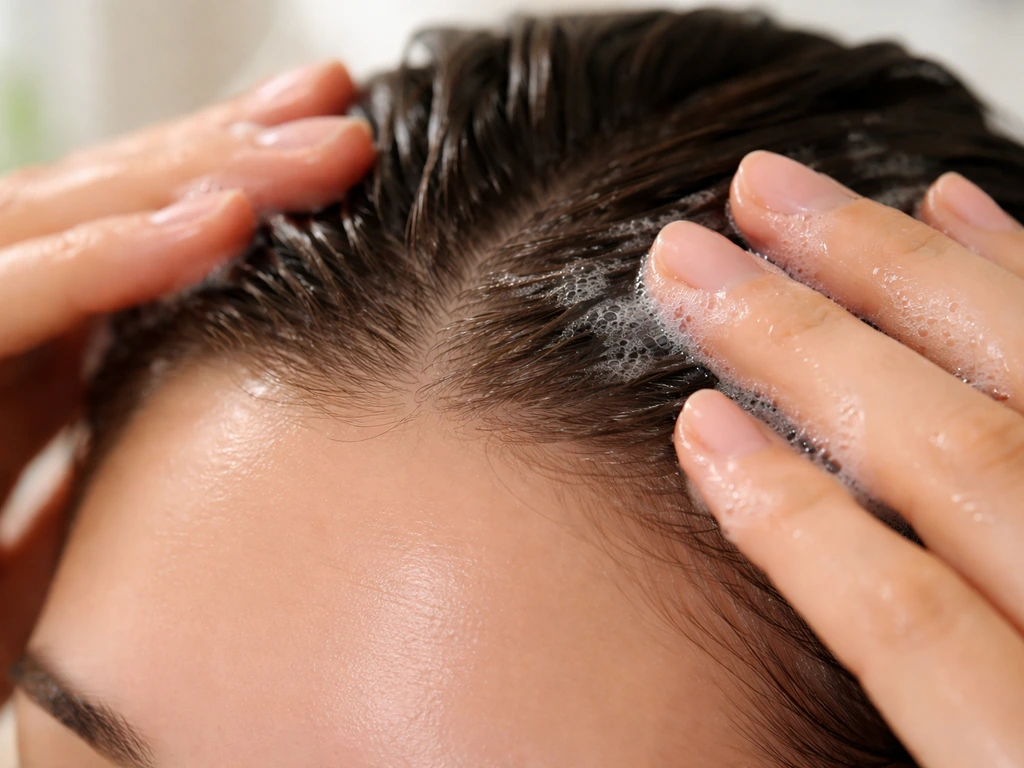
Whatever the cause, the foundation is the same: create the best possible environment for follicles to function. This doesn't replace medical treatment when it's needed, but it supports every other intervention you add on top.
Scalp care
Your scalp is skin, and healthy skin supports healthy follicles. Keep the hairline area clean but not stripped: wash regularly enough to remove buildup (product, oil, dead skin) without over-drying. Gentle scalp massage for 3 to 5 minutes a few times per week improves blood circulation to the follicle area. You don't need a special device; your fingertips work fine. Avoid picking, scratching aggressively, or using fine-tooth combs that drag across a tender hairline.
Nutrition basics

Hair is protein, and follicles are metabolically hungry. Chronic deficiencies in iron, ferritin, zinc, vitamin D, and biotin are all linked to increased shedding and slowed regrowth. You don't need a cabinet full of supplements; you need to rule out actual deficiencies. If you've had significant shedding, ask your doctor to check ferritin (not just hemoglobin), vitamin D, and thyroid function. Eating enough total protein, around 0.8 to 1 gram per kilogram of body weight daily, is a more reliable baseline than most supplements.
Lifestyle and stress
Chronic stress elevates cortisol, which disrupts the hair growth cycle and can push follicles into a resting phase prematurely. Sleep is where cellular repair happens, including in follicle tissue. If you're dealing with telogen effluvium triggered by a major stressor, the most important thing you can do is address the stressor, because the shedding often resolves on its own within 3 to 6 months once the trigger is removed. Telogen effluvium rarely lasts longer than about six months, although some cases may last longer, according to Harvard Health telogen effluvium triggered by a major stressor.
Stop the tension

If traction is even a possible contributor, stop it immediately. This means loosening or removing tight styles, taking breaks from extensions and weaves, not wrapping hair too tightly at night, and switching to gentler elastic bands. Traction alopecia caught early is often reversible, but once the follicle scars, that window closes permanently. No serum reverses fibrosis.
What actually has evidence behind it
Let's be honest: the hairline growth product market is loud and expensive. Here's what the evidence actually supports.
Minoxidil
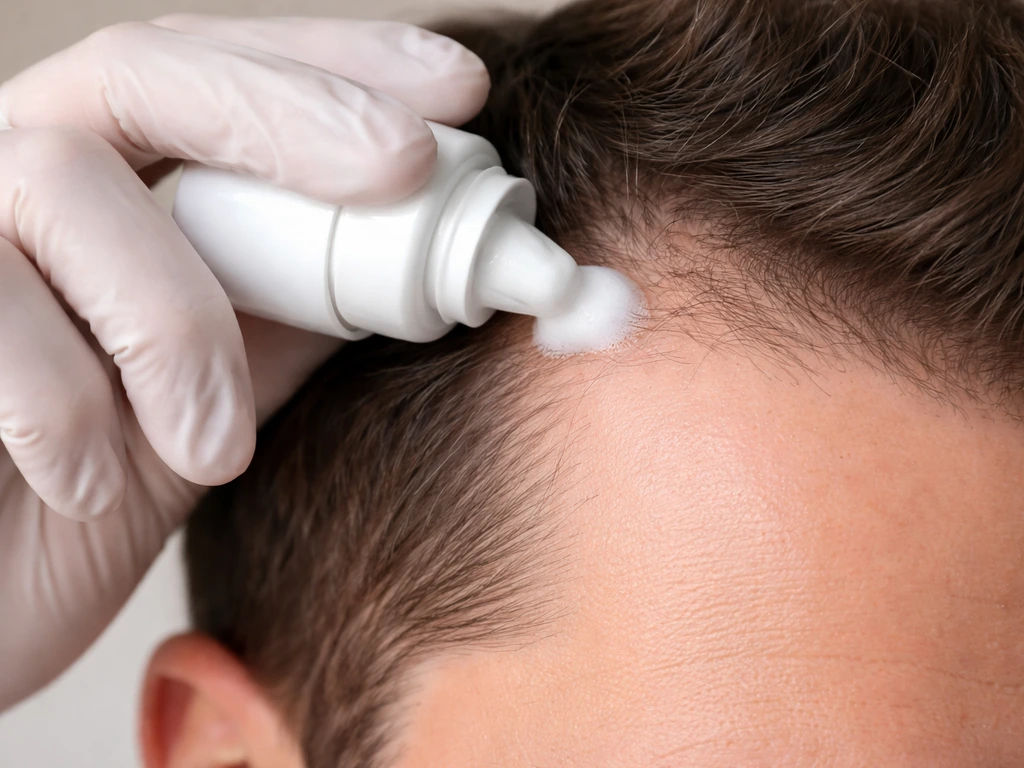
Topical minoxidil is FDA-approved for both male and female androgenetic alopecia and remains one of the most evidence-backed options available over the counter. It works by prolonging the anagen (growth) phase of the hair cycle and improving follicle blood supply. Apply it to the hairline and affected areas twice daily (for 2% or 5% topical) or as directed. Important heads-up: minoxidil can cause a temporary shedding phase in the first 4 to 8 weeks as hairs in the telogen phase are released early. That's a normal pharmacological response, not a sign it's making things worse. Low-dose oral minoxidil has also shown effectiveness in studies and is increasingly used, particularly for people who find topical application messy or irritating, though it requires a prescription and medical supervision.
Finasteride (and alternatives for women)
For men with androgenetic alopecia, oral finasteride is FDA-approved and works by blocking the conversion of testosterone to DHT, the hormone that drives follicle miniaturization. Expert consensus suggests taking it for at least 6 to 12 months before assessing response, and the effects reverse within roughly 12 months of stopping. It's a long-term commitment, not a quick fix. Women of childbearing age are generally not prescribed finasteride due to risk of birth defects. Spironolactone and other antiandrogens are sometimes used off-label in women with hormonal pattern loss. Always discuss these with a dermatologist.
Low-level light therapy (LLLT)

LLLT devices (laser combs, laser caps) have real clinical trial data behind them. A 24-week randomized controlled trial found significantly greater hair density with LLLT compared to a sham device in people with androgenetic alopecia. A separate trial comparing LLLT to topical 5% minoxidil found that both groups showed increased hair density over 3 and 6 months. It's not a replacement for minoxidil or finasteride in most cases, but it's a reasonable adjunct with a solid safety profile.
When to see a professional
See a dermatologist or trichologist if: your hairline has receded rapidly over a short period, you have scalp pain, itching, or burning at the hairline, you see no peach-fuzz regrowth after 3 to 4 months of addressing triggers, the skin at your hairline looks smooth and scarred, or you're unsure of the cause. Scarring alopecias like frontal fibrosing alopecia require early intervention to stop progression. Waiting to "see if it gets better" with a scarring condition can mean losing ground you'll never recover.
What the regrowth timeline actually looks like
Hair grows roughly half an inch per month on average, but visible hairline recovery depends on more than just growth rate. Here's a realistic stage-by-stage breakdown assuming a non-scarring cause and a solid plan in place.
| Stage | What's happening | What you'll notice |
|---|---|---|
| Weeks 1–4 | Removing triggers, starting scalp care and nutrition, beginning minoxidil if applicable | Possibly more shedding (normal with minoxidil). No visible regrowth yet. Scalp health improving. |
| Months 2–3 | Follicles transitioning from rest back toward growth phase | Fine vellus hairs (soft, light, short) may appear at the hairline. Easy to miss without good lighting. |
| Months 3–6 | Vellus hairs thickening into terminal hairs; density slowly increasing | Noticeable fuzz or short regrowth along the hairline edge. This is the exciting phase. |
| Months 6–9 | Terminal hair coverage improving; length increasing | Hairline looks fuller and softer. Styling options expand. Baby hairs visible and longer. |
| Months 9–12 | Continued density improvement; ongoing treatment maintaining results | Meaningful cosmetic improvement in most non-scarring cases. Pattern loss may need ongoing treatment to hold gains. |
| Beyond 12 months | For androgenetic alopecia: maintenance phase | Stopping treatment (minoxidil, finasteride) typically reverses gains. Commitment is ongoing. |
For alopecia areata, the timeline is less predictable. Many people see spontaneous regrowth within a year, but the condition can relapse. For traction alopecia caught early, recovery after removing the tension source can begin within weeks to a few months. For pattern hair loss, you're playing a long game, and "success" often means stopping further recession and improving density rather than a full original hairline.
How to make your hairline look better while it grows

Regrowth takes months. You still have to exist in the world in the meantime. Here's how to style around a receding or regrowing hairline so it looks intentional rather than awkward.
For women
Soft, face-framing pieces are your best friend. Growing out bangs or a front section over a receding hairline works well with a wispy, curtain-style framing that draws the eye inward rather than toward the temples. Side parts tend to be more flattering than center parts during temple recession, as they create visual asymmetry that reads as styled rather than sparse. Avoid slicking all the hair back tightly: this exposes the hairline fully and also adds tension. Loose, low buns, half-up styles, and textured waves all help. Hair fibers and scalp concealers (in your hair color) work remarkably well for sparse areas and buy you confidence during the grow-out period without damaging anything.
If you're natural or transitioning, the grow-out process has its own set of nuances. Learning how to grow out a TWA while managing a receding hairline at the same time is entirely doable, but it helps to understand which styling choices pull on the perimeter and which ones don't. The same principle applies if you're working with tapered natural hair growing out, where the nape and sides are shorter and the hairline is already a focal point.
For men
Growing long hair with a receding hairline is absolutely an option, but requires a different approach than it did before the recession. As the top and front grow, a mature or receding hairline actually pairs well with longer styles because the weight and movement of longer hair de-emphasizes the temples. Textured cuts, loose waves, and styles with volume on top work better than flat, slicked styles that expose the scalp. Avoid aggressive temple fades or razor-edged hairlines if you're trying to grow it forward and lower: sharp artificial lines make the recession look more pronounced, not less. Let the natural hairline soften as regrowth fills in.
If you're also dealing with an undercut or taper that's grown out unevenly, the main goal is to blend the transition zone so it doesn't look like two separate haircuts colliding. A good barber or stylist can help you manage that without cutting length off the top. For men curious about whether they can encourage the hairline to grow in lower or more forward, understanding how a V-taper grows gives useful context for managing the back and sides while the top and front fill in.
Universal tricks that work across all hair types
- Hairline powder or fiber sprays in your hair color can camouflage sparse areas immediately. They wash out cleanly and don't block follicles.
- Styling baby hairs and new regrowth with a soft toothbrush and a light hold gel (not hairspray) keeps them looking polished instead of fluffy.
- Avoid laying edges or baby hairs down with hard-hold products daily: the repeated tension and product buildup can irritate a hairline that's already fragile.
- Protect your hairline at night with a satin bonnet, pillowcase, or head wrap to reduce friction and mechanical stress while you sleep.
- If you're using tinted dry shampoo, apply it lightly to the hairline zone for an instant density boost in photos or on camera.
If it's not growing: troubleshooting and next steps
After 4 to 6 months of consistent effort, most people with a non-scarring cause should see at least some change: less shedding, visible vellus fuzz, or improved density. If nothing is happening, here's how to think through it.
- Re-examine the cause. If you haven't had a professional evaluation, now is the time. Scarring alopecia is often misidentified as standard pattern loss, and the treatments are completely different.
- Check for hidden triggers. Nutritional deficiencies (especially low ferritin), unmanaged thyroid conditions, and ongoing physical or emotional stress can silently suppress regrowth even when everything else looks right.
- Assess your tension habits honestly. Many people believe they've stopped tight styling but are still wrapping too tightly at night, using elastic bands that grip too hard, or wearing styles that put pressure on the hairline edge.
- Consider combination therapy. For androgenetic alopecia, combination approaches (for example, minoxidil plus low-dose finasteride in men, or minoxidil with spironolactone in women) have better evidence than single-agent treatment alone.
- Look into PRP or hair transplant consultation. Platelet-rich plasma (PRP) injections have emerging evidence for androgenetic alopecia. For cases where follicles are definitely gone, hair transplant consultation with a board-certified surgeon is a realistic option, not a last resort.
- If you have a hairline shape concern (like a widow's peak you want to grow back or work with), understanding the genetics and patterns involved helps set realistic expectations. Growing back a widow's peak follows different rules than general recession recovery, and knowing the difference saves you time and frustration.
The most important thing to remember is that stalled regrowth is almost never because you're not trying hard enough. It usually means either the cause hasn't been fully addressed, the timeline expectation is off, or there's a biological limit being hit (scarring, significant follicle deletion) that no over-the-counter routine will fix. In those cases, professional guidance isn't giving up. It's the smart next move.
Your hairline is not a verdict on your choices or your worth, and it's not static. Most people who approach this systematically, by identifying the cause, addressing the root triggers, giving evidence-based treatments enough time to work, and styling smartly in the meantime, end up in a significantly better place than where they started. That's a realistic outcome worth working toward.
FAQ
If I’ve tried minoxidil or other products for a while, how do I know whether my hairline is in a “realistic regrowth” category?
A good rule is that products rarely change the cause, so if you see smooth, shiny, completely bald skin at the hairline for months to years, that raises concern for scarring or advanced follicle loss. In that situation, waiting for a routine to work can delay the only interventions that can stop progression, so getting a dermatologist assessment is the fastest way to avoid wasting time and money.
What timeline should I use to tell whether my grow-out plan is actually working?
For most non-scarring causes, take photos in the same lighting and hair position every 4 weeks, then judge trends after 3 to 6 months. If you are seeing only less shedding but no visible vellus fuzz by around 3 to 4 months, you likely need cause confirmation and plan adjustment rather than simply increasing effort.
Can the pull test tell me how much regrowth I will get, or is it only about diagnosing shedding?
If shedding is active, the pull test can be misleading because the sample might reflect temporary shedding rather than baseline follicle health. That’s why a dermatologist may use trichoscopy to look for miniaturization patterns and follicle density, since those are more predictive than hair loss numbers alone.
Should I stop all styling immediately, even if my cause might be genetics?
It depends on your cause. If your recession is traction-related, continuing the same tension (tight ponytails, daily extension wear, tight silk wraps) can keep preventing recovery even if you start minoxidil. If your recession is pattern loss, over-stopping gentle tension practices is less critical, but aggressive styling that rubs the scalp or pulls at the perimeter can still slow improvement.
What if my hairline also itches or burns while I’m trying to grow it out?
When inflammation is involved, “gentle” matters more than “frequent.” If your scalp gets itchy, burning, or flakes around the hairline, you may be dealing with dermatitis or an inflammatory alopecia process, and using harsh stripping routines or heavy oils can worsen irritation. A clinician can help distinguish inflammation patterns that need anti-inflammatory treatment.
If I get side effects or can’t keep up with treatment, what happens if I stop minoxidil or finasteride?
You should treat discontinuation as a phased decision, especially with minoxidil and finasteride. Stopping minoxidil commonly leads to loss of the gains over months, and stopping pattern-loss treatment can restart miniaturization. If you need to pause for side effects, discuss an alternative plan with a clinician rather than stopping abruptly.
Are hair fibers or scalp concealers a safe substitute for treatment while I wait for regrowth?
Yes, but only if you use them safely. Concentrate concealers on the thinning zone, avoid rubbing during application removal, and choose matches that blend with your natural root. For camouflage, fibers and scalp pigments can be helpful during the “months to regrow” window, but they should not replace addressing traction, inflammation, or hormonal drivers.
My hairline changed quickly, does that mean it’s not just androgenetic alopecia?
Consider adding a cause-specific check when there’s rapid change: if recession accelerated over a few months, or you see patchy loss, scalp symptoms, or eyebrow and body hair involvement, those details push the differential beyond simple pattern loss. A dermatologist may consider labs for telogen effluvium triggers, and trichoscopy to separate miniaturization from other patterns.
Should I start supplements like biotin and zinc right away to grow out my hairline?
Not always. Biotin can distort some lab tests and is rarely helpful unless you have a deficiency. The more useful step after noticeable shedding is asking for ferritin, vitamin D, and thyroid testing, because iron stores and thyroid status often correlate with shedding and recovery capacity.
Does my hair type or age affect how noticeable regrowth will be while I’m growing out my hairline?
Yes, age and hair texture can change your expectations for visibility, not the biology. Curly and coily hair can make thinning harder to see until it grows out, and tightly coiled patterns can also create more perception of a sharper hairline. The strategy is to track the hairline skin changes and density trends rather than relying only on visual contrast.
Can I get a haircut, taper, or extensions while growing out a receding hairline?
In many cases, yes, if you prevent tension and the follicles are not scarred. But the risk of permanent loss rises once scarring develops, and scarring alopecias can look deceptively like “just thinning.” If you have recurring hairline redness, burning, or smooth scar-like skin, you should get evaluated before continuing styles that place tension at the perimeter.
What signs mean I should stop self-treating and see a dermatologist sooner?
If you notice a clear “line” or sharply defined area with no peach fuzz, or you have scalp pain and frequent inflammation at the hairline, that can be a red flag for scarring alopecia. Another warning sign is that improvement does not start at all after addressing triggers and giving evidence-based options time, because scarring progression may require prescription anti-inflammatory or immunomodulating treatment.