
Growing out a tapered hairline takes roughly 2 to 4 months for the perimeter to catch up enough that the contrast largely disappears, depending on how short your taper or fade was cut. The honest truth is there will be an awkward window, usually somewhere between weeks 3 and 8, where the sides and hairline look neither short nor long. The good news is that with the right trimming decisions, a few styling tricks, and realistic expectations about how fast your hair actually grows (about 1 cm per month on average), you can move through that phase looking intentional rather than neglected.
How to Grow Out a Tapered Hairline Without Messy Edges

Marcus Vickers
19 May 2026
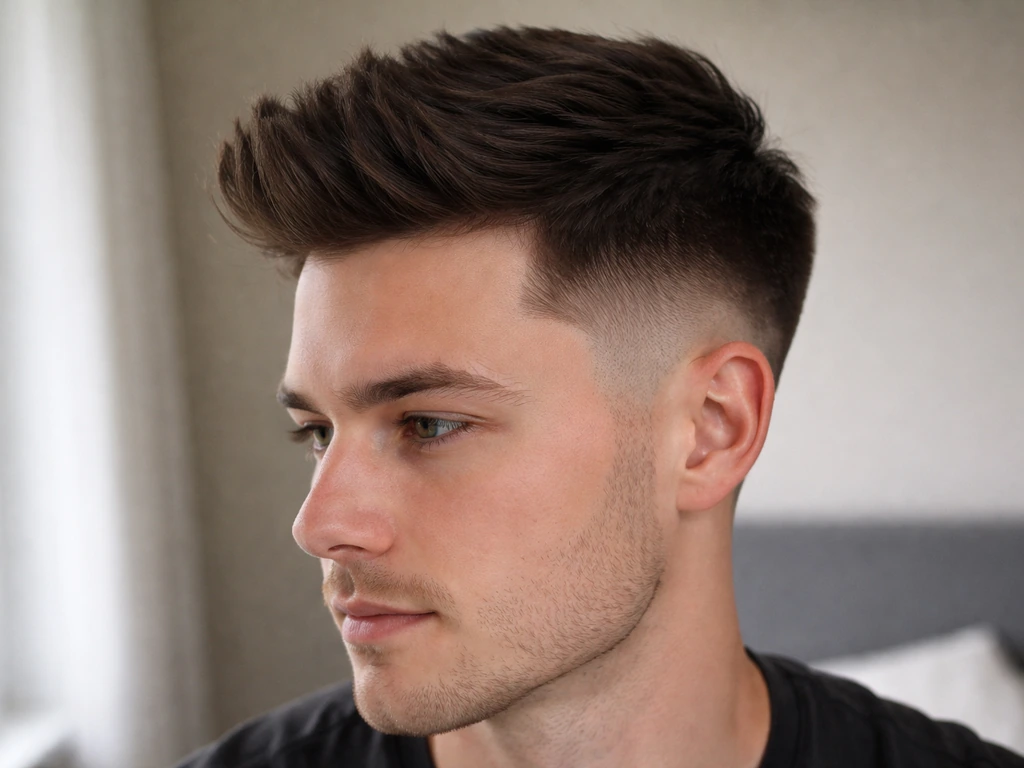
Taper vs taper fade: why the difference matters for growing out
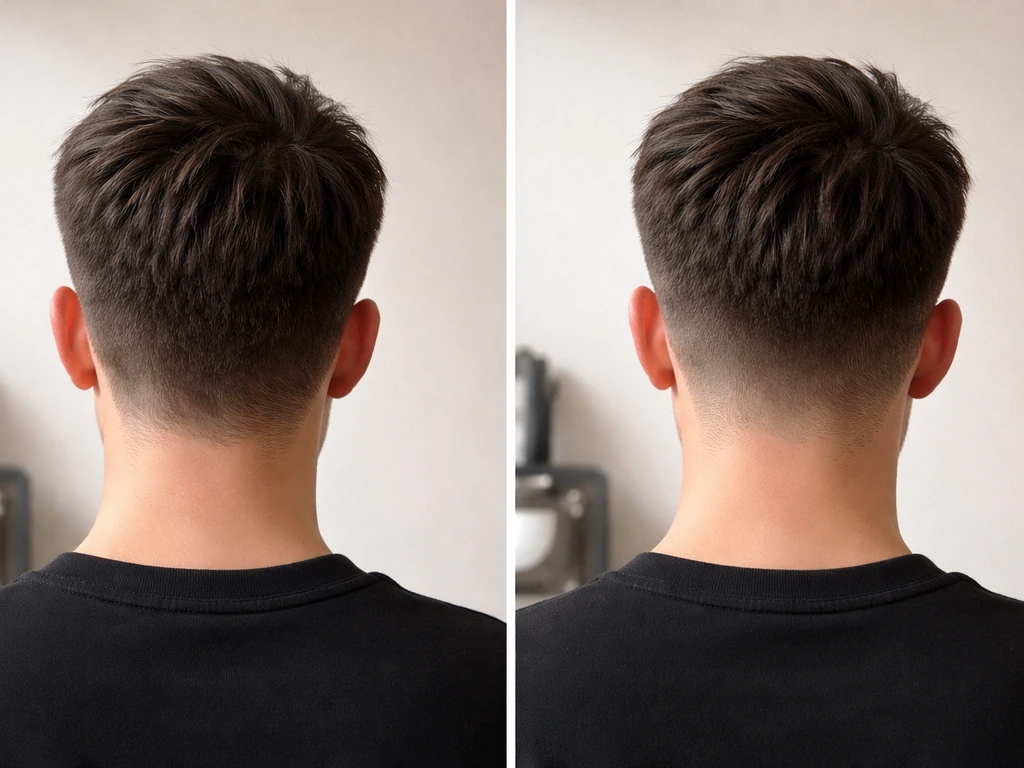
A taper and a fade are related but not the same thing, and the distinction completely changes how your grow-out will look and feel. A taper keeps visible length on the sides and only really graduates down around the sideburns and neckline. Because there's actual hair length throughout most of the side, a taper tends to grow out more naturally and the contrast between lengths becomes less obvious more quickly.
A fade, on the other hand, takes the hair much closer to the skin at its shortest point, creating a stronger and more dramatic contrast. That contrast is exactly what makes a skin fade or a high fade look so sharp right after the cut, but it's also why a fade can start looking grown-out within 1 to 2 weeks. By weeks 3 to 4, the shadow effect around the hairline and sides becomes very visible. So if you started with a fade rather than a standard taper, expect a slightly longer and more noticeable awkward phase.
A temple fade sits somewhere in between: it's typically tapered from the scalp to about 1 cm of length from the edge of the hairline, graduating over roughly 2 cm of space. It's less dramatic than a full skin fade, so it tends to grow out a bit more gracefully. Knowing which version you had helps you set the right expectations and decide how much barber maintenance, if any, makes sense during the grow-out.
What to expect stage by stage at the hairline and sides
Hair grows roughly 0.7 to 1.5 cm per month, so about 1 cm is a fair planning number. The experience at the hairline and sides tends to break into pretty predictable windows.
| Timeframe | What's happening at the hairline/sides | How it looks |
|---|---|---|
| Weeks 1–2 | Barely any growth; the cut still looks intentional | Clean and sharp, especially for tapers |
| Weeks 2–3 | A shadow starts forming along the fade/taper line; skin-fades show this fastest | Still presentable but the contrast is softening |
| Weeks 3–5 | The shortest areas have about 3–5mm of growth; the blended transition zone starts to blur | Slightly fuzzy perimeter; this is the first real awkward window |
| Weeks 5–8 | Sides are growing unevenly; the hairline may look patchy or undefined depending on your growth pattern | The most challenging phase, especially for fades |
| Month 2–3 | The shortest parts are reaching 1.5–2cm; the overall silhouette starts to look more uniform | Starts to read as a deliberate grow-out rather than a neglected cut |
| Month 3–4+ | The taper/fade perimeter has enough length to blend naturally with the top; you have real styling options | Transition mostly complete; focus shifts to shaping the overall style |
One thing worth flagging: the front hairline and the temples often grow at slightly different rates, and the sides can look uneven for a few weeks simply because different areas are at different stages. That's normal. It doesn't mean something is wrong; it just means you're in the middle of the process.
Managing awkward lengths so you don't look uneven
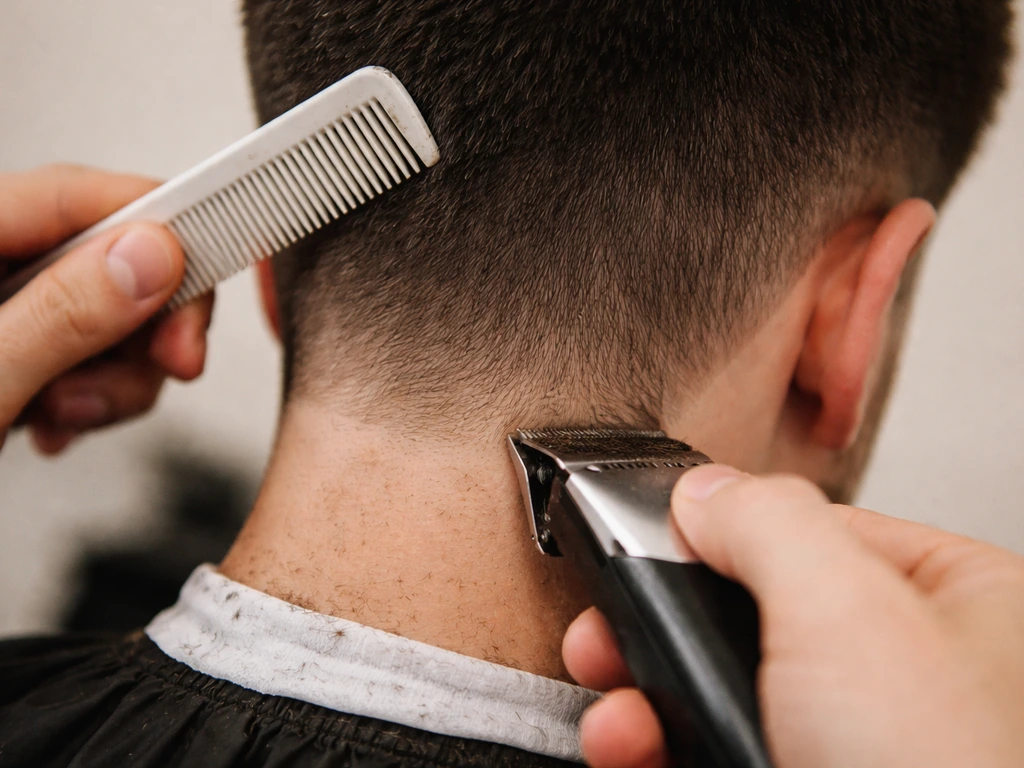
The biggest mistake people make during this phase is either doing too much or too little. Trying to trim the fade or taper line yourself to "fix" the grow-out almost always makes it worse. The guidance from experienced barbers is clear: stay below the defined lines and don't try to trim into the fade itself. You'll create an uneven patchwork that's harder to recover from than just waiting it out.
What you can and should manage is the perimeter you can control: the neckline and the sideburn area. Light trimming here, either at home or with a quick barber visit every 3 to 4 weeks, keeps those zones looking tidy without resetting your fade and undoing weeks of growth. Think of it as maintaining the frame while you let the picture develop.
Moisturizing the scalp and hairline area after washing is also genuinely useful. Dry, irritated skin around the neckline and hairline can make the perimeter look rougher and more patchy than it actually is. A light, non-greasy moisturizer applied to the hairline keeps the skin in good condition and makes the grow-out look more deliberate.
If you started with a fade and the contrast is really bothering you around weeks 3 to 5, one option is to ask a barber to do a very conservative blend: not a fresh fade, but just softening the hard line so the transition looks more gradual. This doesn't set back your growth significantly but buys you another couple of weeks before the awkward phase peaks.
Styling the front and sides as they grow in
Styling options change as the hair gets longer, so it's worth thinking about this in two phases.
Early grow-out (weeks 2–6): keep it clean and controlled
When the tapered areas are still very short, your best styling tool is neatness everywhere else. Keep the top of your hair well-groomed because the contrast between a clean top and a slightly grown-out perimeter actually draws less attention to the sides than messy hair overall. A matte clay or pomade applied lightly to the sides and pressed flat can minimize the appearance of the grow-out zone. For natural hair textures, a light curl cream or edge control gel can help define the hairline area and make it look more intentional.
Mid grow-out (weeks 6–12): work with what's there
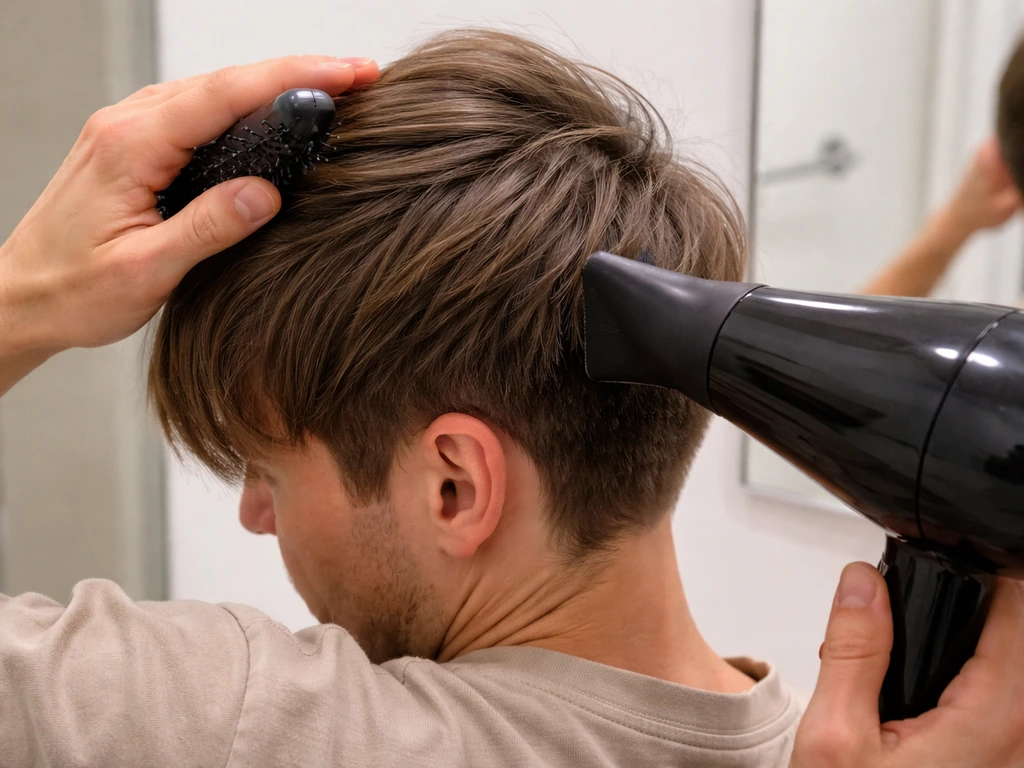
Once the sides have enough length to actually style (roughly 1 to 2 cm), you have more options. Brushing or combing the hair down and slightly forward at the sides helps the growing hairline look connected rather than patchy. If your hair is wavy or curly, working with your natural texture rather than fighting it becomes especially important here. Scrunching a curl cream through the sides and letting them air-dry or diffuse tends to look far more intentional than trying to force short, textured hair flat.
Blow-drying with direction is one of the most underrated tools at this stage. Start drying from the front hairline and use the wide side of a comb while directing the airflow in the direction you want the hair to lie. Using a lower speed setting and pressing the comb gently against the head helps the hair set in that position. This is especially useful at the temple area and along the hairline, where short regrowth often wants to stand up or stick out.
Maintenance decisions: when to see a barber and when to hold off
This is where a lot of people go wrong: they either avoid the barber entirely and end up looking completely unkempt, or they go back for a tidy-up and accidentally reset the grow-out. Neither extreme serves you.
Here's a practical framework. In the first four weeks, you can generally skip the barber entirely unless the neckline is bothering you. Week-by-week grow-out guidance also notes that some people can stretch the fade look to about three weeks depending on hair type, including wavy or curly hair, before it starts looking less controlled NYC Haircuts. The growth is minimal and there's not much to work with. Between weeks 4 and 8, a single visit to have just the neckline and sideburns lightly cleaned up (without touching the fade/taper line) is reasonable. After the two-month mark, you're in a better position to have a real conversation with your barber about shaping the overall style, because now there's actual length to work with.
- Do ask your barber to tidy the neckline and sideburns only
- Do tell them explicitly you're growing out the taper or fade and don't want the sides touched
- Don't let them 'clean up' the sides without knowing exactly what that means in their hands
- Don't attempt to trim the fade or taper blend yourself
- Do consider a conservative soft-blend if the contrast is driving you crazy around weeks 4–5, but understand it slightly delays the final goal
Realistic timeline from taper to fully grown out
At 1 cm of growth per month (a reasonable average to plan around, with individual variation between about 0.7 and 1.5 cm), here's how to think about the full timeline:
- Month 1: The taper/fade line starts to soften but the contrast is still very visible, especially for skin fades. This is purely a waiting game.
- Month 2: The shortest parts have about 1.5–2 cm of growth. The sides start to read as a style choice rather than a growing-out cut. You can begin styling the sides meaningfully.
- Month 3: Most people with a standard taper feel the grow-out is largely complete by the end of this month. The perimeter looks blended enough to either maintain as a longer taper or transition into a completely different style.
- Month 4 and beyond: If you started with a very dramatic skin fade or had the sides taken very short, you may need this extra month for the contrast to fully disappear. Patience here pays off.
If your goal is specifically to grow out tapered natural hair or transition away from a tapered natural style, the process is similar but texture can make the sides look fuller earlier, which actually works in your favor. Once you commit to the taper, keep using the same principles so you learn how to grow a v-taper without constantly resetting the sides. If you want a more step-by-step plan, focus on trimming strategy, styling choices for your texture, and a consistent timeline for how the tapered areas transition how to grow out tapered natural hair. If you are wondering how to grow out TWA as it fills in, focus on consistent trimming decisions and styling that works with your texture during the awkward weeks grow out tapered natural hair. If you’re specifically wondering how to grow out your hairline, this tapered natural approach helps you plan for the phases and styling changes along the front growing out tapered natural hair. Growing out tapered natural hair deserves its own attention because the shrinkage factor means length appears more slowly than it actually is.
Troubleshooting: cowlicks, patches, slow growth, and texture changes
Cowlicks at the hairline and temples
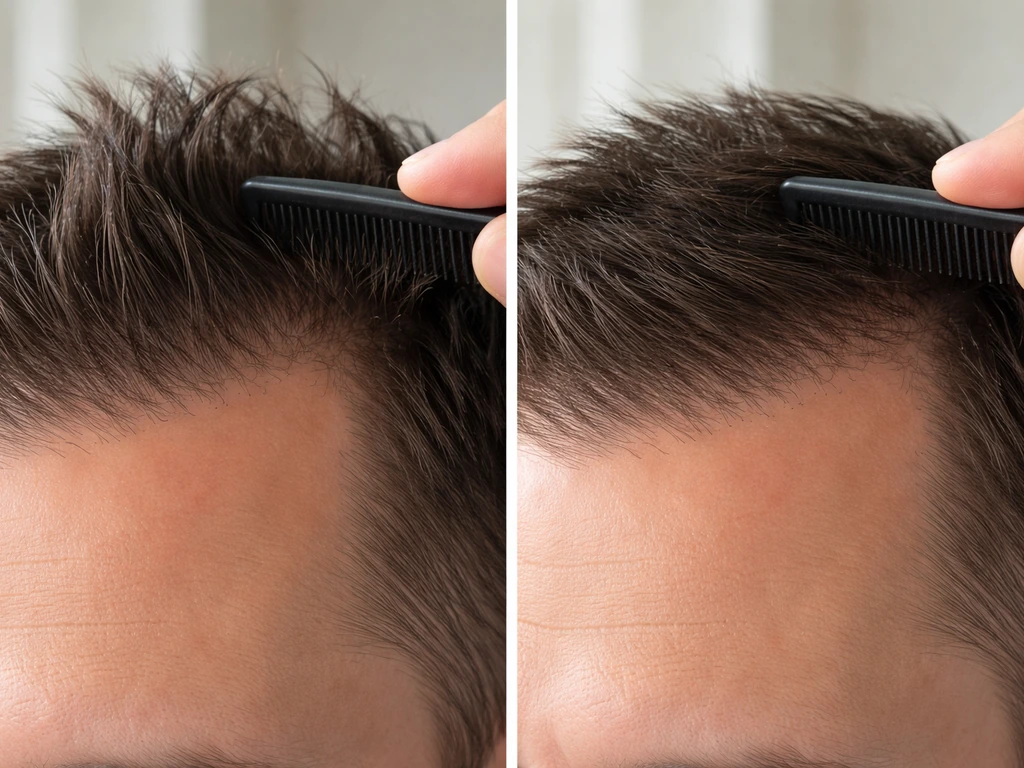
Cowlicks are most obvious along the front hairline and around the temples, which is exactly where you're dealing with short regrowth during a taper grow-out. They're caused by the direction your hair follicles grow, which is genetic and not changeable through products or styling alone. What you can do is work with the direction rather than against it. Blow-drying on a low speed setting while using a comb to press and direct the hair in the direction of the cowlick (not opposing it) helps the hair lie flatter and look more intentional. Using a diffuser attachment for wavy or curly hair allows you to manipulate individual sections while drying without disrupting the curl pattern. Don't expect products to override a strong cowlick. They can add weight and hold, which helps, but the direction the hair naturally grows will always try to reassert itself.
Patches and uneven growth
Patches of slower or sparser growth at the hairline are common and usually temporary. Different areas of the scalp go through growth cycles at different times, so some patchiness during the early weeks is just the normal growth cycle playing out, not a sign of a problem. If the patches are persistent past the three-month mark, that's worth discussing with a doctor, particularly if you're noticing thinning rather than just slow regrowth. It's important to distinguish between an awkward grow-out phase (which everyone goes through) and true hairline changes related to genetics, hormones, or age. If you're unsure, a dermatologist or trichologist can give you a clear answer.
Growth feels slow
If your hair seems to be growing more slowly than the 1 cm per month average, a few things are worth looking at: overall nutrition (especially protein and iron levels), stress, sleep, and scalp health. Scalp massage, while not a miracle solution, does increase blood circulation in the area and is a low-effort addition to a washing routine. Keeping the scalp clean and moisturized also removes any barrier to healthy growth. Beyond that, genetics sets the pace and there's a limit to how much you can accelerate it.
Texture changes as it grows
Some people notice their hair behaves differently at the hairline and temples as it gets longer, especially if it was cut very short. Hair that was lying flat when it was short may suddenly have more wave or curl as it gains length and weight, and the texture can feel coarser or softer than expected. This usually settles as the hair reaches a consistent length. Working with your actual current texture rather than what you expect it to be based on the top of your head is the practical approach. If the sides are coming in wavy, style them as wavy rather than fighting to make them flat.
The bottom line is that growing out a tapered hairline is a 2 to 4 month process for most people. The awkward window is real, but it's manageable. Resist the urge to over-trim, give your barber clear instructions, use blow-drying technique to your advantage, and remember that looking intentionally grown-out is a completely valid place to be while you get to where you're going.
FAQ
How do I know whether my grow-out is “normal awkward” or something is actually wrong with my hairline?
Normal awkward usually improves noticeably after about 6 to 8 weeks as the shortest perimeter catches up. If you still see the same patchy areas or progressive thinning after 12 weeks, especially at the crown or other distinct zones, it is worth checking with a dermatologist, because slow regrowth and true hairline change feel different over time.
Should I trim the taper line if it starts looking uneven during weeks 3 to 5?
Avoid touching the defined taper or fade line itself. Even a small home trim often creates a new uneven boundary that stays visible longer than the original awkward phase. Instead, focus on cleaning the neckline and sideburn area only, keeping any trimming below the existing lines.
How often should I see a barber during the grow-out if I want the edges to look tidy?
A good rule is minimal visits early, then targeted maintenance. You can often skip the barber for the first 4 weeks unless the neckline bothers you. Between weeks 4 and 8, one conservative visit to lightly clean sideburns and neckline (not the taper) is usually enough. After about 2 months, you can ask for reshaping once there is usable length.
What should I ask my barber to avoid resetting my taper while still looking better?
Ask for a conservative blend or “soften the harshness” at most, and explicitly request they do not re-cut into the taper line. If you want a tidy look, request work only on the neckline and sideburn edges, and ask them to maintain your current shortest point rather than taking it down again.
Can hair products make the tapered hairline look worse during the awkward phase?
Yes. Heavy waxes and glossy pomades can highlight texture and make short regrowth look more separate. Stick to matte or light-hold styling on the perimeter, and use just enough product to press hair into place, not to coat it.
My cowlick stands up at the temple, blow-drying direction helps but it still won’t lay flat. What should I do?
Try reducing the target, not fighting the direction. Direct the airflow low and slow while pressing with the comb in the cowlick’s natural direction, then let it set without touching it. If you still can’t control it at short lengths, consider waiting until the sides reach about 1 to 2 cm so you have enough length to train the hair consistently.
Is it better to grow out a taper or a fade differently?
Yes. A fade usually shows a stronger shadow effect around weeks 3 to 4, so the awkward window can feel longer. If you started with a fade, prioritize conservative neckline and sideburn maintenance and plan for an extra week or two before the contrast calms down, rather than trying to “fix” it by re-trimming the shortest area.
What if the temples and the sides are growing at different speeds?
That mismatch is common because those zones often go through growth cycles at different times. Treat it as a progression, not a defect, and keep styling consistent. You can also request your barber clean only the areas you can control (neckline, sideburns) so one side does not get over-corrected.
How can I improve growth if my hair seems slower than about 1 cm per month?
First review fundamentals: protein and iron intake, sleep, stress, and scalp health. Then add a gentle scalp massage during washes and make sure the scalp is clean and moisturized, because buildup and irritation can reduce comfort and consistency. If slow growth comes with noticeable thinning, get medical input rather than relying on product changes.
When should I stop worrying and focus on reshaping the style?
Once you are past the first two-month mark, you typically have enough length to talk about overall shaping. Before that, reshaping usually means taking hair shorter again, which prolongs the awkward phase. Use the first 2 months to manage perimeter tidiness and learn how your texture settles as it gains weight.