
Growing out hair color is not just waiting for your natural shade to come back. It involves managing two very different textures, tones, and levels of damage living on the same strand at the same time. The good news: with a clear plan, you can do this without hacking everything off or letting your hair look like a forgotten project for two years. Here is exactly how to do it.
How to Grow Out Hair Color: Fast, Safe Step-by-Step

Marcus Vickers
7 Apr 2026
Why growing out hair color is its own challenge
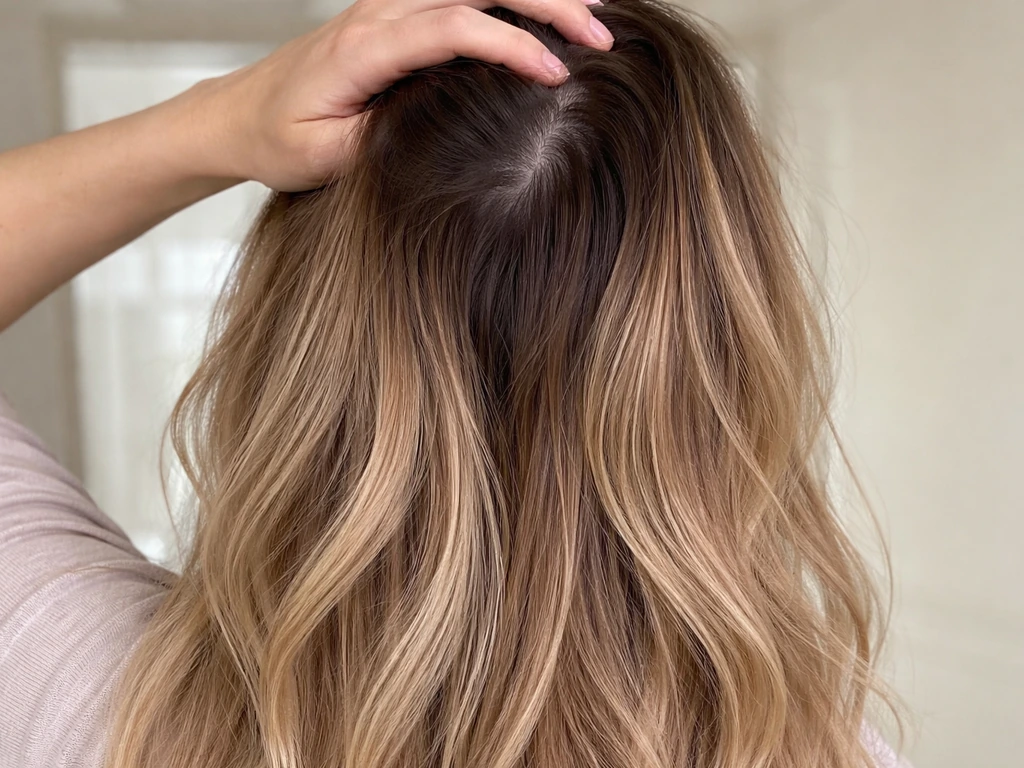
Normal hair growth is simple: hair emerges from the scalp and gets longer. Growing out color is more complicated because your new growth and your colored lengths are structurally different materials. Permanent oxidative dye uses hydrogen peroxide to open the cuticle, push dye precursors into the cortex, and oxidize your natural melanin toward colorless. Those large dye molecules get trapped inside the hair fiber, which is why permanent color does not wash out cleanly over time. Bleach goes further, actively breaking down melanin in the cortex and leaving the cuticle in a raised, porous state. That structural damage is most visible at the ends, where the oldest, most processed hair sits.
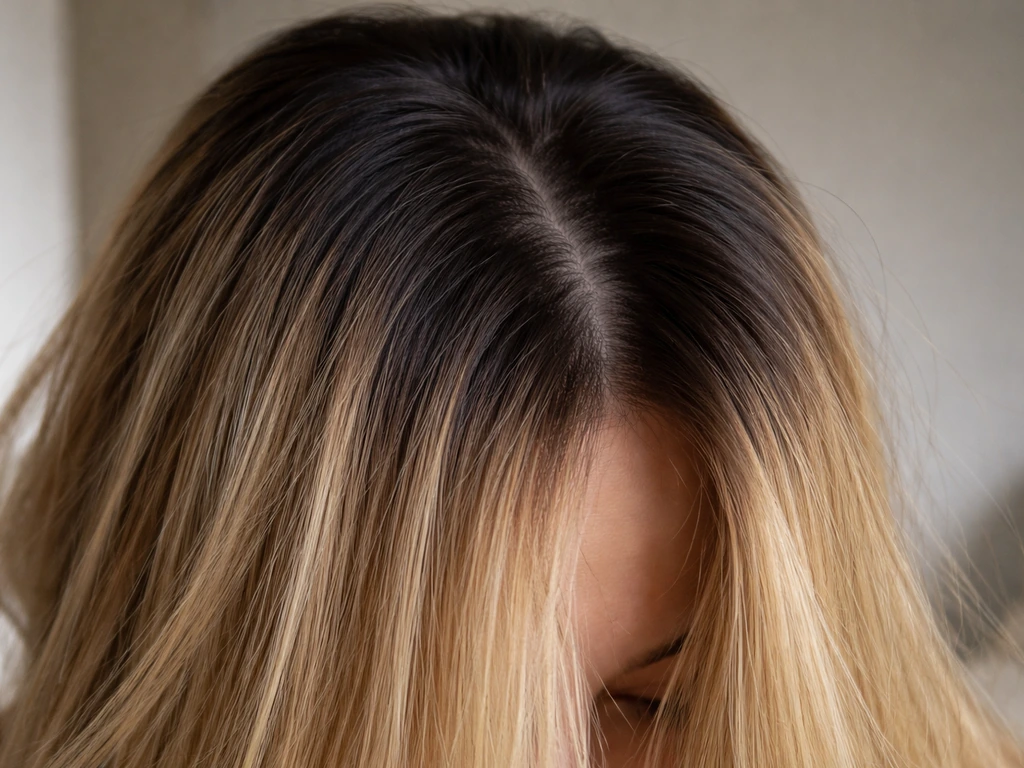
Because of all this, your new regrowth is not just a different color than your lengths. It is a different porosity level, a different protein structure, and often a different texture. That mismatch is what creates those visible bands of contrast and makes the grow-out look uneven or patchy if you do not manage it. Understanding that is the foundation of everything else in this guide.
Build a realistic grow-out plan before you do anything else
Before you decide your approach, you need a rough timeline. blank" rel="noopener noreferrer">Scalp hair grows at an average of about 1 centimeter per month, though individual rates range from roughly 0.6 cm to over 3 cm per month depending on genetics, health, and age. That means if your hair is currently sitting at a chin-length bob with dyed ends, getting enough natural regrowth to cut to an all-natural pixie could take anywhere from 6 to 18 months. If you are sitting on longer dyed lengths, a full grow-out to shoulder length with mostly natural color can take two or three years without significant cuts.
Roots become visibly noticeable to most people within about 3 to 6 months of stopping color, though it depends heavily on the contrast between your natural shade and the dyed color. Going from dark brown dye back to dark brown natural hair is forgiving. Going from platinum blonde back to dark natural hair is one of the most high-contrast grow-outs there is. Set your endpoint before you start: do you want to be fully natural, or are you okay with a blended tone? Do you want to cut aggressively as you go, or preserve length? Your answers will shape every decision below.
Also plan for setbacks. Heat damage, breakage at the line of demarcation (the exact point where treated hair meets natural regrowth), and unexpected color shifts mid-lengths are all common. Build those into your mental timeline rather than being surprised by them. Growing out colored hair gracefully is genuinely possible, but graceful does not mean perfectly smooth every step of the way.
Trim strategy: how often, how much, and when
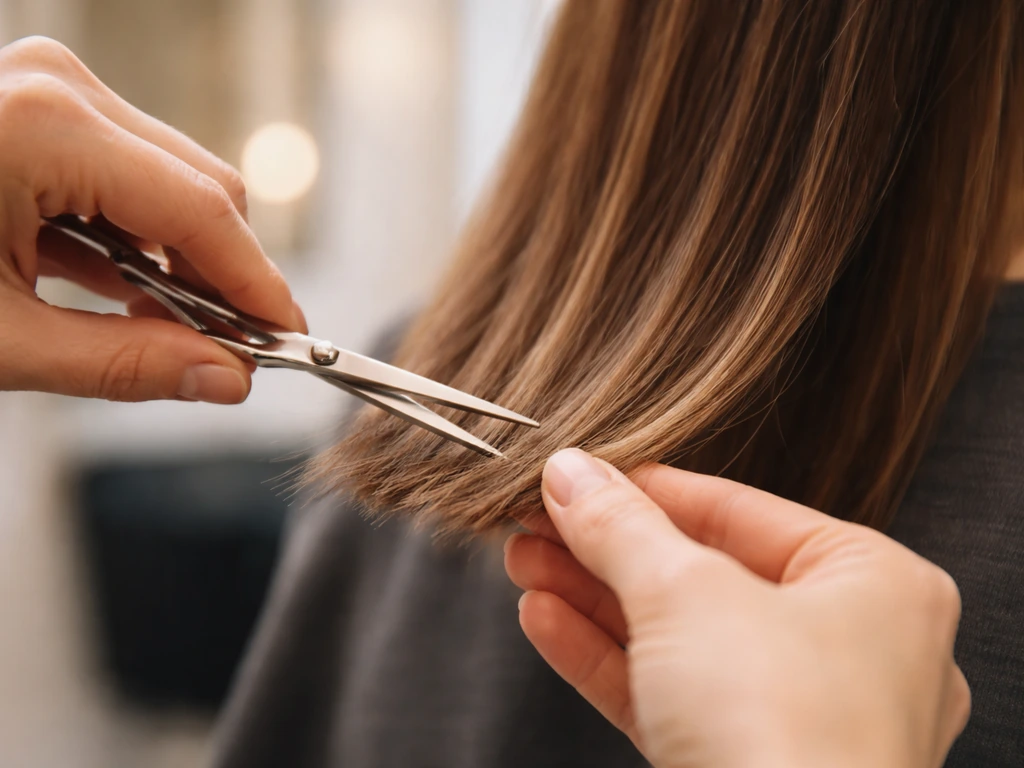
Trimming feels counterintuitive when you are trying to grow hair out, but it is non-negotiable for color grow-outs specifically. The ends of your hair are where damage accumulates most, and bleached or permanently dyed ends left untouched will split, snap, and travel up the shaft, costing you more length later. The goal is to remove damage without stalling progress.
The most effective approach is a technique called dusting: removing only about 1/8 inch or less of the ends every 6 to 10 weeks. This is less than a standard trim, targets only the frayed split ends, and does not meaningfully set back your growth timeline. If your ends are heavily bleached and breaking, a slightly larger cut every 8 to 12 weeks will do more long-term good than monthly micro-trims. A good rule for most people growing out color is to book a trim every 6 to 8 weeks, keep it light, and communicate clearly to your stylist that length retention is the priority.
Strategically, trims also help with the visual transition. As your natural hair grows in at the roots and your colored ends are slowly removed from the bottom, the line of demarcation moves upward and shortens. If your dyed ends have faded significantly, lighter regular trims can also help blend tones faster than you might expect. Think of it less as cutting and more as editing the contrast from the bottom while growth fills in from the top.
Daily maintenance that actually protects your hair during the grow-out
This phase demands more attention to your washing and conditioning routine, not less. The most damaging habit for color-treated lengths is washing in hot water. Hot water lifts the cuticle and accelerates color fade, which creates more tonal mismatch between your new growth and your ends. Switching to cold or lukewarm water for the rinse phase is one of the simplest, highest-impact changes you can make. It helps seal the cuticle, slow the fade, and reduce the visual contrast during grow-out.
Shampoo chemistry also matters more than most people realize. The pH of your wash products affects how the cuticle behaves and how quickly color fades. A scientific review available through PMC notes that shampoos with pH higher than 5.5 can increase frizz and tangling, and it suggests that using a low-pH conditioner afterward can help “seal” cuticle scales. Using a slightly acidic shampoo and conditioner (targeting around pH 4.8 to 5.3) helps keep the cuticle flat and the color more stable. Color-protective or sulfate-free formulas are worth it here, not just for marketing reasons but because lower-surfactant, lower-pH products genuinely reduce the rate of color leaching from the fiber.
Deep conditioning is essential because your colored lengths are higher porosity than your natural regrowth. Porous hair loses moisture faster, tangles more, and is more prone to breakage at the demarcation line. Aim for a hydrating mask once a week and a leave-in conditioner on damp hair before heat styling. On heat: reduce it. Flat irons and curling tools above 350°F on already-bleached ends will accelerate breakage exactly at the points you need to manage carefully. UV exposure also fades color, so a UV-protective hair serum or spray on days when you are outside for extended periods is worth adding.
Color-depositing conditioners are a useful tool for managing brassiness in the colored lengths while you wait for natural color to take over. If your bleached or lightened ends are shifting orange or yellow as they fade, a toning conditioner used once or twice a week keeps the lengths looking intentional rather than neglected. These products are not permanent, but they bridge the gap between salon visits and reduce the visual shock of the contrast band.
Color fade vs color removal: choosing your speed
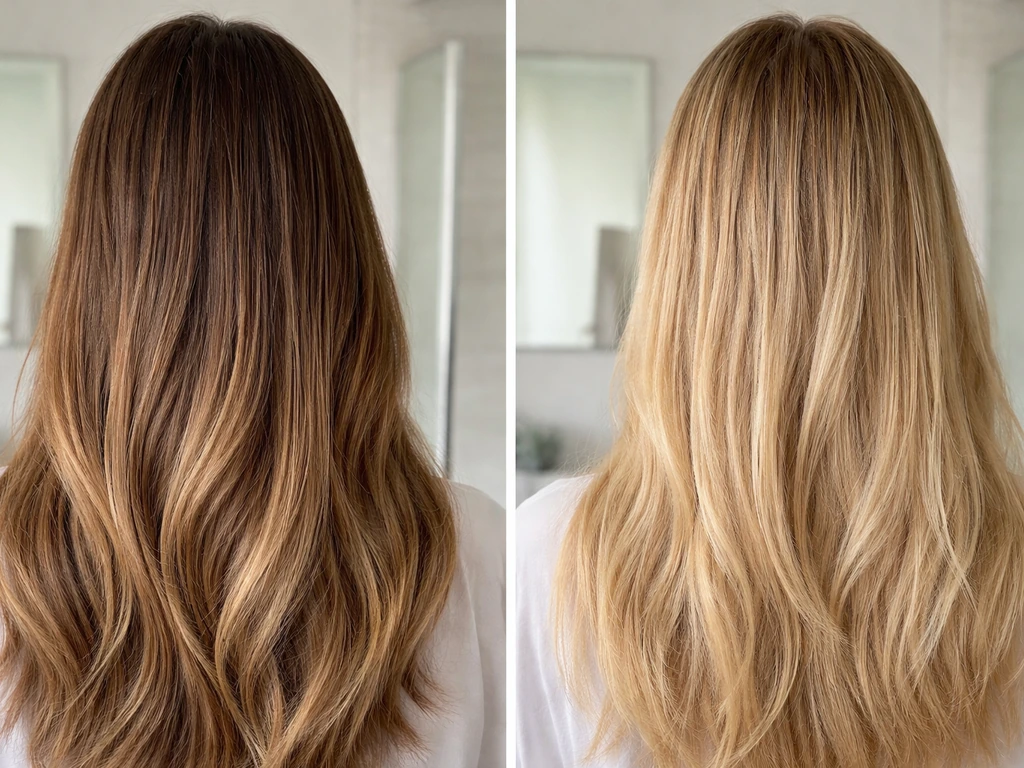
If you want faster results and are willing to do something more than just wait, you have a few options. The first is letting the color fade naturally, which works best for demi-permanent and semi-permanent formulas. Demi-permanent color uses lower peroxide levels and deposits more on the cuticle surface than deep in the cortex, so it genuinely does fade significantly over months of washing. Permanent color is more stubborn because those large dye molecules are locked inside the fiber, and no amount of washing removes them cleanly.
For permanent color, color removal (sometimes called color stripping) uses reducing agents to shrink those trapped dye molecules back to a smaller size so they can be washed out. This is different from bleaching: it targets artificial pigment without (ideally) destroying your natural melanin. The result is often an orange or brassy tone because your underlying pigment is exposed, and a toner or gloss is typically needed afterward. It is a faster path to something closer to natural, but it comes with unpredictability and the process can be drying on already-compromised hair.
Bleaching out artificial color is the most aggressive removal option. It can work but it also stacks structural damage on top of existing damage, especially if the hair has already been bleached before. For many people, the best way to grow out colored hair is a hybrid: one professional color correction to bring the ends closer to your natural tone, followed by a patient grow-out from there rather than repeatedly treating the same damaged hair. This is worth discussing with a colorist, not attempting solo.
A professional gloss or toner is also worth mentioning here as a low-damage option. If brassiness is the main issue and your roots are coming in within a reasonable range of your ends, an in-salon gloss can blend both zones into a cohesive tone without depositing permanent color or lifting anything. This buys you time, reduces visual contrast, and does not compromise the grow-out. Think of it as a maintenance tool rather than a setback.
One specific problem worth addressing directly: if you have dark or black dye in your lengths that you want to grow out, the approach is different from lighter colors because dark pigment is particularly difficult to remove without significant bleaching. The full breakdown of managing that specific transition is covered in the guide on how to grow out black hair dye without wrecking your ends.
Stage-by-stage guide for different starting lengths and styles
Where you are starting from changes everything. Here is how to approach the grow-out based on your current cut and color situation.
Growing out a pixie or buzz cut with colored regrowth
This is the most high-contrast scenario because the distance between your scalp and your ends is short, meaning the demarcation line is very visible and there is not much length to work with for hiding or blending. The grow-out strategy here is mainly about redirection: changing your part regularly to break up the visual line, using lightweight pomade or gel to smooth new growth flat, and using clips or pins to control the direction of growth as it comes in. Growing from a pixie to a longer cut takes roughly 12 to 18 months of consistent growth with light trims. Be patient with the in-between stages, which are discussed more in the styling section below.
Growing out bangs with color contrast
Bangs with a color mismatch are tricky because the fringe frames the face and any contrast is immediately visible. Options include sweeping the bangs to the side as they grow to blend them with the rest of the hair, using a toning product to minimize the tonal difference at the tips, or getting a small trim to bring the fringe line just to where the natural color starts if the fringe is short enough. A stylist can also cut a soft, curtain-bang shape that disguises the grow-out line better than a blunt bang.
Growing out an undercut with regrowth
Undercuts grow out from the nape and sides, which means the shortest, most recently shaved areas often have the most contrast with the colored top sections. The strategy here is to let the undercut sections grow without touching them while managing the top length carefully. As the undercut grows in, the contrast typically becomes less jarring because the shorter sections are newer, less-processed hair. Avoid re-shaving the undercut, which just restarts the clock.
Growing out layers with uneven color banding
Layers create multiple length points, which means color banding can appear at different heights across the head simultaneously. This is one of the more complex grow-outs because you may have mid-lengths that are one tone, ends that are another, and roots that are a third. A technique known as horizontal color correction, applied in sections across the bands rather than in vertical slices, is a professional approach that can unify these zones. If you are not going to a colorist, the priority is to protect the layers you have and trim evenly so the lengths graduate in a controlled way rather than becoming more ragged and uneven over time.
Growing out a bob with dyed ends
The bob is one of the more manageable starting points because there is enough length to style creatively and the blunt ends make the grow-out line easier to predict. The strategy is: minimal trims to preserve length, regular toning to keep the ends from going too brassy, and styling that uses the length to your advantage (tucking, wrapping, and volume techniques covered below). Growing out dyed hair gracefully from a bob is doable in about 12 to 18 months if you are working toward shoulder length.
How to style through the awkward phases without giving up
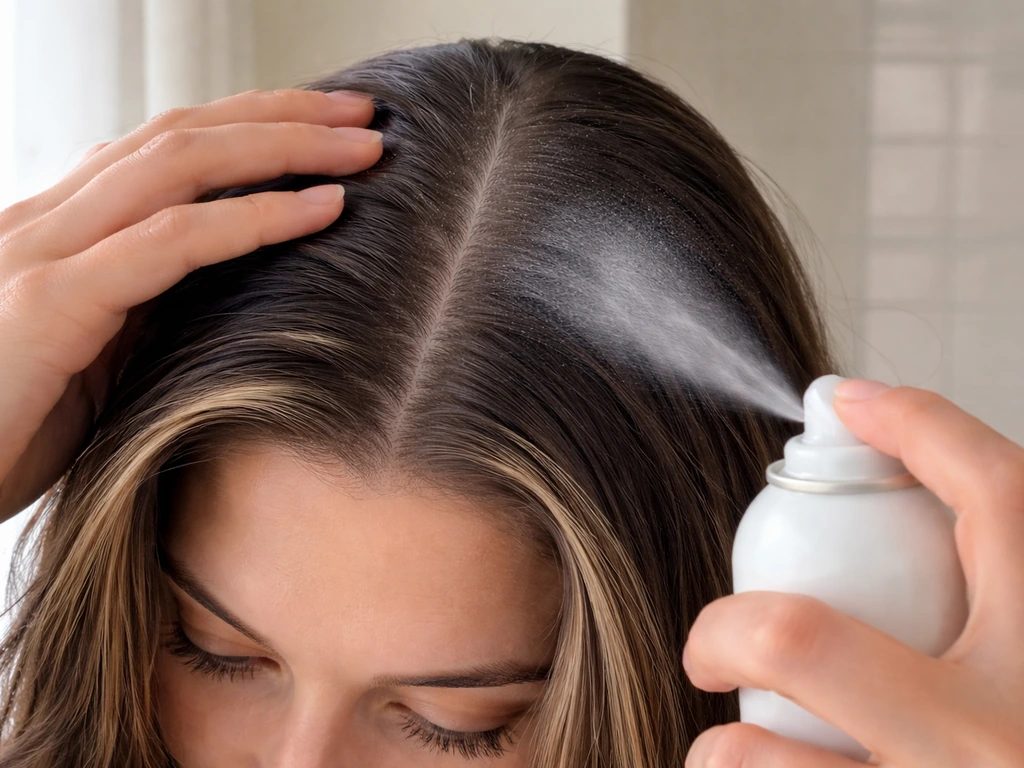
The awkward phase is real and it happens to everyone. Here are the techniques that actually work for managing the look of regrowth contrast while you wait things out.
Part changes and root concealment
Changing your part is the fastest, free, zero-damage method for disguising an obvious demarcation line. A center part on previously side-parted hair creates a completely different frame around your face and often makes the root contrast look more deliberate than neglected. Deep side parts can also direct attention away from the top of the head. Experiment with this before reaching for any product.
Slick, smooth, and sleek styles
Slicking hair back with a light gel or pomade minimizes the visibility of root-to-length contrast because the hair sits flat and the eye reads it as a smooth, intentional style rather than uneven color. A slick low bun, a tight ponytail, or a smoothed-back style with gel is one of the most effective camouflage techniques at any length past a couple of inches. Use a medium-hold product that does not add white cast or flaking at the roots.
Braids, twists, and tuck-and-roll methods
Braids are particularly effective during grow-outs because they mix lengths and tones together in a woven pattern that obscures the demarcation line almost completely. A loose French braid, a milkmaid braid, a simple two-strand twist, or even a loose side braid can make a grow-out look like a deliberate low-maintenance style. Tuck-and-pin techniques, where the ends are tucked under and secured with bobby pins, are also useful for disguising the color difference in the oldest, most processed sections.
Clips, accessories, and strategic texture
Barrettes, claw clips, and headbands physically cover the demarcation zone or redirect attention away from it. A large claw clip at the mid-back of the head while growing out a bob or lob is not just on trend, it is genuinely practical for hiding where natural root color ends and dyed lengths begin. Textured styles like loose waves or scrunched curls also break up the visual line of contrast far better than straight, flat hair. Adding texture with a salt spray or diffuser scatters the light and makes the tonal shift much less obvious than it looks on pin-straight hair.
Blending techniques that buy you months
If you are willing to do one salon appointment rather than none, ask for a toning gloss or a babylights application at the roots. Babylights are ultra-fine highlights added just at the new growth zone that soften the line between natural and dyed hair without fully coloring the roots. This is considered a blending technique rather than a maintenance touch-up and it can buy you three to six more months of invisible grow-out before you need to address the color again. It is one of the lowest-damage options because it involves very small sections and does not overlap onto already-processed lengths.
A note on growing out toward natural gray or salt and pepper
If your natural color includes gray or silver, the grow-out strategy has some additional nuances. Natural gray tends to have a different texture than pigmented hair, and the contrast between gray roots and colored lengths can be stark, especially if you have been covering gray with a warm or dark shade. The toning and blending strategies above all apply, but there are also specific techniques for managing the transition to gray that go into much more depth in the dedicated guide on how to grow out salt and pepper hair gracefully.
What to actually do this week
Stop the overwhelm by narrowing it down to the first concrete steps. Here is what to do in the next seven days to start the grow-out properly.
- Switch to cold or lukewarm water for your final rinse immediately. This is the fastest, zero-cost change you can make today.
- Audit your shampoo and conditioner. If they are high-sulfate or have a high pH, replace them with a color-protective or sulfate-free formula.
- Book a trim for 6 to 8 weeks from now, not a cut. Tell your stylist you are growing out, you want to preserve length, and you need only the most damaged ends removed.
- Decide your speed: are you going natural-only, or are you open to one blending appointment (gloss, toner, or babylights)? Make this decision now so you have a plan, not a default.
- Start a deep conditioning treatment this week and schedule it as a weekly habit going forward.
- Pick one styling technique from the section above that fits your current length and practice it. The goal is having a go-to style for the awkward days.
- Take a photo of your hair today. Grow-outs are slow and it is hard to see progress without a reference point. You will want to look back at it in three months.
Growing out color takes time no matter what you do, but it does not have to look bad while it is happening. With the right maintenance, a smart trim schedule, and a few reliable styling tricks in your toolkit, you can get through every stage looking like you made a deliberate choice, not like you gave up.
FAQ
Can I just dye over the roots to hide the demarcation line?
Yes, but only if you treat it like a blend. If you bleach or re-dye over the demarcation line, you are effectively re-damaging the same ends you are trying to preserve. A safer option is a targeted root-only toning gloss (or babylights) that stops at the new growth zone, leaving the darker or more porous ends untouched until your next planned cut.
What if my ends are breaking more than expected, should I still dust every 6 to 10 weeks?
If the ends are actively splitting, the best “hair growth” decision is usually a slightly larger dusting sooner, not waiting for the next scheduled trim. When you see multiple fractures in a single area, tiny trims every few weeks can leave you with ragged edges that keep catching and breaking. A stylist can assess whether 1/8 inch dusting is enough or if a bigger cut will prevent the problem from traveling upward.
How do I know if my shampoo is making my color fade faster during a grow-out?
Start by checking the product feel and routine, not the label. Many clarifying or “deep clean” shampoos remove more oils and can speed fade, even if they are not marketed for color removal. In a grow-out, reserve clarifying washes for rare occasions, keep most washes sulfate-free and use lukewarm water, then follow with a heavier conditioner or mask on the dyed lengths.
Should I wash my dyed lengths more or less often while growing out color?
For many people, it is best to shampoo only the lengths that need it and keep the scalp focused on cleansing. If your dyed ends are already dry or porous, frequent full-head lathering can worsen mismatch and tangling at the demarcation line. A practical approach is to cleanse the scalp, let the suds rinse through, then apply conditioner from mid-length to ends.
What are the biggest mistakes with heat styling during a color grow-out?
Dry texture does not always mean you need more heat, sometimes it means your hair is absorbing damage unevenly. Avoid cranking temperature or running the iron repeatedly on the same sections, especially near the treated ends. Use lower heat settings, limit passes, and consider air-drying with gentle styling before you reach for hot tools.
How often should I use a toning conditioner, and can it make things worse?
Yes, but choose the right kind. Color-depositing conditioners can help manage brassiness, but using strong toners too often can leave a patchy residue and make the grow-out look “stained.” Aim for once or twice weekly at most, confirm the undertone you are correcting (orange versus yellow), and pause if you notice the shaded area is getting darker at the same height.
When is it worth booking a salon color service instead of waiting it out?
If the line is too obvious to camouflage with styling, a precision option is a professional root-focused blend that targets only the regrowth zone (for example, babylights or a toning gloss placed near the demarcation). This is different from full re-coloring because it is meant to soften transition rather than deposit heavy pigment into already-treated ends.
What’s the best way to reduce breakage specifically at the ends during grow-out?
Protecting the ends from friction matters as much as conditioning. Use a leave-in to improve slip, detangle gently with a wide-tooth comb, and consider a satin or silk pillowcase to reduce surface roughness that encourages splits. If you notice more breakage overnight, the fabric and how you sleep can be the hidden cause.
Does growing out color work differently for curly or coily hair?
If your hair is curly or coiled, the “banding” can look different because curl pattern changes with porosity. Instead of evaluating color only when hair is stretched, check how it looks when dry in your natural texture, then adjust toning and trimming based on the actual dry appearance. Also detangle in sections with a lot of slip, because porous dyed lengths tangle faster in curls.
What changes if my dyed hair is very dark (black or near-black)?
If you have dark dye, you usually need a longer plan because removal typically requires more lift or stronger chemical steps. Rather than repeated at-home attempts, discuss with a colorist whether a hybrid correction to bring ends closer to your target is appropriate, then maintain with minimal interventions until enough new growth makes the blend achievable.