
The best way to grow out colored hair is to protect what you already have while letting time do its job. That means switching to a sulfate-free, color-safe shampoo, building in weekly deep conditioning, trimming just the tips every 6 to 8 weeks (not a full cut), and using blending techniques at the salon to soften the regrowth line as your natural color comes back in. Hair grows about half an inch per month on average, so a realistic plan beats wishful thinking every time.
Best Way to Grow Out Colored Hair: Step-by-Step Guide

Marcus Vickers
27 Apr 2026
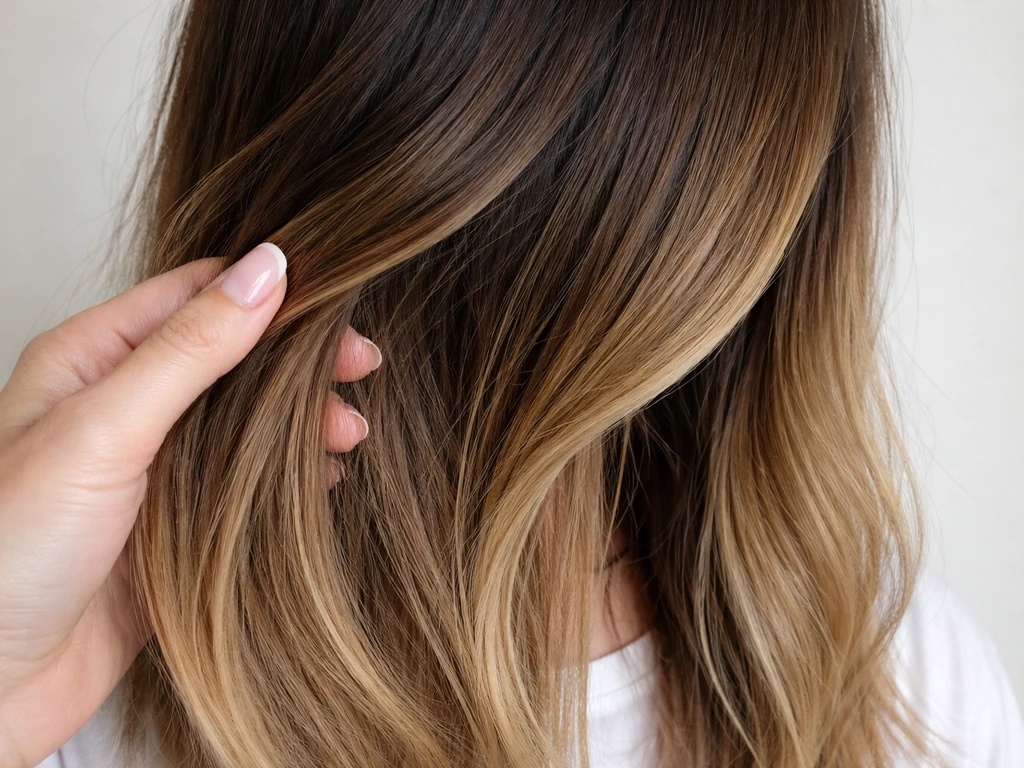
What actually happens as colored hair grows out, stage by stage
When your color was applied, ammonia opened the cuticle so dye could penetrate into the cortex. Bleaching went further by stripping out your natural melanin with hydrogen peroxide. That process permanently changes the hair fiber structure. The colored or bleached section of your hair is more porous than your new growth, meaning it absorbs and loses moisture faster, fades with UV exposure, and breaks more easily under tension. Your new growth, by contrast, is virgin hair with intact cuticles and its original melanin. These two sections behave very differently, which is what makes the grow-out feel complicated.
Here is roughly what to expect at each stage, using that half-inch-per-month benchmark:
| Stage | Approx. Timeframe | What You See | Main Challenge |
|---|---|---|---|
| Early regrowth | Weeks 1-6 (0-1 inch of new growth) | Visible root line, color contrast at the scalp | Harsh demarcation between natural and dyed sections |
| Mid transition | Months 2-5 (1-2.5 inches of new growth) | Two distinct color zones, older ends may fade or look brassy | Frizz, dryness at the ends, uneven texture between zones |
| Longer blend zone | Months 6-12 (3-6 inches of new growth) | Gradient of natural-to-dyed color, ends may be significantly lighter or differently toned | Breakage at the most chemically processed section, length unevenness |
| Near full grow-out | 12-24+ months depending on starting length | Most visible color is at the ends only | Decision point: trim off the last of the color or keep the gradient |
If you bleached heavily or lightened to platinum, your ends will behave like a completely different material than your roots. They have higher porosity, feel more fragile when wet, and can look dull or brassy even after toning. Knowing this helps you make smarter decisions about products and heat styling at each phase.
Managing color between salon visits (and when to go back)
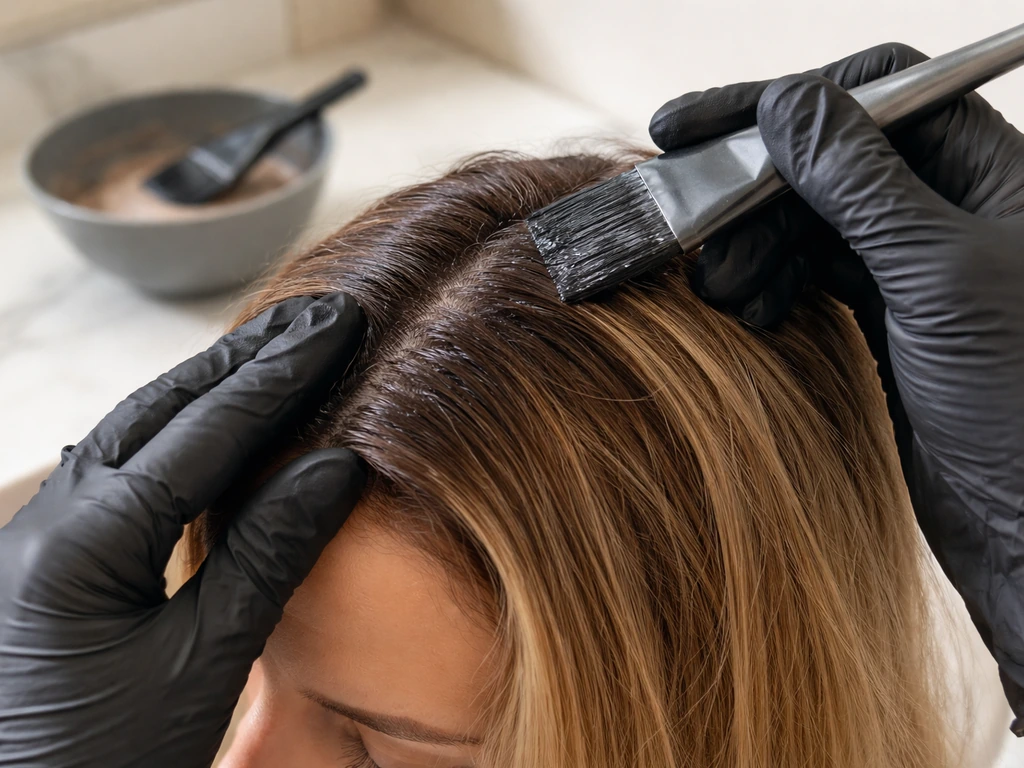
One of the best things you can do for a smoother grow-out is talk to your colorist about low-maintenance techniques before your next appointment rather than waiting for the roots to become a problem. Root shadowing and root melt services deposit a shade close to your natural color at the scalp, creating a gradient instead of a hard line. Color melt techniques blend overlapping tones down the strands so that as your natural color grows in, the transition looks intentional rather than neglected. Balayage-style colors generally grow out the most softly and often only need a salon visit every 3 to 4 months instead of every 4 to 6 weeks.
If you are actively trying to stop dyeing altogether, resist the urge to do at-home touch-ups that could create new harsh lines or cause uneven overlap. Instead, use color-depositing conditioners to refresh fading tone between visits or to gently bridge the color gap while your natural shade catches up. These products are temporary, and their staying power depends on your hair's porosity, moisture levels, and how frequently you apply them. Porous, bleached hair will absorb depositing pigment faster but also release it faster.
One rule that is easy to forget: wait at least 48 hours after any coloring service before washing your hair. The FDA advises consumers to do a patch test each time they dye their hair wait at least 48 hours after any coloring service before washing your hair. That window gives the cuticle time to close and lock the color molecules in place, which pays off in longevity.
The haircare routine your color-treated hair actually needs
Color-treated hair, especially bleached hair, is prone to dryness and breakage. The routine you use during grow-out has a direct effect on how much length you actually retain, so this is worth getting right from the start.
Cleansing

Switch to a sulfate-free shampoo formulated for color-treated hair. Sulfates are strong detergents that strip color faster and dehydrate the already-porous sections of your hair. Washing less frequently also helps: 2 to 3 times a week is plenty for most people, and it significantly extends both your color vibrancy and your hair's moisture balance. Use cool or lukewarm water, not hot, since heat opens the cuticle and lets color and moisture escape.
Conditioning and moisture
Pair every wash with a nourishing conditioner designed for color-treated or chemically processed hair. Apply it from mid-length to ends, which is where the most damage lives. On top of your regular conditioner, add a deep conditioning mask once a week. If your hair is bleached or heavily processed, a bond-building treatment used alongside lightening services (or incorporated into your at-home routine) can help increase tensile strength and reduce breakage during detangling and styling. These bond-repair products work by targeting the internal structure of the hair shaft, making it more resilient to the everyday mechanical stress of brushing and heat.
Protecting from heat and UV
UV rays fade surface pigments and also weaken the protein structure and cuticle function that keeps color sealed in. Because bleached hair has lost its photoprotective melanin, it is even more vulnerable than uncolored hair to sun damage. Use a leave-in product with UV protection or a dedicated hair sunscreen spray whenever you are going to be outside for any significant time. When you heat style, always apply a heat protectant first, and try to keep tool temperatures below 350°F (175°C) on the ends.
Detangling
Detangle gently starting from the ends and working upward toward the roots, always while hair is conditioned (either with a detangling spray or conditioner in the shower). Rough detangling is one of the most common causes of breakage on porous, chemically treated hair. A wide-tooth comb or a soft detangling brush causes far less mechanical stress than a regular brush on wet hair.
Trimming and blending: how to cut without losing your progress
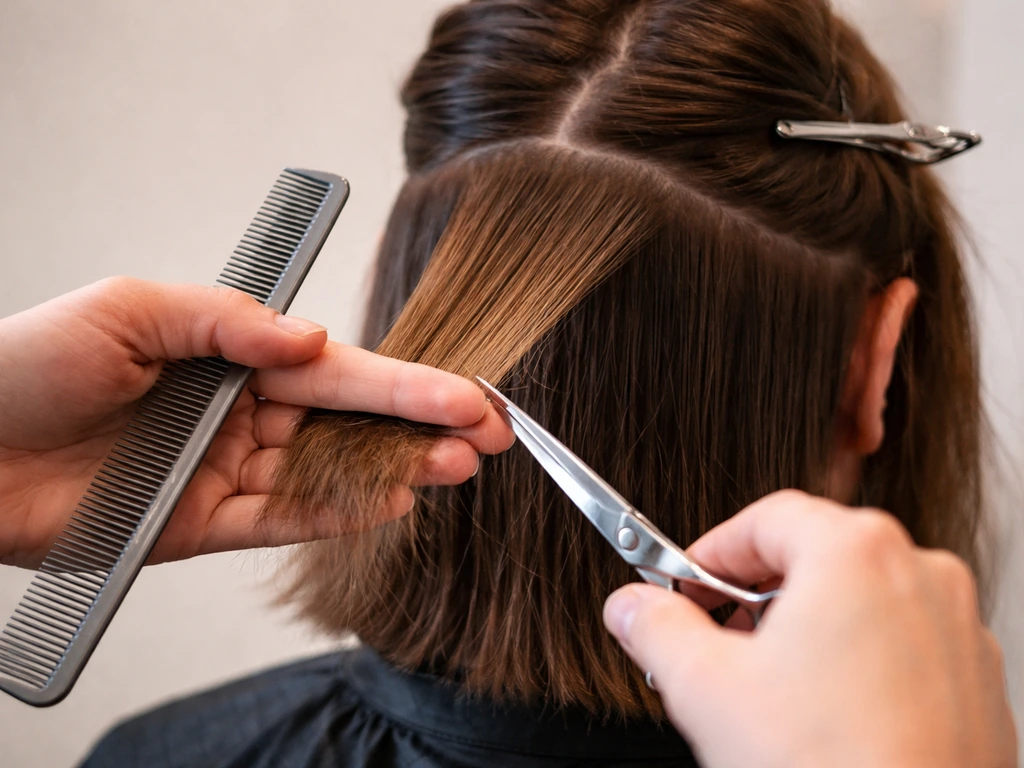
A lot of people avoid trims when growing their hair out because they are afraid of losing length. The real risk is the opposite: if you skip trims entirely, split ends travel up the hair shaft and cause more damage over time, which costs you more length in the long run. The key is strategic trimming, not frequent cutting.
The approach that works best for retain-and-grow is sometimes called dusting: removing only the very tips of the hair, roughly a quarter inch, every 6 to 8 weeks. This removes split ends before they worsen without meaningfully setting back your length progress. At that growth rate of half an inch per month, you are still netting real growth every cycle.
Beyond just the length, the shape of your cut matters during a color grow-out. Ask your stylist for a shape-maintaining trim rather than a reset cut. If you have layers, they can be gradually blended to remove the shorter pieces over time rather than cut all at once. If you grew out an undercut or have a lot of variation in length underneath, talk to your stylist about how to blend those sections so they do not create a visible ledge as the shorter sections catch up. Done well, a blending trim can make a two-color regrowth look far less jarring.
Getting through the awkward phases without starting over
The awkward phase is real and it is universal. The visible root line, the uneven lengths from previous layers or bangs, the frizzy or dry ends from old bleach, the moment when your hair just looks unfinished. This is the phase where most people talk themselves into cutting it all off, and in most cases that just resets the clock. Here is how to navigate the most common problems:
The regrowth line
A hard root line is the most visible sign you are growing out color. The fastest fix is asking your colorist for a root shadow or root melt at your next appointment. This deposits a tone that blends your natural root color into the dyed section with a gradient rather than a line. If you are avoiding the salon entirely, color-depositing conditioners in a shade close to your natural color can soften the contrast temporarily. For darker hair growing in, this can actually look really intentional and even fashionable as a lived-in root.
Length unevenness
If your previous cut had lots of layers, or if you are growing out bangs, you will hit a phase where the lengths are very uneven. This is the hardest part to style because different sections of hair fall at different points on your face and neck. Braids, half-up styles, and twists are your best tools here because they gather different lengths together and create a uniform silhouette. Growing out bangs specifically can take 6 to 12 months to fully blend into the rest of the hair depending on how short they were cut.
Dry or frizzy ends
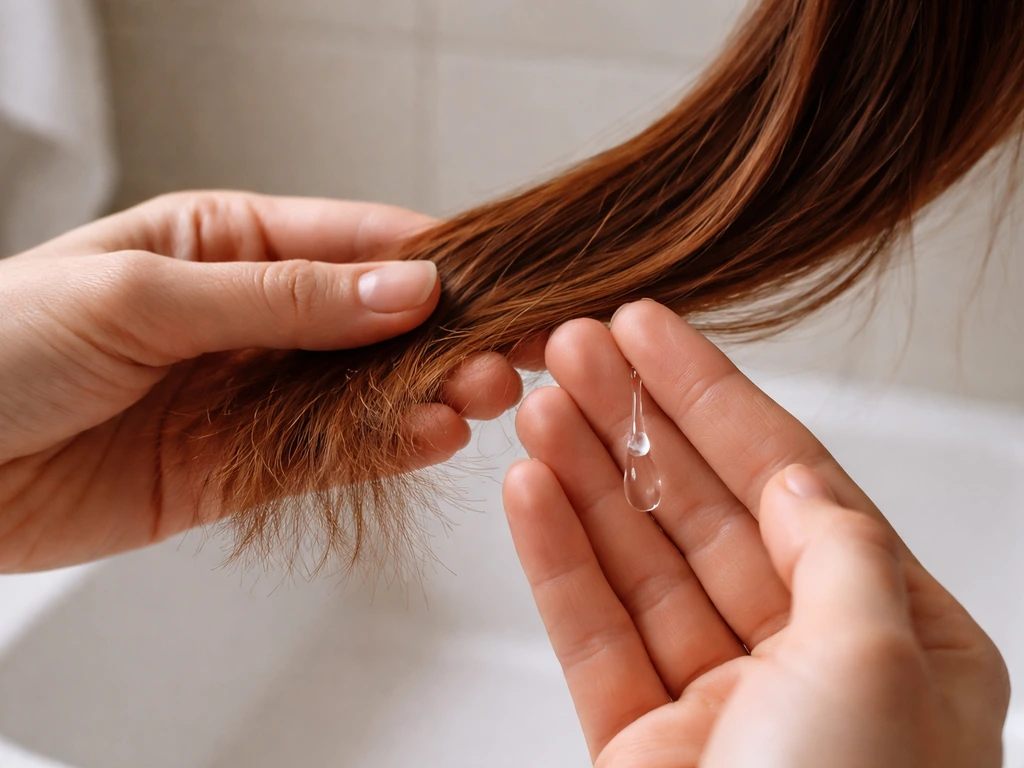
The ends of growing-out colored hair are the oldest and most processed part. They can look dull, feel rough, and frizz easily. This is a moisture problem more than anything else. A leave-in conditioner or hair oil applied to the ends after washing can dramatically improve their appearance. If they are beyond saving with moisture alone, it may be worth trimming more than a dusting amount that one time to remove the worst damage and start fresh from a healthier point.
Styling strategies that make transitions look intentional
The goal with styling during a grow-out is to work with the transition rather than fight it. These styles do the heavy lifting without relying on daily heat tools, which is important because heat damage compounds on already-stressed colored hair.
- Braids and braid-outs: French braids, Dutch braids, and simple three-strand braids gather uneven lengths together and create a clean silhouette. Braiding damp hair and letting it air dry also gives you waves the next day without heat.
- Half-up styles: Pulling the top section back into a bun or clip disguises a visible root line and works across almost every length from a bob through mid-back.
- Low buns and twisted updos: These are the most forgiving styles during mid-length grow-out and can be dressed up or kept casual. They also minimize tangling and mechanical stress on the ends.
- Wash-and-go with product: If your hair has any wave or curl, embracing the natural texture with a light cream or gel can make uneven lengths look like intentional texture rather than a mistake.
- Headbands and scarves: A wide headband or tied scarf placed at the hairline draws the eye away from the root contrast and can make even a harsh demarcation look styled.
- Protective styles: Low-tension braided or twisted styles protect the ends from environmental damage and reduce the daily manipulation that causes breakage. Avoid styles with tight tension at the scalp, since traction stress on chemically treated hair significantly raises the risk of breakage and even hair loss over time.
The one styling habit worth dropping during a color grow-out is tight ponytails and high buns pulled with elastic bands directly on the damaged sections. The older, more porous part of your hair is where the elastic sits, and repeated tension there causes snapping. Use a soft scrunchie or ribbon instead.
A realistic timeline and your actual next steps
Here is what a realistic grow-out looks like at the standard half-inch-per-month rate, along with what to focus on at each point:
| Timeframe | New Growth | Focus | Action |
|---|---|---|---|
| Now (Week 1) | 0 inches | Set up your routine | Switch to sulfate-free shampoo, buy a deep conditioning mask, start washing 2-3x per week |
| Month 1 | ~0.5 inch | Color management | Book a root shadow or melt appointment if the contrast bothers you; start weekly masks |
| Month 2-3 | 1-1.5 inches | Trim and shape | Get a dusting trim (1/4 inch); discuss blending strategy with your stylist |
| Month 4-6 | 2-3 inches | Texture and breakage | Add a bond-building treatment to your routine; lean on protective and heatless styles |
| Month 6-9 | 3-4.5 inches | Mid-transition styling | Use braids and half-ups to manage uneven lengths; assess end condition, trim if needed |
| Month 12+ | 6+ inches | End-game decision | Decide whether to trim off remaining dyed ends or let them grow out further; continue routine |
Your weekly non-negotiables during the entire grow-out: wash with sulfate-free shampoo, condition every wash, deep condition once a week, use UV protection before going outside, and detangle gently. That is genuinely most of the work.
The monthly check-in that keeps you on track: look at your ends under good light. If you see significant splitting or breakage climbing up the shaft, schedule a trim. If the color contrast at your roots is stressing you out, book a blending appointment rather than doing an all-over re-color that complicates the grow-out further.
If you want to grow out colored hair gracefully, prioritize blending at the roots so the transition stays intentional instead of stressful how to grow out colored hair gracefully. Keep track of your progress with monthly photos from the same angle and lighting. When the awkward phase feels endless, seeing three months of side-by-side photos makes the progress visible in a way that day-to-day observation simply cannot.
If you are growing out a specific color situation, the approach shifts slightly. Growing out black hair dye involves a different contrast management strategy than growing out highlights or a full bleach. For the same gentle transition mindset, see how to grow out dyed hair gracefully for more specific timing and blending tips. Growing out salt and pepper or natural gray requires its own approach to transition styling and color-depositing products.
Growing out salt and pepper or natural gray requires a routine that protects your strands while you manage contrast as the new growth comes in. The core routine above applies across all of them, but knowing your specific starting point helps you customize the blending and timeline decisions at the salon. If you want a more step-by-step plan, this guide on how to grow out colored hair gracefully can help you match blending and trimming to your exact timeline.
The grow-out is a process, not a problem. With the right routine and a blending strategy that fits your starting color, you can move through every awkward stage looking intentional rather than in-progress. Your hair is growing whether you have a plan or not. If you are wondering how to grow out hair color without it looking patchy, start by planning your routine around the grow-out stages and the root line. Having one just means more of that growth actually sticks.
FAQ
How long should I wait before I can safely straighten or curl my colored hair during the grow-out?
If you can avoid direct heat tools early in the grow-out, do. When you do style, use a heat protectant every time and keep the ends as the main focus (highest-porosity area). If your hair feels gummy, extremely dry, or breaks when detangled, pause heat styling for a couple of weeks and use bond-building or deep conditioning first, then reassess.
What’s the safest way to wash colored hair if I train or sweat a lot?
Follow the same routine (sulfate-free shampoo, conditioner every wash), but rinse sooner and wash soon after workouts so sweat and residue do not sit on the scalp. Use lukewarm water, concentrate shampoo on the roots only, and keep conditioner to mid-length and ends. If your hair gets greasy quickly, consider a lightweight rinse-out conditioner on days you are not doing full conditioning.
Can I use purple shampoo or toning masks while I’m growing out bleach or highlights?
Yes, but treat toners as a controlled, periodic step. Start by using them less frequently than you think, because porous ends can grab pigment unevenly and lead to patchiness. Apply toning products mainly to the previously lightened sections, and monitor in good lighting. If your hair looks dull or turns ashy, stop and switch to moisture-focused masks.
How do I prevent dryness and breakage if my ends look bad but I don’t want to trim much?
You can reduce damage without frequent cuts by increasing “friction control.” Detangle only on conditioned hair, avoid tight ties on older ends, and apply a leave-in plus a small amount of hair oil to the ends after washing. If splitting keeps appearing higher on the shaft over two monthly check-ins, that is your signal that dusting is no longer enough.
Is it better to dust (quarter-inch trims) or get a full cut while growing out color?
For most people, dusting is better because it removes split tips before they travel upward while preserving length. A full cut or reset trim makes sense only if the hair is significantly damaged all through the mid-lengths, tangles easily, or you are dealing with uneven bulk that cannot be corrected with blending.
What should I do if my regrowth line looks uneven because of uneven dye placement?
Ask your colorist about a blending service (root shadow, root melt, or a targeted color melt) that follows the actual regrowth pattern, not a uniform all-over retone. If you are skipping the salon, color-depositing conditioner can soften contrast, but apply in thin, controlled applications and stop if you notice darker spots forming.
Can I swim or use hot tubs while growing out colored or bleached hair?
You can, but plan for protection. Wet hair first with clean water, apply a leave-in or a dedicated hair protectant, and keep strands secured so chemicals do not concentrate at the ends. Rinse immediately after swimming, then follow with conditioner and a weekly mask. Chlorine and salt water tend to fade pigment faster, even if your routine is strong.
Do I need to change my shampoo frequency as my natural color grows in?
Often, yes. New growth usually behaves more like virgin hair and tolerates moisture and styling better, but the previously processed lengths still need your porosity-focused routine. If ends are staying soft and not breaking, you can keep the same schedule or slightly reduce deep conditioning intensity, but do not remove weekly masking until the ends are clearly healthier.
Will color-depositing conditioners stain my scalp or make my grow-out look darker?
They can, especially if your hair is highly porous or if product sits at the regrowth line. Apply with careful sectioning, keep product mostly on mid-lengths and ends (or only the areas you are trying to tone), and rinse thoroughly. If staining happens, a clarifying wash can help but can also strip some tone, so use it sparingly and be prepared to re-moisturize.
How do I handle growing out bangs or a shorter layer when my lengths are at different stages?
Style strategically to create one “unit” while lengths catch up. Use braids, half-up sections, or twists to blend the silhouette, then consider a gradual blend trim rather than cutting them all at once. For very short bangs, expect a longer runway, typically months, and rely on controlled styling instead of daily heat corrections.
What signs mean I should book a trim sooner than every 6 to 8 weeks?
Book early if you see splitting that is creeping upward past the tips, if tangles are becoming more frequent at the same lengths, or if your hair snaps during gentle detangling. Those are mechanical-stress signals, meaning the ends are no longer “just cosmetic” and need removal to protect the rest of your hair.