
Growing out dyed hair gracefully means managing the transition from colored lengths to your natural color (or a new color) in a way that keeps your hair looking intentional, not neglected. It is not about rushing to the finish line or hiding every inch of regrowth. It is about knowing what to expect at each stage, making small strategic decisions along the way, and protecting your hair's condition so you actually have something worth growing.
How to Grow Out Dyed Hair Gracefully: Step-by-Step Guide

Marcus Vickers
9 Apr 2026

What this transition actually looks like stage by stage
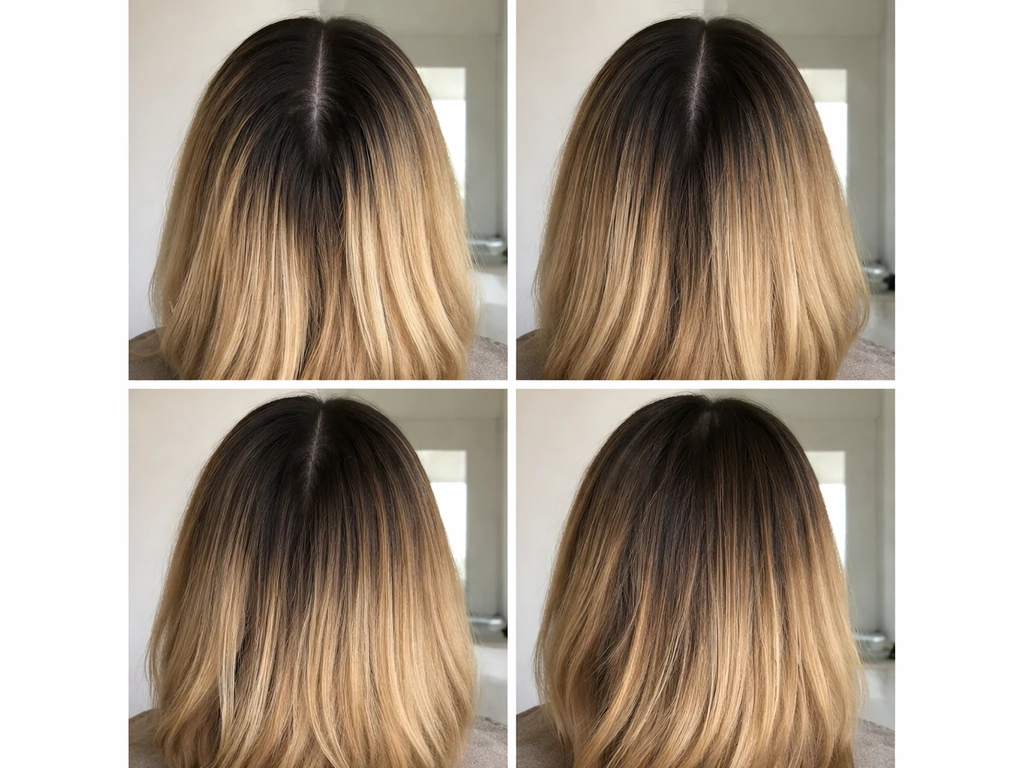
Here is what most people are not warned about: growing out dyed hair is not a single visual change. It happens in waves, and each wave looks different depending on your original color, your natural color, and the type of dye used.
In the first two to four weeks, a visible root line appears. If your dye was a strong contrast to your natural color (think black dye on light brown hair, or platinum blonde on dark roots), that line shows up fast and sharp. Hair grows roughly half an inch per month, so by week four you can already see a quarter to half an inch of natural growth at the scalp. This is the phase most people find hardest to tolerate.
Between roughly months two and four, the banding phase kicks in. You now have a visible block of natural root, a middle section of older dye that is starting to fade or shift in tone, and the original color at the ends. This three-zone look is what people describe as 'stripy' or 'grown out.' Semi-permanent color tends to fade faster here (lasting only around 4 to 12 shampoos), so if that is what you used, the mid-lengths may look patchy or brassy before the ends do. Demi-permanent color holds on a bit longer, roughly 24 washes or four to six weeks of visible depth, but it still fades unevenly under heat and sun exposure.
From month four onward, the transition starts to settle. The dyed ends are either trimmed away gradually or have faded enough to blend better. Natural color now makes up a significant portion of the visible hair, especially in shorter styles. This is the stage where most people start to feel the process is actually working.
Today's starting point: assess your situation before doing anything
Before you buy a toner, book a trim, or change your part, take five minutes to honestly look at your hair in natural daylight. You need three pieces of information: how much regrowth you currently have, how damaged your dyed ends actually are, and what your goal is.
Regrowth is easy to measure. Pull your hair straight and look at the root area. Less than half an inch means you are early in the process. One inch or more means you have some natural color to work with and can start making real blending decisions. To understand how this fits into a longer-term process, it helps to read up on how to grow out hair color from scratch, which covers the full arc from first regrowth to final trim.
For damage assessment, run your fingers down a section of dyed hair. Does it feel rough, gummy when wet, or snap easily? Those are signs of significant damage at the ends. Knowing this tells you how aggressive your trim schedule needs to be. A moderately damaged end can survive another few months with deep conditioning. A severely damaged end will keep breaking regardless of how careful you are, so trimming it sooner rather than later actually saves length in the long run.
Your goal matters too. Are you going fully natural, transitioning to a new color, or just letting a fashion color fade? Each path has different priorities. Someone going fully natural needs to think about contrast management for potentially a year or more. Someone transitioning to a new color can use blending techniques more aggressively. Setting the goal now prevents you from making conflicting decisions week to week.
Blending the root line: your three main options
You do not have to just wait and stare at a hard regrowth line. There are three practical approaches depending on how much intervention you want.
Touch-up (and why to be cautious)
Touch-ups every four to six weeks with a permanent color matched to your dyed shade will keep the root line hidden. The trade-off is that you are continuing to chemically process your hair and extending the total grow-out timeline. If you are trying to eventually get back to your natural color, each touch-up adds more color-treated length to manage later. Touch-ups make sense if you are not ready to commit to a full grow-out but want to reduce the visible contrast while you think it through.
Root smudging and glossing
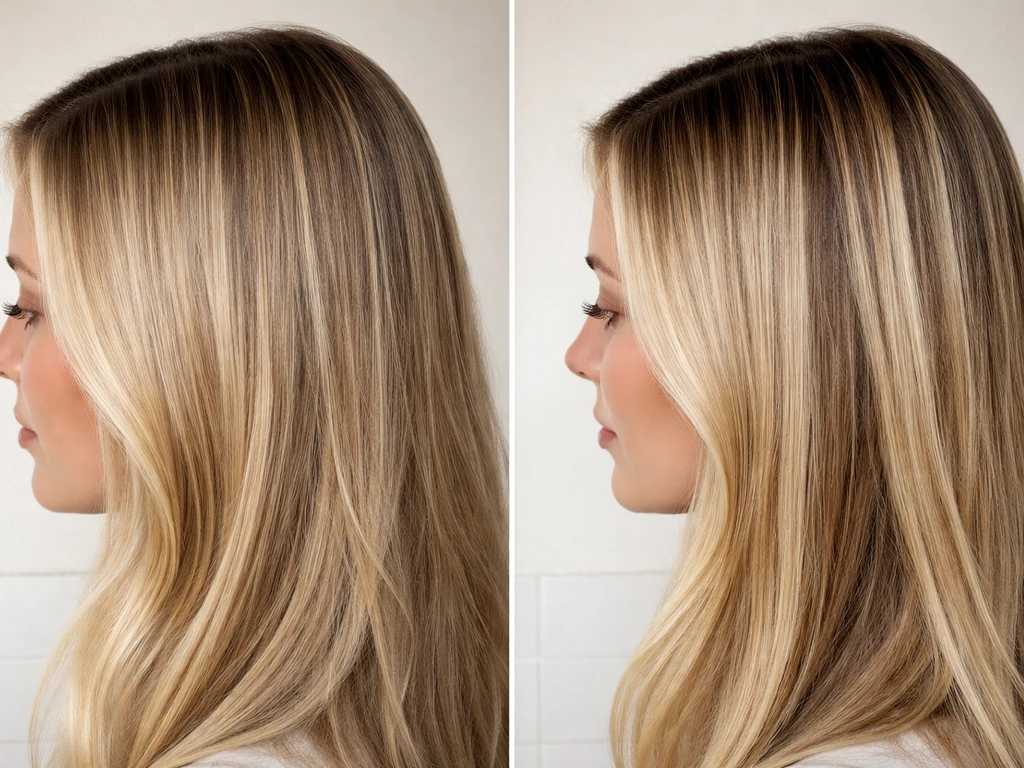
Root smudging is a technique where a colorist blends the demarcation line by applying a demi-permanent or semi-permanent color to soften the edge rather than fully match it. The result is a diffused, shadow-root look that makes the transition read as intentional. A clear or tinted gloss treatment applied at home or in a salon adds shine and can subtly adjust tone without lifting or depositing heavy pigment. This is the sweet spot for most people who want to look polished without committing to a full touch-up cycle.
The fade-and-embrace approach
If your goal is to fully embrace your natural color, the lowest-intervention approach is to manage fading rather than fight it. Use color-safe, sulfate-free shampoo (sulfates strip color faster), wash in cooler water, and limit direct sun exposure on the lengths. The fading of your dyed ends will eventually close the gap between your natural roots and the dyed lengths. How to grow out colored hair gracefully goes deeper into this fade-forward mindset and is worth reading if you are leaning toward no more chemical processing.
| Approach | Best for | Commitment level | Timeline impact |
|---|---|---|---|
| Regular touch-up | Strong contrast, not ready to stop coloring | High (every 4–6 weeks) | Extends grow-out |
| Root smudge / gloss | Visible line, want intentional look | Low to medium (every 6–10 weeks) | Neutral to slightly shorter |
| Fade and embrace | Committed to going natural | Minimal | Fastest to natural color |
For most people, root smudging or glossing is the practical middle ground. It keeps you looking like you made a choice rather than forgot about your hair, without locking you into a perpetual color cycle.
Trimming: keep your length without keeping the damage
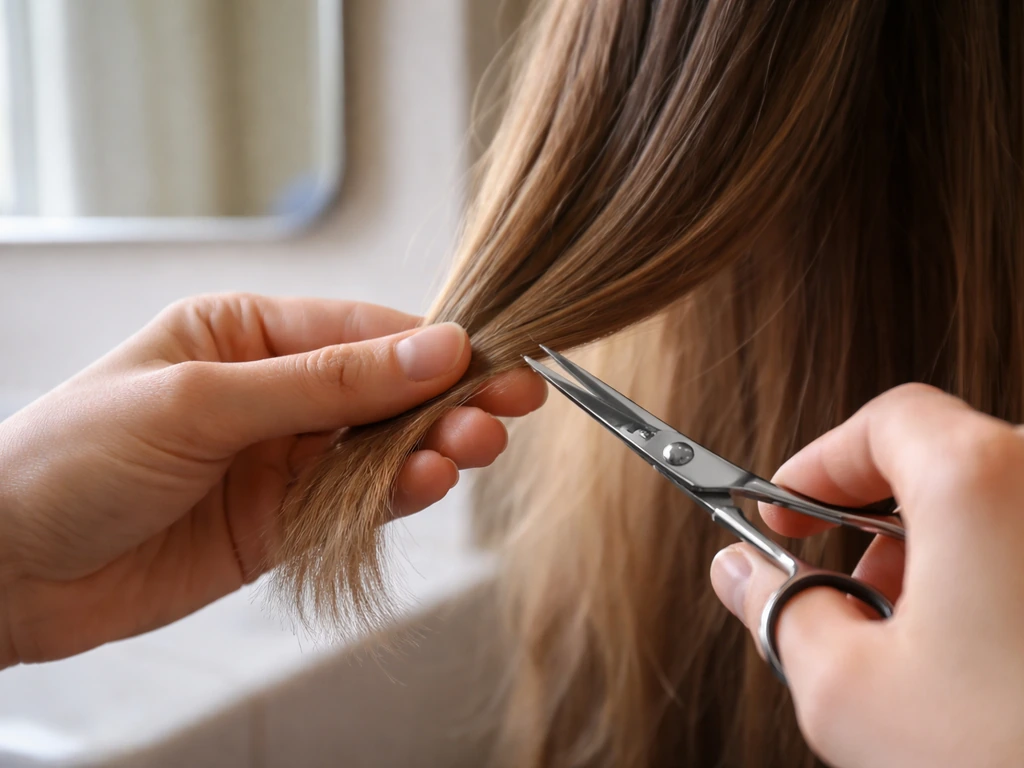
The goal of trimming during a grow-out is to remove the most compromised dyed ends without sacrificing significant length. A dusting trim (removing just the last quarter to half inch) every eight to ten weeks is enough to eliminate split ends and prevent breakage from traveling up the hair shaft. If your ends are severely damaged, a slightly more generous trim of three quarters of an inch to one inch every six to eight weeks will keep the hair stronger overall and actually result in more length over time.
The math works like this: your hair grows roughly half an inch per month. A quarterly trim of half an inch costs you one month of growth but buys you hair that does not snap off at the ends. Skipping trims when your ends are breaking means the hair breaks unevenly anyway, giving you ragged, thin ends that look worse than a clean trim would.
Tell your stylist specifically that you are growing out and do not want length taken off. Ask for a 'dusting' or 'split end trim.' Some stylists default to cutting more than asked unless you are explicit. If you are trimming at home, use sharp hair shears (not craft scissors), work on dry hair section by section, and cut parallel to the end rather than straight across if you want to avoid a blunt edge.
Styling through the awkward in-between phase
The middle months of a grow-out are where most people give up and cut everything off. Do not. These styling tactics make the awkward phase genuinely manageable.
Change your part
A deep side part is one of the simplest tools you have. It shifts the visible root area, breaks up the banding effect, and gives the hair a different shape. If you normally part in the center, try a side part. If you normally part on the left, try the right. The change in direction redistributes where the color demarcation sits visually. This costs nothing and takes ten seconds.
Layers and internal texture
If your stylist is adding any length during your grow-out journey, ask about internal layers. Layers break up the harsh horizontal banding between your root color and dyed lengths because the eye reads movement rather than a solid line. They also make hair easier to style into looks that disguise the transition.
Braids, ponytails, and clips
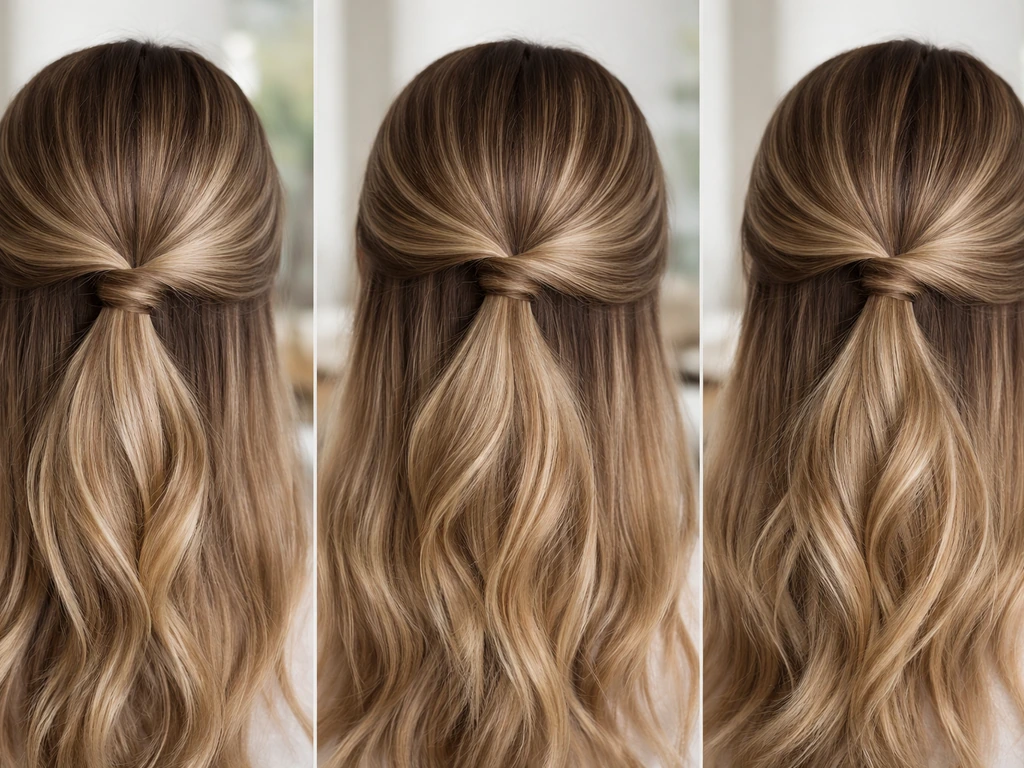
Half-up styles, loose braids, and textured low ponytails are your best friends during months two through four. These styles mix the color zones together so the separation is less obvious. A loosely braided crown, a French braid that pulls from the roots, or a low bun with face-framing pieces pulled out all work the contrast into the texture of the style rather than leaving it exposed. Hair clips and claw clips placed at or just below the regrowth line also draw the eye upward toward the natural color rather than emphasizing the difference.
Managing bangs and undercuts
Bangs growing out are their own challenge within the challenge. If your bangs are dyed a different shade or are growing from a previous cut, pinning them to the side with a bobby pin or small clip is the simplest solution until they are long enough to blend into the rest of your hair. Undercut regrowth is more structural than color-based, but the same principle applies: work with the texture difference rather than trying to flatten it, and use product to define the shorter sections while the length above them grows down. The best way to grow out colored hair includes solid advice on managing these specific structural transitions alongside color work.
Protecting your dyed ends while they grow out
The dyed sections of your hair are the oldest, most processed parts. They need more care than your natural roots do. This is not complicated, but it does require consistency.
Washing and conditioning

Wash two to three times per week maximum, less if your hair and scalp can tolerate it. Every wash strips some moisture and color from the lengths. Use a sulfate-free, color-safe shampoo on the scalp and let the suds rinse through the ends rather than working the shampoo into them. Use a moisturizing conditioner from mid-shaft to ends every single wash. A deep conditioning mask once a week makes a real difference in how the ends hold up over months of growing.
Heat and sun protection
Heat tools accelerate fading and dryness in dyed hair. If you are using heat, apply a heat protectant spray before every session and keep the temperature under 375 degrees Fahrenheit for fine or already-damaged hair. UV exposure also fades color and weakens chemically processed strands. A leave-in with UV filters, a light hair sunscreen spray, or simply wearing a hat in direct summer sun all reduce this damage. It is a small habit that adds up significantly over a six to twelve month grow-out.
Detangling and breakage prevention
Always detangle from the ends upward, working out knots in small sections before moving toward the root. A wide-tooth comb or a paddle brush with flexible bristles on wet, conditioned hair causes far less breakage than a fine-tooth comb dragged from root to tip. If your hair is highly textured or has significant curl, finger detangling with a slippery conditioner in the shower is gentler than any tool. At night, a silk or satin pillowcase reduces friction breakage on the lengths while you sleep. These feel like small things, but over months of growing they make a measurable difference in how much length you actually retain.
If you are dealing with especially stubborn dark dye and worrying about how those ends will hold up, how to grow out black hair dye covers the specific challenges of high-contrast dark color and what extra care the lengths need.
Week-by-week: what to do and when to change your approach
A grow-out does not need a rigid schedule, but knowing the typical decision points helps you avoid both over-managing and under-managing the process.
- Weeks 1 to 4: Do nothing yet. Let regrowth appear. Assess contrast. Start the protective washing and conditioning routine. This is the information-gathering phase.
- Weeks 4 to 8: Decide on your blending approach. If contrast is high and bothering you, book a root smudge or gloss. If you are going natural and contrast is tolerable, stay the course and focus on moisture and protection.
- Weeks 8 to 12: Schedule your first dusting trim if you have not already. Experiment with part changes and half-up styles to manage the banding phase. Consider a toner if the dyed ends have gone brassy or ashy.
- Months 3 to 5: This is often the hardest visual phase. The banding is most obvious. Lean into braids, textured styles, and accessories. Do not cut everything off — you are close to the phase where the transition starts looking intentional.
- Months 5 to 8: Your natural color now makes up a visible and significant portion of the hair. The ends are older dye that is either faded or being gradually trimmed away. Reassess your goal and adjust your blending strategy if needed.
- Months 8 to 12 and beyond: For longer starting lengths, this is when you start to see the finish line. Keep trimming regularly. The dyed ends are now at or near the tips. One or two more trims and you may be fully transitioned.
If your hair is shorter to begin with (a bob, lob, or pixie-length color), your timeline compresses significantly. You might be through the most noticeable banding phase in four to five months rather than a year. If you are working with a longer starting length, patience and consistent care are more important than any single technique.
One specific scenario worth planning for: if your natural color is salt and pepper or significantly gray, the grow-out looks different than transitioning to a solid natural color. The contrast can be striking in a good way or jarring depending on your preference. How to grow out salt and pepper hair gives you the specific approach for that transition, including how to manage the gray band as it widens and when a toner or gloss can soften the effect.
Find your own pace and stick with it
The single biggest reason people give up on growing out dyed hair is that they hit a rough visual week in month three, panic, and either color everything again or cut off their length. Both set the clock back significantly. The awkward phase is temporary and predictable. If you know it is coming, you can style through it rather than react to it.
Keep your protective routine consistent, make deliberate styling choices during the transition months, and trim just enough to keep the ends healthy without sacrificing the length you have worked for. That is what growing out dyed hair gracefully actually looks like in practice. It is less about perfection and more about making informed decisions at each stage rather than reactive ones.
FAQ
How do I tell whether I should wait for blending or schedule a trim sooner?
Check the ends when your hair is fully dry and under good light. If you see lots of shorter flyaways plus noticeable split pieces, or if knots form quickly even with conditioner, that usually means breakage is already starting. In that case, do a targeted dusting sooner rather than waiting for your next eight to ten week window.
What if my dye is permanent and my roots are growing in but the mid-lengths still look too dark or uneven?
Permanent color often fades slowly but can still look banded because it loses tone unevenly. Instead of matching roots immediately, ask for a low-lift, toning gloss or root smudge that softens the contrast without adding heavy new pigment to all the mid-lengths.
Can I grow out dyed hair gracefully if my hair is currently shoulder length or longer and I do not want to cut much?
Yes, but your styling and maintenance have to do more work during months two to four. Focus on low-contrast looks (side part, half-up, textured ponytails) and only remove the last vulnerable edge with dusting trims. Avoid “full shape” haircuts because they tend to remove more than the compromised ends.
Should I stop using clarifying shampoo during a grow-out?
Not necessarily, but use it sparingly. Clarifying shampoos can strip dye faster and make the mid-lengths look patchier, especially in the banding phase. If you do use one, follow with a deep conditioning mask and consider a gentle gloss later only if tone becomes noticeably off.
What is the best way to handle a noticeable color line when I’m not ready for a color service?
Try visual camouflage before you book anything. Use a slightly deeper side part and keep the roots smoother with a lightweight leave-in, then add texture through the lengths using a curl cream, mousse, or sea salt spray so the eye reads movement instead of a straight edge.
How often should I condition and when should I switch from conditioner to a mask?
Keep conditioner at every wash, then add a mask once a week if your ends feel rough, tangly, or dry even after styling. If your hair feels mushy when wet or stretches easily, prioritize protein-containing treatments occasionally (not every week) and keep the mask routine consistent to avoid over-softening.
Is it okay to use heat during the grow-out if I am careful?
It can be, but treat it as optional rather than automatic. On days you heat style, apply protectant every time, use the lowest effective temperature, and limit passes on the same section. If your color is fading unevenly, reducing heat frequency for two to three weeks often evens the look more than adding more toner.
How do I detangle dyed ends without causing more breakage?
Detangle only after adding slip (conditioner in the shower works best), then start at the ends and work upward in small sections. If a section resists, stop, add more slip, and reattempt. For stubborn knots near the banding line, a gentle finger-detangle first prevents the comb from snapping weakened strands.
What should I tell my stylist so they do not take off extra length?
Use precise language: request a dusting or split-end trim and specify the maximum amount (for example, “no more than half an inch”). Also ask them to avoid reshaping or “full cut” lines, because those often remove healthy hair along with the damaged ends.
What if my hair grows in gray or salt-and-pepper, and the transition looks too high-contrast for me?
Plan for a different blending timeline. Gray growth can widen faster visually, so a gloss or toner is often used to soften tone rather than hide regrowth. Ask your stylist to target the specific band tone (warm vs cool) so the transition reads more gradual, not darker or more stark.
Should I use toners or glosses at home during the grow-out?
Sometimes, but only if you understand what they do: toners and glosses adjust tone, they do not “erase” dye completely. Use small patches first to test how your mid-lengths react, and avoid frequent at-home processing if your hair is already feeling gummy or weak.
What’s the most common mistake that makes grow-out look worse around month three?
People usually respond by changing multiple variables at once, like switching products, increasing heat, and booking a heavy color correction. That combination speeds up fading and makes the banding more noticeable. Instead, keep your washing and protection routine consistent, then use a style trick plus a minimal trim if ends are breaking.