
Growing out gray hair with highlights is absolutely doable without chopping everything off and starting over. The key is understanding that this is a multi-stage process, not a single appointment fix. With the right highlight approach, a consistent care routine, and a few smart styling moves, you can blend your natural gray regrowth into highlighted hair so gracefully that most people won't even clock what you're doing. Here's exactly how to pull it off.
How to Grow Out Grey Hair With Highlights Step by Step

Marcus Vickers
14 Apr 2026
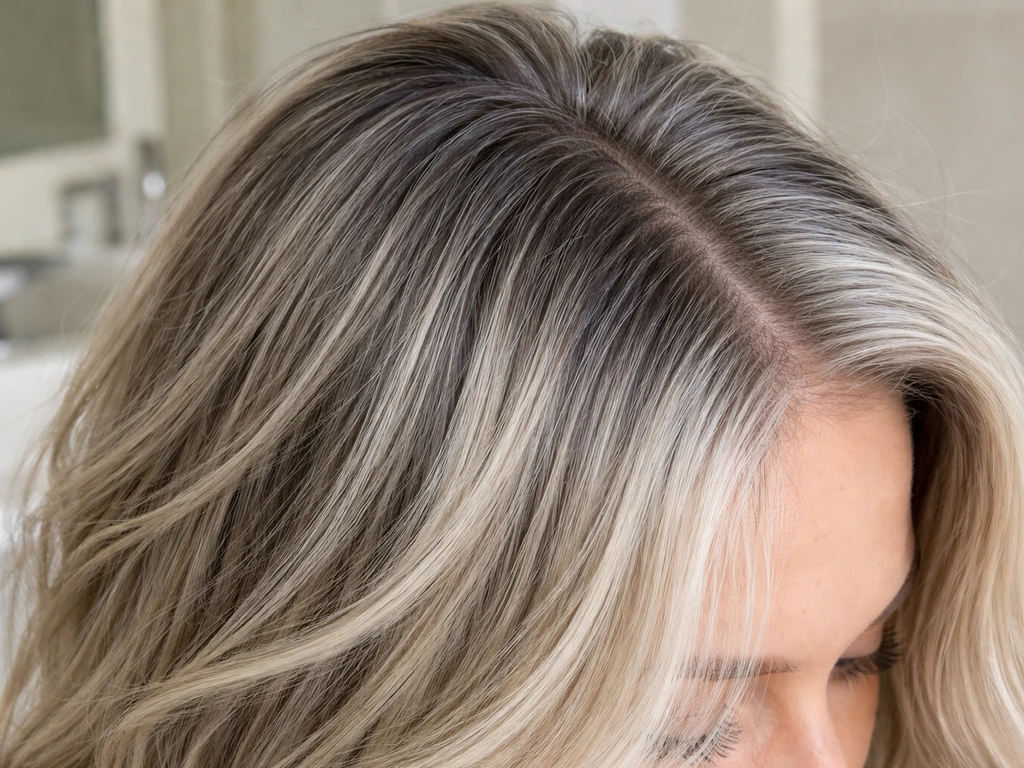
What this actually looks like as you grow it out
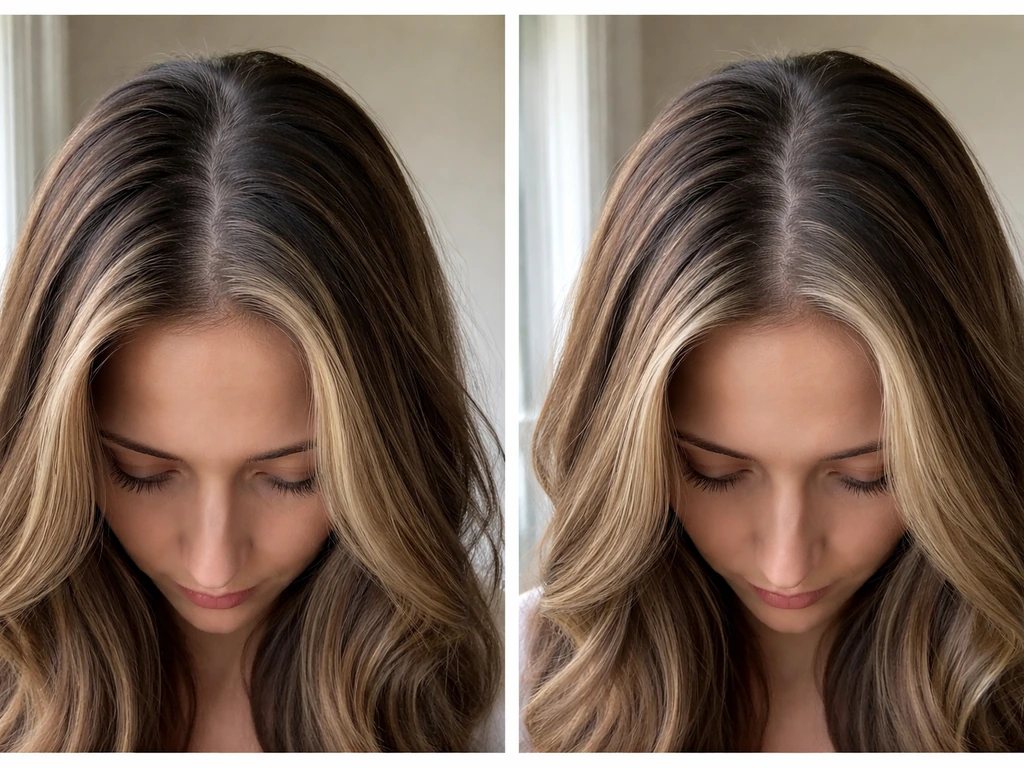
Let's be honest about the phases, because sugar-coating them only sets you up for frustration. Hair grows roughly 0.5 inches per month, so your first visible stripe of natural gray at the root will show up around the 4-to-6-week mark depending on how dark your previous color is against your incoming silver. If you're coming from heavily pigmented highlights, that contrast hits faster and harder. If your highlights are already light or silver-toned, your gray roots will blend in much more quietly.
There are roughly three phases to expect. In the early stage (weeks 1 through 10), you're dealing with the first inch or so of roots against whatever highlights or color is left on your lengths. This is the phase most people bail on, because the contrast can look stark. The middle stage (months 3 through 9) is when things actually start to integrate, especially if you've been strategic with toning and highlight placement. By the later stage (month 9 and beyond), the highlighted sections are either growing down toward your ends or being gradually trimmed away, and your natural gray is becoming the dominant story. The whole journey from "I want to go gray" to "this is clearly intentional" takes most people 12 to 18 months depending on starting length.
Picking the right highlight and toning approach at each stage
Early stage: blur the line before it gets harsh
The single most useful tool in the early stage is the shadow root (sometimes called a root smudge). Instead of leaving a crisp, hard line between your natural gray roots and your highlighted lengths, your colorist deposits a soft, blended tone right at the root that fades into the highlights. This technique can buy you 8 to 12 weeks before regrowth looks noticeable at all, which is a massive relief when you're trying to stretch appointments. Most colorists recommend refreshing a shadow root every 6 to 12 weeks to keep it soft. If you want to go deeper on how this fits into a longer grow-out plan, the full breakdown in how to grow out highlighted hair is worth reading alongside this guide.
If you already have foil highlights in place, the priority in the early stage is NOT to add more lightener on top of the same sections. As Madison Reed points out, overlapping newly lightened product with existing highlights causes unnecessary damage. Instead, ask your colorist to focus new highlight placement on sections that haven't been lifted yet, especially around your part line and temples where gray tends to show most prominently.
Middle stage: strategic placement and cool tones
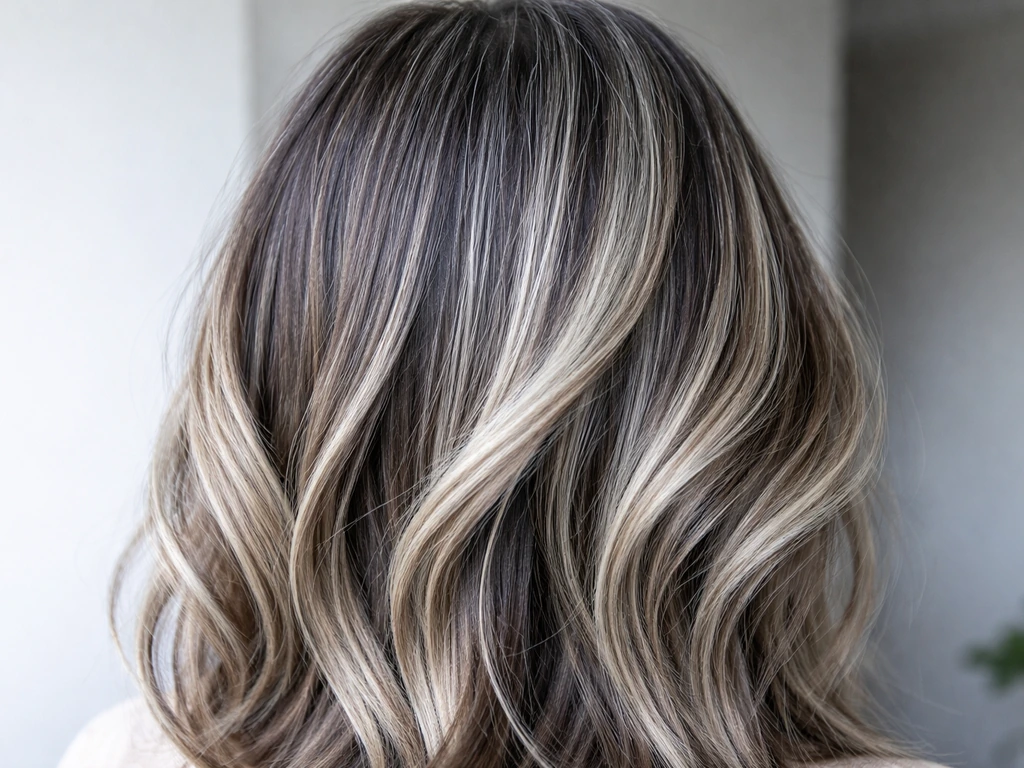
Around months 3 through 6, you have the most flexibility. Your natural gray has grown enough to create a real presence, and the goal now is to make your highlights look intentional alongside it rather than like leftover color you forgot to maintain. This is where balayage and freehand lightening really shine as a technique. The way balayage grows out, with soft edges and no regrowth line, works beautifully for gray grow-outs. If you're wondering whether your current color technique is grow-out-friendly, the article on does balayage grow out well covers exactly why the answer is usually yes.
Toning is critical at this stage. Your gray regrowth tends to pull warm or yellow as it grows through previously colored hair, and any remaining blonde highlights can go brassy. Ask for a cool-toned gloss or a pearl/silver toner at your appointments, applied from mid-shaft to ends, to unify the overall look. Wella's color-wheel logic is simple and useful here: violet pigment cancels yellow, and blue pigment cancels orange. That's the principle behind both professional toners and the purple shampoo you're using at home.
Later stage: let the highlights migrate down
By month 9 and beyond, your strategy shifts from blending to transitioning. Your natural gray is now the bulk of the top section of your hair. The highlighted pieces are living in the mid-lengths and ends, and each trim is gradually removing them. Some people love this look and keep it intentionally, with just a few face-framing highlights to brighten things up. Others want a clean slate and commit to trimming the lightened ends away entirely. Either choice is valid. At this stage, a toning gloss every 6 to 10 weeks keeps everything cohesive and prevents the highlighted ends from going too warm against the cooler silver roots.
The hair care routine that actually protects your hair through all of this
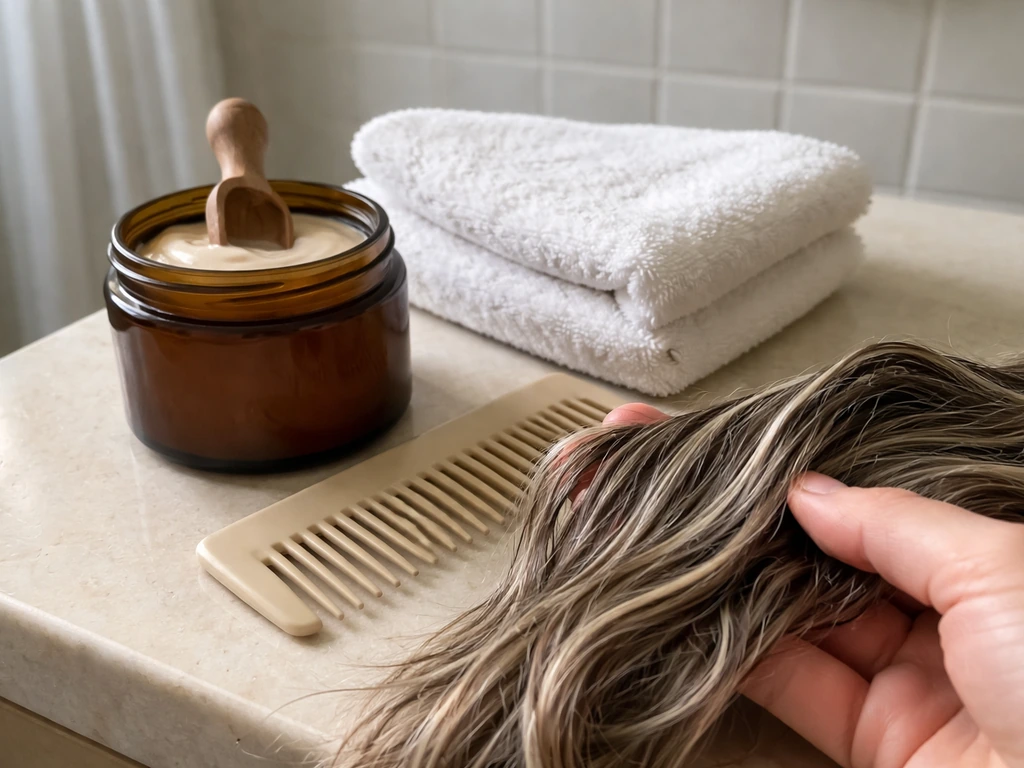
Gray and highlighted hair have one thing in common: they're both thirsty. Gray hair tends to be coarser and more porous, and highlighted hair has had its outer cuticle lifted by lightener. Combine the two and you have hair that loses moisture fast and breaks more easily. A solid weekly routine makes the difference between hair that looks great growing out and hair that looks fried.
The non-negotiable is a weekly deep conditioner. Wella's gray grow-out guidance is blunt about this: use a deep conditioner every week, not just when your hair feels bad. Think of it as maintenance, not rescue. Use it on wash days when you have a few extra minutes, apply from mid-shaft to ends, and leave it on for at least 5 to 10 minutes. This step alone reduces breakage significantly over months of grow-out.
Pair your deep conditioner practice with a sulfate-free shampoo. Sulfates strip color-treated hair faster than almost anything else, meaning your toner fades before your next appointment and your highlights go brassy sooner. A sulfate-free formula plus a reparative mask used together, as Allure recommends for color-treated hair, is a simple and effective combination that protects both your highlights and your natural gray.
Clarifying is the overlooked step. Product buildup, mineral deposits from hard water, and toner residue all dull gray and highlighted hair over time. K18 Peptide Prep Detox Shampoo is marketed as a color-safe, non-stripping clarifying shampoo meant to remove product buildup as part of a detox or clarify step blank" rel="noopener noreferrer">Product buildup, mineral deposits from hard water, and toner residue. Using a color-safe clarifying shampoo like the blank" rel="noopener noreferrer">K18 Peptide Prep detox shampoo once a week or as needed clears that buildup without stripping your color. A general safe frequency is once every one to four weeks depending on how much product you use and how hard your water is. Do this before a toning session for best results, since buildup blocks toner from depositing evenly.
- Sulfate-free shampoo: every wash
- Deep conditioner: once a week, mid-shaft to ends, 5 to 10 minutes
- Color-safe clarifying shampoo: once every 1 to 4 weeks depending on buildup
- Purple or blue shampoo: once every other week to manage brassiness (more on this below)
- Reparative mask: use in place of or alongside your deep conditioner when hair feels particularly dry or brittle
- Heat protectant: every single time you use heat styling tools, no exceptions
Styling through the awkward phases (roots, contrast, layers, and all of it)
The middle months are where most people either give up or figure out how to work with what they've got. The good news is that the awkward phase has a lot of styling solutions, and most of them are genuinely low-effort once you know them.
Visible roots are less noticeable with texture. Sleek, flat styles make every millimeter of root contrast visible. Waves, curls, and tousled blowouts scatter light and blur the boundary between your natural gray roots and your highlighted lengths. If you've been straightening your hair for years, this is a good time to experiment with a diffuser or a loose curl routine. A little texture does more to disguise grow-out contrast than almost any product.
Parting changes are genuinely underrated during grow-out. A center part shows roots symmetrically but also very clearly. A deep side part throws one side of the root line into shadow and makes the whole thing look more intentional. If you've been rocking the same part for years, shift it an inch or two and notice how differently the root line reads. This is especially helpful during months 2 through 5 when the contrast is at its most obvious.
Bangs and layers need their own acknowledgment. If you have grown-out bangs, they often show gray regrowth faster because they sit right at your part and forehead. You have two real options: commit to trimming them at their current length while the rest grows, or start growing them out into face-framing pieces. Layers add movement that helps disguise uneven growth, but over-layered hair during grow-out can also look choppy as different sections grow at different visual rates. Discuss this with your stylist, because the right layer strategy depends heavily on your specific texture.
For those growing out an undercut or short back-and-sides situation while going gray with highlights on top, the contrast between clippered nape and longer highlighted/gray top is its own challenge. Keeping the sides and back neatly trimmed actually makes the longer top look more intentional, not less grown-out. Don't neglect the shape underneath just because you're letting the top grow.
When to trim and when to leave it alone
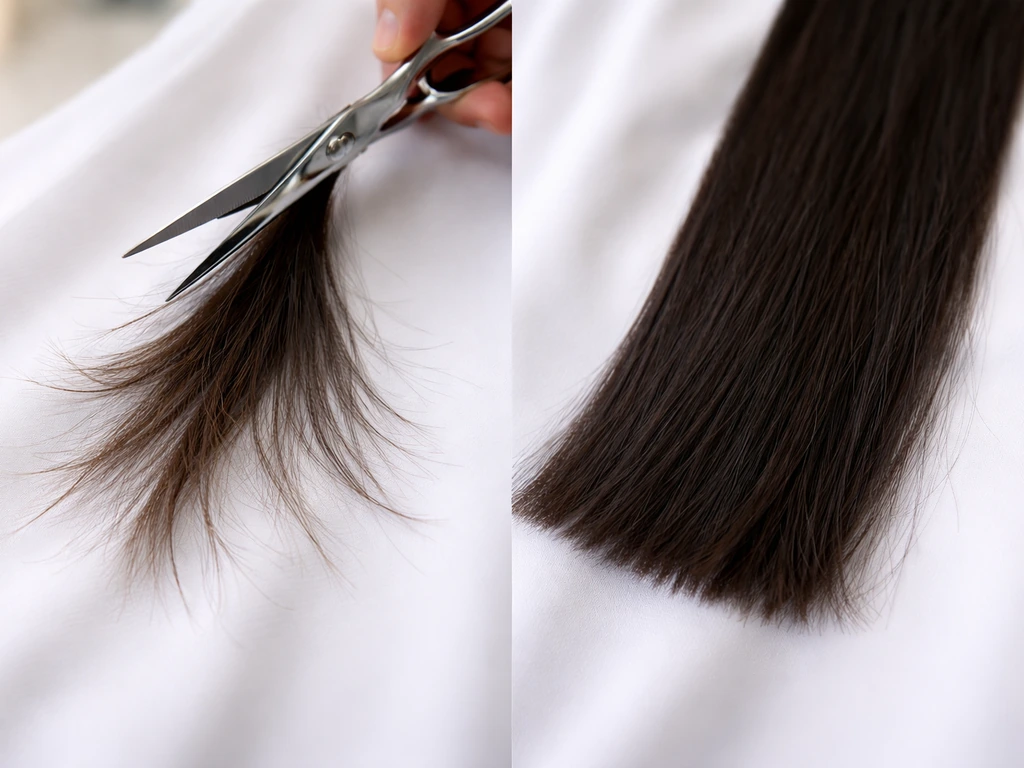
The fear of trimming when you're trying to grow is real, but split ends and breakage are legitimate enemies of length retention. The rule of thumb that actually works: trim to improve the health and shape of your hair, not just because a certain amount of time has passed. If your ends are splitting, those splits travel up the hair shaft and cost you more length over time than a small trim would have. A light dusting every 10 to 12 weeks, removing just a quarter inch or less, keeps ends clean without sacrificing meaningful length.
Where shaping matters most is around your face. A small adjustment to face-framing pieces, maybe just cleaning up a few strands around your temples and cheekbones, can make a grow-out look intentional rather than neglected. This is not the same as a full haircut. You can shape the perimeter without touching the interior length, and that small investment in visible structure makes the whole grow-out process feel more manageable. If you're specifically trying to speed things up, the strategies in how to grow out highlights fast are worth reading, because some of them involve protecting length at the same time as maintaining color.
The exception is when your highlighted ends are heavily damaged. If your lightened lengths are snapping, feeling gummy when wet, or looking obviously fried against your healthier gray roots, trimming more aggressively is the right call. Damaged highlighted ends will not improve with conditioning alone, and they make the entire grow-out look worse, not better.
Keeping color fresh between appointments
Brassiness is the number one color complaint during gray grow-out, and it's almost entirely manageable at home with a consistent routine. The issue is that highlighted hair oxidizes over time, and the warm, yellow tones that emerge can clash badly with cool silver roots. Purple shampoo is your first line of defense, and the timing matters more than most people realize. Brassiness typically shows up around six to eight weeks post-color, which conveniently lines up with when most people are due for a salon visit anyway. Using purple shampoo once every other week is a reasonable baseline, but if you're reaching for it more than once or twice per week, that's a signal to book a professional toning service instead. Overusing purple shampoo leads to buildup and a dull, flat tone that's actually harder to correct.
A gloss or toner applied at the salon every 6 to 10 weeks is the professional complement to your at-home purple shampoo routine. It deposits cool, unifying tone across both your natural gray and your highlighted sections, making the whole head read as one intentional color story rather than a patchwork of different stages. Some people do this at every highlight appointment; others do a standalone toning visit between highlight services. Either approach works as long as the interval doesn't stretch past 10 weeks, at which point warmth tends to dominate.
For a more targeted at-home approach, dpHUE recommends using a cool blonde or violet shampoo and conditioner weekly or as needed for ongoing neutralization, then using a brightening or clarifying powder twice monthly to remove buildup and restore vibrancy. That two-step combo, weekly toning maintenance plus monthly buildup removal, covers most of what your hair needs between salon visits. If you're specifically managing blonde or lighter highlights within your gray grow-out, how to grow out blonde highlights has dedicated guidance for keeping that lighter palette looking intentional rather than brassy.
One more thing worth knowing: if your highlights are balayage-style rather than traditional foils, your toning schedule can often be stretched a bit longer. Balayage has softer edges and less dense lightening, so it oxidizes more gradually. The article on how to grow out balayage covers exactly what kind of maintenance cadence works for that technique specifically.
How long this realistically takes based on where you're starting
Your starting length changes everything about your timeline. Here's a realistic breakdown:
| Starting point | Estimated full grow-out time | Key challenge | Main strategy |
|---|---|---|---|
| Pixie or buzz cut | 6 to 12 months | Every stage is visible immediately | Shadow root from the start, embrace texture |
| Short bob (chin length) | 12 to 18 months | Mid-lengths have the most color contrast | Strategic highlight placement, regular glosses |
| Medium length (shoulder) | 18 to 24 months | Long transition window with uneven integration | Balayage-style highlights, consistent toning |
| Long hair (below shoulder) | 24 to 36 months | Highlighted ends persist longest | Gradual trimming, patience, strong care routine |
If you're starting from a short cut, the process actually moves faster in terms of visible progress, even if it feels more exposed. With a pixie or buzz, your natural gray becomes the dominant look much sooner. For longer hair, the challenge is that your highlighted ends stick around for years, which means more maintenance over a longer window. The guide to growing out highlights on brown hair is particularly useful if your base color before highlights was dark, since the contrast dynamic is different than for naturally lighter starting shades.
Your next-step checklist
Wherever you are in this process right now, here's what to do next. This isn't a one-size-fits-all prescription, but it covers the moves that make the biggest difference for most people. Adjust based on your starting length and how much color you're currently working with.
- Book a consultation (not just a color appointment) with your colorist specifically to discuss shadow root placement and whether your current highlight placement supports a grow-out. This conversation changes your whole plan.
- Switch to a sulfate-free shampoo immediately if you haven't already. This one swap protects your existing highlights and your incoming gray at the same time.
- Add a weekly deep conditioner to your wash routine. Put it in the calendar if you need to. Gray and highlighted hair both need it.
- Get a color-safe clarifying shampoo and use it once every one to four weeks, especially before toning sessions.
- Start using purple shampoo once every other week to manage brassiness between appointments. Don't overdo it.
- Schedule your next salon visit at the 6 to 8 week mark from your last color service, as that's when roots become most noticeable and toning starts to fade.
- Experiment with texture and parting to reduce the visual contrast of your roots during the middle months. This costs nothing and makes a real difference.
- Commit to small trims every 10 to 12 weeks to protect your ends, even if you're trying to gain length. Healthy ends grow out better than damaged ones.
- Revisit your highlight technique around month 3 or 4. If foils are creating too much contrast, ask about transitioning to balayage or a softer placement for future services.
The whole process is more manageable than it looks from the beginning. Most people hit their worst-feeling phase around months 2 through 4 and then start to feel genuinely good about their hair by month 6 or 7. The strategy is what gets you from one end to the other without a dramatic chop, and now you have it.
FAQ
Should I ask for a shadow root every time, or only at the beginning?
If your goal is “how to grow out grey hair with highlights” without creating two obvious timelines, focus on planning the next highlight placement around where your new growth will show. In practice, ask for foiled or freehand lightening to be concentrated on mid-lengths and ends, and request a shadow root or root smudge so the root area is intentionally softened rather than left crisp. This reduces the need for frequent re-toning early on because the transition line stays blurred as your gray rises.
How long should I leave purple shampoo in when growing out highlights into gray?
Yes, but use it strategically. After toning, wait about 48 hours before using purple shampoo, so the toner fully settles and does not wash out immediately. Also, apply purple shampoo to damp hair for a short, controlled window (start with 2 to 3 minutes), then rinse well and condition, because leaving it too long can create a dull, ashy cast that looks worse as your gray continues to grow.
Can I use permanent hair dye to cover gray while I grow out my highlights?
In most cases, don’t. If you are actively growing out highlights into gray, new permanent dye or strong deposits on top of pre-lightened sections can lock in uneven pigment while your gray keeps emerging, creating a “stripey” look. A safer alternative is low-commitment toning (gloss or demi) that unifies tone without significantly overpowering your natural gray. If you must cover, choose a semi-permanent option on roots only, and have your stylist confirm it will not darken the lengths.
What should I do if my highlighted ends feel gummy or start breaking?
If your hair feels gummy, mushy, or snaps when wet, that is a sign your highlighted areas are beyond “just dry.” Conditioning alone often cannot fix bond damage from lightener. At that point, switch your goal from perfect blending to protecting length, reduce heat, and ask your stylist whether a bond-repair treatment or a more aggressive trim is needed. Keeping severely damaged ends in place usually delays the moment your grow-out looks cohesive.
My stylist wants to re-light the same sections, is that a mistake for gray grow-out?
Overlapping lightener on the same lifted sections is one of the fastest ways to make grow-out harder because it adds more porosity and accelerates brassiness. Instead, when you need more brightness or blending, ask your colorist to add dimension on untouched areas and keep the root transition intentional (shadow root plus selective placement). This approach supports growth out even when you still want some lightness in the look.
How often should I clarify while growing out grey hair with highlights?
Most people should treat clarifying like a “reset,” not a weekly ritual. Clarify once every 1 to 4 weeks depending on product use and water hardness, then do toning shortly after (for example, the next wash) so the toner can deposit evenly. If you clarify too often, you can strip needed softness, which makes hair look frizzier and makes toners fade faster.
Can I deep condition every week, even when my hair feels okay?
Yes, but only if your conditioner is set up for frequent use. Since the routine described is weekly deep conditioning, prioritize masks that do not leave heavy buildup. Apply from mid-shaft to ends, avoid the scalp, and keep your contact time consistent (5 to 10 minutes). If your hair gets weighed down, shorten the time rather than skipping, and rotate with a lighter conditioner on non-mask wash days.
What if my toner fades quickly or my hair looks dull no matter what I do?
Hard water can cause dullness and can interfere with toners by leaving mineral residue. If you notice rapid fading, rough texture, or a gray cast that doesn’t respond to purple products, consider a chelating or mineral-removing step (within the “clarify” window) and check your schedule so you tone after buildup is cleared. This is especially important if you swim regularly.
Does balayage change how often I should tone during a gray grow-out?
If your highlights are balayage, you can often stretch the cadence slightly because the grow-out edge is softer and oxidizes more gradually. A practical rule is to stay within the same general range for toning, but you may get away with leaning toward the longer end if your warmth is controlled. If you see warmth reaching your roots faster than before, tighten the interval rather than waiting until everything looks brassy.
Which styling change hides roots best during months 2 to 5?
To reduce the “parts and temples” contrast early, shift your part slightly and keep your root area styled with deliberate direction (for example, blow-dry the roots one side, then set the opposite side). If you wear a center part and it shows regrowth too clearly, a deep side part is usually more effective than adding extra products, because it changes how light hits the root line.