
Hair grows about half an inch per month, no matter what you do. That's the hard ceiling. But the realistic range for most people growing out transitioning hair is somewhere between 4 and 8 inches per year, depending on how much length you're losing to breakage, shedding, and damage along the way. The fastest route to longer hair isn't a miracle supplement or a scalp oil that went viral last week. It's keeping the hair you're already growing, cutting your losses from breakage, and styling through the awkward phases without quitting. That's what this guide is built around.
How to Grow Out Transitioning Hair Fast: A Plan

Marcus Vickers
31 May 2026
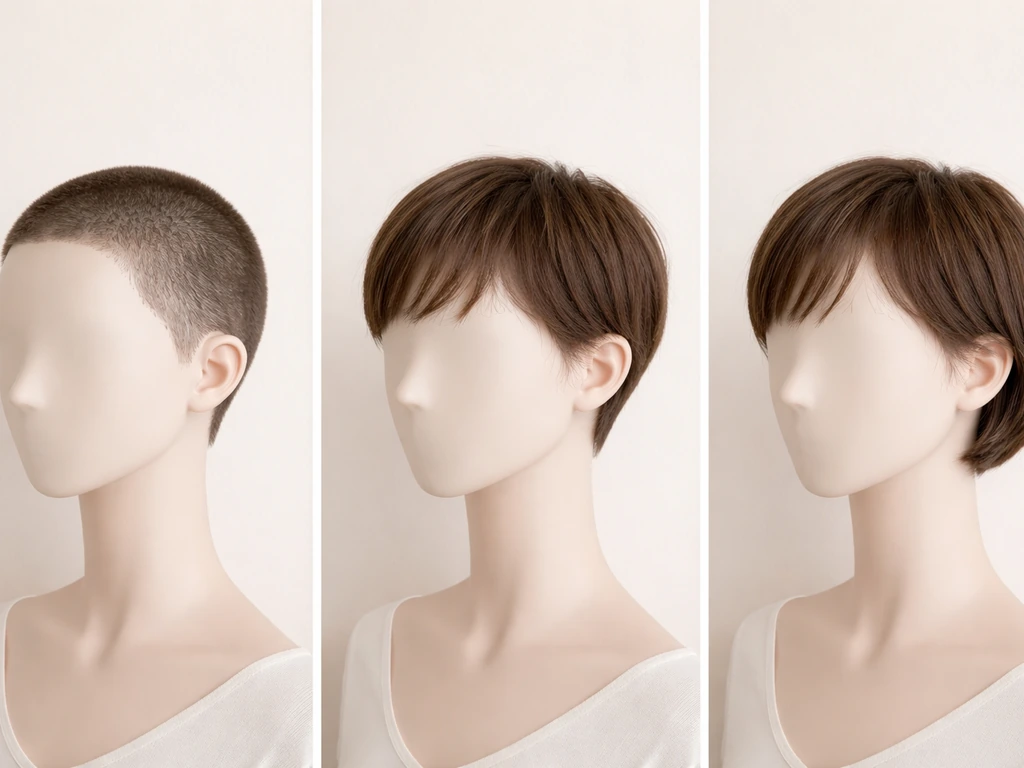
What 'fast' actually means for transitioning hair
The average scalp grows about 1 cm per month, roughly half an inch. Over a year, that's around 6 inches in total growth potential. Going from a buzz cut to a chin-length bob takes most people 12 to 18 months. Growing a pixie to shoulder length takes closer to 2 to 3 years. There's no shortcut around that biology. What 'fast' really means in practice is getting as close to that 6-inch-per-year ceiling as possible by protecting every centimeter you grow rather than watching it break off or get trimmed away.
Your hair goes through natural growth cycles: an active growth phase (anagen) that lasts around 3 to 5 years for most people, followed by a short resting phase (telogen) of about 2 to 4 months before the hair sheds. Normal daily shedding is 50 to 100 hairs. If you're seeing noticeably more than that, something else is going on, and we'll get into that in the timeline section. For now, the key mindset shift is this: growing transitioning hair fast is mostly about retention, not acceleration.
Start today: a routine that actually supports growth

You don't need a 12-step routine. You need a few things done consistently, starting this week. Here's where to focus energy first.
Scalp health comes first
Healthy hair grows from a healthy scalp. If you have flaking, itching, redness, or buildup, that inflammation is affecting the environment your follicles are working in. blank" rel="noopener noreferrer">Seborrheic dermatitis (the scalp condition behind most persistent dandruff) should be washed at least twice a week with a medicated shampoo, not less. Letting it sit between washes allows the yeast that causes it to proliferate. blank" rel="noopener noreferrer">Look for shampoos with zinc pyrithione, selenium sulfide, ketoconazole, salicylic acid, or sulfur. If over-the-counter options aren't clearing it up within a few weeks, that's a dermatologist conversation, not a hair supplement situation.
Scalp massage gets mentioned a lot in growth conversations, and while the evidence is modest, it costs nothing and improves circulation. Two to three minutes while shampooing using your fingertips (not nails) is enough. Some people also find it helps with tension and scalp tightness, especially if they're wearing protective styles frequently.
Nutrients: food first, supplements second

The nutrients most linked to hair health are iron, protein, zinc, and vitamins A, B, C, D, and E. If you're eating a varied diet and not dealing with a diagnosed deficiency, loading up on biotin gummies or hair-growth vitamins is unlikely to do much. The evidence for biotin specifically is weak for people who aren't deficient, and deficiency itself is rare if you're eating reasonably well. That said, if your diet is restrictive, if you've recently been through a high-stress period, or if you've had bloodwork showing low iron or vitamin D, addressing those gaps matters a lot. Low protein intake is a real and underappreciated trigger for increased shedding, so if you've been crash dieting or eating very little, that's worth fixing first. Get a blood panel if you're unsure. Supplements make sense when there's an actual deficiency to correct.
Daily habits that compound over time
- Sleep on a satin or silk pillowcase. Cotton creates friction that breaks off fine or shorter transitioning hair overnight. This is one of the cheapest, most consistently useful changes you can make.
- Drink enough water. Dehydration affects hair texture and elasticity, making it more prone to snapping during manipulation.
- Reduce heat styling frequency. If you're flat ironing or blow-drying daily, spreading that to every other day or less immediately reduces cumulative breakage.
- Don't skip conditioner. Conditioner isn't optional for growing hair, even on short lengths. It reduces friction during detangling and keeps strands more elastic.
- Detangle gently and always start from the ends up, not root to tip.
Stop breakage: this is where most people lose their gains
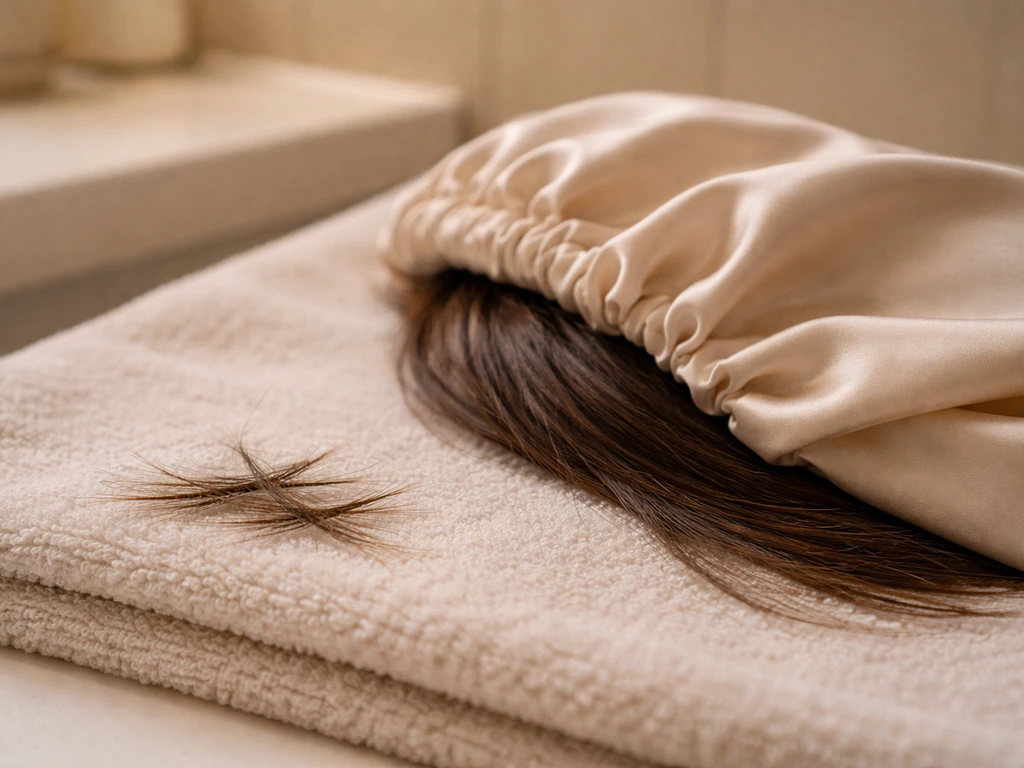
If your hair is growing half an inch a month but breaking off a quarter inch, you're only netting a quarter inch of visible length. This is the most common reason people feel like their hair 'isn't growing' during a transition. The solution isn't to grow faster. It's to break less.
The highest-breakage zones for transitioning hair are typically where two different textures meet (like natural regrowth next to chemically relaxed or bleached hair), where hair is driest (often the ends and the perimeter), and where tight styles are pulling repeatedly. Keep ends moisturized and trimmed just enough to remove splits without sacrificing length. A half-inch trim every 10 to 12 weeks is often enough if you're taking care of the ends between cuts. Trimming more frequently than that when you're trying to gain length is counterproductive unless you genuinely have significant damage to remove.
Tight styles deserve a real warning here. During transitioning phases, it's tempting to pull hair back tightly to manage awkward lengths. If you're noticing small bumps, scalp soreness, or hairline recession at the temples or nape, those are early signs of traction alopecia. At that stage, loosening up immediately can reverse it. If you ignore it and keep the tight styles going, the follicle damage can become permanent. Loose buns, loose braids, and styles that don't pull the hairline are much safer choices while you're growing.
Styling through the awkward phases (so you don't cut it all off again)
The awkward phase is real, and it's the number-one reason people abandon their growth goals. Here's how to get through each major stage without hating your reflection.
Buzz cut and very short (0 to 3 months)
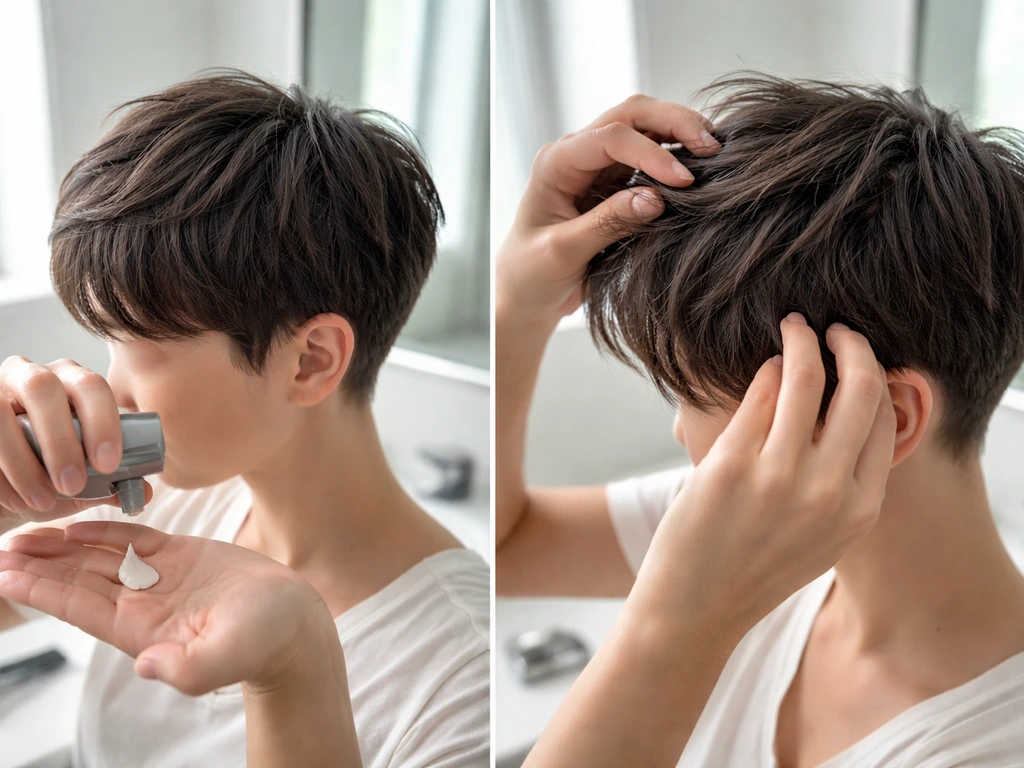
This early stage is mostly about patience. Hair is too short to style much, so the focus is on scalp health, nutrition, and establishing habits. If you had a uniform buzz, growth at this stage is actually the most even you'll get. Keeping the sides and back slightly cleaned up at the barbershop (without going shorter overall) can help the top start to differentiate and look more intentional rather than just grown-out. Hats and headbands are genuinely useful here, not a cop-out.
Pixie and in-between (3 to 9 months)
This is the hardest phase for most people because hair is long enough to look messy but too short for the styles you want. Texturizing products like pomade, clay, or light wax can give you control and definition without weighing hair down. Side parts are your friend here because they create the illusion of more length and weight. If bangs are growing out, a light gel or serum can train them to one side while they're too short to tuck behind your ear. Bobby pins used at the scalp rather than mid-shaft reduce the tugging that causes breakage.
Bob and collarbone length (9 to 18 months)
At this stage, you have real styling options. Blowouts, waves, and texture all work at this length. The challenge is usually managing uneven layers from where the original cut grew out unevenly, or blending regrowth if your hair is colored. A good cut from a stylist who understands you're growing out (not just maintaining) can reshape the layers to look intentional rather than halfway-grown. Bring reference photos and be explicit: you want length preserved and layers blended, not shortened.
Managing bangs as they grow out
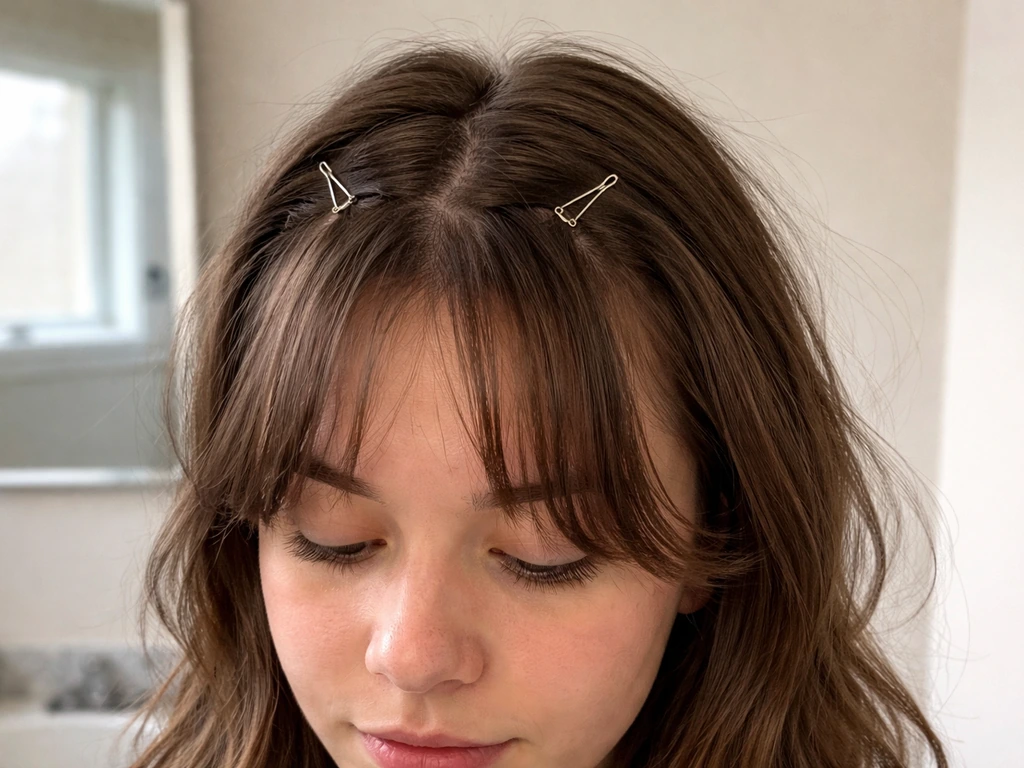
Growing out bangs has its own timeline misery. The phase where they're too long to sit on your forehead but too short to tuck behind your ear lasts roughly 2 to 4 months depending on where your bangs started. A light serum or balm can train them to sweep to the side while they grow. Headbands worn loosely (not tight against the hairline) are a practical daily solution. Curtain-style bangs are the most forgiving grown-out bang style because they transition naturally without ever looking awkward.
Managing tricky growth patterns: undercuts, layers, and uneven lengths
Undercuts create one of the more complicated growing-out scenarios because you're essentially managing two completely different lengths at once. The undercut section grows at the same rate as the rest of your hair (about half an inch per month), but it starts from near zero while the top may already be several inches long. The most common strategy is to let it grow without trimming it at all, wearing the longer top section down or slightly back to cover the shorter section during the grow-out. This can take 12 to 24 months to fully blend depending on how short the undercut was.
Layers from a previous cut grow out unevenly because shorter layers grow to blend with longer ones over time, but the timing is always a little chaotic. A shape-up cut (not a length cut) every few months can soften the internal layering and make it look more intentional while everything catches up. Ask for this specifically: 'I want the shape refined but I want to keep every bit of length I have.'
Uneven natural growth patterns are also worth acknowledging. Many people have one side that grows slightly faster or a cowlick that creates a lopsided look during the short phases. This usually evens out as hair gets longer and gravity takes over. In the meantime, styling to work with the natural direction rather than fighting it (with heat or product) saves a lot of frustration.
Color, heat, and chemical damage during the grow-out
This is where a lot of people unintentionally sabotage their progress. Coloring, relaxing, perming, or bleaching while growing out is not automatically a mistake, but it adds damage risk that has to be managed carefully. Lightening hair by more than three shades requires higher-volume peroxide and causes significantly more structural damage to the strand. If you're growing out previously bleached or dyed hair, the line where new growth meets processed hair is a breakage hotspot. Deep conditioning treatments used weekly (not just occasionally) at that line help maintain elasticity.
If you're growing out a color you no longer want, like red dye or any permanent color, patience is genuinely the safest route. Stripping or aggressively re-coloring to speed up the transition usually adds damage faster than the hair can recover. Growing out permanent hair dye or red tones in particular can take many months before the contrast becomes subtle enough to manage with toners or glosses rather than full lifts. Blending techniques like balayage, babylights, or root smudging can make the demarcation line between old color and new growth look intentional rather than grown-out.
Heat protection is non-negotiable if you're using tools at all. UV exposure also degrades color and dries out the cuticle, so a UV-protective hair product or hair sunscreen is a smart add if you spend a lot of time outdoors. It reduces both color fade and the brittleness that comes from UV damage, which directly affects breakage rates.
If you're managing a chemical texture transition (for example, growing out a relaxer while managing natural new growth), the line between textures is the most vulnerable point. Keeping that line moisturized, minimizing manipulation at the demarcation, and avoiding any additional chemical processing until the relaxed portion has grown far enough to trim off will protect the most length. This is a slow process by necessity, not a failure of technique.
Timelines, what's normal, and what to do if growth stalls
| Starting point | Target length | Realistic timeline |
|---|---|---|
| Buzz/shaved | Pixie (2–3 inches) | 4 to 6 months |
| Buzz/shaved | Chin-length bob | 12 to 18 months |
| Pixie cut | Collarbone length | 18 to 30 months |
| Short bob | Shoulder length | 6 to 12 months |
| Bangs to grow out | Long enough to tuck behind ear | 2 to 5 months |
These ranges assume average growth with reasonable care and no significant breakage or health issues. If you're consistently falling short of these windows after 4 to 6 months, something is slowing things down and it's worth investigating.
When shedding is more than normal
Normal shedding is 50 to 100 hairs per day. If you're losing closer to 300 hairs daily and you can see it on your brush, pillow, and shower drain, that pattern is called telogen effluvium. It's typically triggered by a stressor that happened 2 to 3 months earlier: major illness, surgery, significant emotional trauma, postpartum changes, stopping certain hormonal medications, crash dieting, iron deficiency, or thyroid dysfunction. The shedding usually resolves on its own within 6 months once the trigger is gone and corrected. But if you're not sure what the trigger is, or if it's lasting longer than 6 months, see a dermatologist. They can review your history, check your bloodwork, and rule out other causes.
Checkpoints to track your own progress
Take a photo from the same angle every 4 weeks. Measure hair length at the same spot (many people use the crown or a side section) on the first of each month. Log what you're doing and eating, not to be obsessive about it, but so you have actual data if something changes. Growth should be visible at the 8-week mark if your routine is working. If you’re looking for a full month-by-month plan, see our guide on how to grow transitioning hair with retention-focused routines. If you've done 3 to 4 months of consistent care and are genuinely not seeing any length change, that's when a blood panel (especially iron, ferritin, and vitamin D) and a dermatology visit make sense. Don't wait a full year before seeking answers.
The most important mindset for the long grow-out
The biggest risk during a long transitioning grow-out is giving up and cutting back short because you hit a frustrating phase. Every person growing out a pixie, buzz, undercut, or heavily layered cut will hit at least two or three stretches where their hair looks genuinely awkward and nothing seems to work. That's not a sign that your hair won't grow or that you're doing it wrong. It's just the middle part. Having a go-to style for each awkward phase, keeping up with your routine even when progress feels invisible, and remembering how far you've already come versus where you started is what actually gets people through it. Your hair is growing. The job is mostly to get out of its way. If you want a step-by-step plan for how to grow out scene hair specifically, follow the sections on retention, breakage prevention, and scalp and styling routines. If you are specifically learning how to grow out chemo hair, the same retention-focused approach helps, but it may take extra patience while your hair cycle resets.
FAQ
If hair growth is half an inch per month, why does my length not increase even though I’m following a routine?
In most cases, “fast” is limited by biology, so your goal is net length gain. Measure visible length monthly and track breakage, if you’re losing hair at the ends or through traction, you can grow at the usual rate and still not see progress. A practical rule, if shedding is normal and length photos don’t change after 8 weeks of consistent care, check retention issues first (ends, tight styles, chemical demarcation) before assuming you need more growth stimulants.
Can I make my grow-out look faster by changing only shedding or only breakage?
Yes, but only when the shedding pattern or damage pattern is the bottleneck. If you have diagnosed dandruff or dermatitis, improving scalp inflammation within a few weeks can reduce shedding. If you have breakage, adding more moisture and gentler handling at the breakage zones (ends and the texture line) can create faster visible progress because you stop losing length. If shedding is clearly high (around 300 hairs/day or more) or lasts beyond 6 months, you need to rule out telogen effluvium rather than just doing more conditioning.
How often should I trim transitioning hair if I’m trying to keep maximum length?
A good “end health” guideline is trimming to remove splits while keeping overall length targets. If you have ongoing split-prone ends, consider a trim at about 10 to 12 weeks, but delay more aggressive trimming until you see whether damage is stabilizing. If you’re consistently needing extra trims (for example, every 4 to 6 weeks), it usually means handling or styling is causing new splits, so adjust technique (less heat, less friction, looser styles) before assuming your schedule is wrong.
What are the early signs of traction alopecia during a transition, and what should I do right away?
Look for consistent signs of traction risk: scalp soreness that comes from tight pulls, bumps along the hairline, thinning at the temples, or increased shedding right where the tension sits (often nape and edges). If those show up, switch to loose hairstyles immediately and give the area a few months to recover. Permanent loss is more likely when the pull continues for months, so treat early discomfort as a cue to change styles, not push through.
Is it okay to use heat while learning how to grow out transitioning hair fast?
Use heat only if you can protect the strand and avoid frequent high settings. Prioritize low-heat drying, reduce passes, and always apply a heat protectant before any hot tool. If you need quick styling for awkward phases, consider non-heat options like air-drying with curl or wave-enhancing products, or set the style with pins and a light hold instead of repeated blow-drying.
Why does one side of my hair grow slower or look shorter during the transition?
Hair growth can still be “normal” while you see a lopsided look because growth direction, cowlicks, and texture differences can create uneven shaping early on. Don’t force it with constant heat or heavy product, instead style to the natural fall (part placement, lighter styling where it won’t weigh down). If one side visibly lags in length after several months, that may be breakage difference rather than true growth speed, so compare how your styling and friction affect each side.
What should I do if my bleached or dyed hair keeps snapping at the new-growth line?
If you’re over-processing hair near the demarcation line, retention suffers because that area is elastic and prone to snapping. Reduce additional chemical changes, keep that line moisturized and minimally manipulated, and use deep conditioning regularly to maintain flexibility. If you need to color for blending, do it cautiously and consider waiting until more new growth has moved the line away from high-stress zones.
Should I take biotin or hair vitamins to grow out transitioning hair faster?
Yes, but be careful about what type of supplement you add. A general multivitamin may help if your diet is truly inconsistent, but biotin is most useful when there’s a deficiency, otherwise it may not noticeably change shedding. If you have restrictive eating, recent high stress, or ongoing shedding, a targeted blood panel (often including iron, ferritin, and vitamin D) gives you an evidence-based next step.
How do I tell normal shedding from telogen effluvium during a transition?
If you suspect an issue, start with the pattern and timing. Normal shedding is roughly 50 to 100 hairs/day, but if it’s around 300/day and you can see it on pillow and shower drain, telogen effluvium is possible. It’s often triggered by something 2 to 3 months earlier, and it typically improves once the trigger resolves. If shedding remains beyond 6 months or you have other symptoms (fatigue, scalp pain, patchiness), see a dermatologist rather than self-treating.
What is the most accurate way to track progress when you’re trying to grow transitioning hair fast?
A photo check helps, but measurement method matters. Take photos from the same angle and lighting every 4 weeks, measure at the same reference point (commonly crown or a consistent side part section), and compare net visible length rather than “how long it feels.” If you have 8-week photos showing no change, revisit retention first (ends, traction, scalp condition), then consider bloodwork and a dermatology visit rather than waiting a full year.
How do I choose hairstyles that help me retain length instead of slowing my progress?
Your “go-to style” should reduce manipulation, friction, and tension while you’re in awkward lengths. Examples that usually work well are loose buns, loose braids, side parts for visual length, and using bobby pins carefully at the scalp rather than pulling on mid-shaft. If a style causes bumps or soreness, it’s not a styling success, it’s a retention problem and will slow you down.