
You can absolutely grow out platinum bleached hair without it breaking off or looking like a disaster the whole time, but it takes a real plan, not just patience. The process has predictable stages, and once you know what each one looks like and what to do at each point, the awkward phase becomes manageable. The short version: protect your existing length with bond repair and moisture, keep toner in rotation so the grow-out looks intentional, trim strategically so you're not cutting off progress, and let your roots grow with purpose rather than panic.
How to Grow Out Platinum Bleached Hair Without Breakage

Marcus Vickers
17 May 2026
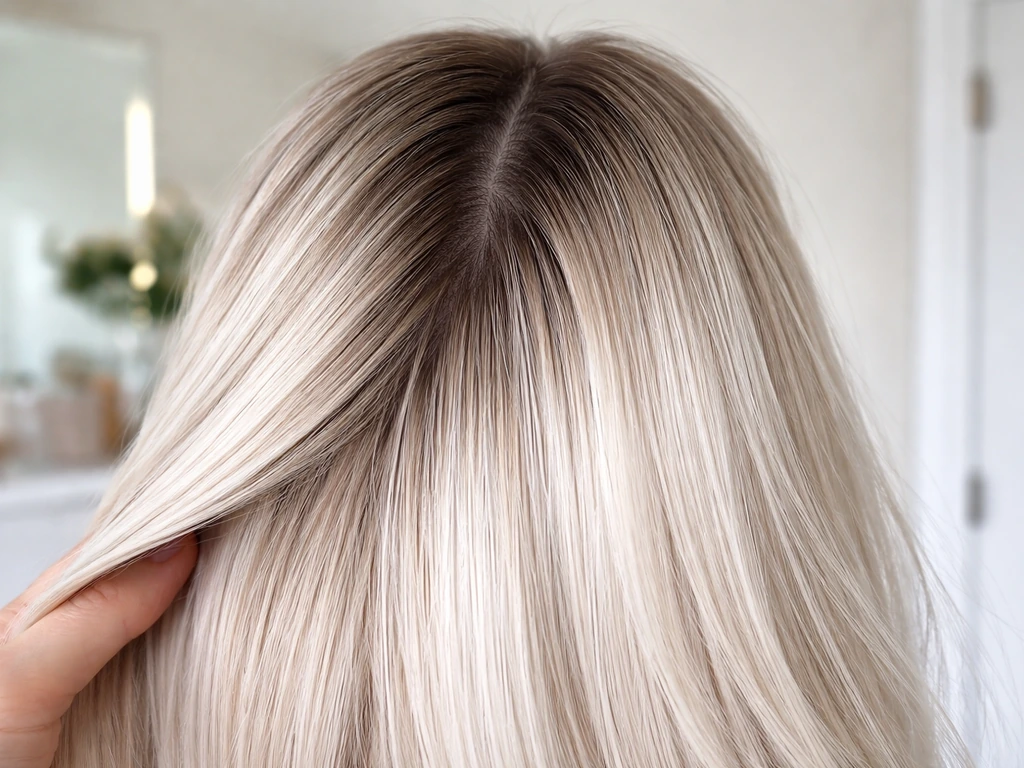
What platinum regrowth actually looks like (phase by phase)
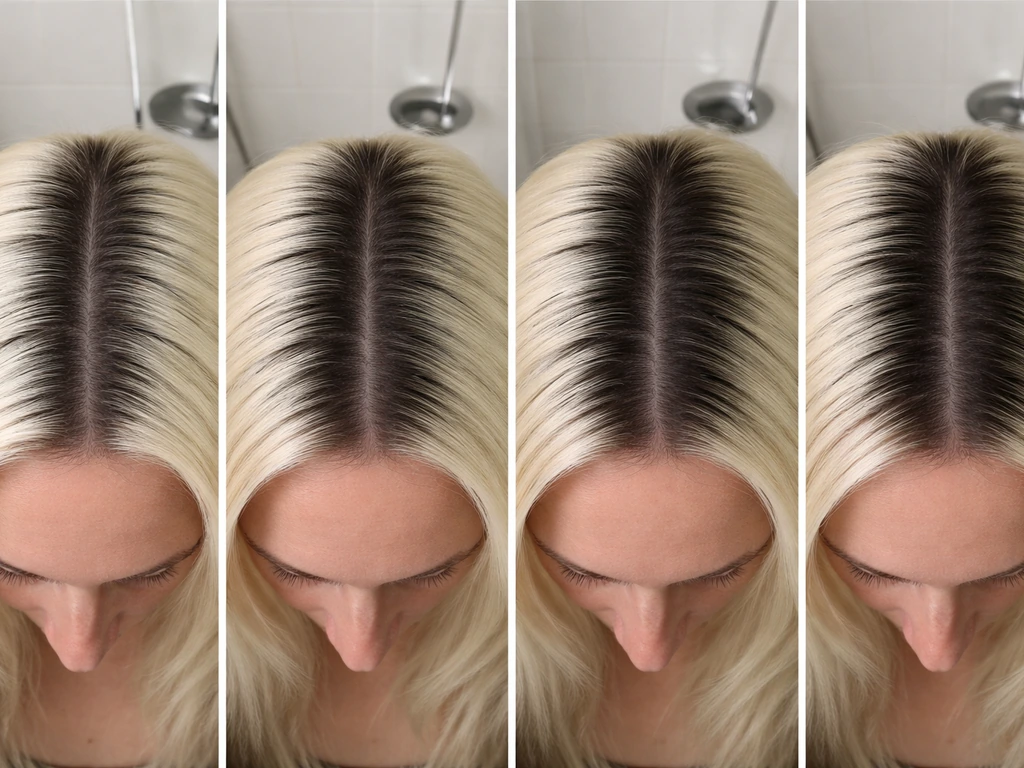
Hair grows roughly half an inch per month on average, so the timeline is pretty predictable once you know the starting point. What's less predictable is how stark the contrast will feel at each stage, and that's where most people get blindsided.
In the first two to four weeks, you'll notice a thin dark line at the scalp. A big part of learning how to grow out dark roots is understanding that the line at the scalp starts thin and then gradually widens over the first couple of months. On platinum hair this line looks especially sharp because there's almost no color bridge between your natural shade and the pale blonde lengths. If your natural hair is medium brown or darker, this line of demarcation is going to be very visible very fast. By weeks four to eight, you have a visible band of natural color, roughly half an inch to an inch wide. This is the phase most people describe as the hardest to live with, it doesn't look styled yet, just grown out.
From months two through four, the root section is long enough to start working with. This is where blending techniques actually start to matter. The lengths may also be shifting warmer at this stage, platinum toner fades over time and the underlying warm pigments start showing through as yellow or brassy tones. By month four or five you're in the "two-tone" zone: natural roots, brassy or faded blonde mid-lengths and ends. It's not pretty on its own, but it's workable with the right styling approach.
From six months onward, if you've been trimming the damage off the ends and keeping up with toning, the grow-out starts looking like a legitimate style rather than a neglected color. This is also around the time layered or undercut sections start to feel uneven, because different parts of your hair are at different stages of growth. That unevenness is normal and a good stylist can shape it without taking off real length.
How to keep your hair from breaking while it grows
Platinum bleached hair is chemically compromised, the bleach breaks disulfide bonds in the hair shaft, and that damage doesn't reverse on its own. Your job while growing it out is to stop adding more damage and actively rebuild what's been depleted. This is the most important part of the whole process.
Bond repair comes first
Bond-building treatments like Olaplex No. 3 (or the newer No. 3PLUS Complete Repair) work by relinking the broken disulfide bonds in your hair. These aren't conditioning treatments, they're doing structural repair. Use one up to two or three times per week if your hair is very damaged, and back down to once weekly once things stabilize. Make this a non-negotiable part of your routine, not an occasional mask.
Treat high-porosity hair like the main problem it is
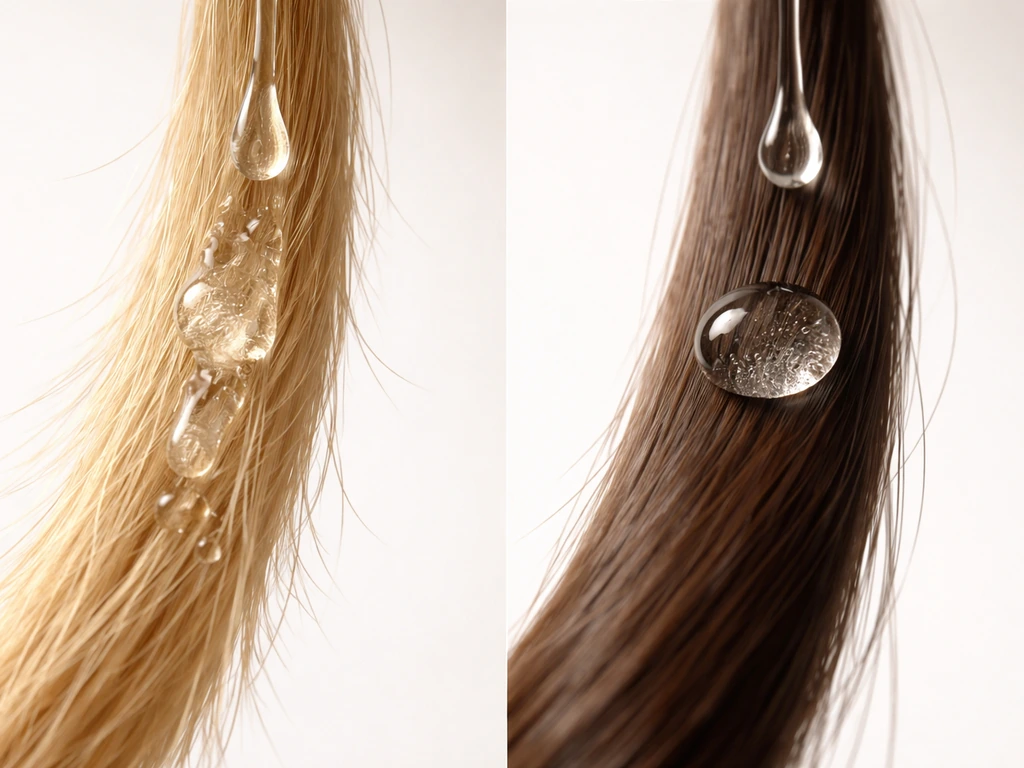
Bleached hair almost always has high porosity, meaning the cuticle is lifted and rough. High-porosity hair absorbs moisture fast but loses it just as quickly, which is why it feels dry, frizzy, and snaps off at the ends. To counteract this, use heavier, moisture-sealing products: leave-in conditioners, hair oils or butters on damp hair, and protein-rich deep conditioners once a week. Look for ingredients like keratin, hydrolyzed proteins, shea butter, and ceramides. After washing, seal with an oil to lock moisture in before it escapes.
Heat and color rules while growing
Cut your heat tool use back significantly. If you're using a flat iron or curling iron daily, drop to two or three times a week max, always with a heat protectant. Keep temperatures at or below 350°F for fine or very damaged hair. More importantly: stop bleaching the lengths. If you're only touching up roots going forward, make sure your stylist is keeping bleach off the already-processed hair. Every additional round of heat or chemicals on damaged strands sets your growth back because it accelerates breakage at the mid-shaft and ends.
Washing frequency and detangling
Wash less often if you can, two or three times a week is ideal for bleached hair. Overwashing strips the moisture you're working hard to put back. When you do wash, use lukewarm water rather than hot (hot water lifts the cuticle and accelerates moisture loss), and always follow with conditioner. Detangle on damp hair with a wide-tooth comb or a wet brush, starting from the ends and working up. Never yank from root to tip on fragile bleached hair.
Your cutting strategy (how to trim without losing progress)
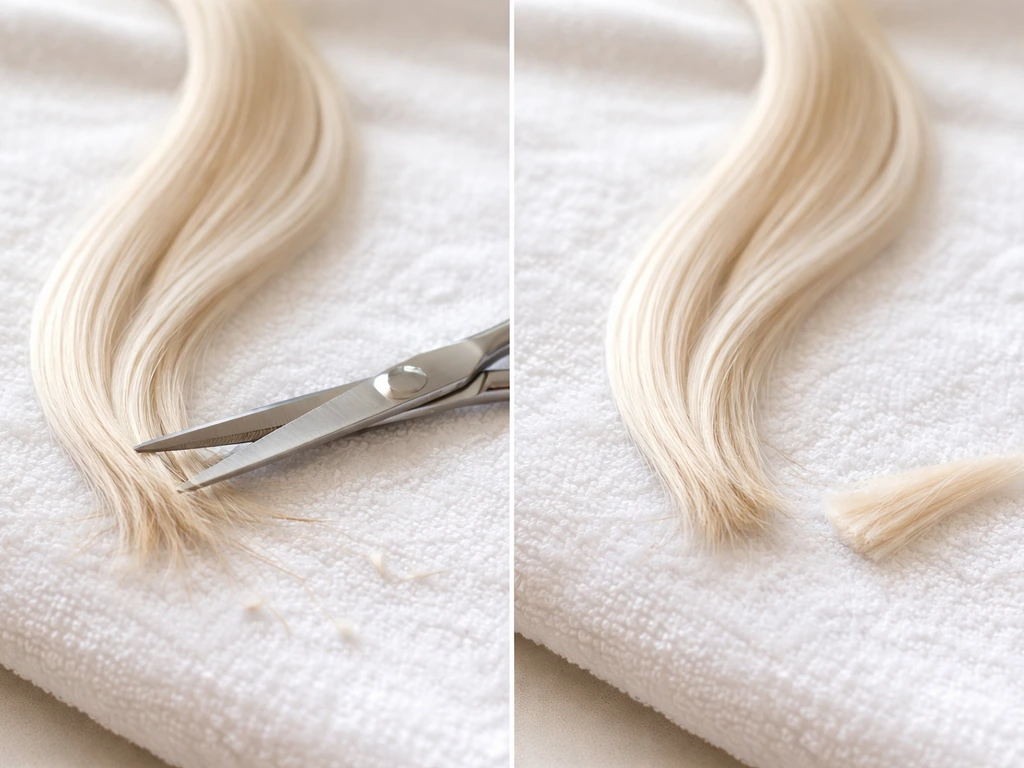
A lot of people avoid trims entirely while growing, thinking every cut is a step backward. That's the wrong instinct. Split ends travel up the hair shaft, and if you leave them long enough, you'll lose far more length to breakage than you would have lost to a tidy trim. The goal is strategic cutting, not avoidance.
Every eight to twelve weeks is a reasonable cadence for trims while growing out platinum bleached hair. Ask specifically for a "dusting" or micro-trim, just enough to remove the splits without taking real length. In many cases that's only one to two millimeters. If your stylist is consistently taking off half an inch or more when you asked for a light trim, find someone who listens. You can also ask them to "search and destroy", going through section by section and snipping only visibly split or broken ends rather than cutting a blunt line across the bottom.
Shape matters too, especially in the awkward middle stages. Ask your stylist to focus on face-framing layers and shaping around the perimeter rather than shortening overall. A well-shaped haircut in the middle of a grow-out looks styled rather than neglected. If you're growing out a bob or pixie, ask for shapes that allow the sides and back to catch up to the top rather than constantly evening everything down to the shortest section.
Styling the platinum-to-regrowth transition so it looks intentional
The biggest styling challenge with platinum grow-out is that sharp line of demarcation, that visible border between your natural root color and the pale blonde below. If you're wondering what to do when your roots grow out, focus on softening the line of demarcation and adjusting your routine as the regrowth becomes more noticeable. The goal is to soften that line so the transition reads as a style choice rather than neglect.
Shadow roots and root smudging
A shadow root is one of the most effective tools here. A colorist applies a demi-permanent or soft permanent color to the first one to two centimeters of root and blends it downward into the platinum, creating a gradual fade rather than a hard line. Done well, it can make roots look intentional for eight to twelve weeks before they need refreshing. This is different from going back to your full natural color, it's just softening the boundary so the grow-out looks like a planned balayage or ombre rather than a missed appointment.
Day-to-day styling tricks
Texture is your best friend during a grow-out. Wavy or messy styles break up the line of demarcation far better than straight, polished looks. If you normally flat-iron your hair straight, try switching to a diffuser or air-dry routine with a curl cream or wave spray, the movement disguises the contrast. Braids, half-up styles, and headbands are also genuinely useful for the months when roots are visible but not yet long enough to blend. They're not a cop-out; they're smart styling for the transition phase.
Growing out bangs and layers
Bleached bangs growing out have a particularly awkward window between about four and eight weeks, when they're too long to stay in place but too short to sweep or pin easily. A small amount of styling paste or pomade can help control them, and a soft clip or bobby pin keeps them off your face without looking forced. For platinum layers growing in, the key is asking your stylist to blend the layers rather than cutting everything to the shortest point. The goal is movement and graduation, not a uniform length.
Managing brassiness, toner, and contrasting tones
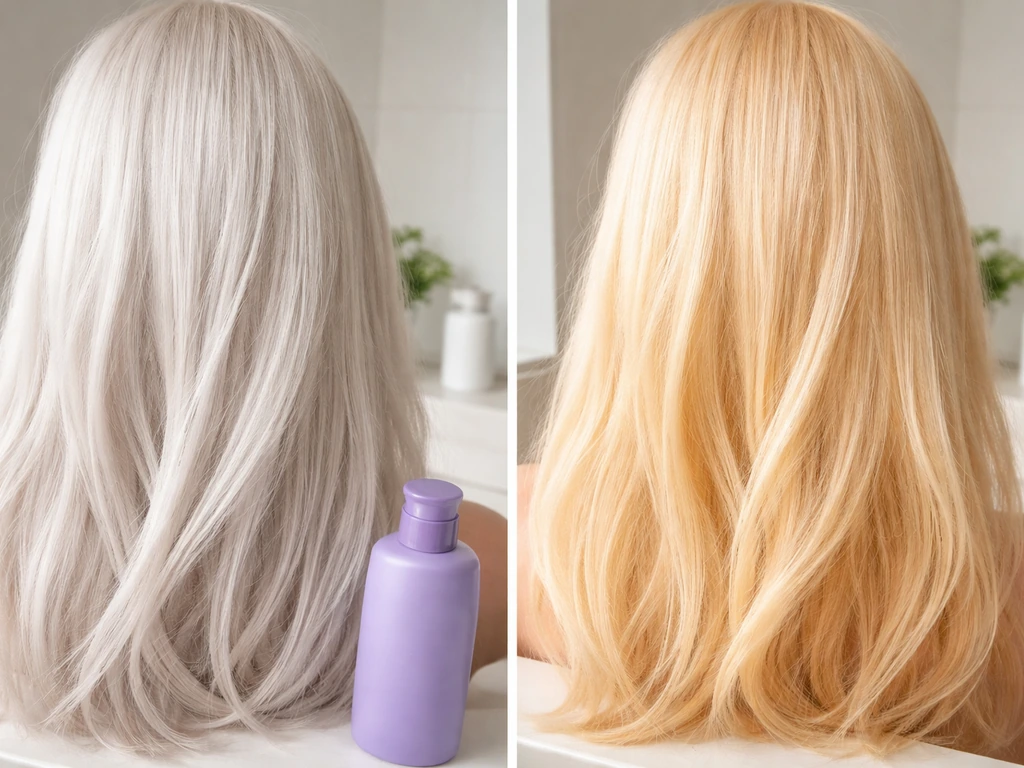
Platinum toner fades, and when it does, warm yellow and orange pigments come back. This is not a failure, it's just chemistry. The fix is staying on top of toning at home and in the salon.
Purple shampoo is the main home maintenance tool for keeping platinum cool. Use it one to two times per week, not every wash. Leaving it on for three to five minutes gives more toning effect; a quick lather and rinse gives a lighter result. The trap people fall into is overusing it, which turns platinum hair an ashy, grayish-lilac. If that starts happening, scale back to once a week or swap to a purple conditioner for a gentler effect.
At the salon, a toner gloss every six to eight weeks can reset the color and refresh the platinum without additional bleaching. If your colorist is doing a shadow root at the same appointment, they can also tone the mid-lengths and ends at the same time, keeping the whole look cohesive. As your natural roots grow in longer, the focus shifts from maintaining platinum all over to managing the two-tone contrast, and that's where techniques like balayage touch-ups or face-framing highlights can help bridge the gap rather than starting over.
If your natural hair is very dark and you're growing it out completely (not maintaining any blonde), brassiness in the lengths is still worth managing because it keeps the overall look cleaner while you wait. Purple or blue shampoo on the lengths, toner glazes at the salon, and avoiding sun exposure all slow the warm shift. Growing out dark roots with platinum lengths is a close sibling of the grow-out experience for people growing out blonde hair with dark roots, the principles overlap significantly.
Realistic timelines by starting point and length goal
Where you're starting from changes the timeline dramatically. Here's how to think about it:
| Starting Point | Goal | Approximate Timeline | Key Milestones |
|---|---|---|---|
| Platinum pixie or buzz cut | Ear-length bob | 9–14 months | Roots visible by month 1; awkward ear-length phase months 4–7; shape improves month 8+ |
| Platinum bob (chin-length) | Shoulder-length | 12–18 months | Line of demarcation very visible months 2–5; blending possible from month 3; shadow root recommended |
| Shoulder-length platinum | Mid-back | 18–24+ months | Maintain toning on lengths; trim damage every 8–12 weeks; layers need shaping every 3–4 months |
| Short regrowth on longer platinum lengths | Fully natural color | 12–24 months depending on length | Shadow root can bridge the gap; toner glazes keep lengths presentable; final chop of bleached ends at end |
These timelines assume healthy growth without significant breakage. If your hair is breaking at the ends due to damage, the visible growth rate will feel slower because you're losing as much as you're gaining. Getting the breakage under control with bond repair and trims is what actually makes the timeline work.
Growing out bleached hair from scratch is a longer journey than many people expect. The people who make it to their length goal without cutting it all off again are the ones who had a plan for each stage rather than waiting to see what happened.
Common mistakes and how to fix them
Breakage that looks like slow growth
If your hair feels like it's not growing, check the ends. Constant breakage at the mid-shaft or ends is the most common reason people feel stuck. The fix is cutting off the broken portions, committing to bond repair treatments multiple times a week, and dialing back heat tools. It's counterintuitive to cut when you want to grow, but it's the only way to stop the cycle.
Uneven growth in layered or undercut sections
If you had an undercut or very short layers around the perimeter, those sections will feel wildly out of proportion as they grow in. This is genuinely the most awkward phase for many people. The solution is shape: a stylist can blend the growing sections into the longer hair with point-cutting or texturizing so the overall look reads as intentional layering rather than uneven growth. Avoid the urge to even everything down to the shortest section, that just erases your progress.
Scalp irritation and allergic reactions
If you're doing root touch-ups or color work during the grow-out, pay attention to your scalp. Bleach and persulfate-based products can cause serious skin reactions, itching, burning, hives, or swelling are all warning signs to take seriously. Stop the treatment immediately and seek medical attention if you experience severe symptoms. Similarly, if you're using a darker dye for a shadow root, be aware that paraphenylenediamine (PPD), found in many permanent dyes, is a common allergen. If you've never used a dark dye before, do a patch test 48 hours in advance. If you develop any reaction, stop the product and don't use it again.
Over-toning and going too ashy
Using purple shampoo every single wash, or leaving toner on too long at the salon, can shift platinum from bright and clean to dull, gray, and flat. If this happens, clarifying shampoo will strip excess toner and reset your color. Going forward, use purple shampoo only one to two times a week and communicate to your colorist exactly how bright or icy you want the result, "not gray, not yellow, clean white-blonde" is a clearer brief than just "keep it platinum."
Dryness that never seems to improve
If your hair feels perpetually dry no matter how much conditioner you use, it's likely a porosity issue combined with product layering that isn't actually sealing moisture in. Swap to a leave-in conditioner applied to soaking-wet hair, followed immediately by an oil or butter to seal. Don't wait until hair is almost dry to add products, by then the moisture has already started escaping. Also check whether your bond-building treatment is actually a reconstructor or just a marketing label on a conditioner. Genuine bond-builders work at a structural level and are not interchangeable with moisture masks.
Your starting-today action plan
If you're reading this the day you've decided to grow out your platinum hair, here's exactly where to start: If you want more detail on what to do during the initial grow-out phase, follow up with our full guide on how to grow out bleached hair.
- Stop any further bleaching on the lengths immediately. If you need root touch-ups, keep bleach only on the new growth.
- Start a bond repair treatment (like Olaplex No. 3 or equivalent) two to three times this week, then settle into a once or twice weekly routine.
- Switch to a sulfate-free, moisturizing shampoo and a heavy conditioner. Wash two to three times a week maximum.
- Book a salon appointment in the next two to three weeks — not for a cut necessarily, but to discuss a shadow root to soften your line of demarcation and get a toner gloss on the lengths.
- Set a trim appointment for eight weeks out. Tell the stylist you want a dusting only — just the splits, no real length taken off.
- Buy a purple shampoo and use it once or twice a week to manage brassiness at home between salon visits.
- Take a photo today. Progress is slow and you'll need the comparison to see how far you've come at the three and six month marks.
Growing out platinum bleached hair is genuinely a long game, but it doesn't have to be a miserable one. The people who get through it successfully aren't the ones with the most patience, they're the ones who had a plan for each stage and made choices along the way that kept them moving forward. If you want the most practical roadmap, follow these steps to grow out white hair without it feeling thin or brittle. If you're still figuring out the overall routine, this guide on how to grow blonde hair out can help you map each step from roots to ends. You're already ahead of the curve by looking for that plan now.
FAQ
Should I stop using protein products while growing out platinum, or keep them in the routine?
Keep protein in a limited, targeted way. Platinum hair often needs structural rebuilding, but too much protein can make it feel stiff or rough and increase snapping. A practical approach is one protein-rich deep conditioner weekly (or every 7 to 10 days), then switch to mostly moisture and sealants on the other wash days, adjusting if your hair feels brittle instead of bouncy.
How can I tell whether my hair needs more bond repair or more moisture right now?
Do a quick texture check after washing. If hair feels mushy, limp, or stretches excessively before it dries, it often needs more bond rebuilding/structure. If it feels rough, tangles easily, and looks frizzy even after conditioner, it often needs better moisture sealing and a leave-in plus oil on damp hair. If it is neither, review heat, over-washing, and whether ends are breaking even if the roots look fine.
What should I do if my ends are breaking but my roots are still growing, so the lengths never seem to catch up?
That usually means the breakage rate is higher than growth rate. The fastest way to create progress is to trim off the broken, weak ends (a true micro-trim or “dusting” sized to the damage), commit to bond repair multiple times weekly until the snap factor improves, and reduce heat and friction (smooth detangling, satin pillowcase, loose protective styles). Growth is happening, but the visible length is being lost at the same time.
Can I use extensions, clip-ins, or toppers during the grow-out without making breakage worse?
Yes, but treat them like a temporary styling tool, not a way to skip hair care. Avoid tight installs and heavy bonding on bleached sections. If you use clip-ins, match your hair’s dryness level by using slip-based products so you are not forcing tangles, and remove at night or whenever you will be detangling. Keep traction low at the roots so the demarcation area is not stressed.
How do I choose between a shadow root, demi-gloss, or toner refresh when my line of demarcation is getting worse?
Use a shadow root when the goal is a softer, longer transition at the root area (especially for the first several inches). Use toner/demi-gloss when your platinum is fading warmer but the roots are already closer to your target. If your lengths are turning noticeably yellow or brassy, prioritize toning the lengths, and only do root softening if the scalp border is still the biggest visual issue.
Is it okay to go from platinum to my natural color early, or should I wait the full grow-out?
You can switch early, but make sure you are not adding damage you do not need. If you want to stop the two-tone awkward phase, ask for a gradual transition (like a root smudge, balayage-style bridge, or careful color blending) rather than an all-over reset. Waiting is best if your ends are compromised, because frequent lightening or repeated chemical processing to “finish” the look can worsen breakage.
How often should I clarify to remove toner or purple shampoo buildup without stripping everything?
Clarify only when you see dullness or buildup effects, not as a weekly habit. If platinum starts looking flat or the tone feels “coated,” clarify occasionally (for example, once every few weeks), then immediately follow with conditioner and a bond-building treatment if your hair feels stressed. After clarifying, re-establish toning with purple shampoo at the recommended frequency rather than restarting at full intensity.
Can I swim with platinum hair during the grow-out, and how do I prevent it from turning brassy faster?
You can, but treat swimming like a damage event. Chlorine and sun both accelerate warmth and dryness, so wet your hair with clean water first, apply a conditioner or protective leave-in to reduce absorption, wear a cap if possible, and rinse immediately after. Then deep condition, and consider a tone-refresh routine (not heavy overuse) to keep the brassy shift under control.
What hairstyle choices actually reduce the demarcation line versus just hiding it temporarily?
The most effective options combine movement with coverage of the transition zone. Wavy, textured styles and half-up looks break up the straight visual border, and braids that start near the root can visually “feather” the line as hair shifts. Headbands and clips help too, but they are most useful for the short awkward window, because they do not change how the colors grow relative to each other.
Does the half-inch per month timeline still apply if my hair is thick, curly, or has shrinkage?
Growth still averages around half an inch per month, but shrinkage can make it look slower. Curly and coily hair often springs less when measured, so the visible length change may seem minimal until stretched. Track progress by measuring from a consistent reference point (like from the crown to the same section of ends) and watch for breakage at the ends, not just apparent length.