
Growing out blonde hair with dark roots is completely manageable once you stop fighting the line and start working with it. The key is knowing what your roots will look like at each stage, having a camouflage plan for the awkward weeks, and making deliberate choices about when (and whether) to touch up. Most people grow about half an inch of hair per month, which means a visible root line typically appears around the four to six week mark.
How to Grow Out Blonde Hair With Dark Roots: Timeline Tips

Marcus Vickers
4 May 2026

Johns Hopkins Medicine notes that scalp hair grows at an average rate of [about 0. 5 inches (about 1. 25 cm) per month](https://www. hopkinsmedicine.
org/health/conditions-and-diseases/hair-loss). From there, you have real options: blend the contrast down with a root shadow service, buy yourself time with temporary products, or lean into a natural gradient. None of those paths require cutting everything off and starting over.
Root shadow vs a hard demarcation line: know what you're working with
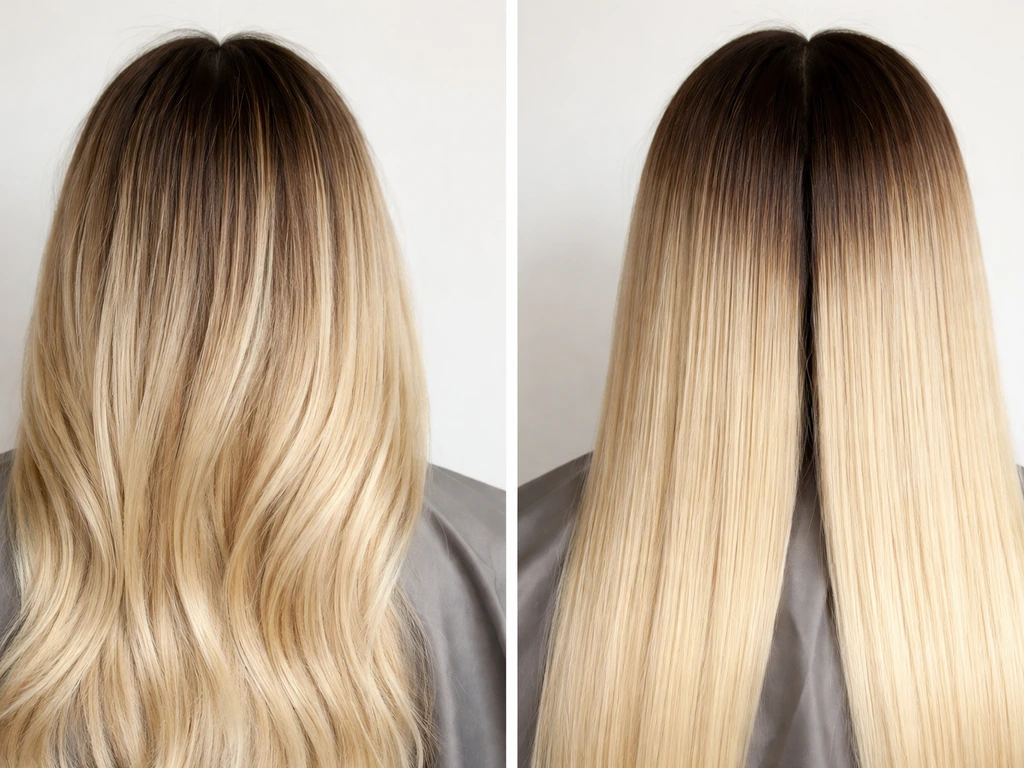
Not all root regrowth looks the same, and understanding the difference between a root shadow and a hard demarcation line changes what you should actually do about it. A hard demarcation line is exactly what it sounds like: a sharp, horizontal stripe where your natural dark color meets the lightened or blonde section below it. This tends to happen with single-process all-over blonde dye or full-coverage foils applied close to the root. It's high contrast and very visible once an inch or more of regrowth comes in.
A root shadow, on the other hand, is a soft, intentional gradient. It's actually a color service where a stylist applies a shade one to two levels darker than your blonde pieces directly at the root to create depth and blur any demarcation. The goal isn't to erase the root, it's to make the transition look gradual and natural instead of striped.
If you went into your grow-out already having a balayage or ombre situation, you may already have a built-in root shadow, which is why balayage tends to be more forgiving as it grows out than foil highlights are. Root taps work similarly, blurring the line between highlights and your natural color at the root level so the boundary softens rather than sharpens.
Before you decide on any strategy, figure out which one you're dealing with. Pull your hair back and look at the contrast in natural light. If the line looks like a stripe drawn with a ruler, that's demarcation and it needs active blending. If the shift looks gradual already, even if the roots are clearly visible, you have more time and flexibility before it becomes a problem.
What to expect at each stage of the grow-out
Hair grows roughly half an inch per month on average, though the actual range is about 0. Hair grows roughly half an inch per month on average, and knowing that timeline helps you time services like a root shadow as you work toward how to grow blonde hair out. 2 to 0.7 inches per month depending on your genetics, age, health, and even the season. It also grows in cycles, meaning not every follicle is actively growing at the same time, which is why regrowth rarely looks perfectly even across the whole head. Here's a realistic stage-by-stage picture of what the grow-out actually looks like:
| Timeframe | Regrowth Length | What It Looks Like | Main Challenge |
|---|---|---|---|
| Weeks 1–4 | Up to ~½ inch | Subtle root line, especially on darker bases; easy to camouflage | Slight shadow near the part and hairline |
| Weeks 4–8 | ~½–1 inch | Visible root band; demarcation clear on straight, single-process color | Hard line becomes obvious, especially under bright light |
| Weeks 8–16 | ~1–2 inches | Full root section visible; blonde moves noticeably lower on the shaft | Contrast looks unintentional unless blended; awkward styling phase |
| Months 4–6 | ~2–3 inches | Significant natural section; blonde is mid-length or lower | Managing two different textures and porosity levels |
| 6+ months | 3+ inches | Natural color dominates from root down; blonde remaining at mid-lengths to ends | Protecting ends from damage while natural color grows in healthy |
If you started with balayage or a root shadow already built in, stages one through three will look much softer than this. The jump from weeks four to eight is when most people hit the wall and consider going back to the salon. That's the phase where having a plan matters most.
Camouflage options for dark roots (low-commitment and temporary)
You don't have to commit to a full color appointment every time your roots get noticeable. There's a whole spectrum of temporary and semi-permanent options, and knowing which one fits your situation saves you time, money, and potential damage.
Temporary sprays and powders

Root cover sprays, like the ION Root Cover Airbrush Tint from Sally Beauty or L'Oréal Paris's root touch-up spray, use micro-fine pigments in a quick-drying formula to camouflage regrowth between appointments. The key with sprays is to shake the can thoroughly before use and hold it four to six inches away from the root area for even coverage. These are genuinely useful for buying yourself a few extra days before a salon visit, or for specific occasions when you want the roots to look less obvious.
Powder-based products like Rootflage or Clairol's Temporary Root Touch-up Concealing Powder work best on dry, styled hair. One practical tip: when applying powder near a part line, use a flat surface like a credit card or your hand as a barrier to keep the powder off the scalp and skin, then seal it with a light mist of hairspray to reduce transfer to your pillow or hands.
One important heads-up: temporary color products can behave unpredictably on pre-lightened, highly porous hair. Clairol Professional notes that temporary color can penetrate more deeply and stain more on lightened hair, so if your blonde ends are very porous, test any temporary product on a small section first before going all over.
Salon blending services
When temporary products stop cutting it, a root shadow or root tap service at the salon is the most effective low-maintenance move. These services don't lift the dark root, they use a deeper shade to feather the boundary between your natural color and the blonde, making the whole thing look intentional. This is especially useful in the eight to sixteen week window when the contrast is at its worst. A root shadow using a shade one to two levels darker than your blonde pieces can extend the time between full color appointments significantly, which is better for your hair in the long run.
Keeping your blonde from going brassy as the roots grow out
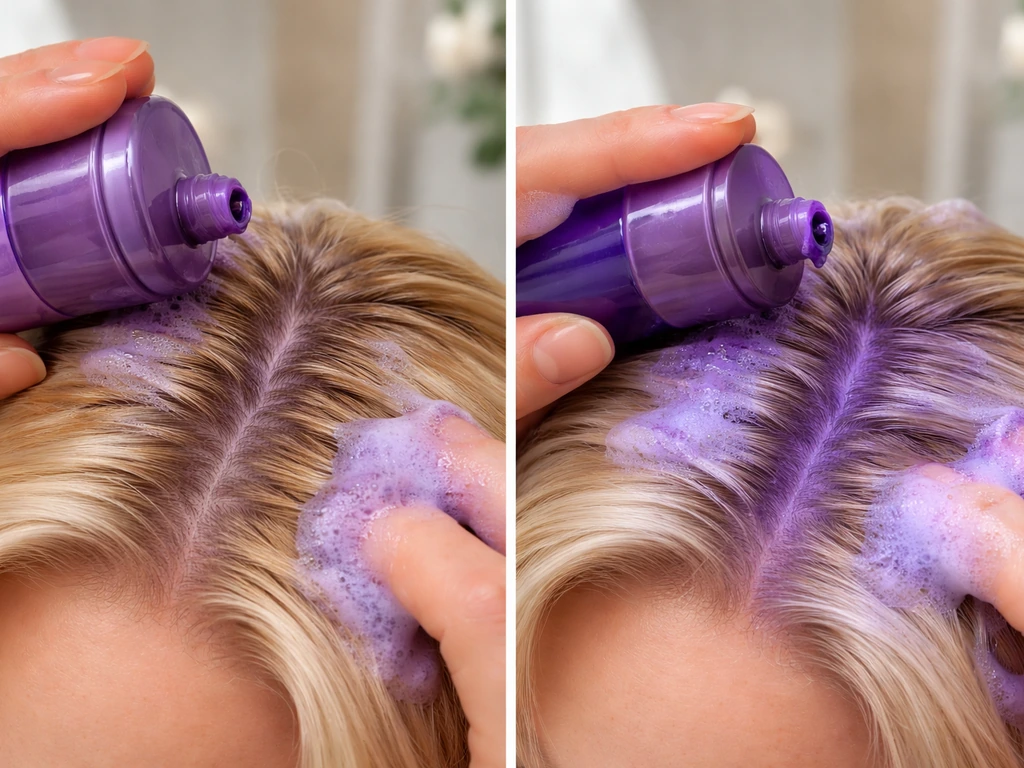
The longer your blonde has been on your hair, the more it can shift toward yellow, orange, or brassy tones, especially with sun exposure, hard water, and heat styling. Purple shampoo is the standard first line of defense here. It works as both a cleanser and a toner, depositing violet pigments to counteract brassiness and keep your blonde looking cool and bright.
One to two times per week is typically enough for most people. Using it more than that is where things go wrong. Frequent use, especially on very light or platinum hair, can cause pigment buildup that makes your blonde look grey, dull, or even take on a purple or blue cast. Purple shampoo is intended to counteract yellow or brassy tones, but overusing it can lead to an unwanted purple, pink, or blue tint. Use a timer (two to five minutes is a good benchmark for most purple shampoos) and cut back if you start to see any unwanted tones creeping in. If you over-tone, a clarifying shampoo wash will usually correct it within a few days.
Beyond purple shampoo, professional gloss or toner treatments can refresh your blonde's tone and add shine. These typically last four to six weeks, so timing one alongside your root shadow service is a good use of a single salon visit. A gloss won't lift your natural regrowth, but it will make the blonde portion look intentional and healthy rather than neglected, which goes a long way visually.
Touch-up, refresh, or go natural: how to decide
This is where you actually need to make a call, and the right answer depends on where you're trying to end up. Here's a breakdown of the main routes and what makes sense for each:
| Goal | Best Service | Typical Frequency | What It Does |
|---|---|---|---|
| Maintain existing blonde look | Root touch-up (foil/full) | Every 8–10 weeks for foils; every 4–6 weeks for single-process | Re-lightens roots to match existing blonde |
| Soften and blend the grow-out | Root shadow or root tap | Every 10–16 weeks | Adds depth at root to blur demarcation line |
| Refresh tone without lifting | Gloss or toner | Every 4–6 weeks | Corrects brassiness, adds shine, no additional damage |
| Extend balayage grow-out | Balayage refresh | Every 12–16 weeks | Re-paints highlights lower on shaft; maintains soft root |
| Transition to natural color | No lift; root shadow to bridge | As needed until grown out | Manages contrast while natural color takes over |
The biggest mistake people make is reflexively booking a full root touch-up at the six week mark every single time. That schedule works if you want to maintain all-over blonde indefinitely, but it keeps you on a treadmill and stacks up damage on the same sections repeatedly.
If you're genuinely trying to grow the blonde out and let your natural color come back, or transition to something lower maintenance, a root shadow every twelve to sixteen weeks with a gloss in between is a much smarter plan. This approach is especially useful when you are learning how to grow out platinum bleached hair without constantly touching the scalp a root shadow every twelve to sixteen weeks.
If you want a smooth grow-out, focus on how to let your roots grow out without fighting the process, especially during the middle weeks let your natural color come back. It reduces lightening sessions on your scalp and makes the grow-out look deliberate rather than neglected.
If your goal is to go fully natural, that's a real option too. The main challenge with letting dark roots grow out naturally is managing the contrast during the middle stages, which is exactly where temporary products and root shadows earn their keep. The same grow-out strategy can also help you figure out how to grow out dark roots while keeping the contrast looking intentional during the middle stages letting dark roots grow out naturally. You don't have to commit to an endpoint to start the process. Start with one fewer touch-up than usual, use temporary products to stretch the gap, and reassess from there.
Styling through the awkward stages
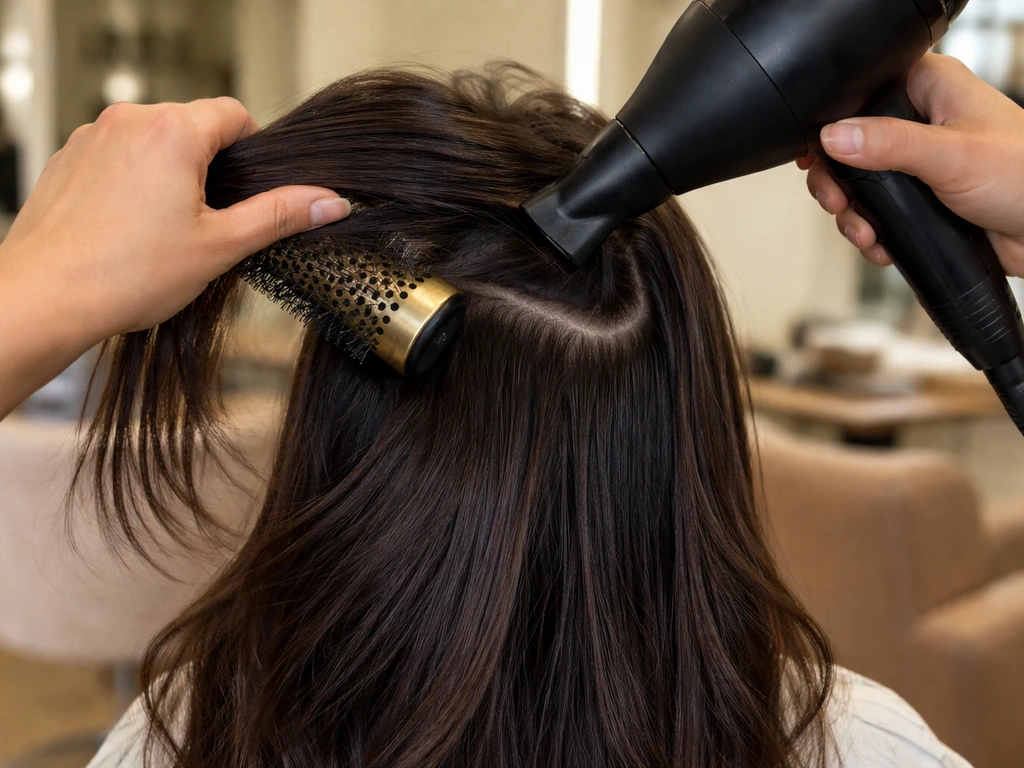
The middle months of a grow-out are genuinely awkward, and the best strategy is building a styling toolkit specifically for that phase rather than trying to pretend it isn't happening.
Layers
Asking your stylist for soft layers is one of the most effective tools during a grow-out. Layers break up the horizontal line between your natural root and the blonde portion below it. Instead of a single flat boundary, the color transitions at different heights around your head, which reads as more intentional and textured. Avoid blunt cuts that emphasize the line.
Bangs
Bangs are a double-edged situation during a blonde grow-out. If your bangs are blonde and your roots are dark, they'll show regrowth faster than any other part of your head because you're looking directly at the hairline. Curtain bangs or side-swept styles are more forgiving than a full blunt fringe, since they don't create the same sharp horizontal line. If you have bangs you're also growing out, use a root powder or spray along the part area and sweep them to the side to minimize contrast.
Updos and half-up styles
Updos can be your best friend during the grow-out, but they work best when the root-to-blonde transition is at or below the ear level. A loose bun, low twist, or half-up half-down style pulls the eye away from the root area and lets the blonde ends do the visual work. Braids are particularly useful because the weaving pattern naturally breaks up any visible root line. If you're in the early stages (under an inch of regrowth), a slick or textured updo with some root concealer on the part is often all you need.
Managing undercuts and nape regrowth
If you have an undercut, the nape and sides tend to show root contrast in a very specific way, especially when hair is worn up. The natural hair growing at the undercut line against the blonde above it can look sharp if left unblended. A root shadow applied to just the undercut border area can soften this significantly without a full color session.
Protecting your hair health while you wait
Growing out lightened hair means you'll have two very different sections coexisting on your head for months: healthy, untreated natural regrowth at the root, and potentially porous, processed blonde at the lengths and ends. These two sections need different treatment, and respecting that difference is how you arrive at your goal without your ends being a fried, breaking mess.
- Use bond-building treatments regularly. Products in the Olaplex category can help repair and strengthen the internal bonds of lightened hair. If your blonde ends are significantly compromised, use them more frequently at first, then taper to a maintenance schedule once the hair stabilizes.
- Limit overlapping lightener on previously lightened hair. If you do go back for a root service, make sure the stylist applies the lightener to new growth only and keeps it off the already-lightened mid-lengths. Repeated lifting on the same section is the primary cause of serious breakage.
- Reduce heat styling frequency on the ends. The blonde portion of your hair is more porous and more vulnerable to heat damage. Use a heat protectant every single time, and consider air-drying more often than you currently do.
- Deep condition weekly. A moisturizing or protein-based mask (depending on what your hair is lacking) applied from mid-length to ends keeps the blonde portion manageable and reduces the appearance of dryness or frizz.
- Use a sulfate-free shampoo for everyday washing. Sulfates strip moisture faster from porous, lightened hair. A gentle, sulfate-free formula preserves the tone from your toner or gloss longer and keeps the blonde from drying out.
- Protect hair from the sun and chlorine. UV exposure and pool chemicals both accelerate brassiness and damage in lightened hair. A UV-protective hair mist or wearing a hat during prolonged sun exposure is a small effort with a real payoff when you're trying to maintain color and health simultaneously.
The most important thing is patience with a plan. Growing out blonde hair with dark roots isn't a quick fix, but it doesn't have to be a chaotic, embarrassing process either. To make sure you get there comfortably, focus on the right blending and camouflage steps as your regrowth comes in how to grow out bleached hair. Every person's timeline is slightly different, and there's no single right answer about whether to maintain, blend, or go fully natural.
What matters is making intentional decisions at each stage rather than reacting out of frustration. Give your hair the care it needs at the ends, manage the root contrast with the tools that actually work, and you'll get where you're going with your hair still intact. Root shadow services are a key technique if you want a smoother grow-out when your white hair starts showing.
FAQ
How can I tell if my dark roots are becoming a hard demarcation line versus just visible contrast?
Do the “stripe test” in natural light with hair pulled back. If you see a straight, horizontal boundary that stays in one height as you move your head, that’s demarcation. If the transition spreads or looks soft around the same area, it’s closer to a shadowed blend and you usually just need camouflage, not a service right away.
Should I use purple shampoo during the months when my roots are dark and only the ends are blonde?
Yes, but keep it targeted. Purple shampoo is best concentrated on the pre-lightened blonde lengths, not at the roots, especially if your scalp area is darker and you want to avoid accidental tone shift near the part. Rinse thoroughly, and start with 1 application per week to see how your blonde ends respond.
Can I use root cover sprays or powders right before washing with shampoo?
It’s better not to. Temporary pigments can smear or transfer while wet, and they may affect how your toner and shampoo behave. Apply root cover products after you’re done cleansing and fully dry your hair, then wash out at your next normal routine.
What if my blonde ends are very porous and my temporary root product stains beyond the roots?
Test a small section first (for example, the part line at the back) and watch how long it lasts after a single wash. If it starts tinting the blonde lengths or looks uneven, switch to a less penetrative option and limit product only to the regrowth area, not the processed ends.
How often should I reapply temporary root concealer between salon visits?
Reapply only when you notice fading or the root line becoming visible again, not on a fixed daily schedule. For many people, that ends up being every few days, but humidity, hair texture, and how often you touch or wash the hair can shorten the window.
Will a root shadow cover make my hair darker at the scalp permanently?
It will change the color at the root area for as long as the service wears off, but it is designed as a blend, not a permanent reset. The goal is to soften the transition while your natural regrowth continues to move upward, so you should expect the effect to gradually fade rather than “hold” indefinitely.
Is it ever a mistake to wait too long for a root shadow if my contrast is getting worse?
Yes, if the line turns high-contrast in a way that looks striped across the whole head. When you start seeing a consistent boundary stripe that appears at the same height even after styling, it usually means blending services will work more effectively than relying only on powders and sprays.
How do I prevent purple shampoo buildup from showing up as a dull or grey cast?
Use a timer and don’t exceed the recommended contact time, then clarify if needed. If you notice your blonde turning noticeably grey or bluish, do one clarifying wash and pause purple for a couple of weeks, then restart with a shorter contact time.
What styling choice helps most during the middle weeks when the root line is most noticeable?
Opt for styles that break up a straight visual line, like side parts, loose braids, or a half-up look where the transition sits at or below the ear level. These reduce the “eye line” focus on the roots and make the grow-out read more intentional, even before you do any new color.
If I want to go more natural, should I stop all toning and just let it grow?
Not necessarily. Letting your roots grow out naturally still usually requires toning on the lengths because pre-lightened hair can shift brassy over time. Keep purple shampoo or a gentle gloss schedule for the blonde ends, while reducing root services so your natural color gains the lead gradually.
Can I cut layers to help the grow-out without making the root line worse?
Yes, if you ask for soft, blended layers rather than blunt cuts. Layers change the height of the transition around your head, which breaks up any uniform boundary. Avoid heavily blunt perimeter cuts that can emphasize the contrast.
How should I adjust my plan if my hair grows slower than the average 0.5 inch per month?
If your growth is on the slower side, you can often stretch timelines longer before the contrast becomes a stripe. Use the “stripe test” and reassess every couple of weeks rather than relying only on week count, then schedule blending when the transition becomes consistently high-contrast.