
Growing blonde hair out takes roughly 6 months to reach your shoulders from a short bob, and closer to 12 to 18 months to go from a pixie or buzz to a genuinely long length. That's the honest answer. Hair grows about 1 cm per month on average, so every inch you're aiming for costs you around 2.5 months of patience. If you know that going in, the whole process becomes a lot easier to manage. The good news is there's plenty you can do to make sure the length you grow actually stays on your head instead of snapping off.
How to Grow Blonde Hair Out: Step-by-Step Growth Guide

Marcus Vickers
14 Apr 2026
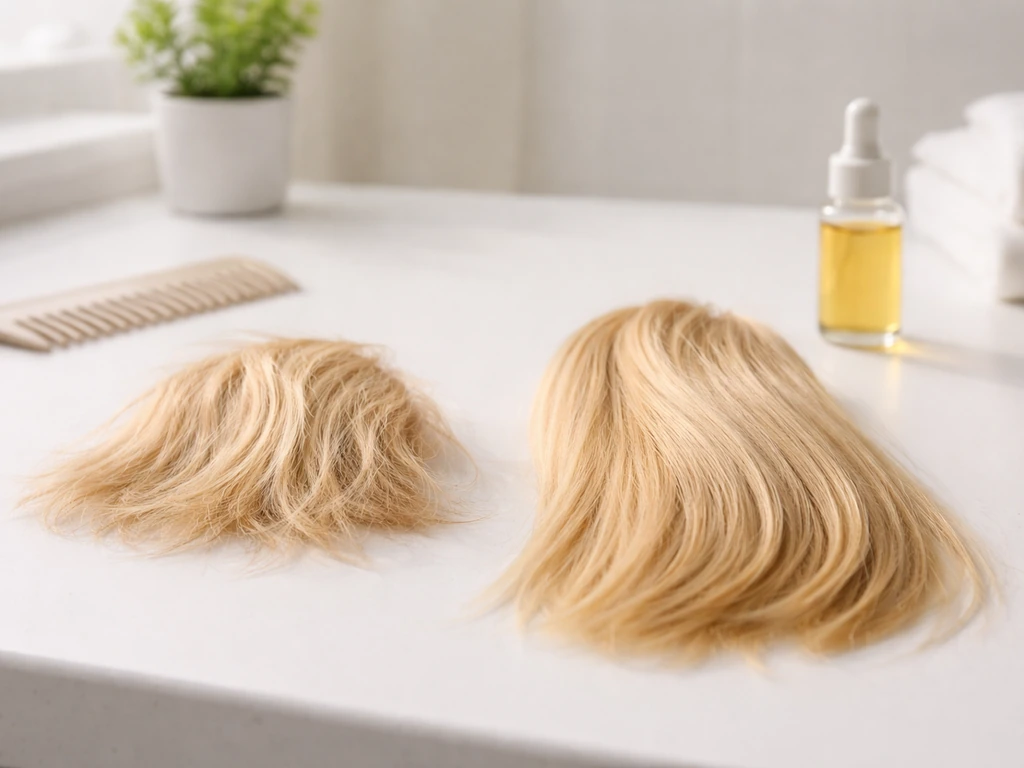
Realistic timeline for growing blonde hair long
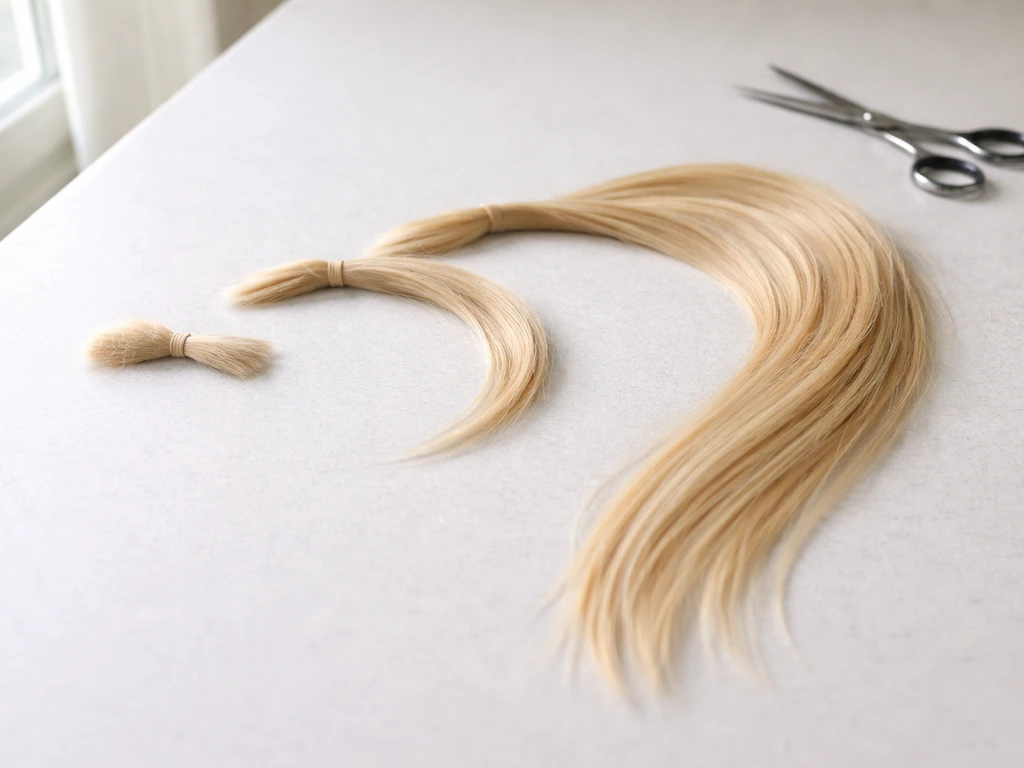
At 1 cm per month (the growth rate consistently cited in medical literature), here's what to expect at each stage. These numbers assume you're trimming minimally and not losing significant length to breakage.
| Starting length | Target length | Approximate time needed |
|---|---|---|
| Buzz cut / shaved | Chin-length bob | 12–15 months |
| Pixie cut | Shoulder length | 12–18 months |
| Short bob (jaw) | Shoulder length | 4–6 months |
| Shoulder length | Mid-back / long | 12–18 months |
| Bangs grown out | Blended with rest of hair | 6–10 months |
Blonde hair doesn't grow faster or slower than other colors by nature, but it does tend to be more prone to breakage if it's been lightened, which can make it feel like growth has stalled. The hair is growing. What's often happening is that the ends are splitting and snapping off at nearly the same rate as new growth arrives. That's the core problem this guide is designed to solve.
Build your grow-out routine from day one
The foundation of growing out any hair is consistency, not expensive products. Four things matter most: how you wash, how you condition, how you care for your scalp, and how you detangle. Get these right and everything else is a bonus.
Washing
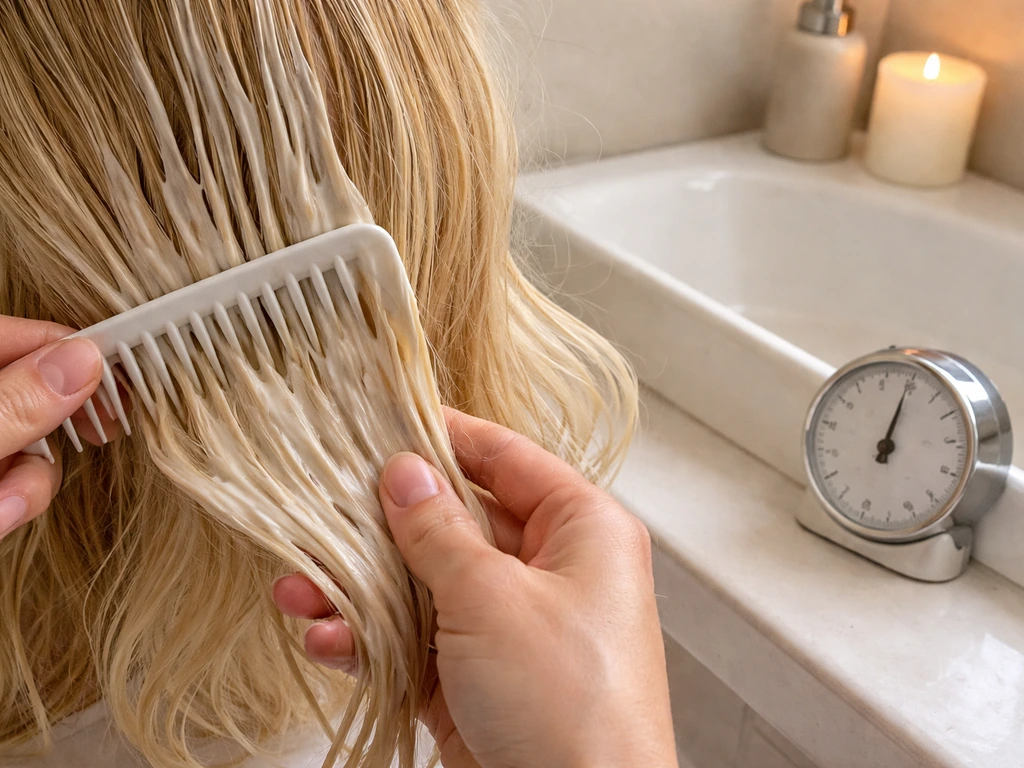
Wash blonde hair 2 to 3 times per week maximum if it's been lightened or chemically processed. Daily washing strips the moisture that bleached hair is already struggling to hold onto. When you do wash, use a sulfate-free shampoo. Sulfates are effective cleansers but they're harsh on porous, color-treated strands. Focus the shampoo on your scalp only and let the suds rinse down the length rather than scrubbing the ends directly.
Conditioning
Conditioner is non-negotiable for blonde hair in a grow-out phase. Apply it from mid-shaft to ends every single wash, and leave it on for at least 2 to 3 minutes. Once or twice a week, swap your regular conditioner for a deep conditioning mask. Look for ingredients like shea butter, hydrolyzed keratin, or panthenol. These don't just coat the hair, they actually reduce the friction between strands that leads to breakage.
Scalp care
Your scalp is where growth actually happens, so don't ignore it. A gentle scalp massage for 3 to 5 minutes a few times a week increases blood circulation to the follicles. You don't need an expensive tool, just your fingertips with light pressure. Keep the scalp clean but not stripped. If you have dandruff or excess buildup from dry shampoo or styling products, use a clarifying shampoo once every 2 to 3 weeks to reset, then follow immediately with a rich conditioner.
Detangling
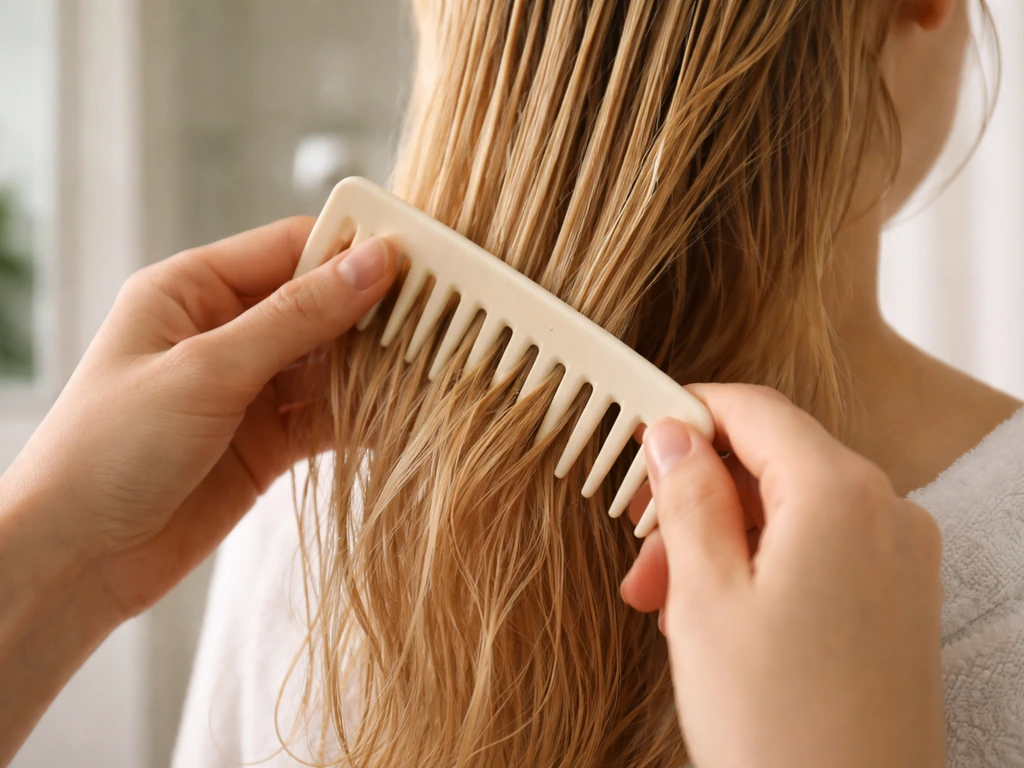
This is one of the biggest sources of breakage that people overlook. Always detangle on damp hair after conditioning, not on dry hair. Start at the ends and work upward in sections, never raking a brush from root to tip. A wide-tooth comb or a wet brush with flexible bristles is the safest option. Forcing knots apart from the root down is how you snap off length that took months to grow.
Keep the length you grow: reducing breakage and dryness
Blonde hair, especially bleached or highlighted blonde, is more porous than virgin dark hair. That porosity means it absorbs moisture quickly but also loses it quickly, which leads to dryness, brittleness, and split ends. If you're trying to grow out bleached hair, this section is especially important because the damage from bleach compounds the normal challenges of the grow-out phase.
- Apply a leave-in conditioner or lightweight hair oil (argan, camellia, or jojoba) to damp hair before styling. This seals the cuticle and reduces friction during brushing.
- Sleep on a silk or satin pillowcase. Cotton creates friction that physically roughens the cuticle and causes small breakage events every night.
- Limit heat styling to 2 to 3 times per week, and always use a heat protectant spray first. Keep flat irons and curling wands at 350°F (175°C) or lower for fine or previously lightened blonde hair.
- Avoid tight elastic hair ties directly on dry hair. Coated hair-friendly elastics or scrunchies are less likely to snap strands at the point of contact.
- Protein treatments once a month can help strengthen bleached hair that feels mushy or overly stretchy when wet. Don't overdo them though: too much protein on dry hair makes it brittle.
Diet and hydration also play a quiet but real role. Hair is made of keratin, a protein, so consistently low protein intake can affect how strong new growth feels. Staying hydrated and eating a balanced diet won't dramatically speed up growth, but deficiencies in iron, biotin, or zinc can genuinely slow things down or increase shedding beyond the normal 50 to 100 hairs per day that dermatologists consider typical.
Styling through the awkward stages

The awkward phase is real and it's different depending on where you started. Here's how to handle the most common scenarios.
Growing out a pixie
Months 1 to 3 are the hardest. The back grows faster than the sides and top, which creates a mullet-adjacent shape. Ask your stylist for small shape-up trims on the back and sides only, not the top, every 8 to 10 weeks. This keeps it looking intentional. Headbands, wide clips, and textured styling products that add definition (like a light pomade or texture cream) are your best friends during this phase. By month 4 to 6, most people have enough length on top to start pinning it back or creating a soft side part.
Growing out a bob
A bob grow-out is actually one of the easier transitions because the length is more uniform. The main challenge is the chin-to-shoulder gap, where the hair isn't quite long enough to tie back but flips out awkwardly. Half-up styles, loose buns secured with a claw clip, and braiding the front sections back work really well here. If you have layers, they may create pieces that fall at different lengths. Blending those layers gradually with each trim makes the grow-out look more cohesive.
Growing out bangs
Bangs take 6 to 10 months to fully blend with the rest of your hair, depending on how short they were cut. The side-sweep is the classic bridge style: use a small amount of styling cream and a round brush to blow-dry bangs to one side. Bobby pins and barrettes help on days they won't cooperate. Braiding the bangs back into the rest of the hair (a small French braid along the hairline) is a practical option once they reach nose-bridge length.
Growing out an undercut
Undercuts create a two-length problem: the shaved or very short sections underneath grow in visibly shorter than the top layer for a long time. The most practical styling approach is to keep the top layer longer so it covers the shorter sections as they grow in. Wearing the hair down or in low ponytails hides the contrast. Resist the urge to re-shave the undercut sections to match: that restarts the clock. If you want to blend the sections actively, ask for gradual fades to minimize the stark line between lengths.
Managing layers during grow-out
Layers are great for styling but they complicate grow-outs because the shortest layers have to catch up to the longest ones. If you want to grow your hair out to one length, ask your stylist to gradually reduce the layers at each trim rather than removing them all at once. Removing layers all at once means cutting significant length off the longest sections to match the shortest, which is counterproductive when you're trying to grow.
Managing color transitions and regrowth
If you've been dyeing or bleaching your hair blonde, regrowth is one of the most visible parts of the grow-out process. How you handle it depends on what your natural color actually is and what your goal is.
If your natural color is close to your blonde
If you're a naturally light blonde or medium blonde who's been using highlights or toning, regrowth blends relatively easily. A gloss or toner applied every 6 to 8 weeks can keep the overall color cohesive and refresh faded blonde without the damage of a full lightening process. Purple or blue toning shampoos used once a week (left on for 3 to 5 minutes, not longer) offset brassiness in the lengths while you wait for natural roots to grow in.
If there's a significant contrast between roots and lengths
A visible dark root line on blonde hair is the most common frustration. The good news is this is very manageable. Growing out blonde hair with dark roots is actually a popular intentional look right now, so leaning into the two-tone rather than fighting it is a genuinely stylish option. If you'd rather blend it, ask your colorist for a root smudge or shadow root technique, which softens the line between dark roots and blonde lengths without a full highlight appointment.
When to touch up vs. when to let it grow
If you're growing toward your natural color and want to stop coloring, knowing how to let your roots grow out gracefully can save you a significant amount of money and damage. The general approach is to space out appointments longer and longer (from every 6 weeks to every 10 to 12 weeks), while using toning treatments to keep both sections looking intentional. This is more sustainable than going cold turkey, which tends to leave a harsh demarcation line. For anyone growing toward a silver or white natural base, the path is different enough that it deserves its own attention: growing out white hair has specific toning and blending considerations that standard regrowth advice doesn't fully cover.
If you're currently platinum and thinking about stepping back from the commitment of maintaining it, growing out platinum bleached hair requires a specific strategy around toning frequency, bond-building treatments, and how you transition the lengths so the contrast isn't jarring. Similarly, if you're seeing stubborn brassiness or warmth creeping into your lengths, a guide on how to grow out dark roots and control the tone during that process is worth reading alongside this one.
What to do when you notice significant regrowth
If you're not sure whether to touch up or just push through, what to do when your roots grow out covers the decision in detail. The short version: if the root contrast is less than 2 shades, you can usually blend with toner alone. If it's more than 2 shades, a root smudge or balayage touch-up from a professional is the most damage-controlled option.
Trimming strategy: how to cut without losing progress
This is the most debated part of growing hair out. The old advice was to trim every 6 to 8 weeks no matter what. That made sense when hair was styled short regularly but it doesn't serve a grow-out goal. Trimming removes length. It does not make your hair grow faster, that's a myth. What trimming does do is remove split ends before they travel up the shaft and cause more damage. So the goal is to trim just enough to prevent split-end damage, not so much that you're erasing growth.
During a grow-out, aim to trim every 10 to 14 weeks instead of every 6 to 8. Ask for a dusting (1/4 inch or less) rather than a standard trim (which is often 1/2 to 1 inch at many salons). If you tell your stylist you're growing it out and ask them to remove only the split ends and not reshape significantly, a good stylist will respect that. You can also do micro-trims at home with sharp hair scissors if you're comfortable. Never use regular scissors. Dull blades create new splits at the cut point.
Track your progress and solve common problems
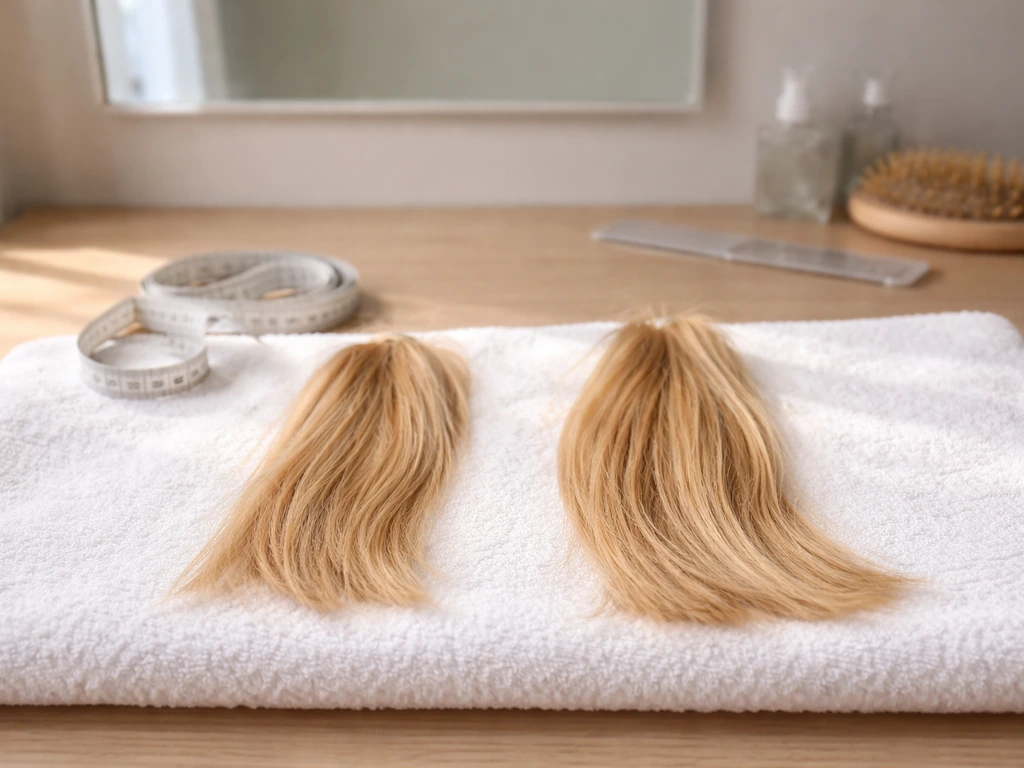
Take a photo from the same angle every 4 to 6 weeks. Growth at 1 cm per month is nearly invisible week to week but very visible over 3 to 4 months. Photos give you objective evidence that progress is happening, which matters a lot during the stages where it feels like nothing is changing.
Growth seems slower than expected
If your photos show minimal change over 3 to 4 months despite consistent care, check three things: Are you losing length to breakage? (Look at the bathroom floor after brushing.) Are you over-trimming? And are there any health factors at play, like recent stress, illness, significant diet changes, or medication? These can all push more follicles into a resting phase temporarily. If you're seeing excessive shedding well above the normal 50 to 100 hairs per day, that's worth a conversation with a dermatologist.
Shedding more than usual
Increased shedding 2 to 4 months after a stressful event, illness, or major hormonal shift (like postpartum) is a real and common phenomenon called telogen effluvium. Hair that was pushed into a resting phase by the stressor sheds all at once when it's ready to cycle out. This is temporary. The follicles aren't damaged, and hair typically regrows on its own within 6 to 12 months. Focus on keeping the scalp healthy and eating enough protein during this period.
Tangles and matting
As blonde hair reaches the collarbone to shoulder stage, tangling gets worse before it gets better. The ends of processed blonde hair are more prone to roughing up and snagging together. Keeping the ends well-moisturized with a leave-in conditioner daily, sleeping in a loose braid, and detangling gently from the ends up every morning will get you through this phase. If tangling is severe, a weekly deep conditioning treatment with extra slip (look for products with cetearyl alcohol or behentrimonium methosulfate as conditioning agents) makes a big difference.
Uneven ends
Uneven ends during a grow-out are almost always caused by old layers that haven't grown out yet, combined with uneven breakage. If the unevenness is cosmetic, wearing the hair in waves or curls disguises it well. If it's structural (some sections are genuinely several inches shorter), a single shape-up trim to establish a cleaner baseline, followed by consistent care, usually resolves it within a few months. Chasing perfectly even ends every trim is what keeps people stuck at the same length for years.
FAQ
How do I grow blonde hair out if I shed more than 100 hairs a day or notice big clumps?
First, do a 2 to 3 day baseline check (after normal washing, not right after a new habit). If shedding stays clearly excessive for more than a couple of weeks, or you see thinning at the part or scalp showing more, talk to a dermatologist. Severe shedding can be driven by iron deficiency, thyroid issues, or recent hormonal changes, and addressing the cause matters more than adding more conditioners.
Should I avoid heat entirely when I’m growing blonde hair out?
You do not necessarily need to stop heat, but you should reduce both frequency and intensity. Use a heat protectant every time, keep the tool at the lowest effective setting (often 300 to 350°F for many hair types), and avoid repeatedly re-styling the same section. Heat increases surface dryness on porous blonde hair, which makes breakage mimic slow growth.
Is it better to detangle in the shower or after, and what’s the safest method for tangles?
The safest approach is to detangle after conditioning, while hair is thoroughly saturated and slippery. Work in small sections, start at the ends, and use a wide-tooth comb or wet brush, letting the brush glide instead of forcing knots to open. If you hit a stubborn knot, stop and add a little more conditioner or leave-in before continuing.
Can I swim or use hot tubs while I’m growing blonde hair out, and how do I protect my ends?
Yes, but you need barrier protection because chlorine and mineral water can increase porosity and dryness. Before swimming, saturate hair with clean water or a conditioner, apply a leave-in, and then braid or secure it. Rinse immediately after, follow with conditioner, and consider a clarifying wash once you are done swimming exposures.
How often should I use a toner or purple shampoo if my blonde is getting brassy while I’m growing out?
Use toner or purple shampoo as sparingly as needed, not on a fixed schedule. Start with once per week for purple shampoo, left on for 3 to 5 minutes, then adjust based on how quickly your roots and lengths change. If your hair feels overly dry or your color goes dull, reduce frequency and focus on deep conditioning between uses.
What should I tell my stylist so I don’t lose too much length during “trims”?
Be specific about the goal and the amount. Ask for a dusting or split-end removal (for example, 1/4 inch or less), and mention you want no reshaping that changes the silhouette. Bring a photo of the current length you want to keep, and ask them to concentrate on the ends rather than re-cutting the overall shape.
Do dark roots make hair look like it’s “not growing,” and how can I manage the look without more bleach?
They can, because the visual contrast is stronger as roots extend. If you want the simplest option, embrace the transition with regular toning on the lengths and keep the root area protected from harsh over-processing. If you want a softer blend, ask for a root smudge or shadow root technique instead of full highlight touch-ups.
How can I tell if my hair isn’t growing or if I’m just breaking it off?
Use two checks. One is length evidence, take photos from the same angle every 4 to 6 weeks. The second is a breakage check, look for shorter, frayed strands or broken pieces in the bathroom after brushing. If photos show little change but breakage is visible, your limiting factor is cuticle damage, not growth rate.
What’s the best way to sleep with shoulder-length blonde hair to reduce tangles and breakage?
Aim for less friction overnight. Sleep with hair loosely braided or in a high, soft bun secured with a gentle elastic, and use a satin or silk pillowcase if you have one. In the morning, detangle with a little leave-in starting at the ends rather than ripping through dry tangles.
If my ends keep looking uneven, should I keep trimming or stop trimming and focus on styling?
It depends on whether it is cosmetic or structural. If ends are uneven because of how they lay or because layers differ, styling (waves or curls) and careful detangling may be enough while time evens things out. If some sections are truly much shorter, a single baseline shape-up trim to remove damaged ends can help, then you switch to consistent, minimal split-end maintenance.