
Growing out dark roots means committing to a plan rather than just waiting and hoping the contrast disappears. Whether you've got dark regrowth pushing through bleached or highlighted lengths, or you've dyed your hair darker and now lighter roots are emerging, the path forward is the same: choose a grow-out strategy, manage the contrast with styling and optional color work, and protect what you have while the length catches up. Most people see the awkward phase peak around weeks four to eight, then the contrast gradually softens as length accumulates. You don't have to cut it again to get through this.
How to Grow Out Dark Roots: Step-by-Step Plan

Marcus Vickers
11 May 2026
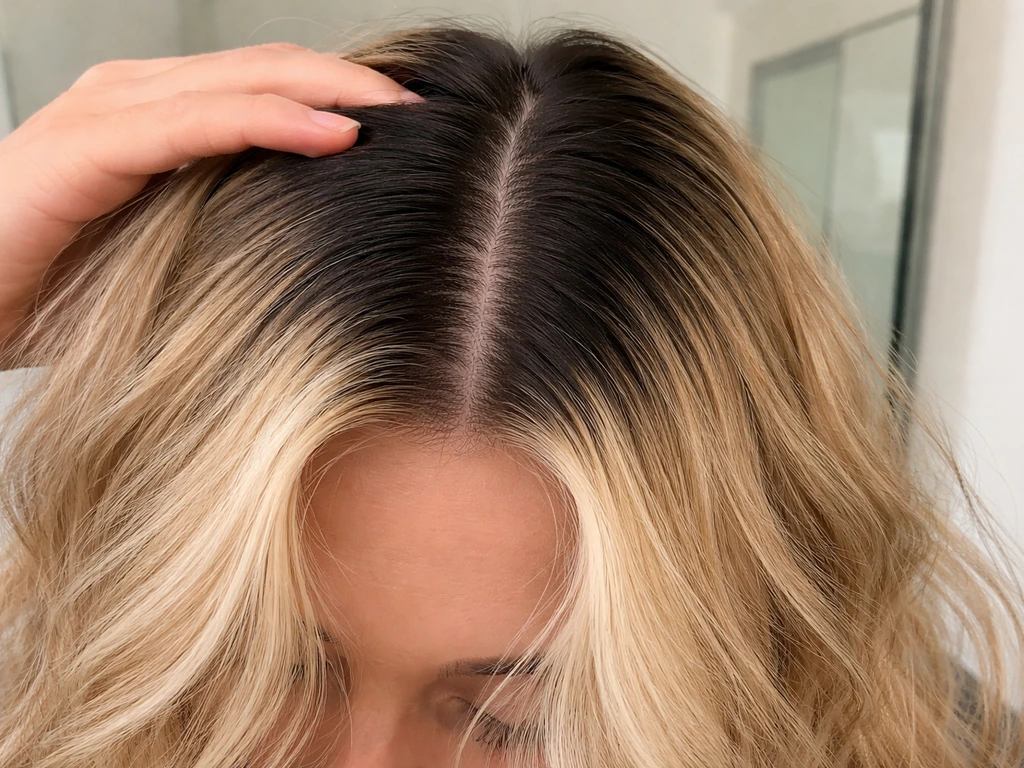
Dark roots vs. light roots: which situation are you actually in?
It's worth being clear about this because the two scenarios look similar but call for slightly different approaches. The most common one: you've had your hair bleached, highlighted, or lifted to a lighter shade, and your natural dark regrowth is now showing at the scalp. The contrast line is obvious, and it gets sharper the longer you wait. The second scenario is less talked about: you dyed your hair a darker shade over naturally lighter or gray hair, and now the lighter roots are growing back in. Both create a two-tone effect, but in opposite directions.
A third situation worth naming: highlights or balayage that have grown out significantly, leaving a band of untreated dark hair between your scalp and where the lighter pieces start. This is the classic 'stripe' look that feels most stubborn. If you're growing out bleached hair specifically, or trying to transition from platinum, the root contrast tends to be the harshest because the color difference is the greatest. If you are growing out platinum bleached hair, you can use the same root-contrast planning and styling steps to make the transition feel intentional as the months pass growing out bleached hair specifically. The grow-out process is fundamentally the same across all these, but your toning and touch-up options will vary.
Pick your grow-out strategy before doing anything else
The first real decision is whether you trim regularly or let the length run. Neither is wrong, but they have different effects. Regular small trims (half an inch every eight to ten weeks) keep the ends healthy and reduce the visual ratio of damaged lighter hair to new darker growth, which actually helps the grow-out look more intentional over time. Skipping trims entirely gets you to your goal length faster in theory, but split ends and fading lighter lengths can make the contrast look worse as time goes on.
The color-safe approach matters just as much as the trim schedule. Avoid any chemical process on the lighter lengths while you're growing out, unless you're doing a targeted toning treatment. Bleaching, perming, or relaxing the already-processed hair while roots grow in adds more damage and widens the contrast. Stick to color-safe, sulfate-free shampoo and conditioner throughout the whole process. This isn't just a nice-to-have: processed lighter hair fades and oxidizes faster when washed with harsh surfactants, which makes the two-tone look more dramatic.
- Trim half an inch every 8 to 10 weeks to keep ends healthy without sacrificing length
- Stop bleaching or lifting the lengths while you grow out
- Switch to sulfate-free, color-safe shampoo immediately
- Avoid heat styling the previously processed sections daily if possible
- Commit to a direction: full grow-out, transitional blending, or gradual color matching
Realistic timeline: when does it stop looking so obvious?
blank" rel="noopener noreferrer">Hair grows roughly half an inch per month on average, though the real range runs from about 0. Human hair growth varies, but a commonly cited average range is about 0.5, 1.7 cm per month blank" rel="noopener noreferrer">0.5–1.7 cm per month. 6 cm to over 3 cm per month depending on genetics, age, health, and even the season. For planning purposes, half an inch a month is the number to use. That means at six months you have approximately three inches of new growth, and at a year you're looking at around six inches.
The awkward phase typically peaks between weeks four and eight. That's when the root line is wide enough to be obvious but not long enough to blend into a natural-looking gradient. After about three months of growth, the root section starts to look more like an intentional shadow root or balayage-style transition rather than simple neglect. By six months, especially if you've done even light toning work, most people find the contrast has softened to a point where it reads as a style choice.
| Growth Stage | Approximate New Length | What to Expect | Key Action |
|---|---|---|---|
| Weeks 1–4 | Up to half an inch | Roots visible but still subtle | Start color-safe routine, no chemical work |
| Weeks 4–8 | Half to one inch | Contrast line most obvious, peak awkward phase | Use styling camouflage, consider root touch-up spray |
| Months 2–3 | 1–1.5 inches | Contrast softens slightly, shadow root effect begins | Optional: professional root smudge or toning gloss |
| Months 3–6 | 1.5–3 inches | Transition looks more intentional, especially with texture | Style to blend, small trim to remove faded ends if needed |
| Months 6–12 | 3–6 inches | Grow-out reads as a style, contrast largely softened | Reassess: full grow-out, color match, or new direction |
If you're starting from a shorter cut like a pixie or a close bob, the proportions shift quickly. With a pixie, three months of growth already represents a significant change to the overall silhouette, so the color transition is less of the main event. With longer hair, you're managing the same contrast over a much bigger canvas, which is why styling tactics matter more the longer your hair is.
How to style your hair to hide the root line while you wait
This is where most grow-out guides fall short: they tell you what will eventually happen but not what to do on Tuesday morning when you have to leave the house. The right styling approach depends on how much contrast you're working with and how long the hair already is, but a few tactics work across the board. When your roots grow out, the best next step is to match your styling and maintenance to the amount of contrast you have what to do when your roots grow out.
Parting tricks
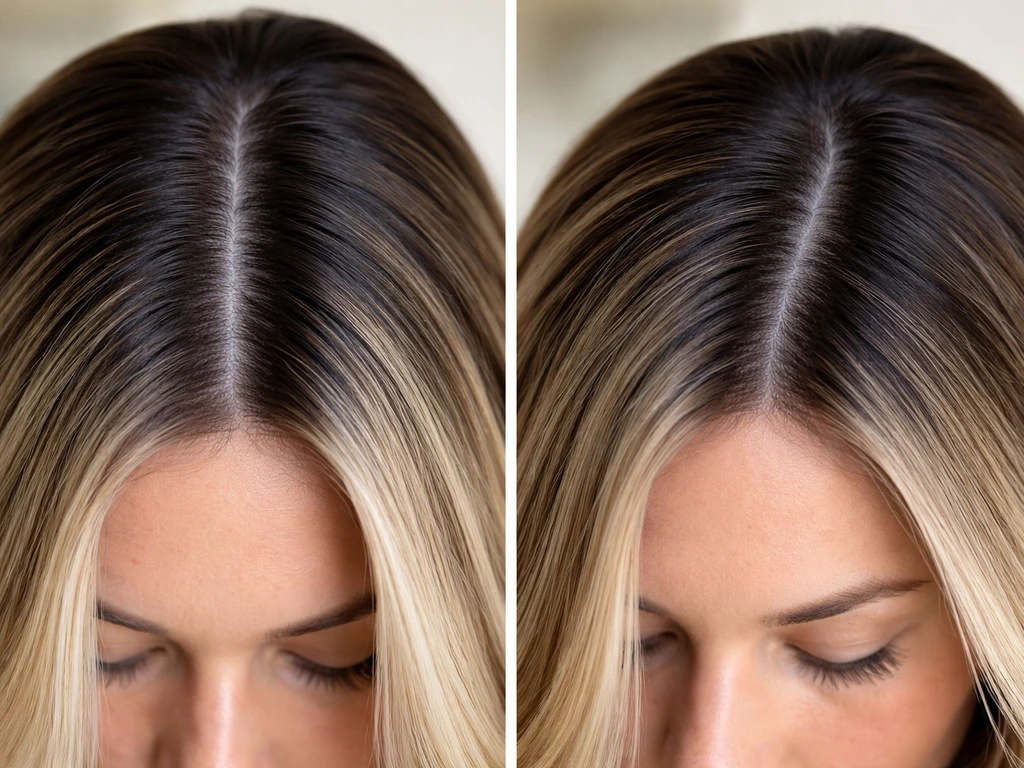
A center part maximizes the visibility of a root line. If your roots are showing, shifting to a deep side part immediately distributes the contrast across more surface area and draws the eye away from the scalp. A messy, slightly off-center part works even better because any structural irregularity breaks up the harsh line. Zigzag parts are another option for medium-length hair. The less geometric your part, the less obvious the regrowth.
Braids and twists
This is genuinely one of the most effective camouflage tools available. When you braid or twist sections of hair, you weave the darker roots and lighter lengths together, so the contrast reads as texture and dimension rather than regrowth. Small braids pulled back from the face, two French braids, or a half-up braid can make dark roots look like deliberate lowlights. The shadow effect created by braided sections is subtle but consistently effective.
Texture and volume
Smooth, sleek hair puts a spotlight on the root line. Adding texture through waves, a diffused blow-dry, or sea salt spray breaks up the visual boundary between root and length. If you have naturally straight hair, loose waves or a slightly undone blowout will do more for your grow-out than any product. Volume at the root area also helps: when hair lifts slightly at the scalp, the color transition appears less stark because light hits it at more angles.
Accessories

Headscarves, headbands, and hair clips placed strategically at the root line are not a cheat code, they're just styling. A wide headband or silk scarf folded at the hairline covers the first inch or two of growth entirely. This is especially useful during the peak awkward weeks four through eight when the root contrast is most obvious. Claw clips pulling hair up into a loose bun also minimize the visible root line for shorter and medium lengths.
The tricky spots: bangs, layers, undercuts, and shaved areas
Certain haircut structures make the grow-out significantly harder. If you have any of these, they need specific handling.
Bangs
Dark roots on bleached bangs are relentless because the hair is short and constantly at eye level. The most practical move here is to either keep the bangs trimmed (which doesn't affect your overall grow-out goal) or begin pinning them back and incorporating them into the rest of the grow-out. If you want to grow the bangs out entirely, the two to four inch phase is the hardest, and side-swept styles or bobby pins tucking them behind the ear make the most of that transition. Root touch-up spray applied only to the bang area can buy you another week between salon visits.
Layers
Heavy layers create multiple different-length pieces, each with its own root-to-tip color gradient, which can look chaotic as dark regrowth fills in. During the grow-out, softening the layers slightly (not removing them, just trimming to reduce the most extreme length difference) helps the new growth blend more evenly across the whole head. Ask your stylist for a 'weight removal' trim rather than a full layer refresh, which would cut too much length.
Undercuts and shaved sections
An undercut growing in is its own category of awkward. The shaved or buzzed section has no color history, so it grows in as your natural (often darker) base color, sometimes with a different texture from the rest of the hair. There's not much you can do to camouflage a growing undercut visually except wear the top hair down or in styles that cover the nape or sides. The good news: undercut regrowth is often the most uniform grow-out, because you're working with fully natural hair from scratch. Give it three to four months before it blends into the surrounding length.
Optional moves to make roots look better faster
You don't have to do any of these. The grow-out works without intervention. But if the contrast is making you want to cut everything off, these options are worth knowing about.
Root touch-up sprays and pens
These are temporary products, washed out with your next shampoo, but they work remarkably well for a quick fix. The key is matching the shade to your lighter lengths, not your natural root color. You want to blend the roots up into the lighter hair, not make the dark section darker. Apply it with light tapping motions and blend before it dries. Reapplication after every wash is the only real drawback.
Root smudging and shadow roots (salon)
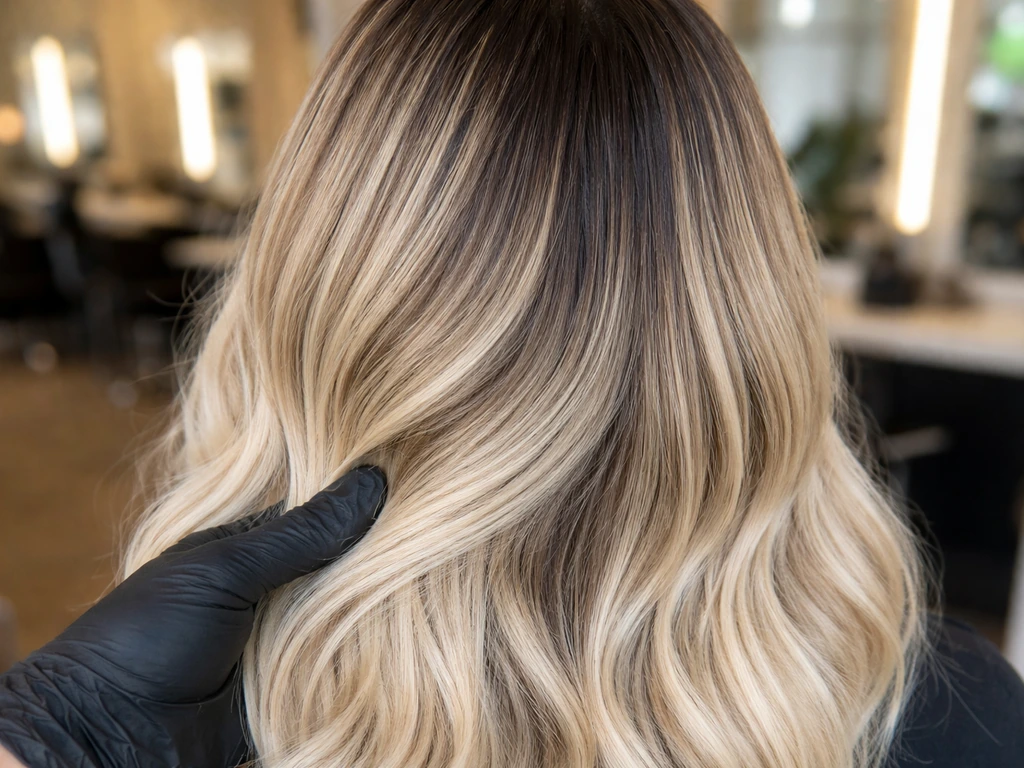
A root smudge is a salon technique where a colorist applies a semi-permanent color to the root area to soften and blend the harsh demarcation line between your natural dark roots and the lighter lengths. A shadow root extends this darker hue a few inches further down, creating a gradient that looks intentional rather than grown-out. L'Oréal's guideline is that if you go past about two months of growth, a root smudge stops looking neglected and starts looking like a technique. This is one of the most effective single appointments you can book during a grow-out.
Toning and glossing
If your lighter hair has faded to brassy or yellow, a toning gloss can bring it back to a cooler or more neutral shade, which actually reduces the visual contrast with darker roots. Brassy yellow looks more different from dark brown than ash blonde does. A gloss treatment, which can be done in a salon or with an at-home product, won't affect your root color but will make the lighter lengths look fresher and closer in tone to the natural growth. Redken's root-blending technique of 'tapping' color at the root area is a similar approach: a stylist works a slightly lighter or darker shade into the root zone to create a transition instead of a hard line.
Color matching toward a middle ground
For people who want to speed the process significantly, a colorist can apply a semi-permanent shade somewhere between your natural root color and your current length color, applied through the mid-lengths. This doesn't require bleach and doesn't darken the roots, but it narrows the gap between the two tones. After a few months of growth, the difference becomes subtle enough to manage with gloss alone. This works best when the starting contrast is extreme, such as jet-black roots on platinum lengths.
Your maintenance plan while the roots grow in
This part is easy to skip but it matters a lot. The goal during any grow-out is to keep the processed lengths in as good a condition as possible so the transition line doesn't look like a boundary between healthy and damaged hair.
- Use sulfate-free, color-safe shampoo every wash. Sulfates strip both pigment and moisture from processed hair, accelerating fade and increasing contrast.
- Wash hair in cool or lukewarm water. Hot water opens the cuticle and speeds color loss in the lighter sections.
- Apply a weekly deep conditioning treatment or hair mask to the mid-lengths and ends only, not the roots. The lighter sections are more porous and need more moisture.
- Use a heat protectant every time you use a dryer, curling iron, or flat iron. Processed hair is more vulnerable to heat damage, and heat damage increases brassiness.
- Limit full-length heat styling to three or fewer times per week if possible. Air-drying or diffusing on low heat keeps the lighter sections healthier longer.
- If you use dry shampoo at the roots to extend washes, choose a shade-matched formula so it doesn't create a visible white or grey cast on dark regrowth.
- Schedule a professional gloss or toning treatment every two to three months to keep the lighter lengths looking fresh and reduce visual contrast.
- Avoid any new bleach or lightener on the lengths until the grow-out is at least six months in and you're reassessing the overall direction.
On the topic of root touch-ups: if you've been maintaining a colored shade and want to keep the lengths consistent, Garnier's guideline of a root touch-up every four to six weeks applies. But if you're in a true grow-out where the goal is letting your natural color return, skip the touch-ups entirely and use toning or gloss to manage contrast instead. Adding permanent color to the roots during a grow-out just restarts the cycle.
One more thing worth knowing: the grow-out process for dark roots into lighter lengths is closely related to other color transitions, like growing out bleached hair, letting blonde grow out naturally, or transitioning gray or white roots into colored lengths. The timelines and maintenance principles are the same across all of them, but the specific toning and blending options differ. If your situation involves an extreme lightness difference, such as platinum or white lengths against very dark roots, those specific transitions have their own nuances worth understanding before you book a salon appointment.
The honest summary: the peak awkward phase lasts six to eight weeks, the transition softens significantly by month three, and you'll have a workable grow-out by month six with basic maintenance. If you're wondering how to grow out white hair specifically, the same timeline and maintenance ideas apply with a few extra shade-matching tweaks peak awkward phase. Style your way through the middle months with braids, texture, and accessories, use a root spray when you need a quick fix, book one root smudge appointment if the contrast is really bothering you, and keep the lengths healthy so the visual gap narrows over time. If you want, also review the part of the guide on how to style your hair to hide the root line while you wait so the grow-out feels easier day to day how to let your roots grow out. That's the whole plan.
FAQ
When should I book a root smudge or shadow root during the grow-out?
If you want the roots to blend faster without adding permanent color, focus on two things, timing and tone. Use light toning or a gloss on the lighter lengths once you see brassy or yellow fading (often after several washes), and plan a single root-smudge or shadow-root appointment around the point your contrast is clearly visible (commonly after the first 6 to 8 weeks). This avoids restarting your cycle with root touch-ups that keep the line sharp.
How do I use root touch-up spray so I don’t make the contrast worse?
Try a “blend-first” rule for product placement, apply root sprays only at the demarcation area and blend upward into the lighter lengths. Avoid spraying the darker regrowth alone, which can make the two-tone contrast look heavier. If your product rubs off easily or stains pillowcases, set it with a quick heat-free dry and keep a microfiber towel for blotting.
Will swimming or sun exposure make dark roots harder to grow out?
Yes, but only if it’s controlled. Chlorine and salt water can pull tone and make lighter bands look warmer and more separated from your roots, which makes regrowth more noticeable. Before swimming, wet hair with fresh water and use a conditioner barrier, then rinse soon after. If you bleach or tone often, also use a clarifying shampoo sparingly (for example, once every 3 to 4 weeks) to prevent dull buildup that can exaggerate the line.
How often should I wash my hair while growing out dark roots?
For hair hygiene, the fastest grow-out is not the harshest routine. Color-safe sulfate-free shampoo helps, but water temperature and wash frequency also matter. Use lukewarm water, focus shampoo on the scalp, and avoid scrubbing the lighter mid-lengths. If you wash frequently, consider a conditioner or mask specifically for color-treated hair so the lighter parts don’t look fried and more visibly “different.”
What if my lighter lengths are turning yellow or patchy as the roots grow in?
If your lighter roots or highlights have faded unevenly, the grow-out will look more banded even if your regrowth is normal. Look for uneven warmth, yellow or brassy patches, because they increase contrast. A gloss or toning targeted to the lighter areas can make the lighter hair look more “continuous” with the natural dark roots, even if the roots themselves are not changing color.
How can I hide the banding or “stripe” when balayage grows out unevenly?
If your main concern is the “stripe” that forms when highlights grow out, the fix is usually structural and part-based. Consider switching to a deep side part, or a softer off-center part, and then add texture (loose waves or a diffused blow-dry) to break up the band. Braiding or half-up styles also help because they disperse that untreated section into the overall pattern.
How do I know if my grow-out is on track when hair grows at different rates?
Don’t judge progress only by the number on the calendar. Growth speed varies a lot, from less than half an inch per month for some people to more than that for others. Instead, use a visual checkpoint, once the root section stops looking like a hard edge and starts reading as a shadow effect (often around the 3-month mark), your next strategy should shift from heavy camouflage to maintenance and conditioning.
Should I trim during the grow-out, or will trimming slow down the process?
Yes, but it should be intentional, not random. Cutting can reduce the ratio of damaged lighter ends to new regrowth, which can make the transition feel cleaner. If you want to keep length, choose micro-trims (about every 8 to 10 weeks) rather than a big off-schedule cut, because large cuts can change how the layers expose the root line.
Can I get a perm, relaxer, or additional bleaching while growing out dark roots?
A perm, relaxer, or bleach on already-processed lighter hair usually increases frizz and dryness, which makes the color boundary look sharper. If you need to change texture, aim for a low-lift approach on the length only after the grow-out is more stabilized, and keep the roots natural during the transition. Otherwise, expect more maintenance and possible color drifting that reintroduces contrast.
What’s the best way to grow out dark bleached bangs without cutting them immediately?
If you have dark roots on bleached bangs, the most practical decision is whether you’re keeping them as bangs or integrating them into the rest of the cut. If keeping, pinning or tucking buys time and can be paired with a targeted root spray only on the bang area. If integrating, side-swept styling and bobby pins behind the ear work best during the 2 to 4 inch awkward phase, because that’s when the eye-level contrast is strongest.