
Here's the honest answer: growing out your bangs is worth it if you're tired of the upkeep, want a longer style, or just feel like a change. It is not worth it if you love how your bangs frame your face and you're only considering it because of one bad fringe day. Both answers are completely valid. What this guide does is help you figure out which camp you're in, then gives you a realistic stage-by-stage plan so you know exactly what's coming and how to handle it.
Should I Grow Out My Bangs? Quiz and Step-by-Step Plan

Marcus Vickers
9 Apr 2026

When growing out your bangs is actually worth it
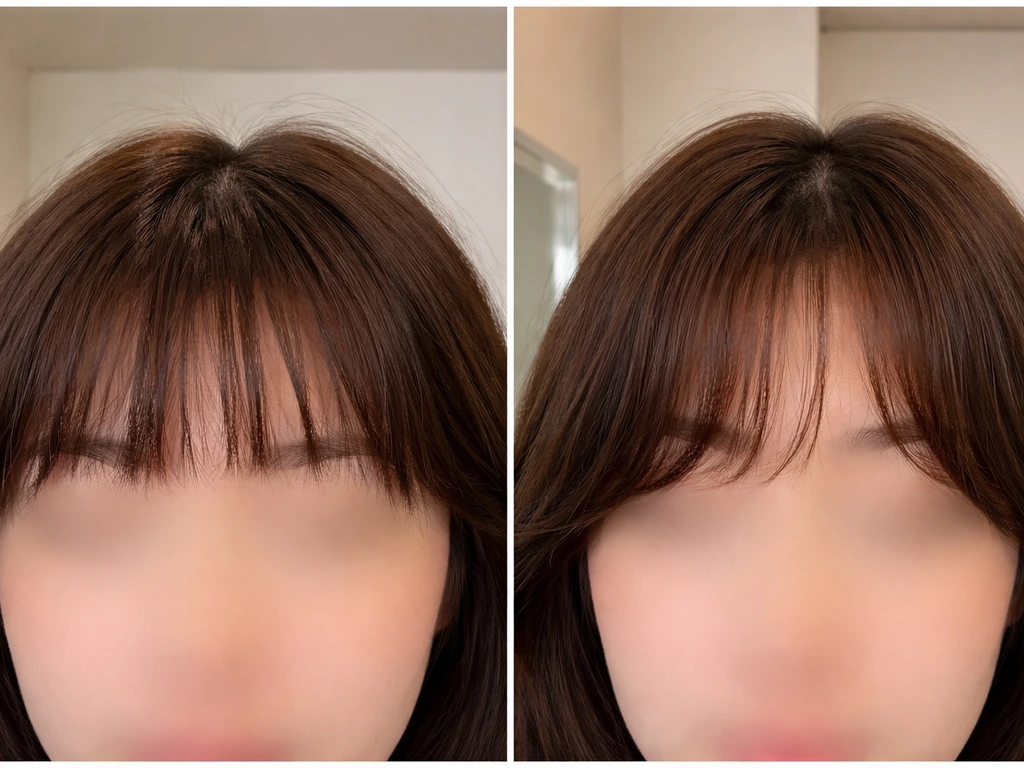
Not every reason to grow out bangs is a good one, and not every reason to keep them is bad. The decision usually comes down to a handful of factors that are genuinely worth weighing before you commit to several months of awkward fringe.
Growing out makes sense when: your bangs require more maintenance than you want to give them (frequent trims every 3 to 4 weeks, daily styling just to look presentable), when they don't suit your current lifestyle or texture, or when you're actively trying to reach a longer style. If you have wavy or curly hair and got bangs when your hair was straightened, you may have discovered they behave completely differently in their natural state, and that's a very good reason to let them grow.
On the flip side, if you genuinely love how bangs frame your face and just had a rough week of them sitting wrong, the answer might simply be a fresh trim and a better styling routine, not a six-month grow-out. Face shape matters too: people who rely on bangs to balance a longer forehead or soften a strong hairline sometimes regret growing them out. There's no shame in deciding the grow-out isn't for you after thinking it through.
- You're trimming more than once a month just to keep them out of your eyes
- Your texture (wavy, curly, or with cowlicks) makes daily bang styling genuinely hard
- You want a longer fringe, curtain bang, or fully grown-out face frame
- Work or school has you frustrated with hair constantly hitting your eyes
- You're growing out another part of your hair (pixie, bob) and bangs feel inconsistent with the goal
- You've had bangs for years and want to see what your face looks like without them
If two or more of those apply to you, growing out is probably the right call. If none of them ring true, a trim and some better product might fix the problem faster.
The grow-out self-check: a quick quiz to read your situation
Answer these five questions honestly. At the end, tally up your answers and use the key below to read your result.
- How often do you trim your bangs just to keep them manageable? (A) Every 3 to 4 weeks, (B) Every 6 to 8 weeks, (C) Rarely, I let them grow and deal with it
- How does your daily bang styling feel? (A) I avoid it, they almost never look right, (B) It's fine but takes time I don't always have, (C) Quick and easy, I've got it down
- What is your texture like? (A) Wavy, curly, or heavily cow-licked, (B) Somewhere in between, (C) Straight and cooperative
- How long are you willing to tolerate an awkward phase before things look intentional again? (A) I can wait 3 to 6 months no problem, (B) I can handle 6 to 10 weeks if I have styling tricks, (C) I need results fast or I'll grab scissors
- What's your honest goal? (A) Fully grown out, blended into the rest of my hair, (B) Just a softer, longer fringe, like curtain bangs, (C) I'm not sure, I just know I'm frustrated right now
Mostly A answers: You're a strong candidate for growing them out. Your frustration is real, your texture probably makes maintenance harder, and you have the patience for the process. Start the grow-out now with a clear plan. Mostly B answers: You're in the middle, and the smartest move might be transitioning to a softer fringe style (like curtain bangs) rather than a full grow-out. This gives you a more manageable length while still moving in the longer direction. Mostly C answers: Honestly, your bangs might just need a good trim and a product refresh. Growing them out right now when you don't have a clear goal and low patience for awkward phases tends to end with a self-trim at 6 weeks. Wait until the motivation is clearer.
Where you are right now: timelines by current bang length
Hair grows at roughly 1 cm per month, so your current bang length directly predicts how long each phase will take. Here's how to think about it by starting point. These timelines are based on straight to slightly wavy hair. If you have curly hair, expect the timeline to feel longer because of shrinkage, even if the actual growth rate is the same.
| Current bang length | How it feels now | Time to clear the eyes | Time to reach a blendable length |
|---|---|---|---|
| Brow-skimming (just above brow) | Fine but one trim away from annoying | 2 to 3 weeks | 5 to 7 months |
| Eyebrow level | At the most frustrating point, always in the eyes | 1 to 2 weeks | 5 to 6 months |
| Eyes to nose level (the awkward zone) | Constantly in the face, hard to style | Already there, just messy | 4 to 5 months |
| Nose to lip length | Can be side-swept or clipped | Already past this stage | 3 to 4 months |
| Chin length (soft fringe) | Almost there, just needs blending | N/A | 1 to 3 months |
| Curtain bang starting point | Looks decent but wants to part differently | N/A | 2 to 4 months to fully blend |
Reaching a fully blendable, chin-length face frame from a short fringe generally takes 6 to 9 months total. That number sounds big but the growth feels faster once you clear the eye-level phase because you gain styling options quickly. If your goal is curtain bangs rather than full blend-out, you're looking at a much shorter runway of 2 to 4 months depending on where you're starting. If you want to understand the full roadmap from where you are right now, the article on how to grow bangs out breaks the entire process into clear stages.
Styling through the awkward phase: what to do at each stage
There is no skipping the awkward phase. It lasts at least 4 to 6 weeks for most people, and the real question is how to look intentional during it rather than like you just forgot to get a trim. Here's what works at each stage.
Stage 1: Bangs at eye level (the hardest part)

This is the stage people hate most. Your bangs are long enough to fall into your eyes but too short to tuck behind your ear or side-sweep convincingly. The most reliable fixes here are a deep side part combined with a clip at the hairline, which smooths the fringe to one side and holds it in place without looking childish. A small bobby pin slid flat along the hairline is almost invisible and keeps bangs from migrating back to the center. Slicking your whole hair back into a bun or low ponytail is also genuinely effective here because it removes the context: there are no bangs, just slicked-back hair. These are not just emergency solutions; they become your daily toolkit for several weeks.
Stage 2: Nose to lip length (getting manageable)
Once bangs pass eye level and reach the nose-to-lip zone, you have real options. A blow-dry with a small round brush curving the fringe gently away from the face starts to look intentional rather than messy. If you go this route, always use a blank" rel="noopener noreferrer">heat protectant applied to damp hair before you blow-dry, working roots to ends. If heat styling isn't your thing, air-drying with a small amount of texture spray or mousse while scrunching the fringe slightly to one side works well for wavy textures. This is also the stage where curtain-bang styling becomes possible if you're parting in the center and letting each side fall naturally. For more detail on working through this specific stage, how to style bangs as they grow out covers product and technique options for each growth milestone.
Stage 3: Cheekbone to chin length (the near-finish line)
Cheekbone length is actually called out by stylists as the most awkward stage specifically for curtain-bang grow-outs, because the fringe is long enough to be noticed but not yet long enough to sit fully into the rest of the hair. The fix is usually styling the fringe outward and slightly curved (a round brush or even two fingers while blow-drying) so it looks like a deliberate face-framing layer. A small amount of serum or anti-frizz product smoothed over the surface helps here, especially if humidity is making the fringe puff or frizz. For frizz, AAD-affiliated guidance generally advises avoiding harsh, drying practices and excessive heat, and recommends leaving hair to dry naturally at times anti-frizz product. The goal at this stage is a finish, not a hold. Use enough product to smooth the cuticle without making the fringe look greasy or heavy.
What to tell your stylist (and when to go)
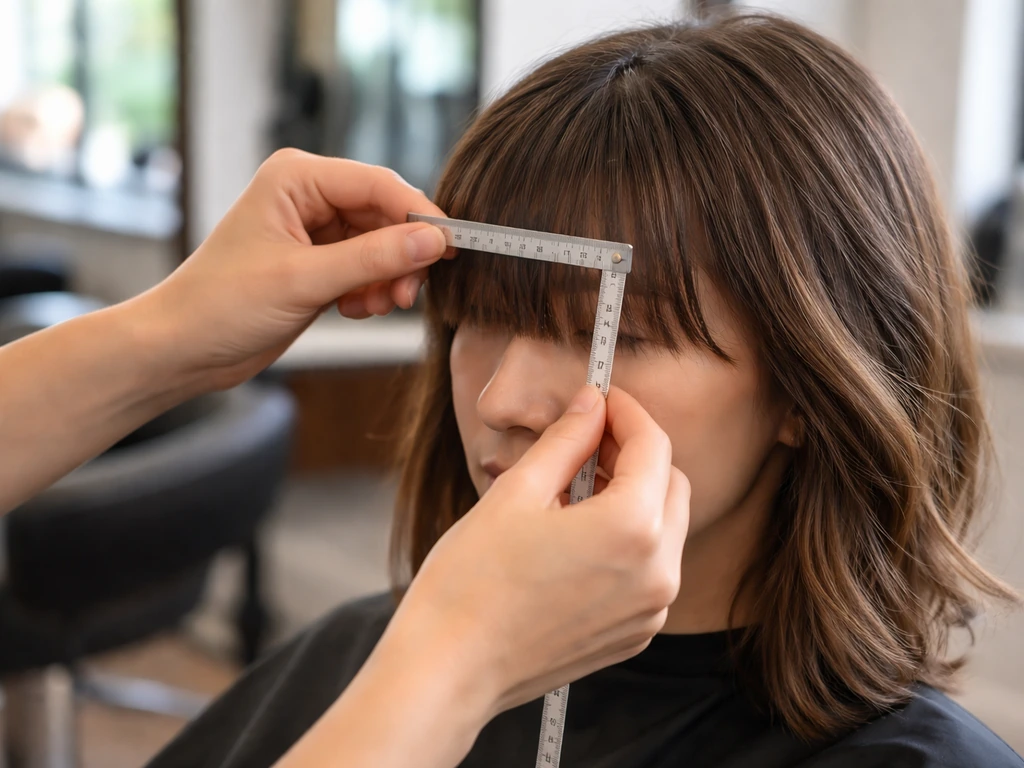
One of the biggest mistakes people make during a bang grow-out is avoiding the salon entirely. Skipping all appointments feels logical (you're growing it out, so why cut?), but it usually leads to one of two outcomes: the bangs look increasingly messy and you end up trimming them yourself and starting over, or they grow unevenly and start to look thin and stringy at the tips.
A better approach is to go in every 8 to 10 weeks and ask specifically for a grow-out blend, not a bang trim. What you want from the stylist: thin out the fringe slightly so it doesn't look blocky as it grows, blend the length into the front layers of the rest of your cut, and shape the sides so the fringe starts to melt into a face-frame rather than sitting as a separate unit. If you're aiming for something like curtain bangs, ask for a centre-parted fringe that skims the cheekbones and blends into the rest of the cut. That specific phrasing tells a stylist exactly what stage you're working toward.
If you're trying to speed up the visual progress, how to grow out bangs fast covers the combination of salon strategies and at-home habits that give you the best shot at hitting each milestone sooner.
Texture, cowlicks, and the stuff that makes grow-outs harder
Texture is the single biggest variable in how a bang grow-out feels. Straight, fine hair tends to grow out in a relatively predictable line and responds well to clips and side parts. Wavy and curly hair is a different experience: the same amount of growth appears shorter because of curl shrinkage, and the fringe tends to spring up or curl in directions that look intentional to no one. If this is your situation, knowing what to expect and how to work with your natural pattern matters a lot. The guide on how to grow out curly bangs goes into the texture-specific strategies that actually work.
Cowlicks are another common obstacle. A cowlick at the hairline can push bangs to one side or create a stubborn part that fights every styling attempt. The key with cowlicks during grow-out is to work with the direction the hair naturally wants to go rather than against it. If your cowlick pushes your fringe to the left, lean into a left-side part and let the bang follow. Blow-drying the root area in the cowlick's direction (not against it) while the hair is damp helps set the growth pattern. Over time, as the hair gains weight from length, cowlicks become easier to manage.
Frizz is a constant companion during grow-out for anyone with even slightly coarse or porous hair. Anti-frizz serums and leave-in products work by smoothing the cuticle layer, which is what creates the frizz in the first place. Look for products with moisturizing and humidity-resistant ingredients, and apply them to towel-dried hair before any heat styling. The goal is enough smoothing to control the fringe without making it look flat or weighed down. One or two drops of serum on damp fringe goes a long way; using too much creates buildup that makes bangs look greasy within hours.
If you're working with curtain bangs specifically, the grow-out from that starting point is actually gentler than from a blunt fringe because the fringe is already angled and longer on the sides. A quick round-brush blow-dry or even just air-drying with a light texture spray can keep curtain bangs looking styled throughout the whole grow-out. For the full breakdown of that specific transition, how to grow out curtain bangs covers the stage-by-stage styling and the timeline to expect.
Your quick-start plan and realistic timeline
If you've decided to do this, here's the straightforward plan. The goal is to reduce frustration at each stage so you don't give up and trim them back before you've made real progress.
- Week 1 to 2: Stop trimming entirely. This sounds obvious but it's where most people stumble. Buy a pack of small bobby pins and a lightweight anti-frizz product if you don't have one. Practice the deep side part plus hairline clip technique until it feels fast.
- Weeks 3 to 6: Expect eye-level frustration. This is the part that makes people quit. Use clips, slick the hair back, or try a half-up style. Remind yourself that this specific stage is temporary and short.
- Weeks 6 to 10: Book a grow-out blend appointment (not a trim). Ask your stylist to thin and blend rather than cut back. This is the first appointment that actually helps rather than resets progress.
- Months 3 to 4: If curtain bangs or a soft fringe is your goal, you're close. Keep up with serum or texture spray and a light blowout to shape the fringe outward. A second blend appointment helps the fringe sit into the rest of your layers.
- Months 5 to 6: You're in the home stretch for a full face-frame or chin-length fringe. A final blending appointment brings everything together. The fringe should now feel like a natural part of your cut, not a separate element you're managing.
- Months 6 to 9: If you started from a very short blunt bang or have curly hair with significant shrinkage, this is when the fully blended result arrives. Be patient here; the progress is real even if it feels slow.
The most realistic thing anyone can tell you is that 6 to 9 months is the typical range from short blunt bang to fully blended face frame, with the first 4 to 6 weeks being the hardest stretch to push through. After that, you gain styling options quickly and the grow-out starts feeling like a style in progress rather than a styling problem. If you want to work through the process with a full month-by-month breakdown, the detailed guide on growing bangs out gives you exactly that, stage by stage.
You don't need to be perfect at this. You just need to get past week six without picking up the scissors, and the rest genuinely gets easier from there.
FAQ
Should I stop getting trims completely when I grow out my bangs?
Usually, yes, but not as a straight “wait it out” plan. If you stop cutting entirely, the fringe can grow unevenly and end up looking stringy at the tips, even if the overall length is progressing. Instead, keep salon visits to a maintenance schedule and ask for thinning or blending (not a full bang trim) so the grow-out stays even.
How do I know when I need a salon visit during the awkward phase?
A good rule is: if your bangs are repeatedly landing in your eyes or you cannot style them into place within a few minutes, it is time for a corrective appointment. If you simply dislike the look for one day, try a styling reset first (part change, clip, light smoothing product) before you pay for a cut.
Can I trim my bangs myself while they grow out?
If you are trying to fully blend them into your face frame, avoid cutting a new “fringe shape” for yourself at home. Micro-trimming can create jagged ends and uneven graduation that later shows up as a thin stripe. If you do anything at home, focus on tidying stray strands without changing the overall line, and rely on a stylist to correct the shape once you are past week 6.
Would switching to curtain bangs be easier than growing out a blunt fringe?
Consider curtain bangs or a soft fringe transition if your goal is longer hair framing your face but you hate the “falls into the eyes” stage. Center-parted curtain bangs are angled from the start, so you lose the harsh blunt feel earlier and gain a workable style sooner, often shortening the time you feel stuck.
What should I do if my bangs are constantly falling into my eyes?
If your bangs sit in your eyes, you can style for coverage and comfort rather than pushing for perfect blending. Use a deep side part with a clip or pin at the hairline, and keep the rest of your hair either slicked back (so bangs are not the focus) or held with a low ponytail. This makes the stage look intentional while you wait for length to catch up.
How can I manage a cowlick at my hairline while growing out bangs?
Yes, cowlicks can make the grow-out look uneven even when growth is on track. The most helpful approach is to style in the direction your hair naturally wants to go, then set the root while damp (especially at the cowlick area). Once the fringe gains weight, the cowlick usually softens and styling gets easier.
How should I choose between a short-term fix and a full grow-out?
Go by your styling goal more than the calendar. If you want less daily work, prioritize a shorter path to a workable fringe (curtain bangs direction, stronger texture product, or a softer cut shape). If you want a fully blendable face frame, stick to the longer timeline and use salon thinning to prevent bulk while waiting.
Why does week 4 to week 6 feel so much worse than later on?
For most people, the first 4 to 6 weeks are hardest because the bangs are too short to tuck or blend but long enough to be noticed. If you consistently feel “back to square one” during that period, it often means the cut is too blunt or too thick. Ask your stylist for thinning and a grow-out blend so the next phase starts looking more connected.
Does the growth timeline change for curly or very wavy hair?
If you have wavy or curly hair, the visual progression can lag because shrinkage changes how long the fringe looks at each milestone. Do not judge progress only by the length you can measure when it is dry. Instead, judge by how well it can be shaped into a side-to-side or center-framed pattern using your natural curl behavior.
What products matter most during a bangs grow-out, and what should I avoid?
Try to match the product to the issue: use anti-frizz smoothing for humidity or puffing, and use a light texture mousse or spray for grip so the fringe can hold a side or center fall. Avoid heavy buildup on the fringe, which can make growing bangs look greasy quickly, especially at the tips.