
Growing out curly bangs takes roughly 6 to 12 months for a full fringe to blend into the rest of your hair, but the awkward phase only lasts as long as you let it. With a trimming plan every 4 to 6 weeks, a few go-to styling moves for the in-between stages, and some basic curl care to manage shrinkage and frizz, you can get through this without looking like you gave up halfway.
How to Grow Out Curly Bangs: Timeline, Styling, and Fixes

Marcus Vickers
24 Apr 2026
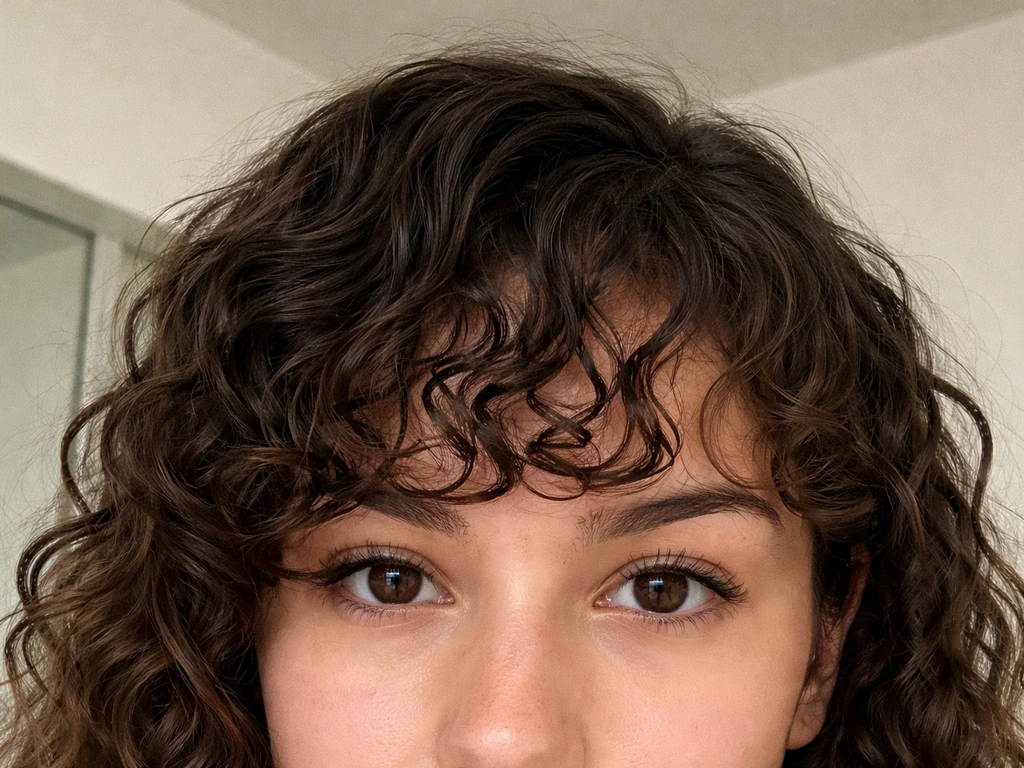
What to expect when growing out curly bangs
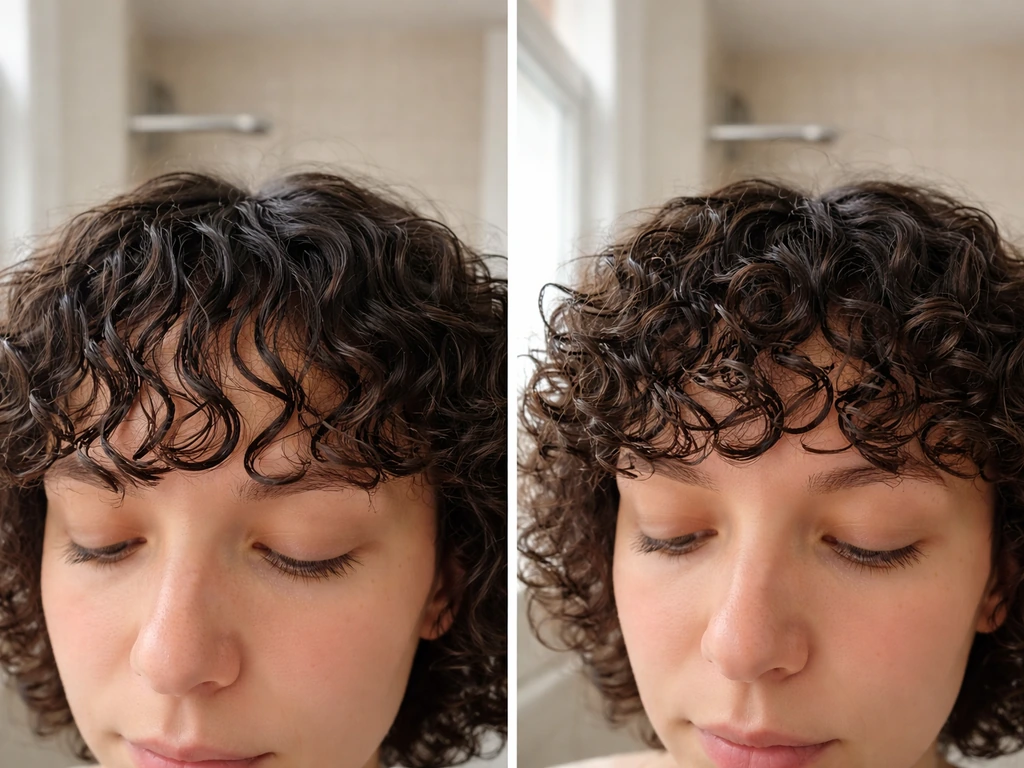
Straight bangs grow out in a fairly predictable way. Curly bangs do not. The biggest culprit is shrinkage: your hair might be growing half an inch a month, but because curls coil back on themselves, you may only see a quarter inch of visible length or less. That means what feels like two months of growth can look like three weeks of progress. It's frustrating, but it's completely normal.
As your bangs get longer, the curl pattern itself will change. Shorter curly bangs often spring up into tight ringlets or waves because the hair is light enough to curl fully. As those same strands get longer and heavier, the curl may loosen, elongate, or start clumping differently with the rest of your hair. Some people find their bangs actually look better during grow-out than they did when short. Others hit a patch where the bangs are just long enough to curl outward awkwardly and not long enough to tuck or pin back. That middle stage, usually around months two through four, is the one everyone is trying to survive.
The transition also tends to surface cowlicks and uneven growth patterns you might not have noticed before. When bangs were short, the weight and cut kept everything in check. As they lengthen, sections may spring in different directions. Knowing this is coming makes it a lot easier to deal with when it does.
How to grow them out: length plan and timeline
Hair grows about half an inch per month on average, but curly hair appears to grow more slowly because of shrinkage. Plan for your bangs to take 4 to 6 months to reach eyebrow-grazing or side-swept length, and 9 to 12 months to fully blend into face-framing layers. If you want a faster, smoother transition, follow a clear length plan and use targeted styling during the awkward months. That said, the goal is not to just wait it out. Each stage has a strategy.
| Stage | Approximate Length | What's Happening | Main Strategy |
|---|---|---|---|
| Months 1–2 | At or just past brow | Curls spring back toward original length; shrinkage is most noticeable | Style with product and clips; start angling the face-framing hair around bangs |
| Months 3–4 | Reaching nose or upper lip | The real awkward phase; bangs may curl outward or bushy | Bobby pins, half-up styles, headbands; consider first shape-up trim |
| Months 5–6 | Approaching chin or jaw | Bangs begin blending with face-framing layers; curl clumping improves | Start tucking behind ear; ask stylist for blending layers |
| Months 7–12 | Jaw to shoulder | Bangs are functionally indistinguishable from the rest of your hair | Maintain overall length and curl health; trim ends only |
The most useful mindset shift is to stop thinking of this as growing out bangs and start thinking of it as growing in face-framing layers. That reframe changes how you handle trims, how you style, and honestly how you feel about the mirror each morning.
Trimming strategy to avoid awkward bulk
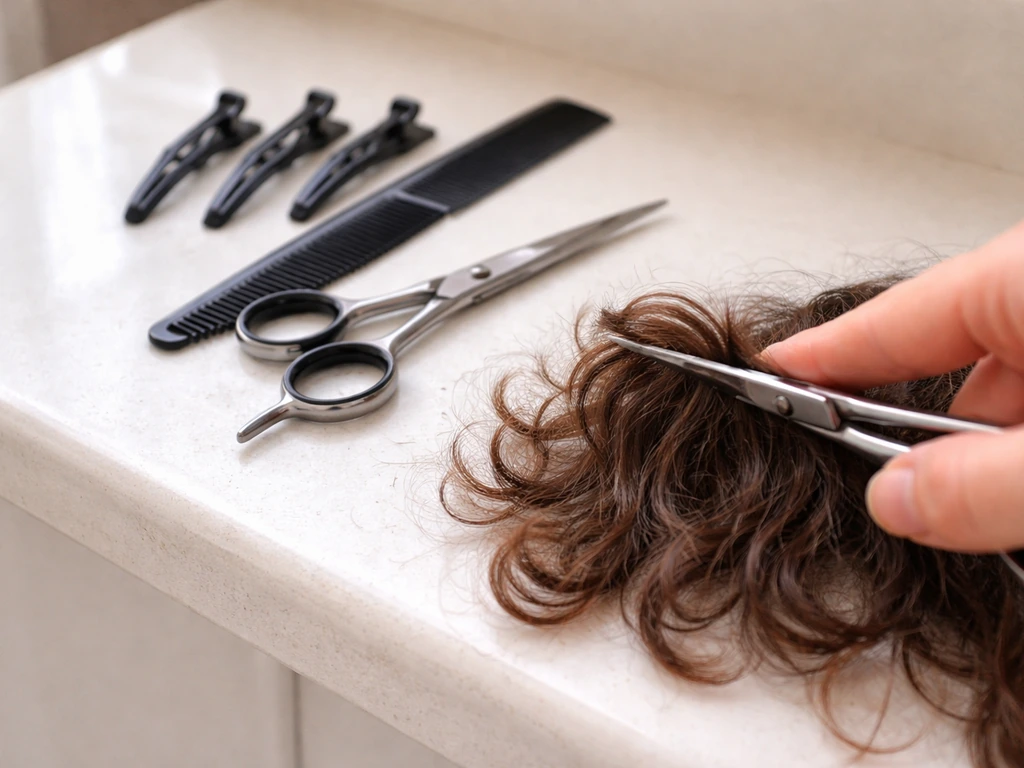
The biggest mistake people make during grow-out is either trimming too much (basically restarting the process) or not trimming at all and ending up with dry, split ends that make the bangs look ragged. The right approach is targeted, minimal trimming every 4 to 6 weeks.
For curly bangs specifically, always trim on dry, styled hair. Cutting wet curly hair will almost certainly leave you shorter than you intended once the shrinkage kicks in. Use point cutting instead of straight horizontal snips: hold small sections and make tiny vertical snips into the ends rather than cutting across. This removes bulk and blends the curl without taking off visible length.
The goal of each trim session during grow-out is not to even things up drastically. Allure also discusses curly-cutting approaches like DevaCut, which emphasizes dry-cutting and face-framing goals so the shape matches how your curls behave as they shrink and grow DevaCut dry-cut curly technique shapes and face-framing as part of achieving the right result with shrinkage. It is to clean up split ends, reduce any puffy bulk at the perimeter, and slightly angle the face-framing hair on either side of your face to meet the growing bangs. This angling helps the bangs look intentional at every stage instead of just stuck in the middle. Trim only the very tips, maybe an eighth of an inch, to protect your progress.
- Always trim dry, not wet, to account for shrinkage
- Use point cutting (small vertical snips) rather than straight cuts across
- Trim every 4 to 6 weeks to manage split ends and bulk without losing length
- Angle the face-framing hair on each side slightly toward the bang section
- Remove an eighth to a quarter inch maximum per session during active grow-out
- Avoid thinning shears on curly bangs; they can create puffiness and frizz
Styling through the awkward phases
This is where most of the day-to-day work happens. The good news is that curly hair actually has more styling options than straight hair during a grow-out, because the texture itself can be shaped and directed in ways that look deliberate.
Months 1 and 2: define and direct
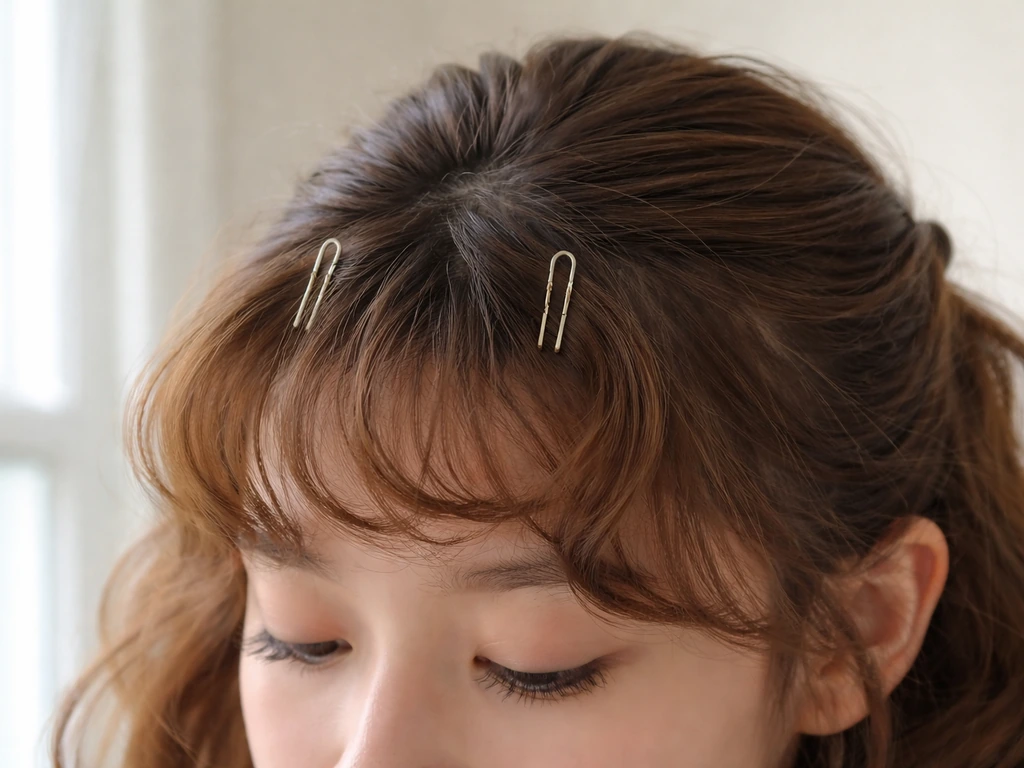
When bangs are still short and springy, the best move is to encourage them to curl in a direction that suits your face rather than fighting the curl. Apply a curl cream or lightweight gel to wet bangs and use your fingers to coax the curls toward one side. A diffuser on low heat can set them there without creating frizz. A small clip or two placed at the root while hair dries helps train the direction without flattening the curl.
Months 3 and 4: the clip and pin phase
This is the hardest stretch. Bangs are long enough to be in your eyes but not long enough to stay anywhere reliably. A U-shaped hairpin twisted into the bang section and tucked back works well here. Bobby pins placed in a small cluster or cross pattern can hold things flat at the forehead. Half-up styles that pull the top section of hair (including the bangs) into a small bun or ponytail buy you a full day of comfort. Headbands, both wide fabric ones and thin elastic ones, are genuinely useful at this stage and not just a workaround: they keep bangs off your face while letting the curl show at the sides.
Months 5 and 6: blending into layers
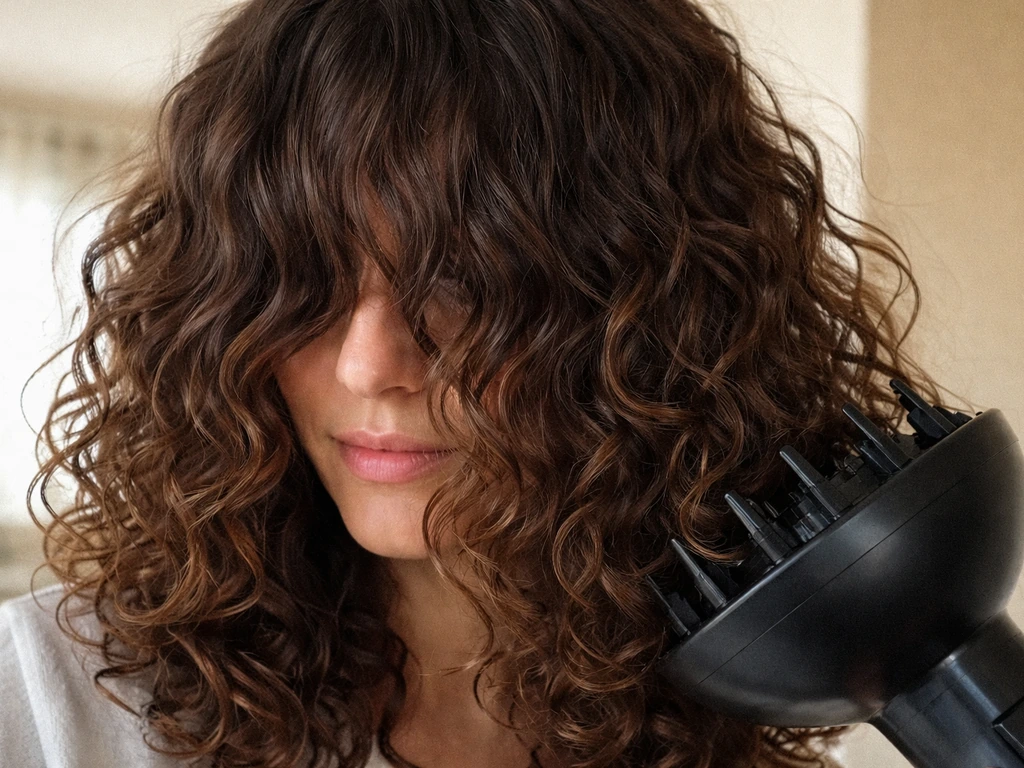
By this point your bangs are reaching nose or chin length and starting to behave more like the rest of your hair. The main styling move now is to let them fall with your natural curl pattern and use a light gel or curl jelly to help them clump together with the surrounding strands. If you have a side part, start encouraging your bangs toward that part: they will begin to read as face-framing layers rather than bangs. You can tuck them behind your ear on the longer side for a relaxed but intentional look.
If you use a blow dryer, keep it on low heat with a diffuser attachment. High heat on curly bangs during grow-out can alter the curl pattern unevenly, making some sections straighter than others and creating a noticeable mismatch with the rest of your hair. If you want more length visible quickly, stretching with low heat before diffusing can show more of the actual growth while still leaving some curl.
Managing curl pattern changes and shrinkage
As your bang length increases, the curl pattern will shift. This is not damage or something going wrong. It is just physics: longer, heavier strands cannot coil as tightly, so the curl loosens. If you had tight ringlet bangs, expect them to become looser waves as they reach chin length. If you had wavy bangs, they may elongate into a more relaxed wave.
Shrinkage is the other constant companion. The difference between your wet length and dry length can be dramatic, sometimes 30 to 50 percent or more depending on your curl type. The practical fix is moisture. Well-hydrated curls shrink less because the hair shaft retains more water throughout the day. A leave-in conditioner applied to soaking wet hair before any other product, followed by a gel or cream to seal it in, gives you the best shot at reducing shrinkage and keeping curl definition consistent as your bangs grow.
Deep condition at least twice a month, more if your bangs feel dry or brittle. Bangs take more product handling, pinning, and manipulation than the rest of your hair, so they tend to dry out faster. blank" rel="noopener noreferrer">Using a microfiber towel or a cotton T-shirt instead of a regular terrycloth towel to blot dry also helps: aggressive rubbing opens the cuticle and causes frizz, which makes the bang section look wider and more unruly than it actually is.
Dealing with cowlicks, frizz, and uneven growth
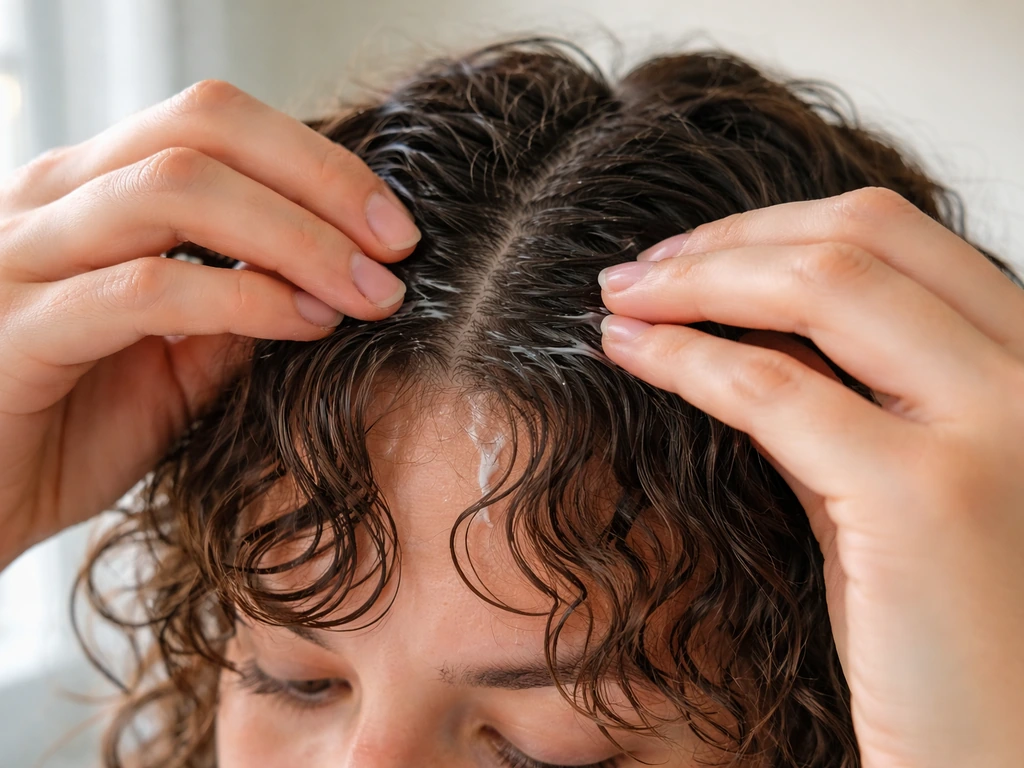
Cowlicks in the bang area tend to become more visible during grow-out because the hair is getting longer but has not yet reached the weight needed to stay down. The good news is that weight itself is the cure: the longer your bangs get, the more the cowlick section will be pulled down by the curl and length. In the meantime, applying gel directly to the cowlick section while hair is wet and using a small clip at the root to hold it flat while drying helps a lot. Avoid picking at it once dry. If you disturb a drying cowlick, it tends to spring back up.
Frizz on curly bangs usually comes from one of two places: dryness or disrupted curl clumping. Dry, porous curls absorb humidity unevenly, which causes the outer layer of the hair to puff up. The solution is the same moisture-first routine mentioned above, plus a humidity-blocking finishing product like a light gel or anti-humidity serum layered on top of your curl cream. Apply everything while hair is still dripping wet for best results, and resist touching the bangs as they dry.
Uneven growth is common and often feels more dramatic than it looks to other people. One section of your bangs may grow faster than another, or one side may have a tighter curl that appears shorter. Rather than trimming the faster-growing section down to match the slower one, work with it. Style the longer section toward one side and let it become the start of a swept look. If the unevenness is extreme and bothering you daily, that is a good reason to see a stylist rather than try to even things yourself at home.
When to bring in a stylist
A curly-specialized stylist is genuinely worth seeing during grow-out, not just at the beginning or end. Specifically, look for a Deva-certified stylist or someone trained in dry-cut curly techniques, because they will cut and shape your bangs dry, which is essential for getting an accurate result given shrinkage.
The best time to book a grow-out appointment is around months three to four, when the bangs are at their most awkward. A good stylist can blend the growing bangs into face-framing layers, angle the perimeter on each side to make the whole thing look intentional, and give you a shape that works now rather than just waiting for later. This is not the same as getting a bang trim that shortens your progress. A skilled stylist will shape around the grow-out, not undo it.
You should also see a professional if you notice significant breakage at the bang section, unusual scalp sensitivity, patchier growth than expected, or if one side of your bangs has a dramatically different texture than before. These can signal dryness damage, product buildup, or occasionally a scalp issue that needs attention. In those cases a stylist can assess what is happening and recommend a targeted treatment before it affects the rest of your grow-out progress.
If you have been wondering whether the grow-out is even worth it or whether you should just cut your bangs back in, that question is worth exploring on its own terms. If you are asking, “should i grow out my bangs,” the answer usually depends on how much styling time you can commit during the awkward months. The decision usually comes down to your face shape, lifestyle, and how much daily styling you actually want to do. Growing out curly bangs is genuinely manageable, but it does require a few minutes of intentional styling every wash day, especially in those middle months. If you want a simple, step-by-step approach for the length stages, this guide on how to grow out curtain bangs walks you through what to do month by month. If you go in with that expectation and a plan, it is much less of an ordeal than people fear.
FAQ
Can I speed up how to grow out curly bangs without ruining the blend?
Yes, by adding a “length-forward” styling step instead of increasing trims. Stretch bangs gently with low-heat diffusing or a quick low-heat blow-dry on soaking-wet hair, then finish with gel to lock the direction. This can make more of the actual length appear sooner while still keeping your haircut strategy minimal (tips only, every 4 to 6 weeks).
How do I know whether my bangs are uneven because of growth or because of curl shape?
Check both wet and dry. If the shorter side also looks shorter when wet (before styling), it is likely true growth or cut imbalance. If they look even when wet but separate when dry, it is usually curl pattern or drying direction, and you can fix it with product on wet hair plus a clip at the root during drying instead of trimming off length.
What should I do when my bangs start getting stuck in my eyes every day?
Use a comfort system that does not fight the curl: either a U-shaped hairpin tucked into the bang section and angled back, or a small half-up style that pulls the top section including the bangs away from your face. If you hate pins, a wide fabric headband can hold them off your eyes while letting the bangs fan out at the sides.
Is it better to pin the bangs or let them hang while they grow out?
For the awkward middle months, pinning or clipping is usually better because it prevents repeated face contact and keeps the perimeter from puffing. Once the bangs reach nose to chin length and start behaving like the rest of your hair, you can transition to letting them fall naturally with a light gel or curl jelly for clumping.
Do I need to moisturize differently on just my bangs area?
Often, yes. Bangs get more handling from daily pinning and touching, so they dry out faster than the rest of your hair. Consider a leave-in or refresher focused on the bangs every other day (or at least whenever they feel rough), and make sure you apply the moisture-first routine while the bangs are still fully wet each wash day.
Can I use a straightener or hot tools to make grow-out look smoother?
Be cautious. High heat can alter curl formation, and even short sections like bangs can end up with a different texture than the surrounding hair. If you use heat, keep it low and use it mainly for controlled stretching before diffusing or setting with gel, then avoid daily high-heat passes.
How often should I refresh styled curly bangs between washes?
Refresh as needed, not on a fixed schedule. A practical method is to mist the bangs until they are damp, reapply a small amount of leave-in, then smooth with a light gel to re-form clumps. Avoid rubbing dry hair, since it increases frizz and makes the bangs look wider.
Will deep conditioning twice a month be enough if my bangs get crunchy or build up product?
It helps, but also watch for buildup symptoms like stiffness, dullness, or sudden frizz that does not respond to moisture. If that happens, focus on cleansing the bangs during your regular wash routine and consider a more thorough scalp and bang cleanse occasionally (especially around the hairline where products accumulate).
What if one side of my bangs has a different curl pattern than the other side?
Work with asymmetry first. Style the longer or curlier side toward one side and let it become the start of a swept face-framing look. If the difference is extreme or includes breakage or patchy growth, it is a good reason to see a stylist to check for damage, buildup, or an unrelated scalp issue.
When should I stop trimming at home and switch to a professional shaping appointment?
Consider professional shaping around months three to four, when the grow-out is most awkward, or sooner if you notice cowlicks that never settle, persistent dryness, or you are unable to achieve a consistent direction despite proper wet styling. A dry-cut curly specialist can angle the perimeter and blend into face-framing layers without over-shortening.