
Growing bangs out is genuinely one of the more frustrating hair transitions out there, mostly because the awkward phase hits fast and the timeline feels endless when you're in it. But here's the honest answer: with the right styling habits, a smart trimming strategy, and realistic expectations about what happens each month, you can get through the grow-out without looking unkempt or giving up and cutting them again. This guide walks you through every stage, from the first week of "wait, these already don't look right" through the point where your bangs fully blend into the rest of your hair.
How to Grow Bangs Out: Timeline, Styling, and Tips

Marcus Vickers
2 Apr 2026

What stage are your bangs actually in right now?
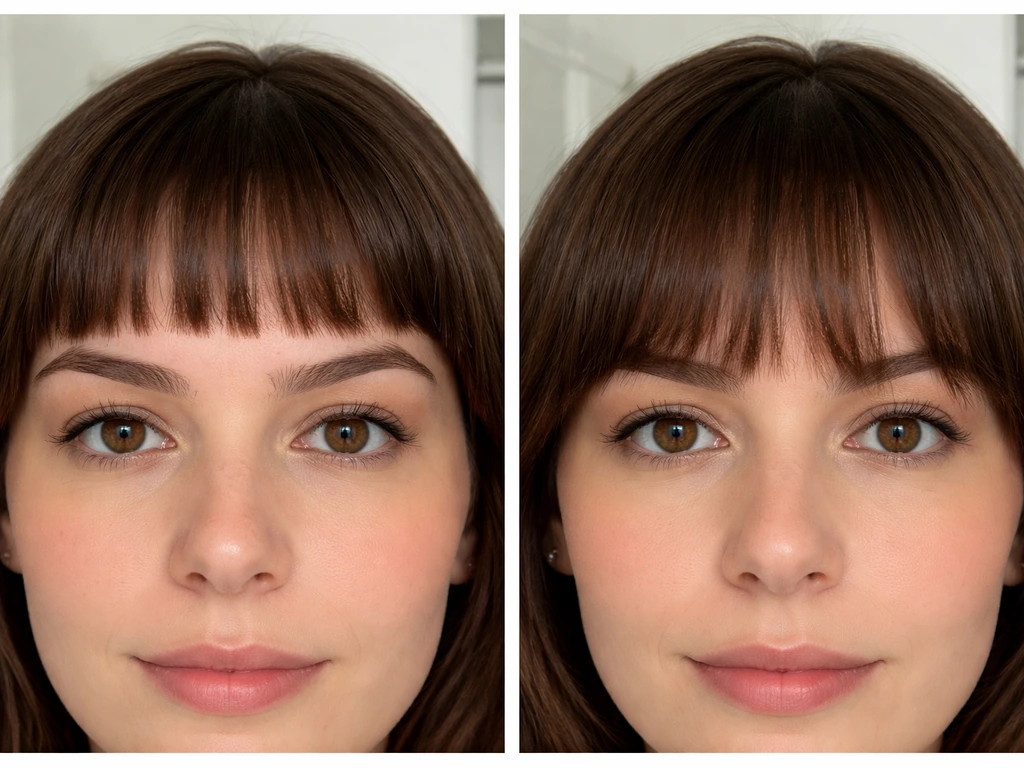
Before you do anything else, figure out where you're starting. Bang length dictates everything: what styling moves are available to you, whether trimming makes sense yet, and how long you realistically have to go. The stages break down roughly like this:
- Micro/short bangs (above the brow, ending at mid-forehead or higher): very limited styling options, most prone to sticking up and refusing to cooperate
- Mid-forehead bangs (hitting mid-brow to brow level): starting to have some weight, can be swept or pinned, but often still flip or poke at the sides
- Brow-length to just-below-brow (the classic awkward zone): heavy enough to get in your eyes, not long enough to tuck behind your ear, the worst of the stages
- Past the nose (getting toward cheekbone length): you can now side-sweep reliably, pin back, or start blending into layers
- Cheekbone and beyond: nearly there, can incorporate into face-framing pieces or layers
Why does knowing the stage matter? Because the advice you need changes completely depending on where you are. Styling tricks that work at brow-length are useless when your bangs are still half an inch long. And if you're still in the micro-bang phase, how to grow out bangs fast has more targeted advice for speeding through that early stage specifically. Honestly assess your current length before picking a strategy.
What to expect week by week (a realistic timeline)
Scalp hair grows roughly 0.5 to 1.blank" rel="noopener noreferrer">7 centimeters per month on average, which works out to about half a centimeter every two weeks. That's not a lot when you're staring at bangs that are poking you in the eye. Some people grow closer to 1 cm per month; a very small percentage grows faster. In a Reddit discussion about long hair, users commonly use about 0.5 inch per month (around 1.25 cm per month) as a typical reference point, while acknowledging individual months vary Some people grow closer to 1 cm per month; a very small percentage grows faster.. You can't change your growth rate dramatically, but you can plan around it.
| Timeframe | Approx. growth added | What's happening | Main challenge |
|---|---|---|---|
| Week 1–2 | ~0.25–0.5 cm | Bangs start losing their shape; ends may flip or stick | They stop laying the way they did when freshly cut |
| Week 3–4 (Month 1) | ~0.5–1 cm total | Visible length change; brow-level bangs now reach or pass the brow | Getting in your eyes, harder to style flat |
| Month 2 | ~1–2 cm total | You're deep in the awkward zone; nose-length territory begins | Heaviness without enough length to sweep back cleanly |
| Month 3 | ~1.5–3 cm total | Cheekbone length is possible for fast growers; most people near nose level | Maintaining shape while blending into layers |
| Month 4–6 | ~2–6 cm total | Most bang lengths can now blend with face-framing layers | Keeping the growth even; managing different texture at the ends |
| Month 6–12 | ~3–10 cm total | Bangs reach shoulder area for many people; nearly fully integrated | Patience; avoiding impulsive trims |
The most common complaint I hear is that the awkward phase starts almost immediately. That's not exaggeration: for some people, literally a week after cutting bangs they stop laying right. Setting that expectation early means you won't be caught off guard at week two thinking something went wrong.
Trim or don't trim? Your maintenance strategy during grow-out
This is the question everyone gets wrong. The instinct is to either let bangs grow completely untouched, or to keep tidying them until they accidentally end up short again. Neither extreme is right. The answer depends on your current length and your goal style.
The case for micro-trims
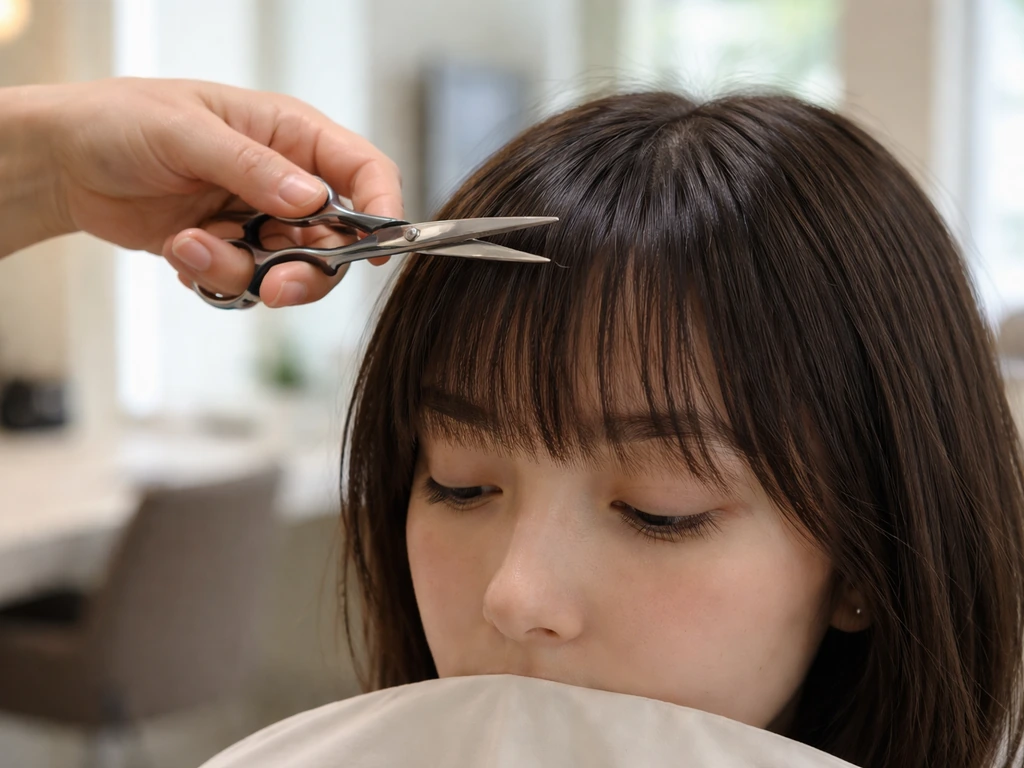
If your bangs are growing out unevenly, developing blunt or damaged ends, or growing at very different rates across the fringe, a micro-trim can keep them looking intentional rather than just neglected. A true micro-trim removes less than a quarter inch (sometimes defined as removing no more than a half inch). Scheduling these every 6 to 12 weeks depending on how your hair grows keeps the ends clean without costing you real length progress. Fine hair often benefits from the closer end of that range, around every 6 to 8 weeks.
When to just leave them alone
If your bangs are already below brow level and growing fairly evenly, hands off. Every trim, even a small one, delays the timeline. At this stage, styling is doing more work than scissors should. Reserve trimming for situations where the unevenness is actually undermining how you look, not just because the grow-out feels messy.
A transitional style worth considering: bottleneck bangs
One option that works beautifully during the brow-to-nose grow-out window is a bottleneck bang shape, where the center pieces are kept slightly shorter and fuller and the side pieces are tapered and feathered out longer. It blends the full-fringe look with a grown-out fringe look, so you look styled rather than in-between. Ask your stylist to use point-cutting in the middle and taper the sides outward. This is a legitimate intermediate option, not a consolation prize.
Styling your way through the awkward phase
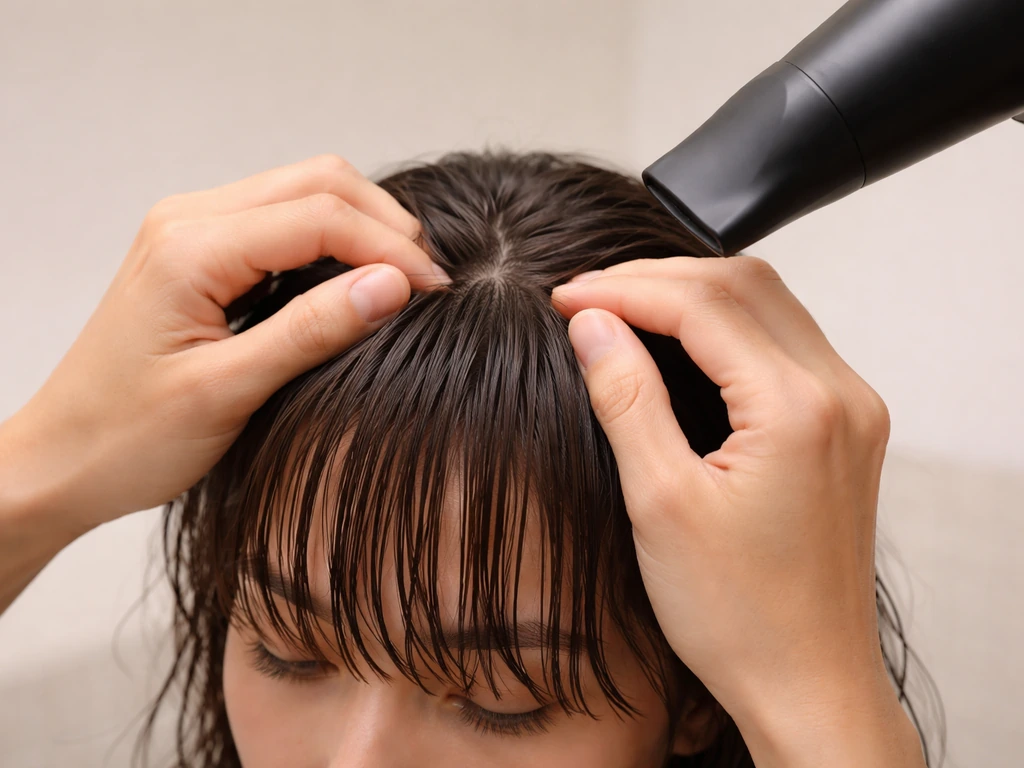
The grow-out phase has a few specific problems: bangs that flip outward, stick straight up at the roots, sit unevenly, or develop a cowlick that wasn't obvious before. Each has a fix.
Blow-drying bangs flat (and fixing cowlicks)
Start the blow-dry while bangs are still damp, not soaking wet. Place your thumb underneath the section to hold tension, and direct the blow-dryer down the hair shaft rather than blasting it from above. Move the bangs right, left, and straight down as you dry to neutralize any directional pull from a cowlick. For stubborn cowlicks specifically, use a fine-tooth comb and blow dry back and forth, left-to-right and right-to-left, right against the scalp. This works because you're interrupting the hair's natural direction repeatedly until it dries in a more neutral position.
Using a straightening iron for the finishing step
After blow-drying, a flat iron is genuinely useful for controlling any remaining kinks or ends that curve upward. The sequence matters: blow-dry first to remove moisture and set the direction, then use the iron to finish. If your hair is fine or color-treated, use a heat protectant before either tool touches your hair. Some heat protectants are rated to protect up to 450°F, which covers the range of most flat irons used on bangs.
Pinning and hiding
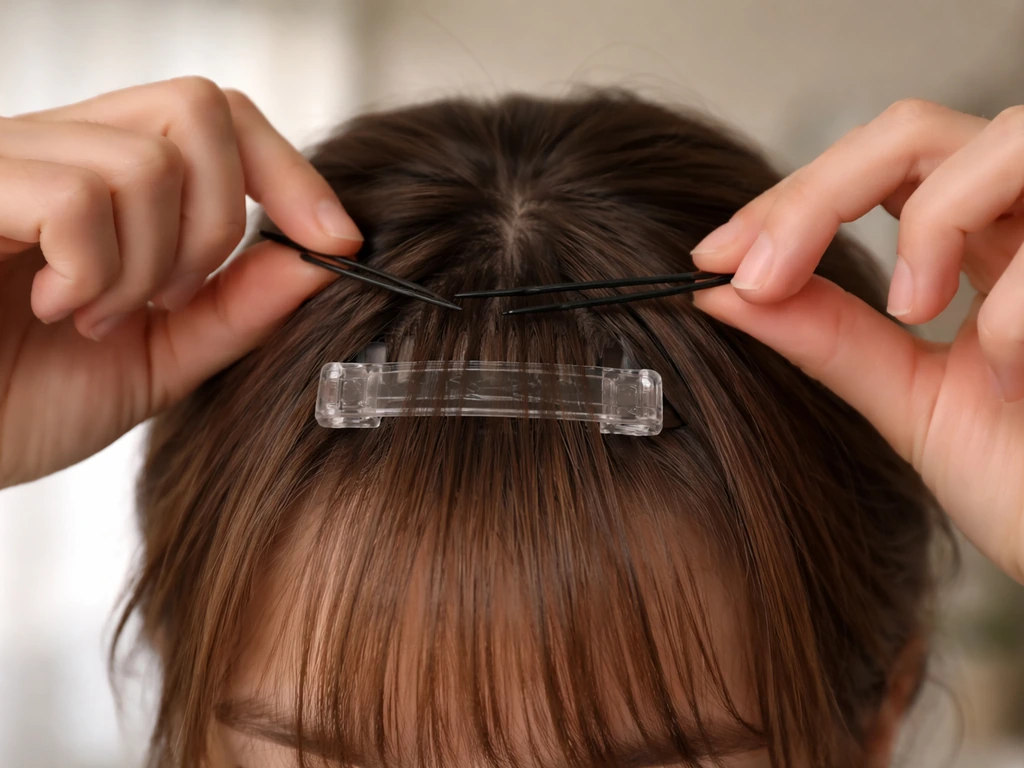
When bangs hit that truly impossible length where they're past your eyes but not long enough to stay swept, pinning them back is not giving up; it's just practical. Bobby pins, setting clips, and braided-back sections all work. If you're going the setting clip route, keep the paddle side of the clip on top for the smoothest result, and leave it in while the hair dries fully. This trains the section to stay flat and swept even after the clip comes out. For growing out curtain bangs specifically, this clipped-back-while-drying technique is especially effective because of the natural center-parting direction those styles require.
Growing out side-swept and side bangs specifically
Side-swept bangs have a different grow-out path than straight-across bangs, and the transition is actually gentler for most people. Because they already have directionality built in, you can deepen the side part and continue sweeping them as they get longer. The main challenge is that as they lengthen, they start falling forward into the face rather than staying swept, especially around the cheekbone area.
The fix: maintain the deep side part aggressively during blow-drying by using a brush to train the bangs in the direction you want before the hair is fully dry. As the length increases, you can gradually encourage them toward a face-framing layer shape by sweeping them further back and behind the ear. A stylist can also introduce a slight angle cut during a regular trim to start blending the bang section into the layers on that side, which makes the transition feel intentional. If you're specifically navigating how to style bangs as they grow out, there's more detail on specific techniques for each week of this transition.
Growing bangs out with short hair, and for guys
Most grow-out guides are written with shoulder-length or longer hair in mind, which is not helpful if you're working with a pixie, a short crop, or a men's style. The dynamic is different: with short hair, the growing bang section is often more visible because there's no surrounding length to absorb or frame it, and the proportions change faster.
Short hair and pixie-adjacent lengths
With short hair, the most effective strategy is keeping the rest of the cut clean and tidy while letting the front grow. This means getting the sides, back, and nape tidied every 4 to 6 weeks even while avoiding any length removal from the top and bang sections. A slightly longer fringe looks intentional against a neat cut; it looks sloppy against an also-overgrown everything-else. The shape of the surrounding hair is doing real work here.
For guys growing out bangs or a fringe
The same principle applies. If you're growing out a fringe or a curtain-style front section, keeping the sides tapered and the neck/back clean makes the longer front look deliberate rather than grown-out-by-accident. Tapering slightly rather than hard-cutting the sides also helps the overall shape transition more gracefully as the top gets longer. Curtain bangs are a great transitional target for men: the center-parted, face-framing shape works across textures and hair types and reads as styled at every length. As the bangs grow past the eyebrow and toward nose length, simply parting down the middle and sweeping each side outward creates the curtain effect naturally. If you're deciding whether this direction makes sense for your situation, it helps to think through whether growing out your bangs is the right call before committing to the full process.
Curly hair grows out differently
Curly bangs have a shrinkage factor that straight and wavy bangs don't: the curl pattern shortens visible length by anywhere from 20 to 50 percent depending on curl tightness. This means the growth timeline feels longer, the bang section goes through fewer distinct "stages" visually, and the styling tools are different. Growing out curly bangs deserves its own approach, especially around how you handle definition versus frizz during the transition.
Products and tools that actually help
You don't need a lot of products for this. You need the right ones for the specific problem you're dealing with.
| Problem | Product type | How to use it |
|---|---|---|
| Bangs flipping or lifting | Strong-hold hairspray | Spray onto a brush or comb and smooth through the bang section after styling, not directly onto dry hair from a distance |
| Cowlick or stubbornness | Light-hold pomade or cream | Work a tiny amount through damp bangs before blow-drying to add weight and control direction |
| Frizz or humidity | Anti-humidity spray or anti-frizz serum | Apply to damp hair before blow-drying; reapply a small amount to dry bangs if frizz returns midday |
| Texture and grip without weight | Texturizing spray | Spritz onto dry bangs for light structure; useful when pinning back or sweeping to one side |
| Heat styling protection | Heat protectant spray or cream | Apply before any blow-dryer or flat iron contact; look for protection rated to 400°F or above |
| Training bangs to lay flat overnight | Setting clips | Clip damp bangs flat against forehead in the direction you want them to fall; remove in the morning |
For most people in the grow-out phase, a heat protectant, a texturizing spray, and a strong-hold hairspray are the three-product setup that covers the most situations. Texturizing sprays specifically are useful because they give lightweight grip and structure without the heaviness that makes bangs flop or look greasy, which is exactly the problem you're trying to avoid during grow-out.
When to see a stylist instead of going it alone
There are a few situations where a professional adjustment is genuinely worth the appointment, and knowing when you've hit one saves a lot of frustration.
- Your bangs are growing at noticeably different rates on different parts of the fringe, creating a jagged or uneven line that styling won't fix
- You have a strong cowlick or multiple cowlicks that no amount of blow-drying is taming, and the bang section is sticking up or parting in a place you don't want it to
- Your layers are growing out at a different rate than your bangs, creating a disconnected shape that looks unfinished rather than in-progress
- You're ready to transition the bang section into a specific shape (curtain bangs, face-framing layers, bottleneck shape) and you want the cut to support that direction
- You've been growing for 3 or more months and the bang section still looks isolated from the rest of your hair rather than blending in
A good stylist during grow-out isn't cutting your bangs shorter: they're adjusting the angle and shape to support where you're headed. Ask specifically for a "grow-out trim" or "blend the bang section into the layers" rather than a general bang trim, so there's no miscommunication about the goal. Styles like the deeper-angled long cuts that professional stylists often recommend for bang grow-out are designed to make the fringe feel supported rather than abandoned.
The grow-out process is not that complicated once you stop fighting it and start working with the length you have at each stage. Assess where you are right now, pick the styling approach that fits that length, use the right products consistently, and keep the surrounding hair clean so the growing fringe reads as intentional. That's it. The months go by whether you're doing it strategically or not, so you might as well get through them looking put-together.
FAQ
How often should I wash my bangs while they’re growing out so they don’t look greasy or flat?
During the awkward phase, wash or refresh more frequently if your roots get oily, but keep the rest of your hair routine consistent. A common approach is to shampoo as usual, then use dry shampoo only at the bangs roots between washes. Avoid spraying dry shampoo through the ends, since it can make the bang section stiff and harder to train with a blow-dry.
Should I cut my bangs at home during the grow-out, or only see a stylist?
If your bangs are at brow length or longer, small home adjustments can work, but only for evening out obvious stragglers. If you’re still in micro-bangs or your fringe is uneven across the width, it’s safer to schedule a grow-out trim, because tiny uneven snips can create lasting gaps in the shape.
What’s the biggest mistake that makes bangs look worse while growing out?
Over-trimming just because they look messy. Repeated tiny cuts can reset your timeline, and they also train the ends to curl or flip unpredictably. Instead, wait for a stage where trimming is truly needed (uneven ends, blunt damage, or a cowlick you cannot tame with styling), then do one intentional micro-trim or grow-out blend.
How do I stop bangs from flipping outward at the ends when I’m not using heat every day?
Try a no-heat training method at night. Lightly dampen the bang section, comb it in the direction you want (often straight down or slightly side-swept), then pin it flat with clips or a soft braid. Let it dry fully before removing. This reduces end flare without adding daily heat stress.
Can I use a curling iron or wand on growing bangs without making them look shorter?
Yes, but use it strategically. Curling too tightly or curling at the roots can make the bangs spring upward, exaggerating “short” visibility. For grow-out, focus on gentle bends through the mid-length and taper, keeping the root flatter, then finish with a small amount of strong-hold hairspray to lock direction.
What should I do if my cowlick is only visible after the bangs dry?
Re-train the direction while the hair is still warm. Blow-dry again in short passes with a brush combing the bang section opposite the cowlick’s natural pull, then end by drying down the hair shaft. If it persists, use a fine-tooth comb to section and hold the direction for 10 to 20 seconds while drying, so the strand sets correctly.
How do I handle grow-out if my bangs are coming from different hair textures (for example, one side wavier)?
Treat them as two sections, not one. Dry the sides separately, and use slightly different tension and product amounts if one side frizzes or falls forward sooner. You may also need a stylist angle cut or taper adjustment so the blend works even when the wave pattern differs across the fringe.
Do I need to trim around my face even if I’m trying to avoid losing length?
Only the minimum needed for evenness. If your bangs are below brow level and mostly even, skip trimming and rely on blow-dry direction and occasional flat-iron finishing. Trim only when there are damaged or blunt ends that show clearly, or when the fringe becomes visibly lopsided across the width.
What’s the best way to pin bangs back so they stay put during the day?
Use the “leave it in while drying” principle when you can, even if you’re just styling for errands. For day-wear without drying, pin the section closer to the roots than you think, smooth the surface with a brush, then add a small amount of strong-hold hairspray around the pin area. Avoid pulling the hair too tight, which can create a crease that looks worse later.
How do I keep curtain bangs from turning into straight-across bangs as they lengthen?
Maintain your center part with consistent blow-dry direction. Blow-dry each side from the part outward and slightly back, then once dry, brush into the curtain position again before leaving the house. If they start collapsing forward, deepen the part during drying and use a light, flexible grip product so the hair holds the fall without becoming crunchy.