
You can grow long hair from a short cut without looking like you forgot to get a haircut, but it takes a trim strategy, a few go-to styles for each length phase, and a styling routine that makes every stage look intentional. The awkward phase is real, but it's mostly a product of doing nothing and hoping for the best. Once you know what to do at each checkpoint, you stop looking like you're "growing out" and start looking like you're just someone with great hair at whatever length you happen to be.
How to Grow Long Hair Without Looking Stupid: A Plan

Marcus Vickers
10 Jun 2026
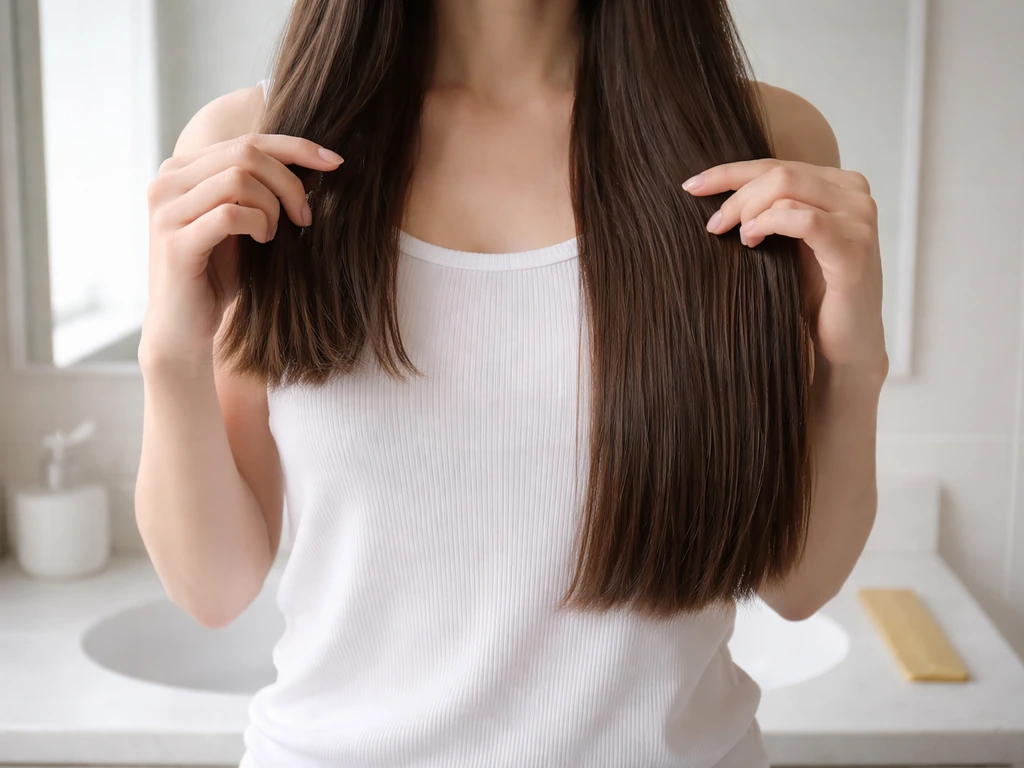
Why it looks "stupid" in the first place
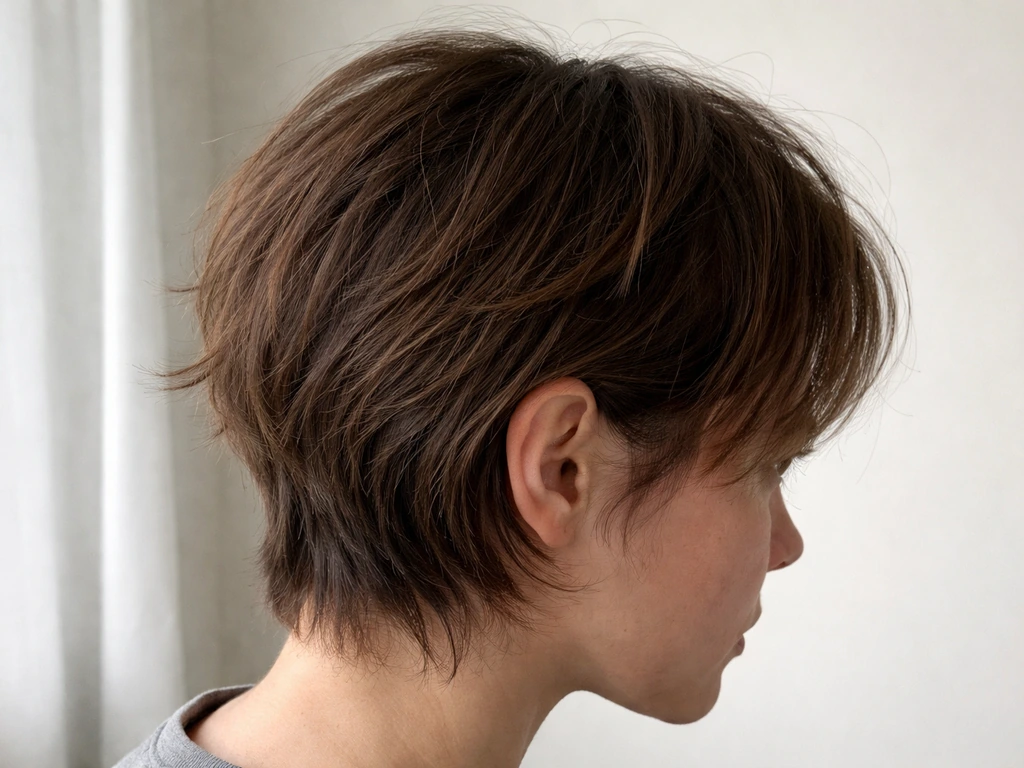
The problem isn't that your hair looks bad, it's that it looks accidental. When hair sits at a length that wasn't chosen, like somewhere between a pixie and a bob, or between a buzz and a proper short back and sides, it signals that you either forgot to get a cut or you're just letting things happen. That perception is the whole issue. Hair that's the same length through all of those awkward middle phases can absolutely look good, but only if it looks like you meant it.
There's also a physical reality: different parts of your head grow at slightly different rates, so the shape your haircut started with breaks down quickly. The back grows faster than the sides for most people, the top gets heavier and starts to lose structure, and suddenly nothing is doing what it was designed to do. Add a cowlick, an old undercut growing in, or a color line creeping down, and you've got multiple problems competing at once. That's what actually makes it look chaotic, not the length itself.
The fix isn't cutting it back short every time it gets uncomfortable. It's understanding what's happening at each phase and adjusting your approach, trims, styles, and products, to stay ahead of it. That's exactly what this guide walks through.
Trim strategy: what to cut (and when) while growing it out
This is where most people go wrong. They either cut nothing (and it grows into a shapeless blob) or they cut too much trying to keep it tidy (and undo months of progress). The goal with trims while growing out isn't to maintain a style, it's to maintain a shape. Those are different things.
Hair grows about half an inch per month on average. Some people clock closer to a third of an inch, others push toward two-thirds, genetics, health, and age all play a role. Either way, you're not going to see dramatic length changes week to week, which means every trim matters more than it feels like it should.
The general rule: trim the perimeter (the back and sides, or the ends if you're at a bob length) every 8 to 12 weeks to prevent split ends from traveling and making hair look ragged, but leave the top and length alone. If you're growing out a pixie or buzz, avoid cutting the top entirely. If you're growing out a bob or lob, a small dusting of the ends (half an inch maximum) every couple of months keeps it from looking scraggly without sacrificing real length.
- Trim the neckline every 4 to 6 weeks to keep the back looking clean and intentional, not grown-out
- Trim the sides and around the ears every 6 to 8 weeks if you're growing out a short back and sides — this is what separates "growing it out" from "neglected"
- Ask your stylist specifically to clean up without removing length — say "shape but no length off the top" and be explicit
- Avoid layers during the first 4 to 6 months of growth — they fragment the hair and make it harder to style through transitions
- If split ends are the issue, a half-inch trim every 10 to 12 weeks is enough — you don't need to cut more than that
If you're managing a growing-out process and also dealing with a professional environment, the neckline and temple cleanup matters even more, a clean perimeter reads as intentional styling, not neglect, regardless of the overall length. If you want to grow your hair out and look professional, focus on a clean neckline and a tidy shape at every stage, not just the final length professional environment.
Best styles for each length phase
The biggest mistake people make is trying to wear the style they had before at a length where it no longer works. Your pixie cut doesn't look like a pixie once it's grown two inches. Accept the phase you're in and work with what you've got right now.
Buzz cut growing out (0 to 2 inches)
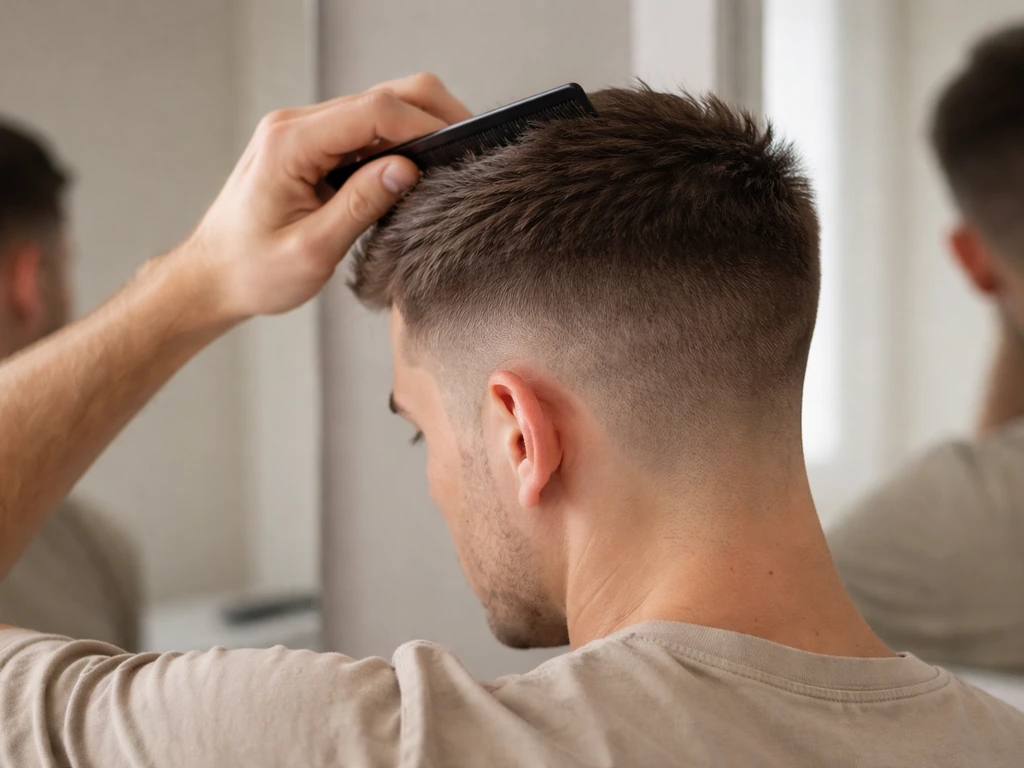
This is the stage most people dread because the hair is too short to style but long enough to look uneven. Keep the fade or taper maintained at the sides, this is the one place you should trim regularly. On top, let it grow. A tiny bit of matte clay or pomade pressed through the top with your fingers gives it texture and makes it look deliberate. A skin fade or low taper that's maintained every 3 to 4 weeks will make a huge difference in how polished the overall look is while the top grows.
Pixie growing out (1 to 4 inches)
The first two months are about the sides catching up to the top. Side parts work well here, they give the hair movement and make it look styled rather than grown-out. Pin back any pieces that are flopping forward awkwardly. Once you hit about 2.5 to 3 inches, a slightly textured, piece-y look with a side part or a soft push-back style works really well. Small barrel curls or waves (even just from sleeping on slightly damp hair) add enough body to keep things from looking limp and flat.
Growing out bangs
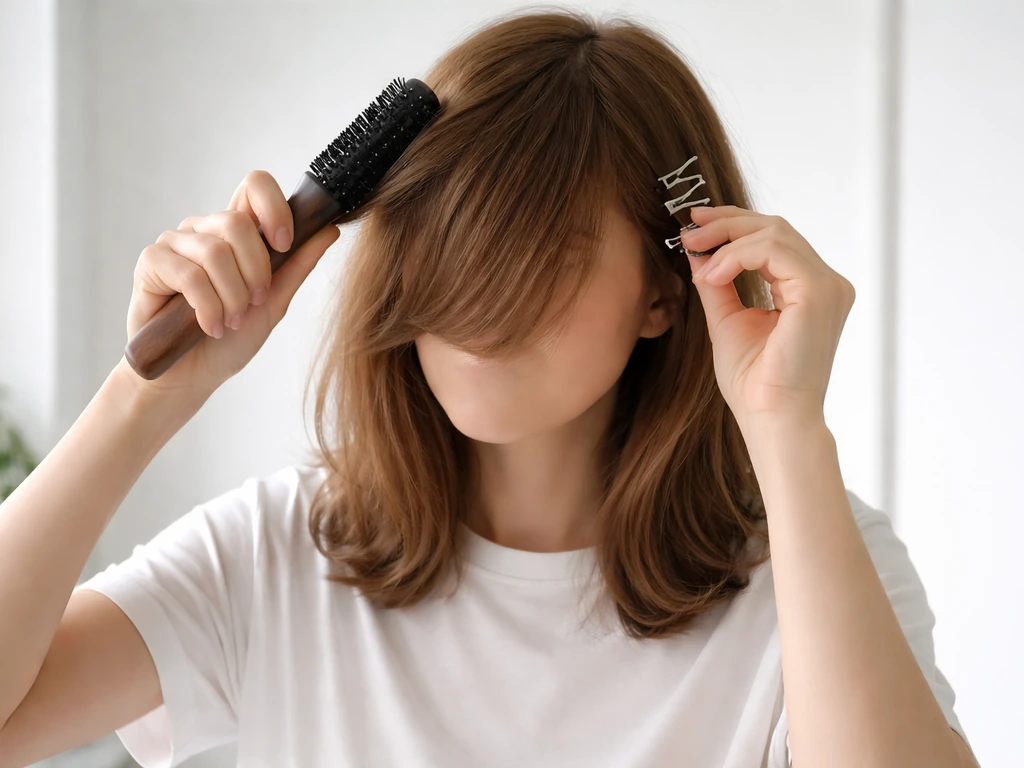
Bangs are one of the trickier transitions because they hit the eyes before they hit the chin, and that eye-level limbo is genuinely annoying. The fastest fix is a side sweep: use a round brush and blow-dry the bangs across to one side until they hold. A bobby pin tucked just behind the hairline on the opposite side gives the sweep staying power. French braids, headbands, and soft barrettes are legitimately useful here, not just throwback accessories, they're a real solution for the 6 to 9 month bang-to-length grow-out period.
Bob and lob growing out (4 to 10 inches)
Once you're past the ear and heading toward the shoulder, you've got real styling options. Half-up twists, low buns, soft waves, and loose braids all become available and all look intentional rather than chaotic. The main enemy at this phase is flatness, hair that's long enough to weigh down but too short for gravity to give it a natural drape. Waves or texture spray solves this. If your hair is all one length and just sitting there, add movement through styling (see the tools section below) rather than adding layers.
Undercut or disconnected cut growing in
This is one of the harder transitions because the short section underneath grows in at a different visual rate than the length on top. If the contrast is still significant (more than an inch of difference), you can maintain the undercut while growing the top longer. Once the undercut section reaches about 2 to 3 inches, it starts to blend better. Avoid brushing everything together before it's ready, it'll poke out and look uneven. Instead, keep the top section longer and use product to keep it separated from the growing-in section while it catches up.
Color, texture, and hair type through the grow-out
Colored hair adds a whole extra layer of complexity to the grow-out because you're not just managing length, you're managing a visible line of demarcation between your natural color and whatever color was applied. The slower you grow, the more obvious that line becomes.
If you're growing out bleached or highlighted hair, the best approach is to gradually shift toward a color that bridges the gap. Root smudging, babylights, or balayage can be used to soften the line so it looks like a gradient rather than a harsh regrowth stripe. Avoid going completely cold turkey to natural if you've been maintaining a significant color difference, the grow-out will look more intentional if you soften the transition with a few strategic appointments rather than letting it grow out stark.
Hair texture also affects how each phase looks. Curly and wavy hair tends to handle the awkward phase better because volume and texture read as intentional even at shorter lengths, but it also shrinks, so what looks like 3 inches of length might actually be 5 inches stretched. Fine, straight hair has the opposite problem: every awkward phase is maximally visible because there's no texture to hide behind, which means styling and product are even more important. Thick, coarse hair can get heavy and shapeless at mid-lengths and benefits from some internal point-cutting (not layers) to remove bulk without removing length.
| Hair Type | Main Challenge During Grow-Out | Best Fix |
|---|---|---|
| Fine and straight | Lies flat, every awkward phase is obvious | Volumizing mousse at roots, blow-dry with round brush, texture spray |
| Thick and coarse | Gets heavy and shapeless at mid-lengths | Point-cutting for bulk removal, strong-hold product to direct shape |
| Curly (type 2-4) | Shrinkage hides length, volume can get chaotic | Moisture + definition; avoid over-diffusing, embrace the shrinkage |
| Wavy | Loses wave pattern at certain lengths due to weight | Salt spray or curl cream on damp hair, scrunch and air dry |
| Color-treated | Regrowth line is visible and distracting | Root smudge or bridging color every 8 to 10 weeks |
Styling tools, routines, and products that actually help
You don't need a drawer full of tools. You need two or three things that work for your hair type and a consistent enough routine that your hair behaves the same way most days. Inconsistency is what makes growing-out hair look messy, if your hair can't predict what's happening to it, it shows.
Blow-dry routine
A round brush blow-dry is the single most useful skill you can develop during a grow-out. It gives short and mid-length hair movement, lifts roots, and controls the direction the hair sits, which is exactly what you need when hair isn't long enough to style itself. Use the brush to roll hair away from the face at the front, and smooth and direct it at the crown to stop it from poking up. This takes about 5 minutes once you've practiced it a dozen times. If you have thick or coarse hair, a boar-bristle round brush gives better smoothing; for fine hair, a smaller barrel gives more lift.
Heatless styling options
Heatless options are underrated for the grow-out. Braiding damp hair before bed and releasing it in the morning gives natural-looking waves without any heat damage, and heat damage during a grow-out is especially counterproductive because it leads to split ends that force you to cut more. Satin or silk pillowcases reduce friction, which means less frizz and breakage overnight. For short lengths, sleeping with hair pushed in the direction you want it to sit can actually train it over a few weeks.
Parting strategy
Changing your part is one of the cheapest and most effective styling moves during a grow-out. If your hair has been parted the same way for years, it's trained to fall in that direction, switching to the opposite side or a deep side part adds instant volume at the root and changes the whole shape of your look. This is especially effective at the 3 to 6 inch length when nothing is cooperating anyway.
Product recommendations by stage
- 0 to 2 inches (buzz/very short): matte clay or fiber paste — gives grip and texture without weight or shine
- 2 to 5 inches (pixie/growing short): light pomade or a styling cream — adds definition and controls flyaways
- 5 to 9 inches (bob/lob zone): texture spray or sea salt spray on damp hair — adds movement and breaks up flatness
- 9 inches and beyond: a lightweight smoothing serum at the mid-lengths and ends to control frizz, plus a flexible-hold mousse at the roots for volume
- For all lengths: dry shampoo at the roots on day 2 or 3 hair — adds grip and volume and keeps the style looking fresh
Cowlicks, uneven growth, thinning, and flat roots
These are the specific issues that make people feel like their hair is uniquely terrible when it's actually just doing normal hair things. Every one of them has a workaround.
Cowlicks
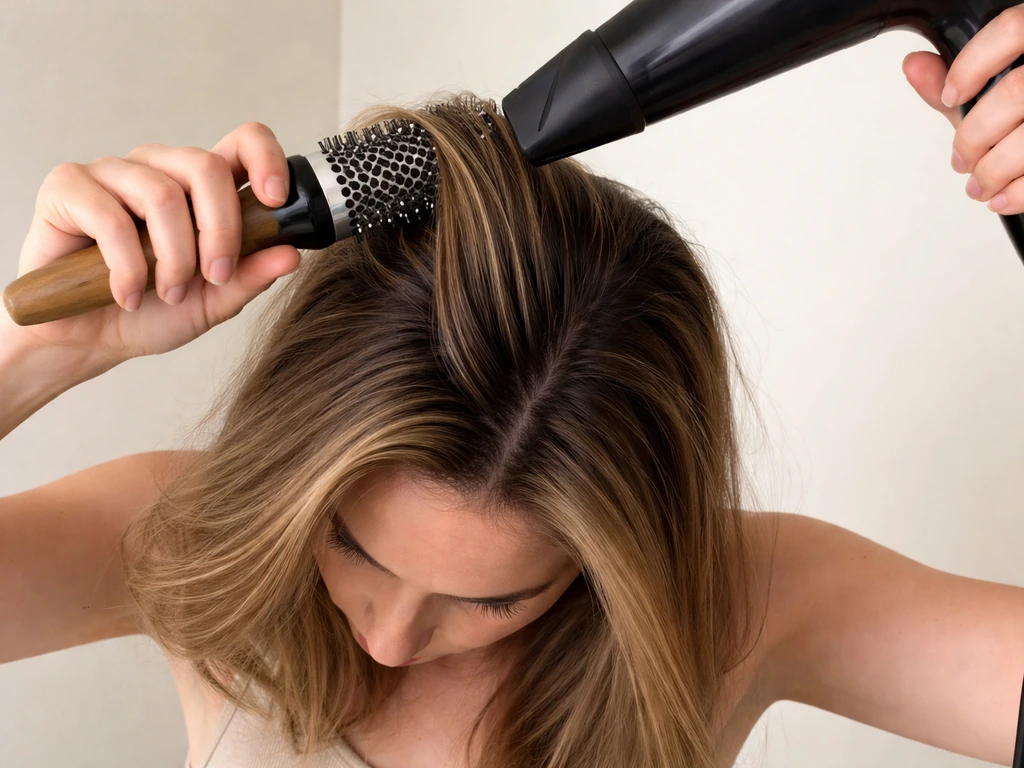
Cowlicks fight you hardest at 2 to 4 inches because the hair is long enough to be noticeable but too short to have enough weight to stay down. The best method: blow-dry the cowlick in the opposite direction first to break the pattern, then redirect it where you want it while the hair is still warm. Apply a small amount of matte clay or strong-hold cream to that section while it's still warm and hold it in place for a few seconds as it cools. This actually works, it's not a permanent fix, but it gives you a reliable daily result.
Uneven growth
The back of your hair almost certainly grows faster than your sides, and one side may outpace the other too. This is normal and it's why getting the perimeter cleaned up regularly matters so much. If you notice one side is noticeably longer than the other, point this out to your stylist rather than trying to self-correct it, a subtle adjustment on the longer side evens things out without losing any meaningful length.
Flat roots and thinning
Flat roots are mostly a fine-hair problem and a weight problem. As hair grows longer, it weighs down the root and kills volume. Blow-dry with your head flipped upside down at the root section, then flip up and redirect. A volumizing mousse applied to damp roots before blow-drying makes a significant difference, not a styling mousse for curls, but specifically a root-lifting or volumizing formula. If thinning is happening (not just fine hair, but actual density loss), avoid heavy oils and serums at the scalp and focus products on the mid-lengths and ends only.
Sideburns and temple hair
This one specifically affects people growing out short cuts and is one of the most common complaints: the hair in front of the ears or at the temples grows at its own pace and starts sticking out awkwardly. Keep this section controlled with a tiny bit of product worked in with your fingers, press it flat against the face or angle it back and into the rest of the hair. As it grows past the jaw, it'll start to integrate naturally. Until then, a small amount of styling balm or even a light hairspray press-down keeps it in place.
The realistic timeline and what to expect at each checkpoint
Here's the honest version. blank" rel="noopener noreferrer">At half an inch a month, growing from a buzz cut or very short pixie to shoulder-length hair takes roughly 18 to 24 months. Growing from a bob to bra-strap length takes another 12 to 18 months on top of that. That's a long time, and the awkward phases don't disappear, they just change character. Knowing what to expect at each stage removes most of the frustration.
| Timeframe | Approximate Length | What's Happening | Main Focus |
|---|---|---|---|
| Month 1 to 3 | 0.5 to 1.5 inches from start | Original cut breaking down, shape going soft | Maintain perimeter; use product for texture |
| Month 3 to 6 | 1.5 to 3 inches | Awkward in-between; top growing, sides catching up | Side part, clay/cream; resist cutting the top |
| Month 6 to 9 | 3 to 4.5 inches | Approaching ear length; real styling options starting | Round brush blow-dry; explore half-back styles |
| Month 9 to 12 | 4.5 to 6 inches | Bob territory; volume can go flat or shapeless | Texture spray; clean up ends; waves help a lot |
| Month 12 to 18 | 6 to 9 inches | Lob to shoulder; hair starts to behave | Introduce braids, half-ups; focus on health |
| Month 18 to 24 | 9 to 12 inches | Shoulder to collarbone; long hair is arriving | Moisture and ends maintenance; you made it |
The checkpoints that matter most are around month 3 (when most people feel the urge to cut it back short), month 6 to 7 (when it finally starts to have enough length to feel like real options are opening up), and month 12 (when the hardest phases are genuinely behind you). If you can get through those three checkpoints with your trim strategy and styling routine intact, the rest is just maintenance.
The same core challenge shows up in slightly different forms depending on where you're starting: growing out men's hair has its own neckline and temple considerations, and growing through the awkward stage without any plan is almost always what makes it feel unbearable.
But the foundation is the same regardless of gender, starting length, or hair type: keep the perimeter clean, choose styles that match where you actually are (not where you want to be), use the right products for your texture, and be consistent. If you want the fastest path to length without losing your look, focus on choosing grow-out styles that match where you are and keep your routine consistent how to grow out your hair and still look good.
If you want to keep it looking intentional through the awkward stages, focus on a trim strategy and styling routine that match your current length growing out men's hair. That's what the difference looks like between "growing it out" and just having long hair.
FAQ
How often should I trim if I’m trying to grow long hair but my ends keep splitting?
Use your split ends as the trigger, not your calendar. If you see rapid splitting, trim a smaller amount more frequently (for example, a light dusting every 6 to 8 weeks) while keeping the top untouched. Split ends travel upward, so delaying usually costs more length later.
What if my barber keeps “cleaning it up” by trimming the top too much?
Ask for a perimeter-only request and repeat the wording: “Please maintain the top length, only remove bulk or shape at the back and sides.” You can also show a photo of the exact length you want at the crown, then confirm the target when you sit down.
Can I still style my hair during the grow-out without ruining it?
Yes, but keep heat and aggressive manipulation limited. Blow-dry with direction control, then stop overusing hot tools once it holds. For texture products, use small amounts and apply after the hair is dry, so you do not harden or clump mid-length hair.
How do I stop “flat roots” if my hair is fine and I hate volumizing mousse?
Try a lighter routine first: volumizing mousse at the roots can be replaced by a root-lifting spray (applied only to damp roots, not the ends) plus flipping and blow-drying in sections. Also avoid conditioner near the scalp, stick to mid-lengths and ends.
My hair looks uneven even though I’m trimming. Is it normal for one side to lag?
Very normal, especially because sides and the back grow at different rates. Instead of trimming both sides equally, measure in one consistent way (for example, compare when the hair reaches the same landmark like the jaw). Point the imbalance to your stylist so the adjustment is subtle and length is preserved.
What should I do at month 3 if I feel ugly and keep wanting to cut back?
Treat month 3 as a shape problem, not a length failure. Keep the side perimeter maintained (every 3 to 4 weeks for fades and tapers) and shift to a style that gives intentional direction, like a side part or controlled textured top. Avoid “resetting” by cutting the top shorter, which restarts the awkward phase.
How do I manage bangs if they keep flipping back and into my eyes?
Use a repeatable hold method: blow-dry in a side sweep until set, then secure with a single bobby pin right behind the hairline on the opposite side. If they are too short to sweep reliably, switch to a headband or small clips only for direction, not tightness that creates dents.
Is there a point where I should stop dusting my ends and just grow straight through?
Usually around when you reach a stable mid-length (often shoulder area), you can move from frequent dusting to periodic maintenance. At that point, trim only when splits or breakage show up and keep the routine focused on conditioning and detangling to prevent new damage.
How do I avoid breakage from protective styles while growing longer?
Protective styles help, but tension breaks hair at the roots. Keep styles loose, avoid tight bands near the scalp, and do not sleep with the same tight style every night. Detangle gently and use a leave-in conditioner on mid-lengths and ends before styling.
What’s the best approach if I’m growing out highlighted or bleached hair without a harsh line?
Start planning color softening before the line becomes obvious. Ask for a blending service like root smudging or babylight refreshes so the regrowth looks like a gradient. Also consider matching the tone to your natural base first, not just growing it out untouched.
Will switching my part really change how the awkward phase looks?
Yes, especially around the 3 to 6 inch stage when the hair has enough length to behave but not enough weight to settle automatically. Switch to the opposite side or a deep side part, then blow-dry and set it in that direction for several days so you are retraining the fall.
I have cowlicks at 2 to 4 inches. Is there a long-term solution or is it only day-to-day fixing?
There’s usually no permanent instant fix. The practical approach is a consistent daily set: blow-dry the cowlick against its pattern briefly, redirect while warm, then apply a small amount of matte clay or strong-hold cream and hold until it cools. If the problem persists in the same spot for months, mention it to your stylist so the haircut shape can work with it.
How can I keep long hair looking intentional if my hair is all one length and won’t move?
Add movement through styling rather than layers immediately. Use a blow-dry technique that lifts at the crown or adds bend through direction, then finish with a light texture spray or sea-salt style mist (not heavy oils). If the hair is genuinely bulky, ask about internal point-cutting rather than removing length.