
Yes, you can let your hair grow out, and for most people who are genuinely tired of their current length, it is absolutely worth doing. The real question is not whether to grow it out but whether you are ready for the timeline, the in-between stages, and the small adjustments you will need to make along the way. This guide will help you make that call today, and if the answer is yes, it will walk you through exactly what to do next.
Should I Let My Hair Grow Out? A Step-by-Step Guide

Marcus Vickers
21 Apr 2026

How to decide if growing it out is right for you
Growing your hair out makes the most sense when your goal is a meaningful change in length, not just a slightly longer version of your current cut. If you are sitting here with a pixie, buzz cut, short bob, or grown-out bangs and you keep imagining yourself with longer hair, that is a good enough reason to start. But it helps to be honest with yourself about a few things first.
Think about your maintenance tolerance. Longer hair generally requires more conditioning, more detangling, and more time. If you loved your short cut because it was fast in the morning, growing it out means going through a period where it is neither fast nor long, just somewhere in the middle. If you loved your short cut because it was fast in the morning, growing it out means going through a period where it is neither fast nor long, just somewhere in the middle should i grow my hair out black male. That middle stage is manageable, but you should know it is coming. On the other hand, if your current cut requires frequent salon visits to stay sharp, growing it out can actually save you money and chair time once you get past the transition.
Also think about your timeline expectations. Hair grows about half an inch per month on average, which is roughly six inches per year. If you are growing a pixie into a chin-length bob, you are looking at roughly a year to eighteen months. If you want to go from a short bob to shoulder length, expect twelve to eighteen months as well, depending on your texture. Wavy and curly hair tends to show less apparent growth because of shrinkage, so it can feel like things are moving slower even when they are not.
Growing it out is probably not the right move right now if you have significant heat damage, chemical processing, or color work that has left your ends compromised. In those cases, the goal should first be getting the hair into a healthier baseline, then committing to a grow-out. Related to this, if you are thinking about letting your natural color or gray grow in at the same time as your length, that is a completely viable plan, but it adds a visual layer to the transition that deserves its own strategy.
A simple way to decide: if you have been thinking about growing your hair out for more than a few weeks, you probably already know the answer. The hesitation is usually about the awkward phase, not the outcome. The good news is that the awkward phase is shorter and more manageable than most people expect.
What actually happens during each stage, and how long it takes
Knowing what to expect at each stage is honestly the thing that keeps most people from giving up. When you understand that the weird length you are currently experiencing is a named, predictable phase that will pass, it stops feeling like a personal failure and starts feeling like a milestone.
Months 1 to 3: the not-quite-anything stage
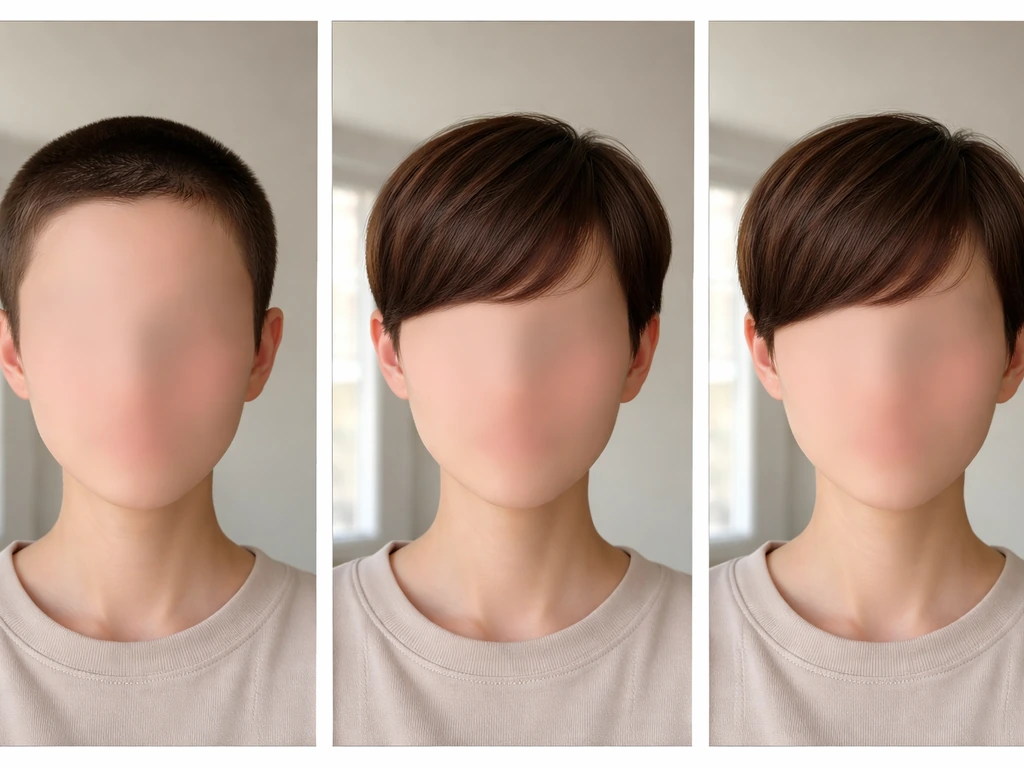
In the first three months, you will gain roughly one to one and a half inches of length. If you started with a buzz cut or very short pixie, this is when hair starts covering the ears, hitting the nape awkwardly, and generally doing nothing flattering. If you started with a bob or bangs grow-out, this is when things start looking intentionally longer rather than just grown out. The key in this stage is resisting the urge to cut it all off again. Almost everyone feels this way around week six.
Months 3 to 6: the actual awkward phase
This is the stage people dread most, and rightly so. Hair is long enough to get in the way but not long enough to do much with. For pixie grow-outs, this is usually the ear-poking, collar-touching, poofy-sides territory. For bangs, you are hitting the eye-length zone where they flip out unpredictably. For bob to shoulder-length grows, the ends may start to look stringy or uneven. The good news is that this stage is also the most responsive to styling strategies, which are covered in the next section.
Months 6 to 12: things start to cooperate
By six months, most people have gained about three inches from where they started. Bangs that started at the eyebrows are now approaching nose or lip length and can be pinned back, side-swept, or braided with ease. Pixie grow-outs are entering a shaggy lob territory. Bob grow-outs are approaching shoulder length. This is the stage where most styling options genuinely open up, and the daily routine starts to feel rewarding rather than frustrating.
Month 12 and beyond: real length
At the one-year mark, you have about six inches of new growth. Depending on your starting point, this can mean chin length, collarbone length, or even approaching the shoulders. From here, growth continues at the same pace, but the styling challenges shift from managing awkward short stages to maintaining healthy ends so you can actually keep the length you worked for.
| Starting Point | Target Length | Approximate Timeline |
|---|---|---|
| Buzz cut | Ear-length (first real style) | 3 to 4 months |
| Pixie cut | Chin-length bob | 12 to 18 months |
| Short bob | Shoulder length | 12 to 18 months |
| Grown-out bangs | Fully blended into layers | 6 to 12 months |
| Lob (long bob) | Collarbone length | 6 to 9 months |
| Collarbone length | Mid-back length | 18 to 24 months |
How to style your hair through the awkward lengths
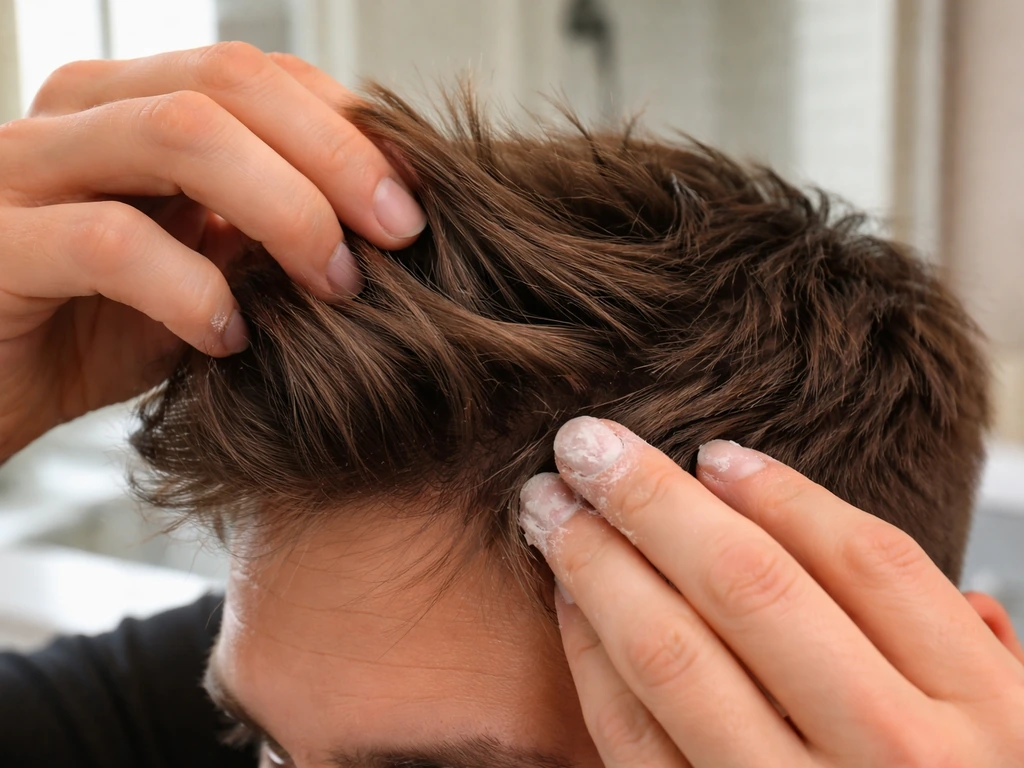
The awkward phase does not have to look awkward. The people who make it through the grow-out without cutting it all off again are usually the ones who have two or three go-to styles for each in-between stage. Here is what actually works at each length.
Super short to ear length
At this stage, your best tools are texture and product. A small amount of pomade or wax pushed forward through the top section gives intentional movement rather than random growth. If hair is starting to poke over the ears, a light hold gel or cream can train it flat while it continues to grow. Headbands work great for people who can wear them, and for those who cannot, a simple side part can add shape that a center part takes away.
Ear to chin length
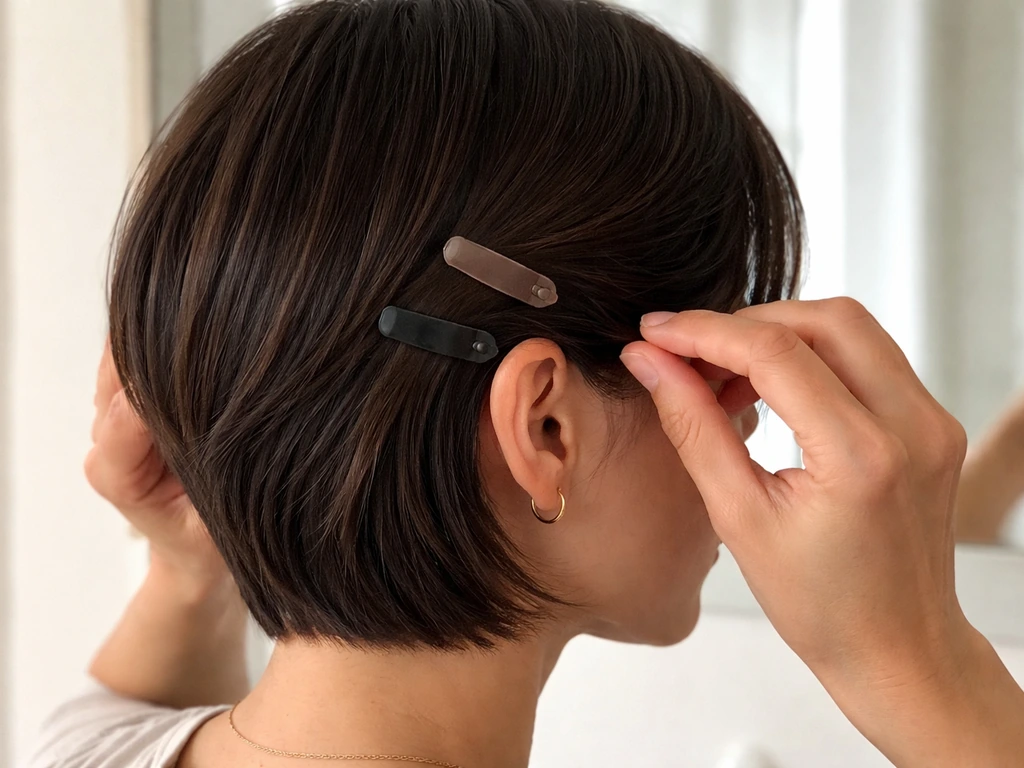
This is the hardest visual stage for most people because the hair has enough length to look intentional but not enough to do much with. The single most effective trick here is adding a light wave or curl. Even if your hair is naturally straight, a quick pass with a one-inch curling wand or a simple braid-and-release overnight creates texture that makes the length look deliberate. Half-up styles using a small clip or single elastic also work well as soon as you have enough length to pull the top section back.
Chin to shoulder length
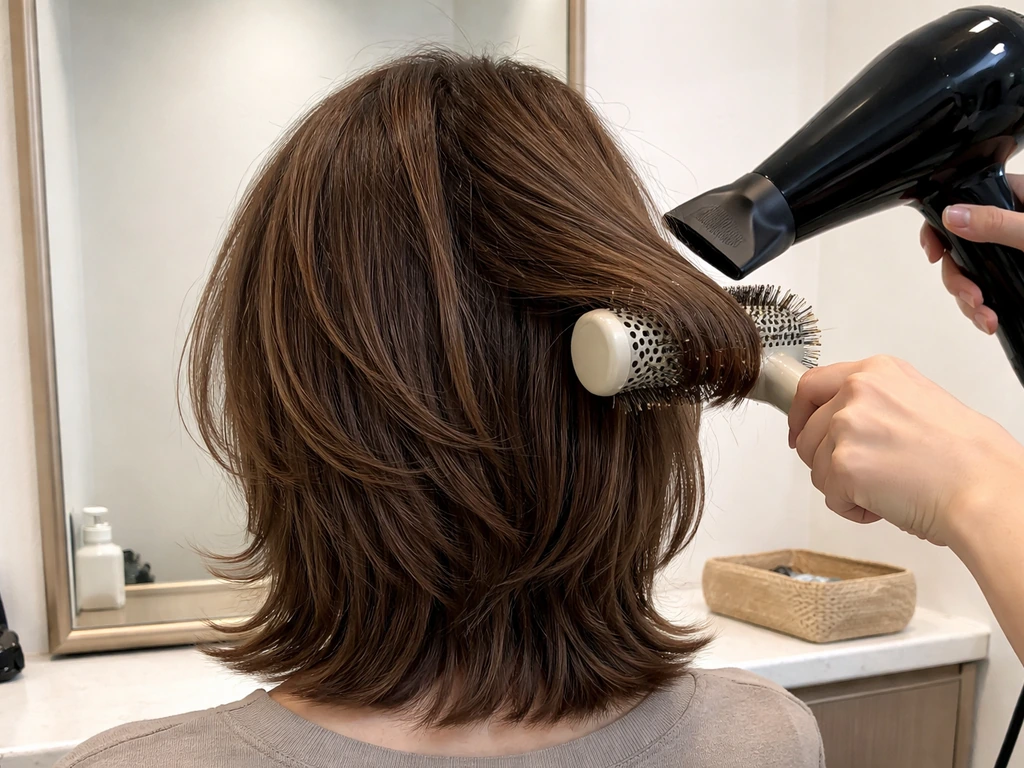
At this stage, almost everything becomes an option: low ponytails, messy buns, braids, half-ups, and blown-out straight styles. The challenge now is that older, shorter layers may be poking out at odd angles while the newer length hangs lower. A round brush blowout at home or a light anti-frizz serum can unify the silhouette on days when the layers are fighting each other.
Handling the specific trouble spots: bangs, undercuts, layers, and uneven growth
General grow-out advice is useful, but the specific starting point makes a big difference. Here is how to handle the most common problem areas.
Growing out bangs
Bangs are one of the most common grow-out scenarios, and the timeline is longer than most people expect. A full fringe typically takes six months to a year to grow out completely and blend into the rest of the hair. At the three-month mark, you can start asking your stylist to blend and reshape the front section rather than cutting it back to a blunt fringe. In the meantime, side sweeping with a clip or bobby pin, pinning with a small barrette, or using a light hold spray to train them to one side are all effective daily options. For those who are determined to avoid the salon entirely during this process, braiding the bangs section into a loose French braid at the front is one of the cleanest ways to keep them controlled at the eye-length stage.
Growing out an undercut
Undercuts are one of the trickier grow-outs because the shaved or very short sections underneath have to catch up to the longer top layers. Depending on how high the undercut goes, this can mean six to twelve months of noticeable length difference underneath. The most practical strategy is to keep the top section longer and use that extra length to cover the growing undercut section. Slicked-back styles, low ponytails, and buns all help mask the grow-out underneath. Avoid short, close-cropped styles on top during this phase because they will expose the contrast underneath.
Growing out layers
If you have a heavily layered cut and want to grow into one length or simply longer, the challenge is that the shorter layers continue to frame your face and create puffiness at the sides while the bottom length grows. The solution is not to cut all the layers out at once, which would take too much length. Instead, ask your stylist to gradually blend the shortest layers into the longer ones with each maintenance visit, removing just enough to reduce the obvious step between them. This keeps the grow-out on track while making the in-between stage look more intentional.
Dealing with uneven growth and cowlicks
Not all hair grows at the same rate, and some sections, especially around the crown or temples, tend to be shorter or grow in a different direction. Cowlicks that were hidden by a short cut can become very obvious during a grow-out. The best approach for cowlicks is to work with the growth direction rather than against it. Blow-drying the section in the direction the cowlick grows, then redirecting with a round brush on the final pass, tends to give the smoothest result. For genuinely uneven growth along the perimeter, a single dusting trim (removing only a quarter inch or less) from a skilled stylist can even things out without sacrificing meaningful length.
Keeping your hair healthy while it grows
Growth rate is largely determined by genetics and overall health, but the condition of the hair you already have determines how much of that growth you actually get to keep. blank" rel="noopener noreferrer">Cleveland Clinic notes that washing frequency varies by person, and some people may benefit from washing at least two to three times per week depending on their needs. Breakage is the silent saboteur of grow-outs. Here is how to minimize it. A Reddit thread in r/BeautyGear also shares user experiences and Q&A about whether silk pillowcases help reduce nighttime hair breakage, though the evidence is anecdotal Reddit r/BeautyGear.
- Wash with a sulfate-free or gentle shampoo two to three times per week. Daily washing strips natural oils that help protect the hair shaft, especially on lengths that are already a few inches long.
- Use a real conditioner every wash, and apply a deep conditioning mask once a week if your hair is color-treated, heat-styled, or on the drier side. The ends of growing-out hair are the oldest and most vulnerable parts.
- Minimize heat styling during the grow-out. When you do use heat, apply a thermal protectant first and keep tools at 350 degrees Fahrenheit or lower for fine or damaged hair.
- If you are growing out color or gray, manage the line of demarcation by keeping the colored ends conditioned and strong. A toning gloss can also help blend the visual contrast between the roots and ends while the grow-out progresses.
- Sleep on a satin or silk pillowcase. It sounds minor but it genuinely reduces friction breakage, especially for longer growing sections.
- Avoid tight elastics and metal clips directly on the hair, especially at the nape, where breakage tends to be worst during grow-outs. Use fabric-covered elastics or spiral hair ties instead.
If you are also navigating a natural color grow-out alongside your length goal, the care routine becomes even more important because the boundary between old color and new growth can be a weak point in the hair shaft. If you are wondering whether you should let your natural hair color grow out, focus on keeping your strands healthy and managing the visible line as it blends natural color grow-out. Keeping both sections hydrated is the most straightforward way to reduce visible damage at the line of demarcation.
When to trim without restarting the whole grow-out
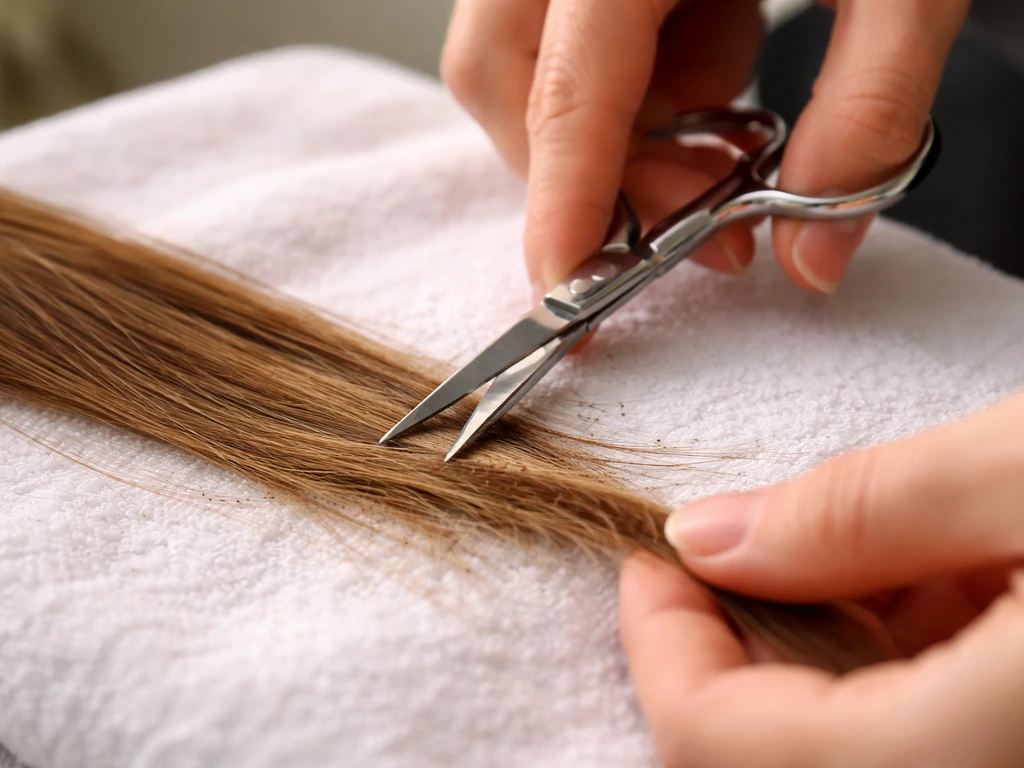
This is where a lot of people get confused. Trimming and growing out are not opposites. A small, well-timed trim can actually help you keep more length over time by removing split ends before they travel up the shaft and cause even more breakage. The key is knowing what kind of trim helps versus what kind sets you back.
A maintenance trim removes only a quarter to half an inch every three to four months. At half an inch of monthly growth, you are still netting positive length every cycle. This kind of trim is worth doing if your ends feel rough, look visibly split, or are snapping off when you comb through them. It is also worth doing to blend layers or reshape the perimeter so the grow-out looks more controlled rather than just neglected.
A trim becomes counterproductive when it removes more than a month or two of growth without a specific reason. If your stylist is recommending a trim because you are in at the regular six-to-eight-week interval, you do not have to say yes. You can say, instead, that you are growing your hair out and would like only a dusting if anything. Any good stylist will respect that and work with your goal rather than around it.
For bangs specifically, some people choose to do light bang trims every two to four weeks while the rest of the fringe grows out, just to keep them out of their eyes during the early stages. This is a reasonable approach, but know that it does extend the total grow-out timeline. If you want the bangs blended and gone as quickly as possible, skipping the bang trims and relying on pins and clips is faster.
Your plan for today: how to start your grow-out with confidence
If you have read this far and you still want to grow your hair out, here is exactly what to do starting today. If you are asking yourself, is it good to grow out your hair, the short answer is yes for most people who are ready for the awkward in-between stage grow your hair out. If you are specifically trying to decide whether to let your gray hair grow out, the key is planning for how the transition will look during the awkward stages. If you are wondering should i grow my hair out, start by assessing your maintenance tolerance and your expected timeline for the awkward stages. No overthinking required.
- Decide your target length. Pick something specific: chin, collarbone, shoulder, or mid-back. This gives you a real finish line and makes the timeline feel concrete rather than open-ended.
- Calculate a rough timeline. Starting from your current length, count how many inches you need to gain and divide by 0.5. That is your minimum number of months. Add two to four months of buffer for your hair type (more for curly or coily, less for straight).
- Take a photo of your hair today. This is the single most motivating thing you can do. At month three and month six, you will not believe how far you have come, but only if you have a reference point.
- Book a blending appointment, not a cut. If you are growing out a structured cut like a pixie, bob with heavy layers, or an undercut, one visit with a stylist focused on shaping the grow-out (not taking length) will make the next three to four months dramatically more manageable.
- Pick one or two go-to styles for your current in-between length. Choose from the styling section above and practice them this week so they feel natural before the awkward stage gets more intense.
- Set a care routine you will actually stick to. If deep conditioning once a week is realistic, do that. If every two weeks is more honest, do that. A consistent simple routine beats an elaborate one you abandon.
- Check in with yourself at the three-month mark before making any decisions. Almost everyone wants to cut it off at six weeks. Almost no one regrets waiting until three months to reassess.
Growing your hair out is one of those things that feels much bigger before you start than it does once you are actually in it. The awkward phases are real, but they are also short relative to the total timeline, and they are entirely manageable with the right styling habits. Whether you are coming from a pixie, a buzz cut, a bob, or a fringe, the process is the same: commit to the goal, manage each stage intentionally, protect your ends, and trim only when it helps rather than out of habit. You have got this.
FAQ
Should I let my hair grow out if it currently feels “unflattering” at my current length?
If you dislike the current length but you can tolerate styling for a few months, growing out is usually worth trying. The deciding factor is whether you can commit to 2 to 3 repeatable styles during the awkward stage, not whether you love the mirror on day one. If you cannot picture yourself doing that, consider a shorter reset (like a trim and slight shape change) before committing to a full grow-out.
How do I handle the grow-out if I have an event coming up before the awkward phase ends?
Plan for temporary camouflage instead of cutting everything off. Use heat-light options like a curling wand pass for texture, a blowout for smooth shape, or strategic half-ups to keep the top section controlled. If you need it to look “intentional” fast, schedule a targeted reshape (blend the perimeter or front) rather than a length cutting trim.
Is it okay to get trims while growing my hair out, or will it slow the process too much?
It is okay, and in some cases trimming actually protects your timeline by reducing split-end travel and breakage. The practical rule is to trim only when ends are rough or visibly splitting, usually a light dusting every 3 to 4 months rather than at every routine appointment. If your hair stylist suggests trims at a typical 6 to 8 week interval, ask specifically for a dusting only (or skip it) since you are in a grow-out goal.
Should I stop using heat completely during a grow-out?
Not necessarily, but you should change how often and how you use it. Prioritize protection if you use hot tools, and focus on short, finishing passes rather than repeated straightening every day. If you notice extra dryness or tangling, reduce heat frequency and lean more on texture techniques like braids-and-release or low-tension styles that do not stress the ends.
What if my hair grows but it does not look longer because of shrinkage or curls?
Shrinkage can make growth look slower even when your hair is getting longer. Measure and track in real terms, like stretched length (gently stretched on clean, conditioned hair) every month, rather than relying only on the mirror. You can also time milestones based on when you can comfortably style and pin without the hair springing back.
How do I deal with breakage if I want to keep as much length as possible?
Treat breakage like a break in the grow-out plan, not normal shedding. Use conditioner every wash, detangle gently (often starting at the ends), and avoid brushing through knots dry. If your hair snaps when combed, switch to a “soft detangle” routine, focus on moisturizing products, and consider a small dusting once the breakage pattern stabilizes.
Should I let my hair grow out if I have split ends right now?
Yes, but decide based on whether ends are splitting and traveling upward. If splits are visible and frequent, a small dusting can be the difference between a true grow-out and a slow setback from ongoing breakage. If the ends are only dry, start by conditioning and reducing friction first, then reassess after a few weeks.
Can I grow out bangs without constantly visiting the salon?
Yes. Use daily control strategies (side sweeping, pins, light-hold spray, or braiding the front section at eye-length) and consider asking your stylist for one blend-focused appointment at the point where you want them to integrate with the rest of your hair. If you want the fastest “get them gone” result, avoid frequent bang trims and rely on styling control.
If I have an undercut, should i let my hair grow out, or will the contrast be too obvious?
It can be obvious, but you can manage it by keeping the top longer to cover the growing undercut underneath. Choose low ponytails, slicked-back styles, or buns during the catch-up period, and avoid short, close-cropped styles on top because they emphasize the difference. Expect a longer timeline when the undercut rises higher than you are prepared to style around.
What should i do if my cowlicks get worse as my hair grows?
Work with the growth direction rather than trying to flatten it with force. Blow-dry the cowlick area in the direction it naturally sits, then redirect on the final pass with a round brush so the top lays smoothly. Once the direction is consistent, styling becomes easier and you are less likely to tug the hair, which helps prevent breakage.
Should I let my hair grow out if I’m also trying to grow out natural color or gray?
Yes, it can work well, but plan for the visible boundary during the awkward months. Keep both the new growth and the colored length equally hydrated, and use gentle care at the line of demarcation to reduce dryness and texture difference. If the contrast is bothering you daily, consider a targeted approach like blending services or a carefully chosen toner schedule, rather than cutting the length short.