
Yes, you should let your gray hair grow out, if you're tired of the upkeep, the cost, or the chemicals, and if you're genuinely curious about what your natural color looks like now. That's the honest answer. The harder question isn't whether, it's how to get through the transition without feeling like you're walking around with a visible line on your head for a year. This guide covers the entire process: how to make the call, what to expect month by month, and exactly what to do with your hair from today until you're fully gray.
Should I Let My Gray Hair Grow Out? A Step-by-Step Guide

Marcus Vickers
13 Apr 2026

Quick decision: keep dyeing or let the gray grow in?
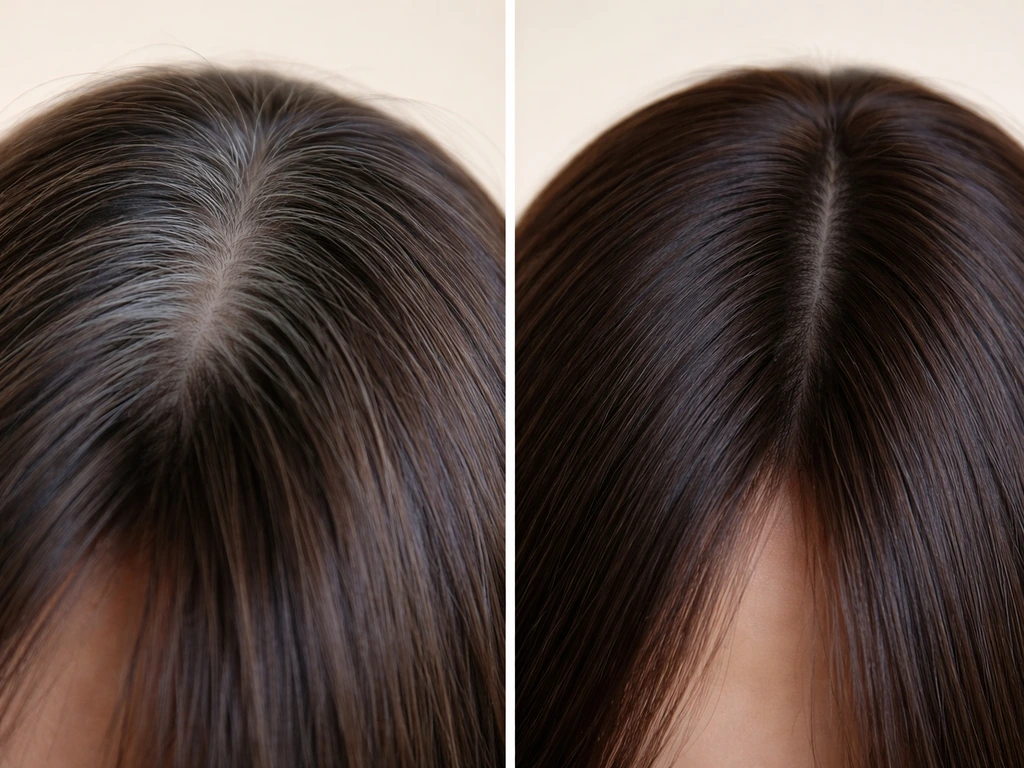
Before diving into the how, it helps to be sure about the why. Most people considering this fall into one of a few camps: the maintenance is getting exhausting (touching up roots every three to four weeks adds up fast), the cost has become hard to justify, or they've started noticing scalp sensitivity or reactions. That last one is worth taking seriously. Hair dye allergies are more common than people realize.
Allergic contact dermatitis from hair products accounted for 9% of positive allergic reactions in a major patch-test study of nearly 39,000 patients, and [PPD (para-phenylenediamine), a chemical in most permanent dyes, is one of the more common sensitizers. ](https://pmc. ncbi. nlm.
nih. gov/articles/PMC4513401/) If your scalp itches, burns, or swells after coloring, stopping dye isn't just a style choice, it's the right health call.
On the other side, if you genuinely enjoy the color, aren't bothered by root appointments, and have no scalp issues, there's no rule that says you have to go gray. Deciding whether to let your hair grow out is always a personal call, and timing matters. The best time to start is when you're mentally ready to sit through an awkward phase, because that phase is real and it will last a while.
| Factor | Keep Dyeing | Let Gray Grow Out |
|---|---|---|
| Maintenance frequency | Every 3–4 weeks for root touch-ups | Decreases over time as gray fills in |
| Cost | Ongoing (salon or at-home products) | One-time transition cost, then minimal |
| Chemical exposure | Repeated oxidative dye, ammonium, peroxide | Eliminated once dye grows out |
| Scalp sensitivity risk | Ongoing PPD/allergy exposure | Risk eliminated |
| Timeline to final look | Indefinite maintenance | 6–12 months for full transition |
| Awkward phase | None (color stays consistent) | Real and visible for several months |
Recommendation: if maintenance fatigue or scalp sensitivity is driving this, go gray. If you're happy with your dyed color and have no side effects, staying with dye is also a valid choice. This guide is for the people who are ready to make the switch.
What the grow-out actually looks like, month by month
Hair grows about half an inch per month on average. Davines also notes that hair growth averages about half an inch per month and that transitioning to gray can take anywhere from about a year to several years depending on length and other factors Your Guide to Growing Out Gray Hair. That's the baseline you're working with. So if you stop dyeing today, here's a rough visual timeline of what to expect:
| Timeframe | What You'll See | Main Challenge |
|---|---|---|
| Weeks 1–4 | Visible root line, ~0.5 inch of gray at scalp | Contrast between gray roots and dyed ends |
| Months 1–3 | 1–1.5 inches of gray regrowth, demarcation line becomes obvious | The "skunk stripe" effect on darker dyes |
| Months 3–6 | 2–3 inches of gray regrowth, dyed ends getting trimmed away gradually | Awkward two-tone look, uneven texture |
| Months 6–9 | Gray is dominant, dyed color mostly gone if trimming regularly | Adjusting to new color, scalp/length mismatch |
| Months 9–12 | Near-full gray or fully gray depending on density and trim rate | Getting used to the final color and texture |
Davines puts the transition window at 6 to 12 months, and that tracks with the math. If your hair is currently short (say, a pixie or bob), you can clear the dyed ends much faster. If it's long, you're looking at the longer end of that range unless you're willing to take off significant length. People with about 50% or more gray density will see the biggest visual change fastest. Those with just a few grays scattered in darker hair may find the transition looks more like highlights than a stark line, which is actually easier to manage.
How to prep your hair and start the process today

The first decision is whether to stop dye cold turkey or taper off gradually. Going cold turkey means you'll see the demarcation line clearly and quickly, but you get through the transition faster. Tapering by switching to demi-permanent or semi-permanent color first can soften the contrast as you grow out. Demi-permanent formulas, like the kind from Wella's Color Touch line, typically last up to 24 washes and, crucially, blend rather than fully cover gray strands. That means your roots won't show as a hard line when the color fades. This is worth considering if you have a longer style and want the transition to look intentional.
Another option for managing roots in the early months without committing to a full dye session is using touch-up sticks or root cover sprays. These wash out and are a useful bridge during the first few months when the contrast is most noticeable. They're not a long-term plan, but they buy you time without adding more permanent dye to your hair.
Here's what to actually do today to start the grow-out properly:
- Book a consultation with your stylist and tell them you want to transition to gray. A good stylist will help you map out a trim schedule and talk about blending options.
- Stop scheduling your next full-color appointment. If you're mid-cycle, let the current color fade naturally.
- Switch to a sulfate-free shampoo. It extends the life of any remaining demi or semi color and is gentler on new gray regrowth, which tends to be coarser and drier than dyed hair.
- Start a weekly deep conditioning routine now. Gray hair has a different cuticle structure and benefits from extra moisture.
- Decide on your trimming strategy (covered in detail below) so you have a plan going forward rather than reacting month to month.
Styling strategies for the awkward in-between phases
The awkward phase is real, but it's manageable with the right approach. The strategy depends heavily on how much hair you're starting with and how much you're willing to cut.
The pixie or short cut option

If you want to get through the transition as fast as possible, cutting your hair shorter is the most direct route. AARP points out that getting a pixie cut once you have about three to four months of gray regrowth can dramatically shorten the awkward phase, since you're cutting off most of the dyed ends in one go. After that, you're only a few more months away from a fully gray short style. Growing out hair from a very short cut has its own set of phases too, but starting from a pixie with natural gray regrowth means you're working with your new color from the start rather than fighting it.
Working with longer hair and bangs
If you're keeping length, bangs and layers are your best tools. Curtain bangs or side-swept bangs draw the eye away from the demarcation line on top. Strategic layering breaks up the visual contrast between your gray roots and dyed ends because layers don't show a clean transition line the way one-length cuts do. Ask your stylist to add face-framing layers that move through the transition zone.
Handling undercuts and shorter sides
If you have an undercut or shorter sides, the contrast between gray roots and dyed length can be extra stark at the nape and sides. Keeping the sides and back trimmed tighter during the grow-out actually helps here because it removes the dyed portions faster in those areas, and the transition line moves upward and becomes less visible over time.
General day-to-day styling tips
- Textured styles (waves, loose curls, braids) disguise the demarcation line far better than sleek straight styles.
- Updos and half-up styles keep the transition zone tucked away during the most obvious months.
- A tinted dry shampoo in a shade close to your dyed color can blur the root line between trims.
- Silver or gray-toned accessories actually make the gray regrowth look intentional rather than accidental.
Trimming and shaping without undercutting your progress
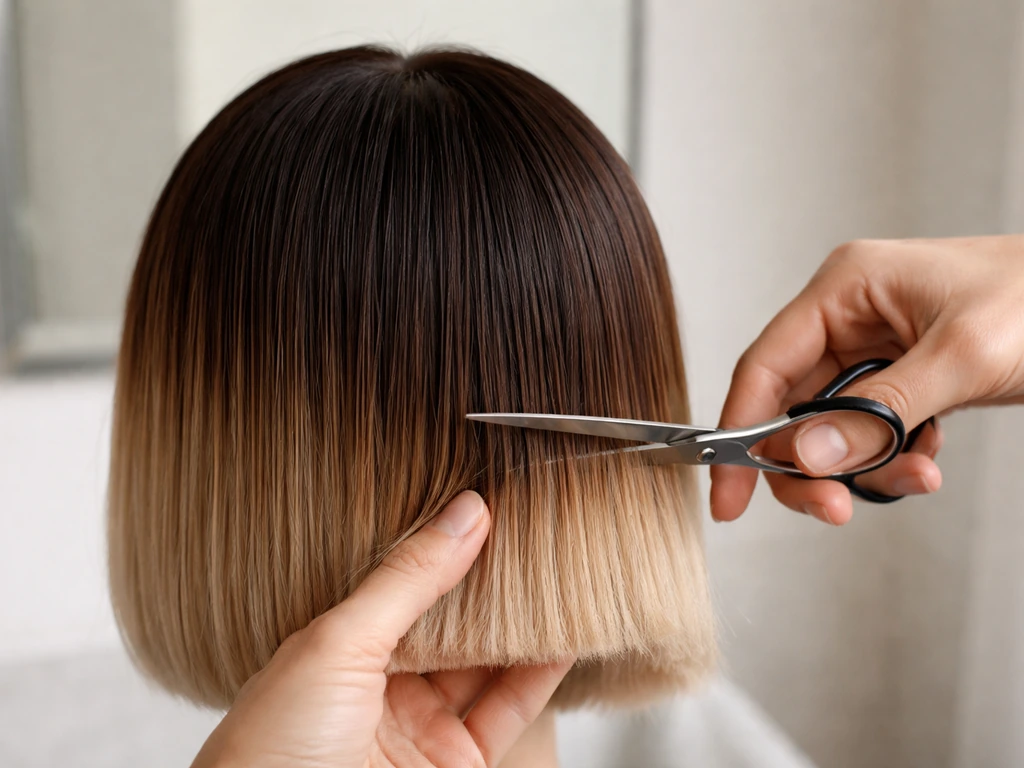
This is where a lot of people get confused. Trimming is not the enemy of growing out your hair. Trimming the dyed ends strategically is actually how you accelerate the transition and keep things looking polished. The key is trimming intentionally rather than reactively.
For shorter hair, trimming every four to six weeks keeps the shape clean and removes dyed ends at a steady pace. For longer hair, you can stretch to every eight to ten weeks. If your ends are damaged from repeated chemical processing (oxidative dye uses ammonium and hydrogen peroxide, both of which stress the hair shaft over time), you may need to trim more frequently to stay ahead of breakage and split ends. The general guidance is: if your ends are healthy, trim less often; if they're brittle or splitting, trim more often regardless of length.
The rule to follow: never cut more than you've grown in since your last appointment. At half an inch per month, a six-week trim should remove no more than about three-quarters of an inch if you want to keep making progress on length. If length isn't your goal and you just want the gray transition to finish cleanly, you can take off more at each visit to remove the dyed portions faster.
Managing the color contrast as gray grows in
The demarcation line (the visible boundary between gray regrowth and dyed hair) is the main visual challenge. How stark it looks depends on two things: how dark your dye is, and how much of your natural hair is gray. Someone with dark brown or black dye transitioning to white or silver gray will have the most obvious contrast. Someone with a lighter dye color or a salt-and-pepper pattern will have a gentler transition.
Blending options that don't require going back to full dye
A gloss treatment is one of the most useful tools during the transition. Gloss adds a sheer tint and shine that softens the contrast between gray roots and dyed ends without depositing full color. A professional gloss typically lasts around 28 shampoos, which translates to about six to seven weeks of use. At-home options vary: dpHUE's Gloss+ is semi-permanent and lasts up to 8 shampoos, while their Glossy Glaze is more temporary, lasting up to 3 shampoos. These are good for touch-ups between salon visits when you want to knock down the contrast a bit.
Highlights and lowlights (not full color) are another effective bridge. Strategic highlights through the transition zone can break up the hard demarcation line and make the grow-out look like a stylistic choice. This is especially effective if your natural gray is coming in as a lighter, brighter tone that can be mimicked with highlights placed through the dyed portions.
If you're wondering whether the whole color question even applies to your situation, deciding whether to let your natural hair color grow out is a broader question worth thinking through, especially if you're not sure whether to fully commit or keep some color in the mix.
When the contrast is just too much
Some people find the two-tone look genuinely distressing and that's valid. If it's making you want to quit the grow-out entirely, consider asking your stylist about a "gray blending" service specifically using demi-permanent color. Because demi formulas blend rather than cover gray, repeated applications during the grow-out period will gradually fade and create a more seamless transition rather than introducing a new hard line. This keeps you on the path to full gray without the jarring in-between appearance.
Staying confident, maintaining your hair, and knowing when to reassess
The hardest part of this process isn't the hair care, it's the mental game. You're going to have days where the grow-out looks rough and you want to call your colorist. That's normal. Having a clear plan helps. Know your trim schedule, know what phase you're in, and remind yourself what the endpoint looks like.
Ongoing maintenance once you're through the transition is actually simpler than most people expect. Gray and white hair can yellow over time, especially if you use hard water or heat styling frequently. A purple or blue toning shampoo used once a week keeps the tone bright and cool. Deep conditioning every one to two weeks helps with the coarser texture that gray hair often has. That's pretty much the full routine.
It's also worth being honest with yourself about whether this is the right time. The bigger decision of whether to grow your hair out at all is one some people revisit once they've seen the first few months of transition. If you realize mid-process that you actually miss your dyed color, that's fine. You can pause, blend, or change course. The goal isn't to suffer through something you hate, it's to make a thoughtful choice and give it a real chance.
Reassess your plan every three months. At month three, you'll have a real sense of how your gray is coming in (tone, density, pattern) and whether your trim and style strategy is working. If it's not, adjust. Whether growing out your hair is genuinely good for you comes down to how it fits your lifestyle and your sense of self, not a universal rule. Give yourself permission to change the plan if the plan isn't serving you.
But if you're ready to commit: stop the dye, book your first transition trim, start the conditioning routine, and give it six months before you judge the result. Most people who get through the awkward phase are genuinely glad they did.
FAQ
How do I tell if I should grow out my gray hair instead of switching to a new dye plan?
If your main issue is root maintenance (touch-ups every few weeks) or recurring irritation after coloring, growing out usually reduces both. If you can tolerate dye and your scalp reacts are minimal, you might do better with a blending approach (like demi-permanent and gloss) rather than a full stop. A good decision test is whether you feel relief at the thought of not booking root appointments for months.
What should I do if I get itchy or irritated from hair dye but I still want to blend gray?
Stop using the triggering dye and get your reaction documented, since re-exposure can worsen reactions. When you try again, ask your stylist about patch-testing and consider methods that minimize permanent dye contact, such as professional gloss for tinting or highlights that do not repeatedly deposit the same sensitizing ingredients at the scalp.
If I stop dyeing, will my gray look darker or different than expected?
Yes, because dyed hair shafts and natural regrowth can reflect light differently, and your gray may shift from a softer salt-and-pepper tone to a cooler silver as the dyed portion fully clears. Your starting dye shade (dark brown or black versus lighter) and your gray density are the biggest drivers of how drastic the change looks in months 1 to 6.
How can I avoid the “hard line” at the roots during the grow-out?
The fastest visual softening usually comes from removing the contrast zone gradually rather than ignoring it. Options include switching temporarily to demi- or semi-permanent products that blend, using a gloss to add sheer tone and shine, or strategically trimming so the line moves upward steadily. Root cover sprays can help short-term, but plan to use styling tools and face-framing pieces for day-to-day control.
Should I stop dyeing completely (cold turkey) or taper off gradually?
Choose cold turkey if you want the demarcation to appear sooner and shorten the overall awkward window, especially if you are open to trimming more frequently. Choose tapering if you want a more gradual, intentional look, particularly if you have a longer style. If you’re unsure, start with a shorter consultation and a blending plan you can adjust after 6 to 10 weeks.
Is it safe to trim more often during the transition?
In general, yes, trimming helps, as long as you trim based on growth rather than impulse. The risk is mainly cutting so much that you lose length faster than you intended, not that trimming itself harms your hair. If your ends are brittle or splitting, trimming more frequently is often the safer choice to prevent breakage.
How often should I tone or use purple shampoo to prevent yellowing?
A common starting point is about once a week, then adjust based on how quickly your hair yellows and how porous your hair feels. If you tone too frequently, gray can tip toward an overly ashy or dull cast, so it helps to watch results over a few wash cycles and scale back if the color looks flat.
Can hard water or heat styling change how my gray grows out?
Yes. Hard water can contribute to dullness and yellowing over time, which makes the transition look more uneven. Heat styling adds dryness, which can make dyed-to-gray contrast more noticeable. If you heat style often, prioritize deep conditioning on a consistent schedule and consider toning to keep the gray looking bright.
What if my hair is short already, do I need a different plan?
Short hair often clears dyed ends faster, so the transition can feel quicker, especially if you can commit to a regular shape maintenance trim. Curtain bangs or side-swept fringe can still help on top, but the key advantage is that trims remove most dyed volume sooner, reducing how long the demarcation line stays prominent.
What should I do if I hate the transition in the first few months?
Reassess without guilt. At month three, you can evaluate tone, density, and how obvious the line is in your specific lighting. If it is not working emotionally or visually, options include switching to blending, pausing and maintaining, or resuming a more traditional color plan. The endpoint is to pick a strategy you can stick with, not to force yourself to tolerate something you dislike.