
Yes, growing your sides out is usually worth it, but only if you have a clear picture of where you're starting from and what the next two to four months will actually look like. The sides are one of the trickiest parts of any grow-out because they hit an awkward, poofy, flip-out phase before they settle into something you can work with. If you go in blind, you'll probably grab scissors and undo three months of progress.
Should I Grow My Sides Out Now? A Growth Plan

Marcus Vickers
29 May 2026

If you go in with a plan, you can style through every weird stage and come out the other side with exactly the length you wanted. If you want, you can also follow a step-by-step plan for growing the sides out like a man, based on your starting length and hair type growing your sides out.
Quick self-check: what you're really trying to fix
Before you decide anything, get specific about the problem. Most people searching 'should I grow my sides out' are actually dealing with one of a handful of distinct situations, and the answer is different for each one.
- Your sides are too short from a recent cut and you just want them back to where they were.
- You have an undercut or shaved sides and you're ready to blend the whole thing into one length.
- You're growing out a pixie or buzz and the sides are the part that looks the most chaotic right now.
- Your sides are fine in length but they flip out, puff up, or stick forward awkwardly at a certain length.
- You have sideburns or temple hair that looks patchy or uneven and you're not sure if trimming or growing will fix it.
The first question to ask yourself is: is the problem the length, or is it the behavior of the hair at that length? If your sides are flipping out at two inches, growing to three inches might fix it, or it might just give you longer flips. Knowing which situation you're in saves you months of frustration.
When growing your sides out works (and when it doesn't)
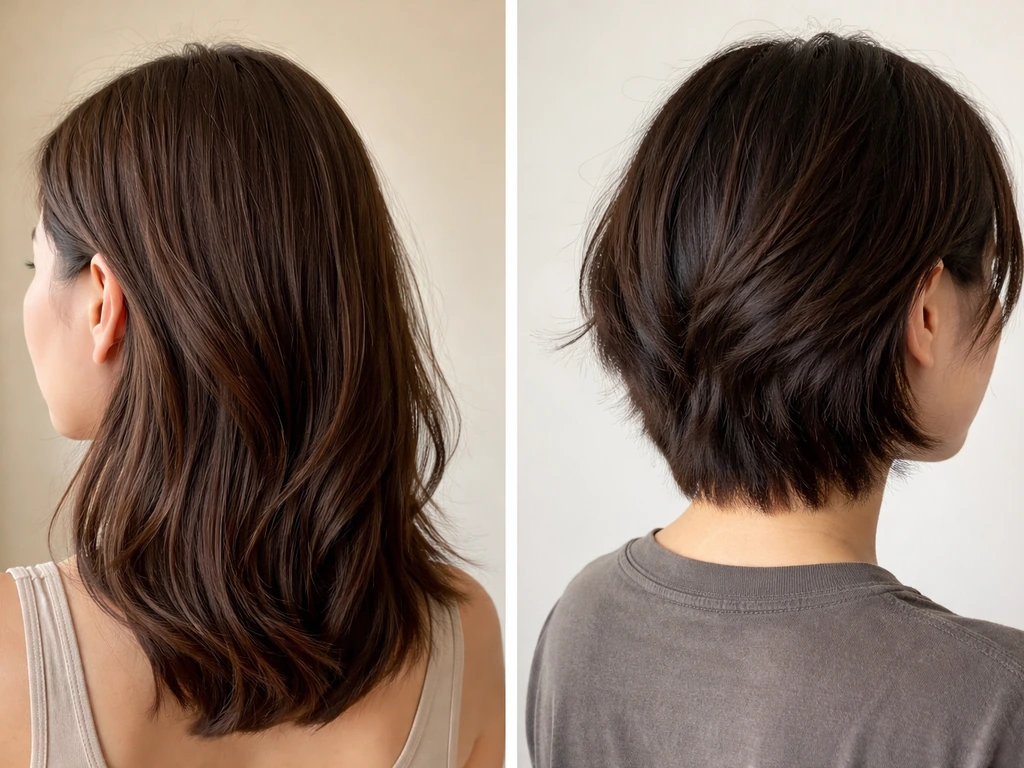
Growing your sides out works really well when you have a destination style in mind. If you're trying to blend a shaved undercut into longer layers, grow a pixie into a bob, or get enough side length to tuck behind your ear, the grow-out has a clear endpoint and the awkward stages are worth pushing through.
It also works when your hair is relatively straight or wavy, because those textures tend to lie flatter as they get longer and become easier to direct with product. Curly and coily hair behaves differently, more on that in the special cases section below.
Growing your sides out tends to backfire when you don't have enough length on top to balance what's happening on the sides. If your top is already very short and your sides start to grow past the point where they blend naturally, you end up with that classic 'helmet head' or triangular silhouette. In that case, you're better off letting the top grow in tandem with the sides, not just focusing on one area.
It also backfires when strong cowlicks or directional growth patterns are involved. If your temples naturally grow forward or your sideburns grow in a spiral, extra length can make those patterns more dramatic, not less. That doesn't mean you shouldn't grow, it means you'll need a specific approach (directional blow-drying, the right products) to manage it.
What the grow-out phase looks like (by starting length)
Hair grows about half an inch per month on average. That's the scientifically consistent number across sources, with a realistic range of roughly 0.6 to 1.5 centimeters per month depending on your age, health, and genetics. You can't meaningfully speed that up through shampoos or supplements in any dramatic way, so your main job is managing what you have at each stage.
Starting from a buzz cut or shaved sides
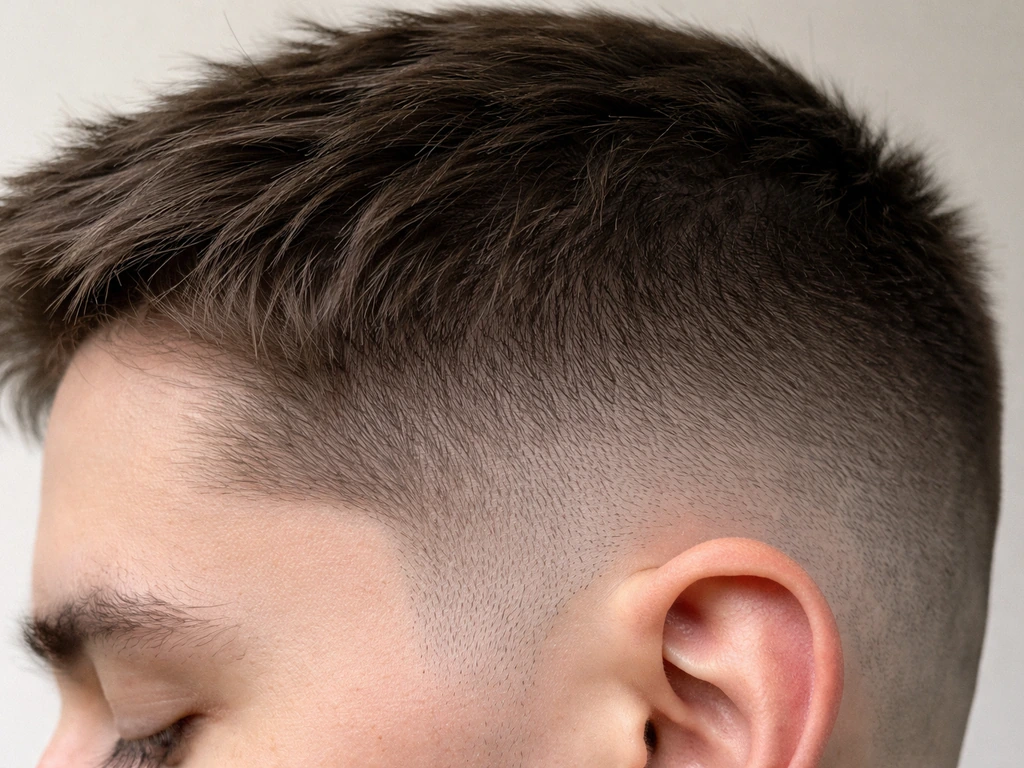
The first four weeks feel fine, everything is short and uniform. Weeks seven and eight are where it gets rough. That's when the hair is long enough to show direction and texture but too short to lie flat or style predictably. For shaved sides specifically, expect about six to eight weeks before you have enough length to even begin blending the shaved section into the surrounding hair. Plan for a solid four to six months before the sides blend naturally into a longer look.
Starting from a pixie or very short cut
The pixie grow-out has three recognizable stages: the tidy short pixie, the 'mullet-adjacent' in-between phase where the back grows faster than the sides, and then the point where everything starts to round out into a short bob shape. Sides during a pixie grow-out often hit their worst phase around months two and three, when they're long enough to flip out around the ear but not long enough to tuck. This is completely normal and it does pass.
Starting from a short bob or ear-length cut
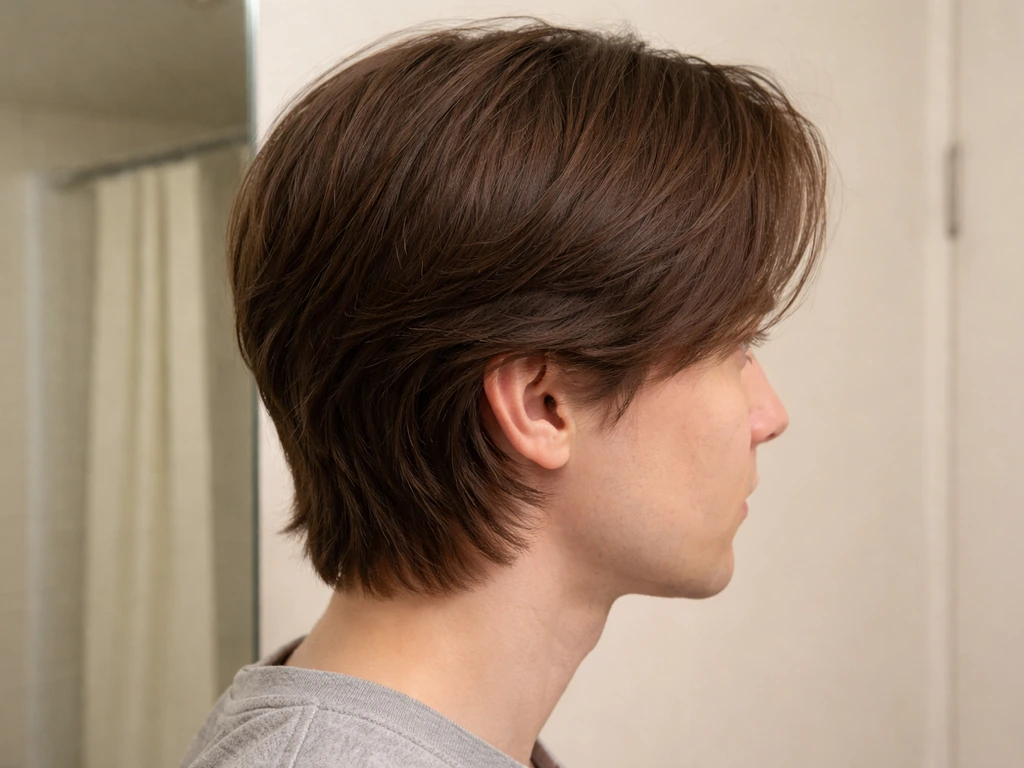
If your sides are already at ear level or just below, you're actually in a good position. One to two months of growth gets you to jaw-grazing length, which is one of the more manageable stages because you can tuck, pin, or smooth the sides much more easily. The main challenge here is the sides growing at a slightly different rate than the back, which can make the overall shape look uneven. Strategic trims to the back (not the sides) every six to eight weeks keep everything proportional.
| Starting point | Awkward phase hits | Manageable/stylable by | Full blend or goal length |
|---|---|---|---|
| Shaved / buzz cut | Weeks 7–8 | Month 3–4 | Month 5–6 |
| Pixie (1–2 inches) | Month 2–3 | Month 4 | Month 6–8 |
| Short bob / ear-length | Month 1–2 | Month 2–3 | Month 4–5 |
| Undercut (long top, shaved sides) | Weeks 6–8 | Month 3 | Month 5–7 |
How to style sides during each awkward stage
This is where most people give up, so let's be specific. The styling approach needs to change as your sides get longer, what works at one inch won't work at two inches.
When sides are very short (under 1 inch)
At this stage, your job is to keep the edges clean without taking off length. A light pomade or styling cream pressed flat against the skin controls direction and reduces the 'fuzz' look. Avoid heavy gels, which make short sides look wet and emphasize unevenness. Keep the part you do have looking intentional by choosing a consistent part line and sticking to it.
The flip-out zone (1–2 inches)
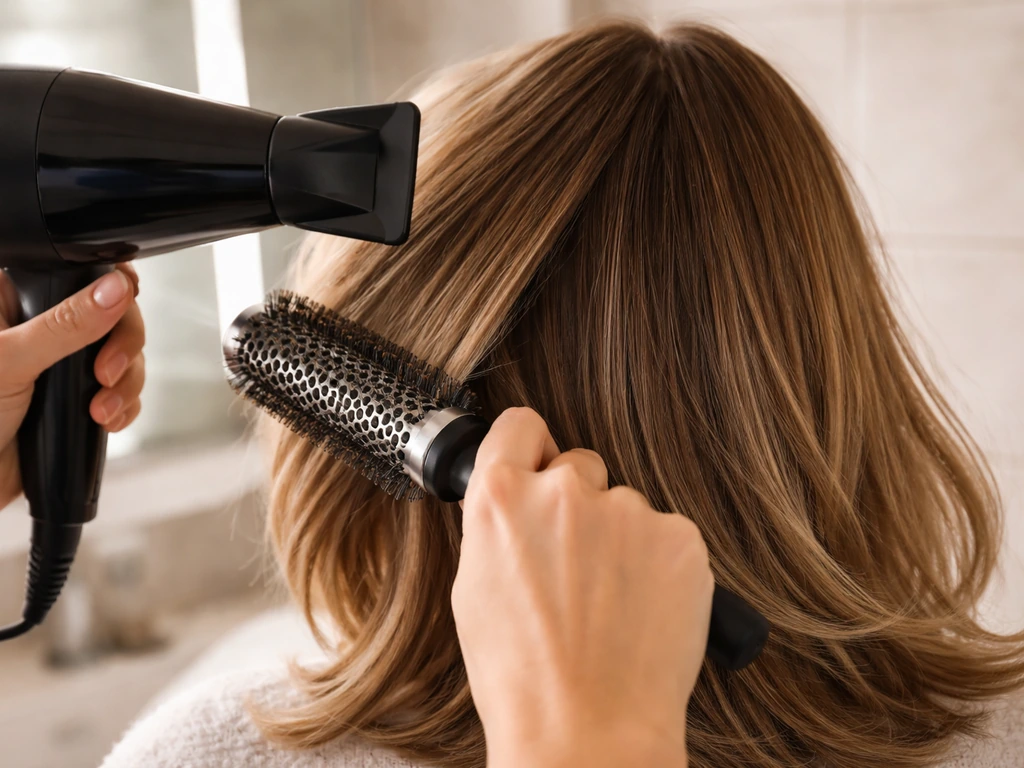
This is the stage most people can't stand. The sides are long enough to have a mind of their own but too short to weigh themselves down. The fix is directional blow-drying. If you’re specifically aiming for how to make your side hair grow down, directional blow-drying is what helps it lose that flip-out and start settling.
Rough-dry your hair to about 70–80% dry, then use a brush or comb to direct the sides downward or back (whichever direction you want them to land), and finish with a cool shot to set the shape. If you have cowlicks at the temples, blow-dry against the direction the cowlick naturally grows first, then switch to cool air to lock it in place. A medium-hold cream or smoothing serum while damp helps a lot here.
When sides reach 2–3 inches
Things start to get easier. There's enough weight for the hair to begin lying more naturally. You can introduce a round brush into your blow-dry for more control, sweeping the sides back or down depending on your style. A light mousse or volumizing spray on damp hair before blow-drying helps wave and thicker hair stay cooperative. This is also the length where tucking behind the ear first becomes viable, which instantly makes the whole look more polished during the grow-out.
Side-clips, pins, and parts as styling tools
Don't underestimate a simple change in how you part your hair during the grow-out. Shifting a center part to a deep side part can immediately give the illusion that your sides are longer and more intentional. Small clips or bobby pins at the temple area keep sides pinned back during the worst weeks, not as a permanent style but as a way to get through the day without thinking about it.
Trimming and blending strategy while you grow
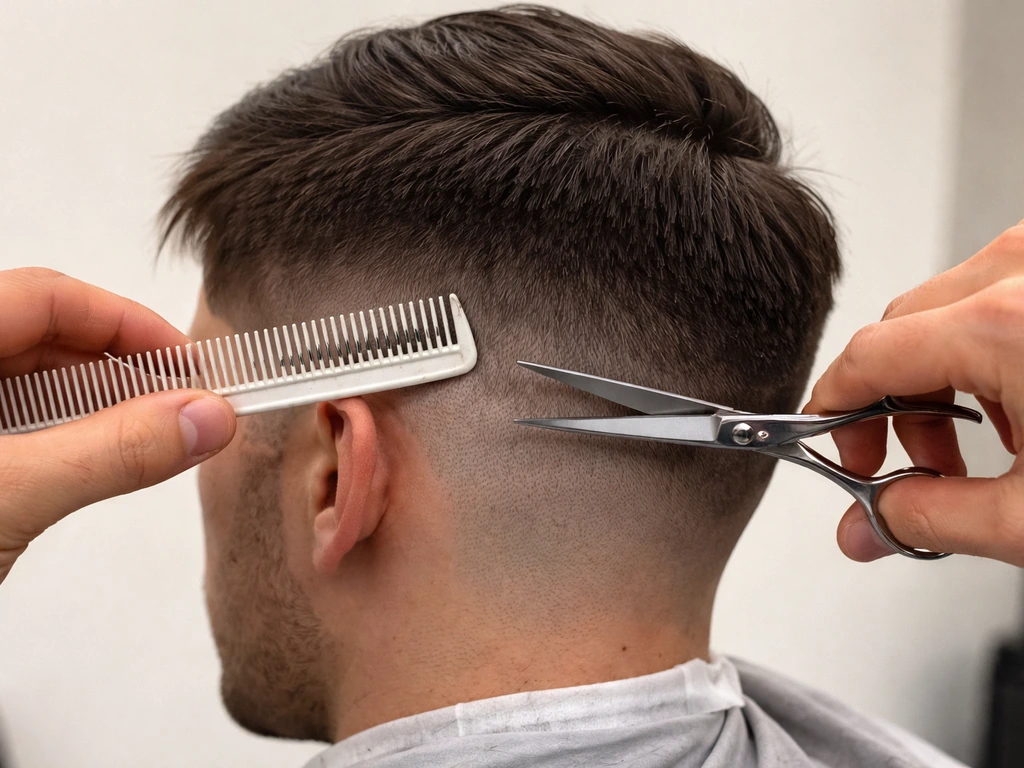
The biggest myth about growing out your sides is that you should never touch them. That's not right. The goal is to protect length while maintaining shape. Those are two different things, and you can do both at once.
Shape-ups: what they do (and don't) take off
A shape-up or line-up cleans the edges at the hairline, the temple, behind the ear, and the neckline, without touching the actual length of the sides. This keeps the grow-out looking intentional rather than neglected. If you're worried about your barber or stylist taking off more than you want, be explicit: 'I want to keep all the length, just clean up the hairline.' Most professionals know this request well.
When to ask for a blend (not a reset)
Around the two to three month mark, if you have an undercut or shaved section still trying to grow in, it's worth seeing a stylist for a scissor-over-comb blend. This technique uses shears held over a comb to gradually soften the line between short and longer hair, without cutting the longer sections back. It makes the grow-out look intentional and removes the harsh demarcation line that signals 'I'm growing something out.' It's a micro-adjustment, not a reset.
When a full reset actually makes sense
If your top and sides have grown so unevenly that the shape is genuinely off, and no amount of styling is hiding it, a partial reset to re-establish a consistent length might actually get you to your goal faster. This is frustrating advice but it's honest: sometimes cutting back slightly to create a better foundation lets you grow everything out more cleanly in the following months.
Special cases: undercuts, bangs, layers, curls/waves, and colored hair
Growing out an undercut
This is one of the longer, harder grow-outs because the length difference between shaved sides and the top can be dramatic. The key milestone is the six to eight week mark, once the shaved sections have about that much growth, there's enough hair to start blending rather than just waiting. Until then, keeping the top styled in a way that minimizes contrast (slicked down, swept to one side, or worn with texture to disguise the line) is your best move.
Some people find that keeping a subtle disconnection intentional, rather than trying to hide it, looks much better during the grow-out than awkward blending attempts too early. Growing a man bun with shaved sides follows a similar trajectory and requires patience through that same early disconnect period.
Growing out bangs alongside side growth
If your bangs and sides are growing simultaneously, the timeline matters. A full fringe can take up to six months to grow out because it needs to reach cheekbone or jaw length before it blends convincingly into the sides. Softer, curtain, or side-swept fringe styles integrate with the sides faster. While bangs are growing, directional blow-drying and a small amount of flexible-hold pomade helps train them to sweep toward the side rather than fall forward, which makes the whole silhouette look more cohesive.
Managing layers during side growth
If you have layers through the crown or the back, growing your sides out without maintaining the layers can result in a puffy, unbalanced shape. The sides grow straighter and flatter while the layered sections have more volume. Every couple of months, a light refresh of the layers, not a full haircut, just taking a tiny amount off the ends, keeps the shape proportional while your sides catch up.
Curly and wavy sides
Curly and wavy hair shrinks as it dries, which means the visible length of your sides will look shorter than it actually is at every stage. This is both frustrating and useful, frustrating because the grow-out feels slower, useful because curls naturally disguise some of the in-between awkwardness. The main risks are frizz and disrupted curl pattern, especially on the sides where hair is shorter and more prone to damage from rough drying.
Use a microfiber towel instead of terrycloth to dry your sides, it's gentler on the curl pattern and reduces frizz significantly. A light curl cream or gel scrunched in while wet and then left alone (the 'hands off' rule) gives the best results during the grow-out.
If you're managing high top dreads and growing out the sides, the same principle applies: protect the texture and let time do the work.
Colored hair and side regrowth
If your sides have been bleached, highlighted, or dyed a very different color from your natural root, growing them out creates a visible contrast line that moves down the hair shaft over time. The most manageable approach is to either go for a root smudge or shadow root technique at a salon (which softens the line rather than removing it) or to gradually lower the lightness of each touch-up so the transition becomes more gradual. Trying to match your natural root color precisely with box dye on grown-out sides almost always looks worse, the lighting and processing difference between the natural and previously-colored sections is hard to match exactly. A colorist's guidance every few months here is genuinely worth the investment.
Your decision right now: a simple framework
Here's how to make the call today. Answer these three things honestly: What is my current side length? What style am I actually trying to reach? And am I willing to do a small amount of daily styling (five minutes of blow-drying or product application) through the awkward months?
If you answered that your sides are shaved or very short, your goal style needs more length, and you can handle a basic styling routine, grow them. Book a shape-up every four to six weeks to keep the hairline clean, get a scissor-over-comb blend at the two to three month mark, and use directional blow-drying to manage the flip-out zone. GQ also recommends getting help from a professional barber to manage the awkward in-between stage when you grow out a buzz cut and to keep certain areas looking fresh so the transition doesn’t look worse Book a shape-up every four to six weeks. You'll be in a workable place by month four.
If your sides are already in the one to two inch range and you're just dealing with flipping or puffing, don't cut. You're in the hardest week and you're almost through it. A medium-hold cream, a good blow-dry technique, and another three to four weeks will change the situation completely.
If your top is very short and your sides are growing disproportionately, consider letting the top grow at the same pace and getting a shape-up only, no length reduction, until everything catches up. The sides growing out of proportion to the top is what creates the 'growing out' look that people want to avoid. Growing everything in balance is the answer.
- Identify your starting point (shaved, pixie-length, short bob, or undercut) and set a realistic timeline using the half-inch-per-month rule.
- Book a shape-up or line-up — not a cut — every four to six weeks to keep the grow-out looking intentional.
- Start a directional blow-dry routine now, before the awkward phase peaks, so it's already a habit when you need it most.
- At the two to three month mark, see a stylist for a scissor-over-comb blend if you have a visible length disconnect.
- Choose one styling product for your hair type (smoothing cream for straight/wavy, curl cream for curly) and use it consistently on damp hair.
- Reassess every six to eight weeks. If the shape is genuinely off-balance, a small strategic trim is better than waiting it out in a silhouette you hate.
FAQ
How do I know if my “side problem” is length or a cowlick, and which should I do first?
Test it on damp hair. If the sides lay flatter after you redirect them with blow-drying, it’s mostly about styling as the length increases. If they spring back in the same spot even when fully dry, treat it as a cowlick issue, blow-dry against the cowlick direction first, then finish with cool air (don’t jump to trimming the same week).
Should I shave or taper my sides instead of growing them out?
If your goal is a blended, longer look, shaving the sides again usually restarts the awkward window. A better alternative is a clean shape-up or careful edge cleanup, and only request a scissor-over-comb blend around the 2 to 3 month mark when there is enough new growth to actually blend without cutting the longer hair back.
What product should I use if my sides look greasy or overly shiny during the grow-out?
Use a small amount of light pomade or cream and apply it only to the outer layer where the flips happen. If shine is excessive, switch to a lighter cream or use less product and press it flat with your hands or a comb, then avoid heavy gels that make short sides look wet.
Can I use a straightener or curling iron on the sides to speed up the process?
You can, but it can cause heat damage and make sides feel rough or frizzier sooner, especially on shorter lengths. If you do use heat, keep it low, use heat protectant, and prefer directional blow-drying first since it sets direction with less repeated passes.
How often should I go back to my stylist while growing out the sides?
Plan for an edge-focused shape-up every 4 to 6 weeks to keep the hairline and temple area tidy without losing length. If you have a shaved or undercut section, schedule the scissor-over-comb blend around 2 to 3 months, when enough growth exists to soften the line.
What if the top is already long but my sides are not catching up?
Don’t rely on styling to force a blend if the lengths are too mismatched. Consider letting the top grow in tandem with the sides for a few weeks and keep the top styled to minimize contrast (swept, slicked, or textured). If the silhouette stays triangular, it’s often a timing issue, not a styling failure.
How should I change my part during the grow-out if my sides keep flipping?
Try a deep side part or shift the part line gradually (in small steps) so more hair lands toward your preferred direction. Use small bobby pins at the temple during the hardest weeks to hold the direction while you’re between lengths, then remove them when the sides start to weigh down.
I have curly hair, and my sides look shorter than my top. Is that normal?
Yes. Curly and wavy hair visually shrinks as it dries, so the sides can look behind even when they’re growing normally. Protect the curl pattern by drying with a microfiber towel, scrunching in a light curl product while wet, and avoiding aggressive rubbing that can disrupt the curl formation on the sides.
What should I do if my dyed or bleached sides show a harsh color line as they grow?
Instead of trying to match the root precisely with repeated at-home dye, ask for a root smudge or shadow root to soften the transition. If you do touch-ups, gradually lower the lightness over time so the contrast moves down the hair shaft without a sudden boundary.
At what point should I stop “waiting it out” and consider a partial reset?
If, after consistent styling for a few weeks, your shape cannot be made proportional and the imbalance is clearly structural (top and sides growing in a way you cannot blend convincingly), a partial reset might be faster. This is usually the case when the length difference is so far off that styling cannot bridge it.