
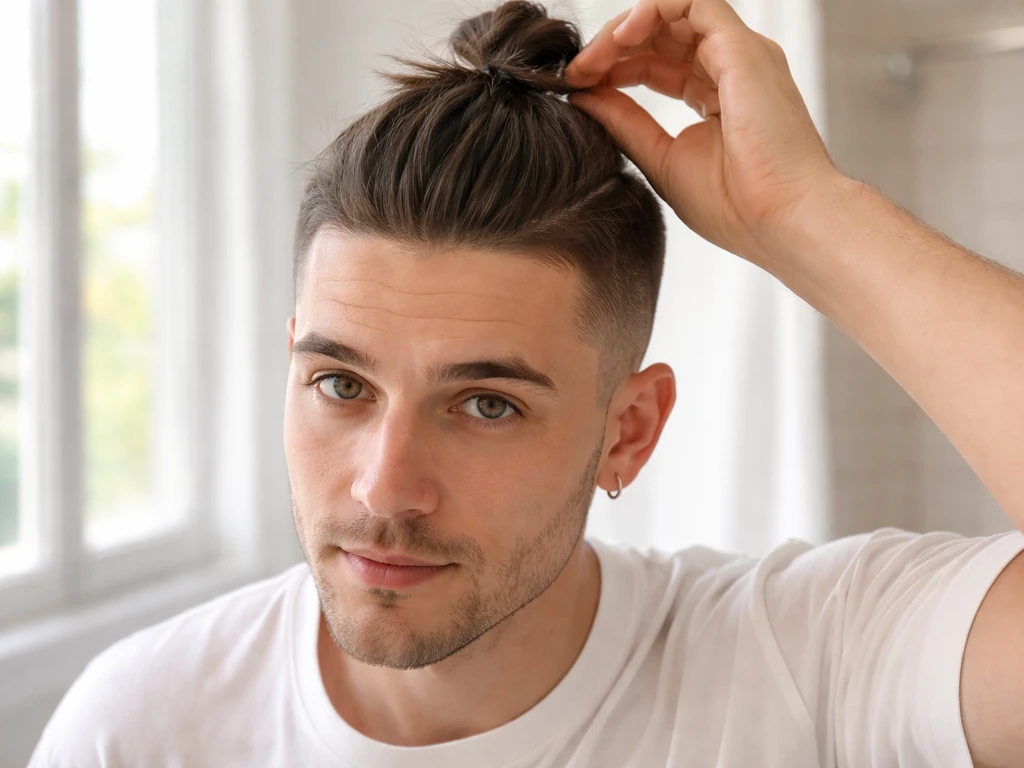
To grow a man bun with shaved sides, you need roughly 6 to 8 inches (15 to 20 cm) of length on top to tie a small bun, and closer to 8 to 12 inches for a fuller one depending on your hair thickness. Starting from a short crop or undercut, that takes most people around 12 to 18 months of consistent growth. The shaved sides stay short throughout the whole process, which means you're really only growing out the top section, and your main jobs are protecting that top hair from breakage, keeping the sides clean and intentional-looking, and surviving the awkward in-between stages where your hair is too short to tie but too long to ignore.
How to Grow a Man Bun With Shaved Sides: Step-by-Step

Marcus Vickers
20 Jun 2026

Decide your starting point and target length
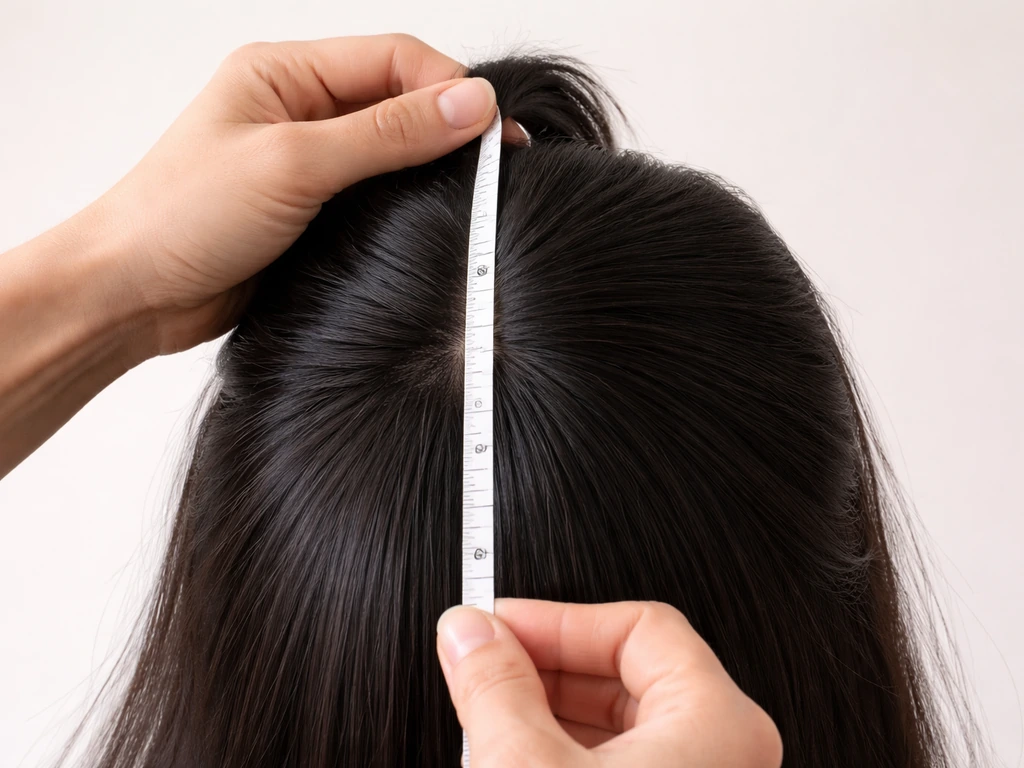
Before anything else, measure what you're actually working with. Part your hair and use a ruler or tape measure from the scalp to the tip of your longest section on top. If you're at a buzz cut or short crop (under an inch), you're starting from scratch. If you've already got 2 to 3 inches on top, you're probably in the early-to-mid awkward stage. Knowing your exact length helps you estimate a realistic timeline instead of guessing.
Your target depends on your hair type and what kind of bun you want. A small, tight mini-bun needs at least 6 inches of actual hair length. A fuller bun that sits confidently on the back of your head needs closer to 8 inches. If your hair is fine or thin, plan for 10 to 12 inches because thinner strands don't bulk up enough to stay secured at shorter lengths. Thicker, coarser hair can often pull off a decent bun closer to the 6 to 7 inch mark. Set your goal length now so you have something concrete to track.
One thing worth deciding early: how shaved do you want the sides to stay? A hard-line undercut with a zero fade looks sharp but requires barber visits every 2 to 3 weeks to stay crisp. A skin fade or tapered undercut gives you more flexibility and blends a little more gracefully between visits. Neither is wrong, but the harder the shave line, the more maintenance you're committing to. Make that call now so your barber knows exactly what you're working toward.
Keep the shaved sides sharp: maintenance plan
The shaved sides are what make this look work. If they grow out and go unattended, the whole style starts to look accidental instead of intentional. The sides lose their clean contrast within roughly 2 to 3 weeks as new growth comes in, so you need a consistent maintenance plan from day one. For buzz-cut grow-outs, GQ notes that keeping the sides in shape typically means regular barber maintenance trims rather than waiting until the entire top is long.
Book a barber appointment every 2 to 3 weeks specifically to maintain the sides and back while leaving the top completely untouched. This is a short, focused appointment, not a full haircut. Tell your barber clearly: "I'm growing the top out for a bun, don't touch the top, just clean up the sides and back." Some barbers will automatically reach for the top out of habit, so be explicit. If you're nervous about miscommunication, show a photo of what you want the sides to look like and point to where the line should sit.
At-home touch-ups between appointments are worth considering if you have access to clippers. A quick pass with a guard zero or one over the sides every 10 to 14 days can keep things tidy between barber visits and saves money. Just be conservative with the clippers around the blending zone where the sides meet the top, because a mistake there is hard to fix without taking length off the top.
As the top gets longer, you'll have a decision to make about the transition zone. A hard, disconnected undercut (where the longer top just sits directly above a shaved side with no blending) looks great once the top is long enough to be tied up and out of the way. But during the awkward phase when the top is 3 to 5 inches, that hard line can look a little jarring. Asking your barber for a subtle taper or blend at the transition point can make those in-between months more manageable without sacrificing the shaved-sides look.
Top hair growth routine to minimize breakage
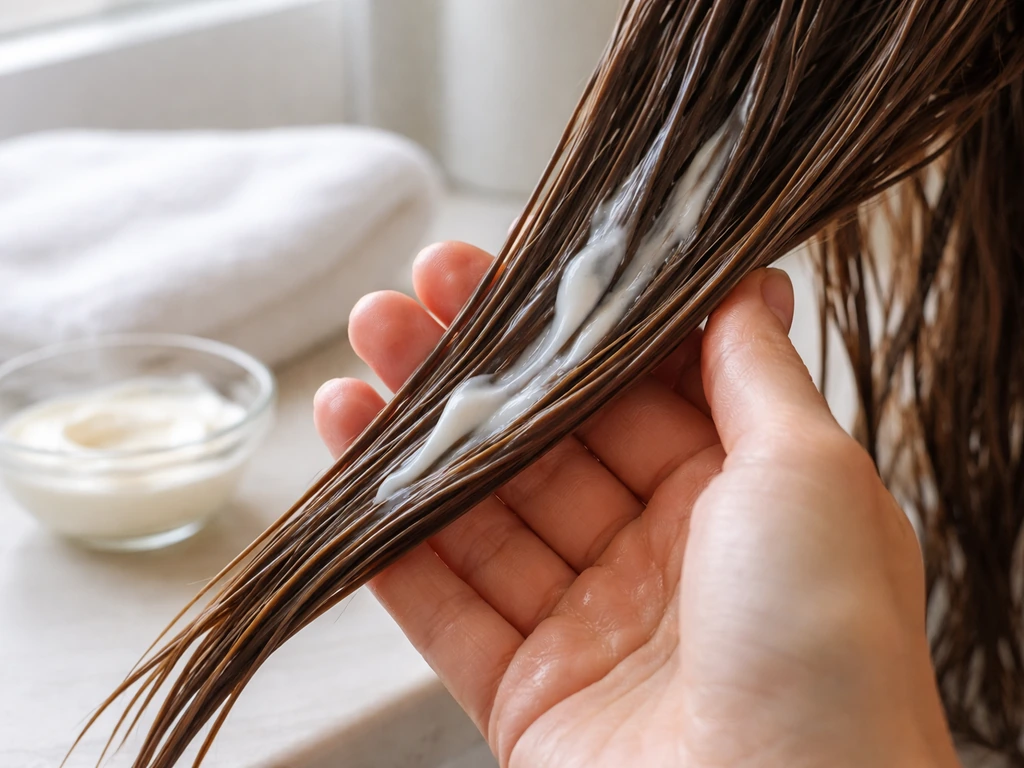
Hair grows about 2 to 3 mm per week on average, which is roughly half an inch per month. You can't make it grow meaningfully faster, but you can absolutely slow it down through damage and breakage. The whole point of a growth routine is to protect what's already growing out of your head. Here's what actually makes a difference.
Washing
Wash your hair based on your hair type, not by a fixed schedule. Daily washing strips natural oils from the scalp and shaft, which leads to dryness and breakage over time. If your scalp is oily, every other day is usually fine. If your hair is dry or coarse, 2 to 3 times per week is enough. Use a moisturizing or hydrating shampoo, not a clarifying formula for everyday use. Save clarifying shampoos for once a month to remove product buildup.
Conditioning
Conditioner is non-negotiable. Every wash should be followed by a conditioner applied from mid-shaft to ends, left on for 2 to 3 minutes before rinsing. Once your hair reaches 3 to 4 inches, add a leave-in conditioner or a few drops of hair oil (argan or jojoba both work well) applied to damp hair after washing. This keeps the ends from drying out and makes detangling significantly easier.
Detangling and combing
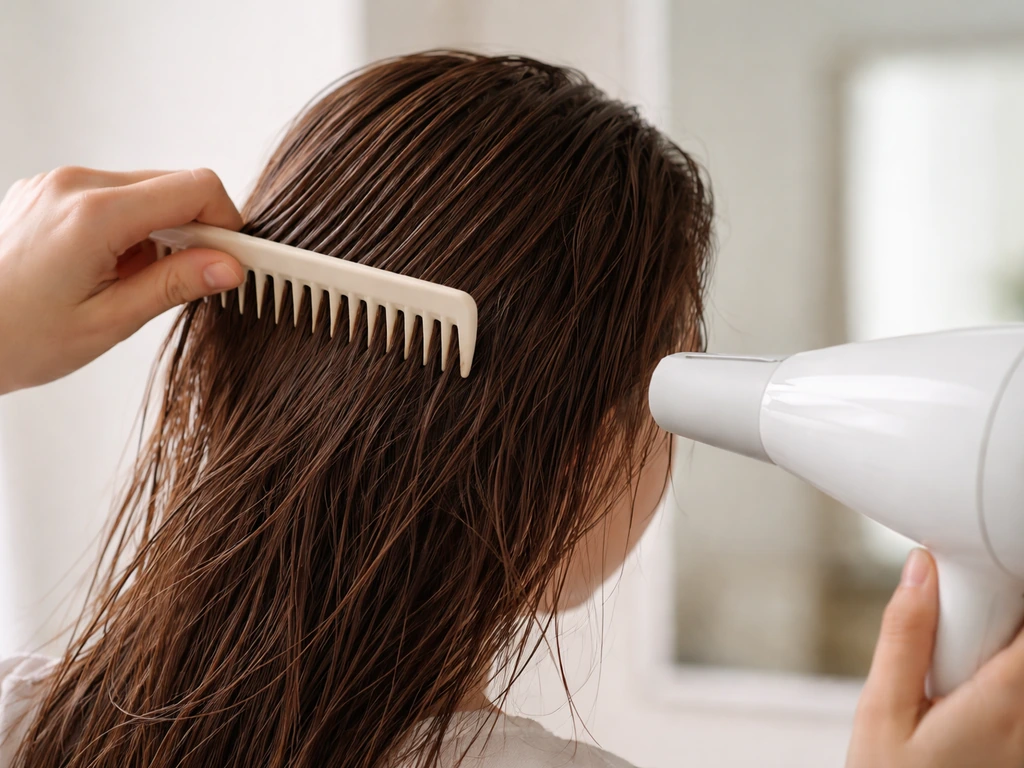
Use a wide-tooth comb to detangle, and always start from the ends working upward toward the roots. Never yank a comb through from root to tip on tangled hair. Detangle while there's still conditioner in your hair in the shower, which makes the process much gentler. The AAD specifically recommends wide-tooth combs and working from the ends up to reduce breakage. If you have textured or curly hair on top, detangle while wet rather than dry to cut down on snapping.
Heat and styling products
Minimize heat styling as much as possible. If you use a blow dryer, keep it on the lowest heat setting and keep it moving rather than holding it in one spot. Hair ties with metal clasps, elastic bands, or tight rubber bands all cause breakage at the point where they grip the hair. Switch to fabric-covered elastics or spiral hair coils once your hair is long enough to tie. Avoid tying the same section of hair in exactly the same spot every day, which creates a wear point that snaps over time.
Scalp care
A healthy scalp means healthier growth. Gently massage your scalp while shampooing to stimulate circulation. If you notice itching, flaking, or scaly patches, that's likely dandruff or mild seborrheic dermatitis. An anti-dandruff shampoo used 2 to 3 times per week usually clears this up. Look for active ingredients like selenium sulfide, zinc pyrithione, or ketoconazole. If things don't improve after 4 to 6 weeks of consistent anti-dandruff shampoo use, it's worth seeing a dermatologist rather than pushing through.
Awkward-stage timelines: how it grows until bun-ready
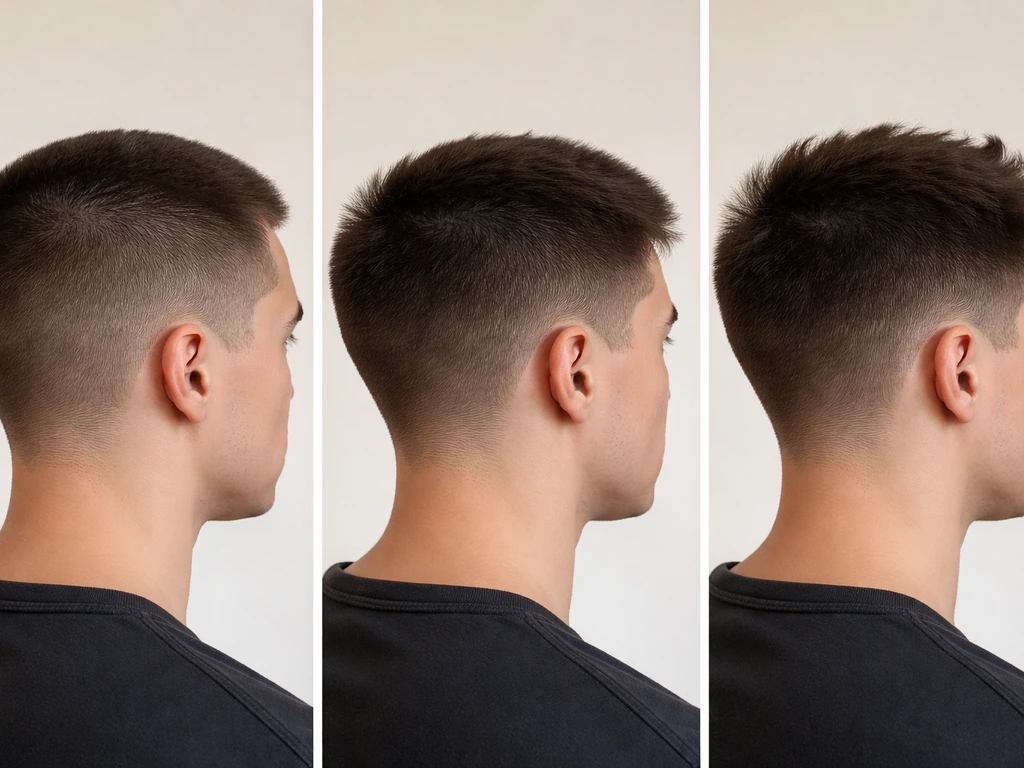
Here's the honest, stage-by-stage breakdown of what to expect. These timelines assume average growth of about half an inch per month and a starting point of a very short crop or buzz on top (under 1 inch). Adjust backward if you're already partway there.
| Stage | Approx. Top Length | Timeline from Buzz | What It Looks Like |
|---|---|---|---|
| Very short crop | 0.5–1 inch | Weeks 1–6 | Still looks like a short cut; sides are clearly shaved, top is barely there |
| Early growth | 1–2 inches | Months 2–4 | Top starts to show texture; hair lies flat or sticks up; can't style it much yet |
| The awkward phase | 2–4 inches | Months 4–8 | Too long to look neat on its own, too short to tie; this is the hardest stretch |
| Pre-bun territory | 4–6 inches | Months 8–12 | Can start doing half-up styles, small clips, and mini-ponytails |
| Mini-bun ready | 6–8 inches | Months 12–16 | Small bun is achievable; looks intentional for the first time |
| Full bun ready | 8–12 inches | Months 16–24 | Fuller, more secure bun with enough length to style confidently |
The awkward phase between 2 and 4 inches is genuinely the hardest part. Your top hair is long enough to get in your face and look messy, but not long enough to tie back. Most people who quit during a grow-out do it right here. The key is having a styling strategy for each sub-stage rather than just waiting it out with no plan.
One thing worth knowing: uneven growth is extremely common. Reddit users in r/Hair report that uneven front versus back lengths can stop the hair from reaching the bun, making the style fall forward into the face uneven growth is extremely common.
The hair at the front of your head and along the hairline often grows slower than the crown and back, so you may reach 4 inches at the crown while the front sections are still only 2 to 3 inches. This is what causes the frustrating problem where you can nearly tie a bun but the shorter front pieces fall out and hang in your face.
If you want your side hair to grow down rather than stay lifted, treat those sections the same way you would the top: minimize breakage, condition often, and protect the strands while they lengthen front sections. Plan for this by being patient with the front sections specifically, and resist trimming them to "even out" because that just sets back the whole timeline.
How to style it at each length: half-up to mini-bun
Styling during the grow-out isn't just about looking good day-to-day. It's about keeping you committed to the process when the hair is in an annoying middle stage. Here's what actually works at each length.
1 to 2 inches: embrace texture and product
At this length there's not much to do styling-wise, but a small amount of matte clay or paste worked through with your fingers can add texture and make the growth look deliberate rather than neglected. Keep the sides freshly maintained so the contrast between the shaved sides and the growing top reads as an intentional undercut, not a grow-out in progress.
2 to 4 inches: slick it back and use accessories
This is the trickiest length. A light pomade or gel slicked straight back can tame this stage reasonably well. Headbands are underrated here: a simple fabric or elastic headband pushed back from the hairline keeps the hair controlled and looks intentional. Bobby pins and small clips to pin back the sides of the top away from your face are also legitimately useful. Don't be too proud to use them. They work.
4 to 6 inches: half-up styles and early ponytails
At 4 inches you can start doing a proper half-up: gather just the top section (crown and a bit behind) and tie it loosely with a fabric elastic. It won't hold everything, but it gets the hair off your face. A small ponytail becomes possible around 5 to 6 inches for thicker hair. These styles look great with shaved sides because the contrast between the clean sides and the gathered top is exactly the aesthetic you're going for.
6 to 8 inches: mini-bun time
Once you hit 6 inches, a small bun is achievable, especially if your hair is medium to thick. Gather everything on top, pull it into a low ponytail at the back of your crown, twist the length around the base, and secure with a second elastic. The bun won't be massive, but it'll be real.
If the front pieces are still short, a small amount of pomade worked through those sections and slicked back toward the bun keeps them from falling out. This is the payoff moment you've been working toward. Once your top is long enough, you can also follow tips for how to grow out the sides for a more balanced male hairstyle as your bun develops how to grow out the sides of hair male.
Transition strategies and blending with shaved sides
The visual relationship between your growing top and the shaved sides changes as your hair gets longer. Managing that transition well is what keeps the look stylish rather than unkempt throughout the entire grow-out.
During the early stages (months 1 through 6), the hard contrast between shaved sides and short top can look a little stark if the top isn't long enough to comb cleanly. You have two options: keep a very precise, hard undercut line and style the top neatly with product, or ask your barber to soften the transition with a subtle taper that blends the shaved sides into the growing top. The taper approach tends to be more forgiving during the 2 to 4 inch stage.
Once the top reaches 5 or more inches, most people switch back to a harder, more disconnected undercut line. At that length the top can be swept back or tied up cleanly, and the contrast between the long top and shaved sides starts to look exactly like the style you're aiming for. You can tell your barber at that point to sharpen the line back up and stop tapering.
If you're deciding whether to grow the sides out at all at some point (maybe as part of a transition to a different style), that's a separate decision worth thinking through separately. But for the man bun with shaved sides look, keeping the sides short and maintaining that contrast throughout the grow-out is generally the right move. The shaved sides are functional too: they make the top section look longer and more dramatic than it actually is, which helps the bun read as more intentional even when it's still fairly small.
Troubleshooting: slow growth, uneven lengths, tangles, breakage, and scalp issues
Even with a solid routine, things come up. Here's how to handle the most common problems.
Hair seems to be growing slowly
Hair genuinely does grow at different rates for different people. The baseline of half an inch per month is an average, not a guarantee. If you feel like growth has stalled, check first whether breakage is the real issue: if your hair is snapping off at a similar rate to how fast it's growing, the length stays flat even though growth is happening. Tightening up your routine (gentler detangling, ditching metal elastics, reducing heat) usually solves this faster than any supplement. Shedding 50 to 100 hairs per day is completely normal, so don't panic when you see hair in the shower drain.
Uneven growth between front and back
Front sections lagging behind the crown and back is one of the most commonly reported frustrations during a man bun grow-out. The fix is simply patience: do not trim the back to match the front. Keep gathering everything into the bun style as best you can, use a bit of product on the shorter front pieces to slick them back, and let the front catch up on its own timeline. It will.
Tangles and knots
Tangles become more common as the top passes 3 to 4 inches. The solution is preventive: condition every wash, use a leave-in conditioner on damp hair after washing, and detangle with a wide-tooth comb before the hair fully dries. If you wake up with knots, dampen the hair slightly with a spray bottle of water before combing instead of fighting through them dry.
Breakage around the hairline and tie points
Breakage from tight hair ties is probably the single most common reason a man bun grow-out takes longer than it should. If you're seeing short, wispy hairs around your hairline or a ring of shorter hair where your elastic sits, those are breakage points. Switch to softer elastics, vary where you place the tie, and don't sleep with hair tied tightly. Satin pillowcases also reduce friction breakage overnight.
Cowlicks and resistant sections
Cowlicks won't disappear, but they become much more manageable once the hair is heavy enough (usually around 4 to 5 inches) to weigh down and cooperate. In the early stages, applying a light pomade or gel to a cowlick while the hair is damp and then directing it with your hand in the direction you want can train it somewhat. Heat (even from a blow dryer on low) while directing the hair helps too.
Itchy scalp and dandruff
Dandruff is common and treatable. The flaking and itching are caused by scalp conditions like seborrheic dermatitis, and over-the-counter anti-dandruff shampoos with selenium sulfide, zinc pyrithione, or ketoconazole address the underlying cause directly. Use one 2 to 3 times per week for at least 4 to 6 weeks before judging whether it's working. If the itching spreads to the hairline, eyebrows, or behind the ears, or if it doesn't respond to OTC shampoos after 6 weeks, see a dermatologist. Untreated scalp irritation can contribute to temporary shedding, so this is worth taking seriously rather than ignoring.
One side growing noticeably slower
If one side of the top is consistently shorter than the other, the most likely cause is mechanical: sleeping on that side, more tension or elastic pressure on that side, or a habit of brushing one side more aggressively. Identify the cause and address it. Sleeping on a satin pillowcase and varying your sleep position helps. If the difference is dramatic and persists without an obvious mechanical reason, it's worth mentioning to a doctor to rule out any scalp or health-related cause.
FAQ
Can I grow a man bun with shaved sides from longer hair instead of a buzz cut or short crop?
Yes. If you already have 2 to 3 inches on top, you can usually accelerate the timeline by focusing on breakage control and keeping the sides maintained. The key is to avoid trimming the top to “even” it too early, because uneven growth is normal and often corrects itself as the front catches up.
How low should the bun sit to avoid looking like a messy top-knot?
Aim for a low placement at the back of the crown once you have enough length to gather everything. If the bun is too high while your top is still short, the elastic will sit at awkward angles and create extra tension, which leads to breakage and a weaker hold.
What’s the best way to tie it if my hair is just barely long enough to wrap?
Use a two-step hold: first secure a loose base ponytail with a fabric elastic, then wrap and secure with a second elastic or a couple of bobby pins. This reduces pulling on the shorter strands. Also, avoid aggressive slicking back, since that increases tension at the front hairline.
How often should I wash once I start wearing the bun more frequently?
Wash based on scalp needs, but when hair is tied up often, you may need slightly more frequent washing to prevent buildup in the bun area. If your scalp gets oily, every other day is often workable, but if you notice flakes or itching, switch to an anti-dandruff shampoo for those washes rather than skipping washing.
Should I use oil on my scalp or just on the ends?
Keep oil primarily on damp lengths after washing, mid-shaft to ends. Oils on the scalp can worsen certain dandruff cases for some people. If you are using an anti-dandruff shampoo, apply it to the scalp and rinse thoroughly, then use leave-in or light oil only on the hair.
What if my bun keeps slipping or the hair won’t hold through the day?
Try lowering the bun and using a lighter product at the crown (matte paste or a small amount of gel/pomade) before tying. Slipping often comes from either insufficient tension control or the elastic being placed over shorter, break-prone front pieces. If you have to re-tighten frequently, that’s a sign you need more length or a softer elastic.
Is a skin fade or a hard undercut better for the grow-out phase?
A tapered or blended transition is usually more forgiving when your top is 2 to 4 inches, because it reduces the stark line while you cannot tie yet. A hard line can look sharp, but it tends to emphasize the awkwardness, so you may need more precise styling and stricter maintenance of the sides.
Can I use clippers at home to maintain the shaved sides without ruining the look?
Yes, but stay conservative near where the sides meet the top. Use a guard you can repeat consistently (like a zero or one on the sides) and avoid trying to create blending lines unless you are confident, because mistakes there often require cutting into the top to fix. When in doubt, do a light tidy pass only between barber visits.
Should I trim the front pieces to help them catch up?
Generally no. Trimming to “even it out” usually delays the bun timeline. Instead, protect the front from breakage, use conditioner and gentle detangling, and slick or pin the shorter front pieces back during the awkward stage until length catches up naturally.
How can I reduce breakage from sleeping, especially when my bun is tied at night?
Don’t sleep with a tight bun if you can avoid it. Use a satin or silk pillowcase and consider a loose, low loose tie or a light braid instead. If you keep the sides short, also make sure the bun elastic is not scraping the same spot at the hairline every night.
What should I do if I get dandruff on top hair during the grow-out?
Treat it promptly with an anti-dandruff shampoo on the scalp 2 to 3 times per week for at least 4 to 6 weeks, and keep conditioner off the scalp. If itching spreads beyond the scalp (hairline, eyebrows, behind ears) or you see no improvement after the full trial window, see a dermatologist to rule out more persistent seborrheic dermatitis.
My sides look grown out even though I’m booking the barber. How do I keep the contrast?
Ask for a clear maintenance target and show the line you want. Also, avoid DIY clippers on the blending zone too aggressively, since that can blur the contrast. Finally, keep the sides moisturized lightly if they feel dry, because a brittle look can make regrowth appear more noticeable.
What signs mean my hair growth is stalling due to breakage rather than slow growth?
If you see new short pieces or wispy regrowth at the hairline and around the elastic area, length is likely being lost to breakage. Track the same reference area each week, and tighten your routine first (softer elastics, gentler detangling, less heat) before spending money on supplements.