
Growing out the sides of your hair takes roughly 3 to 6 months depending on how short they are right now and how long you want them. Hair grows about 1 cm per month on average, so if your sides are currently a tight fade or clipper-short and you want them level with a medium-length top, you're looking at a 4 to 6 month commitment. The good news is you don't have to look messy the whole time. With the right trim plan, a couple of styling products, and realistic expectations about what each month will look like, you can manage this transition without panicking at the mirror every morning.
How to Grow Out Sides of Hair for Men Step by Step

Marcus Vickers
25 Apr 2026

Figure out where you're starting and where you want to end up
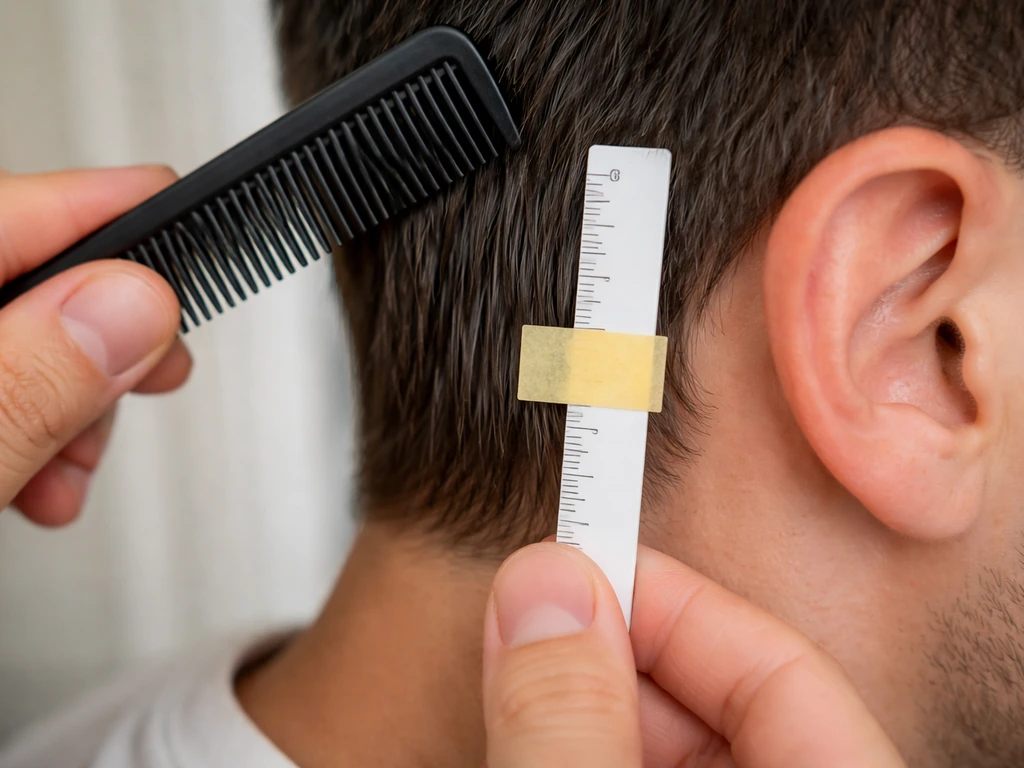
Before you do anything else, you need to know two things: how short your sides are right now, and what "grown out" actually looks like for your specific goal. Those are very different situations depending on whether you're coming from a skin fade, a number 2 all over, or a tapered undercut with 3 or 4 inches on top already.
Here's a simple way to assess your starting point. Run a comb through the sides and measure the longest hair at the widest point. Less than half an inch means you're early in the process. Half an inch to 1.5 inches is the classic "wedge phase" where the sides look puffy and shapeless. Anything above 1.5 inches and you're already in the blending stage, where the goal shifts to matching density and texture rather than raw length.
Your coverage goal matters too. Are you trying to grow the sides to match a longer top for a uniform medium-length cut? Trying to get enough length to pull everything back into a man bun? Or just softening an undercut so the contrast isn't so sharp?
Each goal has a different endpoint and a different timeline, so it's worth being honest with yourself before you start. If you're eventually aiming for a man bun with shaved sides, the approach to growing those sides out is actually its own whole challenge, and the strategy changes significantly once you're past the 3-inch mark.
Once those sides are long enough, you can start shaping them so the finished look supports the man bun without losing the shaved-sides contrast man bun with shaved sides.
| Starting side length | Approximate monthly growth | Time to 3 inches of side coverage |
|---|---|---|
| Skin fade / under 1/4 inch | ~1 cm (0.4 in) per month | Around 7–8 months |
| Number 1–2 clipper (1/4–3/8 inch) | ~1 cm per month | Around 5–6 months |
| Number 3–4 clipper (3/8–1/2 inch) | ~1 cm per month | Around 4–5 months |
| Already 1–1.5 inches | ~1 cm per month | Around 2–3 months more |
A realistic week-by-week grow-out plan for the sides
The most important thing to understand upfront: growing out the sides is not passive. If you just stop going to the barber and let everything go, you'll hit an awkward wedge shape around weeks 4 to 8 that will make you want to shave it all back down. The plan below keeps you looking intentional at every stage while still making real progress.
Weeks 1 to 3: Do almost nothing
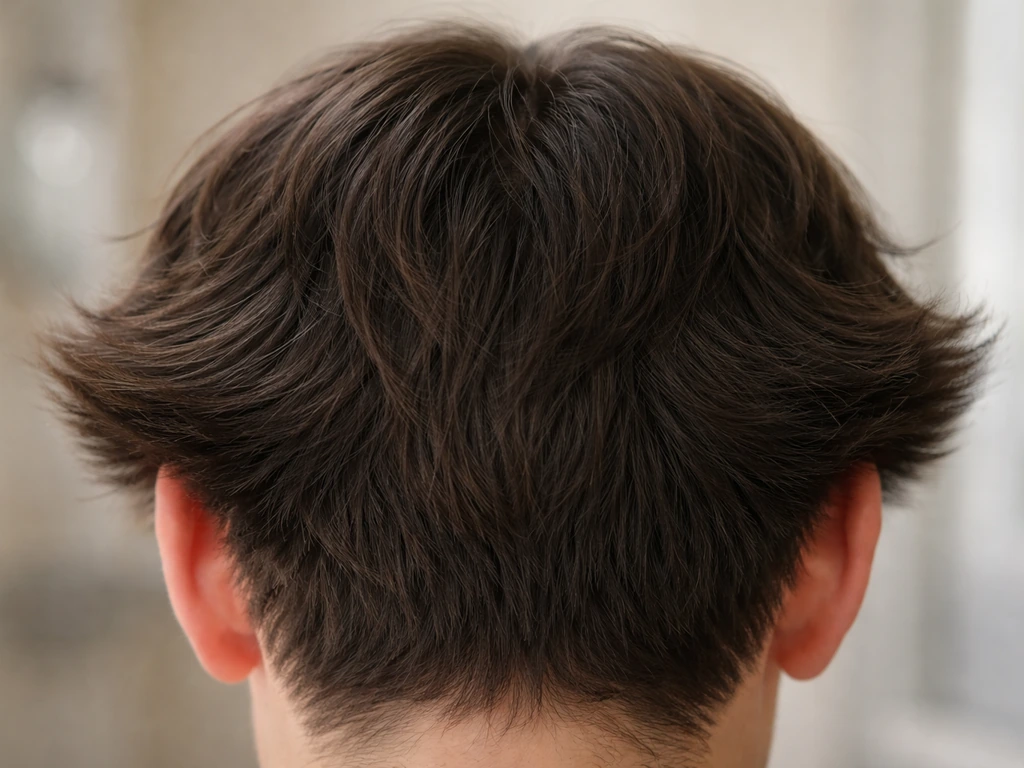
In the first few weeks, hair grows evenly and nothing looks obviously wrong yet. This is actually a trap because people often over-trim at this stage and lose progress. Keep going to your barber if you want, but be very specific: tell them you're growing the sides out and to touch only the neckline and temple corners for now. No clipper work on the sides themselves. Use a light cream or matte paste to keep things laying flat while the sides are still short enough to need minimal product.
Weeks 4 to 8: The puffy wedge phase begins
This is where most guys bail. The sides start to flare outward and lose the clean line of the original cut, but they're not long enough yet to lay down naturally. Resist the urge to clip them back. Instead, ask your barber to do a very light exterior tidy using clipper-over-comb technique only on the outermost perimeter to remove any bushy or jagged hairs, without taking actual length. Think of it as shaping the edges of a shape that's still forming. A good barber can make this look intentional. At home, start using a medium-hold clay most mornings to push the sides down and in toward the head.
Weeks 9 to 16: The blend starts to appear
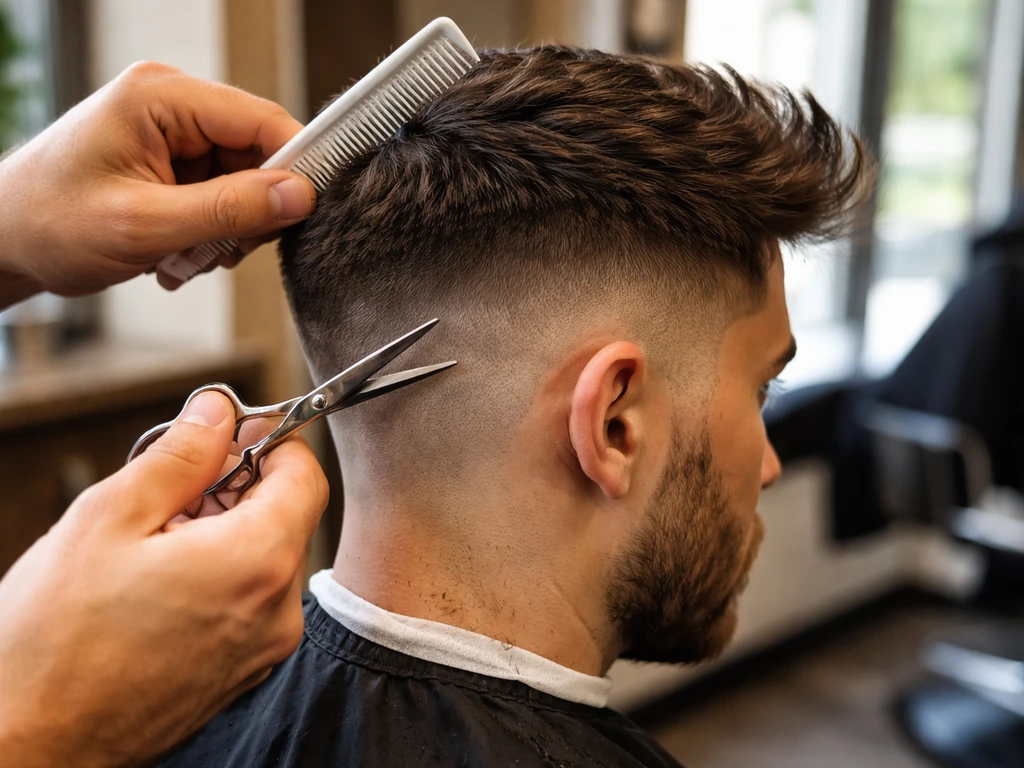
By month 3 or so, you'll have roughly an inch to an inch and a half on the sides. This is when the real blending work begins. Barber visits every 5 to 6 weeks are ideal here, with the goal of softening any harsh line between the sides and top, not shortening the sides. A soft taper (not a fade) at the temple and around the ear keeps the grow-out looking deliberate. At home, side parts become your best friend because they give the hair a direction to fall rather than sitting out awkwardly from the head.
Months 4 to 6: Length reaches the blending zone
This is the payoff stage. [By month 4, most guys with a typical 1 cm/month growth rate have 1. ](https://medlineplus. gov/hairproblems.
html)5 to 2 inches on the sides, which is enough to work with for most medium-length target styles. The sides will still likely be shorter than the top, but the gap starts to feel stylable rather than awkward. If you are aiming for a distinctive look with high top dreads grow out sides, the same grow-out principles apply to timing and barber communication, but you may need a more tailored trim plan as the sides lengthen.
Keep micro-trimming (no more than a quarter inch at a time) every 6 to 8 weeks to remove any uneven ends and encourage the sides to fall cleanly.
How to trim without wrecking your progress
The number one mistake during a side grow-out is over-trimming. Every time you take too much off, you're adding weeks to your timeline. The goal of any trimming during this phase is shape management, not length control. That distinction matters a lot when you're talking to a barber.
Here's what to actually ask for at each stage. In the first two months, ask for a clean neckline and temple tidy only, no guard work on the sides. From months two through four, ask for clipper-over-comb on the exterior silhouette only, just to remove the "frizzy halo" look without taking length. From month four onward, ask for a soft taper from the sides into the top, blending the transition without creating a hard line. Tell your barber specifically: "I'm growing out the sides to match the top, I just want it to look clean while it grows." A good barber will understand exactly what you mean.
If you're trimming at home, use scissors over a comb rather than clippers. Clippers on the sides during a grow-out almost always result in too much length removal. Take no more than a quarter inch at a time, and only touch the very tips that look split or ragged, not the overall length.
Styling through the awkward phase: products, tools, and technique
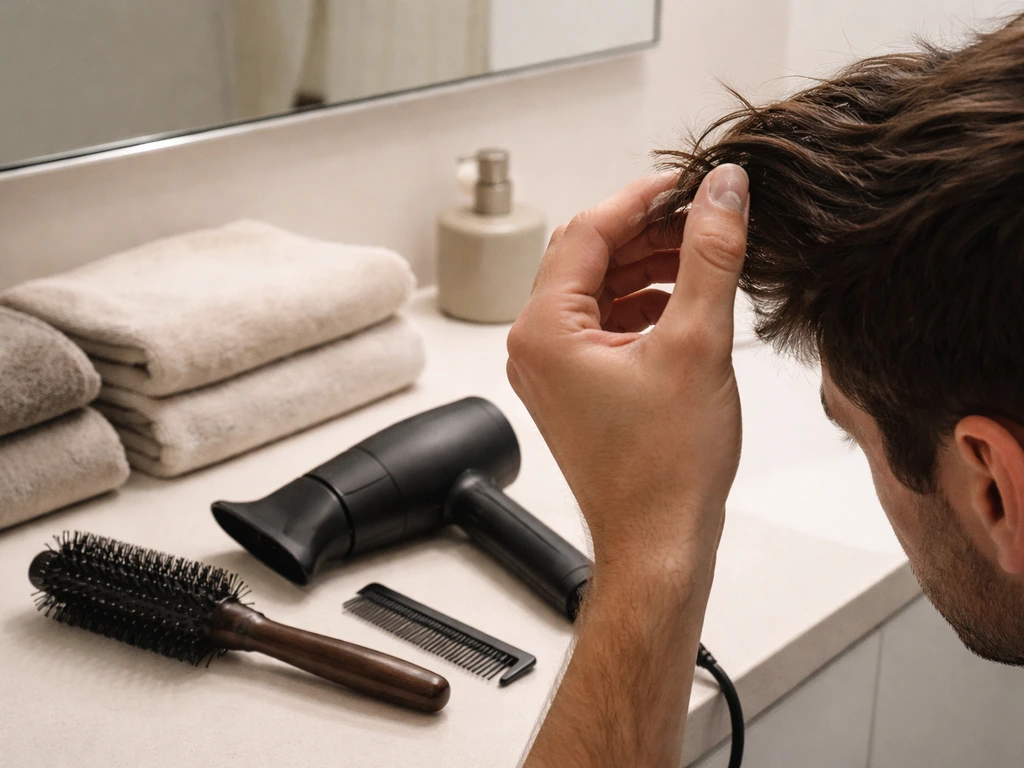
The awkward phase is real, and anyone who tells you it isn't has either never grown out a short cut or has forgotten what it looks like. But there are practical ways to make it much less painful.
Choosing the right product for sides that aren't quite long enough yet
During the early awkward phase (under an inch on the sides), a medium-hold matte clay is usually the best tool. Clay gives structure and grip without making the hair look slicked down or wet, which draws attention to the shortness. It also adds a bit of volume and texture to fine hair that looks limp at shorter lengths. Apply it when hair is about 60 percent dry after a shower, working it through the sides from root to tip and pressing the hair flat and down toward the ear.
Once the sides hit the inch-plus range, you have more options. A light pomade works well if you want a cleaner, slightly sleeker look, since it smooths the hair down and adds a soft shine that makes everything look more intentional. A cream or light paste is good for thicker hair that needs softening rather than hold. Avoid heavy gels during this phase because they tend to make the sides look stiff and separate from the top, which highlights the length difference rather than hiding it.
| Product type | Best for | Hold level | Finish | Side grow-out stage |
|---|---|---|---|---|
| Clay | Thin or fine sides, matte texture goal | Medium | Matte | Early phase (under 1 inch) |
| Paste | Most hair types, natural look | Medium | Low sheen | Early to mid phase |
| Pomade (water-based) | Thicker or coarser sides, sleek look | Medium-high | Medium shine | Mid to late phase |
| Cream | Thick or coarse sides, softening | Light | Natural | Mid to late phase |
| Gel | Avoid during grow-out | High | Wet/hard | Not recommended |
Using heat and direction to control the sides
A blow dryer is genuinely underrated for men managing a side grow-out. Even 60 seconds with a medium-heat dryer can train the sides to lay in a specific direction. If you want to make your side hair grow down, the key is combining the right trims with consistent styling that trains the direction.
After your shower, rough-dry the sides downward and slightly forward, holding the hair in place for a few seconds with your hand or a comb as the heat sets it. This doesn't need to be a full professional blowout. Just enough directed heat to flatten the sides and remove the "puff" before you apply product. Over a few weeks of consistent directional drying, the hair starts to fall that way on its own even without the dryer.
Parting and combing strategies
A defined side part is one of the easiest tricks for managing sides that are growing out unevenly or sitting awkwardly. The part gives the hair a natural fall direction that hides a lot of length inconsistency. Use a fine-tooth comb to set the part while the hair is still slightly damp, then reinforce with product. The side part also works well if you're trying to blend shorter sides into a longer top because it pulls the hair flat and angled rather than letting it sit at a right angle from your head.
If the sides are long enough to tuck behind the ear (generally around 1.5 inches at the ear-top), that's another quick styling move that keeps things looking neat while you're in the messy middle. It works especially well on days when the sides are doing something weird and product alone isn't fixing it.
Common side-growth problems and how to actually fix them
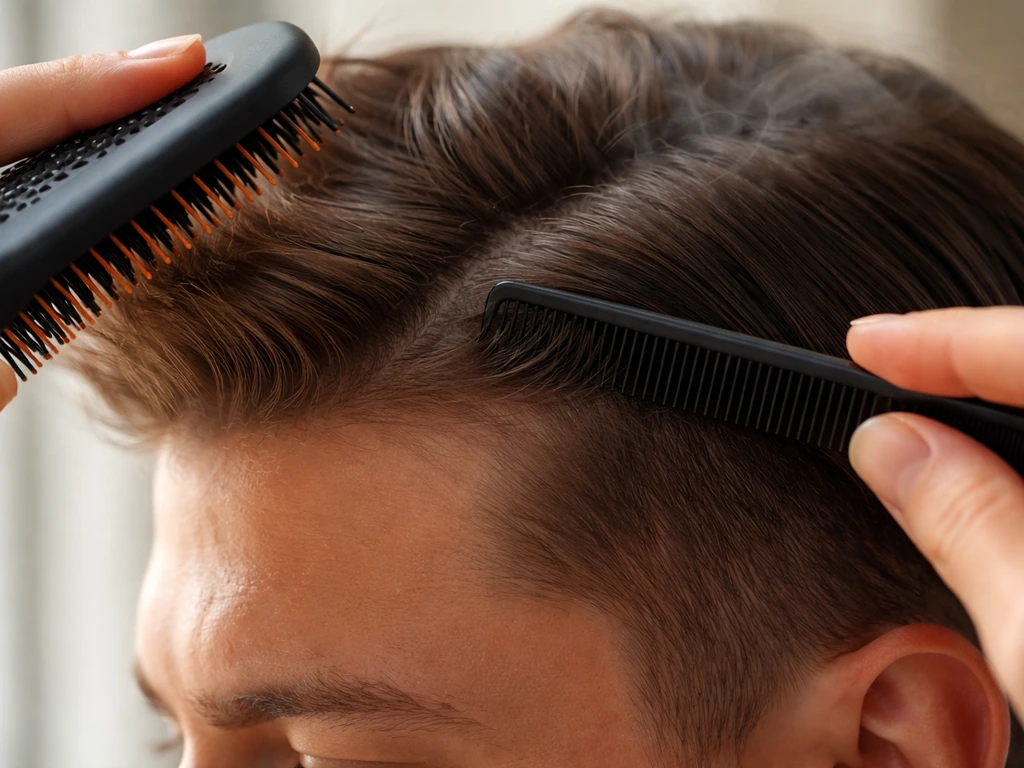
Cowlicks on the sides
Side cowlicks are swirls or directional changes in hair growth that make certain sections stick out, flip up, or resist laying flat. They become more obvious as the hair gets longer because there's more weight for the cowlick to push around. The best fix is a combination of blow-drying and product applied in a specific order.
Start by blow-drying the cowlick section against the direction it wants to grow, pressing it flat with your hand or a comb for a few seconds while the heat is on. Then flip the dryer to the direction you actually want the hair to go and blow for another few seconds. This briefly confuses the cowlick and resets the root direction.
Then apply your clay or paste immediately while the hair is still warm and hold it in place for 20 to 30 seconds. It won't be permanent, but done consistently it makes a real difference.
Uneven growth between left and right sides
It's completely normal for one side to grow faster than the other, or for one side to look thicker or puffier at the same length. Health factors and sleep position can both affect growth rate and direction. If one side is noticeably longer, resist the urge to trim it down to match the slower side. Instead, use product to push the longer side flatter and let the shorter side catch up. If the gap is more than a quarter inch and is visible, you can ask your barber for a very light micro-trim (no more than a quarter inch) on the longer side only, but do this sparingly.
Bulky or flared sides
Bulking and flaring is the most common complaint during a side grow-out, especially for men with thicker or coarser hair. The sides reach a length where they're too heavy to stand up but not long enough to lay down, so they bow outward. The fix is twofold. First, ask your barber to point-cut into the sides (using scissor tips to thin out bulk without shortening the hair) rather than using a thinning razor, which can make the ends look wispy. Second, lean into a medium-hold paste or pomade rather than clay during this phase, since the added smoothing helps the hair lay closer to the head. Directional blow-drying downward will also reduce the puff significantly.
Harsh lines at the temple and neckline
As the sides grow out from a fade or tight taper, the original faded line becomes visible again and looks increasingly patchy. This is one of the most visually jarring parts of the grow-out. A maintenance taper (not a fade, just a soft gradient) at every barber visit keeps this under control. Think of it as keeping the transition soft rather than sharp. A good fade should blend almost invisibly, but during a grow-out you're not re-fading, you're just asking for the line to stay soft and graduated rather than letting it become a visible step. The goal is a transition you can't see, not a hard perimeter.
Sides that don't match the top in texture or density
Even when your sides reach the same length as your top, they can look different because the top hair has been growing longer and has different texture, layering, and density. This is especially true if you had a fade that left the sides with no length at all for a long period. The fix is patience plus point-cutting to add texture to the sides as they grow, and occasionally asking for a very light trim on the top if the top has gotten significantly longer than the sides. Closing that gap from both ends speeds up the visual blend.
When to get a pro involved and how to keep the momentum going
You don't need a barber every week during a grow-out, but going too long between visits leads to shape problems that are harder to fix. A general rhythm that works for most people: every 4 to 5 weeks during the early phase (months 1 to 3) just for neckline cleanup and perimeter tidying, then every 5 to 6 weeks during the mid phase (months 3 to 5) for soft taper maintenance, then every 6 to 8 weeks once the sides are in the blending zone and you're mostly maintaining shape.
At each visit, say clearly: "I'm growing the sides out, I don't want length taken off the sides, I just want it to look tidy and intentional." If a barber can't work with that brief, find one who can. A good barber during a grow-out is doing more shaping than cutting, and the difference in outcome is significant.
As your sides approach your target length, start thinking about the style you actually want to end up with. If the goal is a uniform medium-length cut, you'll eventually want a full shape-up where the barber balances the top and sides together. If you're going for something longer or more uniform across the whole head, that's also the point where you might start asking whether the sides need any layering to match how the top falls. These are good conversations to have proactively rather than showing up and hoping your barber reads your mind.
One final thing worth acknowledging: the decision of whether to grow the sides out at all is genuinely personal, and it's okay to decide mid-process that you prefer the sides shorter. If you're still weighing the decision, this guide can help you figure out whether growing out your sides will fit your hair and your timeline should I grow my sides out. But if you've committed to the grow-out, the awkward phase is temporary. Most guys hit a turning point around month 4 where the sides start cooperating more than fighting, and looking back at month 2 photos usually makes the patience feel worthwhile.
FAQ
What should I do if I already passed the early awkward phase and skipped a barber appointment?
If you miss a trim, the worst usually happens during weeks 4 to 8 when the sides flare and the outline disappears. Don’t try to fix it by cutting length, instead book a visit focused only on perimeter cleanup, and at home use blow-drying plus matte clay to force the hair down and in (set the direction while the hair is warm).
Can I grow out the sides without going to a barber at all for the first couple months?
Yes, you can. If your sides are very short, ask for neckline and temple cleanup plus a “no-clipper-work on the sides” instruction until the hair is long enough to blend. Once you’re around the inch-plus range, then you can switch to point-cutting or clipper-over-comb for exterior silhouette shaping.
How do I avoid getting a thinning cut that makes my sides look patchy while growing them out?
A big red flag is when a barber uses a thinning razor or heavy texturizing too early, because it can make the ends look see-through before there’s enough length to blend. During the grow-out, prefer point-cutting for texture and ask to avoid thinning shears on the sides until they’re in the blending zone.
When the top is much longer than the sides, should I match length first or styling direction first?
If your goal is a uniform look, you should generally align the side length to the top last, not first. When the sides are still shorter, use a side part and directional blow-dry to match the top’s fall pattern, then request blending when the lengths are within about a few weeks of each other.
My right side grows thicker than my left, should I trim more on the thick side?
If one side is thicker, product can compensate without trimming. Use a slightly stronger hold on the thicker side (more consistent blow-drying downward, then clay or paste), and only request a micro-trim if the visible gap is more than about a quarter inch.
What’s the safest way to micro-trim at home without ruining the grow-out timeline?
Start with smaller adjustments: take off no more than a quarter inch, only on the very tips, and do it in stages. If you’re trimming at home, use a comb and scissors, and stop frequently to compare the sides in the same lighting, because uneven snips are harder to fix than a slightly untidy fringe.
How much styling product should I use during the wedge phase so the sides don’t look worse?
If you want to keep the sides from looking greasy or flat, apply product after most of the water is out (around 60 percent dry), then use a small amount and work from root to tip while pressing toward the ear. Overloading product is a common mistake, especially with clay, because too much will make shorter sides look heavier and more obvious.
What’s the best fix for stubborn puffiness around the temple that won’t lay down?
For persistent puff near the temple, the most effective routine is short sessions: blow-dry against the puff to flatten the root, then blow in your desired direction, hold for a few seconds, apply product while warm, and repeat morning of if needed. If it still won’t cooperate after several weeks, a barber can add targeted point-cutting to remove bulk instead of shortening.
My cowlick keeps ruining the side part as it grows, what should I change?
Cowlicks can change how the side part sits as the hair grows. Each morning, reset the direction with heat for a few seconds, then re-set the part while slightly damp. If the cowlick keeps flipping, ask your barber to shape the exit points near the ear with point-cutting so the natural growth path is supported.
How do I handle the faded line becoming visible again during the grow-out?
Yes, but transition it gradually. When the faded line starts showing again, request a soft maintenance taper at each visit rather than trying to re-fade or remove the line with length cuts. The aim is a graduated blend so it stops looking like a separate “step” as the sides catch up.
At what point can I start tucking the sides behind my ear, and will it help the blend?
If you want the sides to eventually tuck behind the ear, don’t wait for the hair to be fully long everywhere. Once you hit roughly the inch-and-a-half range at the ear-top, tuck on purpose after blow-drying and use enough hold to keep it there, then reassess every 1 to 2 weeks.