
You can train side hair to grow downward by blow-drying it in the direction you want while it's damp, using a firm-bristle or round brush to apply tension, hitting it with a cool shot to lock the shape, and using a lightweight hold product daily until the hair is long enough that its own weight takes over. It takes consistency, not magic, and most people start seeing real improvement within a few weeks of daily retraining. The awkward phase where sides stick out or flip is genuinely frustrating, but it is fixable.
How to Make Your Side Hair Grow Down: Step-by-Step Guide

Marcus Vickers
22 Jun 2026
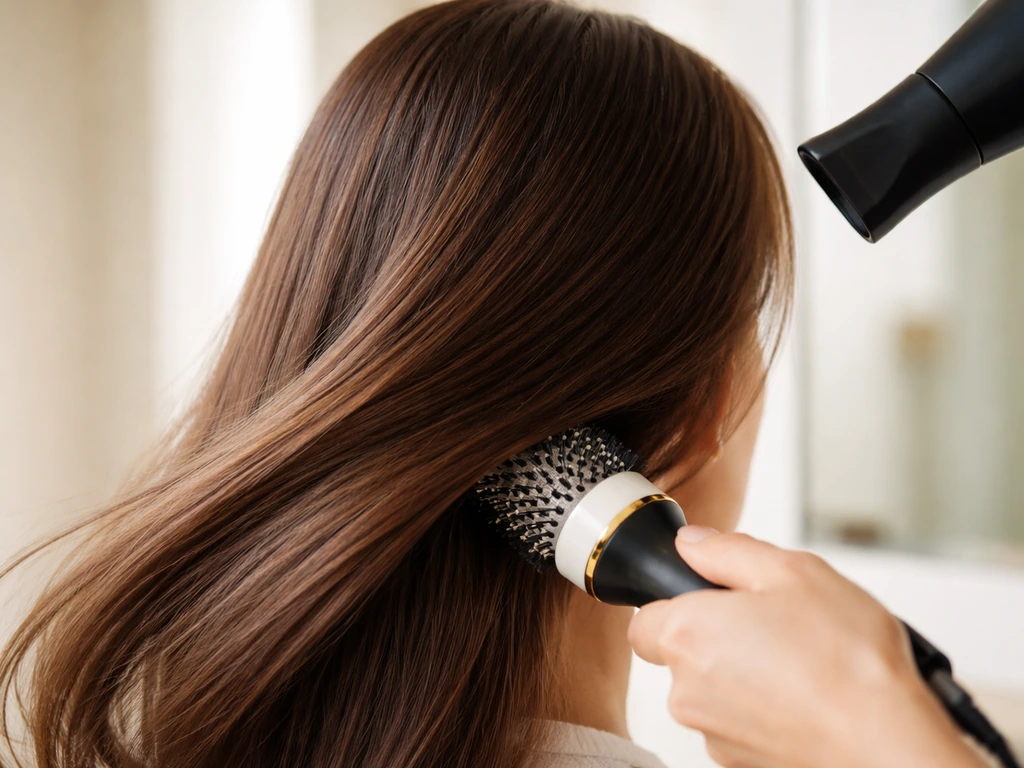
Why your side hair won't grow down
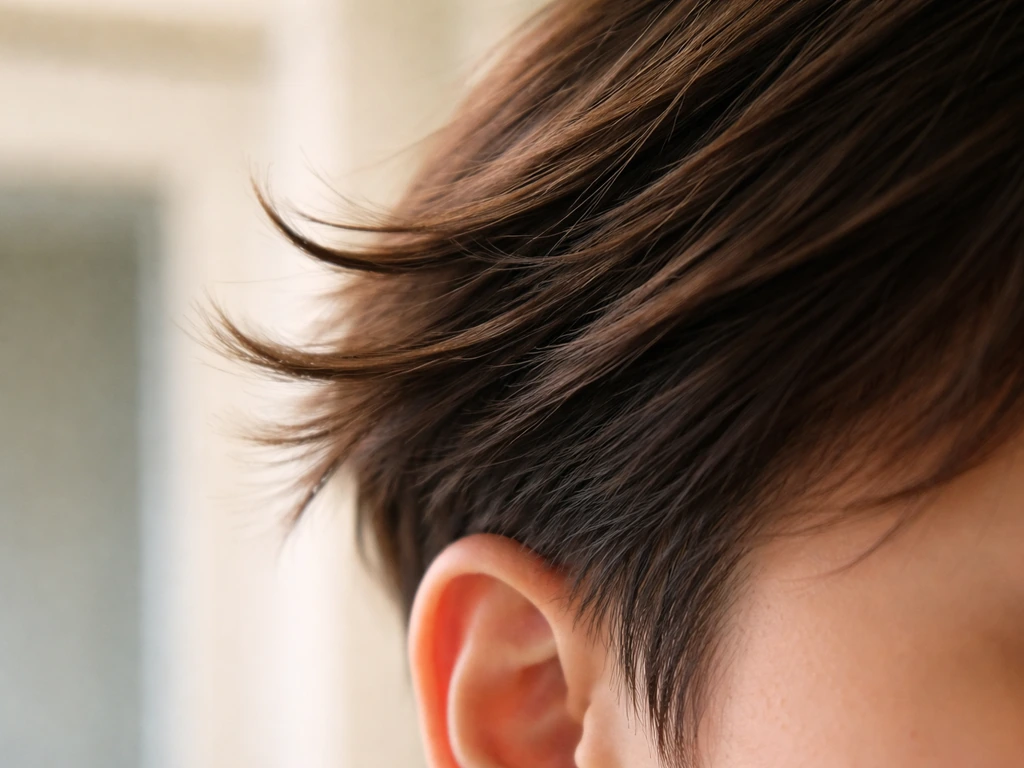
Before you can fix the problem, it helps to know why it's happening. Side hair that flips outward, grows sideways, or refuses to lie flat usually comes down to one or more of these causes.
The biggest culprit is follicle angle. Every hair on your head exits the scalp at a specific angle and direction, and around the sides and temples, those angles often point outward or even slightly upward. This is just how your hair grows. A cowlick (a section where hair grows in a circular whorl pattern, at odds with the surrounding hair) can make this dramatically worse around the sideburn area or above the ears. No amount of wishing changes the follicle angle, but styling technique and weight can absolutely redirect what you see.
Length and weight matter enormously. Short hair is light, so even slightly outward-growing follicles send strands sticking straight sideways. Once hair gets longer, its own weight starts pulling it downward and the direction battle becomes much easier to win. This is why the 2-to-5-month grow-out window is the most frustrating: the hair is long enough to look unruly but not yet long enough to fall on its own.
Haircut shape is another major factor that gets overlooked. If you've had an undercut, a high fade, or any cut that removed bulk or weight from the sides, the remaining hair has nothing to anchor it downward. Layers cut too short into the sides can also create ends that flip outward because there's no weight below them to pull them flat.
If you've been growing out shaved or closely tapered sides specifically, you may relate to this even more, since the grow-out pattern for that situation adds its own complications. If you want a man bun while keeping those shaved sides, the same grow-out rules for closely tapered sides apply, including using the right weight and styling direction to prevent flipping how to grow a man bun with shaved sides.
- Follicle angle and natural hair whorl/cowlick patterns
- Insufficient length and weight to overcome outward-pointing follicles
- Undercuts, high fades, or layering that removed side bulk
- Dryness or texture changes (frizzy hair puffs outward instead of falling flat)
- Styling habits that accidentally reinforce outward growth (scrubbing sides with a towel, wearing hats or helmets that press sides outward)
- Chemical or color treatments that altered texture and made hair more porous and prone to puffing
- Heat damage that lifted the cuticle, causing hair to resist lying flat
- Bangs or fringe that push side sections away from the face as they merge into the sides
What to do starting today: detangle, dry, and set direction
The good news is you can start retraining your sides today with what you probably already own. The key principle is this: hair is most malleable when it's damp and warm, and it sets in whatever position it cools down in. So every wash day (and ideally every day) is an opportunity to press the reset button.
Start by detangling gently while hair is wet. On wet hair, always use a wide-tooth comb rather than a brush, especially if your hair is wavy, curly, or coily. Raking a brush through wet hair causes breakage and disrupts the direction you're trying to set. Work from ends to roots with the wide-tooth comb, and as you reach the sides, comb downward deliberately, even pressing the comb flat against your head to encourage strands to lie close to the scalp.
After detangling, apply your leave-in conditioner or heat protectant while the hair is still damp but not soaking. For short side hair, a dime-sized amount of leave-in or a couple of light spritzes is plenty. Too much product at this stage makes hair heavy and sticky before you've even started styling. Spray heat protectant from about 6 to 8 inches away so it lands evenly rather than pooling in one spot.
Once product is in, comb the sides downward again and, if you have time, clip them flat against your head with sectioning clips or large bobby pins while you do other things. Even 10 minutes of sitting with your sides clipped downward while the hair air-dries slightly gives the retraining process a head start before you even pick up the blow dryer.
How to blow-dry and brush sides to train downward fall
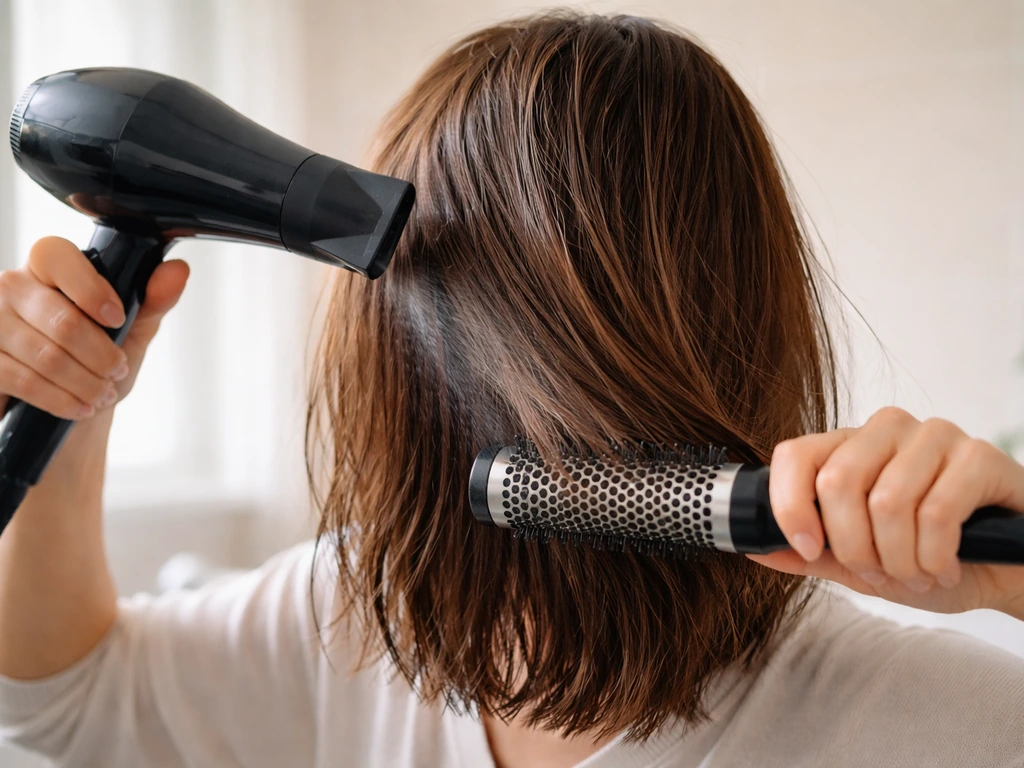
This is where most people go wrong: they rough-dry their whole head without thinking about direction, and then wonder why sides flip. The blow-dry is your most powerful daily training tool. Done right, it resets the shape every single day and, over weeks, starts to condition the hair to fall the way you want.
- Start with damp (not soaking wet) hair and apply heat protectant evenly through the sides.
- Set your dryer to medium heat and low speed to start. High speed blasts hair in every direction; low speed gives you control.
- For a cowlick or particularly stubborn section, blow-dry it in the opposite direction of its natural growth first. This temporarily flattens the lift before you direct it where you want it.
- Switch to blowing downward, using a paddle brush or medium round brush to pull the section toward the floor while applying heat. Keep firm, consistent tension on the brush — slack tension means the hair dries at whatever angle it lands.
- Work in small sections on the sides rather than drying everything at once. Each section should be fully dry (not just warm) before you move on.
- Once a section is fully dried and shaped, hit it immediately with the cool shot for 5 to 10 seconds while holding the brush in position. This step is the one most people skip, and it's the most important. Heat loosens the hydrogen bonds in hair; cool air resets them in the new position.
- Hold the brush in place for about a minute after the cool shot so the hair can fully set before you let go.
- After all sections are done, brush the sides downward one final time with a paddle brush to unify the direction.
For brush choice: a paddle brush is your best friend for smoothing and directing side hair downward in long strokes. A medium round brush with a ceramic barrel adds a slight bend at the ends and helps train stubborn flicky sections. Vented brushes work well for a quick rough-dry to get most of the moisture out before you switch to a paddle or round brush for precision. On wet hair, always use a wide-tooth comb first, then switch to a brush once the hair is about 80 percent dry.
If you have curly or coily side hair, the technique shifts slightly. Use a wide-tooth comb or your fingers with the dryer on a diffuser attachment, directing the diffuser downward along the sides. Avoid scrunching the sides upward, which reinforces volume rather than downward fall. A curl cream pressed through the sides while damp, then diffused downward, gives much better directional results than a brush for tightly coiled hair.
Products that actually keep it down (matched to your hair type)
The right product makes the retraining stick through the day. The wrong one either holds nothing or puffs sides outward. Here's a practical breakdown by hair type.
| Hair Type | Best Product Type | Amount for Side Hair | What It Does |
|---|---|---|---|
| Fine/straight | Lightweight styling cream or thin gel | Pea-sized | Adds enough hold to resist lift without weighing fine strands down |
| Medium/wavy | Anti-frizz serum + medium-hold cream | Small pump + pea-sized | Smooths the cuticle and holds wave in a downward direction |
| Thick/coarse straight | Smoothing wax or pomade (water-based) | Pea to dime-sized | Controls bulk and locks direction without stiffness |
| Curly/coily | Curl cream + light gel | Pea-sized cream, small squirt of gel | Defines curl while directing it downward rather than outward |
| Chemically treated/colored | Leave-in conditioner + light hold cream | Couple of spritzes + pea-sized | Adds moisture to prevent frizz-related puffing and holds direction gently |
Anti-frizz serums that contain silicones (like dimethiconol or cyclopentasiloxane-based formulas) are particularly effective for the sides because they create a smoothing layer over the hair shaft that helps strands lie flat against each other rather than puffing outward. A small amount worked through damp side sections before blow-drying, or pressed over dry sides as a finisher, makes a real difference for anyone with frizz-prone or humidity-affected hair.
One practical rule: apply hold products to damp hair before blow-drying if you want the product baked into the shape. Apply them over dry hair as a finisher if you want a softer, more touchable result. Both approaches work; just don't apply heavy hold products to soaking wet hair, as the product dilutes and doesn't distribute evenly.
Growth timeline: what to expect at each stage
Hair grows at roughly half an inch (about 1.25 cm) per month on average, though you might see anywhere from 0.5 to 1.7 cm depending on genetics, health, and age. What that means practically: you can predict roughly when your side hair will hit the length thresholds that make things easier. Here's an honest stage-by-stage picture.
Weeks 1 to 6: the stubborn early stage
Side hair is still very short and light, which means follicle angle completely dominates. Even with perfect blow-drying technique, short sides will fight you hard every day. This is the phase where daily retraining is most important because every session is laying down habit in the hair. You won't see major directional changes yet, but don't give up. Use clips and light products to keep sides pressed down between washes.
Months 2 to 4: the awkward middle
This is the phase most people describe as wanting to cut everything off. The sides are long enough to look intentionally messy but not long enough to fall cleanly. Flipping, puffing, and sticking out at angles is at its worst here. The blow-dry retraining routine becomes non-negotiable. This is also when a strategic trim (described below) can help you shape the growth rather than look neglected. Stick with it: the weight is accumulating even when it doesn't feel like it.
Months 4 to 6: weight starts to win
Around the 4-month mark, most people notice a genuine shift. The side hair is long enough that gravity starts working in your favor. You'll still need product and technique, but the hair will start defaulting downward more naturally between styling sessions. If you had a cowlick or outward-growing section, it starts to get tamed by its own length.
Month 6 and beyond: the corner is turned
By six months, the sides have typically gained 3 or more inches of length (depending on your starting point). If you're working with high top dreads, the side growth can follow a similar pattern, so you will want to manage direction and weight while it grows out high top dreads grow out sides. At this stage the weight of the hair is doing most of the work and you're styling for smoothness rather than fighting direction. Some people with very strong cowlicks or outward-growing follicles may need a couple more months, but this is when grow-out starts feeling like a choice rather than a battle.
Haircuts and trims that help (and ones that set you back)
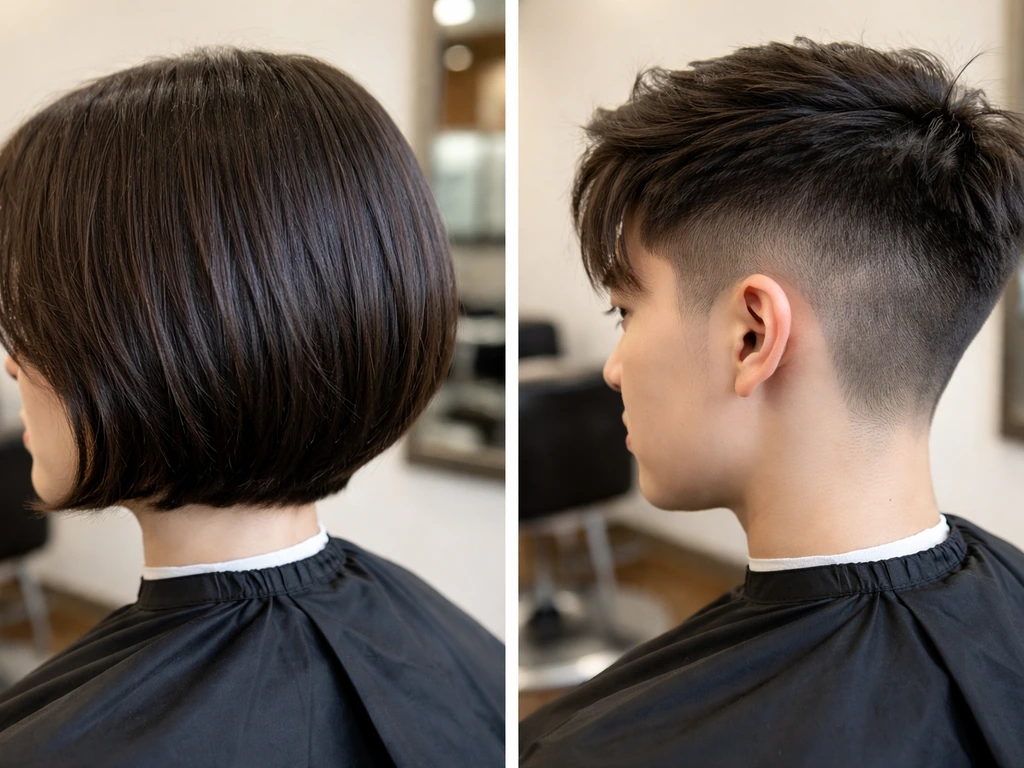
Getting a trim during a grow-out feels counterproductive, but strategic cuts actually accelerate the process by removing the shapes that fight downward fall. This is also the key to how to grow out the sides of hair for men without them sticking out. The goal is to shape the growth without resetting the length.
A good rule of thumb: every 8 to 12 weeks is a reasonable trim interval during grow-out. A barber-focused guide also recommends a strategic trim every 8 to 12 weeks during grow-out to help shape the hair without neglect. This removes split ends (which cause strands to splay outward) and allows your stylist or barber to reshape the side weight distribution without taking off meaningful length. If you had a taper or fade and you're letting the sides grow out, touch-up trims every 2 to 3 weeks on just the transition line (without touching the top or mid-length sides) can keep you looking intentional while the length catches up.
Cuts that help
- Blunt or slightly weight-line cuts on the sides: adds bulk at a single level, which encourages the hair above it to fall downward toward that weight
- Soft layering that starts lower on the sides: layers higher up remove weight you need for downward pull, so ask for layers to start well below the ear
- Point-cutting the ends: removes rigidity that causes ends to flip outward while keeping the length
- Taper adjustments (not full resets): a subtle taper that blends the neckline without shortening the side length keeps things tidy without restarting progress
Cuts to avoid
- High undercuts or new fades that remove side bulk: these restart the weight problem from scratch
- Aggressive side layering that thins out the mid-length: reduces the weight you need to pull hair down
- Fringe or bangs cut too short on the sides: short side-bangs poke outward rather than sweeping down
If bangs or fringe are merging into your side sections as you grow them out, the best approach is to let them grow in the same direction as your side hair rather than cutting them separately. Ask for the fringe blended into the sides with point-cutting so the transition feels seamless rather than two competing sections pushing against each other.
Managing cowlicks, frizz, and treated hair
Persistent cowlicks
A cowlick on the side (often above the ear or at the temple) is caused by a hair whorl or directional pattern built into the follicle. You cannot permanently change it, but you can reliably override it every day. The key technique: blow-dry the cowlick first, in the opposite direction of its natural swirl, then redirect it downward once it's about 80 percent dry. Finish with the cool shot while pressing a comb or brush flat against it for a full 30 to 60 seconds. Holding the position while the hair cools is the step that actually sets it. Light-hold wax or pomade pressed over the top as a finisher is your insurance for the rest of the day.
Frizz that sends sides outward
Frizz is usually a moisture issue: the hair cuticle is open and absorbing humidity from the air, causing individual strands to swell and puff outward. The fix has two parts. First, keep your sides moisturized so the cuticle has less reason to seek outside moisture (a good conditioner every wash and a leave-in on damp hair). Second, smooth the cuticle closed with an anti-frizz serum or a silicone-based finisher after styling. This layer of smoothing prevents humidity from getting in and keeps the side hair lying flat longer.
Colored or chemically treated hair
Bleached, colored, or relaxed hair has a more open cuticle by nature, which means it frizzes more easily, feels drier, and puffs outward faster than virgin hair in the same conditions. If this describes your side hair, moisture is your priority above all else. Use a hydrating conditioner every wash, a leave-in every styling session, and reach for a light cream or serum rather than a gel or wax (gels can be drying on already-porous hair). Be gentler with heat: use a lower heat setting on your dryer and never skip the heat protectant. If you're growing out natural regrowth alongside a colored or chemically altered section, expect the two textures to behave differently and require slightly different product amounts.
Hats, helmets, and sleeping position
These are often forgotten but genuinely contribute to side hair direction. Wearing a tight hat or helmet presses the sides outward or upward depending on how it sits, and if you wear it daily, you're working against your retraining efforts. If you can't avoid it, re-wet and restyle the sides as soon as the hat comes off. Similarly, sleeping on the same side every night creates a persistent pressure pattern on one side. A silk or satin pillowcase reduces friction and lets the hair slip back into position rather than being creased against the pillow for hours.
When to talk to a stylist (and exactly what to say)
Most side-hair direction problems are manageable at home, but there are situations where a professional's eye makes a real difference.
Go see a stylist if: you've been following a daily blow-dry retraining routine for 6 or more weeks and see zero improvement in direction; your side hair is growing in noticeably thinner than before and you're worried about thinning or scalp changes; you feel tension or discomfort around the sides from repeated tight styling; or you had a specific cut (like an undercut or fade) and you genuinely can't picture how to grow it out gracefully. A stylist who understands grow-out phases can assess whether the shape of your current cut is working against you, and reshape it in a way that encourages rather than fights downward fall.
When you get there, be specific. Don't just say 'I'm growing it out.' Instead say something like: 'I'm growing my sides out and they keep flipping outward. If you are wondering should i grow my sides out, ask your barber to keep enough side weight so the length can drop naturally growing my sides out. I don't want to lose length but I need the weight distribution fixed so they fall down. Can you point-cut the ends and soften any layers that are contributing to the flip, without taking off more than half an inch?' That kind of brief gives a stylist exactly what they need to help you rather than defaulting to whatever they think looks tidy.
If you notice patches of slower or completely absent growth on the sides, or significant scalp irritation, those are reasons to talk to a dermatologist rather than a stylist. Traction issues from tight styles, scalp conditions, or hormonal changes can all affect growth rate and direction at the follicle level and need a different kind of help. A stylist can do a lot, but they're working with what's already growing. A dermatologist can address what's happening underneath.
FAQ
How often do I need to retrain my side hair for it to start growing down?
If you want the sides to consistently hang down, treat retraining as a daily routine at first. Blow-drying direction sets the shape, and skipping days usually brings back the flip. A practical approach is to retrain every wash day plus most other days using a quick “press and cool” method (comb the sides down, blow with moderate heat for 30 to 60 seconds, then finish cool while you hold the position).
Can I train my side hair to grow down without daily blow-drying?
Yes, but use it for the right stage. For short sides (when the hair is light), mousse or cream hold can help you maintain direction, but you will still need blow-drying in the downward direction because weight is not doing the job yet. For longer sides (around the time gravity starts helping), you can rely more on leave-in plus a light serum, using heat less frequently.
What’s the best moisture level to start styling (wet, damp, or dry)?
When hair is damp but not soaking, it grips the comb and brush better, and product distributes evenly. A common mistake is styling when hair is dripping wet, which dilutes hold and encourages puffing as it dries. If your sides feel wet and cool to the touch, squeeze out excess water with a towel, then apply leave-in or heat protectant before you dry and set direction.
How long should I clip my sides down, and when should I remove the clips?
If you’re using clips, place them in a way that matches the direction you want, and leave them long enough for partial drying, not just a few seconds. Ten minutes clipped while air-drying helps, but if your clips come off while the hair is still very wet, the hair can revert to its natural flip as it dries.
Why does my side hair still flip even after I use styling product?
You should not use strong hold products in a thick layer on soaking wet hair. Heavy hold can clump and make ends flare instead of lying flat. Use a small amount on damp hair, and if you need more insurance, switch to a light finisher on dry sides (for example, a tiny amount of smoothing serum).
How do I handle a cowlick that keeps my sides from lying flat?
Cowlicks usually require opposite-direction drying first. A reliable method is to blow-dry the cowlick area in the direction it naturally swirls, then once it is about 80 percent dry, redirect downward and hold for cooling (comb or brush pressed flat for 30 to 60 seconds). If you always try to dry it downward from the start, you often lock in the swirl.
What should I do if my sides flip mainly in humid weather?
If your hair gets flat at home but flips in humidity, your sides likely need a stronger anti-frizz layer and better moisture balance. Focus on two steps: keep sides moisturized (conditioner plus leave-in) so the cuticle is less reactive, then smooth with a silicone-based serum or anti-frizz finisher after styling. Avoid alcohol-heavy products that can dry porous hair and increase puff.
Which brush type should I use to train side hair downward?
For straight to wavy hair, a paddle brush often gives the most smooth, long strokes for directing downward. For stubborn flicks, a medium round brush can add a controlled bend at the ends while you dry. For curly or coily side hair, brushing can create unwanted volume, so use fingers or a wide-tooth comb and use a diffuser with downward direction instead.
My sides look worse after I blow-dry them, what am I doing wrong?
If your hair looks worse after styling, reduce variables. Common culprits are brushing wet hair (breakage and disrupted direction), using too much product, or drying without a cool shot. Fix by detangling with a wide-tooth comb, using a small product amount, blow-drying with direction, and finishing cool while holding the comb or brush against the scalp.
Will trimming my sides set me back, or does it actually help?
A trim usually helps, but it should be strategic. During grow-out, ask for removing split ends and softening layers that create outward splay, while preserving enough side weight so the hair can drop naturally. If your barber takes too much bulk, you may reset the “weight problem” and see more flipping again.
How should my routine change if my side hair is dyed or bleached?
Color-treated or bleached hair often feels drier and frizzes faster because the cuticle is more porous. Prioritize a hydrating conditioner at every wash, a leave-in at every styling session, and use lower dryer heat with always-on heat protectant. If you notice dryness, reduce protein-heavy products that can make hair stiff and more prone to poofing outward.
Why do my sides flip again after wearing a hat or sleeping?
If you notice direction shifting after wearing a hat or sleeping, it’s usually mechanical pressure and friction. Re-wet or lightly mist the sides, then quickly re-comb downward and re-set with a brief cool shot. Switching to a satin or silk pillowcase reduces friction so your retraining is not undone overnight.
When should I stop troubleshooting at home and see a dermatologist or doctor?
If you see clearly thinner growth or scalp changes, that’s a different issue than styling retraining. Dermatology is appropriate if there are patches of reduced density, persistent irritation, or sudden changes in growth rate, especially if you have a history of tight styling. A stylist can improve cut shape, but they cannot address follicle-level causes.