
Growing out a fuller bush comes down to one core strategy: stop removing the hair, keep the skin healthy underneath, and give it time. Growing out the back of a man’s pubic hair uses the same core idea: stop shaving, protect the skin, and let the natural growth cycle catch up.
How to Grow a Bush Pubic Hair: Safe Step-by-Step Guide

Marcus Vickers
2 May 2026
If you are trying to grow a ponytail for guys, the same rule applies: avoid trimming or cutting too often and let the length build up steadily stop removing the hair. Pubic hair grows roughly a quarter to half an inch per month, and most people see a noticeable bush within two to three months of leaving it alone.
The awkward, itchy, stubbly phase in the middle is real, but it is manageable, and with the right day-to-day skin care, you can get through it without razor bumps, ingrowns, or irritation derailing your progress.
Realistic expectations for pubic hair regrowth
The most important thing to understand before you start is that your genetics set the ceiling. Pubic hair has its own growth cycle, and that cycle is shorter than scalp hair, so there is a natural limit to how long it gets before it sheds and starts over. Cleveland Clinic describes the body hair cycle as including a growth phase, a [transitional phase lasting about two to four weeks](https://my. clevelandclinic.
org/health/body/body-hair), and a resting phase that can stretch several months. That means some hairs you see today are actively growing, others are on their way out, and a new batch is coming in behind them. That overlapping cycle is actually what creates the full, dense look of a bush, it is not one long strand per follicle, it is continuous turnover.
One thing worth clearing up immediately: shaving does not thin your hair or change the number of follicles you have, and it does not permanently alter growth rate. The stubbly, coarse feeling you get as it comes back in is just the blunt-cut tip of each strand, not thicker or denser hair. Your natural density, color, and curl pattern were set before you ever picked up a razor. So if you had a full bush before and shaved it, it will come back. If your natural density was always moderate, that is what you will grow back to, and that is perfectly fine.
Timeline: what to expect week by week
Here is an honest, stage-by-stage breakdown of what regrowth actually looks and feels like after shaving or waxing down to bare skin. The timelines are approximate because individual growth rates vary, but this gives you a reliable map.
| Stage | Timeframe | What It Looks and Feels Like | Main Challenge |
|---|---|---|---|
| Bare to stubble | Days 1–7 | Short, sharp tips emerge; skin may feel prickly and tight | Itchiness, irritation from clothing friction |
| Early growth | Weeks 2–3 | Visible short hairs, still coarse; ingrowns most likely here | Razor bumps, ingrown hairs, temptation to shave again |
| Awkward phase | Weeks 3–6 | Hair is long enough to curl but not long enough to lie flat | Trapped moisture, increased itch, possible follicle irritation |
| Bush taking shape | Months 2–3 | Soft, fuller coverage; natural curl pattern returns | Minor ingrowns, minor skin dryness |
| Full bush | Months 3–6 | Natural density and length established; feels like pre-shave texture | Routine maintenance, hygiene habits |
If you are growing back after waxing or plucking rather than shaving, add a week or two to each stage. Waxing removes the entire hair from the root, so the follicle has to start a fresh growth cycle from scratch. The result is actually softer new growth (no blunt tip), but a slightly longer wait before you see anything.
What can slow or disrupt growth (and how to fix it)
Most of the time, if regrowth seems slower or patchier than expected, there is a straightforward explanation. Here are the most common culprits and what you can actually do about them.
- Repeated waxing or plucking over many years: Repeated trauma to the follicle can cause thinning or spotty regrowth. There is no topical fix for this—follicles that are damaged grow slower, and some may not come back fully. Give it three to six months before drawing conclusions.
- Hormonal changes: Testosterone, estrogen, and other androgens directly regulate body hair density. Life events like pregnancy, menopause, stopping or starting hormonal contraception, or thyroid changes can thin pubic hair noticeably. If this is your situation, tracking when the change started relative to a hormonal shift gives you useful information to share with a clinician.
- Nutritional gaps: Hair growth across your whole body (including pubic hair) needs adequate protein, iron, zinc, and biotin. If your diet has been restricted or your energy levels are low, addressing basic nutrition is a reasonable first step.
- Chronic friction and skin damage: Tight waistbands, underwear elastic, and synthetic fabrics that trap heat and moisture can stress the follicles in the groin area repeatedly. Switching to looser, breathable cotton underwear during regrowth makes a real difference.
- Skin conditions affecting follicles: Folliculitis (infected or inflamed follicles) can disrupt growth in the affected patches. If left untreated, persistent folliculitis can cause scarring that permanently affects those follicles—so catching it early matters.
Safe day-to-day grooming and skin care during regrowth
The groin is a skin-fold area, which means it has specific challenges: friction between skin surfaces, trapped heat, and moisture from sweat. Merck Manual identifies friction and trapped moisture as the key drivers of intertrigo, a common inflammatory skin condition in folds. Good daily habits during regrowth keep those forces in check and let the follicles do their job without constant disruption.
Cleansing
Wash the area once daily with a gentle, fragrance-free cleanser. Avoid heavily fragranced body washes, antibacterial soaps, or anything marketed as 'intimate wash' with a long ingredient list, these often strip the skin's natural barrier and make irritation worse, not better. A simple, hypoallergenic formula with fewer ingredients is what Cleveland Clinic recommends for sensitive skin. Rinse thoroughly and pat dry rather than rubbing, especially in skin folds.
Moisturizing
Dry skin is itchy skin, and itchy skin during the stubble phase is miserable. Applying a fragrance-free, non-comedogenic moisturizer to the outer pubic area (not internal or mucous membrane areas) after washing helps a lot. If you experience friction discomfort in skin folds, blank" rel="noopener noreferrer">barrier ointments like petroleum jelly or zinc oxide cream are exactly what MedlinePlus recommends for reducing skin-on-skin irritation in the groin area. These are not glamorous, but they work.
Exfoliation
Gentle exfoliation two to three times a week helps prevent ingrown hairs by keeping dead skin from trapping new hair tips under the surface. If you want hair grow tips in Urdu, focus on gentle exfoliation and consistent skin care to support clean regrowth ingrown hairs. Use a soft washcloth or a very gentle scrub, nothing abrasive on skin that is already dealing with new follicle activity. Avoid exfoliating if you have active razor bumps, broken skin, or visible irritation, as it will make those worse.
Clothing choices
Breathable, loose-fitting cotton underwear is your best friend during regrowth. Synthetic fabrics trap heat and moisture against new follicles, increasing the risk of folliculitis and intertrigo. If you work out, change out of sweaty clothing promptly and rinse the area. Keeping the groin as cool and dry as reasonably possible reduces friction-related inflammation significantly.
Preventing ingrowns, bumps, and irritation
Ingrown hairs are the most common complaint during pubic hair regrowth, especially in the first three to four weeks. They happen when a hair curls back into the skin or gets trapped under dead skin cells instead of growing out cleanly. Mayo Clinic notes that ingrown hairs can occur when a curved hair follicle and the direction the hair grows cause it to reenter the skin after cutting [a curved hair follicle and the hair’s growth direction](https://www. mayoclinic.
org/diseases-conditions/ingrown-hair/symptoms-causes/syc-20373893). The good news is that most ingrown hairs resolve on their own within a few days, according to Cleveland Clinic. The key is not to pick, squeeze, or dig at them, that introduces bacteria and can turn a minor annoyance into a real infection.
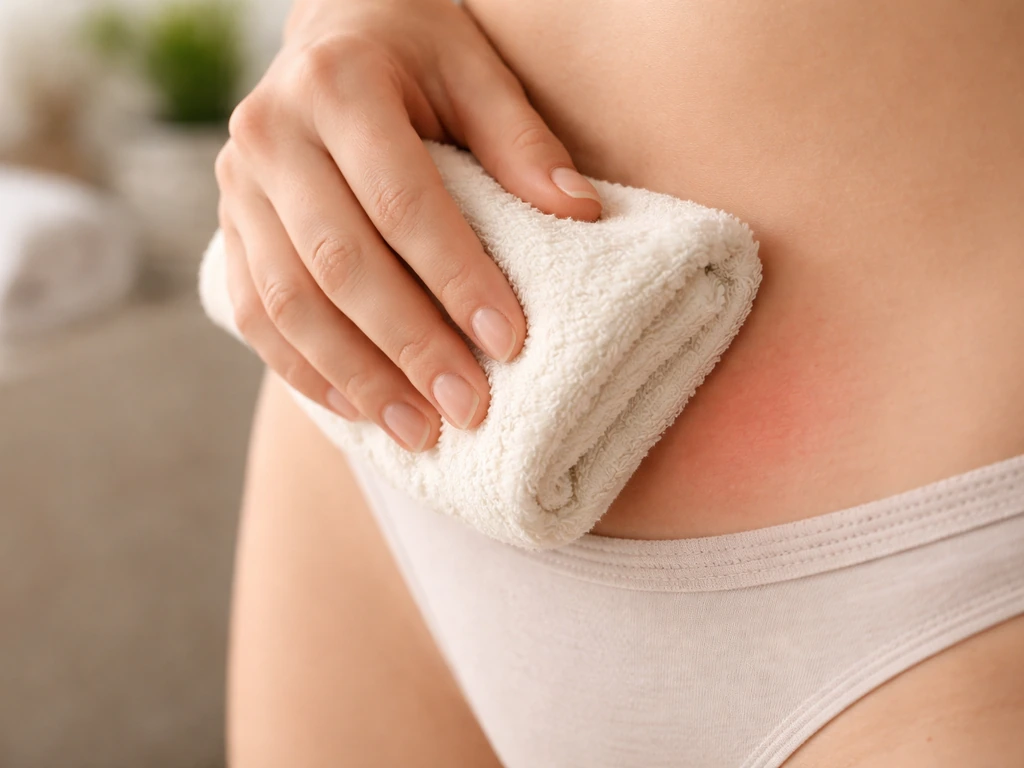
For an ingrown that is visible and close to the surface, Cleveland Clinic's recommended approach is to apply a warm, wet washcloth to the area for ten to fifteen minutes, up to four times a day. This softens the skin and encourages the hair tip to break through naturally. Pubic ingrowns can take anywhere from a few days to more than a week to reach the surface this way, so patience is part of the process.
If you need to do any trimming during the grow-out process (to manage length or uneven patches), Johns Hopkins recommends using a clipper rather than a razor, and never shaving too closely. The AAD adds that if you do shave any area, always wet the skin first, use a sensitive-skin shaving cream, and shave in the direction the hair grows, never against the grain. Going against the grain cuts the hair below the skin's surface, which is the main mechanical cause of ingrowns.
The AAD also points out something useful: if razor bumps are a persistent problem, simply stopping shaving and letting hair grow out eliminates the root cause entirely. Growing the bush is actually the most effective razor-bump treatment there is.
Comfort tips for itchiness and awkward phases
Weeks two through six tend to be the most uncomfortable stretch. The hair is long enough to curl and trap against skin but not long enough to lie flat and soft. Here is what actually helps get through it.
- Moisturize consistently. Dry skin amplifies itchiness tenfold. A fragrance-free lotion or light oil (like jojoba) applied to the outer pubic area after showering keeps the skin barrier intact and reduces the prickling sensation as new hairs emerge.
- Use a cool, damp washcloth on irritated skin. The AAD recommends this after shaving, and it works just as well during general regrowth irritation—cool compresses calm inflamed follicles and temporarily relieve itching without any product.
- Resist scratching. Scratching breaks the skin surface, introduces bacteria from your hands, and can trigger folliculitis in otherwise healthy follicles. If the itch is intense, press gently with a clean cloth instead.
- Wear looser clothing during peak itch weeks. Tight waistbands and seams rubbing against new stubble create friction that makes the itch cycle worse. Even switching to boxer-style underwear for a few weeks during this phase helps noticeably.
- Take warm (not hot) showers. Hot water strips natural oils and dries out the skin, worsening irritation. Slightly cooler water and a shorter shower time makes a real difference for sensitive regrowth skin.
- If the itch is truly unbearable, a small amount of over-the-counter hydrocortisone 1% cream applied to the outer skin (not broken or inflamed areas) can reduce inflammation temporarily. Use it sparingly and not long-term without clinician guidance.
This awkward phase is also where a lot of people give up and shave again, which just restarts the whole cycle. If you can get past week six, the hair softens considerably and the worst of the discomfort is behind you. Once your slick-back hair starts to soften and lay more easily, you will be able to style it with less tugging and fewer breakouts slick back hair.
It is very similar to growing out any short haircut: the middle stage is always the hardest part, and powering through it is the only path to the goal. If you are trying to grow out short hair as a man, the same patience and itch-control approach applies while your hair moves from stubbly to softer growth how to grow out short hair male.
Anyone who has grown out a buzz cut or a pixie cut will recognize this feeling immediately.
When to stop self-care and see a clinician
Most discomfort during pubic hair regrowth is normal and manageable at home. But some symptoms are signals that something else is going on and needs professional attention. Do not wait these out.
- Persistent bumps or sores that do not improve after one to two weeks of home care: Mayo Clinic advises seeing a healthcare provider if symptoms from folliculitis do not resolve within that window. Untreated folliculitis can scar the follicle permanently.
- Signs of spreading infection: Increasing redness, warmth, swelling, pus, or red streaks moving outward from a bump are signs of a bacterial infection that needs prompt medical attention—possibly same-day urgent care.
- A ring-shaped, itchy rash on the inner thigh or groin: This is a classic presentation of jock itch (tinea cruris), a fungal infection. Harvard Health notes it typically responds to topical antifungal treatment over about two weeks, but you need the right diagnosis to use the right treatment.
- Deep, painful nodules that keep coming back: Recurring painful, deep-seated lumps in the groin area—especially ones that leave scars or seem to tunnel under the skin—are potential signs of hidradenitis suppurativa (HS), a chronic inflammatory condition. The AAD and AAFP both describe HS as a condition requiring personalized diagnosis and treatment, not self-care. Getting evaluated early matters because HS can worsen and scar if untreated.
- Patchy hair loss that does not seem to be growing back after three to six months: If large patches of follicles simply are not producing hair after six months of leaving the area alone, a dermatologist can evaluate whether follicle damage, a hormonal issue, or another condition is involved.
- Any lump, sore, or lesion that bleeds, changes in appearance, or does not heal: This always warrants a medical evaluation, without exception.
The bottom line is that routine discomfort, itchiness, minor bumps, temporary redness, is part of the process and responds to the self-care steps above. Pain, spreading symptoms, or anything that keeps getting worse rather than better is the line where self-care stops and professional evaluation starts. Knowing that distinction means you can handle most of the grow-out process confidently on your own, while catching the things that actually need medical attention before they become bigger problems.
FAQ
How long should I wait before I know whether growing a bush is actually working?
If you are currently shaving or waxing, plan for a “catch-up” period. You generally need to stop removal and allow the new cycle to run, usually at least 8 to 12 weeks for a noticeable bush, but your first 2 to 6 weeks are often the bumpiest. If you do not see any improvement by around the 3-month mark, the issue is more likely skin irritation, ongoing friction, or unrealistic density expectations based on genetics rather than a growth “failure.”
Can I trim or shape my pubic hair while it grows out without ruining the process?
Yes, but be careful with tool choice and pressure. If you must tidy uneven areas, use an electric clipper with a guard and do not shave the skin down to bare. Avoid trimming repeatedly at very short lengths because that restarts the awkward stubble phase. A practical approach is to trim only when you feel length is causing irritation or hygiene issues, then leave it alone for several weeks.
Are there any products I should avoid during regrowth (like oils or ointments)?
Oils and heavy balms can feel soothing, but some can clog pores or trap sweat in the groin fold, especially during the itchy stubble stage. Prefer fragrance-free, non-comedogenic options on the outer area only. If you use petroleum jelly or zinc oxide for friction, apply a thin layer to reduce skin-on-skin rubbing, not as a thick “mask” over the follicles.
Where exactly should I apply moisturizer or barrier cream during pubic hair regrowth?
A key difference is location. Moisturizer and barrier products are for the external skin (the outer pubic area), not for internal or mucous membrane tissue. If a product tingles, stings, or increases redness, stop it and switch to a simpler, fragrance-free cleanser and moisturizer.
If shaving doesn’t thin hair, why do I still get more ingrowns when I trim too often?
Yes. Very close trimming can be almost as irritating as shaving because it recreates blunt tips and short stubble that digs into skin folds. If you have a history of ingrowns, “set it and forget it” tends to work best. Consider using a clipper with a longer guard and letting the hair grow past the short-stubble stage.
What should I do if the area stays irritated due to sweat and friction?
For groin folds, focus on friction control: loose cotton underwear, prompt changing after workouts, and thorough but gentle drying after washing. If you sweat a lot, rinsing after exercise and pat-drying can make a bigger difference than adding more exfoliation. Over-washing can also worsen irritation, so aim for about once daily with a gentle cleanser.
When is an ingrown hair during regrowth more than a normal irritation?
Warm compresses and gentle care are best. Avoid picking or squeezing ingrowns, and do not use harsh scrubs or strong acids right over a bump. If an ingrown is very painful, spreading, draining pus, or you develop fever, you may need medical evaluation to rule out infection or a deeper folliculitis.
How often should I exfoliate while growing a bush pubic hair, and when should I stop?
Exfoliation can help, but start cautiously. Use gentle exfoliation about 1 to 3 times per week, and pause if you have active razor bumps, open skin, or visible irritation. If you use exfoliation daily, the skin barrier can become inflamed, which often increases ingrowns and redness.
Is waxing or plucking better than shaving if my goal is a fuller bush?
You can, but use caution with methods that remove hair from the root. Waxing or plucking typically extends the uncomfortable wait because follicles must restart from scratch, and it can increase irritation for some people. If you are currently using waxing and want to minimize bumps, switching to “stop removing and protect the skin” usually gives the most predictable results.
What if my regrowth is patchy or uneven, and it does not improve after a couple months?
If you are getting persistent patchiness, it may be temporary overlap in the hair cycle, but it can also reflect ongoing irritation, friction, or dermatitis. Track patterns: does it worsen with certain underwear, detergents, or products? If patches keep enlarging, itch intensely, or show scale or persistent redness, consider seeing a clinician to rule out skin conditions beyond ingrowns.