
You can realistically pull your hair into a functional ponytail once it reaches about 3 to 4 inches at the shortest layers. That usually takes anywhere from 6 months to over a year, depending on where you're starting from. If you're coming from a buzz cut or short fade, expect closer to 18 months before things truly cooperate. Starting from a medium cut like a crew cut or tapered style? You're probably looking at 9 to 12 months. The honest answer is that growing a ponytail is a slow, stage-by-stage process, and the guys who make it without rage-quitting are the ones who have a plan for each phase instead of just waiting. If you're wondering how to grow out short hair male styles like fades or buzz cuts, the stage-by-stage approach in this guide is your best roadmap. If you're specifically trying to grow out the back of your hair as a man, the same stage-by-stage approach applies to avoid awkward setbacks how to grow out short hair male.
How to Grow a Ponytail for Guys: Timeline and Steps

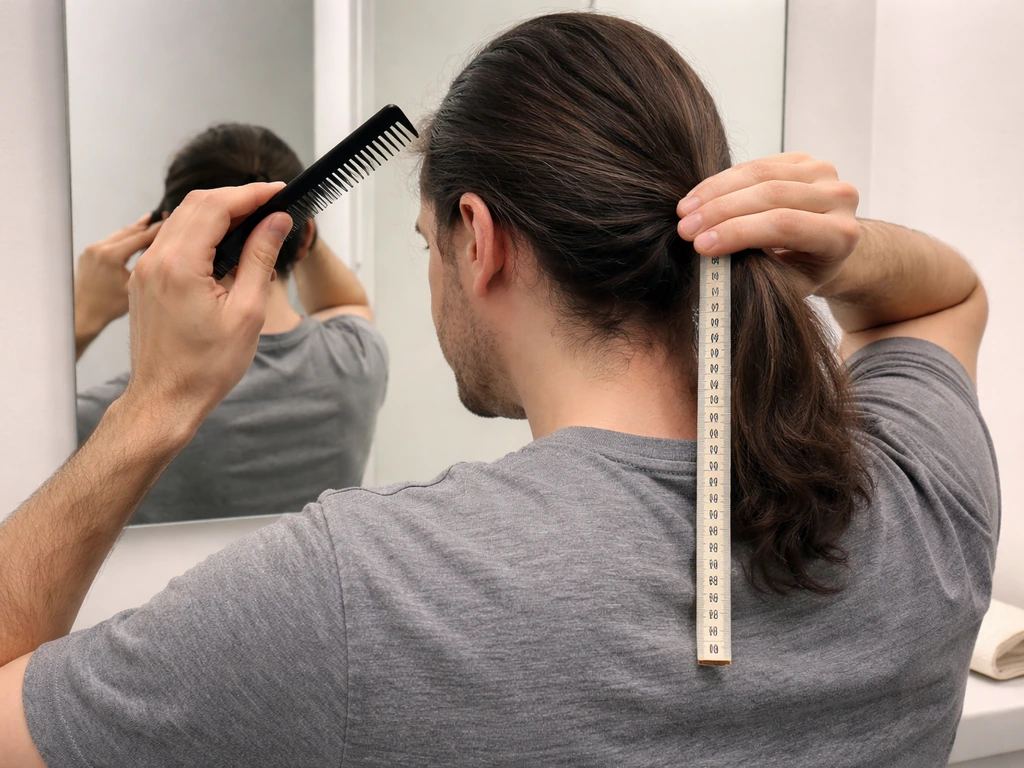
Choosing the right ponytail target length
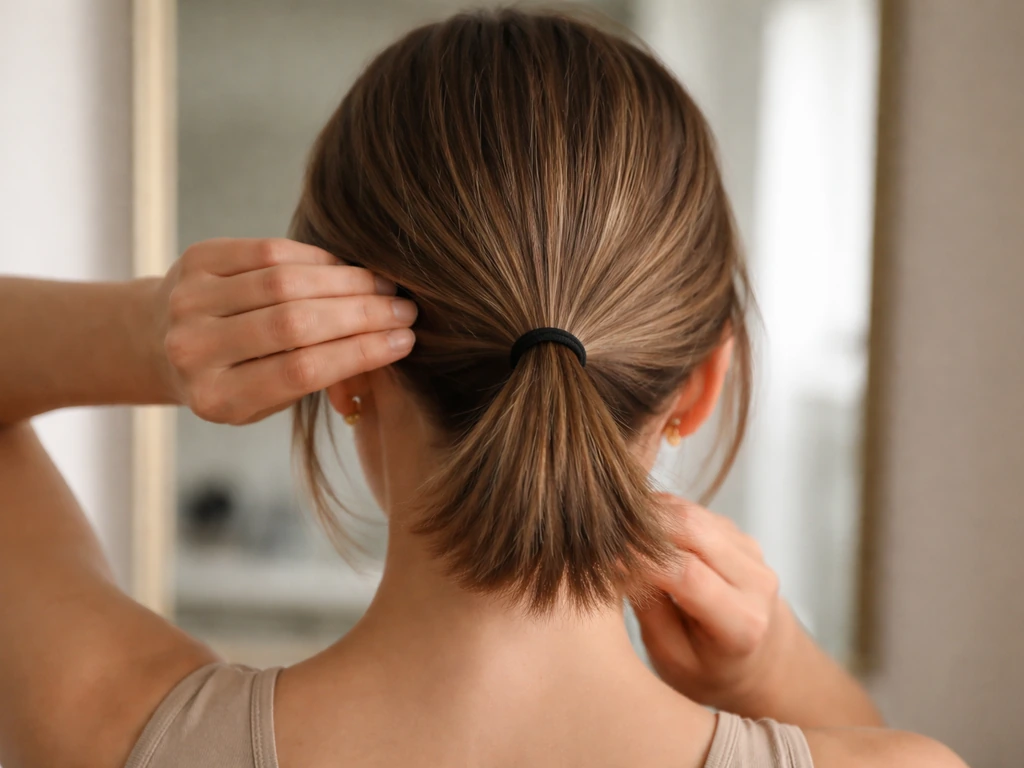
Before you commit to growing, it's worth knowing exactly what you're aiming for. A basic low ponytail that actually holds and looks intentional needs roughly 3 to 4 inches of hair all the way around, including the back and sides. A proper mid-length ponytail that you can slick back cleanly needs more like 5 to 6 inches. If you want a longer, more flowing pony, you're looking at 8 inches or more, which puts you well over a year out from most short starting points.
Your hair texture plays into this too. If your hair is thick, coarse, or curly, it tends to grow outward or upward before it grows down, which means you'll need more length before it actually reaches the elastic. Guys with naturally wavy or curly hair sometimes need an extra inch or two over what someone with straight fine hair would need to achieve the same visual result. Keep that in mind when you're setting your expectations.
| Ponytail Style | Minimum Length Needed | Approximate Time from Buzz Cut | Approximate Time from Crew Cut |
|---|---|---|---|
| Small low pony (functional) | 3–4 inches | 12–15 months | 6–9 months |
| Clean mid ponytail | 5–6 inches | 15–18 months | 9–12 months |
| Full flowing ponytail | 8+ inches | 20–24+ months | 14–18 months |
Hair growth basics for men
blank" rel="noopener noreferrer">Scalp hair grows at roughly half an inch per month, or about 1 to 1. If you want hair grow tips in Urdu, focus on the same basics like nutrition, protein and iron, and steady habits that support healthy growth. 25 centimeters every 28 days. That figure comes from multiple clinical sources and it's pretty consistent across most healthy adults. Some people land slightly higher, around 0.35 mm per day, which works out closer to 6 inches per year. The variation is real but it's not dramatic. What matters more than the exact number is that you're not going to hack this timeline significantly, so don't let anyone sell you on a product that promises otherwise.
Hair grows in cycles. The anagen phase is the active growth stage, and it can last anywhere from 2 to 7 years, which is why some people can grow hair past their waist and others seem to hit a ceiling. After anagen comes catagen (a short transition) and then telogen, where the hair rests and eventually sheds. At any given time, most of your hair is in anagen, which is the good news. The bad news is that if something disrupts the cycle, you can push more hairs into telogen prematurely, causing a wave of shedding weeks to months later. This is called telogen effluvium, and it's triggered by things like severe psychological stress, crash diets, nutritional deficiencies (especially iron), illness, surgery, and thyroid issues. It's one of the main reasons people notice their hair isn't growing as fast as it should during stressful periods.
The practical takeaway here is that the habits most likely to support steady growth are the boring basics: consistent nutrition, adequate protein and iron, reasonable sleep, and managing chronic stress. Supplements like biotin get a lot of attention, but unless you have an actual deficiency, they're unlikely to move the needle much. If you suspect something medical is slowing your growth, that's worth talking to a doctor about before spending money on growth serums.
Growing a ponytail from your current cut, stage by stage
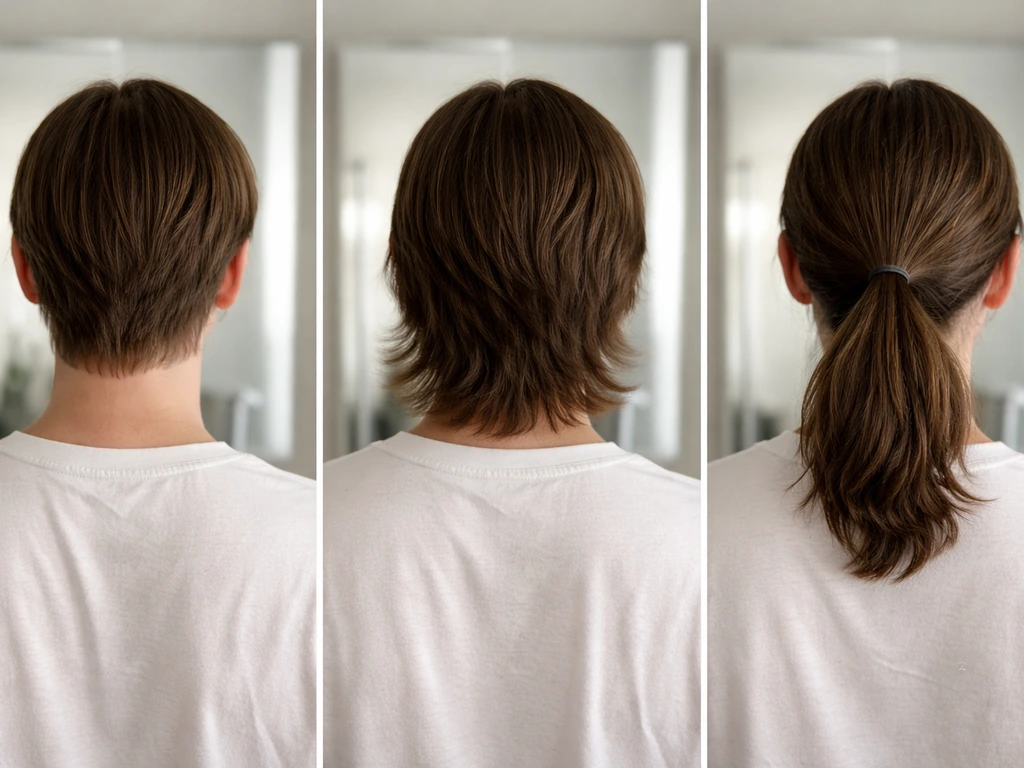
The biggest mistake guys make is treating this as one long passive wait. Breaking the grow-out into stages gives you something to work with at each phase and helps you avoid the most common self-sabotage, which is cutting it all off at month four because it looks messy. Here's a realistic breakdown of what to expect and what to do.
Months 1–3: The early awkward stretch
In the first three months, you're gaining roughly 1.5 inches of length, which is not enough to do much with. Hair tends to look thicker and puffier as the tapered sides grow out, and if you had a fade or undercut, the demarcation line becomes very visible around month two. This is the hardest phase for most guys because there's no styling trick that makes it look fully intentional. The best approach is to lean into a textured, slightly messy look using a light pomade or styling cream, and avoid the urge to neaten up the sides with a trim. Every time you taper the sides back down, you reset your timeline. If you had a heavy undercut, growing it out evens up with the top eventually, but it takes patience. The same challenge applies if you're growing out a more structured short cut, which follows a very similar early trajectory.
Months 4–6: The mullet zone

By month four or five, the back tends to outpace the sides, and you hit the classic grow-out awkward phase that most people describe as a mullet in progress. The top and crown start to have some real length but the sides haven't caught up. This is where a lot of guys tap out. Don't. Instead, use this phase to start experimenting with product. A medium-hold gel or cream can slick the sides back flat, making the overall shape look more deliberate. Headbands are genuinely useful here, not as a fashion statement but as a functional tool to keep the sides back while they grow. If you have bangs or a fringe from a previous cut, they're usually long enough by month five to tuck behind the ear, which helps a lot.
Months 7–10: Getting close to tie-able
Around month seven, if you're coming from a short cut, the top and crown hair is usually getting to 3 inches or so, and you might be able to pull most of it into a very small half-up tie. The sides are still catching up, so a full ponytail isn't here yet. This is the phase to get one optional trim, specifically a light dusting of the very tips to remove any split ends that have built up, without cutting length. Split ends travel up the shaft over time and cause breakage that actually shortens your hair, so one careful maintenance trim here is an investment, not a setback. No more than a quarter inch off.
Months 10–14: First real ponytail territory
Somewhere in this window, depending on your starting length and hair texture, all the layers start to consolidate enough that a low ponytail becomes genuinely achievable. It may be small, it may only hold for a few hours before flyaways escape, but it's functional. This is also when styling for a slick-back look becomes more realistic, since you finally have enough length to lay down. If you started with a longer cut like a medium-length tapered style, you might hit this milestone closer to month 9 or 10.
Dealing with awkward phases without losing your mind
The awkward phase is real and unavoidable. There is no way to skip it. But there are ways to make it significantly more manageable, and the guys who get through it are usually the ones who build a small toolkit of styling strategies instead of fighting the hair at every stage.
- Headbands and elastic headbands: these keep the sides back during the mullet phase and look intentional rather than desperate when you pick the right style.
- Half-up styles: once the top is 2.5 inches or longer, a small half-up tie at the crown keeps things controlled and buys you months of wearable hair while the sides catch up.
- Hats: a well-worn baseball cap or beanie is a legitimate styling tool during the grow-out, not just a cop-out.
- Texturizing spray or sea salt spray: adds grip and separation so the in-between length looks intentional rather than just untrimmed.
- Light pomade or styling cream: slicks the sides and back during the mullet phase so everything reads as one clean shape rather than a patchy mess.
- Moisture: hair that's conditioned and hydrated behaves better at every stage. Dry, brittle mid-length hair is harder to style and breaks more easily.
One thing worth mentioning: if you started from a cut with very short sides (like a high fade or a disconnected undercut), growing the back and sides evenly is genuinely one of the trickier parts of the whole process. The back tends to grow faster and the short sides can look disconnected for months. Some guys handle this by asking their barber to blend without shortening the top, gradually walking down the taper line so the transition looks more gradual as everything grows in.
Ponytail-friendly maintenance
Maintenance during a grow-out is mostly about not undoing your progress. That means protecting the hair you have while it gets longer, rather than just hoping it arrives in good condition. A few habits make a real difference here.
Trims: how much, how often
This is the most common source of confusion. Yes, you should still trim during a grow-out, but only to remove split ends, not to shape. Split ends, if left alone, split further up the shaft and cause breakage that shortens hair over time. A very light trim, no more than a quarter inch every 3 to 4 months, is enough to keep the ends healthy without meaningfully slowing your growth timeline. If you're getting more than that cut off, you're trimming for aesthetics and slowing yourself down. Be specific with your barber: tell them the goal is to grow it out and you want only the bare minimum removed from the ends.
Detangling without breakage
Once hair passes about 3 inches, it starts to tangle, especially at the back of the neck where it rubs against collars. Always detangle starting from the ends and working upward toward the roots, never from the roots down. A wide-tooth comb works better than a fine-tooth brush for mid-length hair. Detangling on dry hair is harder and causes more breakage than detangling on damp hair with a bit of conditioner or detangling spray in it.
Products worth using
A leave-in conditioner or lightweight hair oil used a few times a week helps with both texture and breakage, especially if your hair is naturally coarse or dry. Satin or silk pillowcases genuinely help reduce friction-related breakage and frizz overnight, and dermatologists have noted this specifically. It sounds minor but when you're trying to protect every bit of length you've grown, reducing nightly friction is worth the small investment. For heat styling, always use a heat protectant. Mid-length hair in the grow-out phase is more vulnerable to heat damage than short or very long hair.
Washing frequency
There's no universal rule here, but most people growing out mid-length hair do better washing every 2 to 3 days rather than daily. Daily washing strips natural oils that help the hair stay flexible and resist breakage. If your scalp gets oily fast, a dry shampoo between wash days gives you the clean feel without the daily stripping.
Troubleshooting slow or uneven growth
If your hair genuinely seems to be growing slower than the half-inch-per-month baseline, or you're noticing patches where it's thinner or shorter than the rest, it's worth thinking through a few possible causes before assuming it's just your genetics.
Stress-related shedding (telogen effluvium) is more common than most people realize. If you went through a period of significant stress, illness, a crash diet, or iron deficiency, your hair might have entered a shedding phase that's now showing up as uneven density or a apparent slowdown in growth. The tricky thing about telogen effluvium is that the shedding often starts weeks to months after the original stressor, so people don't always connect the two. In most cases it resolves on its own once the underlying cause is addressed, but it can take several months for the shedding to stop and density to normalize.
Uneven growth is often a sign of breakage rather than actual growth differences. If one area looks shorter or thinner, check whether the hair is breaking off rather than not growing. Split ends, over-processing from chemical treatments or heat, and sleeping habits (like rubbing one side of your head heavily on a pillow) can all cause localized breakage that looks like uneven growth.
If you suspect thyroid issues, significant hormonal changes, or have a family history of patterned hair loss, it's genuinely worth talking to a doctor or dermatologist. A dermatologist can distinguish between telogen effluvium, androgenetic alopecia (pattern hair loss), and other causes of thinning, and the treatment strategies are completely different depending on the cause. Getting a diagnosis early is much better than spending a year growing out hair that isn't responding because of an untreated underlying condition.
Traction alopecia: the ponytail risk you need to know about
Once you're actually wearing your hair in a ponytail, there's a real but preventable risk worth understanding. Traction alopecia is hair loss caused by repeated tension on the follicles, and tight ponytails are one of the primary causes. It typically shows up as thinning or patchy loss in a band-like distribution around the frontal hairline and temples, exactly where the elastic pulls tightest. The good news is it's largely preventable with a few simple habits: wearing your ponytail looser rather than pulled tight, varying where you place the elastic rather than tying it in the same spot every day, and using fabric-covered ties or scrunchies rather than bare rubber bands, which grip and snag the hair more aggressively. If you notice hairline thinning or tenderness at the temples after regularly wearing a ponytail, ease off the tension and see a dermatologist. Caught early, traction alopecia is reversible. Left untreated and repeated over years, the follicle damage can become permanent.
How to actually transition into your first ponytail
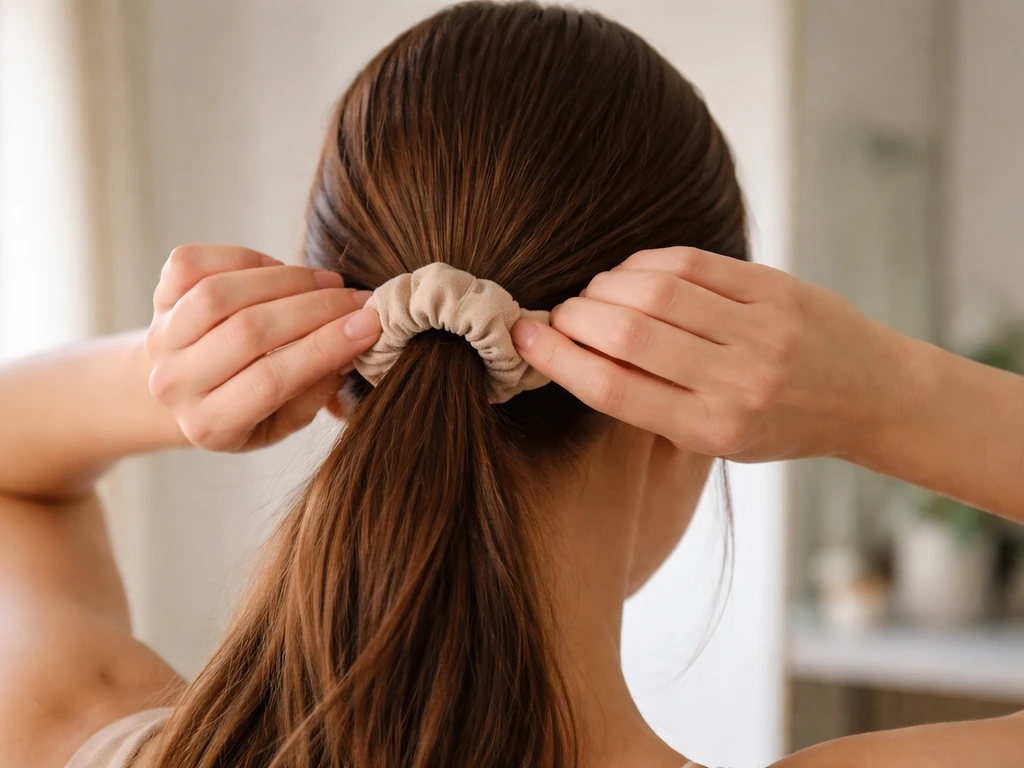
When your hair finally reaches tie-able length, the transition from loose hair to a ponytail you wear regularly takes a bit of thought. Here's what works well in practice.
Choosing the right tie
Fabric-covered elastic ties and scrunchies are your best option. They grip without cutting into the hair shaft the way bare rubber bands or thin elastics do. Spiral coil ties (the clear or colored plastic coil-style elastics) are another good option as they distribute tension across a wider surface area. Avoid metal closures entirely and skip the thin office-style rubber bands. Your tie choice matters more than most people think, especially when the hair is freshly at minimum ponytail length and still relatively fine at the ends.
Low vs. high ponytail
A low ponytail at the nape of the neck requires slightly less overall length and puts less tension on the frontal hairline than a high ponytail. It also tends to look more polished at minimum length. High ponytails can pull tightly on the temples and forehead, which is both uncomfortable and the primary mechanism behind traction alopecia. Starting with a low or mid-height pony while your hair is still on the shorter side is genuinely the better call.
Styling the ponytail as it gets longer
When the ponytail is still short (3 to 5 inches), some flyaways and short layers escaping the elastic are inevitable. A small amount of styling cream or pomade smoothed over the surface before tying helps. A boar-bristle brush used to smooth the surface before tying gives a cleaner result than a wide-tooth comb at this stage. As it grows longer (5 to 8 inches and beyond), you'll have more control and the look becomes more versatile. This is also when a slick-back style becomes genuinely achievable, which is a natural evolution from the mid-length grow-out. When you finally reach tie-able length, you can use the same slick-back fundamentals to learn how to grow slick back hair. If you're interested in a sleeker slicked-back version, that's a slightly different styling technique from a classic ponytail but uses the same foundation of length.
Your actual next steps, starting today
If you're starting this process today, here's the simplest version of a plan you can actually follow.
- Measure your current hair length at the shortest point and at the crown. This gives you a real baseline to track against the half-inch-per-month growth rate.
- Tell your barber your goal. Be specific: you want to grow a ponytail and you do not want the top shortened. Ask only for clean-up at the back of the neck and ears if needed, or skip the barber entirely for the first few months.
- Stock up on a wide-tooth comb, a fabric-covered hair tie or scrunchie, a light leave-in conditioner, and a sea salt or texturizing spray for the awkward phases.
- Switch to washing your hair every 2 to 3 days if you're currently washing daily.
- If you're in month 4 to 8, start experimenting with a half-up style using a small elastic at the crown. This is both practical and keeps you committed.
- Set a realistic milestone: aim for your first low ponytail, not a perfect one. Give yourself a target date based on your current length and the half-inch-per-month rate, and work backward.
- If your growth has noticeably slowed or you're seeing patchy areas, book an appointment with a dermatologist rather than just waiting it out.
Growing a ponytail is one of those goals that genuinely rewards patience over shortcuts. There's no product that will get you there in half the time, but there are plenty of choices that can slow you down or damage your hair on the way. Stick to the basics, protect what you're growing, and give yourself credit for each stage rather than fixating only on the finish line. If you're asking specifically about bush pubic hair, the basics are similar but the grooming and skin-care approach needs to be more gentle. If you're trying to figure out how to grow your pubic hair back after it thins or is removed, focus on gentle skin care and a patience-based growth routine bush pubic hair.
FAQ
How long should I keep growing before I can tell whether my ponytail goal is realistic?
Use a checkpoint method: once you reach about 3 to 4 inches on your shortest layer, you should be able to pull a small, functional low ponytail, even if it only holds briefly. If you are not seeing that by roughly 6 to 12 months (depending on your starting cut and texture), it usually means breakage or uneven growth rather than “slow growth,” and you should adjust maintenance and consider a thinning check.
What should I do if my sides catch up but my back keeps failing to reach ponytail length?
That pattern often happens when the back hair is breaking or getting aggressively rubbed (neck, collars, hats). Focus on detangling carefully from ends upward, reduce friction with satin or silk, and avoid tight tie placement on the same spot every day. If you notice tenderness or thinning near the hairline, treat it as possible traction alopecia rather than a “growth” problem.
Can I speed this up by getting a “growing” haircut or changing my barber instructions?
Avoid any cut that shortens the top or removes bulk too often. The useful compromise is a micro-maintenance trim only to remove split ends, about a quarter inch, every 3 to 4 months, and ask your barber to keep the length on the sections you need to tie. Also, if you started with very short sides, consider a gradual blend plan that walks the taper line down without resetting the top length.
Is biotin or a hair growth supplement worth it for growing a ponytail?
Only if you are likely deficient or you have a specific medical reason to take it. For most people, the bigger gains come from consistent nutrition, adequate protein, iron, and sleep, because supplements that are “fine” but not needed usually do not meaningfully change the length timeline. If you plan to use supplements, talk to a clinician first if you have thyroid issues or a history of nutrient deficiencies.
How can I prevent traction alopecia if I need to wear a ponytail for work most days?
Wear it looser than you think, vary the tie position (for example, slightly left or right), and use fabric-covered ties or coil elastics rather than bare rubber bands. Limit how tight it feels, and take a break when you can (loose style at home). If you get temple tenderness or a band-like thinning around the hairline, reduce tension immediately and see a dermatologist.
My ponytail holds for 10 minutes then slips. What styling changes are most likely to fix it?
At the earliest tie-able length, flyaways and short layers make the elastic lose grip. Smooth a small amount of styling cream or pomade onto the surface before tying, then tie with a fabric-covered or coil tie. A boar-bristle brush can help with surface slicking at this stage, but avoid over-brushing the ends to reduce breakage.
Should I detangle only when my hair is dry or only when it’s wet?
Detangle damp hair with a bit of conditioner or detangling spray if possible, because dry detangling increases breakage. Always start at the ends and work upward toward the roots. If you cannot wet it, use a leave-in product first and be gentler than you would with shorter hair.
If my hair seems thinner at the same time I am “not growing,” could it be something other than shedding?
Yes. Telogen effluvium can cause a noticeable shed or uneven density weeks to months after stress, illness, crash dieting, iron deficiency, surgery, or thyroid problems. Uneven length can also be breakage from split ends, heat, chemical processing, or sleeping habits that flatten or rub one side. If it persists, get evaluated so you do not wait a full year for a condition that needs treatment.
How much trimming should I do once I am past 3 inches?
Trim for health, not for shaping. Keep it conservative, about a quarter inch every 3 to 4 months, and tell your barber your goal is length retention, not a new style. Over-trimming is a common reason people feel “stuck,” because it removes the ends that would otherwise contribute to tie-able length over time.
What is a safer way to handle the awkward months when the sides lag behind?
Treat it like a styling phase, not a reason to cut it off. Use medium-hold products to slick the sides flatter, and use a headband as a practical tool to keep hair back while it grows. If you have fringe, tuck it behind the ear once it is long enough, which usually makes the overall silhouette look more intentional.