
Growing out the back of your hair takes roughly 6 to 12 months to go from a short fade or buzzed neckline to something you can actually work with, and closer to 18 months if you're aiming for real length. Scalp hair grows about 1 to 1.25 cm per month (around 0.35 mm per day), so the math is what it is. The back of the head tends to grow a little faster than the sides for most guys, but that same speed is what creates the awkward flipping and cowlick stages everyone hates. The good news: with the right routine, some strategic trimming, and a few styling tricks, you can manage every phase without starting over.
How to Grow Out the Back of Hair Men: Step-by-Step

Marcus Vickers
29 Apr 2026

What to actually expect from the timeline
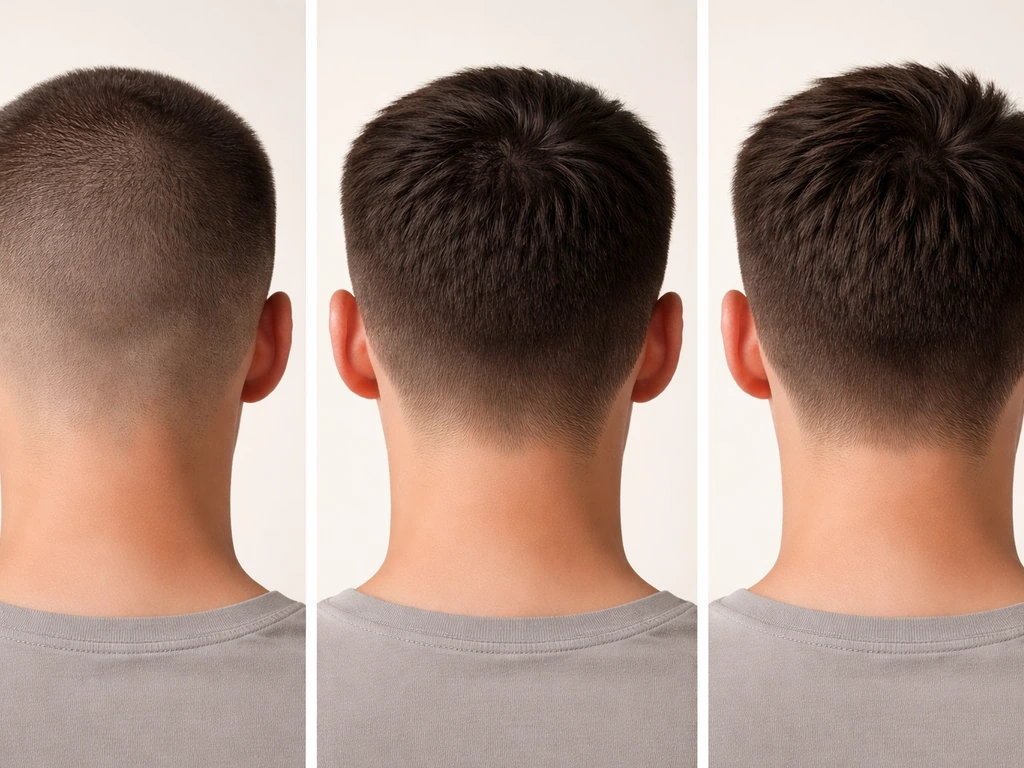
Let's be honest about the math before anything else. At roughly 1 to 1.25 cm per month, here's a rough stage-by-stage picture for the back of the head specifically:
| Timeframe | Approximate back length | What's happening |
|---|---|---|
| Month 1–2 | 1–2.5 cm | Buzzed or faded neckline starts softening; hair lies flat but has no weight yet |
| Month 3–4 | 3–5 cm | The flip zone begins — hair is long enough to curl out but too short to lie down |
| Month 5–6 | 6–7.5 cm | Starts to blend with sides; can tuck behind ears or pull into a tiny stub |
| Month 8–10 | 9–12 cm | Real length, can layer and shape; ponytail stub is possible for most hair types |
| Month 12–18 | 13–22 cm | Shoulder-adjacent territory; styles open up significantly |
The most brutal window is months 2 through 5. That's when the back flips, poofs, or curls in ways that look unintentional. This isn't a sign something is wrong. It's just hair finding its natural shape before it has enough weight to fall properly. Knowing that in advance makes it much easier to push through instead of walking into a barbershop and asking them to take it all off.
A routine that actually supports growth
There's no magic pill that makes hair grow faster than its biological rate, but you can absolutely create conditions where it grows without breaking off, thinning at the ends, or stalling because of scalp issues. Here's the routine that works:
Washing

Wash your hair 2 to 4 times a week depending on your scalp's oil production. Daily washing strips the natural oils that keep the scalp and hair shaft healthy, and over-dry hair is more prone to breakage. Use a sulfate-free or gentle shampoo if your hair is on the coarser or drier side. If you have dandruff or a flaky, itchy scalp (seborrheic dermatitis), that can actually slow your progress by creating an inflamed scalp environment.
Mayo Clinic notes that seborrheic dermatitis treatment can include medicated shampoos used 2 to 3 times per week for several weeks, with a switch to maintenance after improvement. [Ketoconazole 2% shampoo, used twice weekly for about four weeks and then once weekly for maintenance, is a clinically recommended fix.
](https://www. aad. org/public/diseases/a-z/seborrheic-dermatitis-treatment) Leave it on for 5 minutes before rinsing for it to actually do anything.
Conditioning
Conditioner after every wash is non-negotiable once your back hair reaches more than an inch or two. The American Academy of Dermatology is direct about this: use conditioner after washing. Focus it on the mid-lengths and ends, not the scalp. For guys growing out a fade or undercut, the back is often the longest hair on the head, and it needs moisture to stay flexible and avoid snapping during combing or styling.
Scalp care and detangling
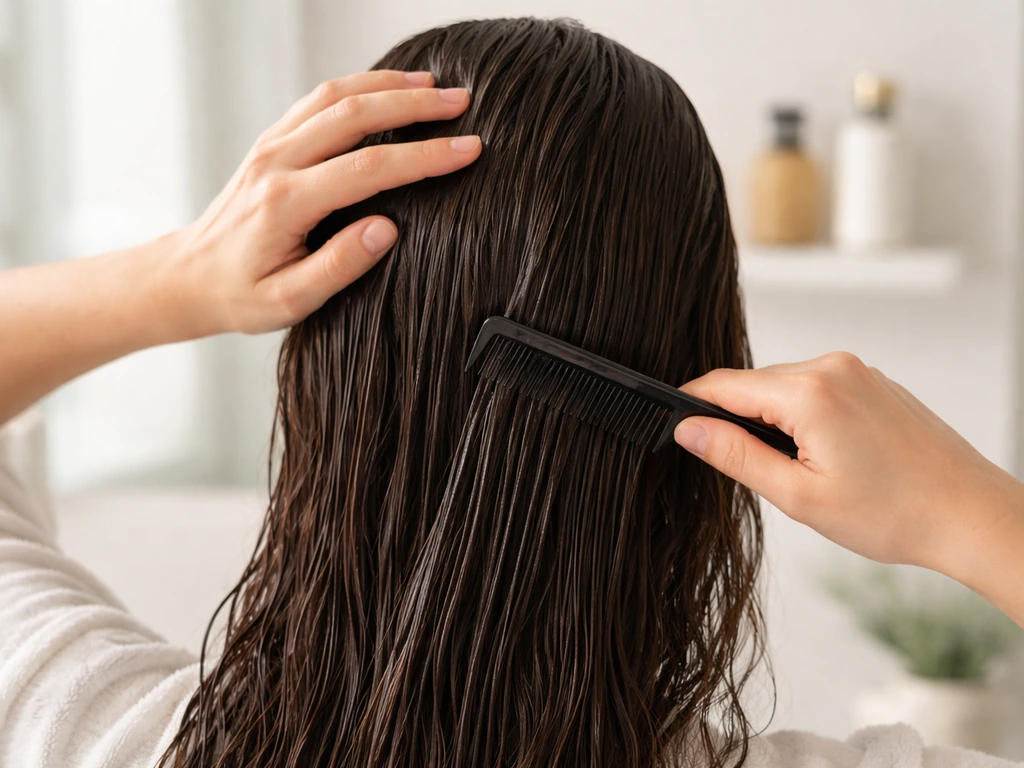
A clean, well-circulated scalp grows hair more reliably. Light scalp massage during washing (2 to 3 minutes) helps with circulation and is low-effort. For detangling, always start from the ends and work upward with a wide-tooth comb, especially when the back hair is wet. Wet hair is weaker and breaks more easily if you drag a brush through it from root to tip. As the back gets longer, detangling before washing also reduces tangling during the rinse.
Managing the awkward phases: cowlicks, flips, and uneven length
The back of the head is where cowlicks live. For most guys, there's at least one swirl or growth pattern that becomes obvious once the hair gets long enough to follow it. Here's how to deal with each common problem:
The flip (hair curling outward at the neckline)

This happens around 3 to 6 cm when the hair has enough length to curl but not enough weight to fall. The fastest fix is blow-drying the back section downward on a low or medium heat setting immediately after washing, while it's still slightly damp. Use a round brush or even just your hand to direct the hair down and under rather than out. A light pomade or cream applied while damp gives it a memory for that direction. This phase passes on its own once there's enough length and weight, usually by month 5 or 6.
Cowlicks
You can't eliminate a cowlick. You can work with it by identifying which direction the hair actually wants to grow and then styling in that direction rather than fighting it. Trying to paste a cowlick flat in the wrong direction just results in it springing back throughout the day. A medium-hold cream or clay applied to damp hair and then blow-dried into position gives the most reliable result. Once the hair gets past about 8 to 10 cm, the length itself helps weight the cowlick down.
Uneven length and layers
If you had layered hair, an undercut, or a textured cut before growing out, the back will almost certainly be uneven during the transition. The longer layers will look stringy and the shorter layers will puff. Resist the urge to even everything out aggressively, that just resets progress on the longer sections. Instead, use a light gel or paste to keep everything together and give the shorter underlayers time to catch up. This is also where growing out a short hair cut and growing out the back specifically share the same pain point: patience wins, not scissors.
Styling strategies as the back grows out
What works at month 2 won't work at month 6, so here's a stage-by-stage breakdown of what to actually do with it:
Short stage (1–4 cm)
There's not much you can do stylistically at this stage other than keep it clean and healthy. A matte clay or paste can add texture and make it look intentional rather than in-between. If the sides are longer, a slicked-back or side-swept style keeps attention away from the still-short back. Avoid heavy gels that create the appearance of wet, stuck-down hair, at short lengths that just emphasizes the uneven growth.
Medium stage (4–9 cm)
This is the awkward peak. The flip is happening, the sides may not match the back, and no style looks completely clean. Your goal here is controlled messiness. A salt spray or light texturizer gives the whole back section a deliberate tousled look that reads as styled rather than growing out. Blow-dry downward to reduce the flip. A loose tuck-behind-the-ear at the sides (if the sides are growing too) also helps frame the back length. If you're aiming for a slick-back style eventually, now is also a good time to start training the hair back with a medium-hold pomade, this builds muscle memory into the hair direction.
Longer stage (9 cm and beyond)
Once you're past about 9 cm at the back, real styling options open up. Half-up styles, small buns, a pulled-back look, or just letting it fall naturally all become workable. If a ponytail is your goal, you're looking at getting there around months 8 to 12 depending on your natural hair length before starting.
Once you have enough length at the back, you can also work toward a slick back look using the right pomade and a little training If a ponytail is your goal. If you're wondering how to grow a ponytail for guys specifically, the key is keeping enough length at the back while training the hair to sit together.
At this stage, keeping the back conditioned and trimmed of split ends becomes the most important maintenance task, length without health looks worse than shorter healthy hair.
The undercut and fade situation
This is where growing out the back gets complicated for a lot of guys. If you have an undercut, a high skin fade, or a hard line at the back and sides, those elements will grow out at the same rate as everything else, meaning the clean fade becomes a patchy transition zone, and the hard line becomes a visible contrast between shorter and longer hair.
There are two realistic approaches. The first is maintenance blending: visit the barber every 4 to 6 weeks not to cut length from the back but specifically to soften the fade line and blend the sides into the growing back. Ask for 'blend and shape only, no length off the back. ' This keeps you looking put-together while the back gains length.
The second approach is going cold turkey: stop visiting the barber, accept the in-between look for 3 to 4 months, and wait for the undercut to grow out enough that it can be blended into one length. This is faster for overall progress but requires tolerating a rough few months. Most guys do better with the maintenance blending route, it's more expensive but keeps you feeling decent about your hair throughout.
If you had a hard neckline (a squared or rounded line at the back of the neck), that will need the most attention. As it grows, a barber can soften it gradually rather than redefining it sharply each visit. Ask specifically for a 'tapered out' or 'natural' neckline rather than a clean line, this means they're removing less and blending instead of re-shaving the edge.
When to trim and how to do it without losing progress
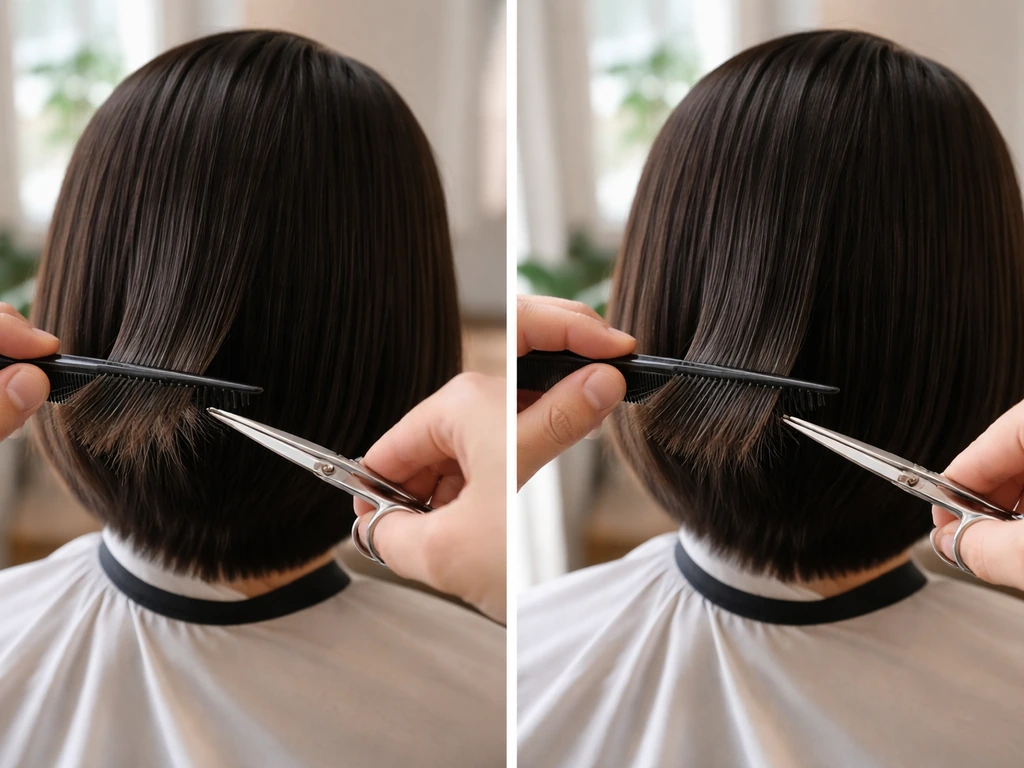
Trimming and growing out are not opposites. The biggest mistake is avoiding the barber entirely for 12 months and ending up with fragile, split, uneven ends that look terrible and break off anyway. Light trims protect your progress.
The rule of thumb: trim only what's damaged or what's actively causing a problem (like a section that's far shorter than the rest and creating a weird layer). Every 10 to 12 weeks is a reasonable visit frequency for the back while growing it out. Be specific with your barber: 'I'm growing the back out, please only remove split ends and don't touch the length.' If they take more than 0.5 to 1 cm off, say something before they continue. Some barbers default to cleaning up the neckline aggressively without thinking about your goals, that's not malicious, they just need explicit direction.
The shape of the back matters too. A slight V or U-shape at the neckline as it grows can look intentional and is easier to maintain than a blunt straight-across edge. Blunt edges at the back also tend to show uneven growth more prominently as the hair gets longer.
Protecting your hair from heat and damage
If you're using a blow-dryer regularly to manage the back-of-hair flip (which you probably should be during the awkward phase), keep it on a low or medium heat setting. The AAD specifically recommends low or medium heat settings and using a heat protectant product before applying any heat tool. A light heat spray takes about 3 seconds to apply and meaningfully reduces the mechanical and thermal damage to the hair shaft over repeated styling sessions.
If the back of your hair is bleached or color-treated, the rules get stricter. Chemically processed hair has a compromised cuticle and is significantly more prone to breakage, especially under heat. Use a protein treatment or bond-building product (like a leave-in conditioner with keratin) every week or two. Reduce wash frequency to prevent color stripping. And be honest about whether you need a gloss or toner touch-up at the roots as the back grows, visible regrowth contrast at the back of the head can look more chaotic than on top, depending on your color.
One specific note on minoxidil: if you're using topical minoxidil to support hair density at the crown or back, do not use a hairdryer directly on the scalp right after applying it. The Mayo Clinic flags this specifically. Let it absorb first before any heat styling.
When growth stalls or something feels off
If you're several months in and the back genuinely doesn't seem to be growing, or you're noticing more shedding than usual, that's worth taking seriously. Around 85% of scalp follicles should be actively growing at any given time. When something disrupts that, stress, illness, nutritional deficiency, hormonal changes, you can enter a phase called telogen effluvium, where more follicles shift into the resting phase and shed together. It often shows up as diffuse thinning across the scalp, and it usually starts 2 to 3 months after the triggering event. The shedding can be alarming but is often temporary once the trigger is addressed.
Here's how to troubleshoot before jumping to conclusions:
- Check your diet: iron deficiency, low protein, and low zinc are the most common nutritional contributors to slow or stalled growth in men
- Look at your scalp: if it's chronically flaky, itchy, or inflamed, that's an environment that doesn't support optimal growth — treat the scalp issue first
- Consider recent stressors: surgery, illness, crash dieting, or extended high stress can all trigger temporary shedding that shows up months later
- Check your styling habits: over-processing, tight hairstyles at the neckline, or aggressive brushing on wet hair can cause localized breakage that mimics slow growth
When to actually see a professional
See a dermatologist or trichologist (a hair and scalp specialist) if: you notice patchy thinning or bald spots specifically at the back or crown, shedding continues for more than 3 to 4 months without improving, your scalp is visibly irritated, itchy, or scaly in a way that doesn't respond to over-the-counter treatments, or the back of your hair is noticeably thinner than it was a year ago. A diagnosis usually involves a physical exam, and may include a hair pull test, scalp dermoscopy, blood tests for hormone levels or nutritional deficiencies, or in some cases a scalp biopsy. The earlier you get in front of someone, the more options are available to you, some types of hair loss (like scarring alopecia) need to be caught before follicles are permanently affected.
Growing out the back of your hair is a commitment measured in months, not weeks. If you’re looking for hair grow tips in Urdu, you can use the same routines and timeline ideas to plan your growth journey. For a step-by-step guide on how to grow out short hair for men, you can use the routines above as your starting point and adjust as your length changes. The flip phase is annoying but temporary.
The awkward blend from a fade is manageable with the right barber communication. And the payoff, actually having the length you've been waiting for, is completely real if you stay consistent, protect what's growing, and don't let a rough month talk you into cutting it all off again. If you mean pubic hair, the same idea applies: support the health of the follicles and give it time, so you can work toward how to grow your pubic hair back.
If you’re also asking how to grow a bush pubic hair, the biggest priorities are gentle grooming, hygiene, and avoiding irritation so follicles can keep their natural growth cycle.
FAQ
How often should I wash the back of my hair while growing it out?
Follow your scalp, not the back specifically. If your scalp gets oily fast, stick to 3 to 4 washes per week, but if it stays dry, 2 to 3 is often enough. The back hair may feel greasy sooner because it gets less airflow, so focus on cleaning the scalp thoroughly while conditioning only the mid-lengths and ends to prevent buildup and breakage.
When I blow-dry the back, how do I avoid making it worse?
Use low to medium heat and direct the airflow downward to calm the flip, then stop once it is mostly dry. Repeatedly blasting damp hair for long periods increases dryness, especially if you have coarse or color-treated hair. Also apply a heat protectant first, and comb it gently with a wide-tooth comb only after it is easier to detangle.
What length should I ask my barber to leave the back during the awkward phase?
If you are trying to minimize the “reset” risk, ask for a trim policy, not an exact haircut. A practical request is “remove split ends only, no more than about a quarter to half an inch (0.5 to 1 cm) at most,” and “blend and shape the neckline naturally.” This protects length while still cleaning up damage.
Can I use a trimmer at home instead of a barber to maintain the neckline?
Only for very light maintenance. Use a guard and shorten damaged edge hairs slightly, but do not try to create fades or remove bulk without consistent guard sizes. If you have a hard neckline, the safest approach is still barber blending every 4 to 6 weeks, because uneven home trimming can create a new, worse line.
What should I do if the back is growing faster than the sides and it looks uneven?
Aim for control, not symmetry. Use styling that sets direction, like blow-drying downward at the back, and keep the sides managed with a light cream or tuck-behind-the-ear. If the imbalance is large, tell your barber you want “soft blending, no length off the back,” so the back keeps catching up without getting cut to match prematurely.
My hair won’t stop “puffing” even after styling. Is there a product mistake?
Often it is product type or amount. Heavy gels can make short hair look stiff and more noticeable, while too little product can fail to guide the cowlick. For short-to-mid lengths, try a small amount of medium-hold cream or clay on damp hair, then blow-dry into position. If puffiness happens after it dries, you may need a slightly firmer hold or more consistent blow-drying direction.
How do I trim split ends without killing progress?
Trim based on visibility and feel. Look for frayed, see-through ends, or hair that tangles more than the surrounding strands. If the back is still short, avoid full “line trims” that cut straight across, and instead ask for targeted split-end removal. A good guard for at-home quick cleanup is usually “less than 1 cm,” but if you see many splits, a barber can assess whether more conservative cutting is needed.
Does growing the back out change what I should do for sleep?
Yes, friction matters once the back is longer than an inch or two. If you toss and turn, use a clean, satin or silk pillowcase, or loosely secure the hair in a soft bun or low ponytail before bed to reduce rubbing and tangling. This helps prevent the back from looking ragged and dry compared to the sides.
Will minoxidil make my back hair grow faster, and can I style after applying it?
Minoxidil can support density for some people, but results are not instant and it is usually not aimed at “training” hair direction. If you use it on the scalp, let it fully absorb before any heat styling and avoid immediately blow-drying the scalp area. Consistency matters more than frequent heat or heavy products that can irritate the scalp.
I’m shedding more than usual while growing out. Is it normal?
Some shedding is normal, but a noticeable increase that lasts beyond 3 to 4 months can signal an issue like telogen effluvium, especially if you had stress, illness, surgery, or major diet changes 2 to 3 months earlier. If shedding is diffuse (not patchy) and improves after the trigger, it often resolves. If you have patchy thinning, persistent scalp irritation, or worsening density, get evaluated.
When should I see a dermatologist for back-of-head hair problems?
Go sooner if you see bald spots or clear patchy loss at the back or crown, if the scalp is persistently itchy, scaly, or painful, or if shedding continues without improvement for more than 3 to 4 months. A specialist can check whether it is shedding, androgen-related loss, or a scalp condition, and they can run targeted tests if nutrition or hormones are suspected.
Is a ponytail realistic if my hair is only in the back, and how do I prepare for it?
It is realistic, but start planning the training early. Keep the back conditioned, manage splits with gentle trims, and use a medium-hold product to encourage the hair to sit together as it grows. Once the back reaches roughly the “pullable” range for your head shape, begin with loose ponytails for short periods, so you do not stress follicles with tight pulling.