
You can absolutely grow your hair into a slick-back style, but it takes at least 3 to 6 months from most starting lengths, and the honest truth is that the awkward middle phase is the part that makes most people quit and cut it short again. If you can commit to the process, keep a smart trimming schedule, and train your hair daily with the right products, you'll get there. If you want the same guidance in Urdu, you can search for hair grow tips in Urdu for step-by-step advice. This guide walks you through every stage so you're not guessing what to do when your hair is at that weird in-between length that refuses to cooperate.
How to Grow Slick Back Hair: A Step by Step Guide

Marcus Vickers
30 Apr 2026
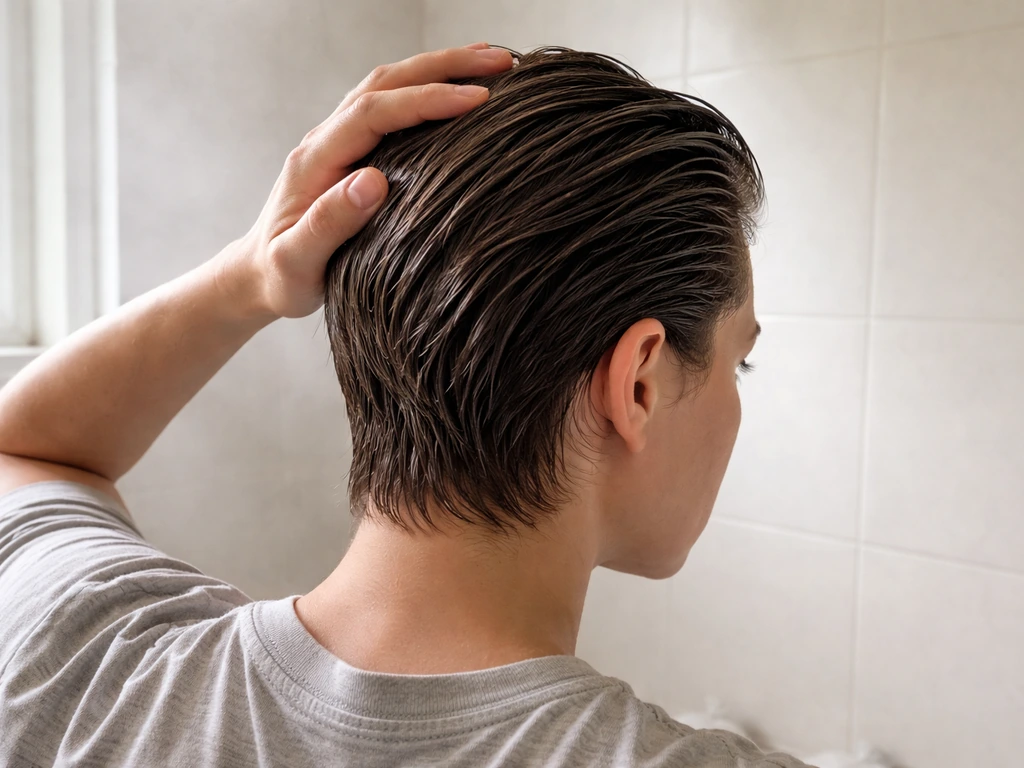
Can you actually grow hair slicked back? A reality check
Yes, but it depends on two things: your current length and your hair texture. A slick-back style requires enough length on top to comb backward and stay put, which typically means at least 3 to 4 inches of hair on the crown. Fine, straight hair can achieve that with a bit less length. Thicker, coarser, or curly hair usually needs more because it has more volume and resistance to lying flat.
The other reality check is about what 'slicked back' actually means for your hair type. If you have very curly or tightly coiled hair, a classic wet-look slick-back may not be the style you land on. You might end up with a slicked-down, defined look rather than a pin-straight comb-over, and that's genuinely a good outcome. Trying to force straight-back styling onto hair that curls tightly under tension can stress the follicle and cause breakage over time. The American Academy of Dermatology specifically warns against repeated tight pulling as a risk factor for traction alopecia, so know your hair type before deciding on a rigid end goal.
If you're starting from a buzz cut, a very short fade, or a pixie, the slick-back is a real destination but you need to set expectations. You're growing out short hair from scratch, and the transition phases can be genuinely frustrating. If you're already at a medium length, you may only be a few months away. Either way, the plan below is the same: grow strategically, style through the awkward phases, and don't let a bad hair day talk you into the scissors.
Length targets and realistic timelines
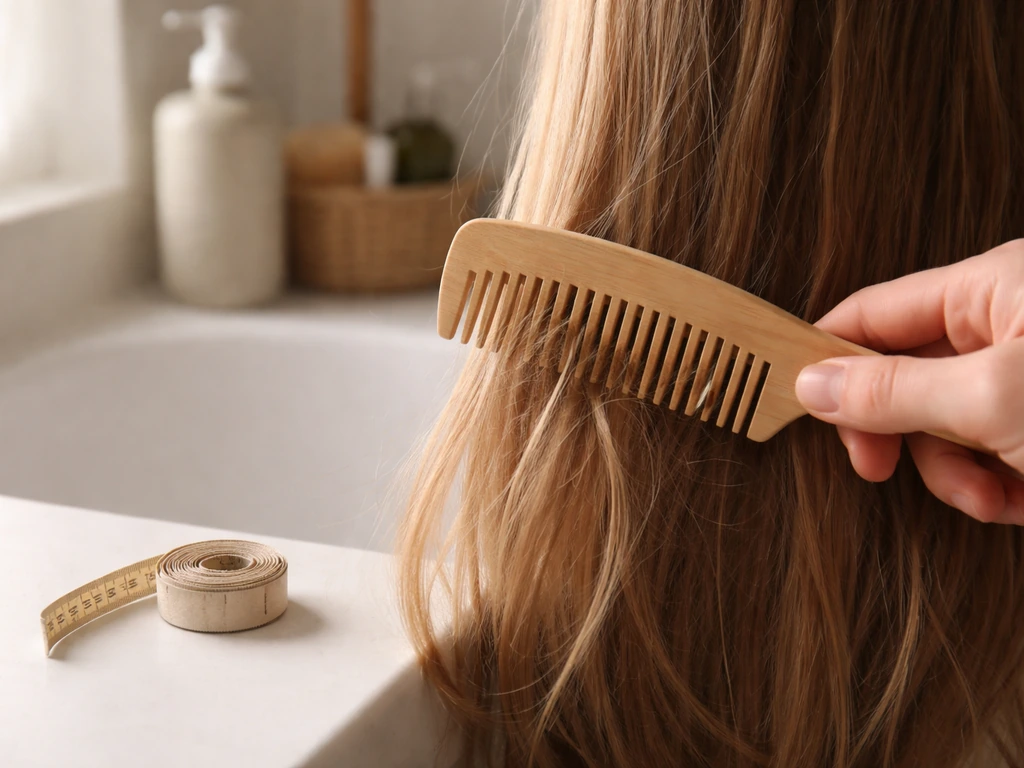
Hair grows about half an inch per month on average, sometimes slightly faster, rarely much slower unless there's an underlying health factor. Hair growth averages about 0.5 inches (about 1.25 cm) per month, which is roughly 6 inches per year Hair grows about half an inch per month on average. Here's how the timeline typically breaks down depending on where you're starting from.
| Starting Length | Length Needed to Slick Back | Estimated Time | Notes |
|---|---|---|---|
| Buzz cut (under 0.5 in) | 3–4 inches on top | 6–9 months | Most awkward phase; requires patience and daily styling |
| Short crop / tight fade (0.5–1 in) | 3–4 inches on top | 4–7 months | Sides grow out quickly; watch for mushroom shape |
| Pixie cut (1–2 in) | 3–4 inches on top | 3–5 months | Common for all genders; bangs grow out fastest |
| Medium short (2–3 in) | 1–2 more inches | 2–4 months | Often the closest to ready; needs training more than length |
| Medium length (3+ in) | Ready or nearly ready | 0–2 months | Focus on texture, product, and direction training |
These timelines assume no major health issues affecting growth rate. Stress, nutritional gaps, and certain medications can slow things down, which is worth knowing if you feel like your hair just isn't moving. For most people, though, the timeline is just patience and consistency, not biology working against you.
One note for men growing out from a short fade: the back and sides will catch up to the top faster than you think, and that puffed-out shape around the ears is one of the most common reasons guys give up. That shape is not permanent, it just needs a strategic trim. More on that in the next section.
Your growing-out plan: trimming, cut strategy, and avoiding setbacks
The biggest mistake people make when growing out for a slick-back is either trimming nothing at all (which leads to split ends and uneven texture) or trimming too much because they panic during an awkward phase. The goal is to keep the shape manageable without sacrificing length on top.
Trimming rhythm
Trim the ends every 10 to 12 weeks, not every 6. You're growing out, so visiting the salon every 6 weeks is actively working against you. When you do go in, ask for a dusting (removing only split ends, usually less than a quarter inch) rather than a shape-up that shortens your length. Be specific. Many stylists will default to their standard trim if you don't tell them your goal.
Managing the sides and back
If you're coming from a fade or undercut, the sides and back will need more frequent attention than the top. You can trim the sides lightly every 4 to 6 weeks to keep the shape from going full 'mushroom' without touching the top length at all. This is the key move that keeps you looking intentional during the grow-out instead of just unkempt. If you're growing out from a more uniform cut, you can usually leave everything alone for longer and just focus on conditioning and styling.
Dealing with bangs and layers
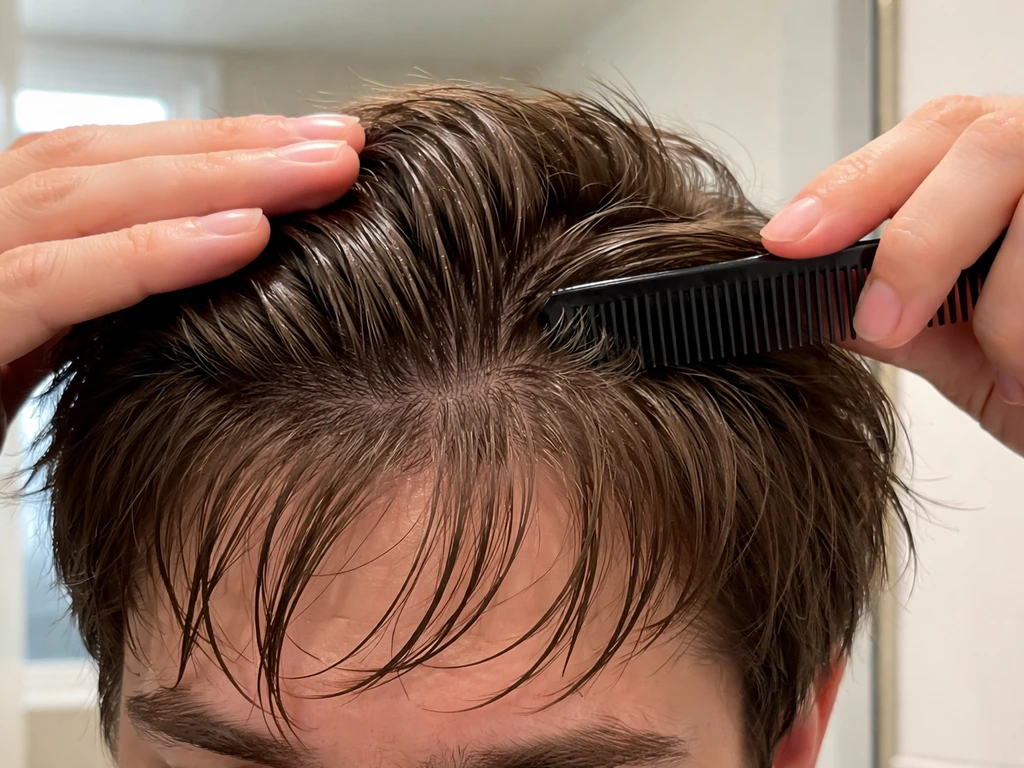
If you have bangs or heavy layers, these are the pieces that will resist slicking back the longest. Bangs, especially, have a mind of their own as they grow out. The best strategy is to train them backward from day one using product and a blow dryer (details in the styling section below), rather than waiting until they're 'long enough.' Even short bangs will start learning the direction you want if you're consistent. Layers add volume that can fight the flat, swept-back look, but once your hair is long enough, layers actually help the style look less one-dimensional.
What counts as a setback
A setback is any cut that takes significant length off the top. Getting 2 inches cut off because you had one bad week sets you back about 4 months. It's fine to go short intentionally if that's what you want, but make sure you're not making that decision on a frustrated Tuesday morning. The awkward phase is temporary. The setback is real.
Washing, conditioning, and product routine to train the hold

This is the part most people skip or underthink, and it's actually where a lot of the 'training' happens. Hair doesn't have memory on its own, but repeated styling in the same direction while the hair is pliable (wet or warm) builds a habit over weeks and months.
Washing frequency
Wash your hair 3 to 4 times a week if you have normal to oily hair, or every 4 to 5 days if your hair is dry or coarse. Daily washing strips natural oils and makes hair drier and harder to control, which actually works against the slick-back look. On non-wash days, a small amount of dry shampoo at the roots can absorb excess oil without disturbing the style.
Conditioner is not optional
If you're skipping conditioner, start using it every time you wash. For normal to oily hair, the American Academy of Dermatology recommends using rinse-out conditioner after every wash, ideally a few times per week, as Healthline summarizes. Hair that holds a slick-back needs to be smooth and flexible, not stiff or dry. Apply conditioner from mid-shaft to ends, leave it for 2 to 3 minutes, and rinse with cool water to help the cuticle lie flat. Fine hair can use a lightweight leave-in conditioner instead of a heavy rinse-out formula to avoid weighing things down.
Products that actually help
The right product depends on your hair type and the finish you want. Here's a practical breakdown.
| Hair Type | Best Product | Finish | Hold Level |
|---|---|---|---|
| Fine/straight | Pomade (water-based) | Shiny/slick | Medium to high |
| Medium/wavy | Hair cream or light pomade | Natural to shiny | Medium |
| Thick/coarse | Strong-hold gel or wax | Shiny to matte | High |
| Curly/coiled | Curl cream + light gel | Defined | Medium |
| Any (subtle hold) | Leave-in conditioner + light pomade | Natural | Low to medium |
Apply product to damp hair for stronger hold and more control, or to dry hair for a lighter, more natural finish. Water-based pomades are easier to wash out and less likely to build up on the scalp, which matters for scalp health over time. Avoid applying product directly to the scalp itself. Work it through the mid-lengths and ends, then comb backward.
The blow dryer is your best tool
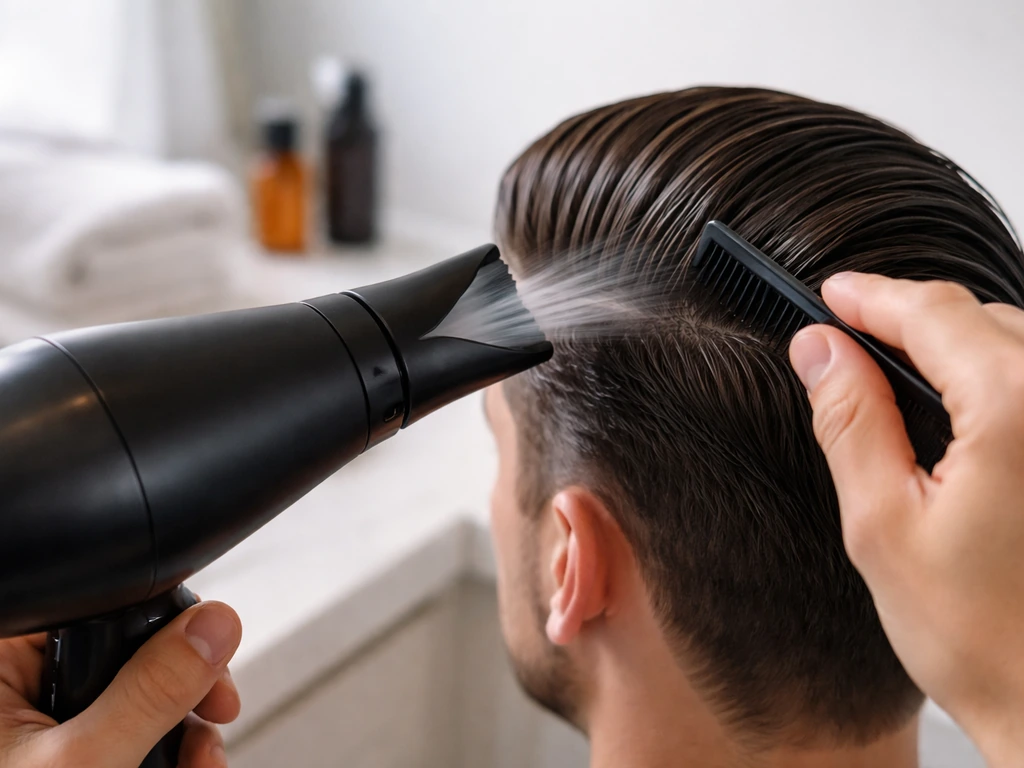
If you're serious about training your hair to go back, a blow dryer with a concentrator nozzle is the single most useful tool you can own. After washing, apply a small amount of product to damp hair, then use the dryer on medium heat while combing or brushing the hair backward from the forehead toward the crown. This sets the direction while the hair is warm and pliable. Finish with a cool shot to lock the shape. Done consistently over several weeks, you'll notice your hair starts naturally wanting to go backward even on days you don't blow dry.
How to slick it back at each awkward phase
The key is to never stop attempting the style, even when the length makes it imperfect. Styling your hair in the intended direction from day one is what trains it and also keeps you from feeling like you look messy for months on end. Here's what to do at each stage.
Very short (under 1 inch on top)
You can't slick it back yet, but you can start training the direction. Use a small amount of pomade or light wax and run your hands or a soft brush backward over the scalp every morning. It won't stay, but you're building the habit and very slightly influencing how the hair lies as it grows in. Keep the sides cleaner at this stage to at least look intentional.
Short-medium (1–2 inches on top)
This is the hardest phase for most people. The hair is long enough to be messy but too short to control. Apply water-based pomade to damp hair and use a fine-tooth comb to sweep everything backward. A headband worn for 20 to 30 minutes after styling can hold the shape while the product dries. It looks a bit ridiculous during that window, but the result is worth it. At this length, a low, tight wrap with a satin scarf or bonnet overnight can also help flatten the hair and reinforce the direction.
Medium (2–3 inches on top)
Now you can actually start doing a real slick-back, at least partially. Apply pomade or a strong-hold gel to damp hair, comb straight back from the hairline, and blow dry on low to medium heat while keeping the comb or brush moving backward. If the sides are also at this length, use a bit more product on the temples where hair tends to spring forward. The style won't last all day yet, but it'll look right in the morning.
Getting there (3–4 inches on top)
At this length, a proper slick-back is genuinely achievable. Comb damp hair fully backward, blow dry with the concentrator pointing from front to back, then apply a final layer of pomade while dry for hold. Use a wide-tooth comb to set the final shape. If you want a hard, shiny look, use a strong pomade or gel and finish with a light hairspray. For a softer result, use a cream and skip the spray.
Longer styles (4+ inches)
At this point you have options. A full slick-back with volume at the crown, a flatter wet-look style, or a textured swept-back look all work. The longer the hair, the more product you'll need to distribute evenly. Work it in section by section from underneath, then comb the surface smooth. At this length, finishing with a light flexible-hold hairspray keeps things in place without stiffening the hair. If you're a guy growing toward a ponytail, you're approaching that length, and the techniques for maintaining the slick-back translate directly into managing longer lengths too.
Dealing with flyaways, cowlicks, thinning, and scalp health
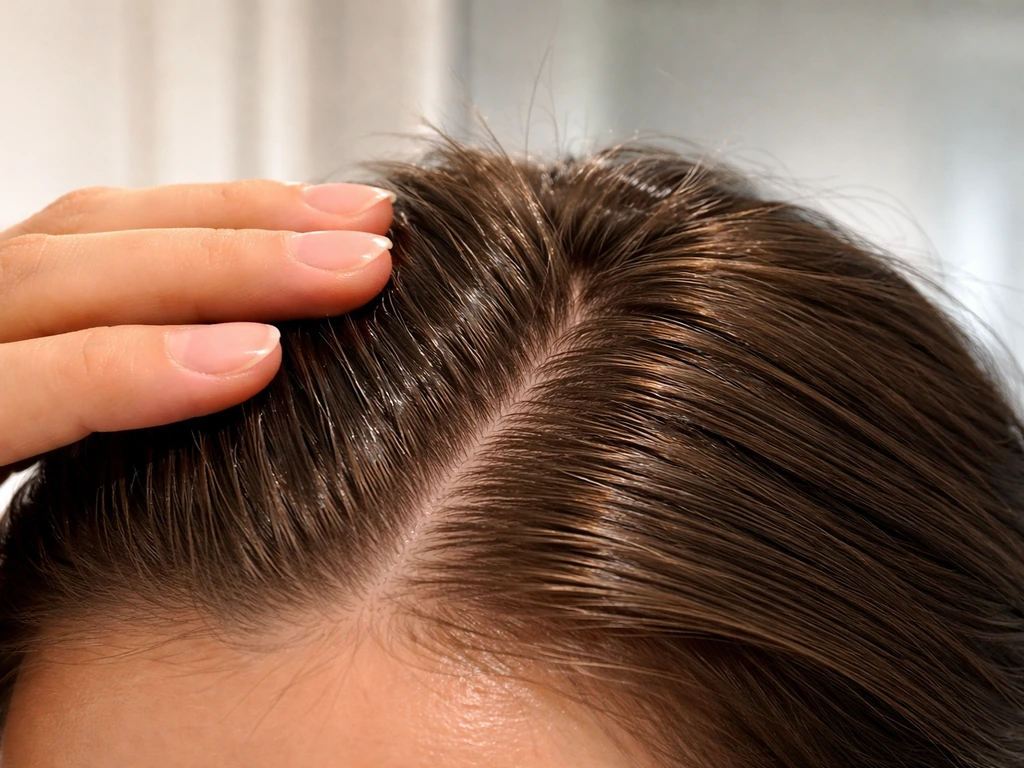
These are the things that make people feel like their hair just 'won't cooperate.' Most of them are solvable, and one of them is worth taking seriously.
Flyaways
Flyaways are usually a sign of dryness or damage, not a styling failure. Make sure you're conditioning consistently. For immediate control, a tiny amount of pomade or even a drop of hair serum smoothed over the top layer of your hair after styling will tame them. A boar bristle brush is very effective here: brush over the top of your finished style to smooth down any fine hairs sticking up. Don't use too much product to fight flyaways or you'll make the whole style look greasy.
Cowlicks
Cowlicks at the crown or hairline are the most common complaint for people trying to grow a slick-back. They don't disappear, but they can be managed. The technique that works best is blow drying the cowlick area against its natural direction first (even temporarily lifting it the wrong way), then immediately redirecting it back where you want it while the hair is still warm. The heat temporarily breaks down the hydrogen bonds in the hair shaft, and you reset the shape as it cools. Do this every wash day and the cowlick becomes much less dominant over time.
Thinning hair
If you're noticing thinning at the top or crown while growing out, this matters for both style and health. Slick-back styles on thinning hair can actually work well because the backward sweep reduces the appearance of volume loss. However, if the thinning is progressing, it's worth addressing it rather than just styling around it.
The Mayo Clinic notes that persistent or distressing hair loss is a reason to see a doctor, and many causes of thinning (nutritional deficiency, hormonal shifts, stress) are treatable once identified. If you are dealing with pubic hair thinning or loss and want to know how to grow your pubic hair back safely, the same basics of scalp-style care, gentle routines, and knowing when to see a professional can help.
A dermatologist can confirm whether what you're seeing is normal shedding or something worth treating proactively.
Also, be careful with how tightly you're slicking things back. The AAD warns that hairstyles that consistently pull on the follicle can cause traction alopecia over time, a type of gradual hair loss that starts at the temples and hairline. A slick-back doesn't have to be brutally tight to look good. Use enough product to hold the direction rather than pulling the hair itself hard against the scalp.
Scalp health during the grow-out
Product buildup is one of the most common scalp issues during the grow-out phase because you're using more styling products more consistently. Clarify your scalp with a clarifying shampoo once every 2 to 3 weeks to remove buildup without stripping your hair. If you notice flaking, itchiness, or irritation, switch to a gentle scalp-focused shampoo temporarily. A healthy scalp is genuinely the foundation of healthy hair growth, so it's worth keeping an eye on and not just covering up with product.
Putting it all together: your week-by-week mindset
The slick-back is one of the most achievable long-term style goals because it doesn't require a specific cut to maintain, just length, texture, and daily routine. The people who get there are almost always the ones who kept styling through every phase instead of waiting until they felt 'ready.' You're not waiting to start styling your hair a certain way. You're styling it that way from now, and the hair catches up. If you're really asking how to grow bush pubic hair, the same patience with grooming and gentle skin care applies.
If you're also planning to eventually grow the back of your hair longer or transition into a longer overall style, the same principles apply: strategic trimming, consistent direction training, and patience with the timeline. The grow-out process is linear but it doesn't always feel that way. Track your progress with monthly photos. The changes are real, they're just slow enough that you don't notice them day to day.
- Wash 3 to 4 times a week, condition every wash
- Blow dry backward on damp hair to train direction
- Trim ends every 10 to 12 weeks, sides every 4 to 6 weeks if needed
- Apply product before each styling session, not just on good hair days
- Use a boar bristle brush or fine-tooth comb for surface smoothing
- Address cowlicks with heat, not just extra product
- Clarify scalp every 2 to 3 weeks to prevent buildup
- If thinning is progressing, see a dermatologist before it advances further
- Take monthly photos so you can see real progress
FAQ
Can I train my hair for a slick back if I do not want to blow-dry every day?
Yes, you can train slick-back direction with a little product on dry or slightly damp hair, but expect less hold. For the strongest “set,” style right after washing (when hair is warm and pliable), then do a quick cool-shot at the end to lock direction.
How do I prevent my slick-back from looking dry or flaky?
If you see increased dryness, adjust the routine rather than adding more product. Reduce to a lighter product, wash as needed (often 3 to 4 times weekly for normal to oily hair), and make conditioner a consistent mid-shaft to ends step with a cool rinse.
What should I do if conditioner makes my hair look flat or greasy?
You usually should not skip conditioner if you want a smooth slick-back. If your hair gets weighed down, use a lightweight leave-in or a shorter conditioner contact time (around 1 to 2 minutes) while still rinsing thoroughly.
How do I pick the right product for my hair texture so it stays slicked back without residue?
Choose a water-based pomade or gel that matches your hair texture. Fine hair typically needs a lighter, flexible hold to avoid buildup and stringiness, while thicker hair often tolerates stronger hold. If you feel residue by midday, switch formulas or wash more often.
How often should I clarify my scalp during a slick-back grow-out?
Wash less often is not always better. If you’re using heavy product, you may need a clarifying shampoo slightly sooner (for example every 2 weeks) until buildup stops, and then return to a maintenance schedule.
Do I need to trim my sides more often even if I am growing the top out?
A quick rule of thumb: trim the sides/back more often than the top only when your haircut shape is becoming distracting. If you notice puffiness around the ears or bulk on the sides, do a light maintenance trim, but keep the crown length intact.
What if my cowlick or hairline will not go backward even after styling?
If the top feels “too stubborn,” it is often resistance from dry roots or cowlicks, not that you are using the wrong haircut length. Try blow-drying the stubborn area in a temporary opposite direction first, then redirect back while warm.
Where exactly should I apply pomade or gel to avoid an oily-looking slick-back?
Do not apply product directly on the scalp. Put it through mid-lengths and ends, then comb backward. If your scalp gets oily quickly, focus on a smaller amount and use dry shampoo only on the roots.
How much of a setback is a one-time bad haircut if I am growing out for slick back?
Small setbacks are common, but large top cuts reset the timeline. Avoid “fixing” a bad week by cutting height off the top. If you do need a cut, request a dusting (split-end removal) rather than a shape-up that removes top length.
Is a slick-back safe if I am noticing thinning at the crown?
If your hair is thinning, styling can help visually, but you should also rule out treatable causes. A dermatologist can determine whether it is shedding versus pattern hair loss, and they can suggest options that do not rely on styling alone.
Should I use hairspray for a slick-back, or can I skip it?
Not necessarily. Some people get better results by using a cream or paste for shape plus a very light flexible hold spray only at the surface, or skipping spray entirely for a more natural look. Over-spraying can make hair stiff and emphasize dryness.
How do I refresh a slick-back between washes without restarting from scratch?
Yes, the style can look different day to day, especially at mid-length. Use the same direction training steps in the morning (or on wash days), and refresh with a tiny amount of water or product on the top layer rather than reworking the whole head.