
Growing out an a-line haircut takes roughly 6 to 18 months depending on how short the back is and how long you want to go, and the process has two genuinely difficult phases: the first is when the back starts catching up to the front (usually around months 2 to 4), and the second is the classic flip-out stage when ends hit somewhere between chin and shoulder. Neither phase has to derail you. With the right trim schedule, a few targeted styling techniques, and realistic expectations about what each month actually looks like, you can move through those stages without feeling like you need to chop it all off and start over.
How to Grow Out an A-Line Haircut: Timeline and Tips

Marcus Vickers
1 Jun 2026
What makes an a-line haircut hard to grow out
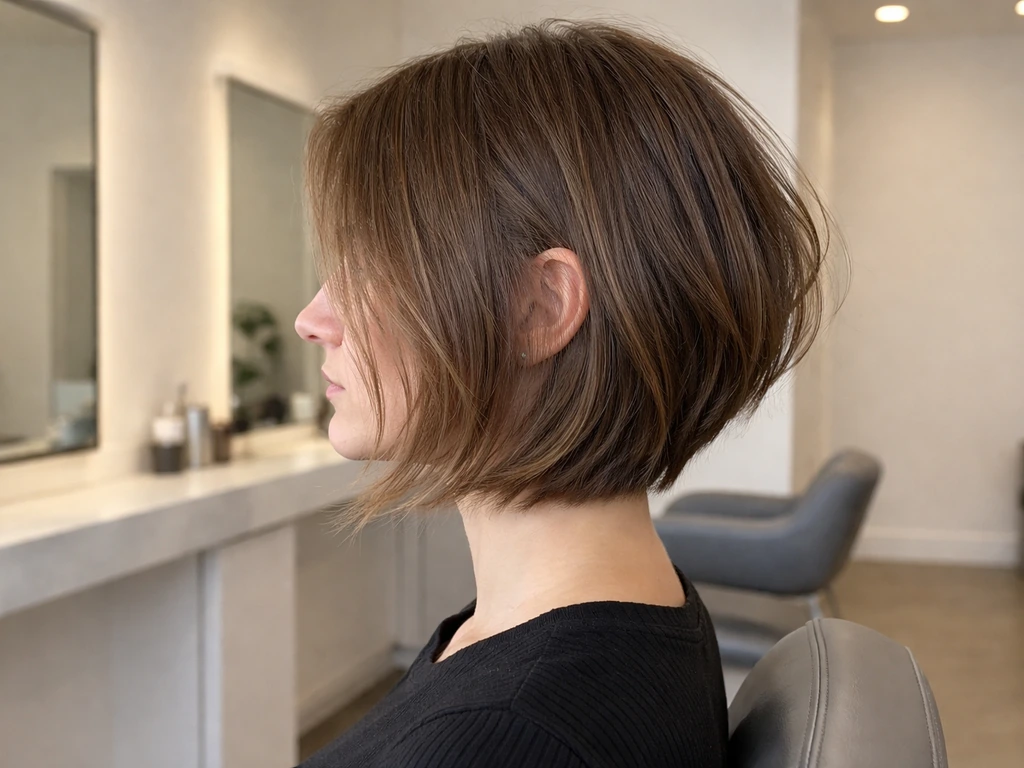
An a-line bob (also called an angled bob) is defined by a diagonal perimeter that runs longer in the front and shorter in the back. That continuous angle is what gives it its sharp, clean look when freshly cut. The problem is that the same built-in front-to-back length difference becomes the source of almost every grow-out complaint.
As everything grows at the same rate (about half an inch per month), the short back starts to catch up to the longer front, but it does so unevenly at first. You end up with a back that looks like it's trying to be a bob but isn't quite there, while the front has already moved past its original length. The shape blurs. The perimeter loses its definition.
And if you had a stacked back, a heavy undercut, or any graduation layered in, those areas add bulk or strange volume at exactly the wrong time.
The flip is the other major issue. When the back grows out to around jaw length, the ends often have nowhere comfortable to sit and start flicking out in unpredictable directions. This is not a texture problem or a damage problem. It is just the physics of short-to-medium hair that hasn't reached enough length to have weight pulling it down. Knowing this happens to almost everyone growing out any kind of bob makes it easier to plan for rather than panic about.
Realistic timeline: what to expect month by month
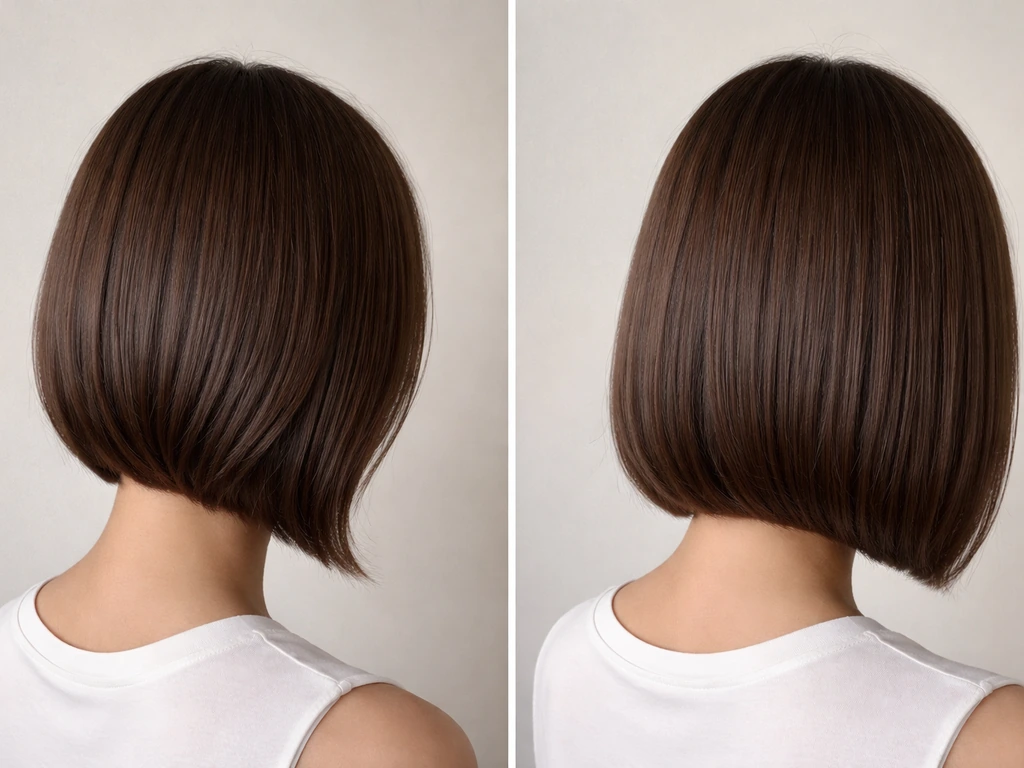
Hair grows about half an inch per month on average, so the math is pretty straightforward once you know your current lengths. The back of a typical a-line is cut anywhere from nape-length (1 to 2 inches) to just below the occipital bone (3 to 4 inches). The front usually sits somewhere from chin to collarbone. Those two measurements drive your entire timeline.
| Growth Phase | Approx. Timeframe | What You'll Notice | Main Challenge |
|---|---|---|---|
| Short back catching up | Months 1 to 3 | Back starts to round out; angle softens | Loss of original shape, possible bulkiness |
| Awkward back-of-neck stage | Months 2 to 4 | Back hits jaw or just below; ends start to flip | Flip-out, uneven perimeter, cowlick exposure |
| Full chin-length all-around | Months 3 to 6 | Front and back closer in length; looks like a growing-out bob | Managing the transition without looking messy |
| Approaching shoulder length | Months 6 to 12 | Hair has weight but may have odd layering or holes | Blending old layers, maintaining shape |
| Past shoulder/longer | Months 12 to 18+ | Most of the original a-line is grown out | Final layer blending, ends texture |
If your back was very short (think nape-grazing), add a few extra months to the early stages. If your front was already at collarbone, you're starting with an advantage because that length already has some weight and movement to work with. The point is: this is a process measured in months, not weeks. If you set your expectations accordingly, every stage feels like progress rather than failure.
Styling strategies for each awkward stage
When the back is still short but growing
In the first couple of months, your main job is to preserve the integrity of whatever shape you have while letting the back catch up. A blowout with a round brush is your best friend here. Use the dryer to lift at the roots first, then follow the length of the hair downward, and use the round brush to coax the ends slightly inward rather than letting them flip. The key move is rotating the brush so it curls the ends under rather than outward. Doing this consistently actually trains the ends over time.
The flip-out phase (the hardest part)

Once your back length hits around jaw level, you'll likely hit the flip. Ends start kicking outward because there isn't enough weight to pull them down. This is the stage people describe as looking like a bad mushroom or a 90s mom bob, and it can feel discouraging. If you feel like your cut is turning into a bad haircut, focus on blow-drying in the flip direction and keeping your expectations realistic bad mushroom or a 90s mom bob.
A few things genuinely help. First, blow-dry against the flip direction: if ends want to kick out and back, roll the round brush inward and push the dryer air downward. If you have a cowlick driving the flip, blow-dry that section in the opposite direction of its growth pattern until the hair is fully dry and set.
Second, a lightweight curl cream or smoothing serum applied to damp ends before blow-drying gives the ends something to hold onto, making them easier to direct. Third, air-drying during this phase almost always makes the flip worse, so if you have the time, always finish with heat.
Blending the angle into a more even bob
Once the back and front are within an inch or two of each other in length, you can start styling toward a rounder, more even bob shape rather than fighting the angle. Tucking the front pieces behind the ears, using a slight wave with a 1-inch curling iron, or pulling everything into a textured half-up style all disguise the remaining angle nicely. This is also when a well-placed trim (more on that below) can actually accelerate the perception of progress by cleaning up the perimeter without removing meaningful length.
Approaching shoulder length
Once hair approaches the shoulder, the flip usually resolves on its own because there's finally enough length to weigh the ends down. Your main styling challenge at this point is that old layers from the a-line may be creating unevenness, patches of shorter hair, or a "hole" in the middle section. A loose wave or beach texture is genuinely the easiest way to handle this because it makes varying lengths look intentional rather than uneven. A texturizing spray on dry hair, scrunched in and diffused for a few minutes, works well for most hair types.
Trims during the grow-out: what to ask for and how often
You do not need to avoid trims entirely while growing out an a-line. The myth that any trim sets you back is frustrating because untrimmed, split, or uneven ends actually make the grow-out look worse at every stage. What matters is the type of trim and the size of it. A micro-trim is typically under half an inch and maintains the health of the ends without sacrificing length. Scheduling these every 8 to 10 weeks during active grow-out is a reasonable cadence. If you go more frequently than every 6 weeks and you're removing even a quarter inch each time, you will stall noticeably.
When you sit down with your stylist, be specific. Say: "I'm growing out my a-line and I want to keep as much length as possible. I want to even out the perimeter slightly and remove split ends, but I do not want more than a quarter inch taken off the front and only what's needed in the back." That phrasing gives the stylist clear boundaries. If you want to transition the shape from a hard angle to a softer, more rounded perimeter, ask for a "gradual perimeter blend" or a "soft rounded bob trim" rather than a sharp a-line rededication. That keeps your grow-out on track while cleaning up the shape.
Handling the specific challenges: layers, undercuts, and the back-to-front gap
Stacked backs and undercuts
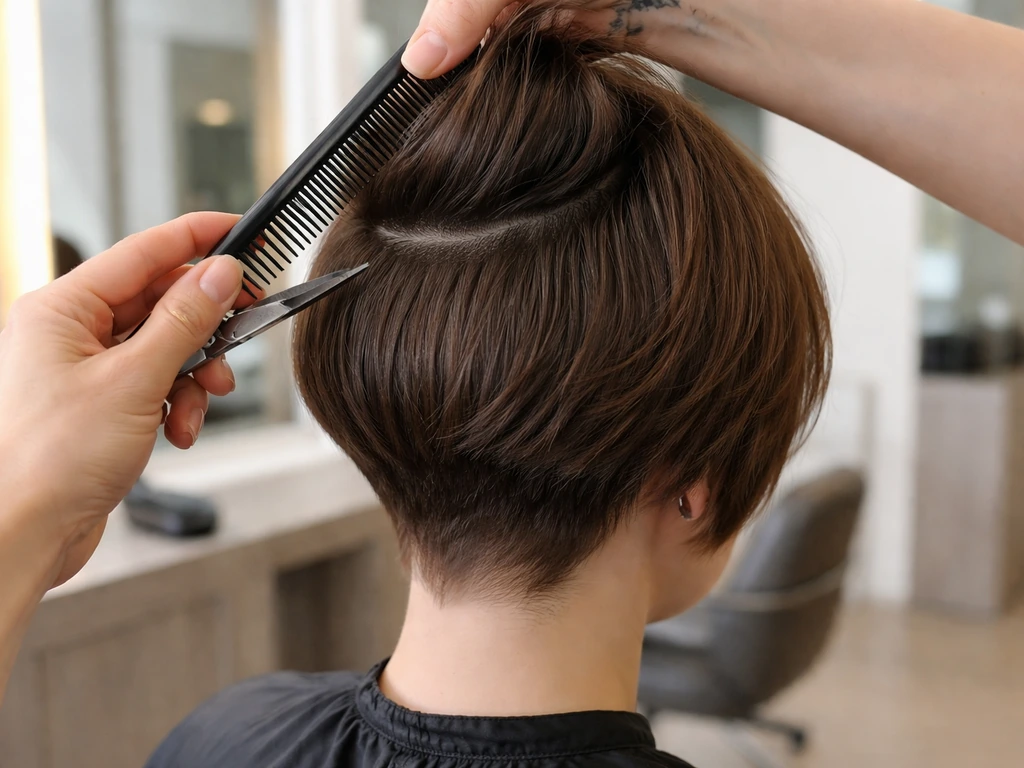
If your a-line had a stacked or graduated back, you have additional layers sitting underneath that will emerge as the top hair grows out. This can create a ledge of bulk or a rounded silhouette in the back that looks odd. The fix is not to cut the top down to match.
Instead, ask a stylist to gently remove some of the stacking bulk every couple of months by point-cutting into the under-layers, which blends the graduation without sacrificing length at the perimeter. If you had a hard undercut, the approach is similar to growing out any undercut: the shorter underneath sections need time, and there will be an awkward in-between period where the nape area looks slightly different from the rest.
Keeping it styled down with smoothing products during this phase helps minimize the visual gap.
Bangs and fringe
If your a-line included a fringe or full bang, that's essentially its own sub-project running alongside the main grow-out. Soft face-framing fringe can blend into longer layers in as little as 8 to 10 weeks. Full blunt bangs take considerably longer, often six months or more to fully integrate into the rest of the length without looking like a obvious separate section.
During that time, a side-swept style (using a round brush and moderate heat to train the bangs across the forehead and to one side) is the most forgiving option. Growing out bangs alongside an a-line is genuinely manageable, but it helps to treat them as a separate timeline so you're not surprised when the rest of your hair looks more integrated before the bangs do.
The back-to-front length gap
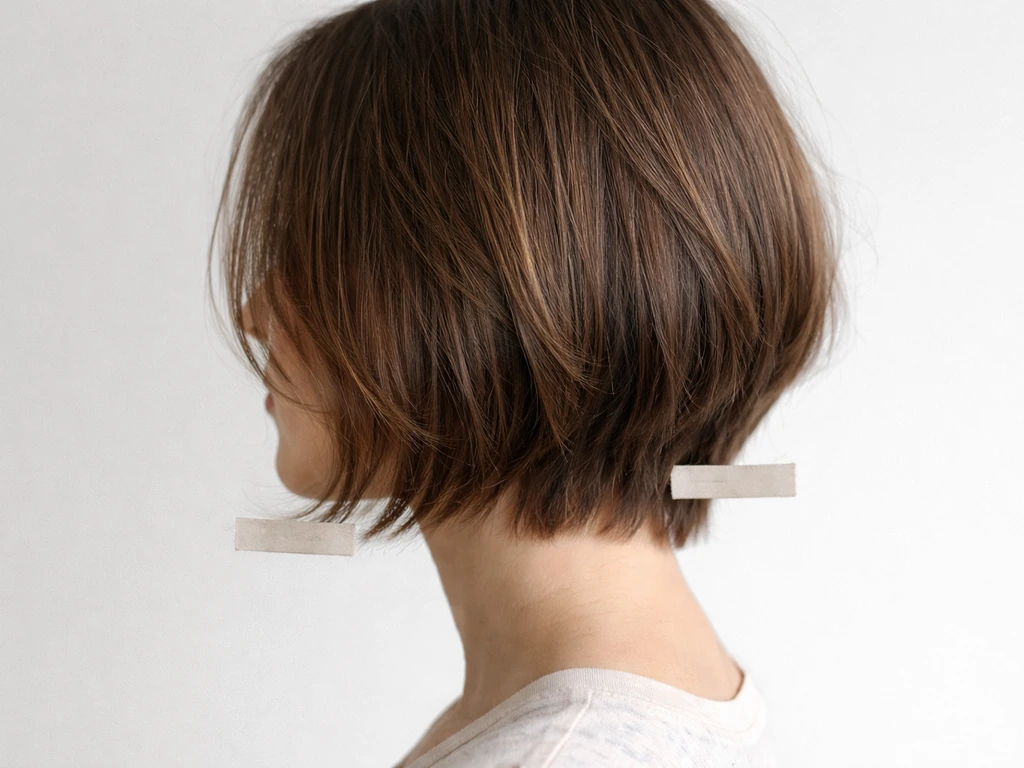
The gap between your short back and your longer front is the defining challenge of an a-line grow-out and it doesn't fully resolve until the back has caught up to at least chin-length or beyond. In the meantime, the most effective visual trick is to draw attention to the front. Wearing earrings, styling the front pieces with a slight wave or bend, or pulling just the top layer back into a clip keeps eyes focused on the longer side. Avoid slicked-back styles during this phase because they show the length difference starkly from the sides. A little volume at the crown also helps balance the silhouette by making the back appear relatively more even with the front.
Color and texture during the grow-out
If your hair is bleached or highlighted
Bleached ends and natural-colored roots become increasingly visible during a grow-out, and how you handle this depends on how much contrast you're dealing with. If you have high-contrast roots (dark natural hair growing in under light blonde or heavily lightened ends), visible regrowth can show within just a couple of weeks.
A crisp line of demarcation becomes obvious at around 4 weeks or about half an inch of new growth, and the longer you let it go, the harsher that line looks. If you want to keep color during the grow-out, a root touch-up or a root shadow every 4 to 6 weeks keeps the boundary soft.
If your goal is to eventually go back to your natural color, a balayage or root shadow painted in every 10 to 14 weeks creates a gradual, blended transition rather than a sharp line, which is much more forgiving as the hair grows.
For color grow-out, a maintenance guide Lee Graves Salon cites suggests you can consider a gloss or toner refresh around the 10 to 14 week window, depending on contrast and your goals balayage or root shadow painted in every 10 to 14 weeks.
Grey regrowth
Grey hair at the roots can reappear within two weeks if contrast is high between your natural grey and your current color. If you're covering grey fully, that 4 to 6 week touch-up window applies here too. If you're considering transitioning to your natural grey during the grow-out (two projects at once, but some people prefer it), a grey-blending technique softens the boundary and makes the transition look more intentional. The key difference from a sharp root line is that blending fades the demarcation rather than drawing a hard edge between old color and new growth.
Texture changes as the a-line grows
As the back section gains length, you may notice it behaves differently than the front, especially if you have any natural wave, curl, or tendency toward puffiness. Longer hair has more weight and usually calms down waves at the front, while the shorter back may still be in a more active texture zone. Anti-humidity products, a smoothing cream on damp hair before blow-drying, or a light serum on dry hair after styling all help keep both sections behaving similarly. If your hair is naturally textured or curly, the back growing out actually often looks better because the curl pattern becomes more consistent across the whole head rather than being disrupted by the short graduation.
When to get professional help vs. handle it at home
Most of the day-to-day management of an a-line grow-out is genuinely DIY-friendly. Styling, product choices, and even deciding when you need a trim are things you can manage at home with confidence. But there are specific situations where a stylist is worth the appointment.
- The back-to-front blend looks persistently uneven or jagged despite regular styling, especially past the 4-month mark
- You had a hard undercut or heavy stacking and the layers are creating a visible ledge or bulk ridge that styling can't smooth
- Your color has a harsh demarcation line that's more than about an inch wide and you want to blend it rather than cut to it
- Your ends are splitting visibly and you haven't had a trim in over 3 months
- You want to transition the perimeter from a hard angle to a softer round bob shape and you're not confident doing it yourself
What to avoid doing at home: trimming the back yourself (especially to even it up) almost always makes the asymmetry worse because it's nearly impossible to see and cut straight without a second mirror and proper sectioning. Point-cutting your own ends into layers is risky for the same reason. And using box color to manage a grow-out line on previously bleached hair is a reliable way to end up with an uneven or banded result that a stylist then has to correct.
The grow-out process for an a-line is almost always messier and more time-consuming than people expect going in. That's not a failure of your hair or your styling ability. It's just the nature of transitioning a specifically angled cut into a more even length. The good news is that every month of growth is real progress, and the awkward stages are genuinely temporary.
So if you are wondering, will a bad haircut grow out, the answer is yes, as long as you manage the awkward stages and stick to a sensible trim schedule every month of growth is real progress. If you've recently gone through a cut you didn't love, a lot of the same principles here apply more broadly, since managing unevenness and timing trims carefully is the through-line of almost any grow-out situation.
Evenness is one of the main things people wonder about, so if you’re asking whether an uneven haircut will grow out, the back-to-front length gap and the flip phase are the key factors will an uneven haircut grow out.
What to do starting today
- Measure the back and front lengths right now so you know exactly where you're starting and can track actual progress each month
- Book a micro-trim appointment if it's been more than 10 weeks since your last cut and you're seeing split ends or a ragged perimeter
- Buy a round brush (a 1.5 to 2 inch barrel works for most bob-length hair) and practice the inward-curl blowout technique on your ends this week
- If you have color, look honestly at your root line and decide now whether you're refreshing it or transitioning out, then plan your color schedule accordingly
- Pick one styling approach for the flip-out phase and commit to it consistently for 2 to 3 weeks before judging whether it's working
- Set a monthly reminder to take a photo from the back and both sides so you can actually see the growth you're making rather than just living in the day-to-day frustration of it
FAQ
My back is catching up faster than the article timeline. How can I slow down the angle change without stalling growth?
If you want to preserve the angle as long as possible, ask for trims only on split or wispy ends (micro-trim) and avoid removing any length from the very front perimeter. Keeping the front ends intact delays the point where the back starts looking “caught up” and reduces the time you spend in the blurred, undefined stage.
What should I do if my ends keep flipping outward even after blow-drying in the right direction?
Try “directional styling” rather than fighting the flip. Blow-dry each section exactly in the direction you want it to sit, then fully dry it before touching. If you still get an outward kick, switch to a curl cream or smoothing serum on damp ends and use a slightly lower heat setting to prevent the ends from springing back out.
Does blow-drying for the flip work differently for thick or coarse hair?
If your hair is thick or coarse, the flip can look worse because the ends keep their shape longer. Use a round brush with smaller sections and make sure the dryer air actually reaches the ends, not just the roots. Finish with a light serum or anti-frizz product on dry hair to add weight and control without adding stiffness.
What products or hairstyles hide the awkward back-to-front gap without making it look worse?
During months when the perimeter looks “off,” avoid heavy, high-hold gels and slick slicked-back products, they emphasize the back-to-front gap. Instead, use a light wave (even a quick bend with a curling iron or a few minutes of diffuse drying) and keep volume at the crown so the silhouette looks intentional.
How do I deal with a cowlick that keeps undoing my flip during the grow-out?
Cowlicks often need more than one pass. Blow-dry the cowlick section first, with the brush positioned to counter its natural direction, and keep drying until the hair is completely dry. If it still won’t obey, pin it in the corrected direction for a few minutes while it cools.
My back looks bulky and rounded. Is this normal, and how do I fix it without losing length?
If you notice the back is developing a rounded “bubble” or ledge, it is usually from stacked or graduation that is emerging unevenly, not from your growth rate. Ask your stylist for point-cut blending into under-layers (not a shorter top cut) so the shape transitions smoothly while preserving perimeter length.
How do I know if I’m trimming too frequently while growing out my a-line?
If you are trimming too often, you can create a visible stop-start effect because you repeatedly remove the same short length that is still trying to catch up. A useful rule is to limit trims to about every 8 to 10 weeks during active grow-out, and target micro amounts (split ends only) rather than “evening” every appointment.
When should I book a professional trim instead of continuing DIY styling?
Go to a stylist sooner if the angle is producing clear asymmetry between left and right, or if your back perimeter has started forming a visible step/ledge. A quick perimeter blend or under-layer point-cut can correct the shape earlier, before you enter the longer phase where the flip is more noticeable.
I’m growing out bleached ends and I have a harsh root line. What is the safest way to manage color during the grow-out?
In general, avoid box dye right on a demarcation line during grow-out because it can create bands on previously lightened hair. If you need coverage, consider a root shadow or targeted root touch-up that softens the transition, and have a stylist match tone to the new regrowth rather than trying to match the old ends.
Do I need a different trim plan if my a-line included fringe or full bangs?
For bangs, treat them as a separate schedule. If you have face-framing pieces, keep trimming lightly so they keep blending into the longer layers, and use a round brush to train them across the forehead during drying. For full bangs, do not expect them to integrate quickly, plan on more time and more frequent, small adjustments.