
Growing out uneven hair comes down to one core strategy: identify exactly where and why the unevenness exists, protect your length while it catches up, and use targeted styling to make the gap look intentional while you wait. Hair grows roughly 0.5 to 1.7 cm per month depending on the person, so even a 1 cm difference between two areas can take two to four months to disappear on its own. Dyson’s article on hair growth cites the American Academy of Dermatology estimate that scalp hair grows on average about 0.5 inches (1.25 cm) per month, or roughly 6 inches (15 cm) per year. That's a long time to feel self-conscious, which is why the interim steps matter just as much as the long-term plan.
How to Grow Uneven Hair Fast Without Making It Worse

Marcus Vickers
1 May 2026
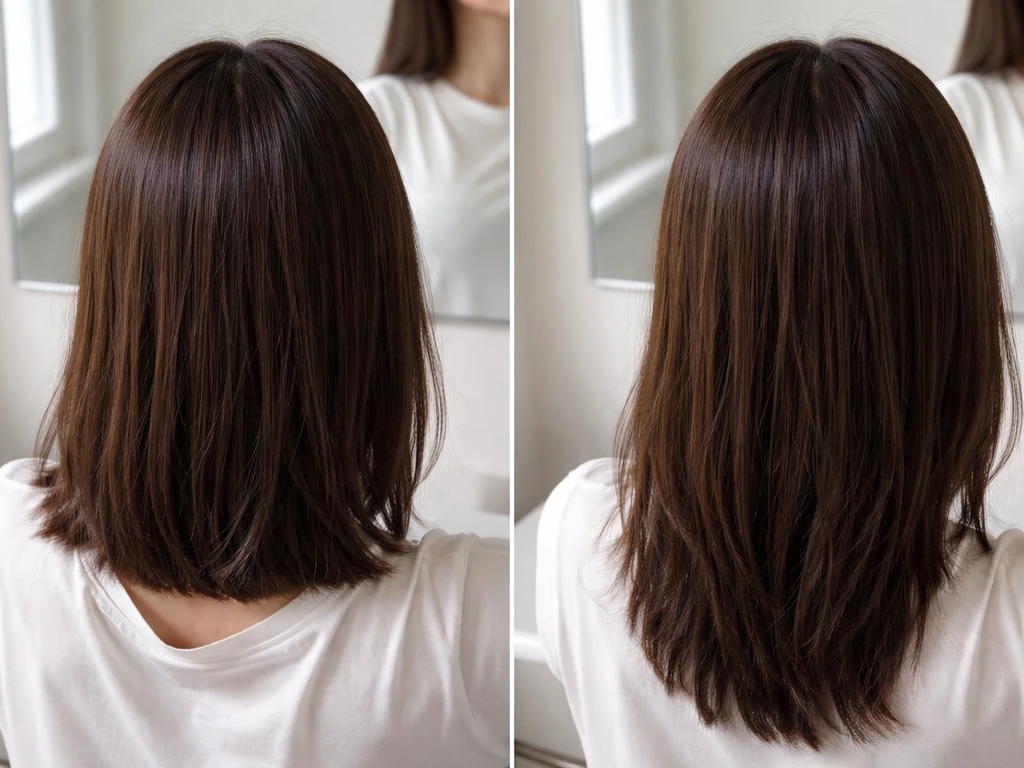
Why your hair is uneven in the first place
Hair doesn't grow at the same rate everywhere on your scalp, and that's completely normal. The hair follicle growth cycle (the anagen, catagen, telogen sequence) operates at different proportions depending on the anatomic location, so the back hairline, temples, crown, and sides can all be on slightly different schedules. Add in cowlicks and whorls, which are genetically programmed spiral or tuft growth directions that resist lying flat, and two sections of equal length can look noticeably different just because one section grows toward your face and the other grows away from it.
On top of the biology, most unevenness comes from things that happened to the hair itself: a layered cut that's grown out at different rates, a bad or rushed haircut where one side was cut shorter, heat or chemical damage that caused breakage in certain sections, an undercut that's now telegraphing through the top, or bangs that were trimmed unevenly. Shrinkage from natural curl patterns also makes hair that's actually the same length look wildly different by section. And sometimes, styling habits are the culprit: always parting on the same side, sleeping on one side, or pulling hair into a tight ponytail that stresses a particular area.
Step one: figure out exactly where the unevenness is

Before you can make a plan, you need to map the problem. Stand in front of a mirror with a second mirror behind you, or take photos from every angle with dry, unstyled hair. You're trying to answer a few specific questions.
- Is one side shorter than the other, or is it a front-to-back difference?
- Are the layers dramatically out of balance (short layers poking out at odd angles, a blunt perimeter mixed with wispy ends)?
- Is the back of your head growing faster than the front, or vice versa?
- Are bangs the issue, or is an undercut growing in and creating a visible ridge?
- Is it a texture/curl issue where one section is naturally tighter than another?
Write down your findings. Seriously. Something like "left side is about 2 cm shorter than right, bangs are at eyebrow level on the left and above the brow on the right" gives you actual checkpoints to measure against every four weeks. Without that baseline, you're just guessing, and guessing leads to overcorrecting with a trim that takes you backward.
Your baseline growth plan
Once you know what you're dealing with, the plan comes together in three phases: protect the length you have, encourage retention so breakage doesn't undo your progress, and schedule only strategic trims that fix shape without removing meaningful length. For a clean line haircut grow-out, that baseline plan helps you decide when to protect length, when to manage breakage, and when to schedule trims Once you know what you're dealing with.
What to stop doing immediately
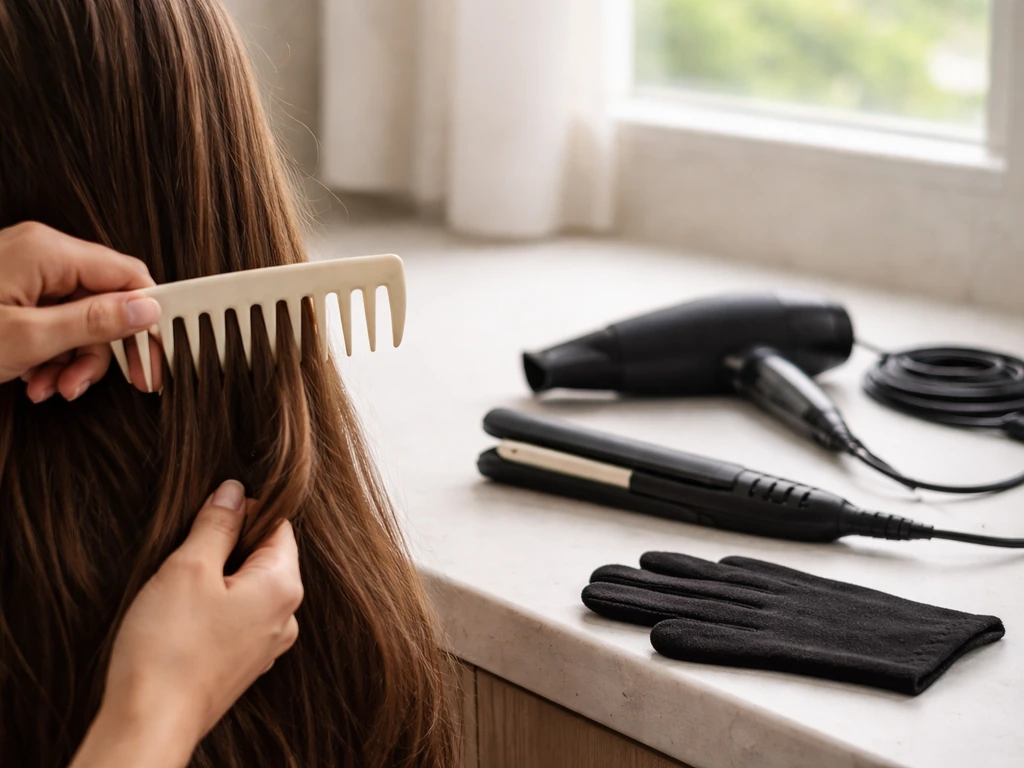
- Stop using heat tools on the shorter sections daily. Heat causes breakage, and breakage on the shorter side keeps it shorter.
- Stop trimming across the whole head to 'even it up.' If one side is already shorter, cutting the longer side down to match just brings everything down. The goal is for the short side to grow up.
- Stop tight elastic bands or clips directly on the problem area, especially at hairline sections where hair is already fragile.
- Stop over-washing if you're using sulfate shampoo every day. It strips moisture and makes dry ends brittle.
What to start doing
- Scalp massage for 4 to 5 minutes, three to four times a week. It increases blood circulation to the follicles and can support a healthier growth cycle.
- Protein-moisture balance in your product routine. Hair that's breaking needs both: a lightweight protein treatment every two to three weeks and a moisturizing conditioner every wash.
- Silk or satin pillowcase, or a satin bonnet. Friction from cotton causes mechanical breakage overnight, especially on the perimeter where hair rubs against pillows.
- Monthly length checks with a measuring tape, not just visual assessment. Cameras and mirrors lie based on how you're holding your head.
Fast fixes while you wait for it to grow
You don't have to look uneven for the whole two to six months it takes the hair to catch up. There are styling moves and targeted corrections that buy you a presentable look without sabotaging your progress.
Strategic parting and camouflage
Changing your part is one of the fastest ways to hide unevenness. A deep side part can sweep longer hair over a shorter section on the opposite side. A center part works well when the front-to-back difference is the issue, because it draws attention to the front length rather than the sides. If bangs are the uneven element, sweeping them all to one side and pinning them back on the shorter side buys you weeks of looking put-together while that section grows in.
Micro-trims and shape corrections
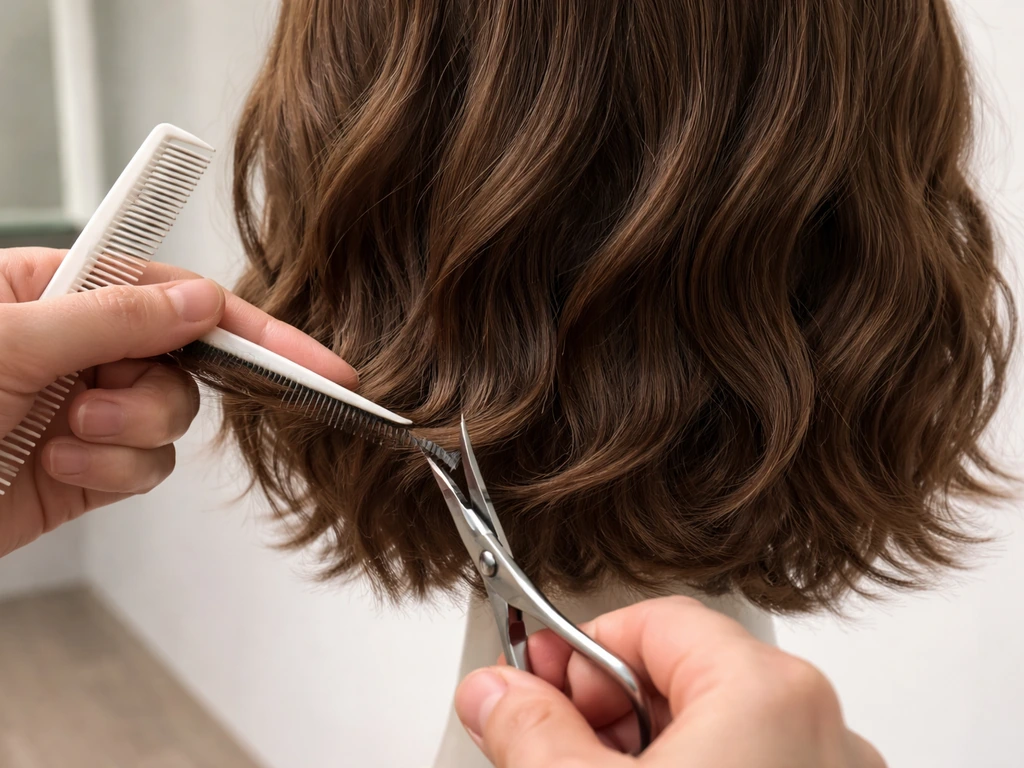
A micro-trim is not the same as a regular trim. Done correctly, a stylist is removing no more than 0.5 to 1 cm from the longer sections to improve the overall silhouette without touching the shorter areas at all. If you have a dramatically uneven cut, one targeted shape correction visit, where the stylist blends the perimeter or adjusts layers without cutting to the shortest point, can make the whole head look intentional while the shorter section catches up. Tell your stylist explicitly: 'I want to keep all the length I can. Please do not take the longer sections down to match the shorter ones.'
Styling tools and techniques
- Dry texture spray or sea salt spray adds volume and breaks up the line between different-length sections, making the transition look more deliberate.
- A diffuser on low heat can blend uneven curl patterns by encouraging consistent definition rather than letting some sections frizz and others clump.
- Bobby pins and barrettes placed on the shorter side pull that section back and show off the longer side, which reads as a style choice rather than a growth stage.
- Headbands, scarves, and wide bands are genuinely useful during undercut or bang grow-out because they mask the awkward ridge where shorter underlayer meets longer top layer.
Uneven natural hair: shrinkage, texture, and detangling
Natural hair (type 3 and 4 curl patterns especially) brings a whole extra layer of complexity to unevenness because shrinkage can make two sections that are actually the same length look two to four inches different. Before you do anything else, stretch a curl from each section and measure the actual length. You might find the unevenness is mostly optical, not structural.
Shrinkage management without heat damage
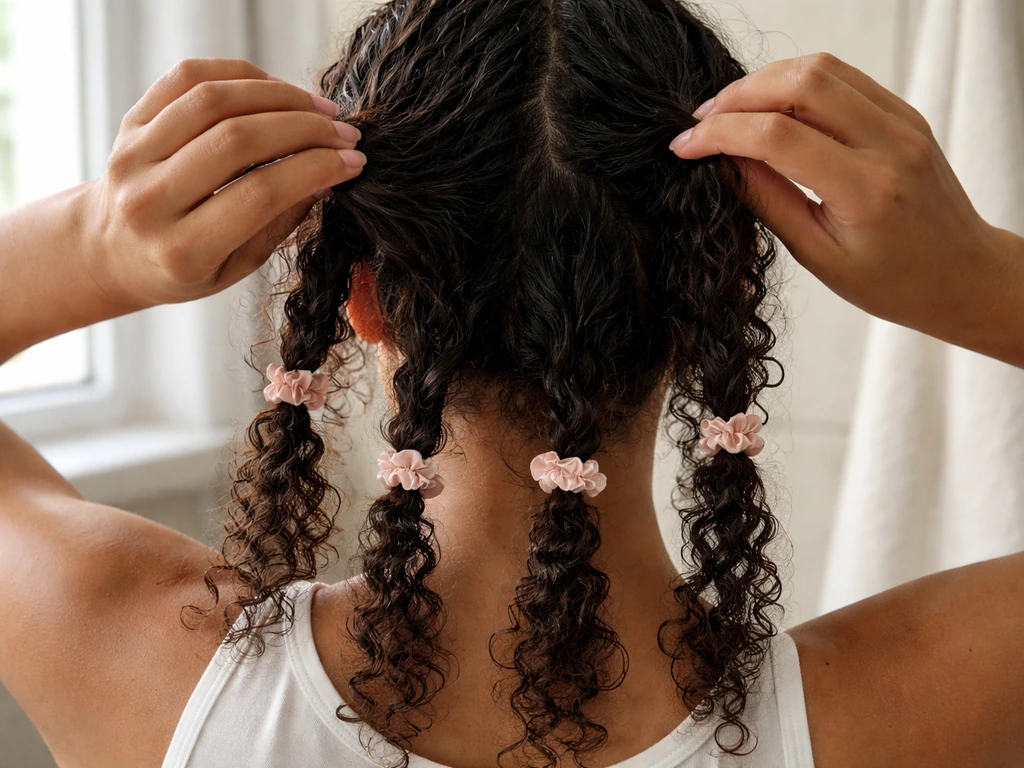
If you want to see your actual length progress without flat ironing (which risks heat damage and defeats the point of growing healthy hair), use low-manipulation stretching methods: African threading, banding, or twist-outs done on freshly washed hair. These extend the curl temporarily without breaking it down. Avoid doing heavy tension blowouts on dry hair, since that's where mechanical breakage happens most.
Detangling routine that doesn't cost you length
Detangling is where a lot of natural hair breakage happens, and breakage in shorter sections keeps them shorter. Always detangle on wet or damp hair with a slip product (a detangling conditioner or a leave-in with good slip). The American Academy of Dermatology recommends using conditioner after washing as part of a healthy hair routine detangling conditioner or a leave-in with good slip. Work from ends to roots in small sections. A wide-tooth comb or your fingers are gentler than fine-tooth combs or brushes on dry natural hair. Rushing this step or detangling dry is one of the most common reasons natural hair stays uneven despite months of growth.
Defining patterns without adding unevenness
When defining curls or coils, apply products section by section in consistent sizes. Inconsistent sectioning creates inconsistent definition, which makes the hair look uneven even when the lengths are close. Shingling, finger-coiling, or rake-and-shake methods applied to uniform sections give you the most even visual result during grow-out.
Managing specific awkward phases
Where the unevenness lives determines what awkward phase you're in, and each one has its own playbook.
| Growth scenario | The awkward phase | Practical interim strategy |
|---|---|---|
| Pixie or buzz grow-out | Crown and sides grow at different rates, sides can look wider than the top | Use a light pomade to push sides flat; get neck and perimeter cleanup only every 6 to 8 weeks |
| Bob grow-out | Front pieces reach collarbone while back is still chin-length | Deep side part sweeps front back visually; ask for a perimeter blend not a full reshape |
| Uneven bangs grow-out | One side of the bang is shorter, or bangs hit mid-forehead while the rest is at chin | Side-sweep the bangs toward the shorter side; use a serum to smooth flyaways |
| Undercut grow-out | Underlayer creates a visible shelf or ridge through the longer top layer | Wear hair down or in loose half-up styles that hide the ridge; avoid slicked-back styles that expose the line |
| Layered cut grow-out | Short layers poke out at crown or sides while the length is growing | Curl or wave the whole head to blend the layers into the texture; ask stylist to dust only the shortest layers |
| Color grow-out (two-toned or faded) | Different lengths have different color, making unevenness more visible | Use a color-depositing conditioner to blend the line; a toner or gloss can reduce the contrast without major cutting |
If you're navigating a pixie or buzz grow-out, the unevenness is usually a combination of structural (the cut itself grew out asymmetrically) and directional (different areas are growing toward or away from each other based on your natural whorls). That's one of the trickier scenarios because it can feel like one side of your head is always ahead of the other. The honest reality is that this phase tends to last about three to five months before the lengths are close enough that styling can fully mask the difference.
Timelines, what to measure, and when to change the plan
At an average growth rate of about 1 to 1.5 cm per month, a 3 cm unevenness takes two to three months to close without any trimming of the longer side. If you use a micro-trim to meet in the middle (trimming the longer side down 1 cm while the shorter side grows 2 cm), you can potentially close the gap in four to six weeks instead. Whether that trade-off is worth it depends on how far along your overall length goal is.
Your monthly check-in routine
- Month 1: Measure both sides (or front and back) with a tape measure on stretched, straight hair. Document in photos taken from the same angle each time.
- Month 2: Re-measure. If the gap has closed by 0.5 to 1 cm, you're on track. If it hasn't moved at all, look at breakage: are the shorter sections snapping off as fast as they're growing?
- Month 3: Evaluate whether you need a shape correction visit. If the overall silhouette is looking rough even with styling, a targeted blending session is worth it.
- Month 4 onward: If breakage is the identified problem and routine changes haven't helped, consider a professional consultation about bond-building treatments (like Olaplex-type treatments) before the next growth phase.
When to adjust the plan
Adjust immediately if you notice active breakage: short, fuzzy hairs at the hairline or on a particular section that weren't there before, or more hair than usual on your comb after detangling. That's a sign the shorter section is not retaining length. Adjust after two months if there's zero measurable change in the gap despite a solid routine. That's usually a signal that a structural issue (like a cowlick direction that makes the hair stand up rather than lie down) is making it look uneven, not actual length difference, and a stylist who understands growth patterns can often solve that with a subtle reshaping rather than time.
The question of whether an uneven haircut will simply grow out on its own is worth keeping in mind here. Some unevenness does resolve with time and patience. But when it's structural (a cowlick, a dramatic layer difference, or a follicle direction issue), waiting without any strategic input can extend your awkward phase longer than necessary. A one-time consultation with a stylist who understands grow-out, not just cuts, can save you two to three months of frustration.
What to do starting today
You don't need to overhaul your entire routine to start making progress right now. Begin with the assessment: take your photos, measure both sides, and write down the gap in actual centimeters. Then pick two things from the routine list above that you're not currently doing (scalp massage and satin pillowcase are the easiest starting points with real payoff). If you're using heat on the shorter section daily, stop today and try a texturizing spray or a defined style instead. If you suspect a bad original cut is behind the unevenness rather than growth rate differences, book a shape correction consultation and bring your measurements so the stylist can work with your growth goal rather than against it. The awkward phase is real, but it's also temporary, and every week you protect your length is a week closer to the result you're actually after. If the haircut was the problem, you can also focus on smart styling and strategic micro-trims so a bad haircut grow-out looks intentional while your hair evens out.
FAQ
Does uneven hair always even out on its own if I just wait?
Yes, but the timeline depends on why it is uneven. If it is mainly optical (curl shrinkage, cowlicks, whorls), the look can change quickly with parting, stretching, and definition. If it is structural (one area was cut shorter, layers grown at different rates, undercut shadowing), you generally need weeks to months for true length to catch up, and zero trimming may not fully hide the gap during the awkward phase.
Should I trim the longer side to make the hair match the shorter side?
Avoid “matching” by cutting the longer side down to the shortest area. A better rule is to treat the gap like a measurement problem: only remove small amounts from the longer section if you can do a micro-trim that improves the silhouette without taking away length from the shorter side. If the imbalance is from breakage or a directional cowlick, trimming the longer side will not fix the root cause and can make the shorter area stay behind.
How can I tell if my unevenness is real length or just my curl pattern?
Not necessarily, and that is a common mistake. If your curl pattern makes the same length look different by section, straightening to “see” the truth can lead you to overcorrect later. Instead, stretch and measure each section before deciding whether the unevenness is real length difference or an optical effect.
What’s the fastest styling change to make uneven hair look intentional right now?
If you can only do one thing to speed up the look of progress, change how hair sits. Try a deeper side part to sweep longer hair over a shorter section, or switch to a center part if the issue is front-to-back. For bangs, sweep and pin them so the shorter side is visually “covered” until growth catches up.
Why does my hair still look uneven even after it’s grown out for a few months?
Use consistent, repeatable sectioning when you apply products and define curls. Uneven results often come from uneven section sizes, not from uneven growth. Measure the change visually by checking definition in the same lighting and from the same angles each week, not just after a one-off wash day.
What should I do if one area seems to stay shorter because it’s breaking?
Yes, but only when it supports your goal. If you see new fuzzy hairs, increasing shedding on a specific area, or more hair on your comb from one side, that suggests breakage is keeping that section short. In that case, prioritize gentler detangling (wet or damp, slip product, small sections) and reduce high-tension styling rather than adding frequent trims.
When should I see a stylist instead of waiting for growth?
A consultation is most useful when you suspect a structural cause, like an asymmetrical cut, a cowlick that makes hair stand up instead of lying flat, or undercut shadowing. Bring your measurements in centimeters and photos from multiple angles so the stylist can plan micro-trims or a subtle reshaping that works with your grow-out timeline.
How long should I try my routine before I judge whether it’s working?
After you start protecting length and improving retention, reassess on a schedule. If there is no measurable change in the gap after about two months despite a solid routine, it often indicates a structural issue affecting how hair sits rather than actual growth falling behind. Then consider a subtle reshaping approach or targeted styling adjustments.
Can I keep using heat while I grow uneven hair out?
If you use heat, adjust your approach so you are not repeatedly damaging the already-shorter area. Daily heat on the shorter section can widen the gap via mechanical breakage. Consider switching to low-manipulation stretching (like twist-outs, banding, or threading) and avoid heavy tension blowouts on dry hair.
What detangling mistakes make uneven hair worse in natural hair?
For natural hair, do not detangle dry, and do not rush. Detangle on wet or damp hair with good slip, start from ends to roots, and use a wide-tooth comb or fingers. This matters because breakage in shorter sections keeps them visually behind even when growth is happening.
What exactly should a “micro-trim” include so it does not ruin my progress?
A micro-trim should be targeted and limited, typically removing about 0.5 to 1 cm from the longer areas for silhouette correction. If your stylist insists on cutting longer sections all the way down to match the shortest point, push back. Ask for blending or layer perimeter adjustments that do not touch the shortest area.
What should I do first if I want to create a clear grow-out plan for uneven hair?
Start with a baseline you can repeat: measure each side in centimeters and note where the unevenness lives (temples, crown, sides, bangs). Then pick two interventions you can do consistently, such as scalp massage for support and a satin pillowcase for reduced friction. Without a written baseline, it is easy to overcorrect.