
Growing out a man bun undercut takes roughly 12 to 18 months from a typical short-sides-long-top starting point to a full, uniform bun you can wear confidently every day. The sides and nape will look rough before they look good, the top will hit its own awkward phases, and there will be about a three-to-four-month window where nothing sits right. That's normal. The key is knowing what to do at each stage so you're making progress instead of grabbing the clippers out of frustration.
How to Grow Out a Man Bun Undercut: Step-by-Step Timeline

Marcus Vickers
5 Jun 2026
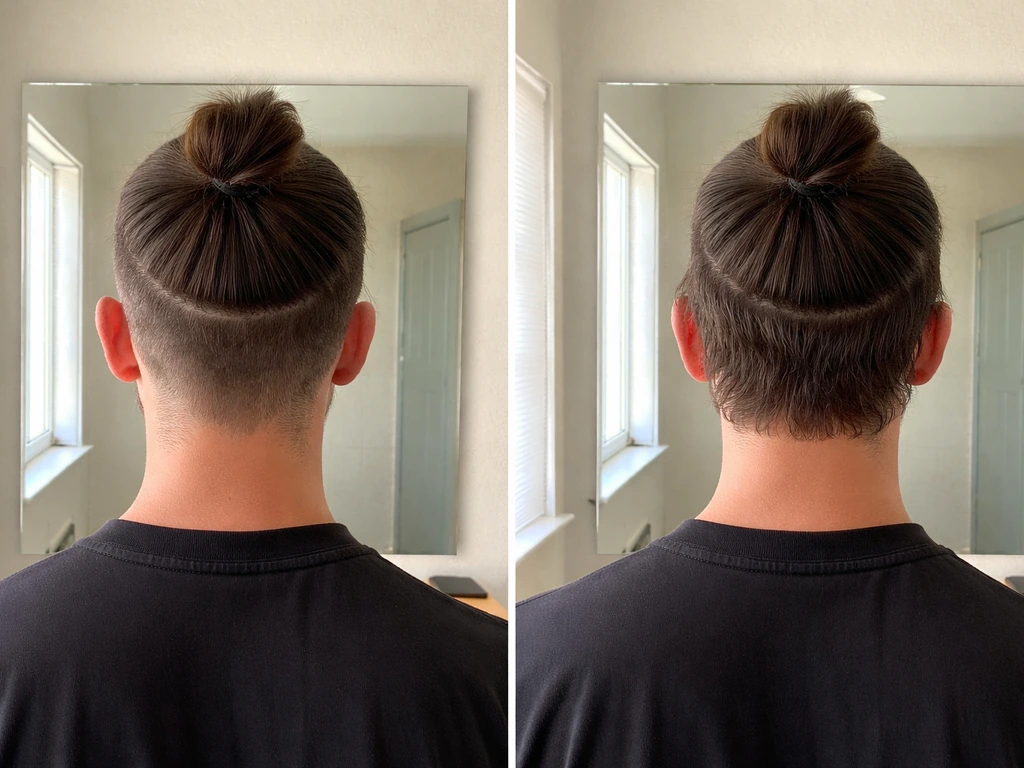
First, define what you're actually growing toward
Before anything else, get specific about what kind of bun you want at the finish line. A small, tight topknot needs around 6 inches (15 cm) of length to hold reliably. A fuller, thicker bun with real mass needs 8 to 10 inches or more. The difference in timeline is significant: at an average growth rate of about half an inch per month, those extra 2 to 4 inches represent four to eight more months of patience. Your starting point matters too. If the top of your hair is already 3 or 4 inches long from the existing man bun, you're much closer than someone starting from a cropped style. Measure the top section now, figure out your target, and subtract to know your real gap. The sides and nape are a separate project running alongside the top, and we'll cover that below.
One practical positioning note: a bun works best placed at the back of the crown rather than low at the nape, especially when your length is still building. Trying to force a low bun before the hair is long enough creates scraggly, uneven results. Aim for crown placement first, and let the bun lower naturally as length increases.
What happens to your hair month by month
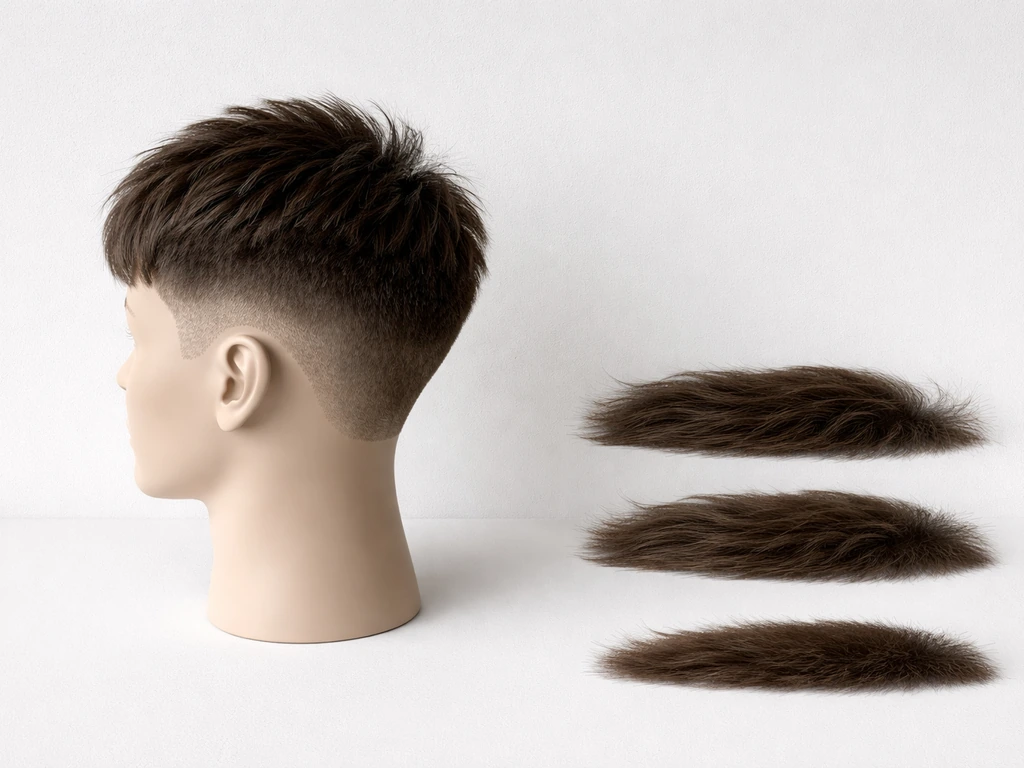
Hair grows at roughly 0.5 to 0.7 inches per month on average, though the range is genuinely wide (some people see as little as 0.2 inches, some see closer to 1.3 inches). Use the middle estimate for planning but don't panic if your timeline shifts a bit. Here's a realistic breakdown of what to expect across both the undercut sides and the top.
| Stage | Months | Top section | Undercut sides and nape | What it looks like |
|---|---|---|---|---|
| Early grow-out | 0–2 months | Pulling toward tie-able length if already 2–3 in; not yet if shorter | Stubble to roughly 0.5–1 in; sharp fade line very visible | Clean fade still shows, top looks deliberate, easiest phase |
| Awkward start | 2–4 months | If under 4 in, still can't tie; if near 4 in, small tuck possible | 1–1.5 in; puffing out, fade line blurring, sides look uneven | Hardest visual phase; sides puff without direction |
| Settling in | 4–7 months | Approaching 5–6 in; small bun possible at crown | 2–3 in; starting to lay down with product; blending begins | Progress visible; bun is small but real |
| Building out | 7–12 months | 6–9 in; solid bun, good hold, bun gets thicker | 3–4+ in; looks intentional with styling; ready to blend or keep | Confident daily wear; big decisions about blending |
| Full length | 12–18 months | 9–12 in or more; full, versatile bun | Matching or close to top if blended; uniform if maintained | The look you started this whole thing for |
The sides and top are on completely different timelines because the undercut was shaved or faded much shorter. That gap is what creates most of the frustration. The top may be bun-ready at month 6 or 7, but the sides are still visibly shorter for several more months unless you actively blend them. Follow these steps month by month so you know exactly when your undercut will start looking smoother as you grow it out faster grow out an undercut faster.
What to do about trims (this is where most people mess up)
The instinct is to avoid the barber entirely so you don't lose progress. That actually works against you. Skipping maintenance leads to split ends, uneven sections, and a general shapelessness that makes the grow-out look sloppy rather than intentional. The goal is strategic trimming, not zero trimming.
For the top section
Trim the top section every 8 to 12 weeks, removing no more than a quarter inch at a time. This keeps the ends healthy without meaningfully slowing progress. Healthy ends grow without splitting back up the shaft, which effectively wastes length you've already earned. If you're trimming every 4 weeks and removing even a small amount each time, you're not making the net progress you think you are.
For the undercut sides
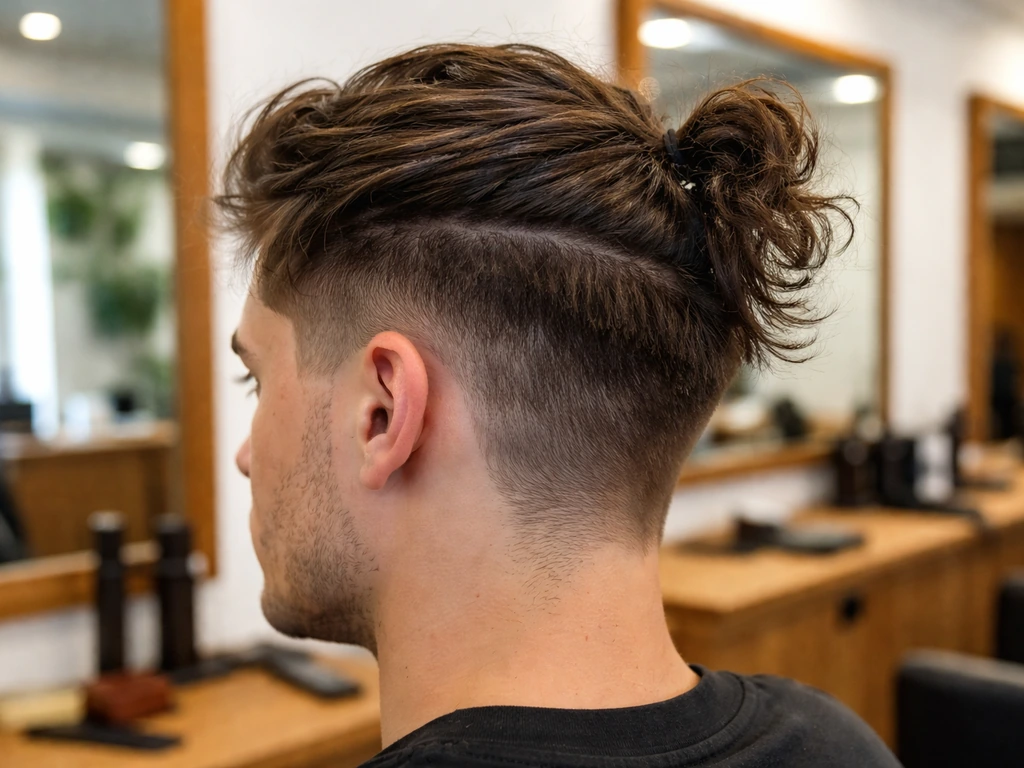
This is where the real decision happens. You have two paths: keep the undercut defined for a while (which looks cleaner during early grow-out but creates a bigger blending job later), or start softening it early (which looks messier in months 2 through 4 but produces a smoother transition by month 8 or 9).
A good middle-ground approach: let the sides grow untouched for about 6 to 8 weeks, then visit a barber every 4 to 6 weeks to begin softening the fade line gradually. The barber isn't cutting the sides shorter, they're blending the line between the undercut and the longer top so the hard edge dissolves over several appointments. Each visit should move the fade line up slightly and reduce the contrast. By month 6 or 7, you should have a much more gradual taper rather than a sharp undercut.
If you had a skin fade or razor-sharp undercut, plan on needing a few more appointments to soften it compared to a scissor-cut or longer clipper undercut. Skin fades need more frequent attention every 3 to 4 weeks if you want them maintained, or deliberate blending sessions every 6 weeks if you're transitioning out. Skipping appointments when you're growing out is not the move, even when it feels counterintuitive.
Surviving the awkward phase: what actually helps
Months 2 through 5 are the ugly duckling period. The sides are too long to look like a clean undercut but too short to blend with the top. The front sections may flip out oddly. The nape might look especially wild. This is the phase where most people quit. If you hit the awkward months and don't know how to handle the fading line, focus on strategic undercut-side blending rather than giving up on the process blending the undercut. Don't. Here's a toolkit of things that genuinely help.
Bobby pins and small clips
Bobby pins are underrated for men doing this grow-out. If you have longer front sections that flip or stick out near the temples, pinning them behind the ear with a small clip keeps them flat and out of the way. Use them discreetly with a matte finish so they don't draw attention. This isn't a forever solution, it's a 6 to 10 week bridge while the hair finds its place.
Headbands and hair ties
A thin headband pushes side and top sections back uniformly, which actually looks intentional when the top is 4 inches or more. It disguises the contrast between the shorter sides and longer top. Fabric headbands work better than plastic or metal ones for all-day wear and create less breakage. Hair ties used to pull the top into a half-up style also reduce the visual awkwardness of mismatched lengths.
Slicking the top back
When the top is 3 to 4 inches long, slicking it straight back with a medium-hold pomade or gel pulls the focus away from the sides and makes the overall shape look more deliberate. This style bridges the gap between man bun and slick-back, and it covers the transition line at the back of the crown particularly well.
Products for controlling bulk and flyaways
As the sides grow to an inch or so, they often puff and add unwanted width. A light cream or smoothing serum worked through damp hair, then blow-dried downward on the sides, trains the hair to lie flatter and reduces that mushroom-cap effect. Gel gives harder hold but can look crunchy. A flexible-hold wax or clay tends to work better for everyday control without stiffness.
Training your hair into a bun as the length comes in
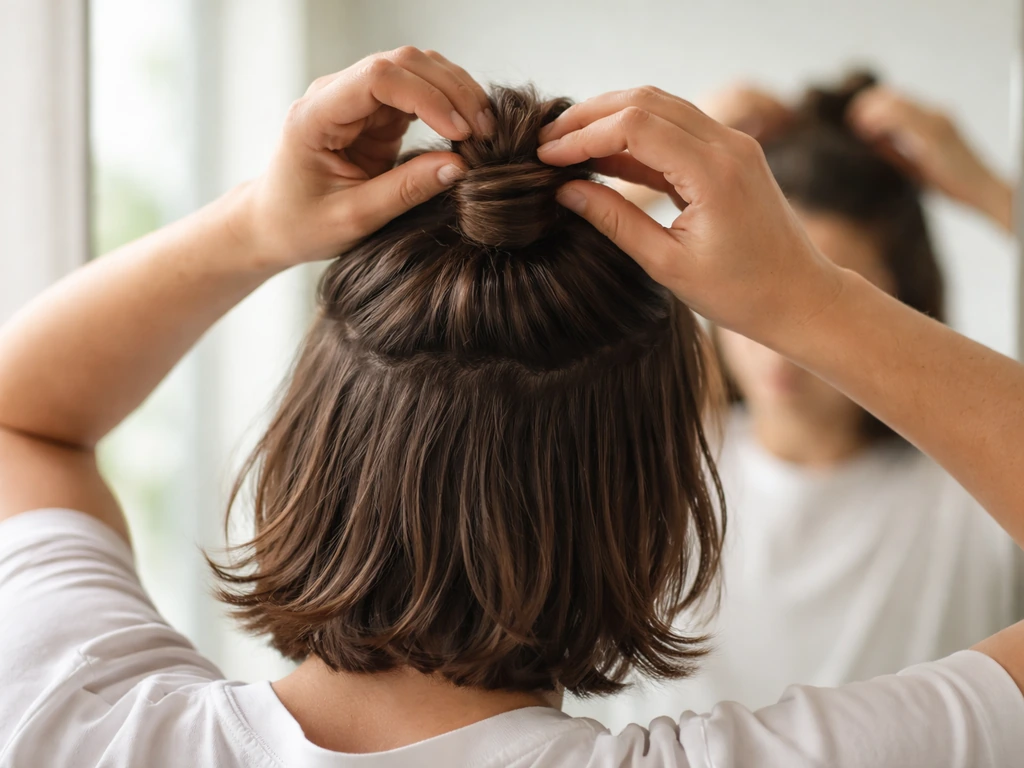
You don't wait until you have 6 full inches and then suddenly start wearing a bun. You build the habit gradually, which also helps train the hair to fall in the right direction.
- At 3 to 3.5 inches on top: Start pulling the top section into a small ponytail at the crown, even if it's only holding for a few hours. This trains the hair to pull back without fighting you later.
- At 4 to 5 inches: A small topknot or half-bun becomes genuinely wearable. Use a thin, seamless hair tie to avoid dents in the hair. Keep the bun positioned at the back crown, not the nape.
- At 5 to 6 inches: The bun looks more intentional and holds with less fuss. Start experimenting with bun size and placement. A loose, textured bun actually hides uneven lengths better than a tight, pulled one at this stage.
- At 6 inches and beyond: You have a real man bun. Now you can start thinking about whether you want the sides to eventually match it or whether you're keeping some version of an undercut underneath.
One useful tip: sleep with your hair loosely tied or braided during the grow-out period. This keeps sections from getting tangled and matted overnight, which becomes a real issue once the top is 4 to 5 inches and the sides are approaching 2 inches. It also helps train the direction of growth gradually.
When to let the undercut go and blend everything together
At some point you'll face the decision: keep a version of the undercut (shorter sides, longer top bun) or grow everything to one uniform length for a full, thick bun with no fade. Neither choice is wrong. Here are the signposts that tell you you're ready to make that call.
- The fade line is no longer sharp or defined, just a difference in length. This means blending is now a one or two appointment job, not a multi-month process.
- The sides are at least 2 to 3 inches long and starting to blend into the top naturally when you pull your hair back.
- You're spending more time managing the contrast between the sides and top than enjoying the style. That's a signal the undercut has served its purpose.
- The bun looks noticeably thin or small compared to the amount of hair you feel like you have. The missing volume is the sides, and adding them would double the density.
- You want a more uniform look for a specific reason (job change, event, or simply tired of the maintenance). This is as valid as any other reason.
When you do decide to blend, do it over two or three barber appointments spaced 4 to 6 weeks apart. Trying to blend everything in one session usually results in cutting too much length off the top to match the sides. Gradual blending preserves top length while bringing the sides up.
If you're not sure whether to blend the undercut or keep it, it's worth knowing there's a whole separate approach for managing a traditional undercut grow-out that doesn't involve a bun goal at all. The strategies differ slightly depending on your target style, so the decision about whether to maintain some fade line is worth thinking through based on the final look you want.
Fixing the problems that always come up
Cowlicks at the crown or nape
Cowlicks are common at the crown and nape, which are exactly the areas you're managing most during this grow-out. They won't go away, but they can be controlled. The most effective method is blow-drying the cowlick section in the opposite direction of its natural growth while applying light tension with a brush, then finishing with a flexible-hold product while the hair is still warm. The heat and direction together temporarily flatten the growth pattern. Do this while the hair is damp, not soaking wet and not fully dry. At the nape specifically, a cowlick that was hidden under a shaved undercut will become suddenly visible as the hair grows in. A small amount of gel pressed flat against the neck and blow-dried down handles it for most hair types.
Uneven sides
If one side grows faster than the other (very common), resist the urge to trim the faster side down to match. You'd be permanently slowing your overall progress. Instead, manage the discrepancy with styling during this phase: slicking both sides back with a medium-hold product removes the visible contrast. If the difference is significant after 8 to 10 weeks, a barber can very lightly dust the faster side without meaningfully affecting length.
The top isn't long enough to stay in the bun
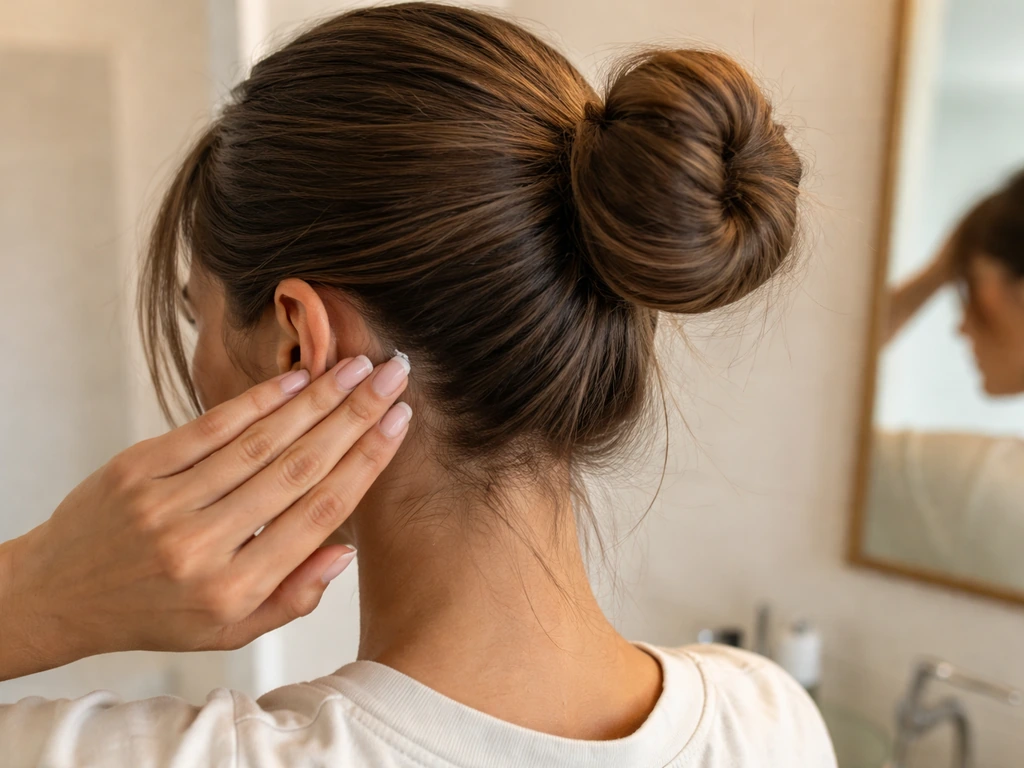
Shorter hairs escaping the bun (especially around the face and ears) is a normal early-bun problem. A small amount of styling paste or wax smoothed over these sections before tying keeps them from flying out. You can also use a second thin hair tie lower on the bun to catch escapees. This isn't a sign the bun isn't working, it's just the early stage of it.
Hair that won't stop flipping outward on the sides
This happens most often between 1 and 2.5 inches on the sides, when the hair is heavy enough to fall but not long enough to stay flat. Blow-dry the sides downward and inward on damp hair daily for about two weeks. This physically trains the growth direction and, combined with a light smoothing cream, usually resolves the flipping without any additional cutting.
General shapelessness and looking unkempt
The single biggest factor in looking like you're growing your hair out intentionally versus just forgetting to cut it is neckline maintenance. Ask your barber to clean up the neckline perimeter every 4 to 5 weeks even when you're not doing any other trimming. A clean neckline signals grooming intent and makes the whole grow-out look far more deliberate. This is one trim that never costs you progress and always pays off visually.
FAQ
When should I start trying to tie my bun each day, if my hair is close but not quite long enough yet?
Start “practice days” as soon as the top can gather at the back of the crown without pulling too hard. If it only holds with tension, use a larger elastic or a loose tie and switch to bobby pins for the first 2 to 3 weeks. You want the bun to sit naturally, not stretched, because stretched ties can create breakage and a crooked crown shape.
What if my bun keeps slipping down or feels lopsided, even when the hair is long enough?
First, check placement, the bun should sit on the back of the crown where the hair naturally supports it. If it still slips, try tying in two steps (bottom tie for grip, second tie or pin to lock the upper section). Also avoid heavy oils before tying, they can reduce friction and make the bun slide.
Should I keep the sides shorter the entire time, or is there a point where I’m better off committing to blending?
If you already know you want a uniform, no-fade look, start softening the fade line earlier (around the 6 to 8 week mark) and keep appointments spaced 4 to 6 weeks. Waiting longer often forces a harsher cut later because the top cannot be shortened to match without losing bun length.
How often do I need to trim the sides, if I’m mostly focused on growing the top out?
Even if you are not “growing out” the sides yourself, you still need perimeter control. Plan on barber cleaning sessions every 4 to 5 weeks for neckline and general shape, and for the blend line every 4 to 6 weeks once you start softening. This prevents the undercut edge from looking accidental rather than intentional.
My hair is wavy or curly, the cowlicks are unpredictable. Does the same blow-drying approach work?
Yes, but use lower heat and higher tension. Blow-dry the sections in smaller parts, brush against the direction of the cowlick, and hold until the hair cools slightly. Curly hair also benefits from a lightweight leave-in or smoothing cream before drying so the cuticle lays flatter under tension.
What should I do if my bun looks fine from the back but the sides still look messy around the temples?
Use temporary control tools rather than cutting, bobby pins behind the ear work best when the temple hair is 3 to 5 inches and wants to flip. Pin after styling, not before, and choose a matte finish that matches your hair color. If only one temple is stubborn, focus pinning that side and keep the other natural to avoid uneven bulk.
Is it better to use gel or wax during the ugly-duckling months (months 2 to 5)?
Go with flexible-hold products first. Gel can create a hard, shiny line that highlights uneven lengths, while wax or clay usually distributes across the hair and keeps the transition visually smoother. A practical test is to style damp, then check after it dries completely, if it looks crunchy or stiff, switch to a lighter hold.
How do I prevent split ends if I have to wait many months to reach bun length?
Do not try to “cut growth back” to solve styling problems, keep the quarter-inch cap on trims and trim based on ends, not shape. If your ends feel dry or frayed, add a conditioner step every wash and consider a light leave-in to reduce friction from tying the bun repeatedly.
What’s the fastest safe way to reduce the height of the undercut while preserving bun length?
Ask for blending that moves the fade line up gradually instead of a full clipper pass. Tell your barber you want the transition softened over 2 to 3 appointments, spaced 4 to 6 weeks, and that you do not want the top shortened to match. This is especially important when your top is under 5 inches, because it can be tempting to “equalize” too early.
If one side grows faster, you said not to trim it down, but what if the difference is obvious in photos?
Manage it with symmetry styling first (slick both sides back with the same product amount and direction). If the imbalance is still clear after 8 to 10 weeks, a barber can do a micro-dust on the faster side by taking only the very ends. Avoid trimming the top, keep the discrepancy correction to the sides only.
How do I keep neckline clean without accidentally making the grow-out look shorter overall?
Ask for a perimeter clean-up, not a broad “cut down.” A neckline tidy every 4 to 5 weeks should remove only the stray hairs around the neck line, keeping your top length and side bulk intact. Consistent neckline maintenance makes the rest of the hair look more intentional even when lengths are uneven.