
The best hairstyles when letting your hair grow out are the ones that work with your current length instead of fighting it. Right now, that probably means a combination of strategic styling (a claw clip, a side part, or some texture spray) and a trim every 8–10 weeks to keep your ends clean without sacrificing length.
Hairstyles When Letting Your Hair Grow Out: Guide by Length

Marcus Vickers
18 Jun 2026
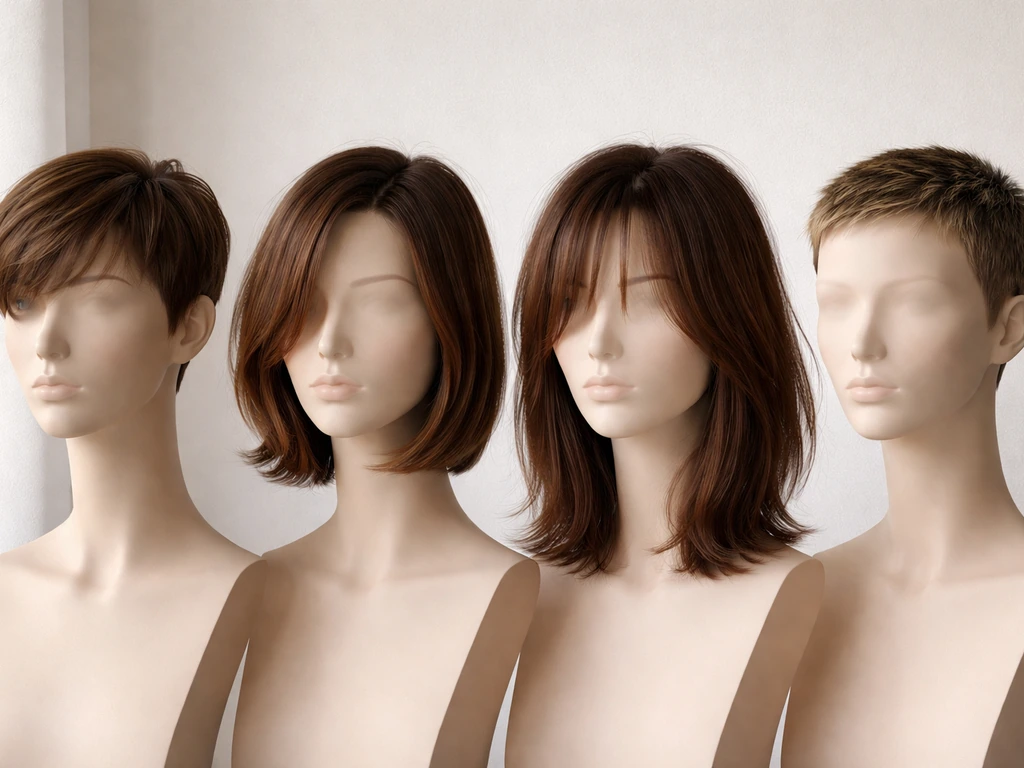
At roughly half an inch of growth per month, you have real options at every stage from a 1-inch buzz to a chin-length bob to a shaggy almost-shoulder situation. This guide walks you through exactly what to do at each milestone, starting cut by starting cut, so you can stop dreading the mirror and start working with what you have.
These styling ideas help you stay consistent while you grow your hair out month by month how to style hair as you grow it out.
How to choose hairstyles for your current length and stage
The single biggest mistake people make during a grow-out is trying to recreate a style that belongs to a different length. If your hair is at 2 inches, you cannot force it to look like a 4-inch cut, and trying to do so is exactly what makes the awkward phase feel unbearable. Instead, start from where you actually are and ask: what can this length do today?
A good framework is to think in terms of three zones: texture, shape, and control. Texture is your hair's natural behavior (straight, wavy, curly, coily). Shape is the silhouette your cut gives you right now. Control is how you manage pieces that are too short, too long, or just doing something weird. The best grow-out styles lean into at least two of those three. For example, if you have wavy hair at chin length, you already have texture and you can encourage a shape by diffusing or scrunching, which means you only need light control for the pieces around your face.
If you are earlier in the process (think short pixie or buzz territory), your main tool is texture product. At this length, style IS the product. A little pomade, a matte clay, or even just a strong-hold mousse lets you direct short pieces intentionally. Once hair is long enough to tuck behind the ear, you have significantly more flexibility because you can blend problem pieces out of sight. That ear-tuck moment is a real milestone and worth celebrating.
Styling hacks for awkward grow-out phases
Awkward phases are not a bug in the grow-out process, they are the whole process. The trick is not to eliminate them but to have a small toolkit of moves that make them manageable day to day.
Shaping what you have
A strategic part change can instantly reshape a grow-out silhouette. If your hair is puffing out awkwardly on the sides (classic bob or pixie grow-out territory), try switching from a center part to a deep side part. The weight of the hair falls differently and often eliminates the mushroom-head effect that plagues this stage. Rough-dry your hair to about 70% first, then use a fine-tooth comb to guide the part into place before finishing with a dryer and round brush. The 70% rule matters because hair is more malleable when it still has a little moisture in it.
Blending uneven lengths
If you have layers or an undercut that are growing out at different rates, your goal is blending, not matching. A texturizing spray or sea salt spray roughed through dry hair creates enough visual noise that uneven lengths stop reading as a mistake and start reading as intentional. On straight hair, a tiny amount of styling cream worked through the mid-lengths and ends and then scrunched upward can create a similar effect.
Taming problem pieces
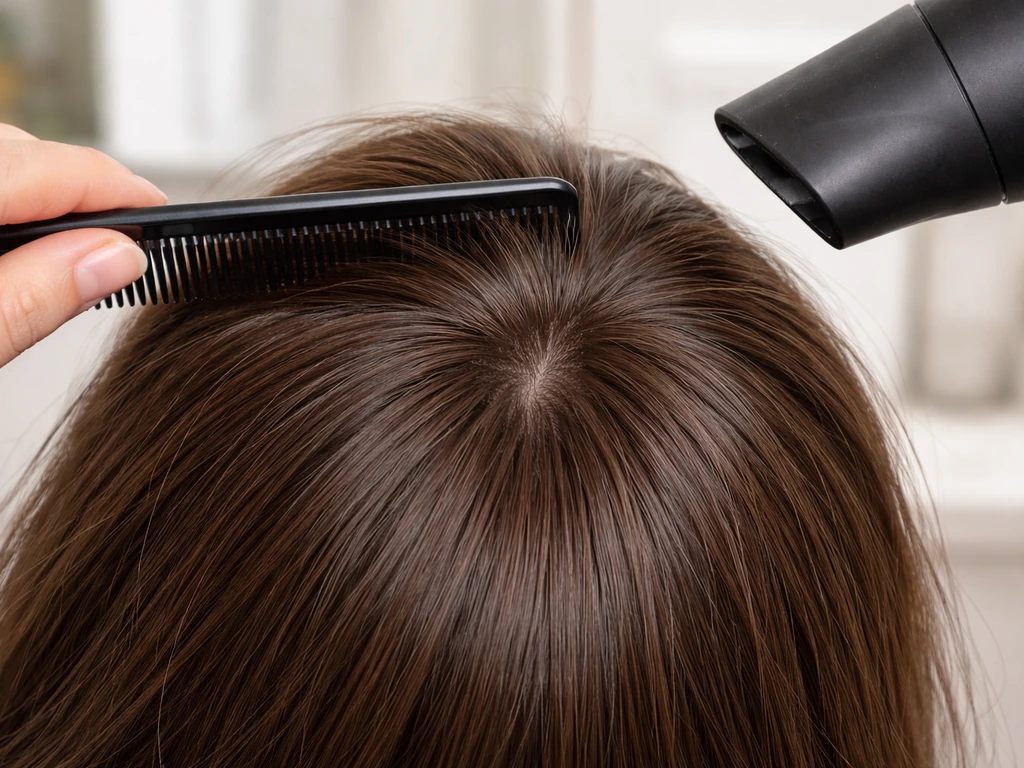
Cowlicks are the most frustrating part of a short grow-out. The fix that actually works: blow-dry the cowlick in the opposite direction it naturally grows, using a fine-tooth comb to guide it. Prime the section first with a frizz-control leave-in or a root spray before you start so the hair has something to grip. Once you have dried it against its natural direction and it cools, it will usually lie flat or at least cooperate. A light-hold hairspray over the top locks it in. Flyaways respond to the same general approach: a tiny amount of product (even a clean mascara wand works in a pinch) smoothed over the surface after styling.
Best grow-out styles by your starting cut
Growing out a pixie
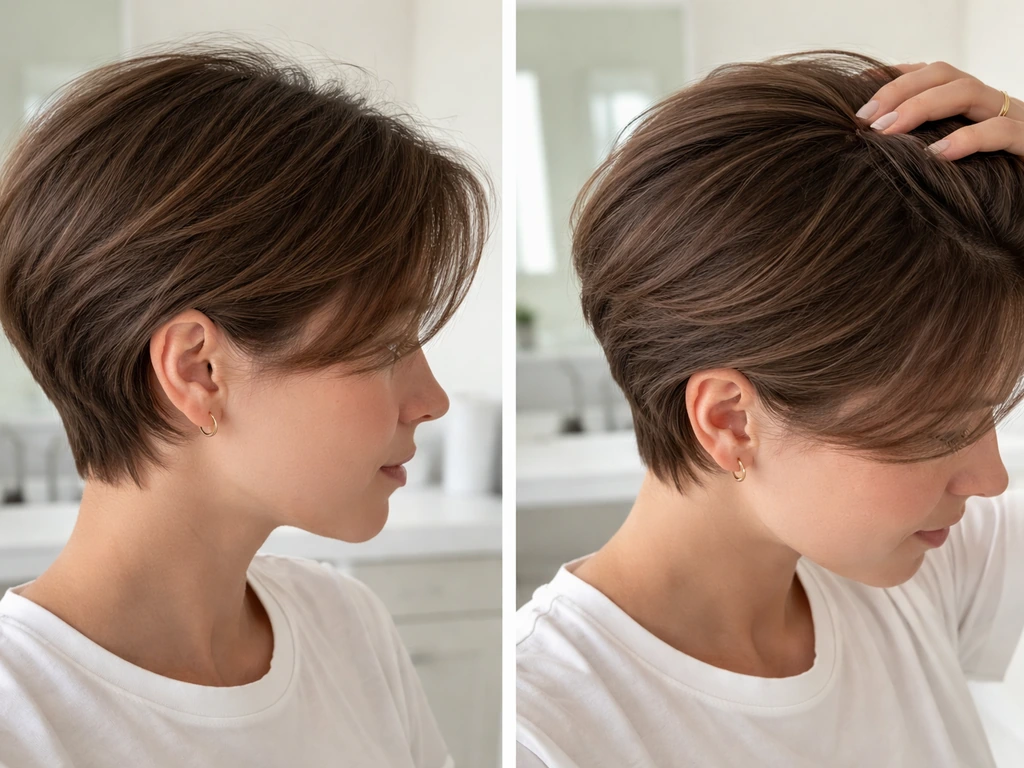
Pixie grow-outs have a reputation for being brutal, but they are actually one of the more styleable transitions if you know the moves. The first goal is reaching ear-tuck length, which usually takes about 3–4 months from a classic short pixie. Until then, lean into a textured, piece-y look: a matte pomade or clay worked through damp hair and air-dried gives a deliberately tousled effect that looks intentional rather than overgrown. A slicked-back side part with a light gel is another strong early-stage option, especially on straight or fine hair.
Once the top and sides have enough length to start blending (usually around 3–5 inches of top length), you can start styling toward a wavy lob shape by using a curling wand or flat iron to flip the ends under or outward. A pompadour-style push at the crown is another great mid-pixie move: it adds height intentionally and keeps shorter side pieces from looking ragged. The key with pixie grow-out is to keep evolving the style rather than treating it as one long waiting room. Each month or so, you should have a slightly different silhouette.
Growing out a bob
Bob grow-outs are frustrating because the structured blunt line that made the bob look sharp starts to blur as the hair grows, and the result is a shapeless wall of hair at jaw or chin level. The easiest fix while you wait for more length: use a claw clip to pull it up into a twisted half-up or a messy bun. This is not a cop-out. A claw clip style at bob length actually looks genuinely chic right now, and it disguises the fact that the cut has lost its original shape without requiring any heat or effort.
If you want to wear it down, add movement. Curling or waving a bob that has grown past its intended length instantly makes it look like a deliberate long bob rather than an overgrown cut. A few loose waves with a 1-inch barrel and a light-hold cream to smooth the surface is the fastest way to reclaim a bob grow-out. If your hair is naturally straight and fine, a volumizing mousse before blow-drying adds the body that keeps this length from looking flat.
Growing out bangs
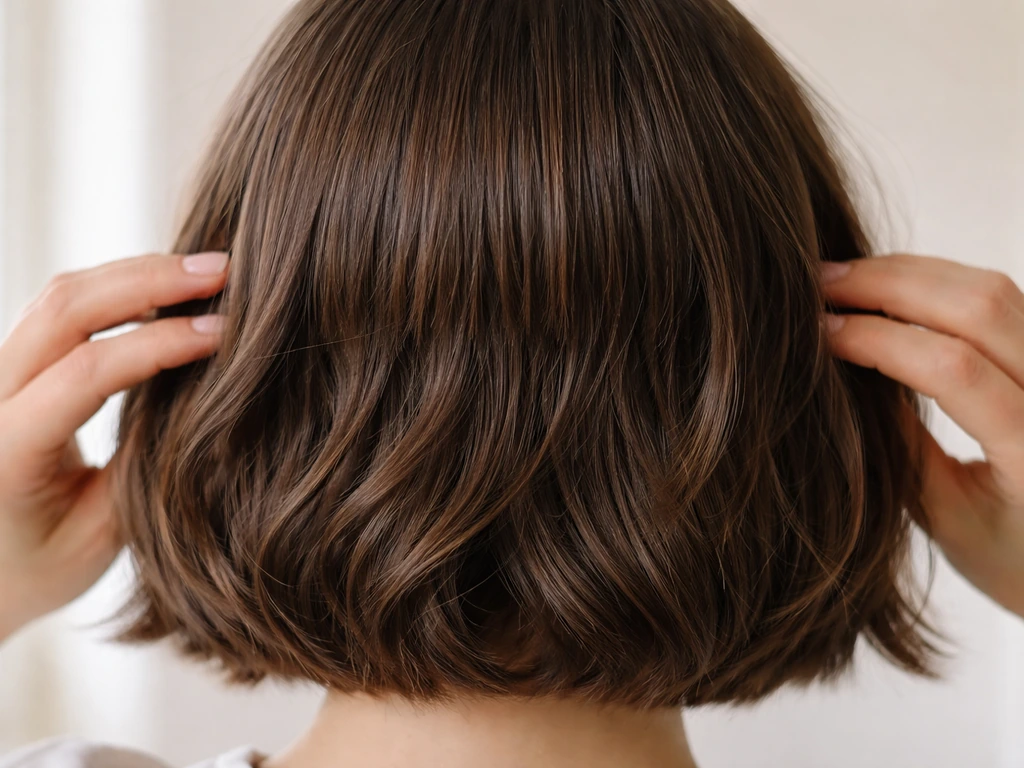
Bangs grow out at the same rate as everything else (roughly half an inch per month), which means a full fringe can take anywhere from 6 to 12 months to fully blend into the rest of your hair. Scalp hair growth is often described as occurring at about 1 cm per month during the anagen phase (roughly 0.
4 inch per month). During the awkward middle phase (when they are too long to be bangs and too short to tuck behind your ear), you have a few reliable moves. Pushing them to the side while blow-drying creates a curtain-bang effect that many people end up loving more than the original style. A headband that sits about an inch back from the hairline holds growing bangs away from your face completely.
For a dressier option, a barrette or bobby pins sweeping them to one side keeps them from flopping into your eyes while still looking intentional. A finishing cream or light-hold hairspray keeps whatever direction you choose from reverting mid-day.
Growing out a buzz cut or very short hair
The early buzz grow-out phase (1–3 inches) is honestly the hardest because you have the least styling leverage. The good news is that at this length, the hair itself is the style. Keep it clean and moisturized, use a small amount of pomade or styling cream to add definition, and let the texture of your natural hair do the work.
If your hair is curly or coily, this is the stage where your curl pattern starts to emerge and it is often genuinely beautiful. If it is straight, a matte product gives it just enough direction to look deliberate. Choosing the best styles to grow out short hair also means matching your product and styling direction to your natural texture If it is straight, a matte product.
Once you hit about 2–3 inches, you have enough length to start experimenting with direction: a brush-forward style, a natural side sweep, or (for curly types) a twist-out or defined curl set. The main thing is not to let the hair just grow without any styling input at all. Even 2 minutes of product and direction each morning makes the difference between "growing out a buzz" and "actually has a hairstyle."
Growing out an undercut
Undercut grow-outs have a unique challenge: the shaved or very short sides and back are growing at the same rate as the top, but they started at a much shorter length. The temptation is to cut the top shorter to blend everything together, but this just makes the overall growth process take longer. The better strategy is to use styling to disguise the contrast while the undercut sections catch up.
Wearing the top hair down and slightly over the sides hides the length difference. Once the undercut sections reach 2–3 inches, a stylist can add texture and layers to the overall shape to help the lengths start blending naturally. Do not rush that blend appointment, it is most effective when the lengths are actually close to each other.
Length milestones and what to do at each one
| Length Stage | Approximate Timeline From Very Short | Best Style Moves | Key Products |
|---|---|---|---|
| 1–2 inches | 2–4 months | Texture products, pomade, defined curls if applicable | Matte clay, pomade, curl cream |
| Ear-tuck length (2–3 inches) | 4–6 months | Side part, tousled texture, brush-forward | Texturizing spray, light hold cream |
| Jaw/chin length | 10–14 months | Curtain bangs, claw clip styles, waves, side part | Curl wand, volumizing mousse, claw clips |
| Neck/collarbone length | 16–22 months | Half-up styles, loose waves, low ponytail | Sea salt spray, light hold hairspray |
| Shoulder length | 24–28 months | Full updos, braids, textured layers, blowout | Round brush, smoothing serum, leave-in |
These timelines are based on the standard growth rate of about half an inch per month and assume no significant breakage. Your actual experience will vary depending on hair health, genetics, and how aggressively you heat style. For perspective, shoulder-length hair is roughly 2 years old from the root, so if you are trying to reach that length from a buzz, you are committing to a multi-year project. That is not discouraging, it is just useful to know so you can plan your milestone styles rather than waiting for a single endpoint.
Managing common problems during the grow-out
Bulk and heaviness
Bulk is most common when hair hits the jaw-to-shoulder range, especially on naturally thick or wavy hair. The fix is a thinning or texturizing trim, not a length cut. Ask your stylist specifically for "internal texturizing" or "point cutting" to remove weight without shortening the overall length. Doing this every 10–12 weeks keeps the shape manageable without sacrificing the growth you have worked for.
Split ends
Split ends are the enemy of grow-out progress because they travel up the hair shaft and cause more breakage over time. A micro-trim (trimming just 1/4 to 1/2 inch) every 8–10 weeks keeps splits from spreading without meaningfully setting back your length timeline. If you are heat styling regularly, a heat protectant is non-negotiable at every single session. Think of it as insurance on the length you are building.
Frizz and flyaways
Frizz during a grow-out is often a moisture issue. Fine hair and hair that has been heat styled frequently tends to lose moisture faster, which makes the cuticle rough and frizzy. A weekly deep conditioning mask and a leave-in conditioner as part of your daily routine addresses the root cause rather than just patting down the surface. For immediate frizz control on dry hair, a tiny amount of a smoothing serum or even a drop of argan oil worked through the mid-lengths and ends flattens the cuticle without weighing the hair down.
Shrinkage (curly and coily hair)
If you have curly or coily hair, shrinkage can make it feel like your grow-out is stalling because the length you gained is not visible when your curls spring up. Stretching styles like twist-outs, braid-outs, or a blown-out wash-and-go on a warm day let you see the actual length while still protecting the curl pattern. Hydration is key here: a leave-in conditioner plus a sealing oil or butter locks moisture in and reduces the tight shrinkage that makes length invisible.
Thinning and fine hair
Fine or thinning hair needs volume without weight. At shorter grow-out lengths, a volumizing mousse applied at the root before blow-drying and then rough-dried with fingers or a diffuser gives lift without flattening. Avoid heavy creams or oils at the root. As the hair gets longer, a lightweight leave-in at the mid-lengths and ends gives moisture without dragging the roots down.
Color-treated hair during the grow-out
Growing out color-treated hair adds a layer of complexity because you are managing not just length but also the visual contrast between your natural root and the color on the rest of the shaft. How you handle this depends a lot on what kind of color you have.
Root visibility and touch-up timing
Permanent single-process color (like an all-over dye) typically shows roots most noticeably and usually needs a touch-up every 4–6 weeks. Foil highlights soften that contrast slightly and can usually go 6–8 weeks. Balayage and ombre are the most grow-out-friendly options by far because the color is placed away from the root intentionally, meaning you can often go 12–16 weeks (or longer) without a touch-up. If you are mid-grow-out and struggling with visible roots, talking to your stylist about transitioning to a balayage or at least adding a root shadow can make the process dramatically more comfortable. A toner or gloss can also refresh faded color in about 30 minutes without the commitment of a full recolor.
Fading and protecting vibrancy
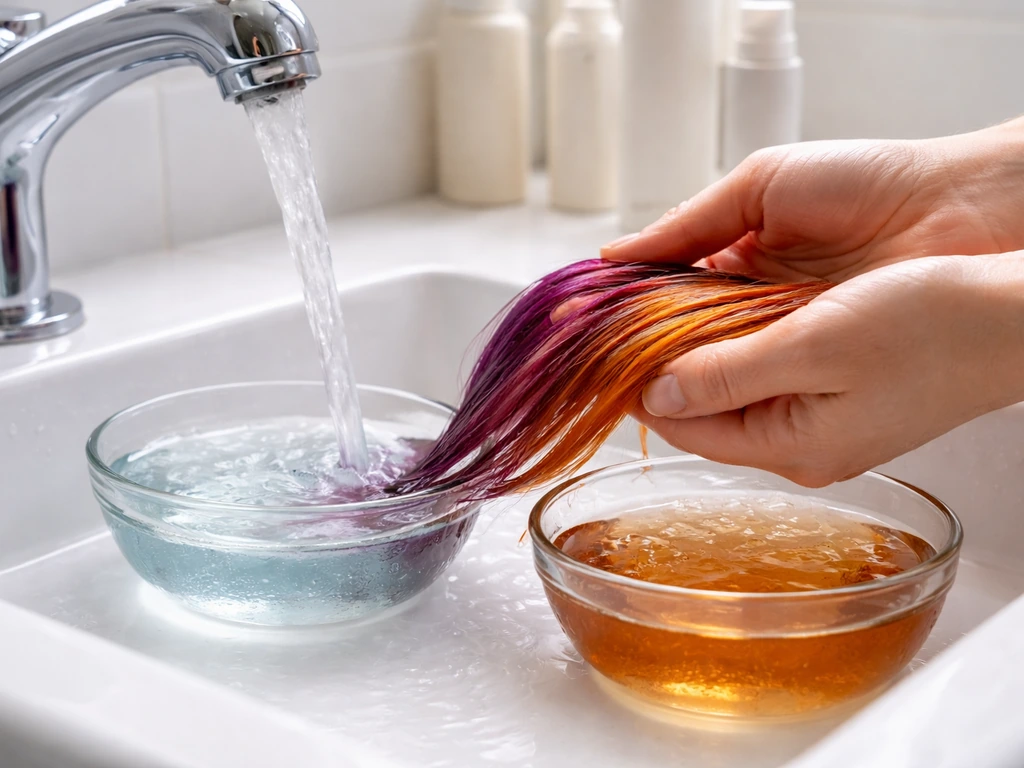
Color fades fastest from heat, sun, and frequent washing. Washing with cool or lukewarm water instead of hot closes the cuticle and slows color loss significantly. A heat protectant spray designed for color-treated hair (look for ones that claim UV and heat protection up to around 230°C/446°F) should be used every time you blow-dry or use a hot tool. Both ghd and Davines make well-regarded options in this category. On wash days, a color-protecting shampoo and conditioner maintain vibrancy between salon visits, and washing less frequently overall is the single most effective thing you can do to stretch color life.
Styling colored hair at grow-out lengths
One of the hidden advantages of growing out colored hair is that the color itself often creates visual interest that disguises awkward lengths. Balayage in particular looks intentional at every stage because the gradient does a lot of the visual work for you. If your color is fading to a warmer or brassier tone, a purple or blue toning shampoo used once a week (left on for 3–5 minutes) corrects that without a salon visit. Just do not overuse it or leave it on too long, as it can deposit too much pigment on fine or light hair.
Accessories and maintenance routines that actually help
Accessories worth having
A few accessories genuinely change the grow-out experience. Claw clips are versatile from bob length onward and can create a polished up-style in under 30 seconds. Headbands (both elastic and padded styles) are especially useful during bang grow-outs and the early pixie phase. Bobby pins and small barrettes let you pin away problem pieces while still looking intentional. Silk or satin scrunchies are worth using instead of regular elastics when you are tying hair back, because they cause less mechanical breakage at the tie point.
A simple maintenance routine that supports growth
- Wash 2–3 times per week maximum (or less if your scalp tolerates it) to reduce color fade and mechanical stress.
- Use a microfiber towel instead of a regular terry cloth towel when drying. The reduced friction measurably lowers breakage risk, especially on wet hair.
- Rough-dry to about 70% with your fingers or a diffuser, then finish with directed heat only on the sections that need shaping.
- Apply a heat protectant before every hot tool session, no exceptions.
- Deep condition once a week, especially if you are heat styling or color-treated.
- Get a trim every 8–10 weeks, but communicate clearly that you want a cleanup trim (dust the ends, remove splits) not a shape cut that takes length.
- Sleep on a silk or satin pillowcase, or use a satin bonnet if you have curly or coily hair. Both reduce overnight friction and frizz.
- Use a leave-in conditioner daily on dry or damp hair to maintain moisture, which is especially important for curly, coily, or color-treated hair.
Try this today based on your current stage
If you are just getting started and want to know what to actually do right now, here is the short version. At 1–2 inches: buy a matte clay or pomade, work it through your hair every morning, and add direction. At jaw length: get a claw clip and a curling wand, and start wearing waves instead of trying to recreate a blunt bob.
At the neck-to-shoulder stage: master a half-up style using a claw clip or pins, add a weekly hair mask, and start thinking about whether you want to add layers at your next trim. At every stage: protect your ends, keep your hair moisturized, and stop waiting to style it until it gets "long enough. " The grow-out period has its own looks. Lean into them and the whole process gets a lot less frustrating.
When you are figuring out hairstyles when trying to grow out short hair, matching the style to your current length and texture makes the awkward phase a lot easier to handle.
If you want to go deeper on specific phases, there is a lot more to say about styling short hair specifically during the early stages of a grow-out, or about the tactical choices for making the transition from a specific cut look as seamless as possible. If you are wondering how to style short hair while letting it grow out, use the stage-based ideas in this guide to pick what fits your current length. The core idea in all of it is the same: treat every stage as a hairstyle in its own right, not as a waiting room for the next one.
FAQ
What should I do if I cannot get trims every 8–10 weeks while growing out my hair?
If you do not want to commit to frequent trims, choose micro-trims instead (about 1/4 to 1/2 inch) only on the most split-prone ends. You will keep the growth timeline mostly intact, and you avoid the common mistake of cutting “too much” to fix one bad section.
How do I know whether I need a texturizing trim versus more length when my grow-out looks bulky?
Yes, but be consistent with the root cause. If the problem is puffiness or bulk, use internal texturizing at your next visit rather than taking off length. If it is tangling or friction, prioritize conditioning and detangling in the shower before you reach for more product.
My grow-out hairstyle looks greasy or flaky, what am I doing wrong?
Do a “test section” first. If your hair is short and the product leaves flakes, switch to a lighter matte product, use a smaller amount, and apply it with damp hair for more even distribution. Heavy gel or thick cream on early-grow-out lengths can make pieces clump together and emphasize the awkward phase.
How can I style without setting back my hair health during the short stages?
If you use heat, limit tool passes and rely on heat-resistant styling methods. For example, dry first (rough-dry), then shape with one controlled pass, and avoid re-styling the same piece repeatedly the same day. The biggest mistake is “touching up” short sections over and over while they are still fragile.
What if I am not getting the ear-tuck milestone at the expected time?
Ear-tuck can happen at different lengths depending on your face shape and hair density, so use it as a flex point rather than a strict rule. If your sides still stand out, try a deeper side part or blow-dry direction work first, then reassess before booking extra layers.
How do I track progress when my hair shrinks a lot (curly or coily)?
For curly or coily hair, plan a “length visibility” routine: keep your usual wash day, then add a stretching style (braid-out, twist-out, or blowout) once every week or two. That way you can see progress while still protecting your curl pattern.
Any practical tips for managing growing bangs that keep falling in my eyes?
When bangs are growing out, avoid brushing them repeatedly dry, it can worsen frizz and make them flip back into your eyes. Instead, set the direction after styling, then re-secure with pins or a headband only when needed during the day.
What is the best product strategy for fine hair so the grow-out does not look flat?
If your hair is fine, the safest place for product is mid-lengths to ends. Use mousse at the root for lift, then keep oils, creams, and heavy styling balms strictly away from your crown to prevent flatness.
My dyed hair looks patchy as it grows out. Should I tone it or recolor it?
If color is fading unevenly, focus on tone balancing instead of full recolor. A gloss or toner can even things out quickly, and washing in cooler water plus less frequent hot-tool use usually improves how long the correction lasts.
How often should I use a purple or blue toning shampoo during a grow-out?
Toning shampoos can be helpful, but start conservatively. Use them once a week, leave for the shorter end of the timing range, and stop if your hair turns too ashy. Overcorrection is a common issue on fine or light hair.
Should I trim my undercut sides to make them catch up faster?
It depends on what you mean by “even.” If the goal is to hide contrast, use styling to blend first, then ask for a trim or internal layers only once the lengths are close enough. Cutting the top shorter early is a frequent mistake that prolongs the overall transition.
What is the best way to prevent breakage when I wear my hair up during the grow-out?
Choose styles that reduce friction and tangling at your current length. Satin scrunchies help, but also consider loose, low-tension ties and minimizing tight styles overnight. The goal is fewer snags so you do not lose length to breakage.