
Highlights do not have to look bad as they grow out, but they often do go through an awkward phase, and whether yours will be subtle or really obvious depends on a few specific things: how much contrast exists between your highlighted hair and your natural base, which technique was used, and what length and cut you have right now. Foil highlights on dark hair with a big lift will show a visible root line faster than soft balayage on medium brown hair. Most people hit the rough patch around weeks 6 to 10, and with the right styling and maintenance moves you can get through it without looking like your color has completely given up on you.
Do Highlights Look Bad When They Grow Out? What to Expect

Marcus Vickers
5 Jun 2026
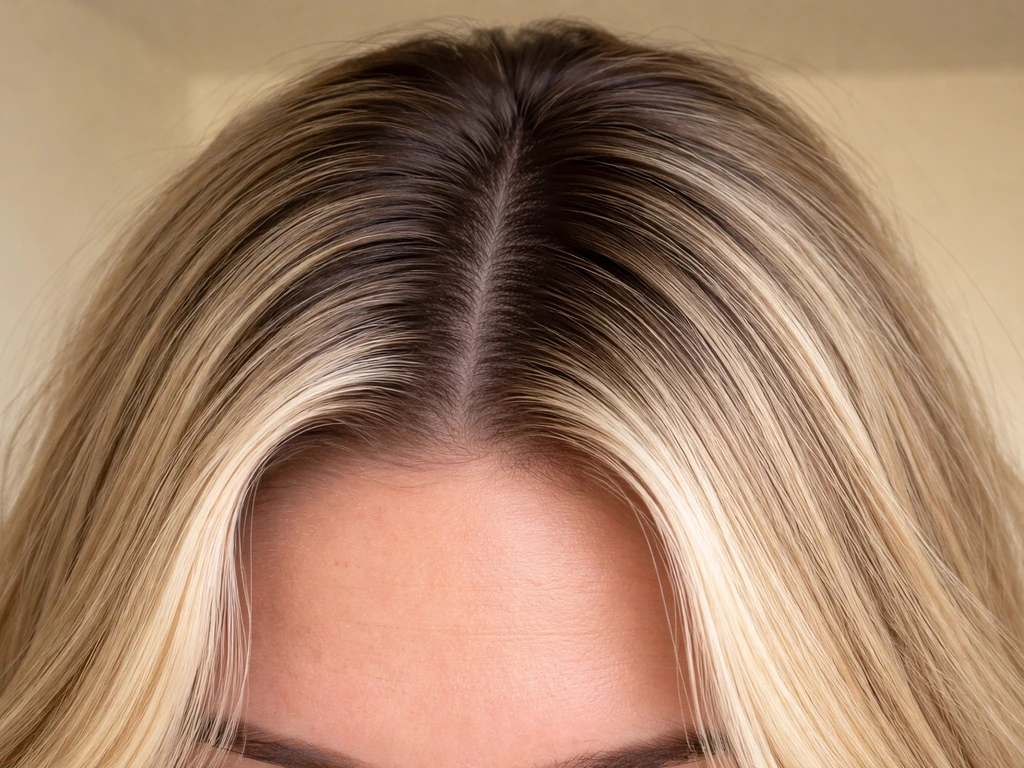
What actually happens at the root line
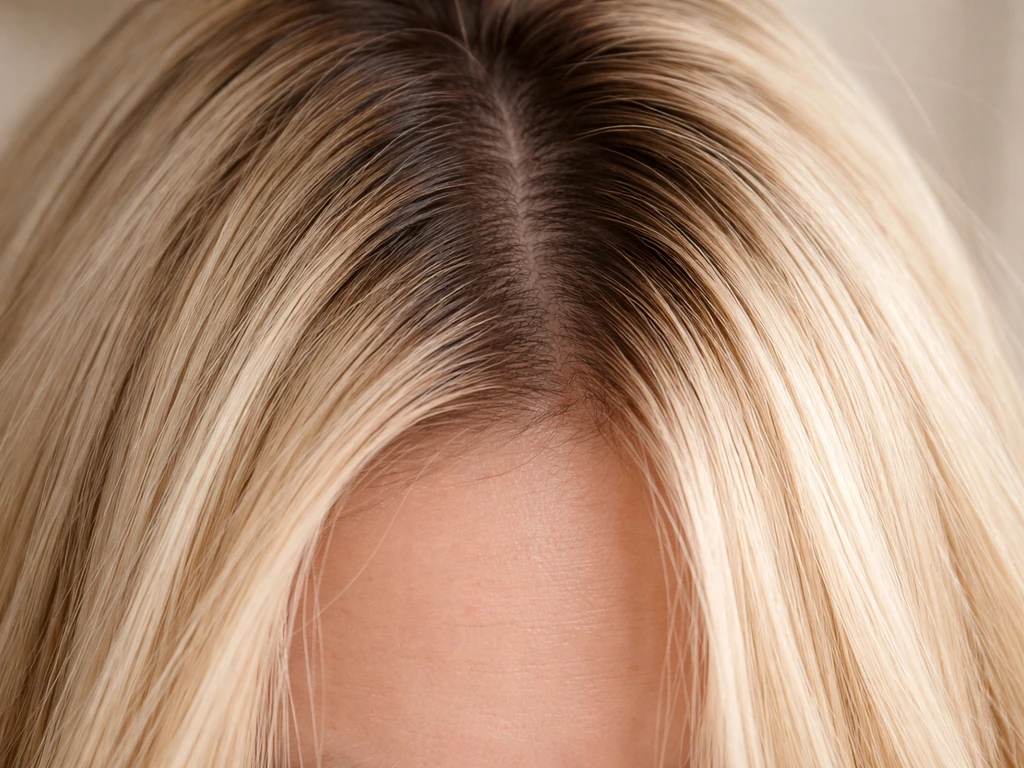
Hair grows roughly half an inch per month on average. For foil highlights, that half inch of natural regrowth appears at the scalp while your lightened lengths stay put, creating what colorists call a line of demarcation. It is essentially a horizontal stripe where your natural color ends and your highlighted color begins. The more dramatic the lift (say, going from dark brown to platinum or bright honey blonde), the harder that line reads. When the line reaches about half an inch, most people start noticing it in photos and in direct light.
Beyond the root line, two other things tend to happen as highlights grow out. First, the highlighted portions fade and can turn brassy or orange, especially if they were lifted significantly. This is also why many people wonder: do highlights fade or grow out, and the answer is both depending on how they were lightened. Heat styling, sun exposure, and hard water all pull the cool tone out of lightened hair over time. Second, if you had all-over foil highlights that were placed close to the scalp, the regrowth can look like a band rather than a gradient, because there is an abrupt shift from your natural color at the root to the highlighted section and then potentially back to your natural color if you have layers growing in at different rates. That banding effect is what most people mean when they say their highlights look bad.
Does it look bad at every stage? Not quite.
The honest answer is that the awkward zone is usually a specific window, not the entire grow-out. The first four weeks are generally fine because the regrowth is barely visible. Weeks six through twelve tend to be the hardest, which is exactly why traditional foil highlights are typically recommended for touch-ups every six to eight weeks. After the three to four month mark, something interesting happens: the root line softens because the overall length has grown enough that the highlighted portion now sits more in the mid-lengths and ends, which is actually a more flattering placement. This is almost exactly what a balayage or ombre looks like naturally, which is part of why those techniques are marketed as low-maintenance in the first place.
The difficulty also varies a lot depending on your haircut. Short cuts like pixies and bobs show regrowth faster and more obviously because the highlighted sections are closer to the scalp and there is less hair overall to blend things out. If you are growing out a pixie or bob with highlights, expect the awkward window to feel more intense. Longer hair gives you more options for styling, layering, and visual distraction. Bangs are their own situation entirely: highlighted bangs grow forward into your face and the root line becomes a focal point right in the center of your forehead.
| Highlight type | How it grows out | Typical touch-up window | Awkward phase intensity |
|---|---|---|---|
| Traditional foils (close to root) | Defined root line, visible banding | Every 6–8 weeks | High |
| Balayage (hand-painted) | Soft, gradual root blend, lived-in look | Every 3–4 months | Low to moderate |
| Ombre | Built-in gradient, roots naturally blend | Every 4–6 months | Low |
| Foilayage (foils + hand-painting) | Slightly softer than foils, more contrast than balayage | Every 8–12 weeks | Moderate |
Quick self-check: will yours blend or will it be obvious?
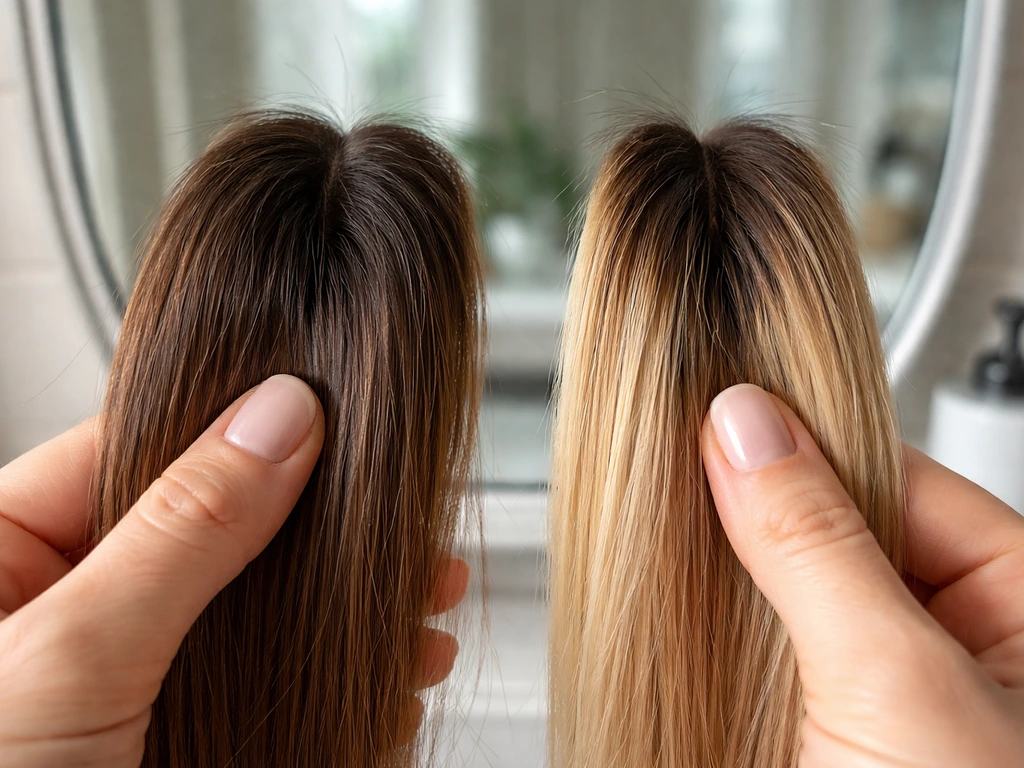
You can actually predict how your grow-out will look before it becomes a problem. Run through these four questions honestly.
- How much contrast is there between your natural root and your highlighted color? Hold up a piece of your natural hair (unwashed, closest to the scalp) next to a highlighted strand. If you can see a stark difference at a glance, your grow-out will be high contrast. If you squint and it blends, you will have an easier time.
- Where were the foils placed? If they were placed very close to the scalp, the demarcation will appear higher and faster. If your colorist left a half-inch or more of natural root at the service, you effectively bought yourself more time.
- How warm is your highlighted hair right now? If there is already brassiness creeping into your highlights, the growing-out phase will add warmth on top of warmth. That combination reads muddy rather than blended.
- What is your hair length and texture? Short fine hair shows roots earlier and more harshly than longer thicker hair, which has more body to diffuse the contrast.
If you answered high contrast, close to scalp, already brassy, and short or fine, you are in the zone where things can look rough without some intervention. If most of your answers pointed toward soft contrast and longer hair, you can probably ride it out with minimal effort.
Styling tricks that actually help right now
You do not have to do anything to your color to make the grow-out look intentional. Styling alone can do a lot of the heavy lifting, especially in the first few months.
Change your part
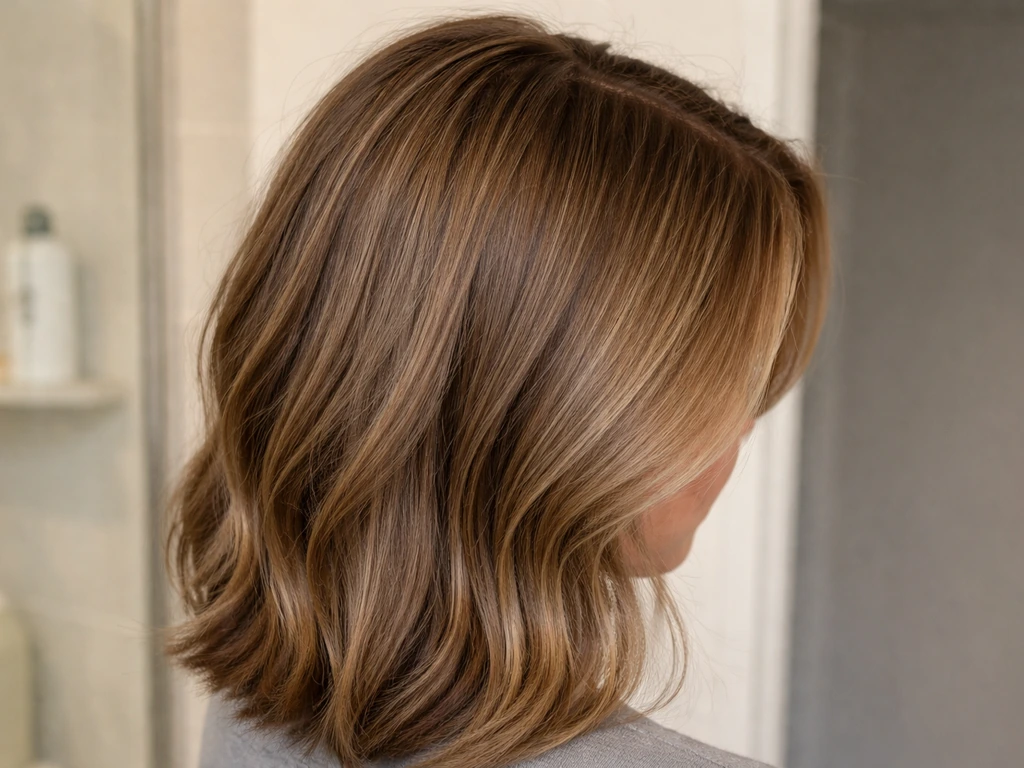
This is the fastest, cheapest fix you have. A side part breaks up the visual line of the root, making the demarcation look irregular and less like a band. If you have been wearing a center part, try shifting it an inch or two to one side. The contrast at the root will still be there but the eye reads it as texture rather than a stripe.
Use layers and face-framing to your advantage
If you are growing out a bob or a layered cut, ask for a light dusting trim that removes the most faded, brassy ends without losing length. This is not about cutting hair short again, it is about evening out the tone at the bottom so the gradient from highlighted mid-lengths to natural roots looks more intentional. Shorter face-framing layers also shift attention away from the regrowth at the crown.
Updos and half-up styles

Pulling the top section up into a bun, twist, or half-up style hides the root area almost entirely. This is especially useful during the weeks six to ten window when the root line is at its most obvious. Low buns and messy twists work well here because a bit of texture around the root actually makes the grow-out look deliberate, like a shadow root rather than neglect.
If you have bangs
Highlighted bangs growing out are genuinely one of the harder situations because the root line is front and center. Sweeping the bang to the side (using a side part and a small amount of pomade or hair spray to hold it) takes the eye away from the straight root line. You can also use a tinted dry shampoo in a shade close to your natural root to soften the contrast visually while you wait.
Color maintenance to keep things from looking harsh
You do not need a full salon appointment to manage the brassiness and contrast that come with growing out highlights. There are several things you can do at home that genuinely help.
Purple shampoo and toning shampoo
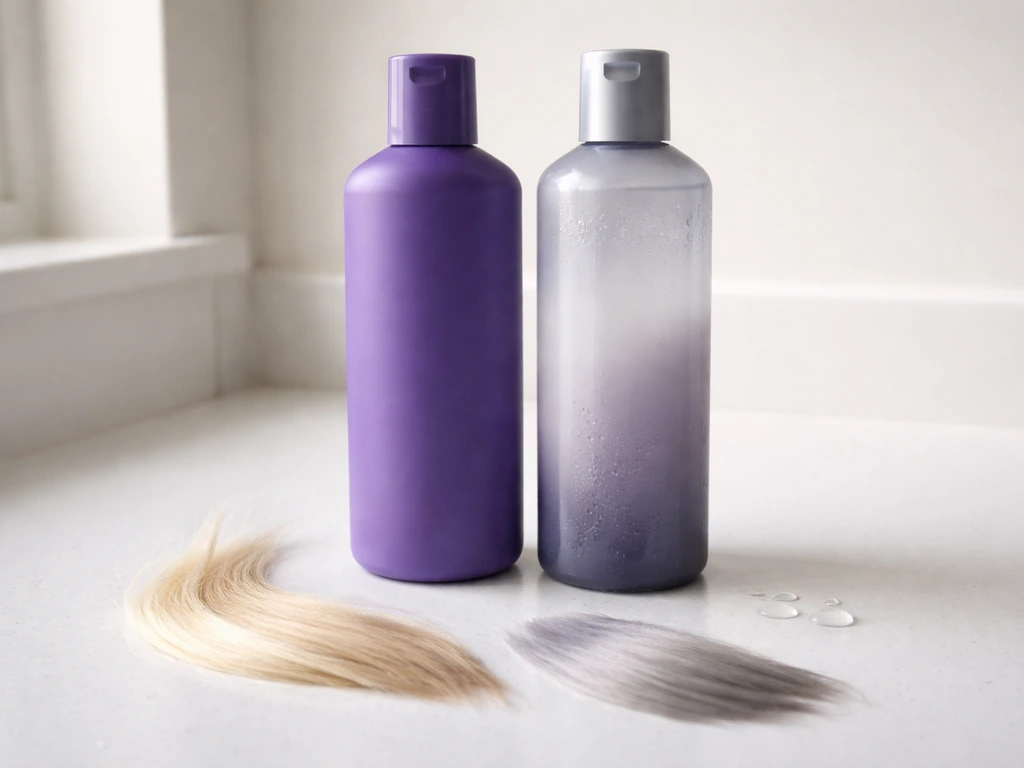
Purple shampoo works by depositing violet pigments that neutralize the yellow and orange tones in bleached or lightened hair. Use it two to three times per week, rotating with your regular shampoo. Woman & Home also notes that purple shampoo should be used on a controlled schedule to avoid over-toning issues like dullness or an unwanted cast Use it two to three times per week. If you overuse it, the violet can build up and leave a dull or slightly lavender cast, so frequency control matters. If you wash your hair less often, once a week can be enough. Think of it as color maintenance between appointments rather than a fix in itself.
Gloss and toner treatments
A clear or tinted gloss treatment, available at most drugstores or from your stylist, adds shine and deposits a thin layer of tone over the entire hair shaft. For growing-out highlights, a cool beige or ash toner gloss can soften the contrast between your natural root and your highlighted mid-lengths by cooling down both sections slightly. These are semi-permanent and wash out over four to six weeks, so they are low commitment. Your stylist can also apply a toner at the salon as a standalone appointment between full highlight services, which costs significantly less than a full color service.
Color-depositing masks
These work similarly to toning shampoos but deposit more pigment and condition at the same time. A blonde or golden mask can refresh faded highlights so they look less washed-out. A cool ash or pearl mask can reduce brassiness. Use once a week in place of your regular conditioner and leave on for five to ten minutes for the most effect.
Protecting your color from here on
Heat damage and sun exposure pull warmth into lightened hair faster than almost anything else. If you are actively growing out highlights, use a heat protectant spray every time you use a blow dryer, flat iron, or curling tool. A UV-protectant hair product (a spray or leave-in with SPF) is worth using in summer months or if you spend a lot of time outdoors. The more you protect the highlighted sections from fading further, the better the overall gradient will look as the natural root grows in.
When to trim and when to leave it alone
The instinct to chop everything off during an awkward grow-out phase is real, and sometimes it is the wrong move. If your highlights look bad primarily because of blank" rel="noopener noreferrer">the root contrast, cutting your hair will not fix the color and may actually make the root line more obvious by bringing the highlighted portion closer to the scalp again. If you are seeing highlights start to grow out unevenly, focus on controlling the brassiness and breaking up the root line with styling while you decide whether you need toner or a root touch-up what to do when highlights grow out. Save the significant trim for when you actually want to remove the highlighted ends entirely and commit to growing out your natural color, or when the ends are so faded and brassy that they are dragging down the whole look.
Small trims every eight to ten weeks to keep the ends healthy and remove the most damaged highlighted portions are genuinely useful during a grow-out. These trims should be light (a quarter to half an inch) and focused on shape rather than length reduction. If you are growing out a bob or pixie with highlights, maintaining the shape of the cut while it transitions is more important than obsessing over whether the highlighted ends are perfect. The goal is to look intentional at every stage, not to rush to a point where the color is gone.
One guideline worth keeping in mind: if you can see a hard, crisp line of demarcation at the root and it is been four weeks or more, that is the signal to either book a root smudge or toning appointment, or to lean harder into the styling and maintenance strategies above. Around eight to twelve weeks is when most people with traditional foil highlights need some kind of color intervention to stay comfortable with their look, even if it is just a toner rather than a full re-highlight.
If it looks worse than you expected: your real options
Sometimes the grow-out hits harder than planned, especially if you have gone through a significant color change, experienced heat damage that made the highlighted sections porous and patchy, or are dealing with a haircut that makes the contrast especially obvious. Here is what you can actually do.
- Root smudge: A colorist applies a shade close to your natural root color and blends it two to three inches into the highlighted hair, softening the line so there is no harsh edge. This is not a full color application; it is a blending technique specifically designed to make the grow-out look seamless. It lasts until your next cut or color service and is one of the most effective and affordable options.
- Partial highlight refresh: Rather than doing a full head of foils again, a partial service targets just the face-framing and top sections, which are the most visible. This refreshes the look without fully committing to ongoing highlight maintenance.
- Toner-only appointment: If the issue is primarily brassiness rather than root contrast, a standalone toner service from a colorist (usually 20 to 45 minutes) can neutralize the warmth and buy you several more comfortable weeks.
- Transition to balayage: If you are tired of the maintenance cycle of foil highlights, ask your colorist about transitioning to a balayage or soft ombre technique. This can be done over one to two appointments and moves you toward a lower-maintenance color that looks intentional as it grows out. The grow-out behavior of balayage is much more forgiving, exactly because it mimics the natural softening that happens at the roots.
- Let it ride with maintenance: If the grow-out is not truly bad, just in the awkward phase, the combination of toning shampoo, a gloss treatment, and smart styling can genuinely carry you through to a point where the highlighted portions have moved far enough into the lengths that they look like natural dimension.
One thing worth saying directly: growing out highlights does not ruin your hair permanently. If you are also starting to notice grey, the same grow-out approach can help you blend highlights more naturally as your hair changes growing out highlights. The awkward phase is temporary and specific. If you’re noticing highlights that are growing out, the awkward window is often the hardest part and it helps to know what to expect highlights growing out. Hair porosity changes from chemical processing can make toners absorb unevenly for a while, but that normalizes as the natural hair grows in. If your highlighted hair has taken on an uneven or patchy quality, a moisturizing treatment followed by a professional toner can do a lot to normalize the appearance while you wait.
Stage-by-stage expectations for the full grow-out
| Timeframe | What you will likely see | What to do |
|---|---|---|
| Weeks 1–4 | Minimal root line, highlights still fresh-looking | Use purple shampoo 2–3x per week, protect from heat and sun |
| Weeks 5–8 | Visible root line, possible brassiness starting | Try a part change, use a toning gloss or mask, consider a root smudge if contrast is high |
| Weeks 9–16 | Root line more defined, banding possible, highlights fading | Toner or salon gloss appointment, small trim if ends are brassy, lean into updos and half-up styles |
| Months 4–6 | Natural root growing in significantly, highlighted sections moving toward mid-length | This is when the look starts to soften naturally; consider whether to continue growing out or refresh |
| 6 months+ | Highlighted ends mostly in the lower half of hair, roots look more like shadow root | Trim off the most faded ends gradually, or transition to balayage to extend the soft look |
The most important thing to take away is that the grow-out has a shape to it, and you are not stuck in the worst part forever. The hardest window is roughly weeks six through twelve, and there are real, practical things you can do at every stage to stay ahead of it. Whether you want to keep highlighting, transition to a lower-maintenance technique, or grow fully back to your natural color, you have more control over how it looks than it might feel like right now.
FAQ
What if my highlights look worse because they turned lavender or dull, not just because of the root line?
It can if the toner or purple product has been over-applied or left on too long, because violet pigments can build up on existing lift and start to look dull, grayish, or slightly lavender. If you notice a cool cast that you did not ask for, pause purple shampoo for a couple of washes, switch to a regular moisturizing conditioner, and consider a gloss or toner that matches your natural base rather than a stronger purple formula.
Why do my grown-out highlights look patchy or uneven instead of just “different at the roots”?
Yes, the grow-out can look patchy when your highlighted sections are more porous in some areas, which makes toner and shampoo fade or grab unevenly. A common fix is a moisturizing treatment first (to even out porosity), then a professional toner/gloss applied after the hair is prepped. At home, use masks to soften texture before you try another round of toning.
Will I reach the awkward grow-out stage faster if I straighten or curl my hair a lot?
If you use heat often, you may notice the line and any brassiness show up sooner than the typical 6 to 10 week window. Heat increases fading and warmth, especially on bleached mid-lengths, so using a heat protectant every time and lowering tool temperature can stretch the awkward phase. Sun can also accelerate this, so UV protection matters in summer.
Should I cut my hair shorter if the grow-out looks bad, or is that usually the wrong move?
A full haircut usually is not the answer for highlight grow-out, especially when the main issue is the root contrast or fading mid-lengths. Instead, try targeted styling changes (like part changes or half-up styles) and color maintenance (purple shampoo, masks, or a toner/gloss). Save bigger cuts for when the ends are truly damaged or you want to commit to removing the highlighted portion later.
How can I prevent brassiness early, before the root line becomes obvious?
Right after getting highlights, the root line might still look clean, but you can still prevent early brassiness by protecting the hair from warmth and using toning strategically. Many people do better with a conservative routine, for example purple shampoo 1 to 2 times per week to start, plus heat and UV protection, rather than waiting until the awkward phase and then trying to correct everything at once.
Can I just cover the root line at home with permanent hair dye?
You generally should not try to “fix” growing-out foil highlights by dyeing your whole head to cover the root line, because it can overlap with existing lift and create uneven bands or darker blotches. A safer path is to use targeted toning (shampoo/mask/gloss) for warmth, or a root smudge/root shadow service if you want the regrowth to blend naturally.
How often should I use purple shampoo if my highlights are already ashier?
Avoid overusing purple shampoo if your highlights are already ashy or if you have low contrast, because extra violet can create a gray or muted look. If your hair turns dull quickly, reduce frequency, and lean more on conditioner and toning masks that refresh tone without pigment overload.
When should I book a salon visit, root touch-up, or toner versus just trying styling at home?
If you see a crisp demarcation that is clearly noticeable after about four weeks, it usually means the blend is breaking down and you may need a small service rather than waiting. Practical options are a root smudge, a toning gloss, or a targeted appointment between full highlights, which can be less time and cost than re-highlighting.
Why do my highlighted bangs look worse than the rest of my highlights as they grow out?
Yes. The grow-out “awkward window” can be different depending on haircut and layering, but bangs are the biggest exception because the regrowth sits at the visual focal point. Side-sweeping, pinning, or holding bangs with a little product can disguise the line faster than you can with general hair changes, and tinted dry shampoo can help soften the contrast.
What should I ask my stylist for if I need a trim while growing out highlighted hair?
You can often keep the grow-out looking intentional by using a cut and shape strategy, not just a color strategy. Ask for a light dusting focused on faded ends (not length reduction), and consider how face-framing layers will sit while you grow, because shorter face-framing pieces can pull attention away from the crown root line.