
When your highlights grow out and that regrowth line starts staring back at you in the mirror, you have three real options: camouflage it today with styling tricks, blend it with a color treatment (toner, root smudge, or partial refresh), or book a professional to reset the whole thing. Which one makes sense depends on how stark the contrast is, how long you want to wait between salon visits, and how much effort you want to put in at home. Most people can buy themselves several weeks with the right quick fixes while they figure out a longer plan. They do fade and also grow out as your hair regrows, which is why timing and maintenance both matter do highlights fade or grow out.
What to Do When Highlights Grow Out: Fix the Line Fast

Marcus Vickers
5 May 2026
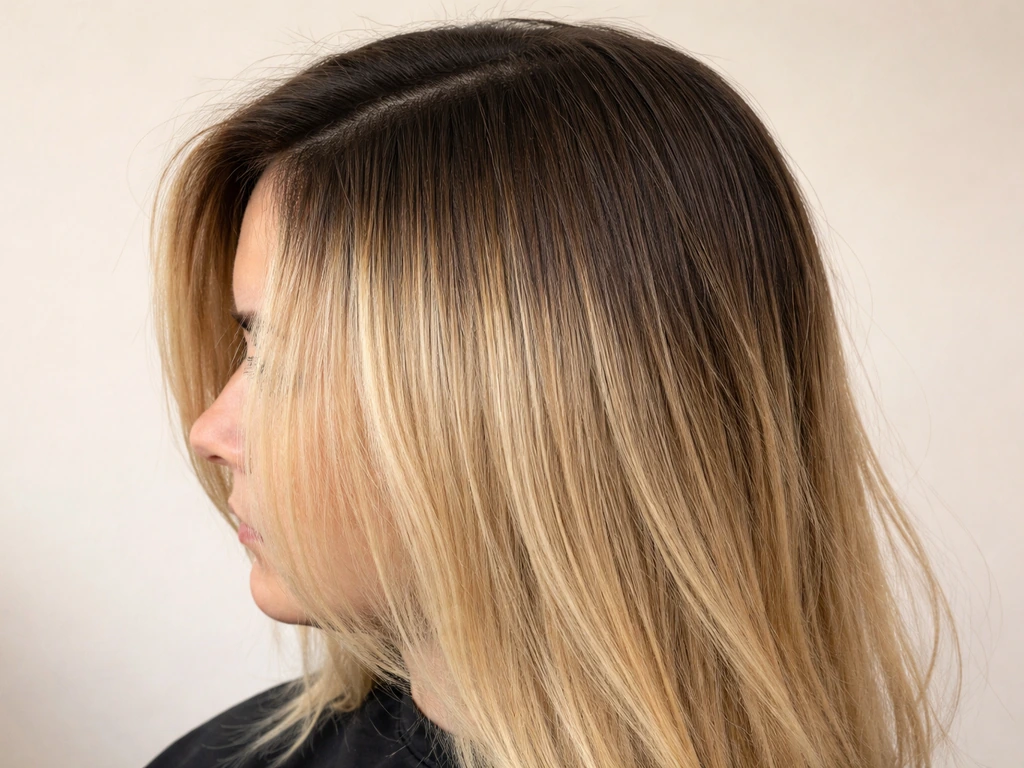
Why highlights start to look grown out (and why it happens fast)
Hair grows about half an inch per month, which means after just 8 weeks you have roughly an inch of new growth sitting between your scalp and your highlighted lengths. That new growth has a completely different underlying pigment level than the hair that was lifted and toned, so the contrast shows up even if your highlights looked perfectly blended when you left the salon. Classic foil highlights placed right at the root create a hard horizontal line the moment regrowth starts pushing through. Balayage and painted techniques fare better because the color was never placed at the root to begin with, so there is no sudden demarcation, just a gradual shift.
On top of the regrowth, the color you do have is likely shifting tone. Lightened hair is more porous than natural hair, and that porosity makes it absorb minerals, sunlight, heat, and oxidation from the air, all of which push the color warmer and brassier over time. Toners and glosses applied at the salon fade unevenly for the same reason: high-porosity sections grab pigment fast and release it fast, while lower-porosity sections stay ashy longer. The result is a grow-out that looks not just rooty but patchy and warm, which is when it starts feeling genuinely awkward.
Quick fixes for this week (no color required)
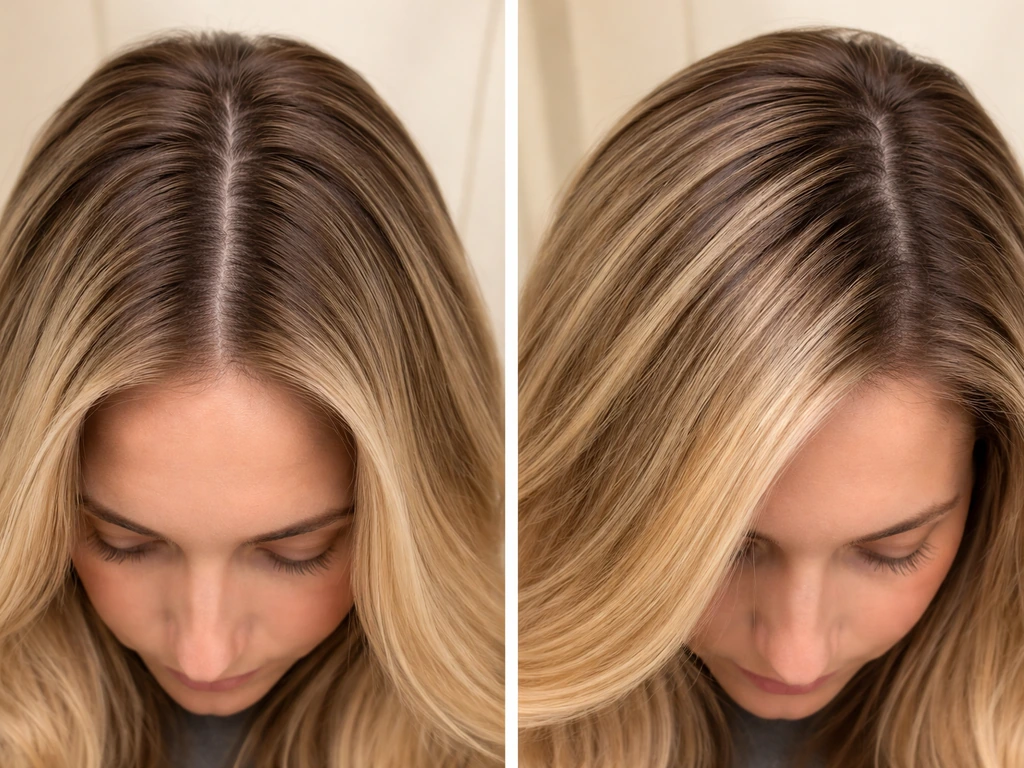
Before you touch a single drop of color, try these styling moves. A lot of the awkwardness in a grown-out highlight is about line visibility, and you can reduce that with nothing more than your styling tools and a bit of repositioning.
- Shift your part. A center part exposes the most root in a symmetrical, obvious line. Moving to a deep side part instantly breaks up the visible regrowth and hides some of the demarcation under the top layer of hair.
- Add waves or texture. A flat, smooth surface makes regrowth lines jump out. Loose waves, beach texture spray, or even air-dried texture blurs the boundary between root and highlighted lengths. This is probably the single fastest thing you can do.
- Use face-framing placement. If your highlights are mainly concentrated around the face, pulling the front sections slightly forward or pinning them back at an angle draws the eye to the lighter ends and away from the dark roots.
- Try a braid, half-up, or twist. Updos and braids physically tuck regrowth out of the sight line and add enough visual interest that nobody is looking at your roots anyway.
- Use a root touch-up powder or spray in the same shade as your highlights. These are not meant to be perfect color matches, but dusted lightly on the regrowth they reduce the contrast just enough to get you through a week or two.
- Dry shampoo at the root. Not for color correction, but volume at the root changes the angle the hair sits at, which subtly shifts how much of the regrowth shows.
If the contrast is very stark, meaning your natural hair is several shades darker than your highlights and you have more than an inch of growth, styling tricks will soften the look but will not hide it entirely. That is when a color treatment becomes worth considering.
Color options to blend regrowth (from subtle to full refresh)
There is a range of options between doing nothing and booking a full highlight appointment. Choosing the right one depends on how much contrast you are dealing with and how dramatic a change you want.
Toner or gloss
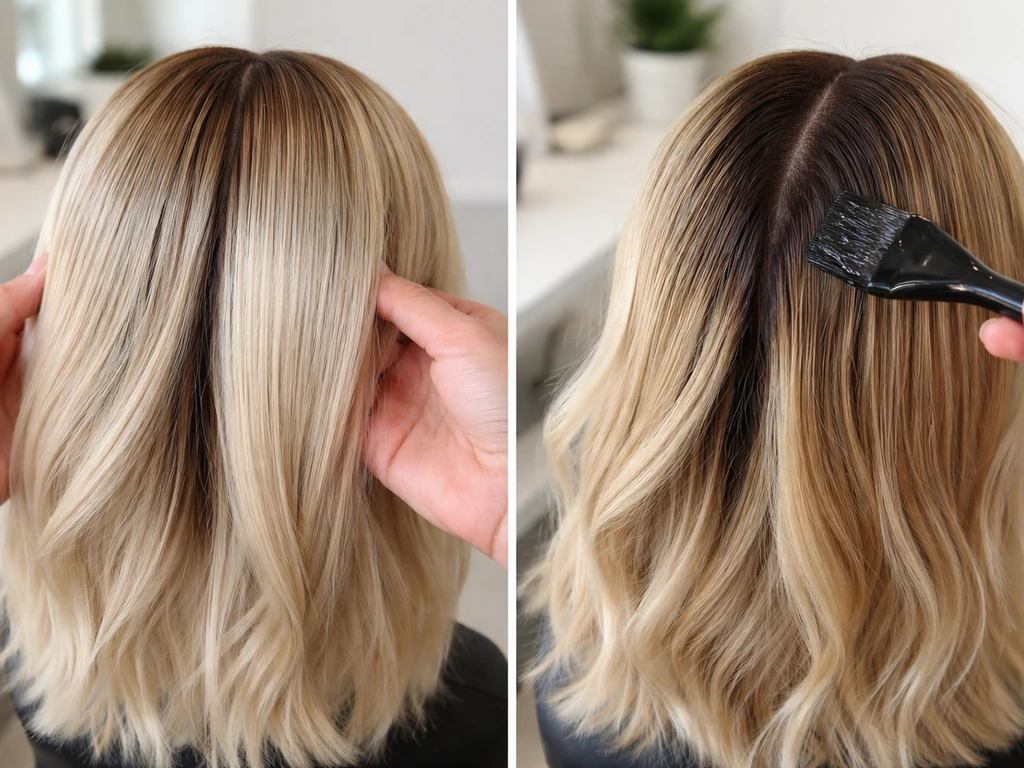
A toner or clear gloss does not lift or darken your color, it just deposits tone to neutralize brassiness and add shine. If your highlights are still reasonably placed but the color has gone warm and patchy, a toner refresh is often all you need. Purple shampoo works on the same principle at home: the violet pigment cancels out yellow and orange tones. Use it once or twice a week and leave it on for 3 to 5 minutes.
Overusing it leads to a gray or lavender cast, so less is more. A bond-building gloss treatment at the salon will do a better job and last longer, but purple shampoo is the right starting point if you just want to buy time.
Root smudge or shadow root
This is the technique that genuinely changes the grow-out game. A root smudge takes a slightly darker color and blends it from the root downward, eliminating the hard line between your natural regrowth and highlighted lengths. A shadow root goes a bit further, darkening the first 1 to 2 centimeters of root and fading into the highlights, giving you a more intentional gradient.
The difference is subtle but worth knowing: a root smudge keeps the dark hue tight to the scalp, while a shadow root extends it further down for a more pronounced fade. Either approach can push your time between salon visits to 8 to 12 weeks instead of 4 to 6, because the regrowth blends in rather than creating a contrast line.
This is best done at a salon, but box demi-permanent kits exist for at-home use if you are confident with color.
Partial re-highlighting or face-frame refresh
If your highlights are mostly fine but the framing around your face looks noticeably grown out, a partial service (just a few new foils around the face and part line) can freshen the look at lower cost and less processing time than a full appointment. This works well when the rest of your color is still reasonably blended.
Full highlight refresh
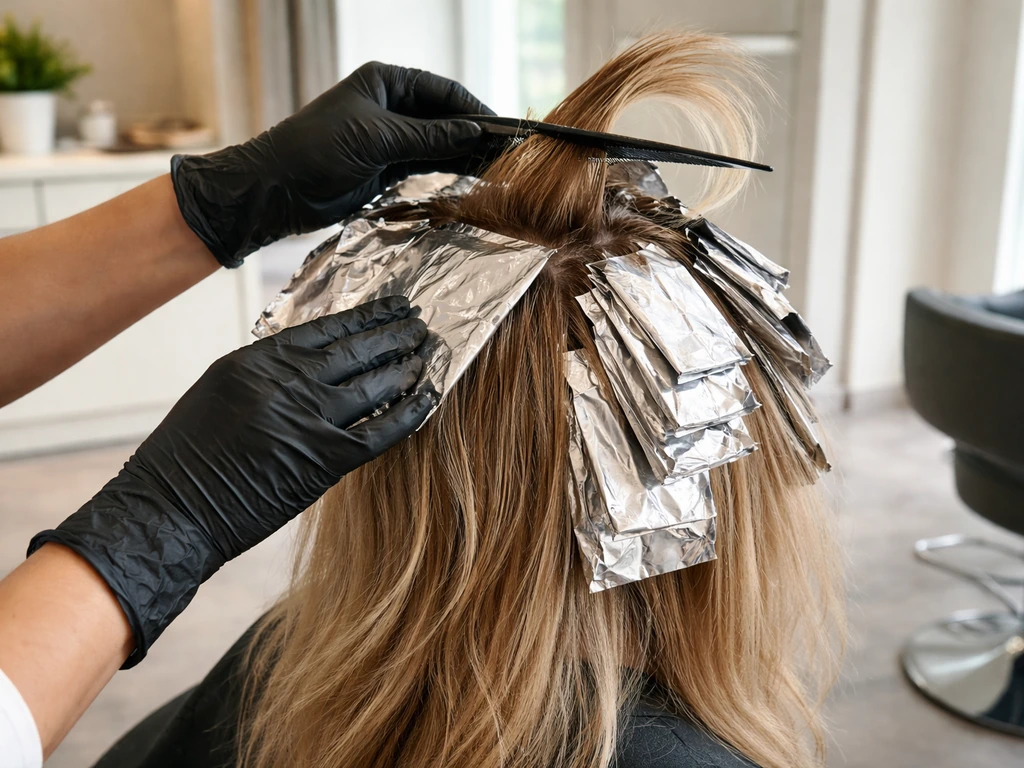
When the regrowth is significant, the toner has fully faded, and you want to reset the whole color, a full highlight appointment is the right call. This is also the right time to reconsider your placement: if classic foils have been creating a hard grow-out line repeatedly, asking your colorist to shift to a balayage or painted technique will make future grow-outs softer and more manageable.
| Option | What it does | DIY or salon | Adds time between visits |
|---|---|---|---|
| Purple shampoo | Neutralizes brassiness, maintains tone | DIY | Keeps existing tone longer |
| Toner / gloss | Refreshes tone, adds shine, no lift | Salon (best), some DIY kits | 4–6 weeks |
| Root smudge | Blends root line, stays close to scalp | Salon recommended | 8–10 weeks |
| Shadow root | Creates gradient, darker hue extends further | Salon recommended | 10–12 weeks |
| Partial highlights | Refreshes key sections without full appointment | Salon | 6–10 weeks |
| Full highlight refresh | Resets entire color | Salon | Resets the clock |
Building a maintenance plan that actually works
A maintenance plan for grown-out highlights has two layers: the color appointments themselves, and what you do between appointments to keep the color looking even. Both matter.
How often to refresh

Classic foil highlights at the root typically need refreshing every 6 to 10 weeks before the contrast becomes distracting. Balayage and ombré can stretch to 12 to 16 weeks because the grow-out is naturally softer. If you have added a root smudge or shadow root, you can often push your appointments to the 10 to 12 week mark without it looking messy. The lower-maintenance your technique, the more flexibility you have, which is worth considering if you want to reduce salon frequency.
Products that prevent uneven fading
- Sulfate-free shampoo: sulfates strip color faster, so switching to a gentle formula extends the life of both your highlights and your toner.
- Purple or blue shampoo 1–2 times per week: keeps brassiness from creeping back between appointments.
- Weekly deep conditioning or bond-building treatment: lightened hair is more porous and prone to damage, and keeping it conditioned slows the rate at which it releases tone.
- Heat protectant every single time you use a dryer, flat iron, or curling iron: heat accelerates oxidation and tonal shift in lightened hair, contributing directly to brassiness.
- UV protection spray or leave-in with UV filters: sun exposure is one of the main drivers of tonal shift in highlighted hair.
Washing habits that help
Wash your hair in cool or lukewarm water instead of hot. Hot water opens the cuticle and allows more color pigment to escape. Washing less frequently, even going one extra day between washes, meaningfully extends how long your color looks fresh. When you do wash, use a color-safe conditioner from mid-length to ends since that is where the highlighted, more porous hair sits.
Protecting your highlights from fading unevenly

Uneven fading is frustrating because it makes regrowth look worse than it actually is. The patchiness comes from the fact that different sections of your hair have different porosity levels. Areas that were lifted more aggressively grab toner quickly but also lose it faster, so they go brassy before the rest of the hair does.
You can slow this down by keeping all of your highlighted lengths well moisturized (moisture reduces the rate at which porous hair releases pigment) and by avoiding anything that opens the cuticle unnecessarily, including very hot water, harsh shampoos, and chlorine exposure. One experimental study found that with UV protection, hair fades less after UV irradiation than it does [without UV protection](https://pmc. ncbi. nlm.
nih. gov/articles/PMC12712344/), measured using a hair color difference index. If you swim regularly, wet your hair with clean water before getting in the pool, use a swim cap, and rinse immediately after. Chlorine and minerals in pool water are particularly rough on lightened hair.
The other factor is heat styling frequency. Every time you use a flat iron or curling wand without heat protection, you accelerate the oxidation that turns highlighted hair brassy. A good heat protectant is not optional if you color your hair, it is part of your color maintenance routine.
When to book a professional vs handle it yourself
There is no shame in troubleshooting at home, and plenty of the maintenance stuff (purple shampoo, conditioning treatments, heat protection) is absolutely DIY territory. But there are situations where a professional colorist is genuinely the right call and trying to fix it yourself can make things significantly worse.
- The contrast between your roots and your highlights is very high (think dark brown roots against platinum or bright blonde highlights). At-home color in this situation is risky because the wrong product can create banding, patchy results, or unwanted tones.
- You are seeing banding, meaning a visible stripe of color that looks different from both your root and your highlighted ends. This is a sign of uneven processing and needs a professional assessment to correct without creating more damage.
- Your hair feels dry, stretchy, or breaks when you tug it gently. Compromised hair should not have more chemicals applied until it has recovered, and a colorist can assess the damage and recommend a path forward that does not make it worse.
- You want to change your highlight technique (for example, switching from foils to balayage) because doing that transition cleanly and without visible seams requires skill.
- You have tried a root touch-up product or demi-permanent kit at home and it has made things uneven or introduced an unwanted tone. Color correction is one of the most difficult things to do and should almost always go to a pro.
On the other hand, if your highlights are mostly intact and the issue is just brassiness or a slight root line, purple shampoo, a toning gloss, and some styling adjustments are completely reasonable to try first. And using a temporary root powder or spray to get through the week before your appointment is always a solid move.
Realistic timelines by starting length and style
Where you are in your grow-out process changes what you should actually do. Here is what to expect depending on your starting point.
Pixie or buzz cut with highlights
Short hair shows regrowth fastest because there is almost no length to distract from the root area. You will likely see contrast within 4 to 6 weeks. Because you are growing the cut out as well as the color, the priority is keeping the hair healthy during processing. Frequent touch-ups are hard on very short, often heavily lifted hair, so talking to your colorist about using a gloss or shadow root to soften the grow-out (rather than re-lifting repeatedly) is worth doing early. At the 3 to 4 month mark you will have enough length for more styling flexibility.
Bob or lob with highlights
A bob length gives you more styling tools than a pixie, and waves or a textured finish can soften the regrowth line well. Classic foil highlights on a bob will show root contrast noticeably by 6 to 8 weeks. If you are growing the bob out toward longer lengths, resist the urge to re-highlight the whole head repeatedly because layering more lightener on already processed ends will damage them. Partial services or root smudges are better during this phase.
Bangs with highlights
Bangs are the most visually front-and-center part of your hair, so highlighted bangs that grow out can look quite obvious very quickly. Growing out bangs fully takes anywhere from 6 months to a year depending on how short they started. If your bangs are highlighted and growing, consider keeping them trimmed and shaped at an angle while the rest of your hair catches up, or pin them to the side to reduce how much they are stacking on top of each other and showing the root line.
Undercuts and layers with highlights
Undercuts and heavy layering add complexity because the highlighted sections may be at different growth stages depending on where on the head they sit. The nape area (typical undercut zone) will show regrowth quickly if it was highlighted. As the undercut grows in, the contrast between the lightened section and the new growth becomes layered and patchy rather than just a single root line. Regular trims to blend the undercut into the surrounding length, combined with a shadow root to soften the top, tends to work better than color touch-ups alone.
Natural hair or previously colored hair growing in
If you are growing out highlights over natural texture, the regrowth blend depends heavily on your natural hair color and texture. Coarser or curlier textures often have more visible porosity variation between natural and highlighted sections, which can affect how evenly toner takes. If you are growing out highlights over previously colored hair (for example, highlights over old permanent color), the grow-out will likely show more contrast because the underlying color from the old permanent dye and the highlighted sections are creating three distinct zones. A colorist can map this out and recommend either a root smudge to unify the look or a balayage approach that works with all three zones instead of against them.
Your next steps today
Here is a practical starting point depending on where you are right now.
- Look at your regrowth in natural light and estimate how much contrast there is. If it is subtle (under half an inch, low contrast), start with styling tricks and purple shampoo. If it is significant (an inch or more, high contrast), skip straight to booking a consultation.
- If you are styling today: shift your part, add waves with a diffuser or curling wand, and use a root powder or spray in a tone close to your highlights to reduce the visible line.
- Start purple shampoo this week if you are not already using it. Use it once or twice a week, leave it on for 3 to 5 minutes, and follow with a deep conditioner.
- Switch to a sulfate-free shampoo and add a heat protectant to every single styling session starting now.
- If you are ready for a color treatment: ask your colorist about a root smudge or shadow root as a first step before committing to a full re-highlight. It is less damaging, costs less, and buys you 8 to 12 weeks.
- If your hair feels damaged or you are seeing banding, book a professional consultation before applying anything at home. Fixing color correction mistakes is always more expensive than preventing them.
The grown-out highlight phase is genuinely one of the more manageable color transitions, especially once you have the right toolkit. If you are wondering whether it looks bad, the answer is usually no once you blend the regrowth with the right technique and timing grown-out highlights. The goal is not to fight the regrowth but to blend it into something that looks intentional while your hair does what it naturally does: grow.
FAQ
How do I tell if I should do a toner versus a root smudge?
If the main issue is yellow or orange tone throughout the highlighted lengths, start with a toner or gloss (or purple shampoo). If the problem is a visible line right at the scalp where new growth meets lighter hair, choose a root smudge or shadow root first, because toning will not erase the regrowth boundary.
Can I use purple shampoo to fix both brassiness and a root line?
Purple shampoo is best for brassiness, it will not blend a hard demarcation where your hair has regrown. If you still see a distinct root band, pair purple shampoo with styling that breaks up the line, or plan a root smudge/shadow root for the next step.
What happens if I leave purple shampoo on longer than recommended?
Leaving it on longer than 3 to 5 minutes can deposit extra violet pigment and create patchy lavender or gray areas, especially on highly porous, previously lightened sections. If you oversaturate, it is usually better to pause and let your next wash restore balance rather than reapply immediately.
How can I blend highlights while my hair is growing out if I do not want any more dye right now?
Use a part that shifts slightly from day to day, add soft waves, and focus on shine products on the highlighted lengths. This reduces how much the regrowth line catches light, but it will not change the underlying pigment contrast, so expect only cosmetic improvement.
How often should I wash if my highlights are growing out?
If you can, stretch washes by even one day. Less frequent washing reduces mineral and oxidation buildup that makes brassy, uneven fading more obvious. When you do wash, keep water cool or lukewarm and condition mid-length to ends every time.
Is heat styling making my grow-out look worse even if I use a heat protectant?
Heat protectant helps, but frequent high-heat styling still speeds up oxidation and can make highlights turn warmer sooner. If you are trying to get through a grow-out phase, lower the temperature and reduce passes, especially on the lightest, most porous pieces.
Can I swim with highlights while they are growing out?
Yes, but treat it like a color-support task. Wet hair with clean water before pool entry, use a swim cap, and rinse immediately after. Expect highlighted hair to fade unevenly if chlorine is repeatedly absorbed, even when you are just “briefly” in the water.
How do I choose between a partial service and waiting for a full refresh?
Choose partial refresh if only the face-framing or part-line area looks noticeably out of sync while the rest still looks blended. Choose full refresh if toner has fully faded, regrowth is several shades more obvious across most of the head, or you want to reset overall placement.
What is the quickest mistake to avoid at home during grow-out?
Do not repeatedly re-apply lightener to “fix the line.” Adding more bleach or aggressive processing onto already lightened ends increases dryness and porosity, which often makes patchy brassiness worse before it looks better.
Will a box demi-permanent kit work for a root smudge, or will it look uneven?
It can work, but results depend on matching the kit shade to your current regrowth and highlighted tone. The biggest risk is ending up too dark or too warm right at the root, which makes the transition harsher. If your contrast is already strong or your hair history is complex, professional mapping is safer.
Can the wrong toner shade make my grow-out look worse?
Yes. If you pick a toner that overcorrects, you can end up with ash that looks dull or a lavender cast on very porous areas. When in doubt, start with a milder correction at home, then reassess after one or two washes before escalating.
When should I stop troubleshooting at home and book my colorist?
Book sooner if your root line is clearly defined across multiple sections, your toner has turned patchy gray or brassy in distinct bands, or your highlights were done over prior permanent color. These situations often require intentional placement changes (like shadow root or technique adjustment) rather than more at-home toning.
How does natural curl texture affect grow-out blending?
Curl patterns can exaggerate porosity differences because coils and bends expose sections to different processing and fading. If you notice uneven grab of toner, consider asking for a softer placement strategy (like shadow root or balayage mapping) so the transition matches your curl pattern.