
Growing out layers and bangs at the same time is genuinely one of the trickier hair transitions you can do, but it is absolutely manageable if you know what to expect each month and have a few go-to styling moves for the awkward phases. Hair grows roughly half an inch per month on average, which means short fringe that sits mid-forehead today will reach your chin in about a year. That sounds like forever, but the transition gets a lot more comfortable once you stop fighting your hair and start routing it somewhere useful instead.
How to Grow Out Layers and Bangs: Step-by-Step Timeline

Marcus Vickers
19 Jun 2026
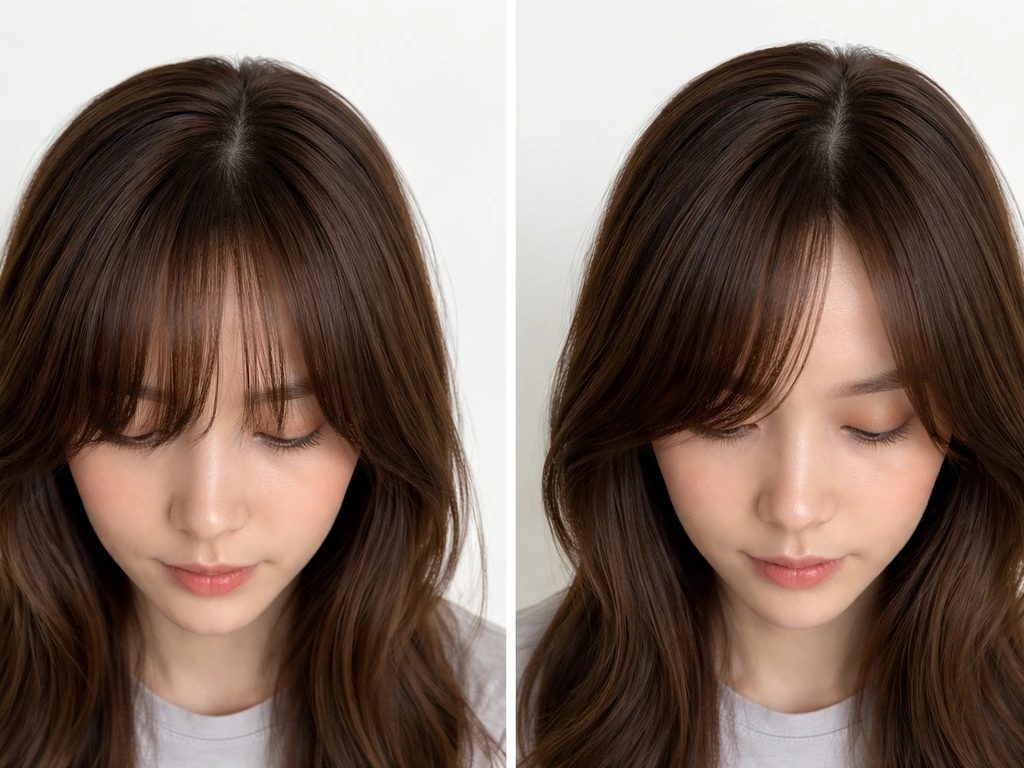
Know your starting point before you do anything else
Before you can plan anything, you need an honest look at exactly where your bangs and layers are right now. Grab a mirror, pull everything else back, and measure roughly. Are your bangs shorter than your brows, sitting at brow level, or already past the nose? Are your layers short and choppy close to the face, longer face-framing pieces, or a full shaggy cut all the way through? Your answers change the entire strategy.
Micro-bangs or a very short fringe (above mid-forehead) are the longest grow-out and the hardest to disguise early on. Blunt bangs at brow level are about six weeks from looking overgrown and a better part of a year from fully blending in. Longer bangs that already graze the nose or lips are actually close to the side-swept transition point, so you may only be two to three months from being able to tuck them fully. For layers, the key question is whether they are blunt and heavy or already textured. Heavy blunt layers tend to puff out and look triangular as they grow, while textured or point-cut layers blend more easily.
Hair type matters here too. Straight, fine hair will show every uneven edge and every length difference between bang and layer. Wavy and curly hair hides those edges better but adds volume and can make growing-out layers look poofy or wide. Coily hair shrinks significantly, so growth is happening faster than it looks, and layers can blend into the curl pattern with less obvious awkwardness. Keep your hair type in mind as you read the strategies below because some of them need a small tweak depending on your texture.
How to grow out bangs: the route from fringe to side-swept or curtain
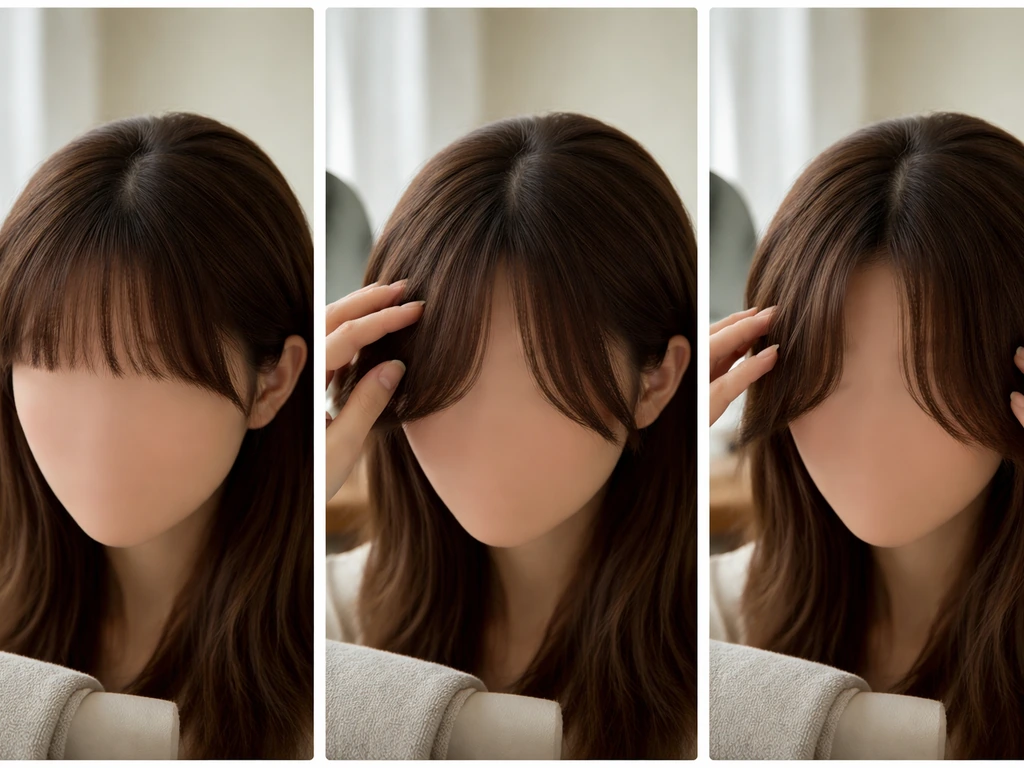
The single best thing you can do for a bang grow-out is give your hair a direction to go. Bangs that are left to their own devices will fall right back into the same spot every time because your natural growth pattern is pointing them there. You need to physically train them somewhere else, and the earlier you start the better.
Micro-bangs and short fringe (above mid-forehead)
At this length, your only real move is patience plus training. Use a small amount of styling cream or pomade on damp hair and comb the bangs to one side every single morning. Blow-dry them in that same direction using a small round brush or just your fingers, directing the airflow to the side rather than straight down. A bobby pin or a small claw clip holding them in place for ten to fifteen minutes after drying sets the muscle memory. Headbands are your best friend at this stage. A slim elastic or a wider fabric band pushes the short pieces back and makes the whole thing look intentional.
Blunt bangs at or just below brow level
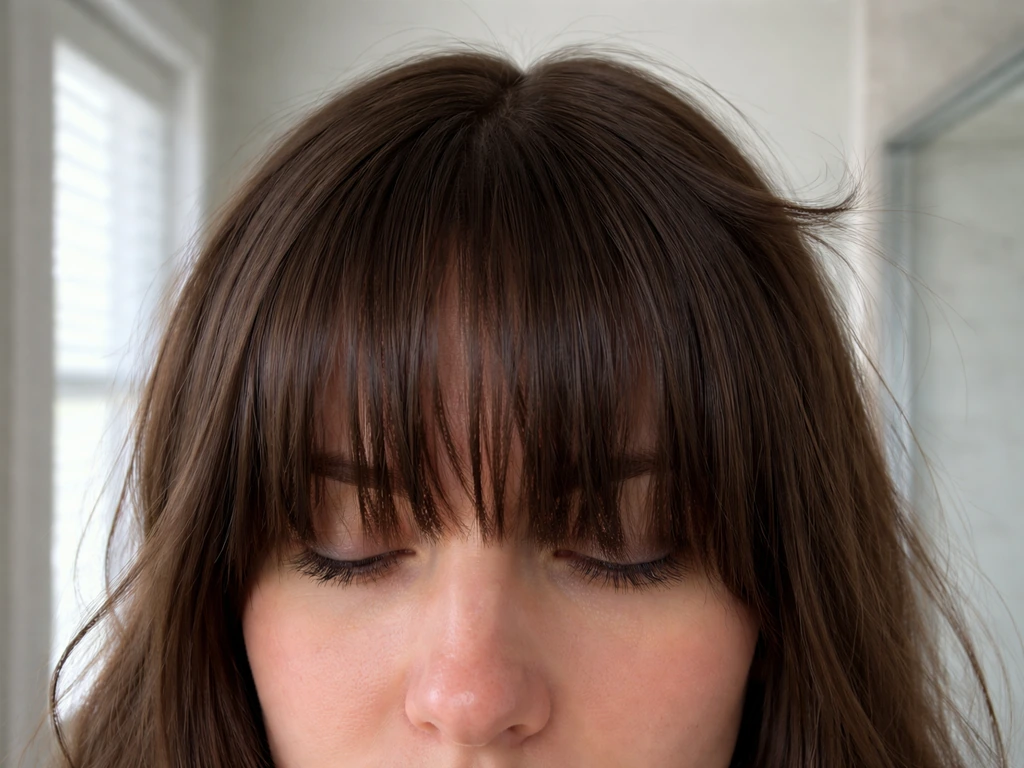
This is the most visually frustrating stage. The bangs are too long to look sharp but too short to go behind the ear or tuck away. If you have a stubborn cowlick, now is when it shows up. To fight it, blow-dry damp bangs by pulling them right, then left, then straight down, keeping light tension the whole time with a brush or your fingers. The back-and-forth motion disrupts the growth pattern and gives you more control over where they settle. Angle the blow dryer outward, not straight into your forehead, so the pieces naturally fall away from the face rather than lying flat and heavy on your skin.
Curtain bangs, if that was your starting style, are genuinely easier to grow out than a blunt fringe because the layered texture at the edges blends into the rest of your hair faster. If you had blunt bangs, this is a smart time to visit a stylist and ask them to soften the edge with texture and angle the ends slightly, making them shorter near the face. That small shaping change prevents them from growing out as one thick, heavy flap of hair.
Bangs past the nose heading toward lip length
You are almost at the side-swept transition. Keep training them to one side every morning, and try a loose tuck behind the ear. Once they reach lip length, they can be pinned, tucked, or braided into the rest of your hair without looking obviously "pinned." A half-up style with the growing bangs swept back into a small clip or mini bun at the crown also works well here. If the grow-out length is bothering you at the below-brow-to-nose stage, cutting them at a slight angle at the salon can help bridge the gap while they continue to grow.
How to grow out layers: handling bulk, puffiness, and uneven shape
Growing out layers is less about one specific awkward moment and more about a series of shape changes that happen month to month. The challenge is that different layers are growing from different starting lengths, so for a while everything looks uneven and sometimes quite wide or triangle-shaped. If you are also dealing with shaggy bang length, the same idea applies: managing shape month to month is key, and you can use the section on how to grow out shaggy layers for extra tactics.
The first phase: layers that flip and puff
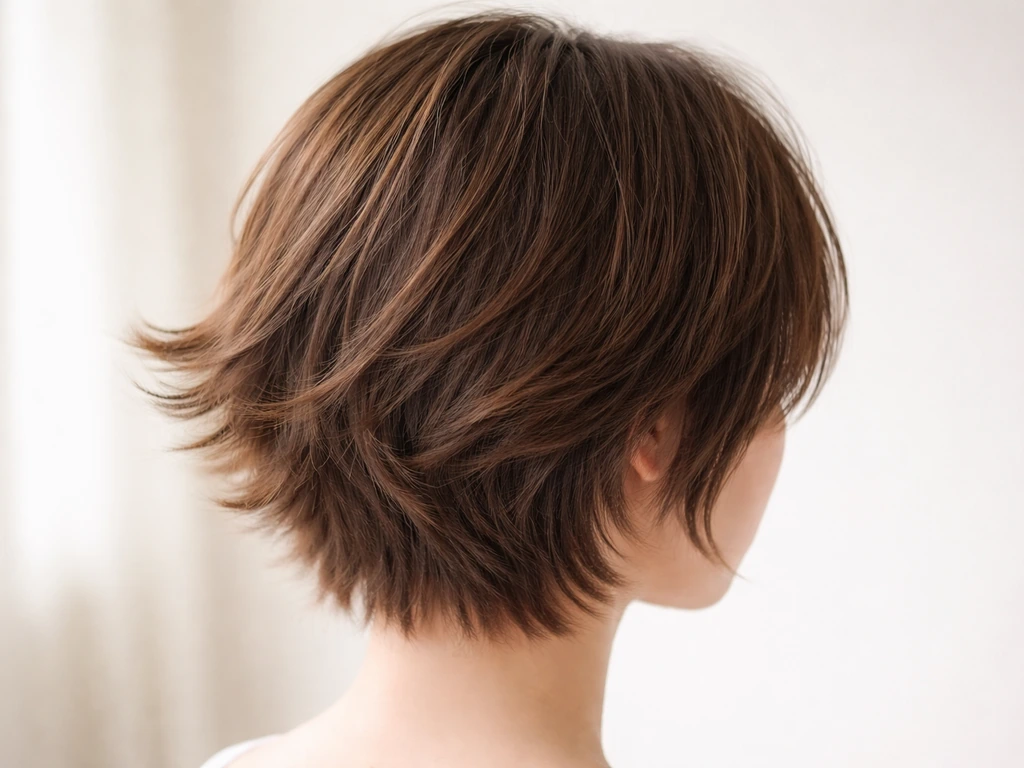
Short layers that are growing toward medium length will flip outward at the ends before they have enough weight to lie flat. This is the poofy or triangle phase, especially in the back. For straight hair, a blow-dry with a large round brush rolling the ends under can counteract this. For wavy or curly hair, scrunching with a lightweight curl cream and diffusing, rather than brushing, keeps the texture together so the flipping looks more like intentional waves than chaos. Avoid heavy products that will weigh down the roots but leave the ends dry, which only makes the puff worse.
The middle phase: blending the layers into the length
Once layers have grown past the point where they flip, the problem shifts to an obvious "shelf" where the layered section meets the longer section underneath. The goal now is to make those two lengths look connected. A skilled stylist can do this with a technique sometimes called "bulk removal" or just blending, where they lightly point-cut into the edges to soften the line without removing overall length. If you are growing out a shag haircut specifically, you will recognize this phase clearly. Face-framing layers growing toward shoulder length present a slightly different challenge because they can look like two separate layers of hair rather than one flowing style.
Fine hair vs. thick hair approaches
Fine hair tends to look stringy and flat as layers grow out because there is not enough density to make the shape look intentional. A light volumizing mousse applied to the roots before blow-drying, combined with a round brush, helps create some lift and disguises the unevenness. Thick hair has the opposite problem: growing-out layers add enormous bulk and can look extremely wide. Keeping some light internal layering through regular trims, without reducing overall length, is how you manage this. Ask your stylist for "invisible layers" or blending cuts specifically designed to reduce bulk without shortening what you have.
Day-to-day styling during the awkward phase
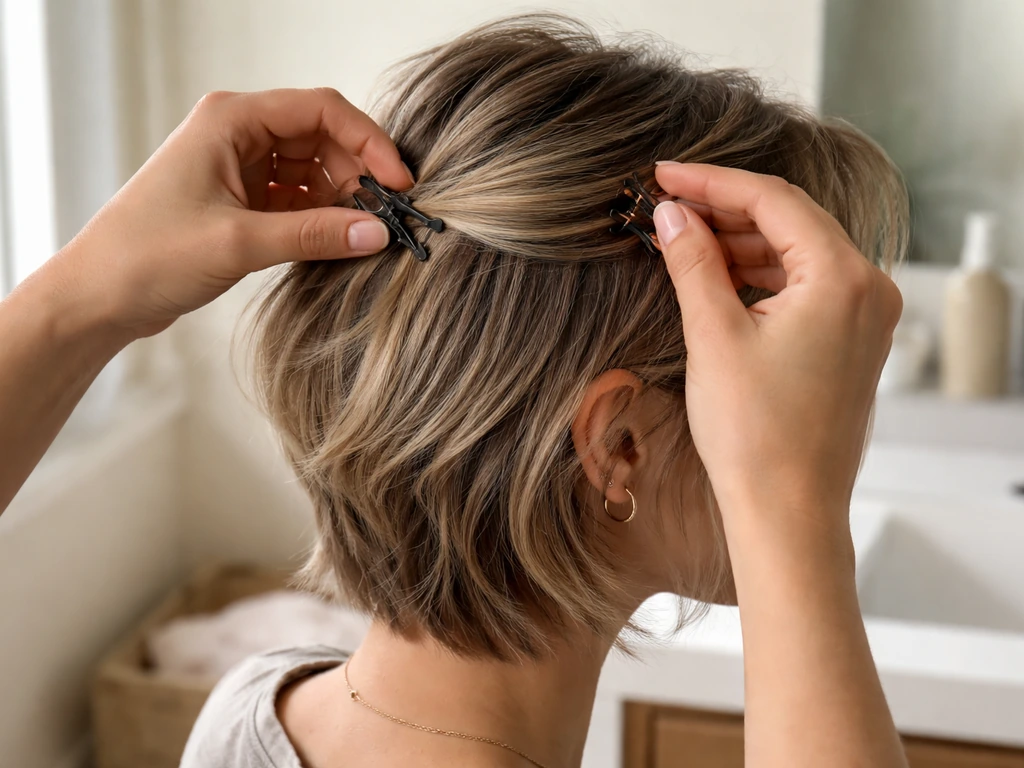
Having three or four reliable styling moves you can rotate takes most of the daily frustration out of a grow-out. You do not need to reinvent your look every morning. You just need a small toolkit that works at each stage.
- Clips and pins: Small claw clips, bobby pins, and barrettes are genuinely useful, not just decorative. Use a claw clip to push the bang section back into a half-up as soon as it reaches cheekbone length. A single bobby pin angled into the side of the part keeps shorter bangs off the face without looking overly styled.
- Part changes: Shifting your part by even an inch can completely change where short layers and growing bangs fall. If your bangs are trained to fall right, try a deeper side part to give them more travel distance before hitting your forehead.
- Tuck and roll: Once growing-out layers reach the neck or collar, they can be tucked under with a blow dryer and large brush for a slightly turned-under look that hides the length difference between short top layers and longer underlayers.
- Braids and ponytails: Incorporating growing bangs into a loose French braid along the front hairline or a low ponytail keeps them out of your face and actually trains them backward toward the crown, which helps long-term.
- Heatless options: Overnight pin curls or soft flexi rods can add wave to straight growing-out layers, making the length differences less obvious. Braiding slightly damp hair before bed and releasing it in the morning gives waves that camouflage uneven ends.
For blow-drying technique specifically: always dry with some downward tension on the hair shaft to smooth the cuticle and reduce frizz. A diffuser is a better tool than a regular nozzle for wavy and curly textures because it preserves the curl pattern and avoids roughing up the cuticle the way direct airflow does. Blot with a microfiber towel first rather than rubbing, then apply your styling product before diffusing, not after.
Products and care that support faster-looking growth
Hair grows at the rate it grows, but you can absolutely slow that progress down with damage, dryness, and breakage, especially in the growing-out bang and layer sections where the ends are older and more fragile. The goal here is keeping the hair you have intact while it gets longer.
A leave-in conditioner is the single most useful addition to a grow-out routine. It makes detangling easier, reduces the friction that causes knots, and keeps the ends flexible enough to survive styling. Apply it to damp hair before any heat or styling. For frizz-prone and wavy or curly hair, look for formulas with glycerin or aloe as primary ingredients, but know that glycerin can pull in extra humidity in very humid weather and increase frizz, so in a humid climate you may want a lighter formula. Avoid products with ethanol or isopropyl alcohol high on the ingredient list since these strip natural oils and leave the ends brittle.
Dry shampoo is a grow-out staple, especially for managing oily bangs and roots without washing every day. Use it on the roots only, and do not go more than two consecutive days without a real wash. Buildup on the scalp from extended dry shampoo use can clog follicles and affect the scalp environment, which is the last thing you want when you are trying to encourage healthy growth.
Wet hair is fragile, stretching and snapping more easily than dry hair. Detangle starting from the ends and working upward with a wide-tooth comb or a wet brush, never from the roots down. Avoid going to sleep with soaking wet hair both because of the breakage risk from tossing on a pillow and because prolonged wetness weakens the hair shaft. If you shower at night, at least blot and loosely braid or twist before bed.
If you are using heat styling regularly during your grow-out, keep the temperature below 375°F for fine or color-treated hair and use a heat protectant spray every single time. Chemical services like color, bleach, or relaxers applied on top of already-stressed growing-out sections are the most common reason a grow-out stalls because split ends and breakage eat up the length you are gaining each month.
What to expect week by week and month by month
Timelines vary by individual growth rate, but here is a realistic picture based on the approximately half-inch-per-month average. Use this as a reference, not a rigid schedule.
| Timeframe | Bang progress | Layer progress | What helps most |
|---|---|---|---|
| Weeks 2–4 | Short fringe looks overgrown; blunt bangs lose their crisp edge | Shortest layers may start to flip or puff | Daily training with blow-dryer + clips; headbands for short fringe |
| Weeks 6–8 | Bangs hit mid-nose area; side-sweep starts to become possible | Flip phase peaks; triangle shape may appear | Side-sweep training; round-brush blow-dry to encourage ends under |
| Months 3–4 | Bangs graze upper lip; tuck-behind-ear possible on good days | Layers creating visible shelf or uneven outline | Part changes; half-up styles; first blending trim recommended |
| Months 5–6 | Bangs fully tuck-able; reaching chin for many starting points | Short layers approaching mid-length; bulk reducing naturally | Braids incorporating bangs; light internal layers from stylist |
| Months 8–10 | Bangs blending into face-framing length for most starting points | Most layers reaching similar length; shape more cohesive | Moisture focus; minimal heat; shape-maintenance trim |
| Months 12–14+ | Full blend for brow-length blunt bangs; micro-bangs may take longer | Layers largely grown out or at desired length | Optional final blend trim; focus on health and moisture |
The six-to-eight-week mark is when most people feel the most frustrated, especially with blunt bangs, because the hair is visually awkward and none of the tuck-or-train moves feel fully satisfying yet. Knowing this in advance makes it much easier to push through. Once you hit the three-month mark, options open up noticeably and most people report the transition starting to feel manageable.
When to see a stylist and exactly what to ask for
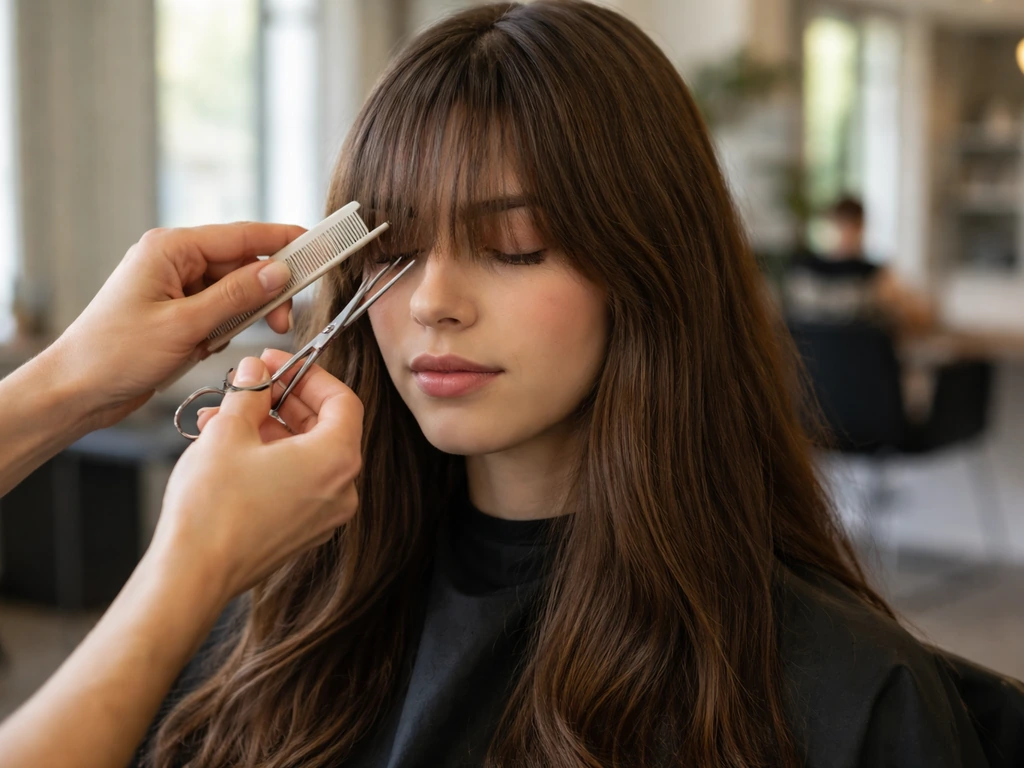
You do not need to avoid the salon during a grow-out. The key is knowing what to ask for so you leave with more length than you came in with, not less.
For bangs specifically, there are two useful timing windows for a salon visit. The first is early on, when blunt bangs are just starting to look overgrown. Ask for the ends to be softened with texture (point-cutting or razor finishing) and for the bang to be angled slightly so it is shortest closest to your nose rather than a uniform flat edge. This makes the grow-out look intentional rather than neglected. The second window is when bangs have passed the eyebrows and are hitting nose-to-lip length. At this point, ask for the outer corners to be trimmed to prevent the side-swept transition from looking lopsided as the middle continues growing.
For layers, ask for a "blending cut" or "bulk removal" rather than a trim. Be explicit: tell your stylist you are growing out the layers and you want to keep as much length as possible while removing the visible shelf or puffiness. If you have been wondering what the best grow-out approach is, many people share their results and tips on how to grow out layers on Reddit how to grow out layers reddit. A good stylist will point-cut into the layers to soften the line between sections without shortening the underlayer. If you are growing out shaggy layers or a full shag haircut, the same conversation applies, but you may also want to discuss whether any of the very shortest layers near the crown need light shaping to stop them from looking messy as they transition.
How often should you go? If your bangs need to look precise while you wear them as bangs, that is every two to three weeks. Once you commit to growing them out and are relying on styling tricks instead, you can stretch visits to every eight to twelve weeks, mainly going in for a blending cut on the layers. If you have a growing-out face-framing layer situation alongside the bang grow-out, a trim every ten to twelve weeks specifically targeting the layer line keeps the shape from looking ragged without undoing your progress.
The main thing to avoid is walking in feeling frustrated and asking your stylist to just "clean it up," which in salon language often leads to a much shorter result than you intended. Go in with a clear ask, ideally a photo of a blended, longer style you are aiming for, and explicitly say you are in a grow-out and want to preserve length. A good stylist will work with that goal rather than against it.
FAQ
Can I trim my bangs or layers while I’m growing them out, without losing progress?
Yes, but do it strategically. If you must cut, focus on snipping only the ragged bang ends or the single “shelf” edge that catches your eye, rather than removing bulk across the whole fringe. This keeps the overall length you gained that month while improving how the grow-out looks from the front.
What if I train my bangs every morning but they still fall the wrong way?
If your bangs are always flipping back into the same spot, switch from one-direction training to a two-step routine: comb them to your target side, then use the bobby pin or clip for 10 to 15 minutes while they cool. Once the hair is cool, the new fall direction is more likely to hold until your next wash.
How do I handle a cowlick during the awkward bang phase?
For stubborn cowlicks, try changing the blow-dry angle and the section size. Use smaller sections than you think you need, and dry with the dryer pointed outward at about a 30 to 45 degree angle so the hair is pushed away from your forehead instead of glued flat against it.
Is it okay to blow-dry every day while growing out bangs and layers?
Use a “dryness check” before increasing heat. If the ends feel dry or rough even after conditioner, lower heat frequency first, then add a leave-in and consider diffusing on low. Frequent high heat during the grow-out can create breakage that makes the timeline look slower even if your hair is technically growing.
Should I ask for extra thinning or texture right away when growing out blunt bangs?
Texturizing too much early can backfire, especially if your bangs started very short. Instead of asking for heavy thinning, ask for softened edges and angled finishing. Save major texturizing for later stages when the fringe reaches a length where it can blend into the surrounding hair.
My layers look wide or triangular as they grow, what can I do at home?
If the “triangular puff” or wide shape happens, add weight at the right place, not heavy product everywhere. Apply cream or pomade lightly through the mid-lengths and only a small amount to the underside, then blow-dry with a large round brush rolling under to control the outer edges.
How often should I wash my hair when growing out bangs?
Wash frequency matters. If your scalp gets oily quickly, use dry shampoo on the roots, but do not let it replace real washing for more than two consecutive days. Stuck buildup can make your bangs look heavy and can also increase scalp irritation, which is the opposite of a healthy grow-out.
What’s the best way to protect bangs overnight so they don’t kink or break?
Avoid sleeping with hair that is soaking wet, and if your bangs are still short, keep them out of the line of friction. After drying or near-dry bedtime, loosely twist or braid the bangs away from your face, or pin them lightly so they do not get mashed into your pillow texture.
Where should I focus salon trims if I want to preserve length?
Target trims should be specific and minimal. Ask for blending or point-cutting at the layer line, not a general “dusting” everywhere. A good rule is trimming only where the visible boundary shows, since removing hair from the whole head is how grow-out timelines get reset.
At what approximate length can I switch from headbands and clips to more natural tucking?
Look for the “look-up” length change. When bangs are around lip-to-cheek length, you usually get more seamless side-swept styling because they can be tucked or pinned without looking like a separate piece. Before that, plan to use clips or headbands daily as a transition strategy.