
Growing out a money piece takes patience, but it's completely manageable if you know what to expect. The bleached or highlighted sections around your face will grow at roughly 1 cm per month, which means the root line becomes visible fast, and the contrast between your natural base and the lightened pieces can look stark before it starts to look seamless. The good news: with the right trimming schedule, some strategic styling, and basic toning maintenance, you can keep it looking intentional the whole way through rather than "accidentally grown out."
How to Grow Out Money Piece Hair: A Step-by-Step Plan

Marcus Vickers
16 May 2026
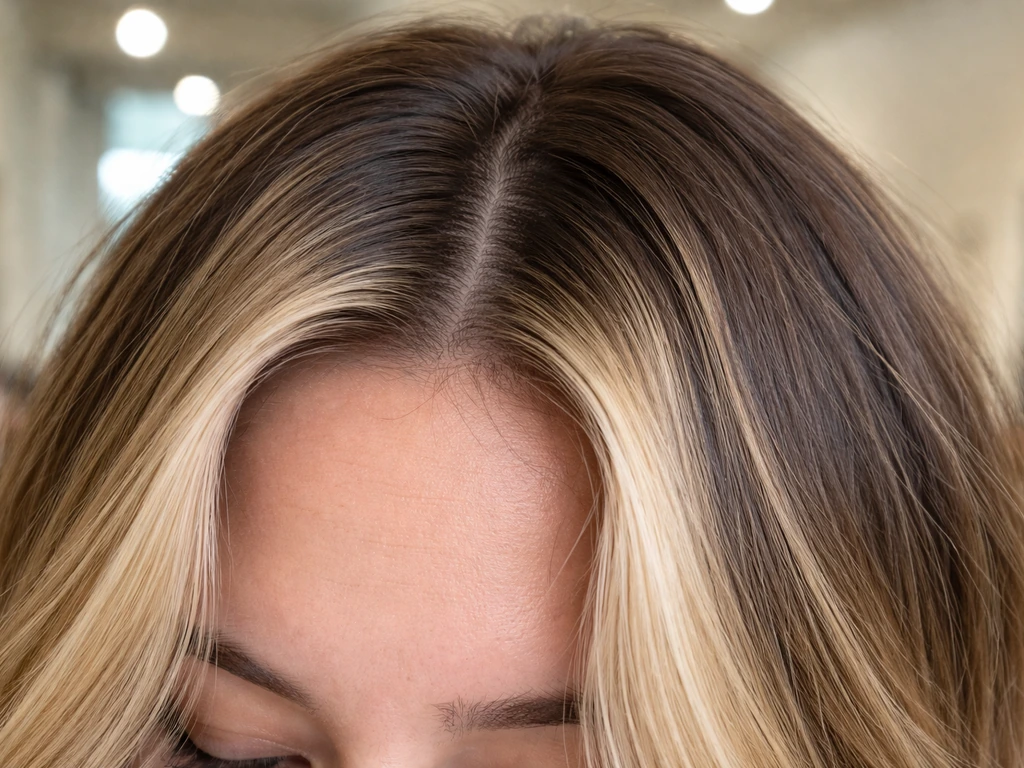
What a money piece actually is (and why growing it out is its own challenge)
A money piece is a face-framing highlight technique where thin sections of hair directly around your face are hand-painted or lightened, usually to a noticeably brighter shade than the rest of your hair. L’Oréal Paris defines “money piece” highlights as hand-painted, face-framing highlights placed on thin sections of hair around the face. The placement is very specific: hair is typically parted down the center and a triangular section is created around the top and front of the hairline, so the lightened pieces frame your face on both sides. That placement is exactly what makes it such a flattering look when it's fresh, and exactly what makes regrowth more obvious than, say, a balayage or regular highlights. Because the lightened pieces are concentrated right at the front where everyone looks first, any root growth is immediately visible.
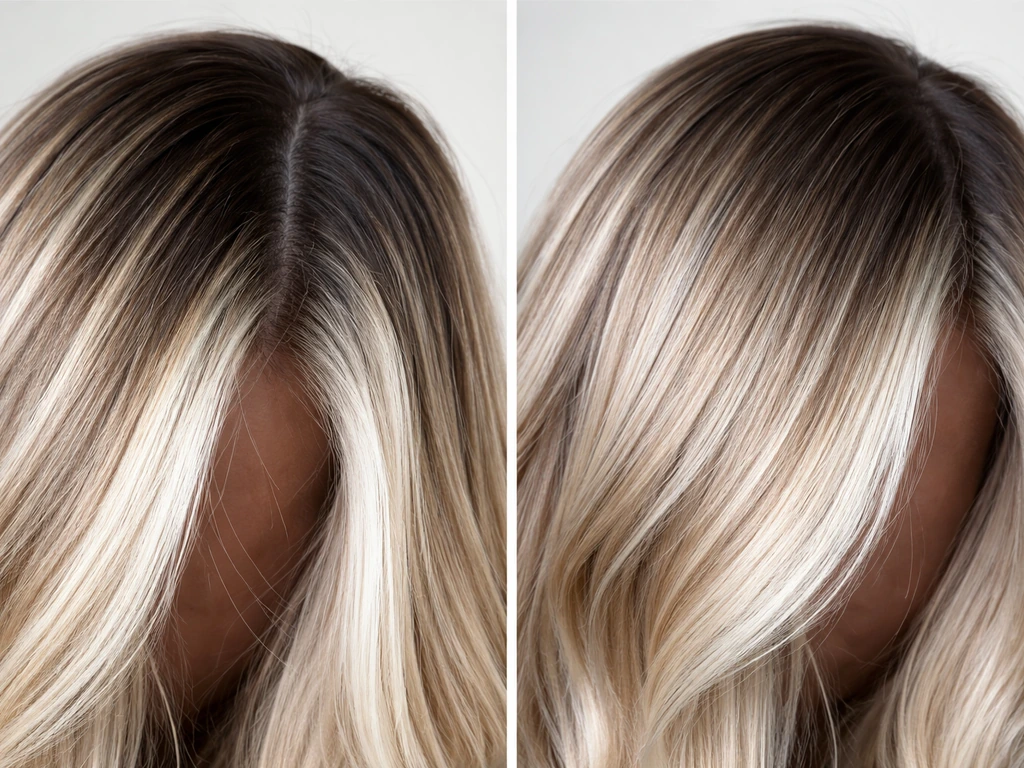
The other thing that makes money piece regrowth tricky is the contrast. Money pieces are often taken several levels lighter than the base color, sometimes to a platinum or bright blonde even on darker hair. When your natural color grows in at the root, you get a defined line of dark-to-light right at the front of your face. It's not subtle. Add potential brassiness as the bleached sections oxidize over time, and you've got a pretty noticeable grow-out situation on your hands. That's the challenge, but it's a solvable one. If you want to keep it looking intentional, focus on managing the contrast as the roots come in and blend the grow-out through styling and toning That's the challenge, but it's a solvable one..
A realistic grow-out timeline: what to expect month by month
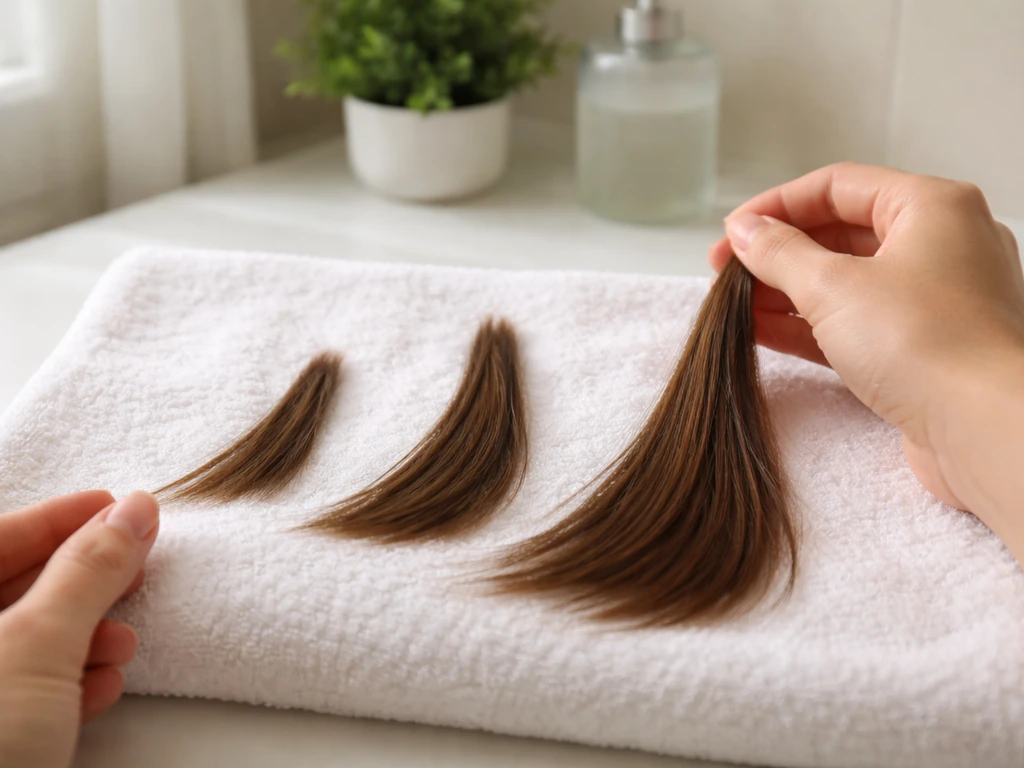
Hair grows at an average of about 1 cm per month, though the real range is anywhere from 0.6 to 3.36 cm per month depending on genetics, health, and hair type. Most people land somewhere around 1 to 1.5 cm monthly. Here's what that actually looks like when you're trying to grow out a money piece.
| Stage | Approx. Growth | What You'll Notice | Main Priority |
|---|---|---|---|
| Weeks 1–4 | ~1 cm | Visible root line starts forming along the hairline; contrast becomes obvious | Start toning routine; style to minimize root visibility |
| Weeks 5–8 | ~2 cm | Root band is clear; brassiness may appear in bleached sections; pieces may look patchy | Purple shampoo weekly; consider a toning gloss |
| Months 3–4 | ~3–4 cm | Money piece begins separating from hairline; on shorter cuts this is the awkward phase peak | Use styling techniques to blend; assess whether a trim helps |
| Months 5–6 | ~5–6 cm | Pieces start to blend into midlengths; easier to work with on medium hair | Keep blending; micro-trims at the ends if needed |
| Months 7–12 | ~7–12 cm | On longer hair, highlights begin merging with the rest; contrast fades naturally | Patience; maintain color health; no major trims needed |
| 12+ months | 12+ cm | Money piece effectively blended or absorbed into overall color | Transition to a new color story or maintain naturally |
If you're starting from a short cut, a bob, or had bangs cut into the money piece, expect the awkward phase to feel longest around months 2 through 4. That's when the root is visible but the length hasn't grown enough to blend naturally. On longer base hair, the transition is often smoother because there's more surrounding hair to work with and the contrast gets diluted across more length.
How to style through the awkward phase without cutting it all off
The awkward phase of growing out a money piece tends to produce what a lot of people describe as a "halo" effect: the face-framing pieces look almost detached from the rest of the hair, floating around the face rather than framing it. Here's how to minimize that and keep things looking intentional.
Blending the root line
The biggest visual fix for a growing root line is to break up the hard contrast. Part your hair slightly off-center instead of dead straight down the middle (a middle part can actually emphasize the symmetry of the root line on both sides). To get closer to a how to grow a middle part flow result, focus on maintaining that off-center-to-middle balance as the root line becomes more visible Part your hair slightly off-center. If you want the most control over how your middle part blends during regrowth, you can use the same principles from this guide on how to grow a middle part. A soft side part lets one panel of the money piece blend slightly behind the rest of the hair. Loose waves or curls also help enormously because they mix the highlighted pieces with the natural-colored sections, softening the boundary between root and lightened hair. Straight, flat styles will show the root the most, so save those for days you don't mind the visible grow-out. Try a straightened, sleek look only if you can keep your styling gentle and consistent, since straight hair makes the root line easier to spot how to grow flow with straight hair.
Face-framing without looking "grown out"
Pull face-framing pieces forward intentionally rather than letting them do their own thing. A loose, intentional tendril in front of the ear looks styled; the same piece sitting flat against your face looks like you forgot about it. Tuck one side back and let the other fall forward for an asymmetric framing effect, or use a clip or barrette to pin back one section and keep it looking deliberate. Half-up styles are genuinely useful here: they pull attention upward and let the lighter ends frame your face without the root line being the first thing anyone notices.
Reducing the halo look
The "halo" happens when the money piece is too separated from the surrounding hair, especially if the pieces are shorter than the rest of your hair from a previous cut. The fix is mixing them in. Use a round brush or diffuser to blend and curl the money piece sections into the surrounding hair rather than letting them air-dry separately. A small amount of lightweight pomade or cream worked through while the hair is damp helps pieces stay together rather than separating out. If you have wavy or curly hair, scrunching the front sections into your curl pattern helps them merge with the rest of the texture.
Trimming strategy: what to trim, what to leave alone

This is where people get themselves into trouble. Trimming the money piece to "neaten it up" often just resets your progress and keeps you in the awkward phase indefinitely. As a general rule: don't trim the length of the money piece sections themselves unless they are significantly damaged or split. What you should trim is the ends of the surrounding hair to keep the overall shape healthy and to stop the money piece from looking dramatically shorter than everything else.
For most people, a trim every 8 to 12 weeks is the right cadence when you're actively growing out color-treated hair. This keeps your ends healthy without sacrificing meaningful length progress. If you're on a shorter cut growing through the awkward phase, you might benefit from a slight shape-up every 6 to 8 weeks, but make sure your stylist knows your goal is to grow the money piece out, not to keep it tidy. That instruction matters because a well-meaning stylist can easily re-create the money piece shape when all you wanted was a dusting.
- Trim the ends of your overall hair to maintain shape, not the money piece sections specifically
- Tell your stylist clearly: "I want to grow the money piece out" before they touch anything near your face
- If ends are splitting on the bleached sections, a micro-trim of just 0.5 to 1 cm prevents breakage from creeping up
- Skip trims entirely during months 3 through 6 if your ends are healthy, to maximize length progress
- Avoid cuts that re-frame the money piece, like adding layers that start right at the cheekbone
Keeping color in check during the grow-out
This is the part most people underestimate. Growing out a money piece isn't just about length, it's also about managing what happens to the bleached sections while they grow. Without regular toning, those highlighted pieces will turn brassy, yellow, or orange (especially if they were taken to a pale blonde), and that color shift makes the grow-out look worse, not better.
Purple shampoo: how to use it right
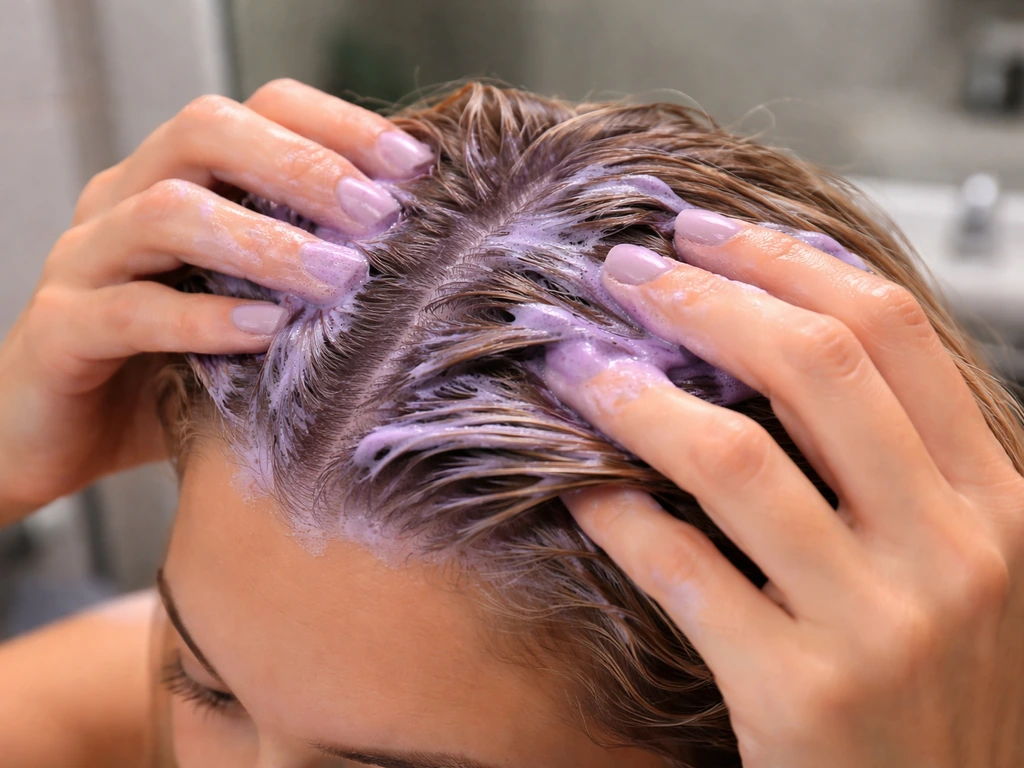
Purple shampoo uses violet pigments to neutralize the yellow and orange tones that show up in lightened hair over time. Use it once or twice a week, leave it on for 2 to 5 minutes, and rinse thoroughly. Daily use will over-deposit pigment and make your money piece look dull or even lavender. If your hair is particularly porous or very pale blonde, start at once a week and adjust from there. On weeks you don't use purple shampoo, use a regular color-safe or bond-maintaining shampoo and conditioner like OLAPLEX No.4 and No.5, which are formulated to support bleach-treated hair without stripping color.
Toning glosses and root smudging
A toning gloss (the kind you can apply at home or get done at a salon) applied every 6 to 8 weeks can smooth out the contrast between your natural root and the highlighted pieces, making the grow-out line look more like a soft gradient and less like a hard stripe. Ask your colorist about a "root smudge" or "shadow root" technique if you want a more permanent softening of the root line. This doesn't remove the money piece, it just blends the transition so the regrowth looks like a stylistic choice rather than neglect. It's one of the most effective tools for surviving the middle months of a money piece grow-out.
Protecting the bleached sections from damage
Bleached hair is more porous and fragile than unprocessed hair, and the money piece sections will always be more vulnerable to breakage, heat damage, and dryness than the rest of your hair. Use a heat protectant every single time you use any hot tool on those sections. Keep deep conditioning treatments in your routine, at minimum once every two weeks, focusing product on the money piece sections specifically. The goal is to keep those bleached sections strong enough to survive the full grow-out without snapping off mid-length, which would set your timeline back significantly.
Common problems and how to fix them
Uneven sides
It's incredibly common for one side of the money piece to grow faster, look longer, or appear lighter than the other side. This can happen because of how the original color was applied, differences in hair porosity side to side, or just natural growth variation. Don't try to even them out by trimming the longer side, you'll be chasing it forever. Instead, style asymmetrically on purpose: tuck the shorter side behind your ear and let the longer side fall forward. Within a few months, the difference will usually even out on its own.
Cowlicks and separation
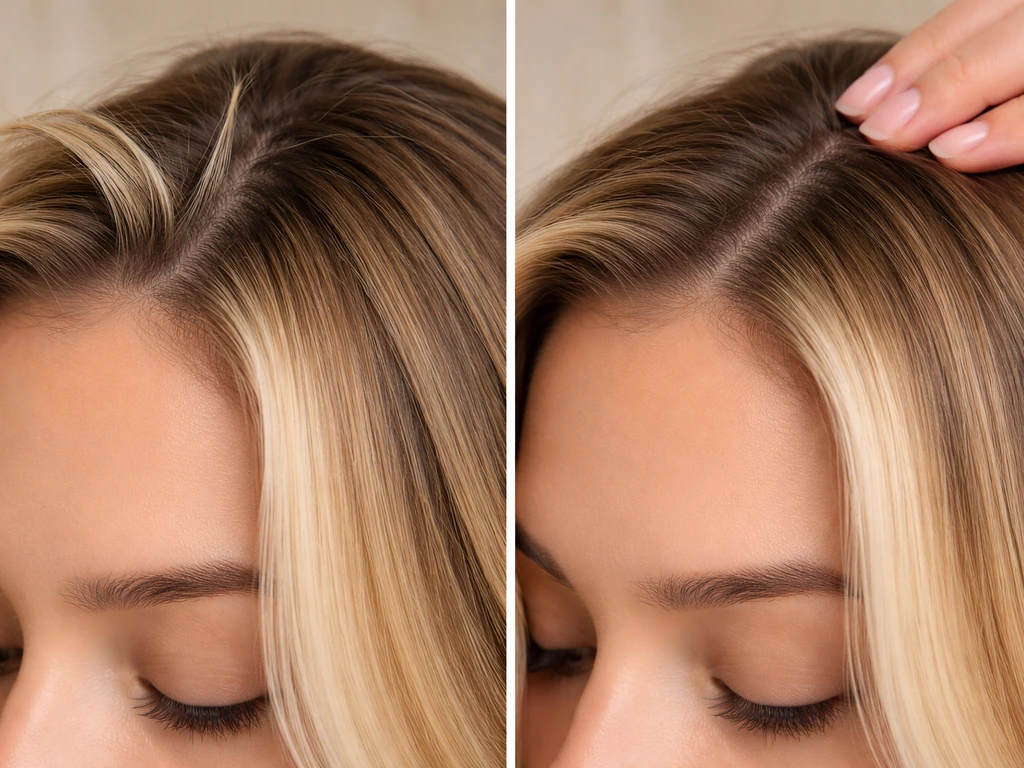
Cowlicks at the hairline can cause the money piece to separate and stick out at odd angles, which looks especially pronounced when the pieces are shorter or lighter. A tiny bit of edge control or a flexible hold gel applied to the root area while hair is slightly damp and then dried in place can train the piece to sit where you want it. Don't fight the cowlick direction entirely, work slightly with it rather than against it, and use a diffuser or round brush to guide it in a direction that looks more intentional. Growing out the crown area can sometimes affect how face-framing pieces behave too, since the weight distribution of the hair changes as the top grows. Growing out the crown area can sometimes affect how face-framing pieces behave too, since the weight distribution of the hair changes as the top grows how to grow out the crown of your hair.
Texture and curl differences in regrowth
Bleached hair often has a different texture than your natural regrowth, and when you have wavy or curly hair, the natural sections may curl more tightly than the lighter, more porous sections. This can make the money piece look frizzy or separate from the curl pattern of the rest of your hair. Using a curl cream or defining gel through both sections together (not just on the curl sections) helps unify the texture. A diffuser on low heat rather than air drying can also help the money piece sections absorb some of the surrounding curl pattern instead of doing their own thing.
Brassiness returning between toning sessions
If your money piece is going brassy faster than your purple shampoo routine can keep up with, increase your usage to twice a week for a few weeks, leaving the shampoo on for the full 5 minutes, then dial back once the tone stabilizes. Sun exposure, chlorine, hard water, and frequent washing all accelerate brassiness in bleached hair. If you swim regularly, use a swim cap or apply a leave-in conditioner before getting in the water to create a barrier. And if you're in hard water, a chelating or clarifying shampoo once a month will strip mineral buildup that contributes to warmth in the tone.
Products and routines that actually make a difference
You don't need a shelf full of products to get through this grow-out, but a few targeted ones make a real difference. Here's a straightforward routine built around what color-treated, bleach-processed money piece hair actually needs.
Wash schedule
Wash your hair 2 to 3 times per week if possible. Every time you shampoo, you're stripping some of the toning pigment and drying out bleached sections. Dry shampoo at the roots between washes extends your schedule without touching the money piece sections at all. When you do wash, use cool or lukewarm water rather than hot, since heat opens the cuticle and lets color molecules escape faster.
Core product list
- Bond-maintaining shampoo and conditioner (OLAPLEX No.4 and No.5 are a solid standard choice): use these on regular wash days to repair damage and maintain moisture in bleached sections
- Purple shampoo: once or twice a week, 2 to 5 minutes of contact time, to neutralize brassiness in the money piece
- Deep conditioning mask or treatment: once every one to two weeks, focusing on the lightened sections; leave on for at least 10 to 20 minutes under a heat cap for better penetration
- Heat protectant spray: every single time you use a blow dryer, flat iron, or curling tool on the money piece sections
- Lightweight leave-in conditioner or hair oil: a small amount worked through the ends of the money piece after washing to prevent dryness and frizz
Heat tool approach
Keep heat styling to a minimum on the bleached sections specifically. If you use a flat iron or curling wand on your money piece, aim for the lowest effective temperature (around 300 to 350°F for most hair types, lower for fine or already-damaged hair). The less heat you put through those sections, the better the hair integrity holds up over the months of grow-out. Air drying or diffusing on low is always the gentler option when you have time.
If growing out the money piece is making you rethink face-framing altogether, it's worth exploring whether a different kind of front-focused growth is what you actually want, whether that's growing the front lengths out more generally, adjusting your part, or letting the overall shape evolve as things grow in. If you still want to keep a front look, learn how to grow your hair in the front by using the right part, trimming schedule, and blending techniques for regrowth front-focused growth. The money piece grow-out is a long game, but it's one you can absolutely manage on your own terms without starting over from a fresh cut. If you're also asking how to grow the flow hairstyle, the same patience and blending strategies apply as your front pieces transition manage on your own terms.
FAQ
Do I need to cut the money piece off, or can I keep it while it grows out?
Generally, yes, you can keep the money piece as it grows, but you should avoid trimming the lightened strands themselves. If the regrowth is already blending poorly, ask your stylist for a micro-trim or dusting only on the surrounding, darker ends to keep the shape from looking lopsided without resetting the highlight length.
When should I start toning after getting money piece highlights?
Wait about 2 weeks after your initial bleach or full highlight refresh before using a toning gloss or more aggressive purple care. Bleached hair continues to shift as it settles, and toning too soon can make the front look patchy or overly cool before the rest of the tone evens out.
Why does the root line look harsher right after washing?
If you see a visible dark-to-light line immediately after washing, that often means either the roots are more porous or the toning is washing out faster on one side. Before you add more toning, switch to consistent leave-on conditioner on the front sections and keep your wash temperature cool, then reassess after 2 to 3 washes.
What if my money piece is still turning brassy even with purple shampoo?
Purple shampoo can be used more than once a week, but increase gradually. If you go from once weekly to twice weekly, watch for dull, grayish, or dry-looking blonde, especially on pale or very porous hair, and shorten the leave-in time if needed.
One side of my money piece grows faster, should I even it out with trims?
If your money piece is growing out unevenly, do not solve it by cutting the longer side’s highlighted length. Instead, use asymmetric styling (pin back the shorter side, let the longer side fall forward) for a few months, and consider a “blend and shadow” approach (root smudge) only if the contrast stays extreme.
Can I touch up the roots without making the grow-out worse?
Yes, but only if the overlap is subtle and you can match the blend. A full re-bleach of money piece sections usually makes the grow-out harder. A better option is a shadow root or root smudge to soften the boundary, then maintain with glossing on a schedule.
How do I handle breakage risk while growing out the bleached pieces?
If your hair is thinning near the front or you notice snapping at the ends of the money piece, add one extra protective step now, not later: reduce heat on those sections, detangle gently with conditioner, and consider a protein-balanced deep treatment every 2 to 4 weeks (not daily) to help broken strength before length breaks.
What should I do if the front pieces won’t lie flat during grow-out?
If your cowlicks make the front pieces lift, use control products while the hair is damp and train one direction with your dryer or diffuser. If you only use styling after it dries, the piece often springs back and the root line looks more obvious.
Will swimming make my money piece turn brassy faster?
You can swim, but treat the money piece like it is more “high risk.” Wear a swim cap when possible, saturate hair with clean water before chlorine, then rinse immediately and use a leave-in barrier or conditioner after. This reduces warmth and dryness that make the contrast more noticeable.
Is a middle part always bad for growing out money piece hair?
If you want the root line to look intentional, aim for a part shift. A slightly off-center part breaks the symmetry of the regrowth. If you prefer a middle part later, try returning to it after a gloss or shadow root has softened the contrast so you do not lock in the harsh stripe.
How do I fix money piece hair that looks dull or too ashy?
If your money piece looks dull or slightly purple, it usually means the pigment is building up. Reduce purple shampoo frequency, shorten the leave time, and rely more on a color-safe shampoo on off-weeks so the tone becomes more natural again.
Why does the money piece look detached from the rest of my hair?
If your money piece is short compared to the rest of your front pieces, the “halo” effect is harder to fix with products alone. The practical solution is a blend with heat tools or a stylist’s face-framing integration (adding curls or soft layering around the highlighted strands) rather than repeated trims of the highlights.