
Growing flow with straight hair is absolutely doable, but you need a clear target, a trimming plan, and a styling routine that fights the two biggest enemies: flatness and cowlicks. Straight hair grows flow beautifully once you stop fighting its natural behavior and start working with it. The whole process takes roughly 6 to 8 months from a short cut to a confident, intentional-looking flow, based on the average growth rate of about half an inch per month.
How to Grow Flow With Straight Hair: Straight Tips

Marcus Vickers
13 May 2026
What flow actually means for straight hair and what you're aiming for

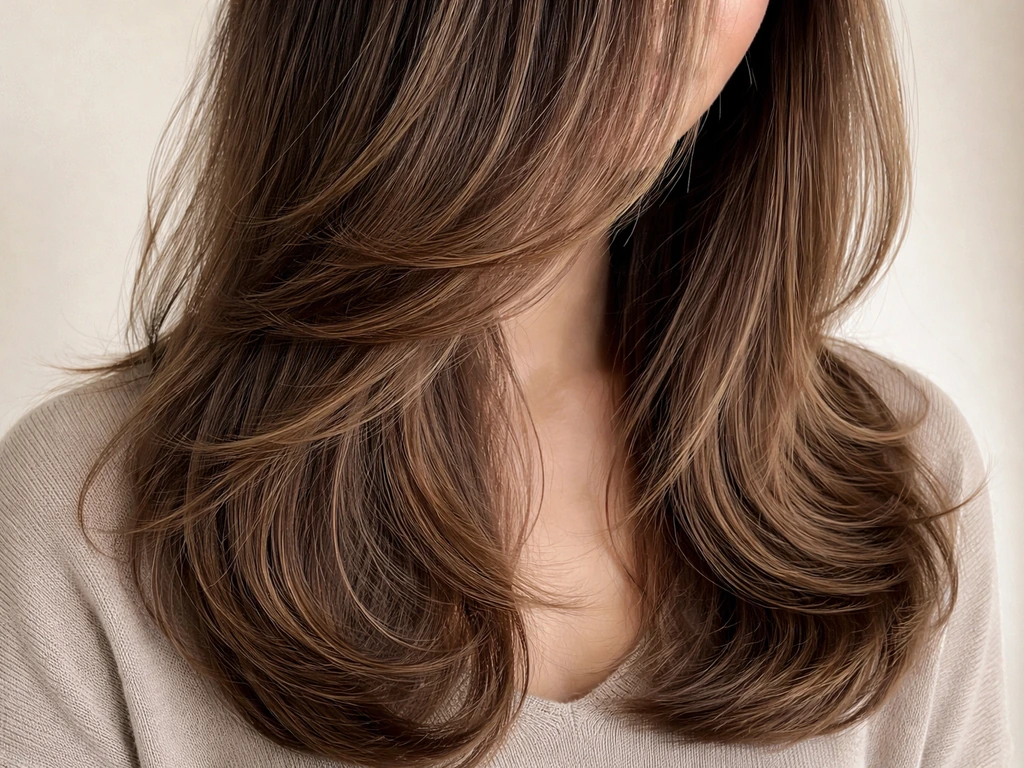
Flow is not just "long hair." It's a medium-to-long, layered style designed to move naturally, fall away from the face, and sit through the sides and back without looking rigid or over-styled. When people talk about a bro flow or the wings cut (sometimes called mop top or flippies), they're describing hair that has real movement to it. The practical length targets to keep in mind: front hair reaching the bridge of the nose or lips, sides covering the top of the ears or lower, and the back reaching the nape of the neck or collar. That's your finish line.
For straight hair specifically, "flow" means the hair is long enough to sweep away from the face naturally and has enough weight and layering to move rather than just hang flat. Straight hair has a real advantage here because it tends to grow uniformly and lies predictably, which makes shaping the flow easier once you have enough length. The challenge is the awkward middle phase where it's too long to look neat but too short to flow. That's the phase this guide is mostly about.
Wash, condition, and buildup control while you grow
How you wash your hair during the grow-out process matters more than most people expect. Straight hair shows oil and product buildup fast because there's no curl pattern to hide it. If you're not washing often enough, the hair at the roots gets heavy and greasy, which kills any movement and volume you're trying to build. Signs you need to wash: visible oil, itching, or flaking. Use those as your guide rather than a fixed schedule, because how often your scalp needs washing depends on how oily your skin is and how many products you use. If you are focused on how to grow out the crown of your hair, these wash, trim, and styling habits are especially important for the top as it lengthens how you wash your hair during the grow-out process matters.
When you do shampoo, focus on the scalp and roots rather than scrubbing the entire length. The lengths of straight hair tend to be drier and more fragile than the roots, especially once you're past the 3-month mark and have some real length to protect. Let the shampoo rinse naturally through the ends rather than working it in aggressively.
Conditioner should go on the mid-lengths and ends only. Conditioning the roots of straight hair weighs it down and accelerates that flat, oily look. Focus the product from about an inch below your roots downward. This keeps your ends healthy and reduces breakage without sacrificing volume at the scalp.
Every few weeks, or whenever you feel like products are building up and your hair won't respond properly to styling, do a clarifying shampoo reset. A clarifying shampoo is a deep-cleanse tool that removes stubborn product residue, oils, and pollutants that regular shampoo misses. The key is occasional use only, not daily. Overuse strips the hair and scalp of necessary moisture, which causes a different set of problems. Think of it as a monthly reset, not a replacement for your regular shampoo.
If you're dealing with flaking or dandruff during the grow-out, don't ignore it. Untreated scalp inflammation makes everything harder: your hair looks bad, styling doesn't hold, and the scalp discomfort can tempt you to wash too aggressively. For persistent dandruff or seborrheic dermatitis, shampoo at least twice a week and look for active ingredients like zinc pyrithione, selenium sulfide, ketoconazole, or salicylic acid. If over-the-counter options aren't improving things after a few weeks, ketoconazole shampoo (antifungal, available OTC or by prescription) is a stronger next step worth trying.
Your trim strategy during the grow-out
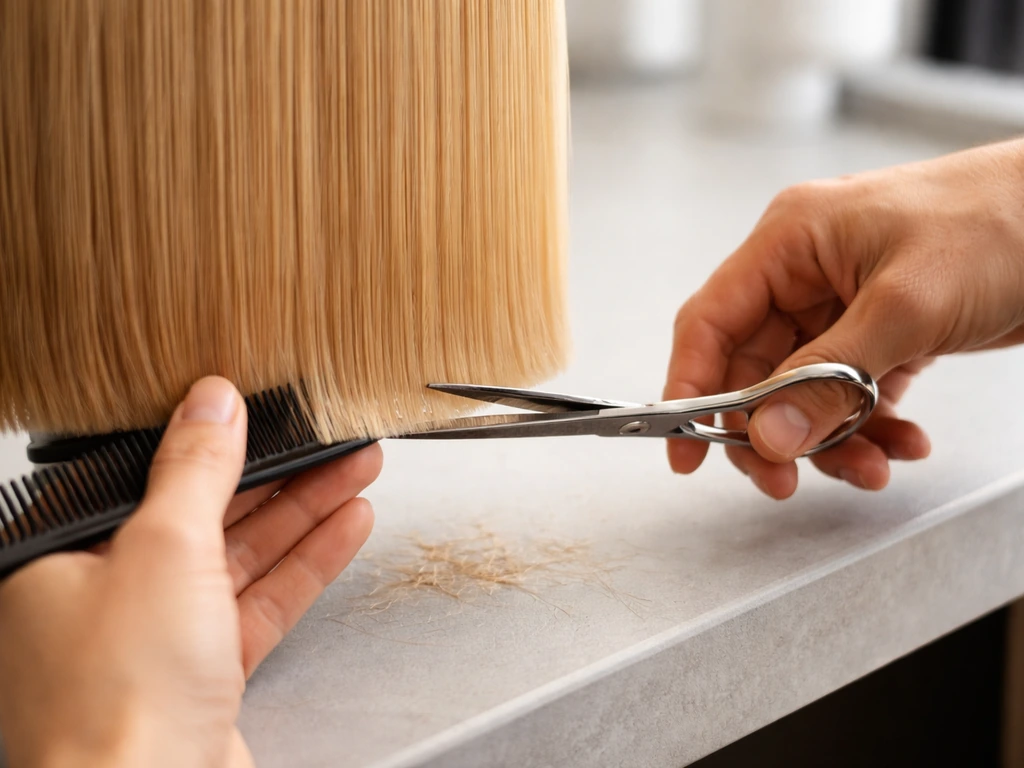
This is the part most people get wrong. They either trim nothing and end up with stringy, damaged ends, or they trim too much and undo months of progress. The goal is to maintain the shape of your grow-out while protecting the ends from splitting up the shaft and causing real damage.
General guidance is to trim every 6 to 8 weeks, but that doesn't mean taking off a half inch each time. A trim during a grow-out is often just a dusting of the ends, removing split ends and keeping the silhouette intentional. What you're really doing is shaping the grow-out so it always looks like you meant to have hair at this length, rather than looking like you just forgot to get a haircut.
For flow specifically, you want to protect length at the top and back while cleaning up the sides and perimeter. Here's how to think about what to trim and what to leave alone: If you're aiming for a side part instead of a center split, the technique changes a bit, so check out how to grow out a side part for the best timing and shaping.
- Top and back: leave these alone as much as possible, only dusting the ends if there's visible damage
- Sides: light shaping to keep them from looking bushy or uneven, but don't cut into the length aggressively
- Neckline: keep it clean, especially in the early months, because a messy neckline makes the whole grow-out look accidental
- Bangs or front sections: if you're growing out bangs as part of the flow, resist trimming them and instead work them into side-swept styling (they'll blend into the flow naturally once they reach cheekbone length)
- Undercuts: if you had an undercut before starting the grow-out, this complicates the sides/back timeline significantly and you'll need to let the undercut sections catch up before the flow can really take shape
Layers are your friend for flow in straight hair. A subtle layer cut through the mid-lengths and ends adds movement and prevents the hair from looking like a flat curtain. Ask your barber or stylist to add soft layers through the back and sides once you're at least 4 to 5 months into the grow-out, not before. Adding layers too early reduces length before you have enough to work with.
Daily styling routine to build and shape flow
The styling routine is where straight-hair flow is won or lost. Without the right approach, straight hair dries flat, sits heavy, and looks dull. The good news is that a consistent routine fixes most of this, and it doesn't have to be complicated.
Start with damp, not soaking wet hair

Towel-dry gently (blotting, not rubbing) until your hair is damp but not dripping. This is the ideal moment to apply your styling product. For flow, mousse is one of the most underrated products for straight hair because it builds volume and texture at the roots without weighing the hair down. Apply mousse to damp hair, working it in from roots to ends. Never apply mousse to dry hair: it mats and dulls straight hair and you'll lose the light, airy texture you're trying to create.
Blow-dry for volume and direction
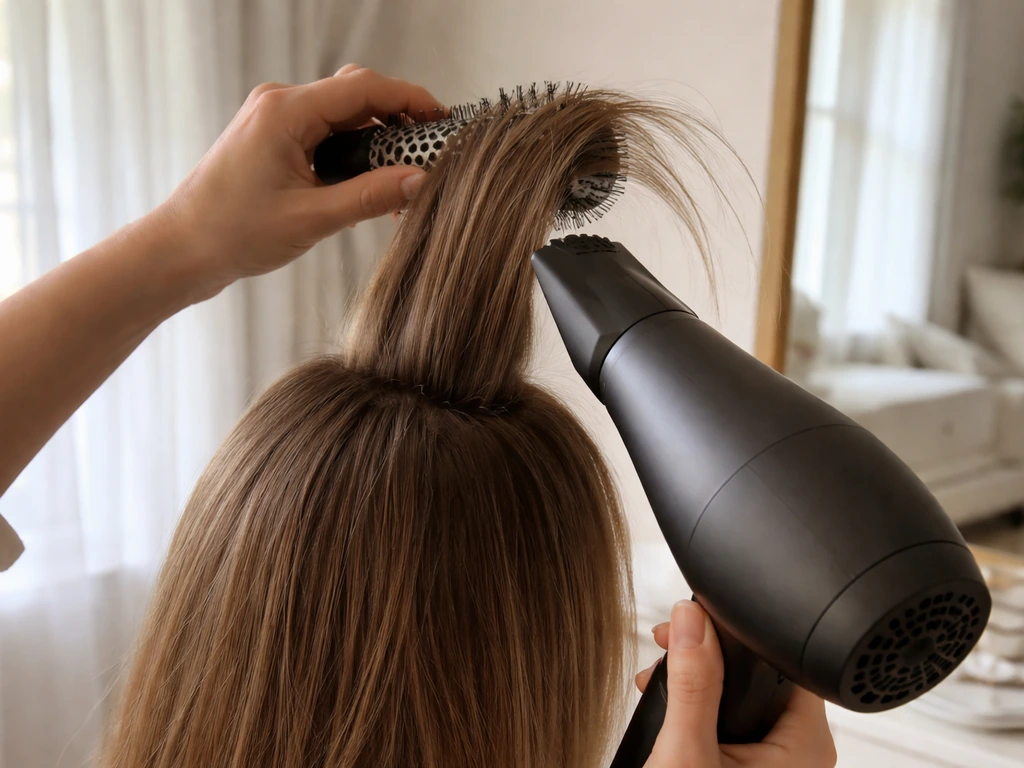
Before blow-drying, detangle with a wide-tooth comb. This is non-negotiable for avoiding breakage, especially once you have real length. Then, use a vented round brush while blow-drying to lift sections at the root and direct heat toward the base of the hair. Dry in the direction of your hair's natural growth pattern, which trains the hair over time to fall the way you want it to fall. The round brush lifts the roots away from the scalp as the heat sets them, which is where your volume comes from. If you want your blowout to look fuller and last longer while your hair grows, keep the heat and product routine consistent throughout the grow-out.
Once you're done blow-drying, let the hair cool completely before touching it. This cooling phase is when the shape sets. After it's cool, a light mist of flexible-hold hairspray helps keep everything in place without stiffness.
Texture and volume products
Once the hair is dry and set, you can add a small amount of texture powder at the roots if you want more lift. The technique is to dust a tiny amount onto your fingertips and tap it into specific zones: the front center, the crown, and whichever side tends to fall flattest. This isn't a product to use all over, just at the pressure points where straight hair collapses. A little goes a long way. Too much leaves your hair looking chalky and dull.
For hold and finish, light to medium-hold products work better for flow than heavy waxes or gels. Heavy products turn the flowing, natural movement into something stiff and clumped. If you want the hair to move, keep the hold light and let the layers do the work.
Refreshing without washing
On days between washes, a texture spray or tonic at the roots (sprayed and then lifted with a round brush) refreshes the blow-dry shape without needing to re-do everything from scratch. This is a time-saver that also protects your ends from over-washing during the sensitive grow-out period.
Managing cowlicks, flat spots, and laying-flat issues
Straight hair and cowlicks are a constant negotiation. Cowlicks are areas where the hair grows in a circular or opposing direction, and they become more visible (and annoying) as the hair gets longer because the weight of longer hair starts to pull in different directions from a single growth point. The good news is that longer hair actually helps here. Once the hair has enough weight, the cowlick tends to get pulled down and stop spiking. The worst cowlick behavior usually happens in the 2 to 4 month range, where there's enough length to stick up but not enough to lie down.
To manage cowlicks during the grow-out, blow-dry them in the direction you want them to go while the hair is still damp and warm. Use your round brush to press them flat and hold the heat on them for a few seconds longer than surrounding sections, then let the area cool while held in position. Doing this consistently over weeks trains the hair to fall more cooperatively. It's not permanent, but it makes a real difference day to day.
For general flatness, which is straight hair's main complaint, the volume routine described above handles most of it. If you find one specific section always falls flat despite everything, target your texture powder there and try blow-drying that section upward first before redirecting it into the flow shape. The goal is to build body at the root so the hair has somewhere to fall from.
Straight hair can also suffer from "shrinkage" in the sense that it lays so flat it looks shorter than it actually is. This is different from curl shrinkage but just as frustrating. The solution is volume at the root, not more length. Once the root has lift, the true length of the hair becomes visible, and the flow shape becomes apparent.
The transition timeline: what to expect at each stage
At roughly half an inch of growth per month, a full flow from a short cut takes about 6 to 8 months. Here's what each phase actually looks and feels like, and what to do at each step.
| Phase | Approximate Length | What's Happening | What to Focus On |
|---|---|---|---|
| Months 1–2 (short) | 1–2 inches | Hair is still close to scalp, cowlicks most visible, very little styling control | Keep scalp clean, skip aggressive products, let it grow without trimming the top |
| Months 3–4 (awkward) | 2–3 inches | Hair covers ears partially, starts to curl at ends or flip outward, looks intentionally cut or accidentally neglected | Start mousse and blow-dry routine, manage cowlicks with heat, keep neckline clean |
| Months 5–6 (early flow) | 3–4 inches | Enough length to sweep away from the face, sides starting to tuck behind ears, back reaching collar | Add soft layers if not done yet, refine shape with light trims, full styling routine kicks in |
| Months 7–8 (full flow) | 4–5 inches | Front reaches nose or lips, sides past ears, back at collar or below, real movement visible | Maintain shape with trims every 6–8 weeks, focus on movement and texture rather than length |
The awkward phase (months 3 and 4) is where most people quit. The hair doesn't look like the short style anymore but it doesn't look like the goal yet either. This is completely normal and it's exactly when the right styling routine matters most. If you want to grow out money piece hair specifically, aim for extra gentle handling and a trim rhythm that protects those front strands as they lengthen. Pushing through this phase with a consistent wash-and-style approach is how you get to the other side. If you're also growing out a middle part to go with the flow, that front section timing aligns closely with months 5 and 6, which is when the front sections get long enough to part and drape naturally. If your goal is specifically how to grow your hair in the front, the same flow principles apply, but you will focus extra on front-length timing and styling direction as it lengthens. If you’re aiming to grow a middle part flow, keep the front sections long enough to part cleanly by months 5 to 6 and style to encourage that drape. If you’re specifically aiming for a middle part, check out how to grow a middle part so the front section has time to part and frame your face.
When straight-hair flow isn't cooperating: troubleshooting growth, breakage, and thinning
Sometimes you're doing everything right and the hair still isn't growing as fast as expected, is breaking before it reaches your length goals, or looks noticeably thinner during the grow-out. Here's how to diagnose and fix the most common issues.
Growth feels stalled
Hair grows at roughly half an inch per month for most people. If yours seems significantly slower, the most common causes are nutritional deficiencies (particularly iron, zinc, and biotin), high stress, or underlying health issues affecting the scalp or hair follicle. A basic blood panel with your doctor can rule out deficiency issues quickly. In the meantime, make sure you're eating enough protein, since hair is made of keratin and low protein intake directly slows growth. Growth doesn't actually speed up when you trim, despite the popular claim. Trims manage damage, not growth rate.
Breakage before reaching goal length
Breakage is the most common reason straight hair flow stalls. The ends are the oldest, most fragile part of the hair, and heat styling, rough towel-drying, or skipping conditioner all cause the ends to break before they can accumulate enough length. If you're seeing a lot of short broken hairs around the 3 to 4 inch range, back off the heat, use a heat protectant every time you blow-dry, switch to microfiber towel blotting, and focus conditioner on the ends. Protective styling on non-wash days (tucking the hair back gently rather than leaving it loose and rubbing against collars) also helps.
Thinning or reduced density
If your hair looks noticeably thinner than it did at the start, a few things could be happening. Some hair shedding during a grow-out is normal, especially if you were previously keeping it very short and the hair cycle is resetting. If the thinning is significant, concentrated at the hairline or crown, or accompanied by scalp irritation, see a dermatologist. Conditions like androgenetic alopecia or scalp inflammation can affect density and are much easier to address early. Don't let styling vanity delay a conversation with a doctor if the thinning seems like more than normal shedding.
Scalp issues affecting the look and feel
Dandruff, seborrheic dermatitis, or a persistently irritated scalp will fight your grow-out at every stage. Flakes are visible in your hair, styling products don't behave properly on an inflamed scalp, and the discomfort can make you over-wash, which strips moisture and causes more breakage. If regular shampoo isn't fixing it after a couple of weeks, switch to a medicated shampoo with one of the proven actives: zinc pyrithione, selenium sulfide, salicylic acid, or ketoconazole. Ketoconazole is typically the strongest OTC option and works well for persistent cases. Apply to damp scalp, let it sit for a couple of minutes before rinsing, and use it at least twice a week until symptoms are under control.
The most important thing to remember throughout this process is that setbacks are normal and reversible. A patch of breakage, a persistent cowlick, or a few bad hair months don't mean the grow-out isn't working. They mean you need to adjust one variable, not restart from scratch. Stay consistent with the wash routine, the trim plan, and the styling approach, and the flow will come.
FAQ
Can I keep my flow looking good between washes without ruining volume?
Yes, but avoid re-wetting the hair right before styling unless you re-blot and reapply a light root product. If you refresh with a spray or tonic, lift the roots with a round brush for a few seconds so the hair sets in the right direction again, then stop touching it while it cools.
What should I do if my hair gets flat after a few days even though I use mousse?
If you want more lift, switch to a lighter conditioner routine rather than adding more mousse or hairspray. Keep conditioner off the roots, and if your hair still feels coated after rinsing, use a clarifying reset no more than every 3 to 4 weeks and then return to your mid-lengths-only conditioning.
How hot should I blow-dry, and can too much heat stop flow from forming?
Use heat, but control the exposure. Always apply a heat protectant, dry with the brush while keeping the dryer moving, and avoid prolonged holding of the hot brush on one spot, especially near the ends. Cowlick training works best when you press and hold warm hair briefly, then let it cool in place.
Why does my blowout fall flat even though I follow the steps?
Don’t skip water, detangling, or the cool-down. Towel-dry too dry, detangle too late, or touch the hair while it is still warm usually causes the style to collapse and creates extra breakage. The reliable sequence is blot to damp, detangle with a wide-tooth comb, style, then leave it untouched until fully cool.
How often should I wash while growing out my flow if I have dry ends?
It depends on your scalp and how quickly your hair looks oily. If you see root heaviness or flakes between washes, don’t wait for a fixed timeline, increase wash frequency slightly and pair it with mid-length-only conditioning. If you’re dry or irritated, the issue may be the cleanser strength, so adjust rather than aggressively washing.
Can I use texture powder every day during the awkward months?
In most cases, yes, but only if you can keep it lightweight. Look for a texture powder or dry volume product that is easy to brush off, dust it lightly at the front center, crown, and one flat side only, then finish with a quick blow-dry lift if needed. Avoid heavy reapplication, which can make straight hair look dull and chalky.
My hair feels thinner and I see lots of broken strands, should I trim more or change my routine?
If your hair is breaking, the first fix is to reduce mechanical stress and heat, not to keep adding length. Try microfiber or towel-free blotting, use heat protectant, and keep conditioner concentrated on the ends. Also consider asking for a trim that targets split ends only, since removing damaged tips prevents the breaks from climbing up the shaft.
How do I handle one cowlick that refuses to cooperate even after styling?
If the issue is a specific stubborn cowlick, focus on targeted re-direction rather than overall styling changes. Blow-dry that section while pressing it flat, hold a little longer than surrounding areas, then cool it while held. Repeat consistently for a few weeks, since occasional attempts often fail to train the direction.
Why does my middle part look uneven while my hair is still growing?
A middle part tends to require slightly longer front sections than a side part to drape cleanly. If your front is not long enough yet, you will often get separation that looks messy instead of intentional. Let the front keep length through months 5 to 6, and during that time focus on training direction with blow-drying rather than forcing the part with heavy products.
What are the most common mistakes that make straight-hair flow look greasy or stiff?
Watch for root greasiness plus limp sides, which usually means conditioner is creeping too high or your product is too heavy. Another common mistake is applying mousse to dry hair, which can mat and dull straight strands. Re-check your application points, keep products lighter, and if needed do an occasional clarifying reset to remove buildup.
How can I tell whether my hair is growing slowly or just not keeping length?
If growth rate seems slow but hair is not breaking much, the first step is to rule out factors that affect shedding and length retention. Low protein intake, iron or zinc deficiency, high stress, and scalp inflammation can all reduce usable length, even when the scalp is technically growing. If thinning is concentrated at the crown or hairline or comes with irritation, consider a dermatologist evaluation.