
Growing out grey hair in the UK takes roughly 12 to 24 months to get from visible roots to a fully natural look, depending on how long your hair is and how much of it was previously coloured. Hair grows about half an inch (1.25 cm) a month, so the maths is straightforward even if the journey feels anything but. The good news is that with the right cuts, a few styling tricks, and a simple product routine, you can make every stage look deliberate rather than accidental. You don't need to chop it all off to start over. If you're wondering about grey hair how to grow it out without getting stuck in the awkward two-tone stage, the steps below help you plan the timing, trims, and styling.
How to Grow Out Grey Hair UK: Step by Step Guide

Marcus Vickers
9 Jun 2026

What the grow-out actually looks like (and why it varies)
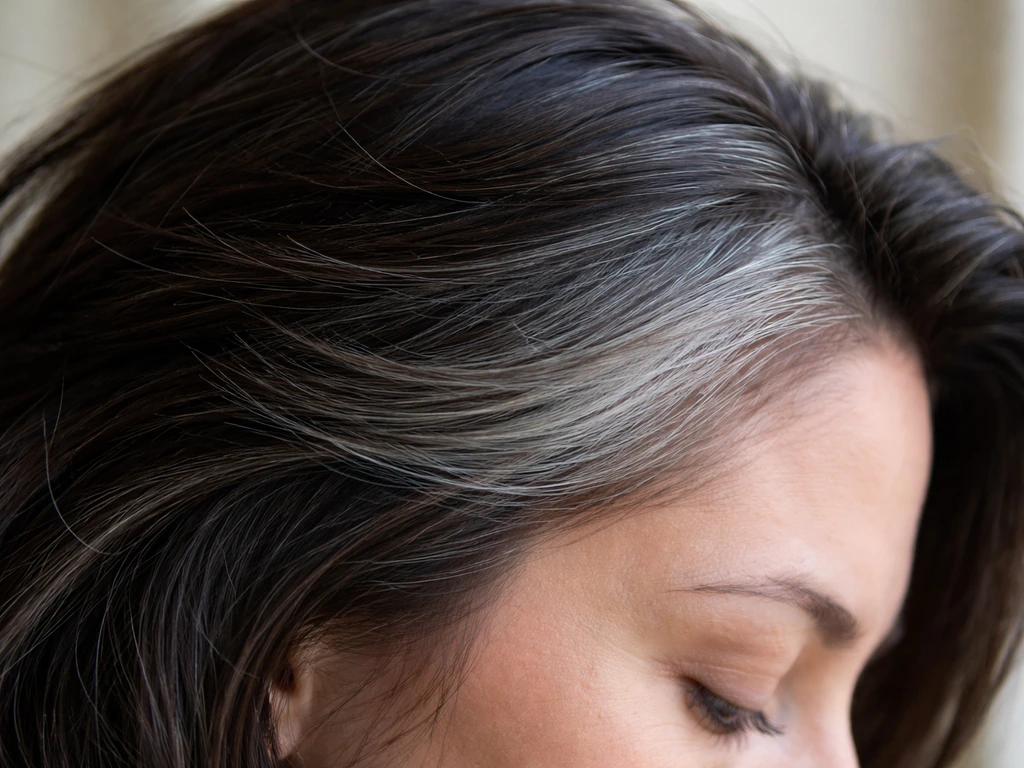
Before you can manage the transition, it helps to know what pattern your grey follows, because not everyone gets the same look. Grey doesn't always come in evenly, and that's the part people don't always warn you about.
The most common pattern in the UK is temple-first greying: you go silver at the sides and around the hairline before the crown catches up. This creates a natural frame that can actually look quite striking and intentional as it grows in. Crown and parting regrowth tends to show a clean band of lighter colour at the root, which is the classic two-tone look most people are trying to manage. Peppering (scattered grey throughout the canopy rather than in neat bands) is a different beast entirely, because the contrast appears everywhere rather than in a predictable root line. And then there's the cowlick or nape regrowth, where grey often comes in patchier because of the way hair sits and grows in those areas.
Grey develops when the melanocyte cells in each hair follicle stop producing pigment. Each new hair that grows in simply comes through lighter, which is why you can't reverse or speed up the greying itself. What you can control is how visible the contrast is while the new growth is shorter than the coloured hair beneath it.
Your realistic grow-out timeline, stage by stage
At half an inch a month, here's roughly what to expect at each stage. These are averages: some people grow a little faster (up to 6 inches a year in total), some slower, and factors like age, health, and scalp condition all play a role.
| Stage | Approx. timeframe | What's happening | Main challenge |
|---|---|---|---|
| Early regrowth | Months 1–3 | Grey root band up to 1.5 inches | Stark contrast, especially on dark dye |
| Two-tone phase | Months 3–8 | A visible horizontal line between grey root and coloured length | Hair can look unfinished or unkempt |
| Blending zone | Months 8–14 | Grey accounts for 40–60% of visible hair | Managing texture and volume differences between old and new |
| Length parity | Months 14–24+ | Grey grows past the coloured ends | Waiting for the last of the old colour to grow or be trimmed off |
If you're starting from a short cut (a pixie, buzz, or closely cropped style), you'll reach full coverage faster simply because there's less previously coloured hair to grow out. If you're starting from a bob or longer, you're managing a longer coloured length alongside the growing grey, which is where the two-tone phase gets the most pronounced. Many people find months 4 to 9 the hardest stretch, and that's when most people give up and go back to colouring. If that's where you are right now, sit tight. There are ways through it.
The cut and trim strategy that actually helps
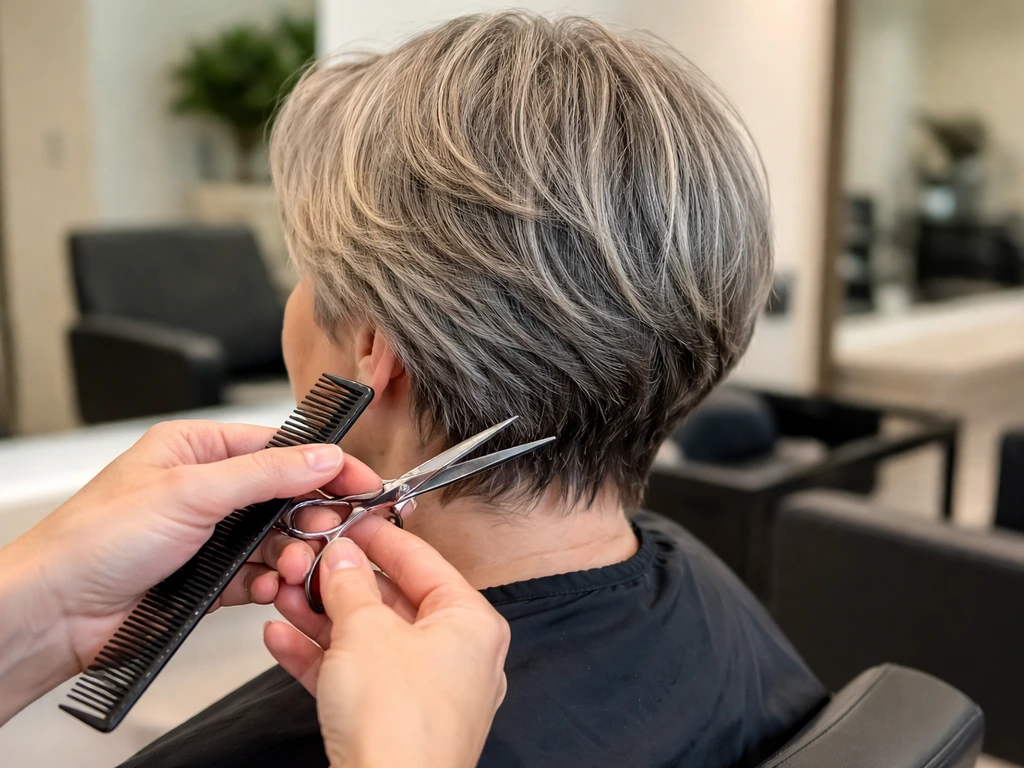
The single biggest mistake during a grey grow-out is avoiding the hairdresser entirely. Regular trims don't slow growth down, but they do remove split ends that make grey hair look dull and frizzy, and they can reshape your style so each phase looks intentional rather than neglected.
Aim for a trim every 8 to 10 weeks. For touch-up colour appointments, Wella Professionals recommends doing them about every 6, 8 weeks as a general rule of thumb trim every 8 to 10 weeks. That's not a full cut, just a shape-up to keep the ends healthy and the silhouette clean. Each time you trim, you're also removing a small amount of old colour from the ends, which gradually reduces the visible colour band without requiring a dramatic chop.
When you're in the salon, be specific about what you want. A good way to frame it: tell your stylist you're growing out your grey and want to keep as much length as possible while removing any obvious split ends and keeping the shape intentional. Ask for a 'dusting' rather than a full cut if length is important to you. If you're in the awkward two-tone phase, ask specifically about whether a face-framing trim or a soft graduation at the ends could reduce the visual contrast without taking off much length overall.
If you started the grow-out from a shorter style with layers, an undercut, or a textured pixie, the challenge is that different sections of hair are at different lengths. Ask your stylist to blend the layers as the grow-out progresses rather than cutting everything to one length, which can look blocky and delay the process.
Styling fixes for every awkward phase
Short (post-pixie or buzz grow-out)
In the first few inches of growth, the grey and any remaining pigmented hair often sit close together, so the contrast isn't as dramatic as it will be later. The main challenge at this stage is managing texture differences: grey hair tends to be coarser and can stick up or out in ways the finer pigmented hair didn't. A small amount of pomade or wax worked through the ends gives definition and tames flyaways without weighing the hair down. Part your hair more deliberately than before: a defined part at this stage can give the illusion of intentional styling rather than overgrown neglect.
Chin-length and bob stage
This is where the two-tone band is usually most visible because the grey root section is long enough to contrast sharply with the coloured mid-lengths and ends. Loose waves or a soft blow-dry helps break up the horizontal line because movement blurs the transition. A straight, flat style tends to make the colour band look more obvious. If your hair is thick enough, a low textured bun or twist at the nape takes the contrast out of view entirely on days when you don't want to deal with it.
Managing bangs and fringe
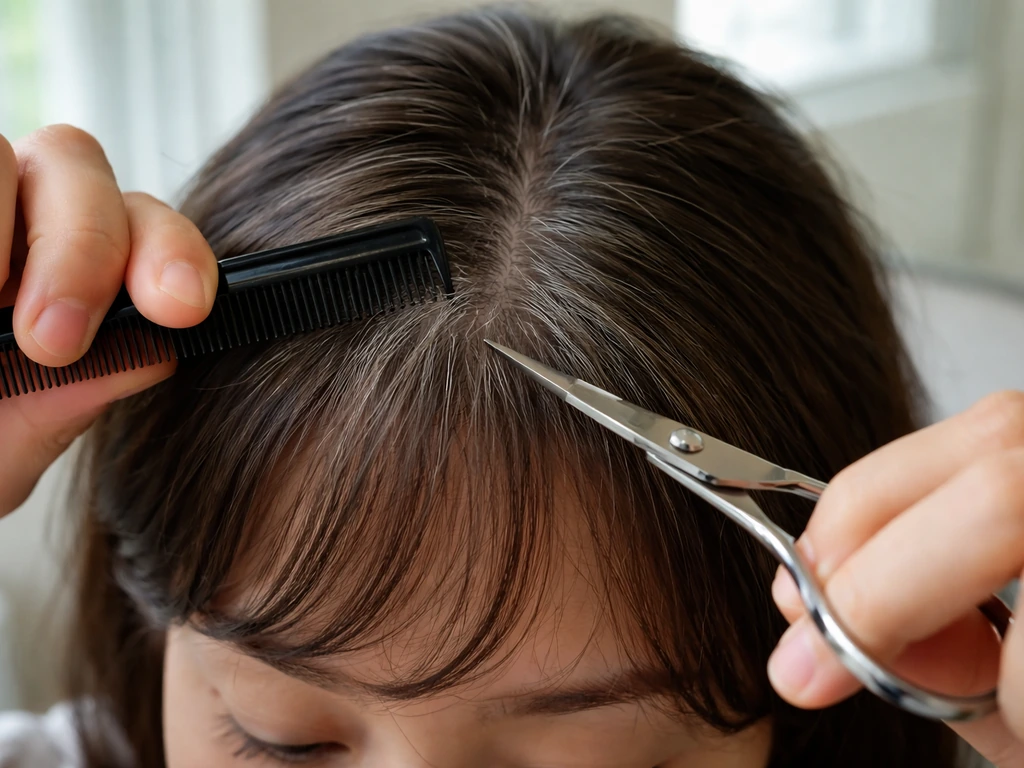
If you have a fringe, grey regrowth at the front hairline tends to be very visible. You have two practical options: keep the fringe trimmed so the grey and the coloured length stay closer together in terms of proportion, or grow the fringe out into the face-framing pieces, which gives you more flexibility for pinning it back or to the side on bad days. A side-swept fringe is more forgiving during a grow-out than a blunt fringe because it doesn't create a harsh horizontal line where the root colour change sits.
Dealing with an undercut grow-out
If you're growing out an undercut as part of this process, the nape and sides will be shorter than the top, so you'll see a stark length difference before the colour difference even becomes the main issue. Wearing the top section down or in a very low bun keeps the grow-out hidden at the back. As the undercut section grows in, use a fine-toothed comb and a light holding spray to press the shorter sections against the head rather than letting them puff out.
Layers and volume management
Grey hair is often coarser and can carry more volume than the coloured hair below it, especially when both are at different lengths. If you're finding the root area is lifting or puffing out while the ends are flatter, a round brush blow-dry can smooth the roots down and add movement to the ends, evening out the silhouette. Braids and soft updos are genuinely useful here, not just as a style choice but as a practical way to blend two textures that are fighting each other.
The hair care routine grey hair actually needs
Grey hair has different needs from pigmented hair, and your routine during the grow-out needs to address both the newer grey sections and the older (often chemically treated) coloured ends. The two parts of your hair are in completely different conditions, which is why a basic one-size routine often falls short.
- Deep condition weekly. Grey hair tends to be drier and more porous at the ends from previous colouring, while the new growth is coarser and needs softening. A weekly deep conditioning mask makes a visible difference in shine and manageability within a few weeks.
- Use a silver or purple shampoo once or twice a week. Grey hair can develop a yellow or brassy tint from minerals in UK tap water, product build-up, and pollution. A silver shampoo neutralises this by depositing a small amount of violet pigment. Use it on wet hair like your regular shampoo, but leave it for 2 to 5 minutes before rinsing. On non-silver-shampoo days, use a gentle sulphate-free shampoo to avoid stripping the hair.
- Switch to a microfibre towel. Standard bath towels create friction against the hair cuticle, which causes frizz and breakage, particularly in grey hair that's already coarser. Blot and squeeze rather than rubbing or wrapping tightly.
- Don't skip heat protection. Even if you're trying to air-dry more, any use of straighteners, dryers, or tongs needs a heat protectant spray. The coloured ends are typically more porous and more vulnerable to heat damage.
- Minimise brushing wet hair. Wet hair is at its most breakage-prone. Use a wide-tooth comb to detangle from the ends up, or a paddle brush designed for wet hair.
If you're finding the grey sections particularly frizzy or wiry, a lightweight serum or hair oil applied to damp hair before drying can help smooth the cuticle. Look for products that contain argan oil, camellia oil, or similar lightweight oils. Avoid anything too heavy at the roots, which can make fine grey regrowth look flat and greasy.
Managing colour contrast: your options during the transition
Going fully cold turkey on colour isn't the only way to grow out grey, and for many people with darker hair or a sharp contrast, it's the hardest route. There's a spectrum of options between 'stop everything' and 'full root touch-up every six weeks', and the middle ground is often where the grow-out becomes genuinely manageable.
Root shadowing and blending techniques
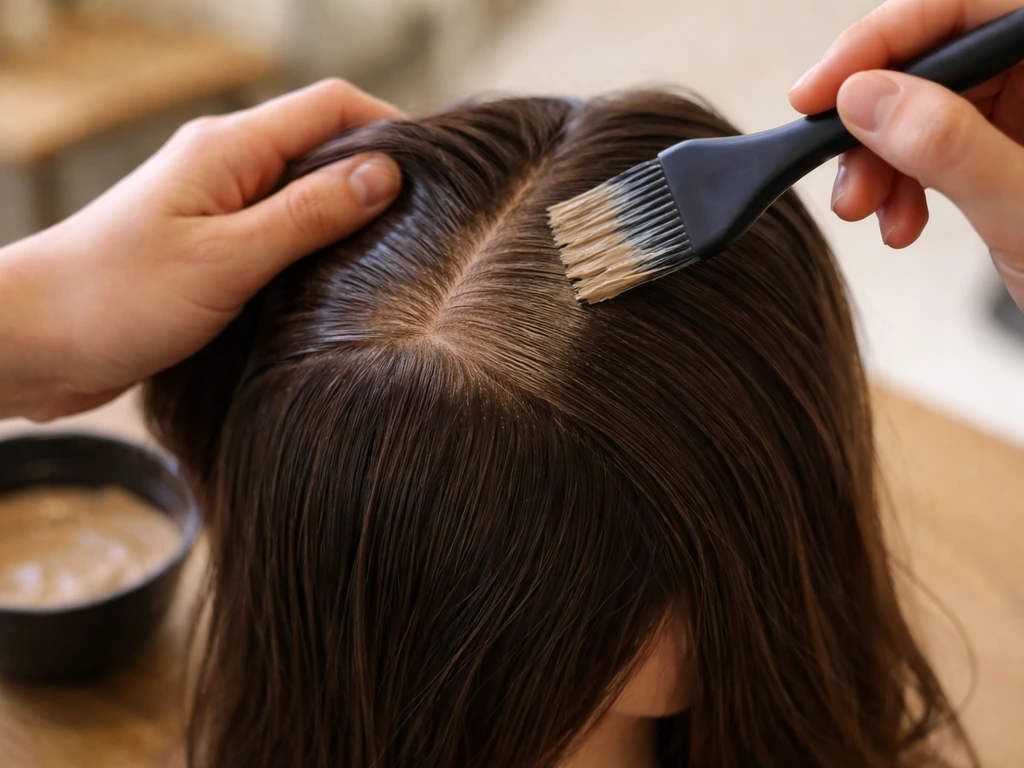
Root shadowing involves a colourist applying a softer, slightly lighter tone to the root area rather than the full depth of your original colour. This softens the contrast between your growing grey and the existing dyed colour so the line is less stark. It's not about covering the grey, it's about bridging the gap. You can also consider blending techniques like root shadowing or toners to make the transition feel more natural while you grow it out bridging the gap. This is different from a traditional touch-up and doesn't reset your grow-out progress.
Highlights, lowlights, and toners
Adding fine highlights through the mid-lengths and ends can make the growing grey blend more naturally because it breaks up the solid coloured section and introduces lighter tones that echo your new growth. Lowlights do the opposite: they add darker pieces through the grey zone, which can suit people whose grey is coming in very bright or stark white and who want to soften it a little. A toner applied to the whole head can unify the overall colour without adding permanent dye and can be done at the salon in between grow-out stages.
Touch-up pens and at-home tools
For quick fixes, particularly around the temples and hairline where grey tends to show first and most prominently, touch-up pens are a practical day-to-day option. They're not a long-term solution and they do wash out, but for occasions when you don't want the regrowth on show, they give precise coverage without the commitment of a salon appointment. These are widely available in UK pharmacies and online.
Fully natural: what it takes
If you want to go completely natural without any interim colouring, the key is committing to the styling and care routine above and accepting that months 4 to 10 will require the most patience. The good news is that grey hair, once it's grown in fully and the coloured ends have been trimmed away, often looks significantly better than it did mid-transition, especially with the right toning shampoo keeping it cool and bright. Grey that gets the same care and attention as coloured hair genuinely can look polished and intentional.
When to reassess if it's not working
There are a few situations where it's worth stopping to reassess rather than pushing through at all costs. Growing out grey is a commitment, but it's not a one-way door.
If after six months the contrast is causing you genuine distress every time you look in the mirror, and styling workarounds aren't helping enough, consider a consultation with a colourist who specialises in grey blending rather than covering. If lockdown left you stuck at home and wondering how to grow out grey hair, keep an eye on contrast and consider grey blending options that suit your timeline grey grow-out. Many UK salons now offer specific grey grow-out consultations where they can map out a plan using highlights, balayage, or root shadowing techniques to make the remaining growth much more liveable without having to start again. You can get the benefit of blending without undoing the progress you've made.
If growth feels very slow, it's worth thinking about whether something else is going on. Stress, nutritional deficiencies (particularly iron, zinc, and B12, which are common in the UK), thyroid issues, and significant hormonal changes can all slow the growth cycle. If your hair seems to be growing slower than the average half inch a month over a sustained period, it's worth raising with your GP rather than just waiting it out.
If you have significant breakage at the transition line (where the grey meets the coloured hair), this is a sign of structural weakness at that point where two very different hair conditions meet. A protein treatment once a month alongside your weekly deep conditioning can help strengthen this zone. If breakage is severe, a consultation with a trichologist is a sensible next step before it gets worse.
Finally, it's completely fine to decide partway through that full grey isn't for you right now. The grow-out process gives you information about what your grey actually looks like, and that's valuable. Some people discover they love it; others find they'd rather maintain some colour. Both are entirely valid. The goal was never to force a particular outcome, just to give you the real experience of it before you decide.
There are related decisions that come up alongside this process, like how to grow out grey hair without a visible line, whether to do the process quietly without announcing it to colleagues or family, and how specific scenarios like lockdowns or remote working can actually make the grow-out easier by reducing the pressure of constant scrutiny. Each of those has its own set of considerations worth thinking through as you go.
FAQ
How do I know my grey grow-out timeline in the UK if my hair feels like it grows slower than half an inch a month?
Track regrowth using a simple “same-part” photo every 2 to 4 weeks, taken in the same light. If the measured length gain is consistently below average for 3 months, it can point to factors like scalp inflammation, iron or B12 deficiency, thyroid issues, or breakage reducing effective growth, at which point it’s worth discussing with your GP.
What should I do if my grey is patchy or comes in at the nape in clumps?
Treat patchy areas as texture, not a styling failure. Use a slightly stronger hold product only on the shortest zones (nape and edges) and consider a soft layered trim that redistributes weight. If the patchiness is severe, ask your stylist about blending the short sections during each trim so the silhouette stays even while the grey catches up.
Can I speed up the grow-out by using hair dyes, toners, or “activators” on the grey itself?
You cannot reverse or accelerate grey by colouring products once the follicles have stopped producing pigment. Toners and bridging colours can reduce contrast, and cuticle-smoothing products can improve how the grey looks, but “activator” claims are unlikely to change the rate of greying. Focus on scalp health, preventing breakage, and managing visual contrast.
How often should I wash grey hair during a grow-out to avoid frizz and dullness?
A common mistake is washing too infrequently when grey feels wiry, or too often when ends look dry. Start with 2 to 4 washes per week, then adjust. Use a cool or lukewarm rinse on grey sections and put your heavier conditioners mainly through the coloured mid-lengths and ends, not the new regrowth near the roots.
What’s the safest way to reduce breakage at the transition line between grey and previously coloured hair?
Minimise friction and heat right where the textures meet. Detangle gently with a wide-tooth comb, use a satin pillowcase, and apply a targeted strengthening conditioner or monthly protein treatment only if you’re seeing actual snapping or rough, uneven texture at that line. If your hair feels stiff or straw-like after protein, switch to strengthening through deep conditioning instead.
Should I use purple shampoo or toner, and how do I stop it from going too ashy?
Use toning products mainly on the grey portions, not the previously coloured lengths, and start with the lowest frequency (for example once every 1 to 2 weeks). If you notice the coloured ends becoming overly silver or slightly greyed, reduce contact time and apply toner only to the regrowth area (you can section and protect the ends with conditioner).
Is it better to keep my hair straight or use heat styling during the awkward two-tone phase?
If your goal is to soften the visible band, movement usually helps more than a perfectly flat style. That said, avoid high heat. Use a round brush or a controlled blow-dry for root smoothing, but keep styling temperatures moderate and always use a heat protectant, especially because coloured ends are often more vulnerable to damage.
What should I tell my stylist if I have an undercut and I’m worried about the back showing both short and coloured lengths?
Ask for a plan for the sides and nape that keeps the shorter section pressed close to the head while you grow out the contrast. Request blending adjustments rather than cutting everything to one length, and mention you want minimal “step” lines at the back so the length difference looks deliberate while the undercut regrows.
Touch-up pens help at the hairline, but will they damage grey hair if I use them frequently?
Most wash-out pens mainly deposit colour on the hair surface, so they are usually low risk for the hair shaft, but frequent use can make hairline hair feel dry or producty. If you use them often, wash thoroughly and follow with a light conditioning product on the fringe and temples, then limit heat and choose a gentle shampoo to prevent buildup.
When should I stop the grow-out and switch strategy, even if I don’t want to go back to full colouring?
Reassess if, after about six months, contrast is causing persistent distress despite styling workarounds, or if the transition line is breaking significantly. At that point, consider a consultation focused on grey blending (root shadowing, balayage, or controlled toning) to “bridge the gap” without resetting your progress completely.
Can I combine a fringe grow-out with pinning, without making it look uneven?
Yes, but keep the fringe doing “one job at a time.” For a side-swept approach, ask for a shape that naturally falls across the face, then keep trimming just enough to maintain that fall. On days you pin back, use small sections and a light hold spray so the transition area near the hairline doesn’t spring differently than the rest.
What products routine should I change first if my grey feels coarser and my ends feel drier during the grow-out?
Adjust in this order: (1) lightweight smoothing product to the grey on damp hair (to reduce wiry frizz), (2) a richer conditioner or mask only on the coloured ends, and (3) reduce heat or lower temperatures if the transition line is snapping. This targets the two textures separately, which matters during the grow-out.