
The visible line where your dyed or colored hair meets incoming gray regrowth is probably the single biggest reason people give up on growing out gray hair and reach for the box dye again. But here is the truth: you do not have to cut your hair short to get through it, and you do not have to keep coloring forever just to avoid looking like you have a stripe across your head. With the right combination of color techniques, styling adjustments, and a realistic timeline, you can grow out your gray hair without cutting and without that harsh demarcation line dominating every glance in the mirror.
How to Grow Out Gray Hair Without the Line

Marcus Vickers
18 Apr 2026

What 'the line' actually is and why it forms
The line is the visible boundary between your natural gray or silver roots and the dyed, colored, or chemically treated hair below. It forms because the two zones differ in both color depth and light behavior. Your incoming gray or white hair reflects light differently from dyed hair, and depending on how deep or saturated your previous color was, that contrast can show up as a crisp, stripe-like edge across your scalp within just a few weeks of growth.
How quickly the line becomes obvious depends on contrast. If your hair was dyed very dark brown or black and your natural gray is light silver, even 0.5 to 1 centimeter of regrowth can be noticeable. If your dyed color was closer to your natural tone, the boundary will be softer and slower to form. Either way, the line is not a flaw in your biology, it is just physics: two different surfaces meeting at a hard edge. The goal is to blur that edge, not to eliminate the grow-out altogether.
There is also a texture dimension that people underestimate. Gray hair is often coarser and more wiry than dyed hair, especially hair that has been chemically processed for years. When new gray growth comes in with a different texture from the lengths, the line can look even more prominent because the light hits the two sections at different angles. Knowing this helps, because texture management becomes part of your strategy, not just color.
The best grow-out strategy based on your hair length and pattern
There is no single approach that works for everyone because where you are starting from matters enormously. Someone growing out gray from a pixie cut is in a completely different situation than someone with a mid-back bob who has been dyeing for a decade. Below is a practical breakdown by starting point.
Short hair (pixie, buzz, or close-cropped)
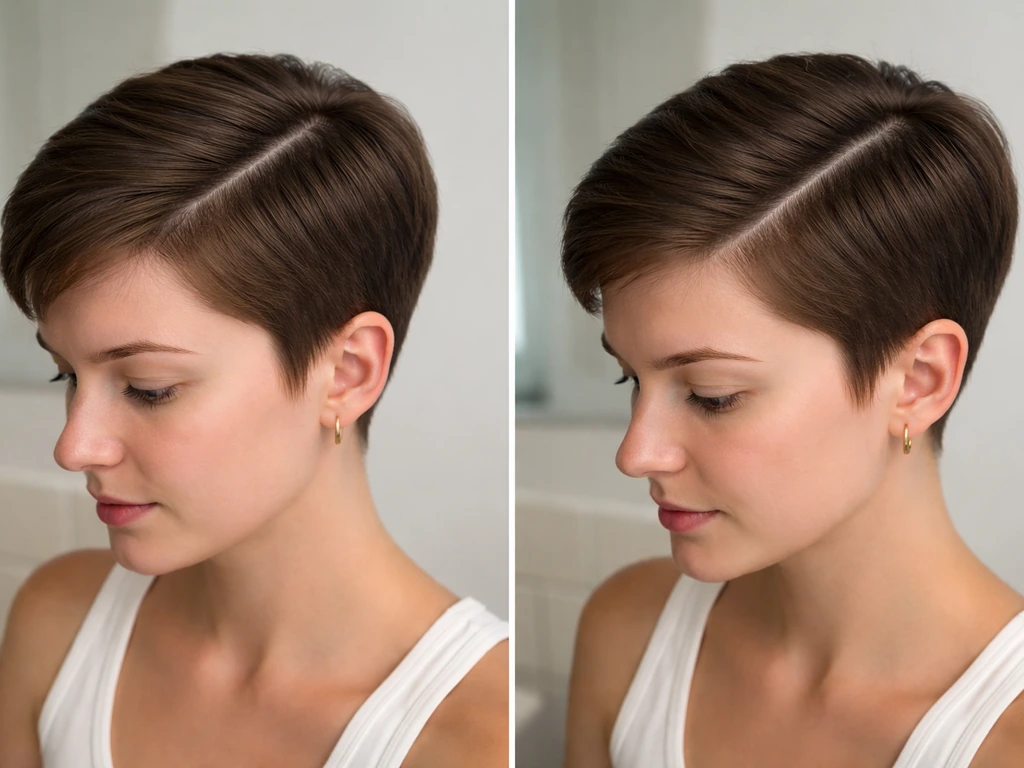
Short hair is actually the most manageable starting point for going gray without cutting, even though it might feel intimidating. Because the total length of dyed hair is small, the grow-out phase is shorter, usually six to twelve months before the majority of your hair is natural gray. The demarcation line is also less dramatic because there is not a long column of contrasting dyed hair below it. Focus on keeping your hair moisturized and using a purple or silver toning shampoo to keep the gray portions bright and intentional-looking rather than yellow or dull.
Medium hair (chin to shoulder length)
Medium-length hair presents the classic line problem. You have enough dyed length below for the contrast to be very visible, but you also have enough hair to work with styling tricks and color softening techniques. This is the range where root smudging and strategic parting make the biggest difference. Resist the urge to cut to a pixie to start fresh unless that is genuinely what you want. The grow-out is manageable at this length with the right approach.
Long hair (collarbone and beyond)
Long hair takes the most patience, but it also gives you the most styling flexibility. The trade-off is that the line can be particularly visible because the two zones are proportionally extreme: a narrow band of gray at the crown against a long body of darker dyed hair. Balayage-style softening, lowlights, and intentional color transition work are your best tools here. Expect the full grow-out to take anywhere from eighteen months to three or more years depending on your starting length and growth rate.
What not to do regardless of length
- Do not apply a fresh, full-coverage root color right at the demarcation line right when the line starts to bother you. This resets the clock and makes the eventual grow-out harder.
- Do not use a box dye that exactly matches your original dyed shade. It creates a new hard edge rather than blending the transition.
- Do not skip conditioning. Dyed hair and new gray hair have different porosity, and the difference in texture sharpens the visible line.
- Do not panic-cut. A significant trim feels like relief but costs you months of progress and does not address the root cause.
Color transition options that reduce the visible demarcation
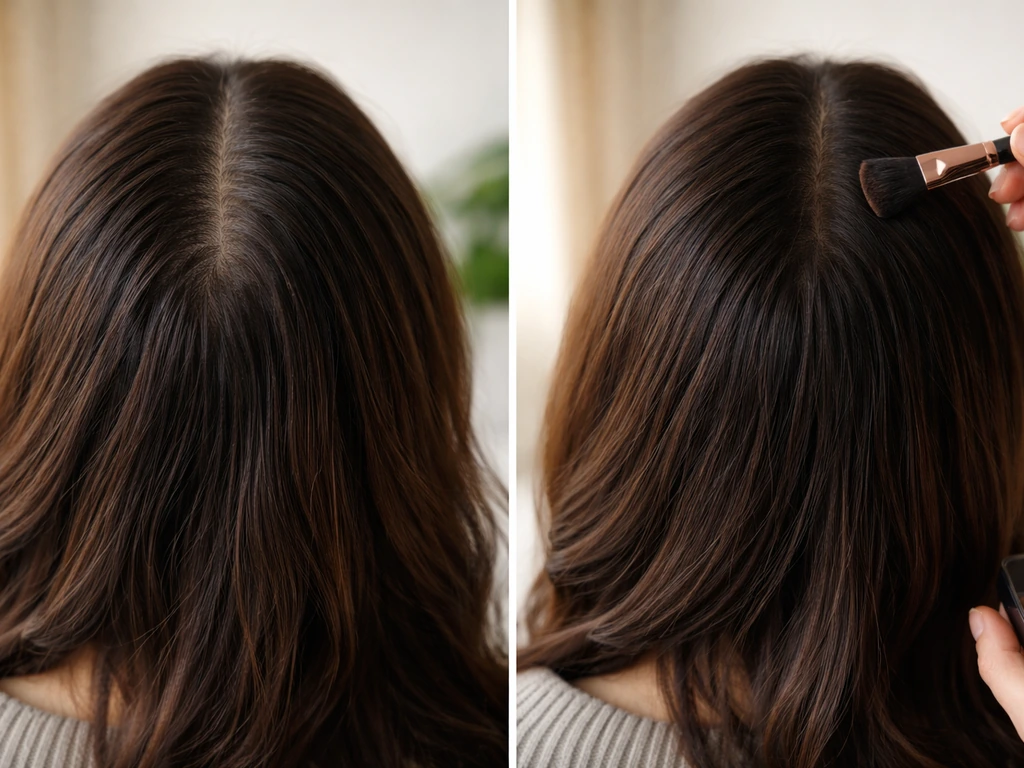
This is where you can make the biggest difference without committing to a full color service or a big chop. There is a spectrum of approaches depending on how much intervention you want, how much gray you have coming in, and what your budget allows.
Root smudging
Root smudging is one of the most effective and underused techniques for this exact problem. Cleveland Clinic also advises doing a test patch on skin before applying hair dye or box color to rule out possible allergic reactions and to follow the timing on the instructions do a test patch on skin. A colorist applies a shade that sits between your natural gray root and your dyed lengths, then feathers and blends it downward so the two zones graduate into each other instead of meeting at a sharp edge. The goal is not to cover the gray but to create a smooth visual fade between the gray and the dyed section. Done well, it eliminates the hard line without adding new dense pigment that will just create another demarcation problem in six weeks. Ask for this specifically by name when you go in.
Lowlights placed at the line
Lowlights are thin sections of darker or more neutral color woven through the hair just below and around the demarcation line. They break up the sharp boundary by adding depth variation, so the eye reads a gradual shift rather than a distinct stripe. This works especially well for people whose gray is coming in lighter or silver-toned against darker dyed lengths. A good colorist will place them strategically at the border zone, not throughout the whole head.
Toning and color shadowing
If your dyed hair has faded and looks brassy or warm, a toner can bring it closer to the cooler, neutral tones of gray regrowth, which automatically reduces contrast and makes the line less jarring. Color shadowing is a related technique where a semi-permanent, lower-commitment color is used to cast a softer tone across the grow-out zone. Both of these approaches are gentler than full permanent color and fade out gradually, which is exactly what you want during a grow-out: no hard new edges.
Going cold turkey on color
Some people decide to stop all color immediately and just grow it out. This is a completely valid choice and it works best when your dyed lengths are relatively short or when your natural gray pattern is dense enough to look intentional quickly. The line will be most visible during months two through six, but after that, as the gray section grows longer, it starts to look like a style decision rather than a neglected regrowth. If you go this route, the styling and haircare sections below become your primary tools.
| Technique | Best For | Commitment Level | How It Helps the Line |
|---|---|---|---|
| Root smudge | All lengths, especially medium and long | Low to medium (salon visit every 2–3 months) | Blends gray root into dyed lengths with a gradual fade |
| Lowlights at demarcation | Darker dyed hair with lighter gray growth | Medium (salon, placed precisely) | Breaks up the hard edge with depth variation |
| Toner/color shadow | Faded, brassy, or warm dyed lengths | Low (applied over existing color, fades out) | Neutralizes warm tones to reduce contrast with gray |
| Cold turkey | Short to medium hair, dense gray pattern | None (no products needed) | Requires patience but avoids new demarcation points |
Styling and parting tricks to minimize the line right now
You do not need a salon appointment to start managing the line today. How you part and style your hair can dramatically change how visible the demarcation is on a daily basis.
Change your part
A hard, straight part is the worst thing for a visible grow-out line because it creates a runway that shows every millimeter of regrowth in a neat, unbroken line. Switch to a side part, a zigzag part, or a deep diagonal part instead. Better yet, try a no-part style where the hair is pushed loosely back or to one side without a defined separation. Changing your part every few days also keeps the hair from flattening into the same position, which helps a lot with the scalp-area visibility.
Use texture and volume to your advantage
Volume at the roots lifts hair away from the scalp and makes the boundary between gray and dyed hair less readable from across the room. A volumizing mousse or root-lifting spray applied before blow-drying can add enough lift to visually soften the line. If you have naturally wavy or curly hair, embracing your wave pattern rather than straightening helps enormously, because straight hair shows every boundary while wavy hair creates natural variation that the eye skips over.
Strategic updos and half-up styles
Loose buns, messy knots, and half-up styles gather the hair in a way that conceals the demarcation zone under natural movement and texture. The key word is loose. A tight updo actually emphasizes the scalp and the line running from front to back. Pulling hair back with some deliberate volume at the crown keeps things looking intentional. Headbands, scarves, and hair clips can also cover the exact line zone when you want a break from thinking about it.
Tinted root sprays and temporary powders
There is no shame in using a tinted root spray or color-matching powder on days when the line is bothering you. These products are water-soluble, wash out completely, and take about thirty seconds to apply. Use a shade that bridges the gap between your gray and your dyed lengths rather than fully matching one or the other, this is what creates the blur effect on a temporary basis. Think of them as a styling tool, not a cheat code.
Haircare habits that actually reduce contrast during grow-out
Your daily haircare routine has a bigger impact on how obvious the line looks than most people realize. The goal is to minimize the visual difference between your gray roots and your dyed lengths, and both texture and shine play into that.
Deep conditioning is non-negotiable
Dyed hair and gray hair have different porosity. Dyed hair is often more porous from repeated chemical processing, which means it absorbs and loses moisture faster and tends to look dry or matte at the ends. Gray hair, especially newly grown gray, can be coarser and more resistant. This physical difference catches the light differently and sharpens the visible line. A weekly deep conditioning mask applied from mid-lengths to ends brings your dyed hair closer in texture to your incoming gray, softening the boundary. Look for masks with keratin, argan oil, or ceramides.
Purple and silver shampoos for tone matching
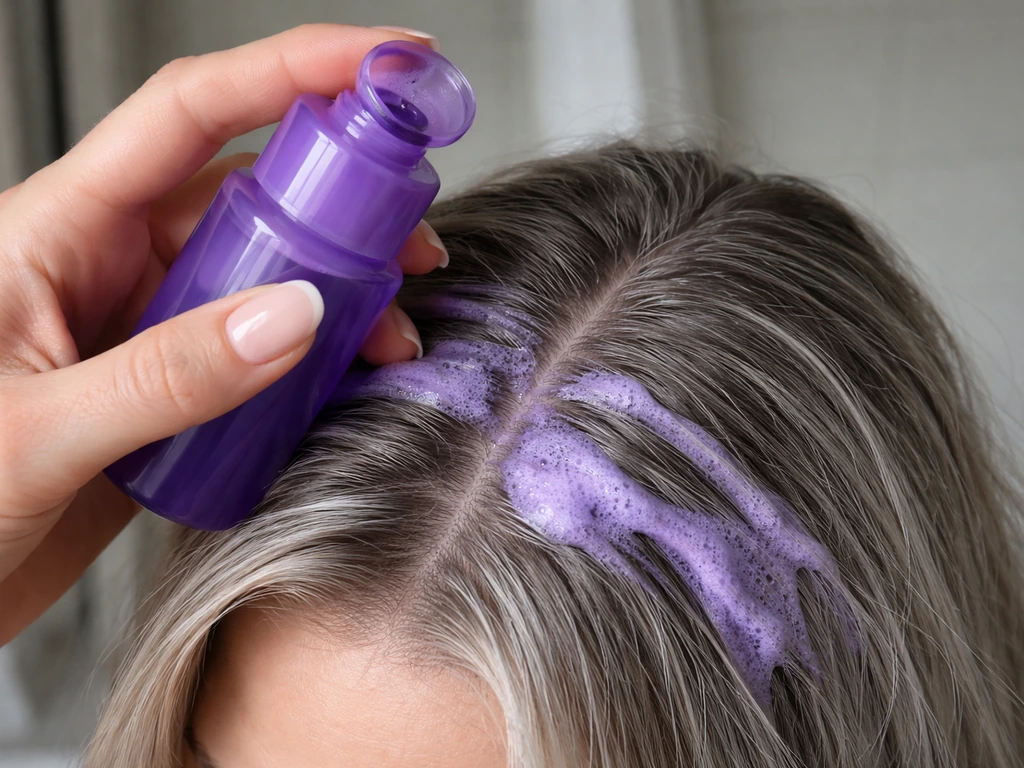
If your dyed hair has any warm or yellow tones, a purple toning shampoo used once or twice a week will cool it down and bring it visually closer to the cool, silver tones of natural gray. L’Oréal also notes that purple shampoo uses violet pigments to neutralize yellow or brassy tones, and you should base how often you use it on your brassiness level and hair type to avoid overdoing it, which can lead to dryness or buildup purple toning shampoo used once or twice a week will cool it down. This is one of the simplest and cheapest things you can do. Do not use it every wash or the violet pigment will build up and shift the color too far, but as a weekly treatment it keeps the lengths from looking like a different world from your roots.
Manage frizz and flyaways at the grow-out zone
The area right around the demarcation line is often where frizz and flyaways are worst, partly because new gray growth can be more wiry and partly because that zone of hair has been through the most repeated styling and product exposure. A lightweight smoothing serum or a tiny amount of hair oil applied specifically to that zone helps keep things looking polished rather than chaotic. Smooth hair at the boundary line looks more like a gradual color shift and less like a problem.
Reduce heat in the grow-out zone
Repeated heat styling at the root and mid-shaft area can increase the contrast between your new gray growth and the lengths by drying out and fading the dyed sections faster. Try air-drying when you can, and when you do use heat, use a thermal protectant and keep the temperature under 180°C (350°F). The less damage your dyed sections take, the slower they visually diverge from your incoming gray.
What to expect week by week: a realistic timeline
Hair grows roughly 1.25 centimeters (about half an inch) per month on average. That is the baseline. How the line evolves over time depends on your starting length, how much gray is coming in, and the color techniques you use. Here is an honest, stage-by-stage breakdown.
| Stage | Approximate Timeframe | What the Line Looks Like | What Helps Most |
|---|---|---|---|
| Early regrowth | Weeks 1–6 | Subtle at first, then a thin but visible gray band forms at the roots | Tinted root spray, adjusting your part |
| The hard line phase | Weeks 6–16 | Most challenging: a clear stripe of gray above dyed lengths, contrast is at its peak | Root smudge or lowlights, volume styling, toning shampoo |
| Growing softness | Months 4–8 | Gray section is now 4–8 cm long; starts to look more intentional as a distinct zone | Deep conditioning, embracing wave/texture, loose styles |
| The blend begins | Months 8–14 | Dyed ends are fading; the two zones start to look more like a gradient than a hard line | Toner refresh if needed, continue conditioning |
| Mostly gray | Months 14–24+ | Depending on length, the majority of visible hair is now gray; line is at the ends only | Regular trims of dyed ends if desired, shine serums |
The line is typically at its most noticeable between weeks six and sixteen. This is the phase where most people quit. If you can hold through this window, using the styling and color techniques above to manage the visual, the line genuinely does soften as the gray zone grows longer and starts to look like an intentional two-tone or gradient rather than neglected regrowth.
People who are growing out gray during a period of limited salon access, or who simply prefer a low-maintenance approach, often find that months three through six feel the hardest psychologically but that the hair itself starts to cooperate more after that. If you are figuring out how to grow out grey hair during lockdown with limited salon access, aim for simple at-home color transition and styling tricks that keep the line softer until you can get help. If you are wondering how to grow out grey hair, focus on simple at-home color transition and styling tricks to keep the line softer while you wait for salon help. This is also a topic that comes up often for people growing out gray in specific circumstances or environments, and the timeline holds regardless of whether you have regular salon access or are managing entirely at home.
Maintenance, micro-adjustments, and when to consider alternatives
Committing to growing out gray without cutting does not mean doing nothing. There are small, targeted adjustments you can make along the way that keep things looking intentional and manageable without resetting your progress.
Micro-trims: what they are and when they are worth it
A micro-trim is a very small cut, usually half a centimeter to one centimeter, focused specifically on removing split ends or evening out the ends of the dyed section. This is not a significant chop, and it does not meaningfully slow your grow-out. What it does is remove the most visually tired and damaged part of your dyed lengths, which reduces the contrast between crispy, faded ends and your healthy new gray growth above. If the line is unusually stubborn and your ends are significantly more faded or damaged than your mid-lengths, a micro-trim every three to four months can genuinely help the overall blend without costing you real progress.
Covering products for ongoing management
There is a whole category of products designed to be used regularly during grow-out rather than as an emergency fix. Root concealer sprays, color-depositing conditioners in cool ash or silver tones, and tinted dry shampoos are all part of this toolkit. Used consistently, a color-depositing conditioner in a silver or ash shade will gradually shift your dyed lengths cooler and closer in tone to your incoming gray, which makes the line progressively less dramatic over time with zero chemical commitment.
When to go back to a colorist for targeted help
If you have been managing at home for several months and the demarcation is still sharp and visible despite styling adjustments, it is worth one targeted salon visit specifically for root smudging or lowlight placement rather than a full color service. Be explicit: tell your colorist you are growing out your gray and you want to soften the line, not cover the roots. Many people find that one well-placed session every two to three months is enough to keep the grow-out looking clean without slowing the process down.
Staying the course
Growing out gray hair without cutting is a long game, and the line is a phase, not a permanent feature. If you are wondering how do you secretly grow out gray hair, the key is combining smart color transition techniques with styling and haircare habits that reduce contrast. If you want more tailored tips for UK haircare routines and salon options, see how to grow out grey hair uk as a related guide. The readers who get through it successfully are usually the ones who give themselves a specific check-in point, like six months or one year, rather than evaluating the decision every two weeks. Take photos in the same light every month. You will often notice the line softening more in photos than in your daily mirror check, because you are seeing it with fresh eyes rather than habituated ones. Your hair is growing whether you can see progress or not, and every week that passes, the dyed section is shorter and the gray section is longer. That is always moving in the right direction.
FAQ
What should I do if the line looks worse after I start growing out my gray?
If your line is still very crisp after a few months, the fastest fix is usually blending the border zone rather than adding more overall pigment. Ask for root smudging or lowlights placed only where the gray meets the dyed lengths, and skip full-root coverage because that tends to create a new, sharper edge as it grows out.
Can I use root concealer products to hide the line permanently, or should they be temporary?
Yes, but only if you bridge the gap between tones. A tinted root spray or color-matching powder works best when the shade sits between your gray and your dyed lengths, and you should apply it just at the scalp area and along the first centimeter of regrowth for a true “fade” effect rather than a solid band.
How often should I use a purple toning shampoo during a gray grow-out?
Purple toning shampoo can help if your dyed lengths look yellow or brassy, but you should treat it like a targeted correction, not a regular cleanser. Use it once or twice a week, and if your hair starts looking slightly grayish or ashy in the lengths, reduce frequency or rotate with a regular sulfate-free shampoo to prevent violet buildup.
Will blow-drying or flat ironing make the line appear faster?
Heat can speed up the visual separation by drying and fading the dyed section. If you want the line to soften more gradually, prioritize air-drying, and when you do style use thermal protection and keep heat moderate (around 350°F/180°C). Also avoid frequent direct heat on the root area where the gray is emerging.
When is a micro-trim actually worth it during grow-out?
A micro-trim can help when the bottom of the dyed section looks visibly drier, more porous, or split. The key is timing and size, keep it half a centimeter to one centimeter and schedule it every few months only if the ends look tired compared to the mid-lengths. It does not change the growth rate, it just reduces contrast caused by damaged ends.
How can I tell if my color work is making the grow-out line worse?
Look for signs of over-coverage, for example, the regrowth edge becomes a darker or thicker stripe, or the lengths start to feel stiff and chalky. This usually means too much permanent pigment or overly frequent toning. The corrective step is to switch to blending methods (root smudging, lowlights, or shadowing) and reduce how often you add new color to the border zone.
What shade should I ask for if my gray is warmer or my dyed hair is neutral versus ashy?
Don’t just match your current dye color, match the undertone that will work with your incoming gray. If your gray reads cool/silver, choose ash or neutral tones for blending products. If your gray reads warmer or your roots are more golden, go neutral first and adjust later, because depositing the wrong undertone can increase contrast instead of reducing it.
How do I decide when to get one more salon blending session versus waiting it out?
If your hair grows slowly or your starting contrast is high, expect the line to stay most noticeable longer. A practical strategy is to plan check-ins at 6 months and 12 months with photos, then reassess whether you need one targeted blending session in the middle. This prevents “resetting” with frequent color decisions based only on day-to-day mirror visibility.
Is it okay to stop all coloring immediately, and what months should I brace for?
Yes, if the gray pattern is dense enough, it can look intentional. The most noticeable stretch is often months two through six, so prepare styling coverage for that window (looser half-up styles, clips, or a softer part). Then the gray portion typically begins to read like a style choice as it takes up more of the overall length.
What are the best day-to-day styling changes to make the line less noticeable without buying new color?
You can reduce contrast without changing your cut by adapting how the line is exposed. Change your part often (side or diagonal instead of a straight center part), add root lift before blow-drying for a softer scalp edge, and use loose updos or messy knots so the boundary is under movement rather than in a fixed runway.