
Growing out grey hair takes roughly 12 to 24 months depending on your starting length, but you can look intentional and put-together at every stage if you have a plan. If you're in the UK and wondering how to grow out grey hair, this guide will help you plan each stage and keep it looking intentional. The basics: trim every 10 to 12 weeks for shape (not length), use purple shampoo one to three times a week to kill brassiness, deep condition weekly because grey hair is drier than pigmented hair, and choose a blending strategy for the first six months so the line of demarcation doesn't drive you crazy. Everything below breaks that down stage by stage so you know exactly what to expect and what to do.
Grey Hair How to Grow It Out: Timeline, Styling Tips

Marcus Vickers
3 Jun 2026

Why grey hair happens and what 'growing it out' actually means
Grey hair happens when the melanocyte stem cells in your hair follicles stop replenishing properly. Each time a hair completes a growth cycle, those stem cells are supposed to refresh and keep producing melanin (the pigment that gives hair its color). Over time, the reservoir depletes or the cells stop functioning the way they should, and new hair comes in without pigment. That's why grey spreads gradually rather than all at once. Genetics determines when this starts, but premature greying has also been linked to low vitamin B12, low iron/ferritin, thyroid conditions, smoking, and other factors, so it's worth ruling those out with a doctor if you're going grey significantly before your mid-30s.
The key thing to understand before you start your grow-out: once a hair shaft has grown without pigment, there is no product, serum, or routine that puts color back into it. The biology is fixed at the follicle level. What you can control is how you manage the transition visually, how you keep the hair healthy and toned so it looks intentional, and how you style each awkward phase so you don't bail on the process halfway through. That's what this guide is for.
'Growing it out' in this context means two things at once: letting the natural grey come in at the roots while also growing your hair from its current length (pixie, buzz, bob, mid-length) to your target length. Both timelines run simultaneously, and both need a strategy.
Grow it all out or blend it? Choosing your strategy first
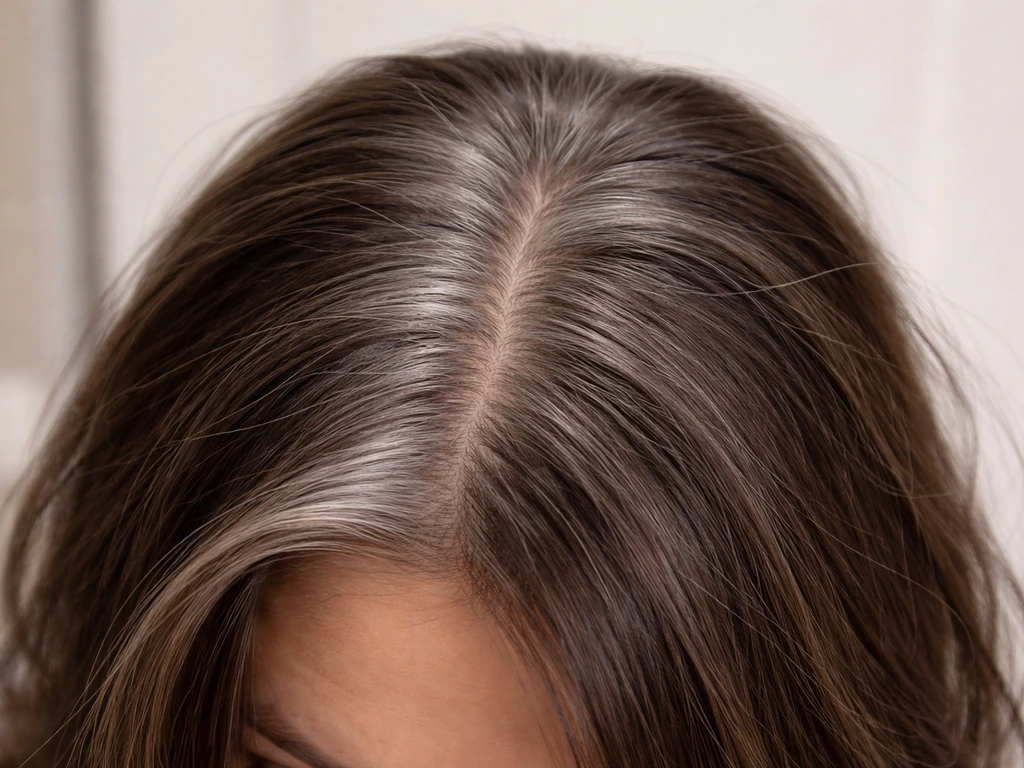
Before you do anything else, decide which approach fits your life right now. There are three real options, and the right one depends on how much contrast you have between your dyed color and your natural grey, how much salon time you want, and how quickly you need to look polished.
| Strategy | What it looks like | Best for | Salon frequency |
|---|---|---|---|
| Full cold-turkey grow-out | Stop all color, let grey come in from roots naturally | People with enough grey that the roots blend reasonably, or those willing to cut short to reset | Every 10–12 weeks for trims only |
| Root smudging or root shadowing | Colorist softens the grow-out line by blending regrowth into existing color | Anyone with high contrast (dark dye, bright roots) who isn't ready to go fully grey | Every 3–6 weeks initially |
| Highlights/lowlights blend ('greige' transition) | Strategically placed highlights or lowlights soften the demarcation and gradually introduce more grey-looking tones | People with medium contrast who want a graceful multi-month transition | Every 6–10 weeks |
If you have a strong contrast between a dark dye job and bright silver roots, the cold-turkey approach will give you a very visible line of demarcation for the first several months. That's completely manageable with the right styling, but be honest with yourself about your daily tolerance for it. Root smudging is the quickest fix for that specific problem: a colorist blends the regrowth line so the contrast softens without adding more permanent color to your new growth.
If you prefer to handle things more gradually over six to twelve months, highlights and lowlights placed around the face and through the mid-lengths can create a 'greige' effect that lets grey grow in without a harsh line. There's also a more discreet version of this process that some people call a secret grow-out, which involves small, subtle changes over time that others barely notice.
If you are wondering how do you secretly grow out gray hair without anyone noticing, focus on subtle blending changes rather than a hard line at the roots secret grow-out.
The grow-out timeline, stage by stage
Hair grows about half an inch (roughly 1.25 cm) per month on average. That means getting from a pixie or buzz cut to a bob takes around 12 to 18 months, and reaching shoulder length from a short cut takes roughly two years. Every stage below is based on that rate, so adjust forward or back depending on how fast your hair actually grows.
Months 1 to 3: The earliest and most tempting-to-quit phase
This is where most people give up, so it helps to know what you're walking into. If you're starting from a buzz or very short pixie, you'll have one to one and a half inches of growth by month three. The grey root line will likely be visible if you had color. Your hair won't sit right yet and won't style predictably. The best move here is to commit to your blending strategy (root shadow or highlights if needed), use a deep conditioner once a week, and keep your trims minimal: just a light clean-up of the neckline and ears if needed, not a full cut. Headbands, wide clips, and scarves are genuinely useful right now, not a cop-out.
Months 3 to 6: Shape becomes possible
By month three to four, you have enough length to start working with. This is when a good stylist becomes your best investment: a strategic trim at this point can create a shape that grows out gracefully rather than just looking unkempt. Ask for a grow-out cut, not a maintenance cut. The goal is to remove bulk and weight that makes hair sit awkwardly, not to take length.
If you have bangs, they're probably at an annoying in-between length right now. Soft bangs or face-framing pieces can take about eight to ten weeks to blend into the rest of your hair if they're light, but thicker or blunt fringes can take up to six months to fully integrate. Pinning them to the side or using a texturizing spray to blend them back buys you time.
Months 6 to 12: The bob zone

From a short starting point, month six to nine is typically when you hit bob territory. This is actually a great length to pause and enjoy for a while: bobs suit almost everyone, photograph well, and are much easier to style than the very short phases before. If you had an undercut as part of your previous style, the back and sides are probably catching up to the top by now but may still feel patchy or uneven.
Letting the back grow without trimming it feels counterintuitive but is usually the right call: ask your stylist to only trim the top and sides to keep the shape while the back catches up. Grey hair at this stage may start showing more tonal variation, so this is a good time to introduce purple shampoo if you haven't already.
Months 12 to 24: Shoulder length and beyond
By month 12 to 18 from a short cut, most people are at or approaching collarbone length. The awkward phase is largely behind you, and the grey is now a full part of your look rather than a transition. Your main jobs now are keeping the ends healthy (split ends travel up the shaft and cause breakage that makes hair seem like it's stopped growing), managing brassiness, and enjoying the fact that you've done the hard part. Reaching shoulder length from scratch takes roughly two years including occasional trims, and waist length is a multi-year project, but at the one-year mark the effort genuinely starts to pay off visually.
Styling through the awkward phases: bangs, layers, undercuts, and cowlicks
The structural challenges of growing out grey hair aren't just about length: they're about the specific haircut you're growing out of. Here's how to handle the most common ones.
Bangs
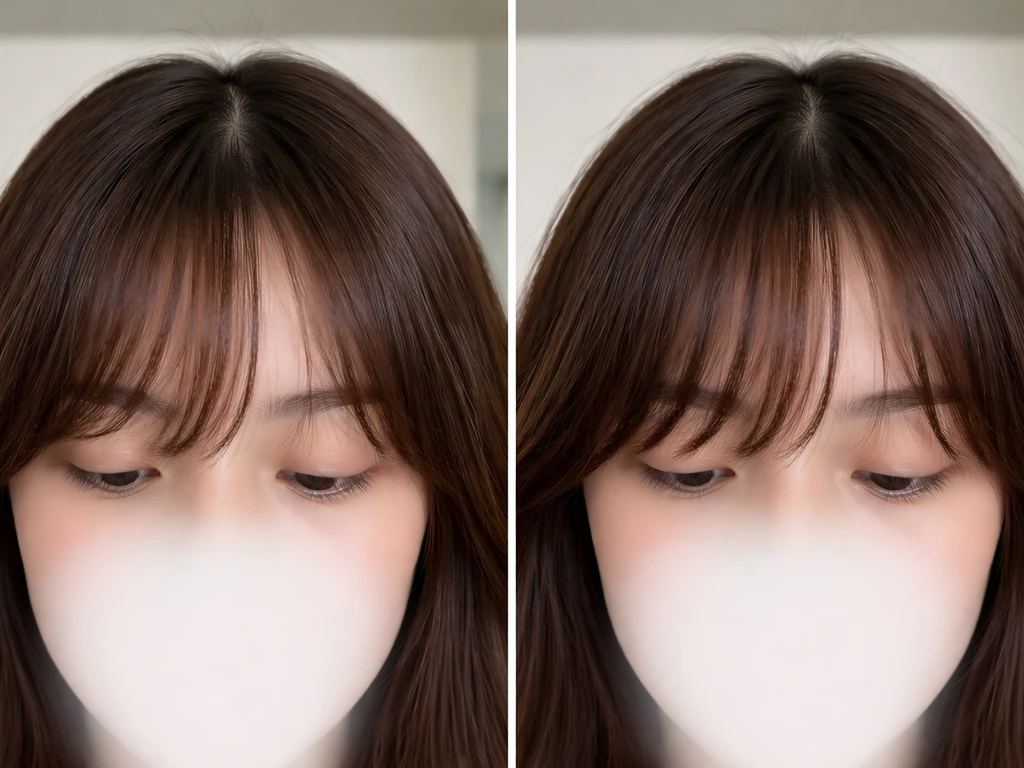
The thickness of your bangs at the start determines everything about how uncomfortable this phase will be. Soft, face-framing bangs can blend in within eight to ten weeks with a little texturizing spray and side-sweeping. Full, blunt fringes are a longer project, often three to six months of pinning, clipping, or braiding them back before they're long enough to wear swept to the side naturally. A half-up style with the bangs tucked back is the most functional option during this window. Avoid trimming bangs to keep them 'neat': every trim resets the clock.
Layers
Heavily layered cuts create what stylists call 'ledges': bands of shorter hair at different lengths that stick out as growth happens. The fix is to ask your stylist to gradually blend the layers on each trim visit rather than add new ones. As the shortest layers grow out, you may go through a period of three to five months where the hair looks thicker at the roots and thinner at the ends. A light glaze or gloss treatment at the salon can add shine and visual weight to the ends so they don't look as wispy during this phase.
Undercuts
Growing out an undercut is one of the longer structural challenges: the shaved or very short sections underneath need to catch up to the rest of the hair, which can take six to twelve months depending on the extent of the undercut. During this time, wearing the top layers down over the shorter sections is the simplest approach. Avoid trimming the undercut sections to 'clean them up,' as that keeps them short while the rest of the hair gets longer, widening the gap. If the texture mismatch is severe, a root perm or texturizing treatment on just the top sections can help everything look more cohesive while it grows.
Cowlicks and texture changes
Grey hair is often coarser and drier than the pigmented hair it replaces, which can make cowlicks more pronounced as regrowth comes in. A light pomade or smoothing cream applied to damp hair and then blow-dried in the direction you want the hair to go is the most reliable way to train cowlick-prone sections. Once the hair has enough length to weigh itself down (usually four to six inches), cowlicks become much easier to manage.
Blending grey with your existing color: toning, highlights, and the greige approach
If you have any remaining dyed color in your hair while natural grey is growing in, managing the visual gap between the two is the centerpiece of a graceful transition. Here are the main tools.
Purple shampoo for brassiness

Grey and white hair picks up yellow and orange tones over time from UV exposure, hard water, and product buildup. Purple shampoo works by depositing violet pigments that neutralize those warm tones. Use it one to three times per week depending on how brassy your hair is, leaving it on for two to five minutes before rinsing. On weeks when your hair feels dry, swap one purple shampoo session for a moisturizing shampoo instead, then follow with a deep conditioner. Blue shampoo is the better choice if your remaining dyed sections are pulling orange rather than yellow (more common with brunette-to-grey transitions). UV-protective sprays also help slow brassiness between washes.
Highlights and lowlights for a softer transition
The greige look (a blend of grey and beige/blonde tones) is one of the most flattering transition styles available right now. A colorist places fine highlights through the mid-lengths and ends to lighten them toward the grey tones coming in at the roots, and adds lowlights if needed to prevent the overall look from going too flat or washed-out. This technique works especially well for people with medium-brown hair transitioning to silver because it meets the natural grey partway rather than fighting it. Expect to visit the salon every six to ten weeks for this approach until the natural grey is the dominant color, then you can dial back to trims only.
Root smudging and root shadowing
Root smudging is a targeted technique where a colorist blends just the regrowth line rather than coloring the whole head. It softens the hard edge between your natural grey and the dyed lengths without extending or reinforcing the color. This is a good holding strategy in the early months when the contrast is highest and you're not ready to commit to a full highlights approach. Depending on contrast, you may need touch-ups every three to six weeks early on. As the grey grows further, the frequency drops.
A care routine that actually supports growth
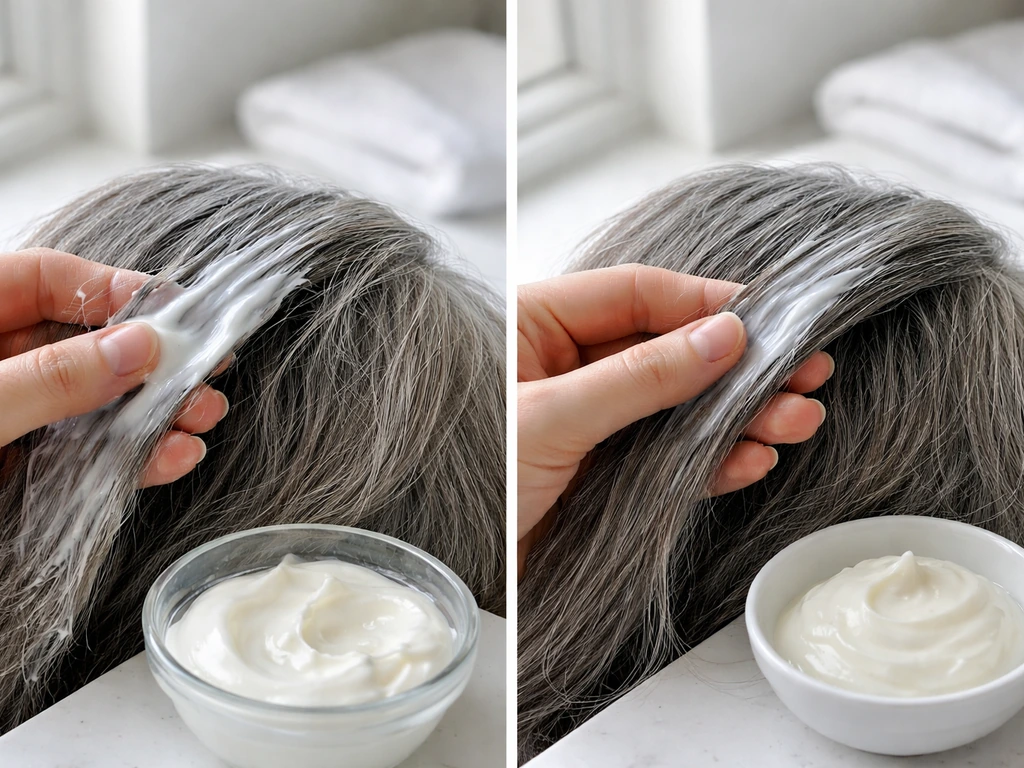
Grey hair behaves differently than pigmented hair. It's typically drier, more porous, and coarser because the structural changes in the follicle that come with age also reduce sebum production. That means the routine that worked for your hair five years ago probably needs updating.
- Shampoo two to three times per week maximum: daily washing strips the natural oils grey hair has less of to begin with.
- Use a sulfate-free shampoo for regular wash days and rotate in purple or blue shampoo one to three times per week depending on brassiness.
- Deep condition once a week with a mask or treatment conditioner (not just rinse-out conditioner), leaving it on for five to ten minutes.
- Use a leave-in conditioner on damp hair before styling: it smooths the cuticle and makes grey hair easier to detangle and style.
- Minimize heat styling where possible, and always use a heat protectant at 230°C (450°F) or below when you do.
- Protect hair from UV exposure with a UV-protective spray or SPF hair product, especially in summer, to prevent brassiness and dryness.
- Trim every 10 to 12 weeks: enough to remove split ends and keep the shape intentional, not so often that you lose length progress.
On trimming: this is one of the most misunderstood parts of growing hair out. Trimming does not make hair grow faster (growth happens at the follicle, not the ends), but it does prevent split ends from traveling up the shaft and causing breakage that makes your length seem to stall. The sweet spot is every ten to twelve weeks, taking off no more than a quarter inch unless there is significant damage to address. If your stylist has a habit of taking more than you asked for, be explicit before they start: 'I'm growing this out, please just dust the ends.'
Managing the challenges: brassiness, texture, confidence, and long-term maintenance
Even with a good plan, there are a few common stumbling blocks that catch people off guard.
Brassiness that keeps coming back
If your grey is consistently going yellow or brassy between washes, check a few things: how much sun exposure your hair gets, whether your water is hard (mineral-heavy water accelerates brassiness), and whether you're using any products with silicones that build up and create a yellowish film. Clarifying shampoo once a month clears buildup before it becomes visible, and adding a UV spray to your daily routine makes a noticeable difference over time.
Texture changes as grey grows in
It's completely normal for your grey hair to have a different texture than your pigmented hair: sometimes wirier, sometimes more wavy, sometimes both. This isn't damage, it's a structural difference in how the follicle produces the hair shaft. A review describes that greying can involve melanocyte loss and/or reduced melanin production in hair follicles, with ectopic melanin redistribution seen in follicles lacking intact melanocytes [a structural difference in how the follicle produces the hair shaft](https://pmc. ncbi.
nlm. nih. gov/articles/PMC2938584/). The response is the same as for any coarse or dry hair type: more moisture, gentler handling, and products designed for coarse or curly textures if needed.
If your grey hair is suddenly wavy when your hair was previously straight, lean into it with a curl-enhancing cream and diffuser rather than fighting it with flat irons every day.
The confidence gap in the middle months
Months two through six are genuinely the hardest part, and it's worth naming that directly. Your hair doesn't look like your old style anymore, and it doesn't look like your goal yet either. This is when most people book an appointment to go back to color or cut it all off again. What actually helps: keeping the ends shaped so the overall silhouette looks intentional even if the color is in transition, having one or two reliable styles for bad-hair days (a slicked-back look, a half-up style, or a simple clip), and remembering that everyone who has successfully grown out grey hair went through exactly this stretch.
Long-term maintenance once you're there
Once your natural grey is the dominant color and your hair is at your target length, maintenance becomes much simpler. You're trimming for shape, toning for brassiness as needed, and conditioning regularly. Some people find they only need purple shampoo seasonally (more in summer when UV exposure is higher, less in winter). Others keep it as a once-a-week staple year-round. There's no universal right answer: go by what your hair actually looks like, not a rigid schedule.
The grow-out process is longer than most people expect and shorter than it feels in the middle of it. A clear plan, realistic expectations about timing, and a care routine matched to what grey hair actually needs are what get people through it. If you were trying to grow it out during lockdown, the key is staying consistent with your routine even when you cannot get to the salon as often grow it out during lockdown during lockdown. You don't have to do it all perfectly: you just have to keep going.
FAQ
Can I use permanent dye to cover my grey while I’m growing it out?
Yes, but timing matters. If you have significant dyed regrowth, a one-time “corrective” blend may reduce contrast, but it will not replace pigment in the new grey. Ask for a conservative root shadow or targeted blending, then commit to tonal maintenance (purple shampoo, gloss, or occasional salon toning) until your natural grey becomes dominant.
How often should I use purple shampoo during a grow-out if my hair keeps going too ashy or dull?
Don’t use purple shampoo as a daily fix. If your hair is getting too ashy or looking slightly dull, drop to once a week and focus on deep conditioning. Also, if your hair is turning more orange than yellow, switch to blue shampoo for that cycle rather than extending purple sessions.
My length feels like it’s stuck, is that normal when growing out grey?
If the grey is already coming in, the best goal is reducing breakage, not “forcing growth.” If you are seeing shed plus short, snapping hairs, switch to a gentler detangling method (wide-tooth comb on conditioner), reduce heat, and trim only damaged ends. Growth at the follicle will continue, but breakage can make it look like nothing is changing.
Should I wash my hair more often or less often to keep grey from turning yellow?
Washing more often usually helps brassiness control, but it can worsen dryness. Many people do better with a balance like moisturizing wash days every other day (or a couple times weekly), and purple shampoo limited to 1 to 3 times weekly only on the section that needs toning. Use a leave-in conditioner after rinsing to keep grey from feeling crunchy.
Will a salon gloss or glaze speed up the look of my grey grow-out?
Yes, but go for “toning” not “color deposit” as your default. A salon glaze or gloss can add shine and reduce dullness, which makes transitional grey look healthier, especially after the first year. If you choose gloss while there is still a lot of dyed hair, ask your stylist to match the tone to your underlying base (yellow versus orange) to avoid muddy results.
What should I do if my grey is coming in patchy, with different shades across my head?
Patchy or uneven grey can be normal, especially if your hair was previously dyed at different times or if you have variable follicle timing. The practical move is to base your blending plan on the highest-contrast area (often temples or part line), then use face-framing highlights or root shadow rather than trying to “fix” every patch immediately.
How do I know whether I should use blue shampoo or purple shampoo during my transition?
Choose based on the dye history. If your remaining dyed hair is mostly pulling yellow, purple is usually the better match. If it pulls orange or coppery (common in brunette-to-grey transitions), blue shampoo is more effective. If you are unsure, do one strand test and observe tone after drying.
What should I say to my stylist so they don’t cut off too much length during the grow-out?
Be clear about the growth-out goal: “dust only, no more than a quarter inch, and please keep the current length while shaping for silhouette.” If your stylist tends to take extra, ask for a grow-out cut plan with what they will remove by area (ends only, neckline clean-up, or top and sides). Trimming too aggressively resets the timeline by forcing you to regain length again.
Do I need a clarifying shampoo during a grey grow-out, and how often?
Dryness products can build up, making grey look heavier and slightly yellowish over time. If you are using oils, heavy masks, or lots of leave-ins, consider a clarifying shampoo about once a month (or when buildup becomes obvious), then follow immediately with deep conditioning to restore softness.
My new grey roots stand up in different directions, what’s the best way to manage cowlicks?
For cowlick-prone regrowth, train with heat-light drying direction, not high heat styling. Apply a small amount of smoothing cream or light pomade to damp hair, then blow-dry in the direction you want. Once the hair is long enough to weigh down (often after 4 to 6 inches), the cowlick usually becomes less stubborn.
I’m growing out bangs, should I keep trimming them to stay neat?
Yes, but use it strategically. If your bangs keep looking awkward, pinning or side-sweeping buys time, and texturizing spray helps them blend without cutting. Avoid frequent trimming of bangs, because each micro-cut restarts the integration process.
Should I get bloodwork if I’m greying faster than expected?
If you are going grey early or greying rapidly, it can be worth checking basics like B12, iron or ferritin, and thyroid markers with a clinician. You do not need to stop growing-out efforts, but addressing a potentially reversible cause can improve overall hair quality, reduce shedding, and help your transition feel more manageable.
I’m in the awkward stage and hate how it looks. How do I get through without booking another color?
It’s normal to feel like you’re stuck around months 2 to 6, but the “fix” is usually presentation rather than starting over. Stick to one or two reliable styles for bad-hair days (half-up, clipped back, or slicked styles), and keep trims for shape only so the silhouette stays intentional.