
Growing out grey hair during a lockdown is genuinely one of the harder hair transitions to sit through, mostly because you can't pop in for a quick gloss or a toning session when the contrast gets too stark. But it's also one of the most manageable if you know what to expect and have a simple routine in place.
How to Grow Out Grey Hair During Lockdown Step by Step

Marcus Vickers
15 Jun 2026
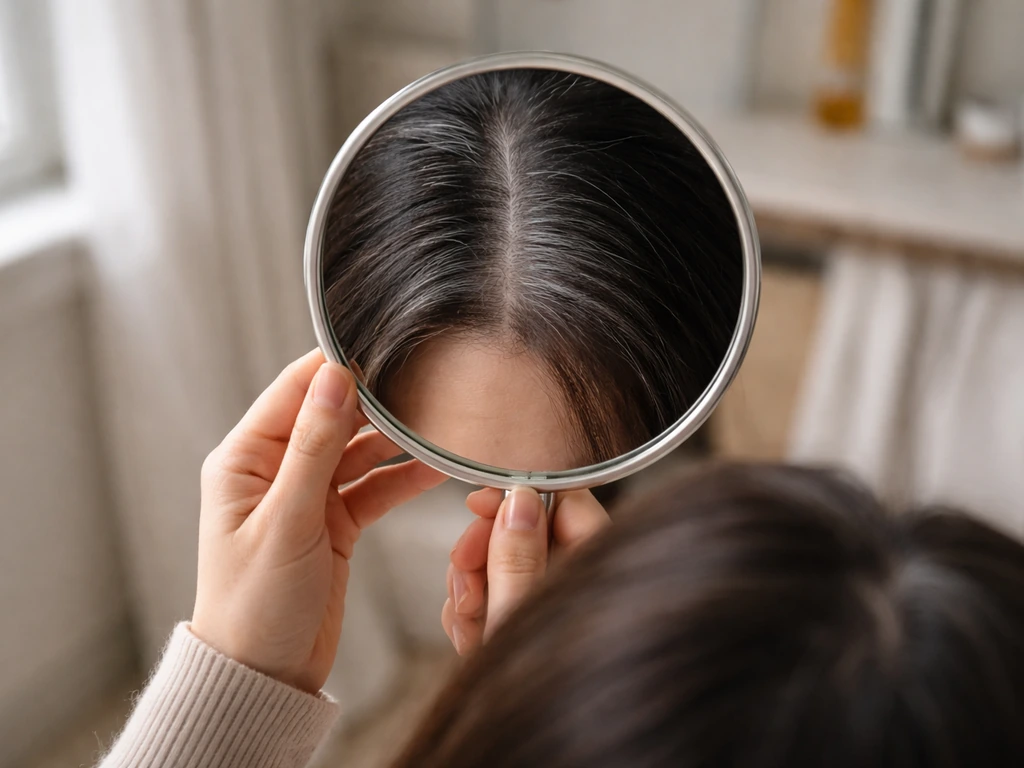
Most people hit the worst of the awkward phase somewhere between month two and month four, when there's enough grey root to be visible but not enough to look intentional. Hair grows roughly 1 cm per month, so if your dyed length is 10 cm or longer, you're looking at a multi-month journey. The good news: you have more tools at home than you think, and there are real ways to make every stage look considered rather than neglected.
If you want more tailored guidance for the UK, including timelines and product choices, look at our UK-specific steps for growing out grey hair growing out grey hair in the UK.
Why grey hair can feel worse during a lockdown
The frustration isn't just cosmetic. During lockdown, salons were completely off the table. In England, hairdressers were closed until 12 April 2021 when they were finally allowed to reopen, and Scotland required appointment-only services around the same period. That meant months of watching a demarcation line creep down your hair with zero professional options.
If you want to keep the line from looking too harsh while you grow out, focus on softening it with the right blending approach rather than trying to cover it all at once demarcation line. Normally you'd have booked a toning session or a gloss treatment at the first sign of a harsh line. Without that option, the contrast between your natural grey root and the old dyed length feels relentless, particularly under home lighting and on video calls.
There's also a psychological layer to it. Lockdown already stripped away a lot of the things that made people feel put-together. Hair was one of the last visible markers of control, and watching it go in a direction you didn't plan for while stuck at home is genuinely demoralising. If that resonates, you're not being vain. You're reacting normally to a real change in how you look and feel. The practical steps below are designed to give that control back.
Realistic timelines for grow-out and blending
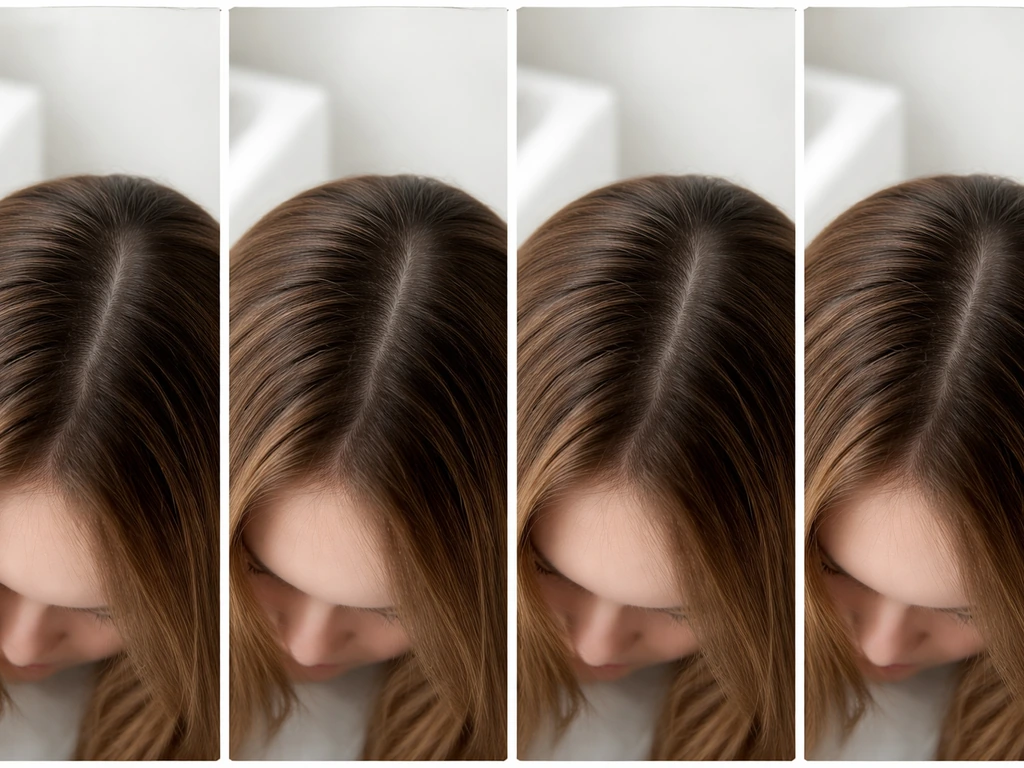
Hair grows around 1 cm per month on average, though research shows the real range sits anywhere from about 0.6 cm to over 3 cm per month depending on age, genetics, nutrition, and scalp health. For most people, 1 cm per month is a reliable planning number. That means if you currently have 15 cm of dyed hair, achieving a fully grown-out grey look takes roughly 12 to 18 months. Here's how the stages typically break down:
| Time from last dye | What you'll see | What helps most |
|---|---|---|
| Weeks 1–4 | Visible root line, up to 1 cm of grey | Root touch-up sprays or powders, parting changes |
| Months 2–3 | 2–3 cm of grey root, strong contrast | Toning shampoo, highlights, headbands, textured styling |
| Months 4–6 | 4–6 cm of grey, demarcation line midshaft | Balayage blending, protective styles, regular trims |
| Months 7–12 | Grey length now dominant, old dye near ends | Glossing treatments, moisture focus, optional trim to remove ends |
| 12 months+ | Fully grey or very close | Final cut to remove remaining dyed ends if desired |
If you have a shorter cut, like a pixie or a bob, you may be fully grown into grey in six to twelve months. If you're growing out a longer style, the line can persist for over a year. Be honest with yourself about your starting length so you're not surprised at month four. The goal isn't to rush it. It's to look intentional at every stage.
Scalp and hair-care steps to support regrowth and reduce breakage
Grey hair is structurally different from pigmented hair. Research confirms that the loss of pigment changes the actual fibre properties of the hair strand, and grey hair tends to be coarser, more porous, and less flexible. That means it's more prone to dryness and breakage, especially where the grey root meets previously dyed (and often chemically processed) hair. Building your routine around protecting that transition zone is the single most useful thing you can do during a lockdown grow-out.
Washing frequency and technique
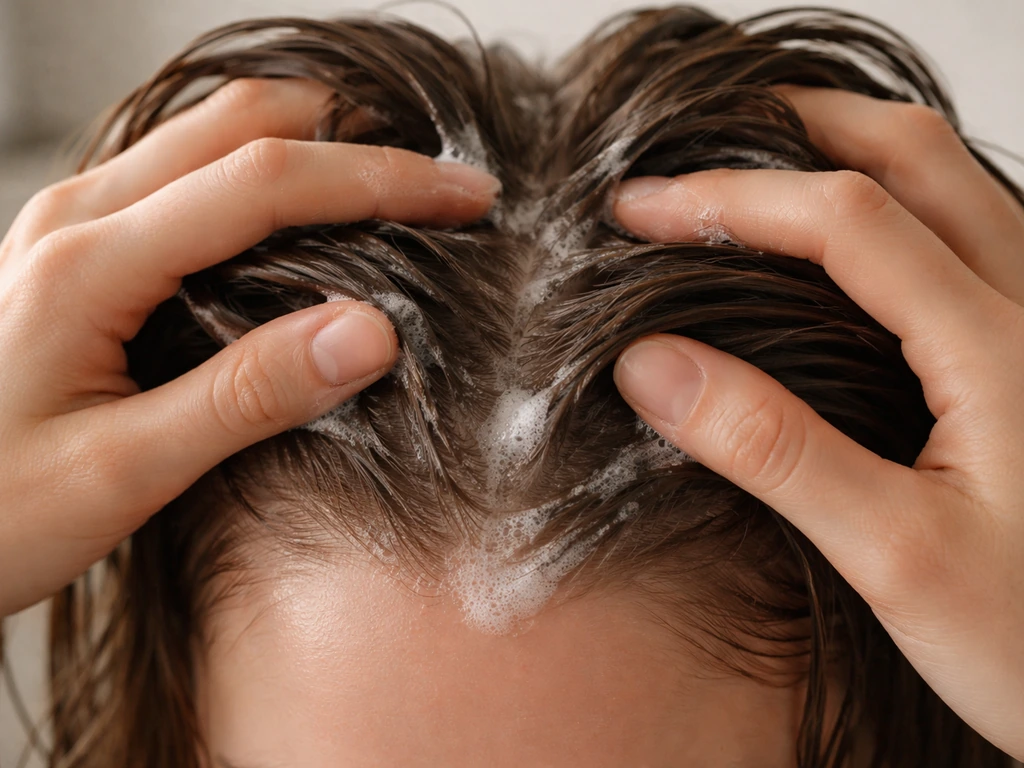
Washing too frequently strips natural oils that grey hair needs more than ever. Washing too infrequently can cause buildup that blocks follicles and makes hair look dull. For most people growing out grey, washing two to three times per week is the practical sweet spot. Dermatologists cited in The Washington Post note that washing frequency varies widely depending on the person. When you do shampoo, focus it on your scalp only. Letting the suds rinse through the lengths is enough. Putting shampoo directly on the ends, particularly dyed ends, causes dryness and breakage. Conditioner is the opposite: apply it from mid-shaft to tips, not on the scalp.
Reducing breakage at the transition zone
- Never brush hair when it's wet. Wet hair is structurally weaker and significantly more prone to snapping. Use a wide-tooth comb or your fingers to gently detangle, starting at the ends and working upward.
- Use a leave-in conditioner or detangling spray on damp hair before any combing. This is especially important at the transition zone where grey meets dyed.
- When using a blow dryer, use the lowest heat setting. High heat degrades the hair cuticle surface and accelerates breakage at already-fragile points.
- Minimise flat irons and curling irons. If you use them, apply a heat protectant first, every single time.
- Avoid tight hairstyles like severe ponytails or buns at the same spot every day. Repeated tension on the hairline causes traction-related shedding over time.
- Sleep on a satin or silk pillowcase or use a satin hair wrap. Cotton friction overnight causes real cumulative damage.
Products worth using during lockdown
- A purple or blue toning shampoo: use once a week to neutralise any yellow or brassiness in both the grey root and lightened dyed sections.
- A deep conditioning mask: use once a week on the mid-lengths and ends. Grey hair responds well to heavier moisture than pigmented hair.
- A lightweight scalp oil or serum: a small amount massaged into the scalp two or three times a week encourages circulation without weighing roots down.
- A protein treatment: if your hair feels limp and stretchy rather than snapping, it needs moisture. If it snaps immediately with no elasticity, it needs protein. Alternate based on how your hair feels.
- A root touch-up spray or powder: not a permanent fix, but genuinely useful between weeks one and three when the contrast is fresh and harsh.
Haircuts and styling options while growing out (awkward stages included)
The awkward phase is real and it peaks differently depending on your starting cut. The key is making the grow-out look deliberate at each stage rather than like you simply forgot about your hair. Different starting points need different strategies.
Growing out a pixie or buzz cut into grey
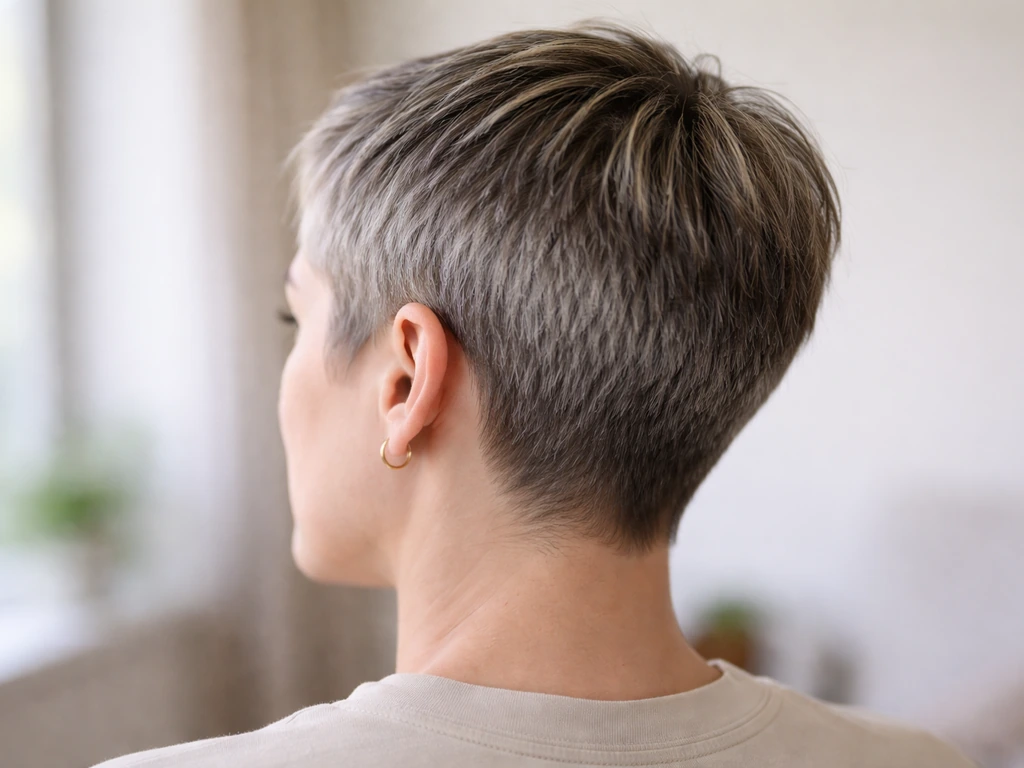
This is actually the fastest route to a fully grey look because there's less dyed length to grow out. The awkward phase for a pixie usually hits around months two to four when the sides and back get shaggy. At-home trimming around the ears and neckline with small scissors keeps it looking intentional. Let the top grow without touching it so you maintain length there for future styling options.
Growing out a bob or short cut
A bob is one of the harder transitions because the blunt line of the cut makes the demarcation between grey root and dyed length very visible. Texturising the ends with a razor comb (if you can get hold of one) or asking for a soft layered cut at your first available salon appointment softens the line considerably. In the meantime, centre-parted styles and loose waves disguise hard lines much better than sleek, straight styling.
Growing out bangs or a fringe into grey
Bangs go grey faster visibly because they frame your face and the contrast is right at eye level. Pinning them back or incorporating them into a soft side-sweep as they grow through is the easiest approach. If you're growing bangs out simultaneously, a small clip or bobby pin at the side while they're in the in-between stage keeps them from flopping awkwardly.
Growing out layered cuts and undercuts
Layered cuts actually help during grey grow-out because the layers break up the demarcation line visually. Undercuts are trickier because the shaved section grows in with a very obvious line. Keeping the shaved area freshly trimmed (even at home with clippers) while the top grows is more manageable than trying to grow everything out simultaneously. Consider transitioning the undercut to a tapered fade as the first step, which you can revisit at the first available barbershop appointment.
General styling tricks for any awkward stage
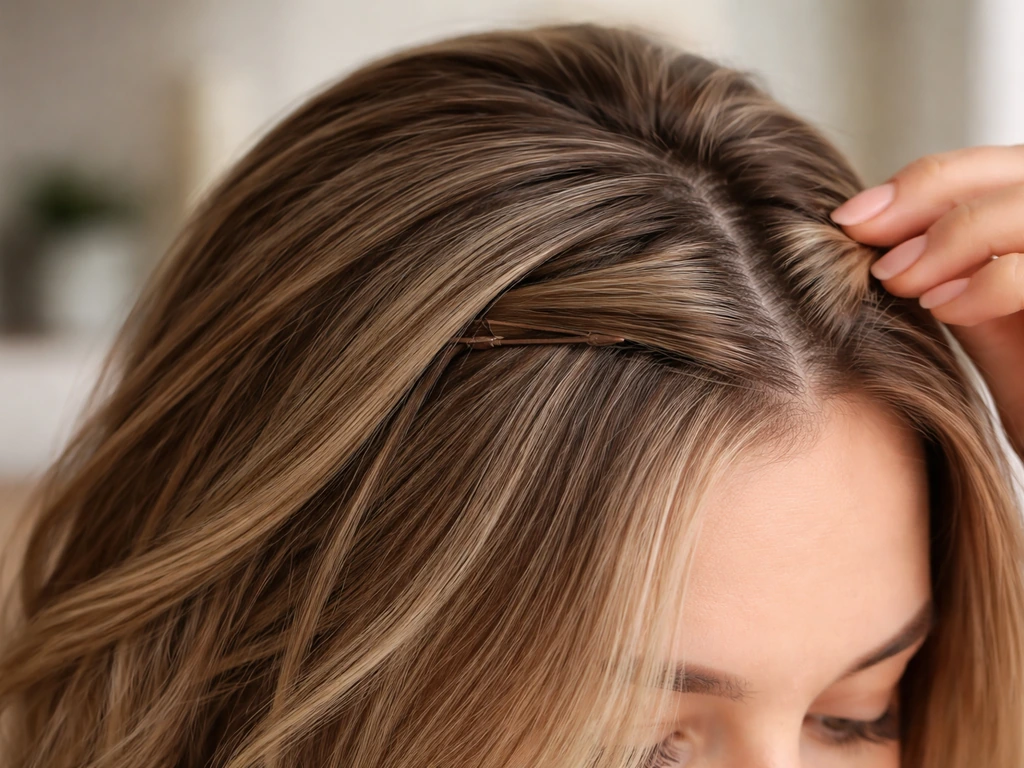
- Change your parting. A different part position breaks up a visible line and adds volume at the root.
- Loose braids, twists, and low buns redistribute where the contrast sits, making it less obvious.
- Textured, wavy, or curly styling consistently outperforms sleek, straight styling at disguising grow-out lines.
- A wide headband or scarf can bridge months two and three while you wait for the root to develop enough length to blend.
- Dry shampoo at the roots adds volume and slightly diffuses the colour contrast between grey and dyed sections.
How to blend grey with color, highlights, and root coverage safely at home and with a pro
Blending is where most people make expensive or damaging mistakes, particularly when doing it at home during lockdown. The approach you take depends on how much contrast you're dealing with and how much risk you're comfortable with.
Low-commitment options (lowest risk, best for lockdown)
- Root touch-up sprays and powders: temporary, wash out, no damage, and genuinely good at buying you two to four weeks of breathing room.
- Toning shampoos and conditioners: purple or silver formulas neutralise brassiness in both grey roots and blonde-leaning dyed sections without any chemical processing.
- Glossing treatments: semi-permanent clear or tinted glosses (available at pharmacies and online) add shine and slightly unify the tone between grey and dyed sections without commitment.
At-home colour options (moderate risk, patch test required)
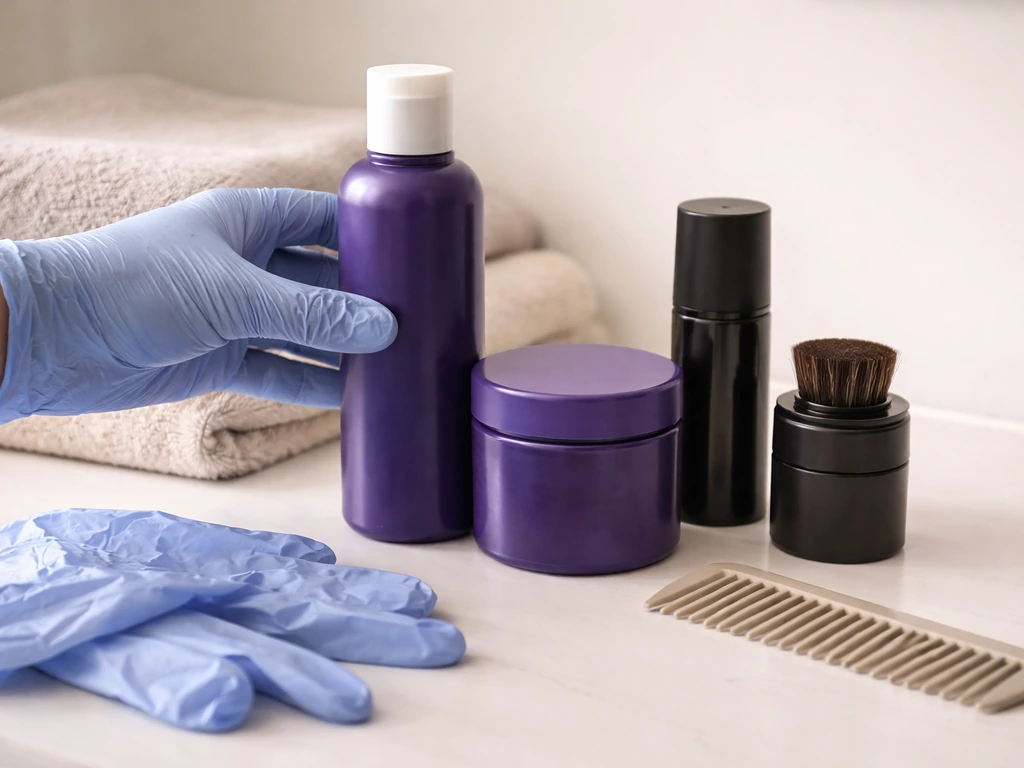
If you want to use an at-home dye or semi-permanent colour during lockdown, patch testing is non-negotiable. Both the FDA and the AAD specifically advise doing a patch test before every hair dye application, even if you've used the same product before. Allergies can develop at any point, and reactions to paraphenylenediamine (PPD), one of the most common allergens in permanent hair dye, can range from mild redness to severe blistering. Apply a small amount of the mixed dye behind your ear or on your inner elbow, leave it for 24 to 48 hours, and check for any itching, redness, or swelling before proceeding.
For blending rather than covering, semi-permanent dye is safer than permanent because it contains no ammonia and minimal peroxide. It won't dramatically lighten the existing dyed hair, but it can soften the line between grey root and darker dyed lengths. Avoid applying permanent dye to hair that's already been chemically lightened without professional guidance: the combination dramatically increases breakage risk.
Professional options to book at your first opportunity
- Highlights or a balayage painted through the mid-lengths and ends to lighten the dyed section closer to the grey root tone: this is the single most effective professional technique for closing the contrast gap.
- A toner or gloss applied over both grey and dyed sections to create a unified tone across the whole head.
- A lowlight through the grey root section to add depth and make the root blend into the dyed length rather than sitting on top of it.
- A 'big chop' if you're ready: cutting off the dyed ends at a shorter length accelerates the transition dramatically and is worth discussing with your stylist.
Managing texture changes, shedding, and common setbacks
Grey hair genuinely behaves differently from pigmented hair. The structural changes that come with pigment loss mean the cuticle surface can be rougher, the strand can be coarser or wiry, and moisture retention is often lower. This isn't damage you caused. It's a normal biological shift. But it does mean your old routine may stop working well, and that's often the first thing that catches people off guard during a grow-out.
Texture changes
If your grey root feels wiry or coarser than your dyed hair, increase your conditioning routine rather than adding heat to smooth it. Heavy conditioners and hair oils (argan, jojoba, or coconut applied sparingly to the lengths) help tame coarse grey texture without the damage of repeated straightening. Some people find their grey hair is actually finer and more fragile than their pigmented hair was, rather than coarser. In that case, volumising products and avoiding heavy oils are a better approach.
Shedding
Noticing more hair in the shower or on your brush during lockdown is common and often stress-related rather than a direct result of the grow-out. Significant life stressors, including the kind that lockdown reliably delivered, can push more hairs into a resting phase simultaneously, leading to a shedding period two to three months later. This is known as telogen effluvium and it typically resolves on its own. If shedding is dramatic or patchy rather than diffuse, that warrants a GP or dermatologist conversation. For ordinary elevated shedding, maintaining scalp health, eating well, and being gentle during detangling are the most practical responses.
Common setbacks and how to recover
- Breakage at the transition zone: usually caused by moisture imbalance or rough handling. Add a weekly deep conditioning mask and stop brushing wet hair.
- Brassy or yellow grey: use a purple toning shampoo once a week. Leave it on for three to five minutes rather than rinsing immediately for a stronger effect.
- A patch test reaction to at-home dye: stop immediately, rinse thoroughly, and avoid that product. See a GP if the reaction is severe. Do not retry without professional allergy testing.
- A home colour that turned out too dark or patchy: leave it alone for at least four weeks before attempting to adjust it at home. A professional correction at the first available appointment is a much safer route than layering more product on compromised hair.
- Motivation crash around month three or four: this is the most common point where people give up and re-dye. It helps to take monthly photos so you can see progress that's invisible day-to-day.
Confidence, maintenance routine, and when to reconsider a plan
Getting through a grey grow-out during lockdown is as much a confidence exercise as a practical one. The most useful thing you can do on a day-to-day basis is have a simple routine that takes the decision-making off the table. Here's a realistic maintenance structure:
Weekly maintenance routine
- Wash two to three times per week with a gentle or sulphate-free shampoo, focusing product on the scalp only.
- Apply a purple toning shampoo once per week in place of your regular shampoo, leaving it on for three to five minutes.
- Condition from mid-shaft to ends every wash. Use a deeper mask in place of standard conditioner once per week.
- Apply a leave-in conditioner or detangling spray to damp hair before combing. Use a wide-tooth comb or fingers only, starting from the ends.
- Dry on a low heat setting or air dry where possible. Apply a heat protectant before any styling tool use.
- Massage the scalp gently for a few minutes two to three times per week to support circulation.
Monthly check-ins
Once a month, take a photo in the same light and compare it to the previous month. It's genuinely hard to see growth and change day-to-day but easy to see it month-to-month. This keeps you motivated through the phase where progress feels invisible. Also reassess your products monthly: as the ratio of grey to dyed hair shifts, you may need more moisture, less toning, or a different styling approach.
When to change the plan
Full grey grow-out isn't the only valid outcome. If at month four or five the contrast is genuinely affecting your day-to-day confidence and the end of lockdown restrictions isn't imminent, it's reasonable to use a semi-permanent dye to blend things down rather than continuing cold turkey. This is a low-damage middle ground, not a failure.
Similarly, if you have access to a salon, a single professional balayage session to soften the demarcation line can make the remaining months of grow-out much easier to manage. And if you decide the full grey look isn't for you after all, that's also a legitimate choice. The point of this process was always to give yourself the information to make that call intentionally, not because the awkward phase defeated you.
Your next steps checklist
- Today: take a baseline photo and note your current hair length and when you last coloured. This is your starting point.
- This week: swap to a gentle sulphate-free shampoo, add a purple toning shampoo to your routine, and pick up a deep conditioning mask.
- This week: patch test any at-home colour product you're considering using, even if you've used it before.
- Month one: style around the root contrast using texture, parting changes, or a root powder. Resist the urge to re-dye.
- Month two to three: assess the contrast honestly. If it's manageable, continue. If it's not, consider a semi-permanent blend or low-ammonia gloss.
- Every month: take a progress photo, reassess your product routine, and trim any split ends at home with sharp scissors if needed.
- At your first salon opportunity: book a consultation for balayage, toning, or a trim to remove dyed ends. Bring your photos to show the stylist your timeline.
The grow-out is a process, not an event. Some months will feel harder than others, particularly around months two to four when the line is most visible but the grey isn't long enough to wear confidently yet. That phase passes. If you're also navigating questions about how to handle the line itself or whether to blend it more gradually, those are worth exploring in more detail depending on your specific starting point.
If you are trying to figure out how do you secretly grow out gray hair, blending gradually is often the easiest way to reduce the obvious line whether to blend it more gradually. But the foundation is always the same: protect what you have, be realistic about the timeline, and make each stage look as intentional as possible.
FAQ
How do I decide whether to wash 2 times or 3 times per week while growing out grey hair?
Wash timing can be adjusted based on your scalp, not a fixed rule. If you get oily quickly or your roots feel itchy, move toward the higher end (3 times weekly), and if you get dry buildup or squeaky ends, stay closer to 2 times. Always shampoo the scalp only, and rinse thoroughly so old product residue does not make the grey look dull under indoor lighting.
Can I use clarifying shampoo to help the grey blend better, or will it make dryness worse?
Yes, but focus on what changes the look without damaging the strand. Use a clarifying shampoo only occasionally if you notice dullness from product buildup, then follow immediately with a deep conditioner or mask. Avoid frequent “degreasing” washes, because grey hair tends to lose moisture faster once the cuticle is dry.
What hairstyle tricks actually reduce the look of the grey line during the awkward months?
Try a cut-and-style plan that minimizes the grow-out line at eye level. When the line is most visible (often months 2 to 4), use a centre part only if your hair naturally falls to blur it, otherwise switch to a slight off-centre part or soft waves. Heat should be limited, and if you do use it, use a protectant and lower the temperature to avoid making the transition zone feel rougher.
Is it ever worth trying to lighten the dyed lengths at home to speed up the grey transition?
If you already dye your hair, you generally want to avoid “re-lightening” during lockdown. Bringing previously dyed, chemically lightened lengths further lighter increases breakage risk and can make porosity uneven. A safer approach is blending with semi-permanent or using a professional when available to match the tone rather than trying to lighten the existing dye at home.
If I’ve used the same dye brand before without issues, do I still need a patch test during lockdown?
Patch testing is needed even if you used the same product before because sensitivity can develop later. If your skin reacts, do not proceed, and do not mix products or “combine shades” to compensate. If you want to blend sooner, consider non-dye options like regular trims and texture changes, then revisit colouring only when you can patch test successfully.
How do I choose a toner shade to blend grey without making it look dull or too ashy?
For many people, the best blending outcome comes from gradual toning rather than covering. If you notice brassiness, choose a toner or semi-permanent shade that cools the grey without depositing heavy colour on the lengths. Apply carefully, keep it away from the scalp, and stop if the grey looks over-toned, because over-correcting can make it look grey-green or dull.
What should I change in my routine if my grey hair feels different than expected (coarser vs finer)?
Not always. Grey hair can feel either coarser or finer depending on the person, and the right product changes with that texture. If your hair feels wiry or rough, lean toward heavier conditioners and occasional oils on the very ends only. If it feels fragile or limp, use lightweight conditioning, focus on volume at the roots, and skip heavy oils that can weigh it down.
At what point does increased shedding during lockdown stop being normal and need a doctor check?
If shedding is diffuse and you are otherwise healthy, telogen effluvium often settles as stress eases and hair cycles normalize. Track shedding for 6 to 8 weeks and look for a “trend down” rather than day-to-day spikes. If you see bald patches, scalp pain, intense itching, or shedding that keeps worsening, get medical advice.
Why does my grey line look worse on camera than in the mirror, and what can I do about it?
Video-call lighting exaggerates the demarcation, especially with overhead lights. Test your blend in the same type of light you use most, take a photo in daylight and one indoors, and compare month to month. If the line is harsher on camera than in person, switch your part, try softer waves, and consider a small semi-permanent blend rather than frequent full re-dyes.
How often should I trim at home to keep the grow-out looking deliberate without slowing progress?
If you trim only to maintain shape, you can keep the awkward stage looking intentional without losing growth. Focus on removing split ends and tidying the perimeter (ears and neckline) using small scissor snips, avoid heavy shaping every week, and keep your top length mostly untouched so you still get future styling options.