
If you are genuinely torn between cutting and growing, the honest answer is: commit to growing for at least 3 months before you decide anything. Hair grows roughly half an inch per month, so three months gives you enough new length to see real options forming. If you are starting from a pixie, buzz cut, or very short bob, that 3-month mark is your first realistic reassessment point. If you are growing out bangs, expect 4 to 6 weeks of truly awkward, and a full 6 to 12 months before they fully blend into the rest of your hair. Knowing the timeline upfront is the single biggest thing that stops people from rage-cutting their way back to square one.
Should I Cut My Hair or Grow It Out Quiz Guide

Marcus Vickers
13 May 2026
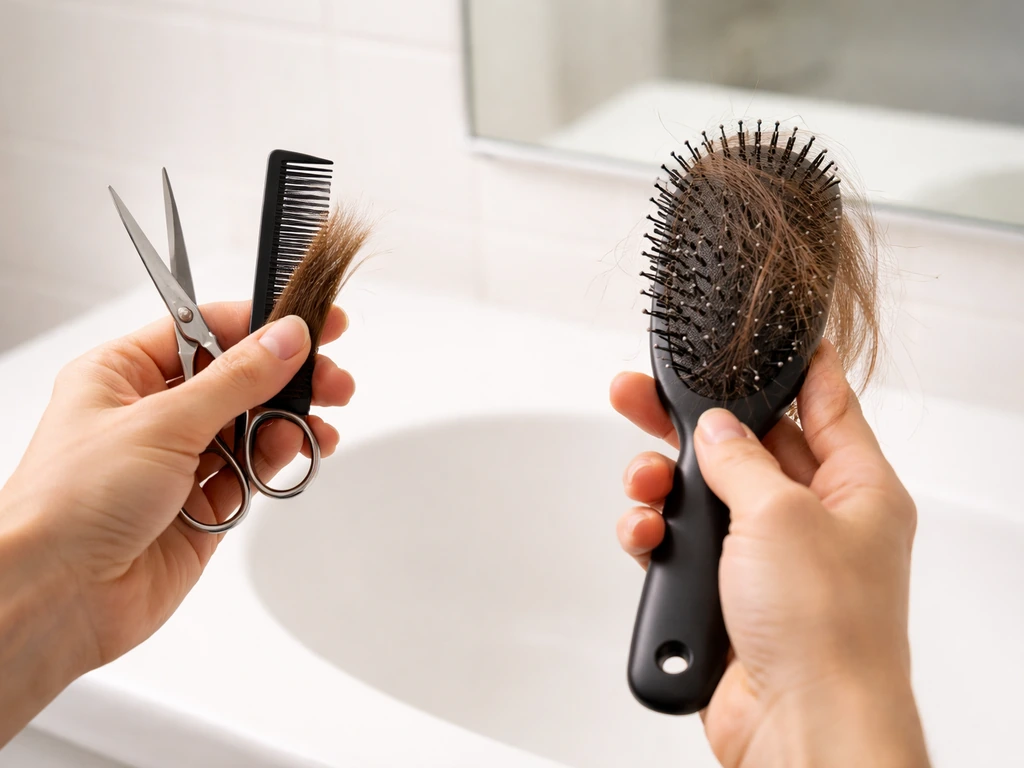
The cut vs. grow quiz: answer these questions first
A quiz is just a structured way to surface what you already know about your hair and your life. Work through these questions honestly and your answer will usually be obvious by the end.
- How much time do you spend styling your hair right now? If the answer is 'almost none' and a grow-out requires more daily effort, is that actually something you will do?
- What is your starting point? Pixie, buzz, bob, bangs only, undercut, or layered mid-length? Each has a different awkward phase and a different 'it looks good again' timeline.
- Do you have a specific length goal, or are you just bored with your current cut? Boredom alone is not a reason to grow; it often resolves with a fresh version of your current style.
- How is your hair's health right now? If it is dry, brittle, or full of split ends, growing without trimming will make it look worse, not better.
- Are you dealing with color regrowth, gray transition, or a previous bleach job? Color adds a whole extra layer of timing to your decision.
- Can you handle 2 to 4 months of hair that looks 'in between' and does not suit any particular style? If that genuinely sounds unbearable, a strategic trim may actually serve the grow-out goal better than gritting your teeth.
- Do you have a real occasion or deadline within the next 6 months? If so, factor in that hair grows approximately 3 inches in 6 months, which is helpful but not transformative.
If most of your answers point toward patience, commitment, and a clear length goal, grow it out. If most of them reveal low tolerance for maintenance or an unclear goal, a clean, intentional cut is the smarter move right now. Neither answer is wrong; the problem is choosing grow-out and then quitting at month two, which wastes time and often means cutting off more than you would have otherwise.
How gender and hair type shift the math
The biology of hair growth is the same for everyone: roughly 0.5 to 1.7 cm per month depending on genetics, age, health, and stress. But the social and styling context varies a lot, and that changes which phase feels most difficult and when you hit your first usable length.
For women growing from short cuts
Growing from a pixie or short bob is a 12 to 24 month project to reach shoulder length, full stop. The worst phase for most women is months 3 through 6, when the back and sides have grown past their original shape but have not reached a clean bob line. This is the phase that sends people back to the salon for a cut they immediately regret. The styling strategies in a later section below will get you through it, but you need to know it is coming.
For men growing from a buzz or short fade
Men growing from a buzz or tight fade hit their worst phase around weeks 6 to 10, when the hair is long enough to look unkempt but not long enough to style. The sides and back usually grow faster-looking than the top because the contrast is so stark. Maintenance trims to the sides every 6 to 8 weeks, without touching the top, are the standard approach and they genuinely help. If you have an undercut or a hard part growing out, plan on a longer awkward window (more on that below).
Hair texture makes a real difference
Curly and coily hair shrinks significantly as it grows, so length gains look smaller than they are. A full inch of growth on 4C hair may look like almost nothing until it reaches a certain density. The upside is that curly textures tend to hide the awkward in-between phases better than straight or fine hair, because the natural volume and texture provides shape at almost any length. Fine, straight hair, on the other hand, shows every awkward length transition immediately.
If that is you, hair accessories, dry shampoo, and a good texturizing spray will become your best friends for about 4 months. Thick hair tends to get bulky and heavy during grow-out, so thinning or debulking at the ends (not shortening the length) helps manage the shape.
Realistic timelines: when does it actually start looking right
Here is what the actual stages look like by starting point. These are based on average growth of about half an inch per month, so adjust up or down slightly for your own growth rate.
| Starting point | First usable style appears | Full awkward phase ends | Reaches shoulder length |
|---|---|---|---|
| Buzz cut (close-cropped) | 8–10 weeks | 4–6 months | 18–24 months |
| Pixie cut | 3–4 months | 6–8 months | 14–18 months |
| Short bob (at chin) | 2–3 months | 4–5 months | 8–12 months |
| Bangs only (rest of hair long) | 4–6 weeks (early blend) | 6–12 months (full blend) | N/A |
| Undercut (shaved sides) | 6–10 weeks (sides) | 8–12 months | Varies |
| Layered mid-length | 2–3 months | 4–6 months | Already there or close |
The 'first usable style' column is the point where you can do something intentional with your hair rather than just tolerating it. That is your first real reassessment checkpoint, not a reason to cut. The 'full awkward phase ends' is when the grow-out stops feeling uncomfortable and starts feeling like a normal haircut at a new length.
Getting through the awkward phases without giving up
The awkward phase is real, it is predictable, and it is survivable. The key is having a small toolkit ready before you hit each one, rather than improvising in front of the mirror at 7am.
Months 1 and 2: the 'nothing works' window

This is when hair is past its original shape but has no new shape yet. The goal here is not to look great; it is to not look unkempt. Headbands, textured products (a small amount of wax or clay for short hair, or sea salt spray for longer hair), and a willingness to try hats or beanies if your lifestyle allows are your tools. For women growing a pixie, the back of the hair often needs a light neck trim at week 6 to 8 to keep it from looking shaggy while the top catches up. This is not a setback; it is smart grow-out management.
Months 3 and 4: the first usable checkpoint
By month 3 you usually have enough length to make a real styling decision. For short-to-medium grow-outs, this is when a bob tuck, a slicked-back look, or a simple low ponytail becomes possible. For bangs, this is roughly when a face-framing or curtain-bang style becomes achievable as a transition shape. This is also the moment most people impulsively cut, because the hair is not yet 'long' but is no longer 'cute and short' either. Hold on. You are at the hardest part, but you are through the worst of it within a few more weeks.
Months 5 through 8: actual progress
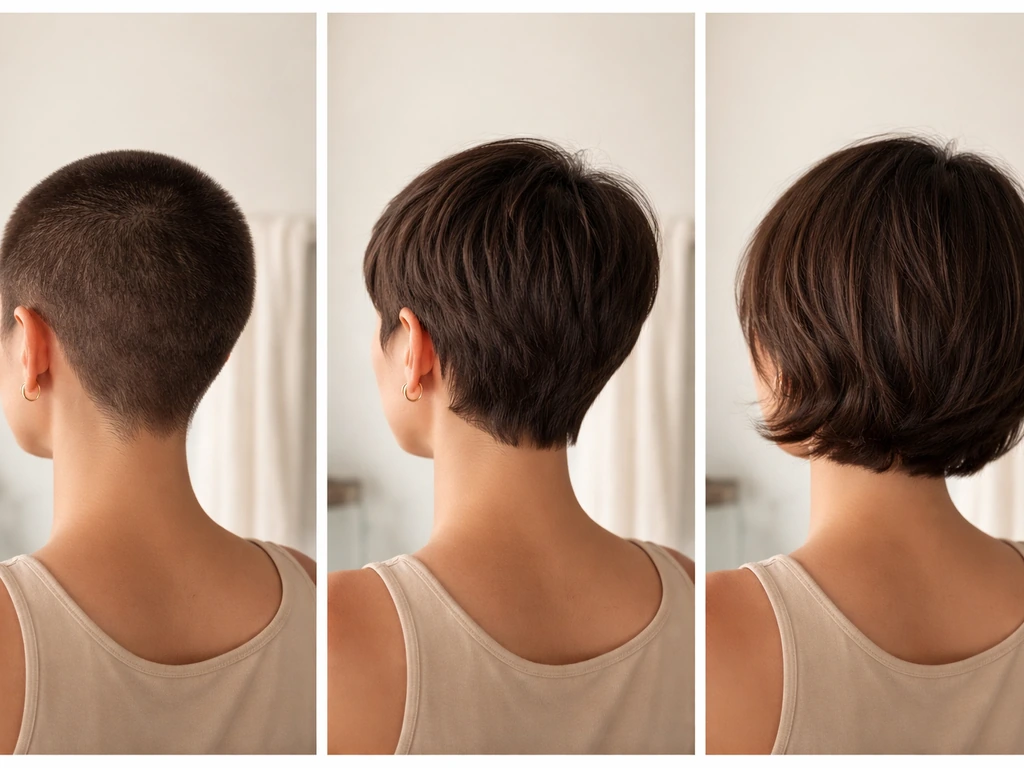
By month 5 or 6, most starting points have entered a genuinely workable length range. Hair that started at a pixie is approaching a short-to-medium bob. Hair growing from a buzz is reaching a shaggy medium style that can be shaped with product or a light stylist visit. For the first time, the grow-out starts feeling intentional rather than accidental. Keeping up with trims every 6 to 8 weeks from this point forward is worth it, because split ends that go untreated will break off, stealing the length gains you have worked months for.
Styling strategies for every transition scenario
Growing out bangs
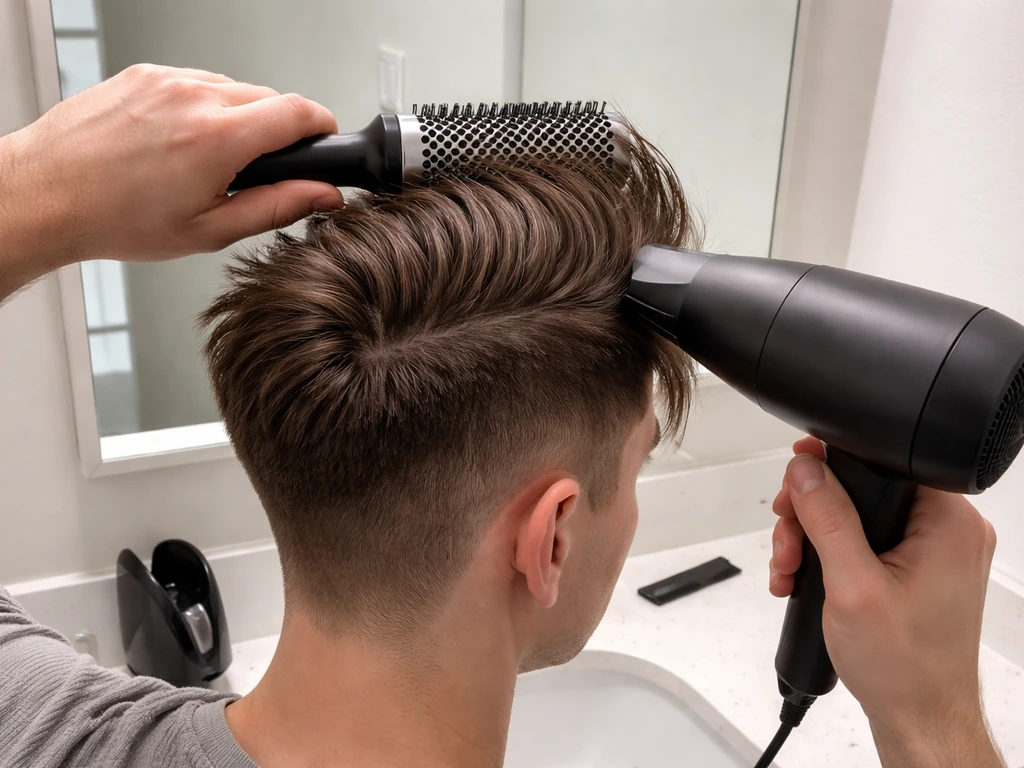
The first 4 to 6 weeks are the hardest. Bangs that are growing out land awkwardly across the forehead and resist lying flat. The most practical daily approach is to blow-dry them in the direction you want them to go immediately after washing, while they are still damp. Even if the rest of your hair air-dries, take 2 minutes to direct the bangs.
Dry shampoo at the roots helps control the greasy-heavy look that happens when bangs get too long for their original cut. As they reach the cheekbone area (usually around months 2 to 3), you have the option of transitioning to curtain bangs, which blend into the rest of the hair much more gracefully. A bang trim every 6 to 8 weeks from a stylist during this phase keeps the shape intentional rather than ragged.
Full fringe can take 6 to 12 months to fully blend in, so plan for the long game.
Growing out an undercut or faded sides
Undercuts growing out create a visible line between the shaved or clipper-cut section and the longer hair above it. For the first 6 to 10 weeks, this line is stark and tends to look like a mistake rather than a style. The practical fix is to ask your stylist to debulk the area just above the undercut line at each visit, blending the transition rather than letting it grow as a hard demarcation.
A geometric undercut tutorial from American Salon also recommends debulking to remove bulk in the regrowth area so the transition can be shaped with clipper attachment lengths debulk the area just above the undercut line at each visit. Slicking the sides down with a medium-hold product can also help during the early weeks.
By months 3 to 4 the line softens naturally, and by months 6 to 8 most undercuts are no longer distinguishable in the overall shape.
Managing layers as they grow out
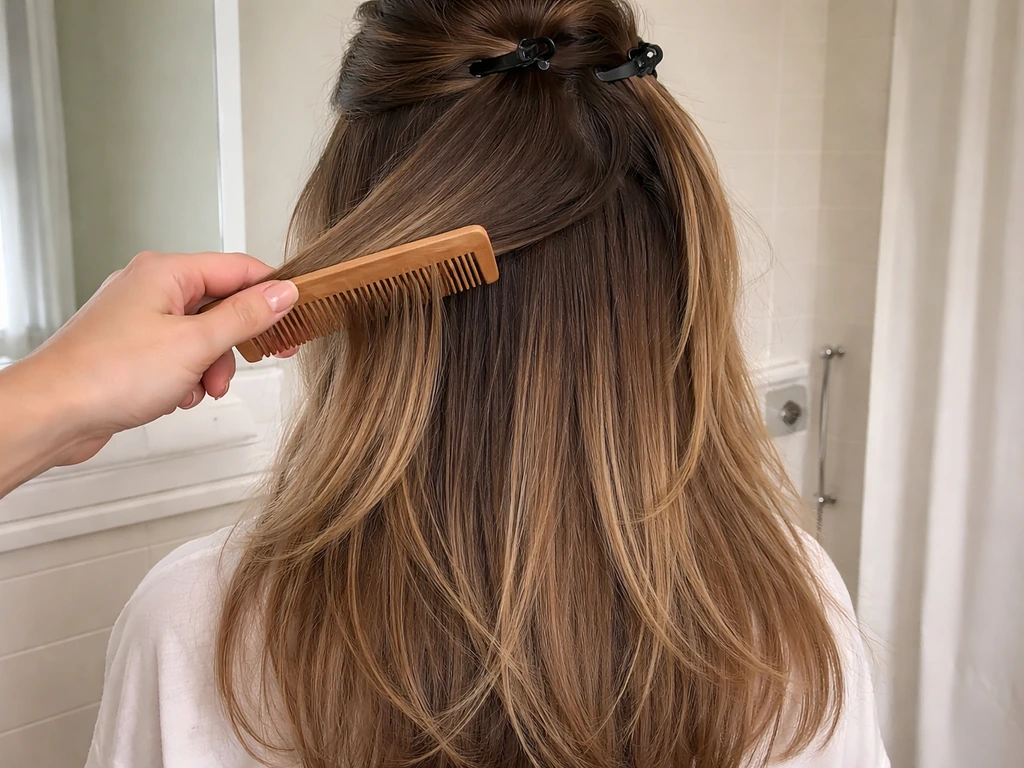
Layers that are growing out tend to create a triangle or pyramid shape (wide at the bottom, shorter sections on top) before they reach a uniform length. This is the frustrating phase for most mid-length grow-outs. The solution is not to cut the layers back in; it is to use a round brush and blow-dryer to smooth and redirect volume, and to ask your stylist for minimal interior layers that reduce bulk without shortening the perimeter. Long layers added strategically can make the grow-out look intentional for months.
Stage-by-stage styling toolkit
| Growth stage | What you are dealing with | Daily styling fix | Stylist move |
|---|---|---|---|
| Weeks 1–6 (very short) | Past original shape, no new shape | Texture product, headband, hat | Light neck/nape trim only |
| Months 2–3 (short/medium) | Piecey, uneven, frizzy at ends | Sea salt spray, bobby pins, slick-back | Tidy split ends only, no length |
| Months 3–5 (mid) | First ponytail territory; layers fighting back | Round brush blowout, texturizer | Interior debulking, no perimeter cut |
| Months 5–8 (medium) | Real styling options appear | Normal routine + moisturizing mask weekly | Light dusting every 6–8 weeks |
| Months 8+ (medium/long) | Length is working; ends need care | Full routine; oils at ends | Trim every 8–10 weeks |
Special cases: color, gray transition, and natural regrowth
Growing out colored or highlighted hair
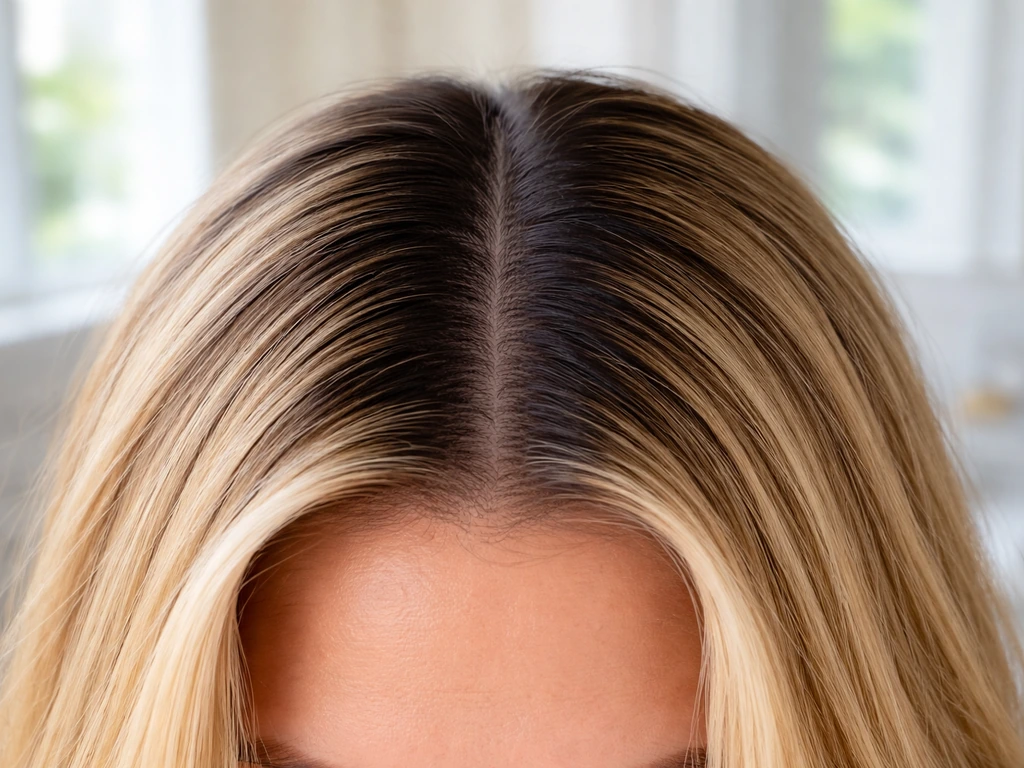
Root regrowth becomes visible after about 6 to 8 weeks, which is also when most people start to feel the itch to do something. If you are growing your hair out while also trying to maintain color, you are managing two timelines at once. Highlights that are refreshed every 8 to 12 weeks can actually help the grow-out look more natural, because the lighter pieces soften the contrast between new growth and previously colored lengths. If you are trying to grow out bleached hair specifically, the safest approach is to do a gloss or toner treatment (not another bleach application) at each visit, and let a stylist gradually shift the color placement downward toward the ends over 6 to 12 months.
Transitioning to gray or natural color
This is one of the most committed grow-out decisions you can make, and it requires patience with an intentional plan. A common rule of thumb is to start the gray transition once you have at least 2 inches of natural growth, so there is something to work with. Gray blending techniques (like babylights or a shadow root) soften the contrast line between dyed and natural hair and can make the transition feel designed rather than accidental.
Root touch-up sprays between salon visits help manage the visible line while your natural color grows in. Budget roughly 6 to 12 months for a full transition from permanent color to fully natural or gray, depending on how fast your hair grows and how much length you are willing to cut as you go.
Growing out after postpartum shedding or thinning
If your hair is thinning or has shed significantly (from postpartum changes, stress, or health reasons), the decision framework shifts somewhat. If you are asking specifically about thinning, you can still consider growing out, but it helps to tailor the plan to your density and growth pattern. Growing out thinning hair is often still a viable goal, but the styling strategies and trim schedule need to account for density, not just length.
Thicker hair textures can mask thinning for longer; finer or straight hair will show density loss more prominently at longer lengths. A realistic conversation with a stylist about your specific density and growth pattern is worth having before committing to a long grow-out if thinning is a major concern.
When cutting is actually the right answer
Growing it out is not always the smart move, and there is no shame in cutting if the circumstances genuinely call for it. Here are the situations where cutting serves the goal better than grinding through. If you are considering whether to shave your head to grow it out, weigh the real timeline and maintenance trade-offs first shave my head to grow it out.
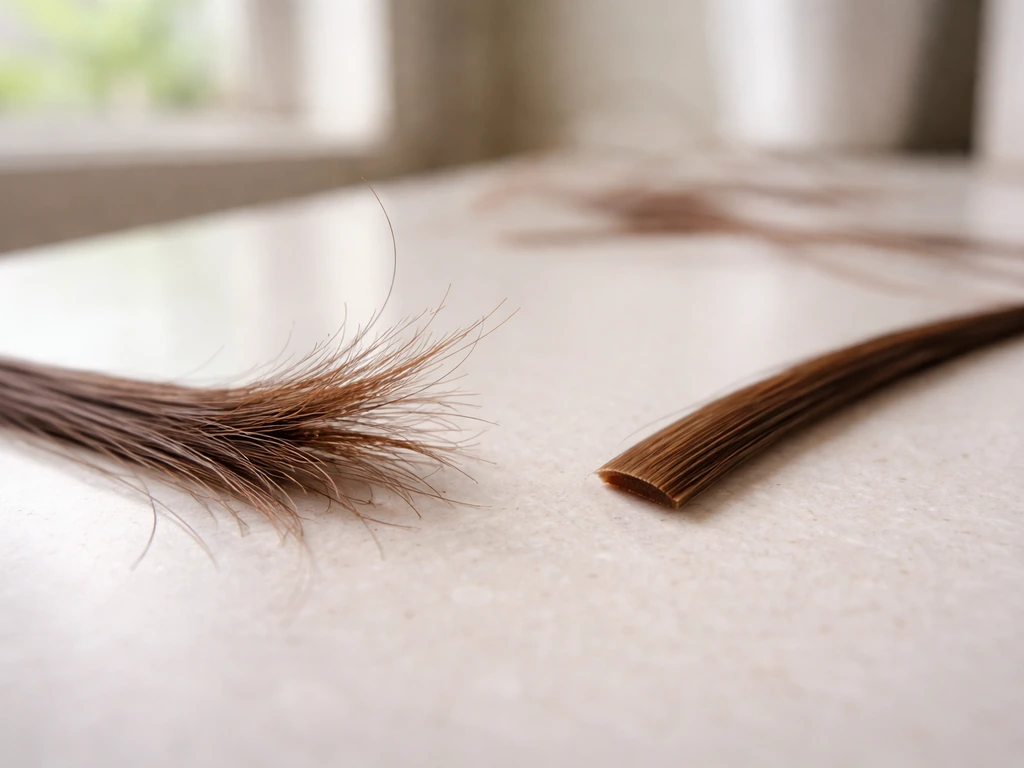
- Your ends are badly split and breaking off: split ends cannot be repaired once they form, and breakage at the ends means you are losing the same length you are growing. A 1 to 2 cm trim every 6 to 8 weeks ('baby trims') preserves more length over time than letting breakage continue.
- You are at month 2 or 3 of a grow-out and genuinely miserable: if the awkward phase is affecting your daily confidence in a real way, a clean, intentional cut back to the previous shape resets you without burning the goal. You can start a more prepared grow-out in a few months with better tools in place.
- Your current grow-out has no clear destination: if you do not actually know what length you are growing toward, you are more likely to quit. Cutting to a clean baseline and then setting a specific goal (for example, collar-length bob by next spring) is more productive than aimless growing.
- Your hair has significant chemical damage from bleach or overlapping color: sometimes the healthiest move is a reset cut that removes damaged sections and lets you start fresh from stronger hair.
- You have a major event in 6 to 8 weeks and your hair currently looks unintentional: a skilled stylist can sometimes shape an awkward grow-out into something wearable, but if that is not an option, a clean cut that suits your face right now is a better call than showing up with in-between hair at something important.
The key distinction is between maintenance trims (which support the grow-out goal and should happen every 6 to 10 weeks regardless) and reset cuts (which start you over). Both are valid. The one to avoid is an impulsive cut mid-awkward-phase that is driven by frustration rather than a real plan. That is the cycle that keeps people at the same length for years.
Your actual next steps, this week
If you have worked through this and you are committing to growing: book a stylist appointment within the next 2 weeks, not to cut length, but to assess your ends and get a trim plan. Tell them your goal length and ask them to help you grow toward it with strategic trims every 6 to 8 weeks. Then stock your bathroom with a texturizing spray, dry shampoo, and at least two or three hair accessories (bobby pins, a claw clip, a headband) so you have options during the awkward phase rather than just staring at it.
If you are going to cut: make it intentional. Pick a specific style, look up references before you go, and tell the stylist exactly what you want. A deliberate cut you love is always better than a reactive cut you regret by Thursday.
Either way, the decision gets easier once you stop treating it as permanent. Hair grows back. It grows slowly, and the in-between period is genuinely annoying, but it grows back. The goal is just to make a clear, informed choice today rather than going back and forth for another three months without any real progress.
FAQ
How do I tell if I should cut right now versus waiting until it starts looking usable?
If you are deciding based on the mirror right now, use a “usable style” rule instead of a vibe check. If you cannot create a repeatable look (ponytail, tucked style, curtain/framing direction for bangs) within 2 minutes after washing, you are usually still in the tolerance zone, not the decision zone. In that case, extending the grow-out by a few weeks is often smarter than cutting immediately.
When is the best point to reassess a grow-out decision?
For most people, the most productive time to reassess is around the first usable style milestone (often about 6 to 8 weeks) and then again near month 5 or 6 when the length starts feeling intentional. If your reassessment is happening earlier than that, it is usually because of maintenance gaps (ends, bangs direction, root control) rather than the grow-out being a bad plan.
What’s the difference between a maintenance trim and cutting that sets me back?
Don’t confuse “light trim” with “reset.” Maintenance trims should remove damaged ends, debulk if needed, and keep the perimeter working toward your goal, while reset cuts shorten enough that you basically restart the timeline. A good script is, “I want help managing shape, please remove only what is preventing healthy growth and do not cut the target length off.”
I’m growing out dyed hair, what should I do about root regrowth so it doesn’t look worse?
If you color your hair, you can usually prevent an obvious regrowth line without switching timelines. Ask your stylist for strategic refreshes that soften contrast (gloss/toner rather than new bleaching) and keep refresh intervals consistent, typically every 8 to 12 weeks for color work. This lets your grow-out progress look intentional while new growth catches up.
My hair feels bulky or looks flat during grow-out. How can I manage it without losing length?
If your goal is to keep length, prioritize debulking and shaping over shortening. For thick hair getting heavy, thinning or debulking at the ends can improve swing and reduce that bulky silhouette without losing overall length. For fine or straight hair that shows transitions fast, use lightweight texturizing products and accessories to create separation so you are not forced into cutting.
What are the biggest mistakes people make when growing out bangs?
If you are growing out bangs, the most common mistake is trying to “fix” them with frequent cutting. Instead, commit to a direction plan for the first 4 to 6 weeks, blow-dry bangs the direction you want right after washing, use dry shampoo to control oil when they get too long, and aim for stylist bang trims every 6 to 8 weeks to keep the transition clean.
My undercut is growing out and the line looks harsh. What should I ask my stylist for?
For undercuts or hard-part grows, you usually need blending work at each visit, otherwise the shaved line looks like a mistake for longer. Ask your stylist to debulk and blend the area just above the undercut line during appointments, and expect that the line softens over months as the overall shape evens out.
Should I still grow out my hair if I’m dealing with thinning?
If you have thinning or shedding, length alone is not the main success metric, density and distribution are. Plan for a longer consult that includes your growth pattern and density, because a grow-out can work but may need different styling and trim frequency. If your density is uneven, consider a plan that supports volume at the scalp (not just hiding with length).
How can I prevent myself from rage-cutting during the awkward phase?
If you are tempted to cut because the awkward phase feels unmanageable at work or in social settings, make the plan environment-specific. Store at least a few fast options (claw clip, bobby pins, headband) so you can switch looks in seconds rather than improvising. The goal is to prevent “emotional cutting,” which usually happens when styling time is limited.
What should I do before my first appointment if I’m choosing to grow it out?
Book the appointment with a concrete goal even if you are not cutting length. In the first 2 weeks, ask for an ends assessment and a trim plan that supports your target length, typically with strategic maintenance trims every 6 to 8 weeks. Bring a reference photo of your end goal so your stylist trims toward it, not away from it.