
Yes, you can grow out thinning hair, and for a lot of people it actually looks better longer than short, because length and shape give you more tools to create the illusion of fullness. But it depends on the type of thinning you're dealing with. If your hair is thinning due to temporary shedding, breakage, or styling habits, growing it out with the right cuts and techniques can genuinely help. If it's progressing androgenetic hair loss (pattern baldness) or something medical, growing it out can sometimes highlight the problem more than a shorter style would. The key is figuring out which situation you're in before you commit to the grow-out.
If My Hair Is Thinning, Should I Grow It Out?

Marcus Vickers
28 Apr 2026
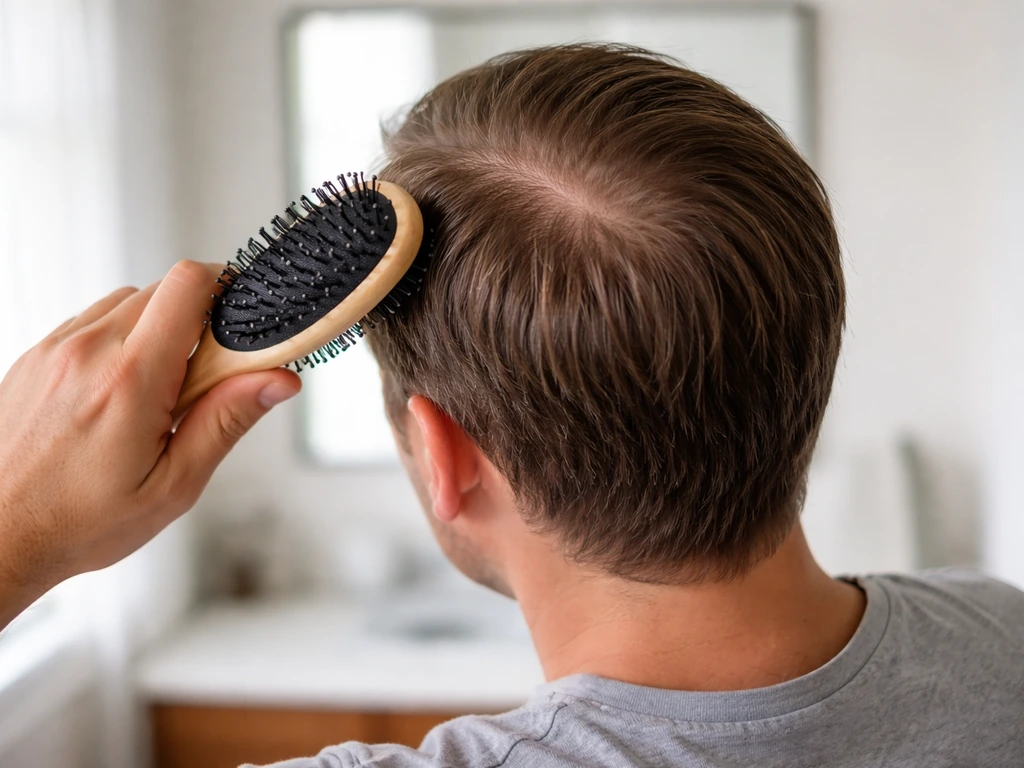
Should you grow it out? The quick decision
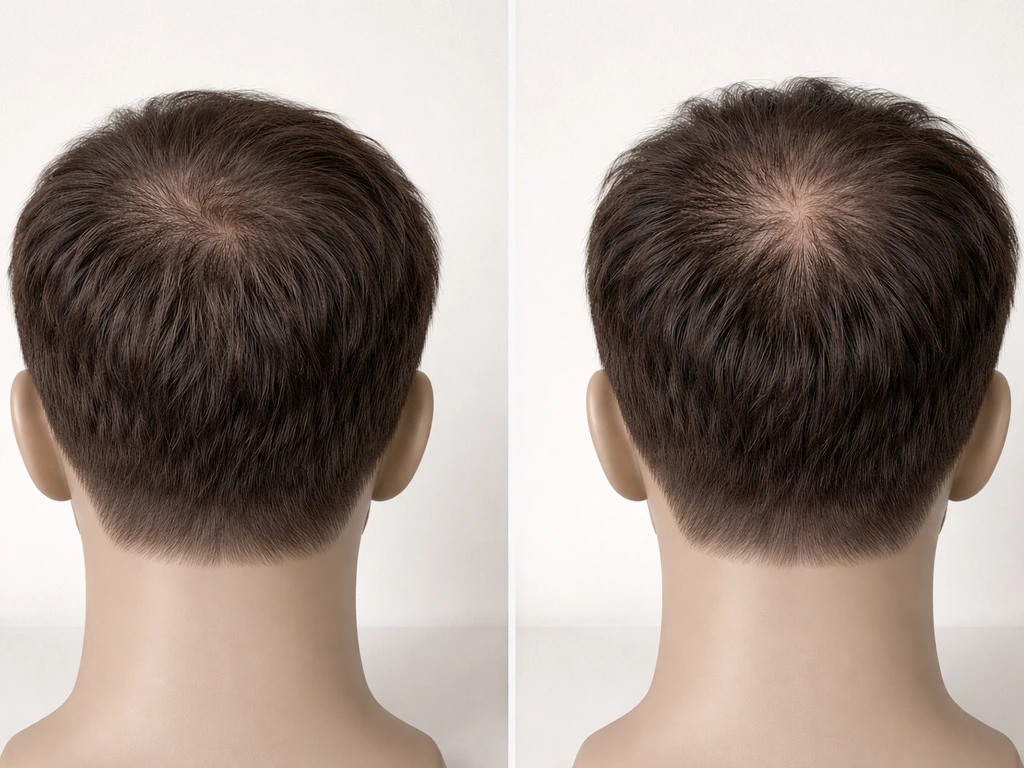
Here's the honest framework. Growing out thinning hair is usually a good move when the thinning is mild to moderate, fairly even, or caused by something temporary like stress, postpartum hormonal shifts, or a poor diet. In those cases, a bit more length gives you coverage, styling options, and the ability to redirect parts and use texture to your advantage. It's also worth growing out if your thinning is caused by tension from tight styles or certain haircuts, since looser, longer hair actually takes pressure off the follicles.
Growing it out gets trickier when the thinning is severe, concentrated in one area (like the crown or temples), or progressing quickly. More length can make very sparse areas look more visible, not less, because longer strands lay flat and expose the scalp underneath. If you're constantly battling see-through patches even after styling, or you're noticing significant breakage before your hair even reaches a manageable length, that's a signal to pause and address the root cause before committing to a grow-out.
| Situation | Grow it out? | Why |
|---|---|---|
| Mild, even thinning | Yes | Length gives more styling and coverage options |
| Temporary shedding (stress, postpartum, diet) | Yes | Thinning is likely to resolve; length helps in the meantime |
| Traction alopecia from tight styles | Yes | Reducing tension is the main fix; looser length helps |
| Moderate androgenetic (pattern) thinning | It depends | Strategic cuts and styling can help, but results vary |
| Severe crown or temple thinning | It depends | Longer hair may expose scalp more; requires careful shaping |
| Active breakage along the length | Not yet | Fix breakage first or you'll lose length faster than you gain it |
| Patchy or rapidly progressing loss | See a doctor first | Needs diagnosis before any styling decision |
How thinning actually changes the grow-out outcome
There are two different problems that both get called 'thinning,' and they behave very differently during a grow-out. The first is hair density loss, where fewer hairs are actively growing, so the scalp becomes more visible over time. The second is hair breakage, where strands snap before they get long enough to contribute to the style. If you're dealing with breakage, growing your hair out can feel like running on a treadmill: you're putting in effort but not gaining length, because the ends keep breaking off. In this case, the priority is protecting your hair first.
Density loss from causes like androgenetic alopecia tends to follow a pattern. Men typically see it at the temples and vertex (crown), while women more often experience diffuse thinning across the crown with a widening part, often while keeping the frontal hairline. Knowing your pattern matters because it tells you which lengths and styles will give you coverage and which will expose the problem. A style that works beautifully for someone with mild diffuse thinning may look worse on someone with concentrated vertex loss.
blank" rel="noopener noreferrer">Temporary shedding, like telogen effluvium, is a different beast entirely. It often shows up a few months after a stressful event, surgery, illness, childbirth, or a crash diet, and the blank" rel="noopener noreferrer">shedding typically lasts less than six months before stabilizing. If this sounds like your situation, growing your hair out during or after the shed is very reasonable, since the follicles themselves are usually fine and new growth will come in. The awkward part is managing the appearance while you're in the middle of it.
The best lengths, cuts, and shapes for visual volume while growing
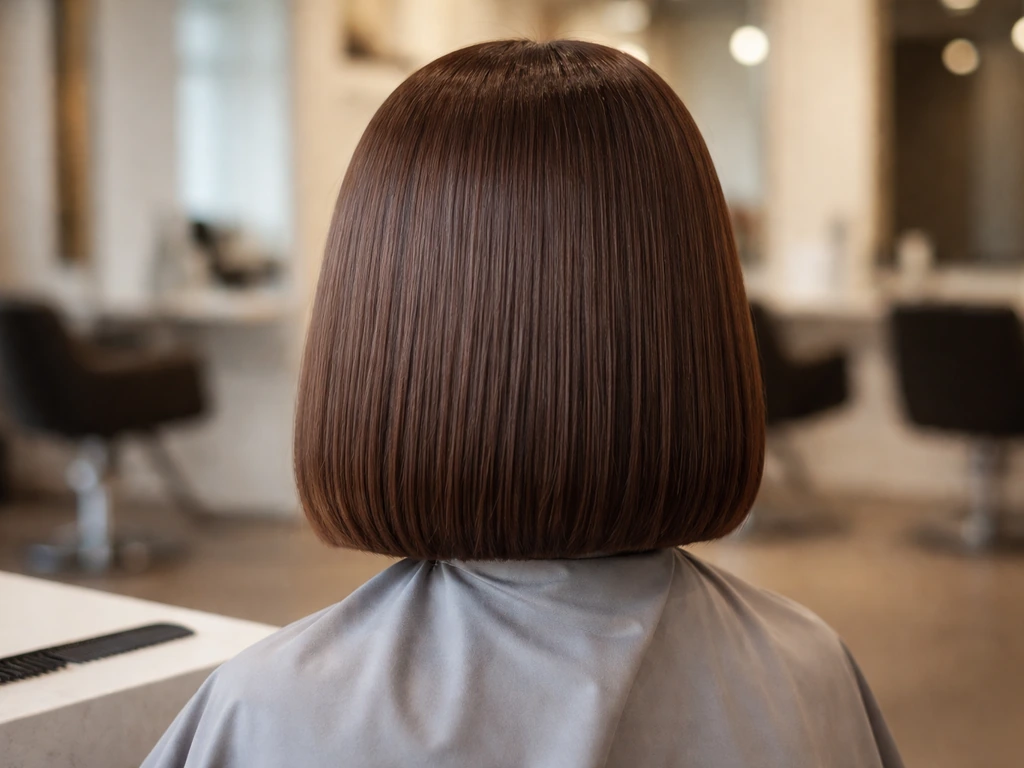
The single most reliably flattering cut for thinning hair during a grow-out is a blunt cut. A blunt bob, lob (long bob), or even a blunt trim at the ends keeps all the hair at the same length so the ends look dense rather than wispy. This is the opposite of heavy layering throughout, which can thin out the ends and make them see-through. Think of it this way: when all your strands hit the same endpoint, they stack together and create a fuller visual line. When they're feathered or heavily layered, the sparse ends collapse and the whole style looks thin.
That said, zero layering isn't always the answer either. Targeted face-framing layers, without layering the whole head, can give movement and shape without sacrificing that crucial perimeter density. A skilled stylist can add a few layers just around the face while leaving the back and sides blunt, which gives you the best of both. If you're growing out from a pixie, this approach is especially useful once you hit the chin-length stage.
For women with diffuse crown thinning, a jaw-to-shoulder-length blunt style tends to hit a sweet spot: long enough to style over thin patches, short enough that the hair doesn't lay completely flat and expose the scalp. For men with temple or crown thinning, keeping a little length on top (2 to 3 inches) while keeping sides shorter and tidy creates a proportional shape that draws the eye to the denser parts of the hair. Going very long on top when the density isn't there usually backfires.
Styling strategies during the awkward growth phase
The awkward phase is real and it's especially pronounced when you're growing out thinning hair, but there are specific techniques that genuinely help rather than just make the best of a bad situation.
Change your part
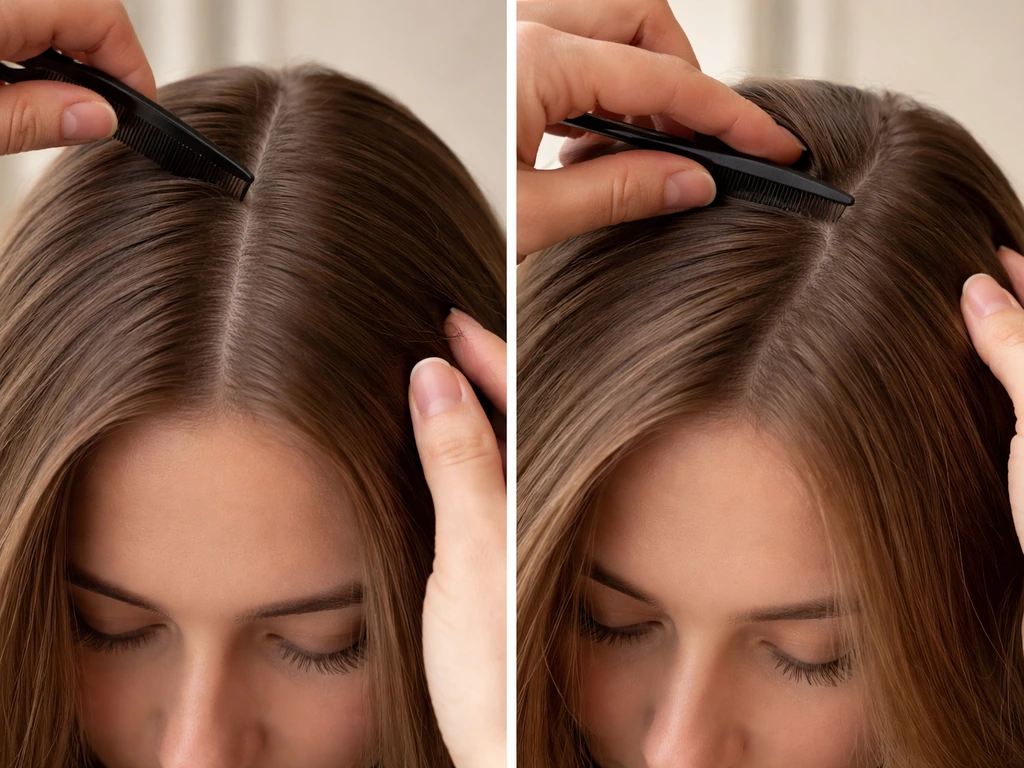
Shifting your part to a different position or switching to a side part instead of a center part can instantly cover a thinning area and add the appearance of lift at the root. If you've been parting your hair the same way for years, the hairs will have trained to lay flat in that direction. Moving the part even half an inch to one side can reveal new volume. A deep side part is one of the most effective low-effort fixes for crown thinning, particularly for women.
Use texture to your advantage
Thinning hair that's styled smooth or blown straight will always look thinner than hair with some texture and movement. A light texturizing spray or sea salt spray applied to damp hair, then diffused or air-dried rather than heat-styled straight, adds separation and makes each strand visually count for more. If you're heat styling, point the dryer upward at the roots while using a round brush to lift, rather than pressing hair flat with a paddle brush.
Bangs are a useful tool (when timed right)
Bangs can be a genuinely useful styling strategy if your thinning is concentrated at the front or temples, because they redirect where the eye goes. A wispy or curtain bang works especially well for thinning hair since it doesn't require dense coverage to look intentional. The catch is timing: adding bangs while growing out the rest of your hair adds another transition to manage, so it's best to introduce them once the rest of your hair has hit a length you feel comfortable with.
Products that actually help
- Root-lifting spray or mousse applied at the scalp before drying gives lasting lift without weight
- Dry shampoo at the roots absorbs oil and adds grip and body between washes
- Lightweight volumizing shampoo and conditioner (avoid heavy conditioning formulas on roots)
- Tinted root powder or hair fibers to fill in visibly sparse areas while you grow
- Leave-in conditioner on lengths and ends only, never at the roots, to avoid flattening
Managing the grow-out with specific starting points
Growing out a pixie or buzz cut
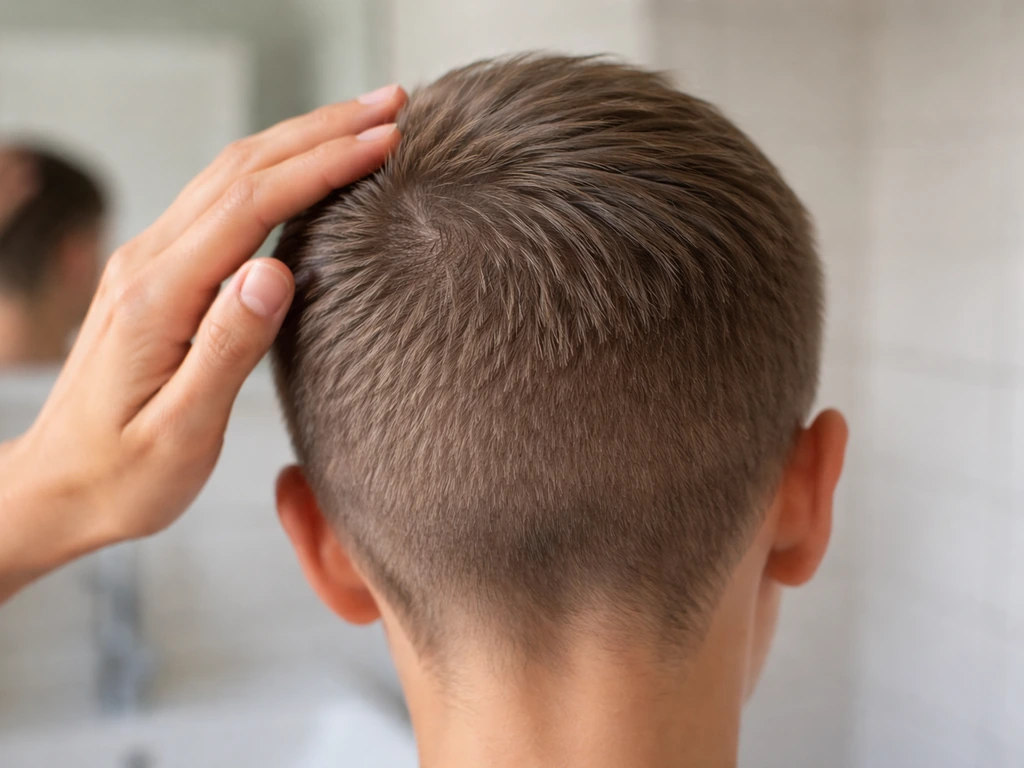
This is the most demanding transition for thinning hair because the early phases (months 1 through 4) leave you with very little to work with. The scalp is most visible at this stage. Keep the grow-out tidy with regular trims around the ears and neckline to avoid the shaggy look that can emphasize sparse coverage. A small amount of pomade or paste can define and clump short strands so they look deliberate rather than wispy. By the time you hit 3 to 4 inches, you'll have enough length to start using texture and parting tricks.
Growing out a bob
Growing from a bob to longer lengths is actually one of the more manageable transitions for thinning hair because you already have a dense perimeter. The challenge is the in-between stage where the hair hits the jaw and neck but isn't yet long enough to tuck or style elegantly. Keeping the ends blunt with minimal layering during this phase maintains density. Ask your stylist for a 'dusting,' which removes only the very tips to prevent breakage and split ends, rather than a full trim that could set you back weeks of progress.
Growing out an undercut
Undercuts present a specific challenge for thinning hair because the shaved or very short sections grow in at a different rate and texture than the longer top. If thinning is happening on top, the contrast between sparse longer hair and the growing-in undercut can be jarring. The practical move is to blend the undercut out gradually with each haircut rather than letting it grow in fully unmanaged. Ask for progressive fade trims as the undercut grows in so the transition looks intentional.
Signs that thinning needs a doctor, not a stylist
Growing out your hair is a styling decision, but thinning is sometimes a medical one. It's worth seeing a board-certified dermatologist if your shedding or thinning is persistent, rapidly progressing, or coming with other symptoms. The American Academy of Dermatology is clear that early treatment gives you the best chance of regrowth, and that not every type of hair loss is treatable in the same way, so getting an accurate diagnosis matters before you invest months in a grow-out that may not address the real issue.
- You're losing hair in patches or noticing a clearly defined bald spot (could be alopecia areata, which sometimes resolves with treatment)
- Thinning came on suddenly over a few weeks rather than gradually over months or years
- You're noticing broken hairs along the hairline or temples from tight styles (early traction alopecia warning signs that require reducing tension immediately, not styling over it)
- Shedding has continued for more than six months without improvement
- Hair loss is accompanied by scalp pain, itching, burning, or scaling
- You're experiencing other symptoms like fatigue, weight changes, or nail changes alongside hair loss (may point to thyroid or nutritional issues)
A dermatologist can do a physical exam and a pull test, where they gently pull a few dozen hairs to check how many come out, to help diagnose the type of loss. This takes about 20 minutes and gives you real information rather than guesses. If traction alopecia is caught early, the main treatment is simply removing the tension, which means looser styles and avoiding tight ponytails or braids. But if scarring has already begun from prolonged tension, that damage is permanent, which is why catching it early matters.
A realistic growth timeline for thinning hair
Hair grows roughly half an inch per month on average (around 1.25 cm), though this varies between about 0.6 and 3.36 cm per month depending on genetics, health, and age. For thinning hair, managing expectations around this timeline is really important, because you're not just waiting for length, you're also potentially waiting for new growth to fill in or for a triggered shed to run its course.
| Timeline | What to expect | What to focus on |
|---|---|---|
| Months 1–2 | Minimal visible growth, scalp still prominent from a short cut | Keep edges clean, use root powder to blur sparse patches |
| Months 3–4 | Noticeable length but likely hitting an awkward in-between stage | Blunt trims, texture spray, start experimenting with parts |
| Months 5–6 | Enough length for basic styling (small ponytail, tuck behind ears) | Introduce face-framing layers if needed; keep ends blunt |
| Months 7–9 | Approaching a workable length for most short-to-medium styles | Evaluate density honestly; decide whether to continue growing or settle here |
| Months 10–12 | Shoulder-adjacent length; most styling options are available | Blunt lob or layered styles become viable; assess coverage at crown/temples |
| 12+ months | Full grow-out to a longer style | Maintain with dusting trims every 8–12 weeks to protect ends |
If you're recovering from a temporary shed (like telogen effluvium after childbirth or illness), the new growth typically starts becoming visible around months 3 to 6 after the trigger event, and the hair gradually thickens back in over the following 6 to 12 months. Growing your hair out during this window means you may actually see it filling in as it gets longer, which is encouraging rather than discouraging.
If you're weighing the decision between growing out versus cutting shorter to start over, or even considering shaving your head to reset, the core question is the same: what's causing the thinning, and will more or less length actually address it? If you tell me what type of thinning you have and where it shows up, I can help you decide between cutting it short or growing it out should i cut my hair or grow it out. If you tell me what type of thinning you have and where it shows up, I can help you decide between cutting it short or growing it out, and I can also guide you through a related should i cut my hair or grow it out quiz approach to compare options. The grow-out is always worth attempting when the cause is understood and manageable. Many people wonder if trimming helps, so you may also want to consider whether you should trim your hair to grow it long should i trim my hair to grow it long. It's worth adjusting course when it's not.
The bottom line is that most people with mild to moderate thinning can grow their hair out successfully with the right cuts, styling habits, and realistic expectations. You don't have to choose between having thinning hair and having longer hair. You just need a strategy that works with your hair's current reality rather than against it. If you’re wondering should i cut my hair or grow it out, the best choice comes down to what’s causing the thinning and how much coverage you need right now.
FAQ
How do I tell if my thinning is more likely density loss versus breakage before I commit to growing it out?
A quick self-check is to look at the base of shed hairs. If the strands that come out are full length, with no short broken pieces, it points more toward shedding or density loss. If you see lots of short, uneven fragments and feel rough, see-through ends, breakage is more likely, and you usually need a protect-first plan rather than only growing longer.
Will growing my hair out make a widening part or see-through scalp more noticeable?
It can, especially early on, if your thinning is concentrated and the hair lays flat. A practical prevention is to start with a blunt perimeter and use part shifts, then reassess after you gain about 2 to 3 inches. If the scalp visibility increases despite texture and part changes, that’s a sign to pivot cut or treatment rather than pushing the grow-out.
Should I keep washing less frequently to make thinning look better while I’m growing it out?
Not usually. Build-up can make hair lie flatter and look thinner at the roots. Instead, aim for consistent washing, use a light conditioner on mid-lengths to ends only, and consider a volume-leaning product so your roots have separation without appearing greasy.
What if I’m thinning and my hair is naturally curly, coily, or wavy?
Curly textures often benefit from “short layers vs blunt” choices that preserve a dense outer shape. Ask for a strategy that maintains perimeter fullness, and consider leaving some length in the crown so curls don’t collapse into visible scalp. Also, use a leave-in and gentle detangling to reduce breakage, since curly hair can break at the ends during a grow-out.
Is it better to grow it out if I wear tight ponytails, extensions, or frequent protective styles?
If tension is part of the problem, growing it longer may not solve it and can worsen traction. The more useful step is to stop tight styles, loosen edges and tension points, and reassess after a few months. If you use extensions, make sure they are not being placed or tightened on thinning areas.
How often should I trim while growing out thinning hair?
Plan trims based on breakage risk rather than waiting for the “perfect length.” Many people do well with small maintenance visits, like dusting only the tips, every 6 to 10 weeks, especially during the first 3 to 4 inches when sparse coverage is most obvious.
Can hair growth supplements or vitamins replace addressing the cause?
They can help only when there is a deficiency, and they are not a substitute for diagnosing the cause. If you suspect low iron, low vitamin D, or another nutrition issue, ask a clinician what to test before spending months on supplements that may not change shedding or androgen-related thinning.
Should I avoid layers completely during a grow-out for thinning hair?
Not necessarily. The most reliable rule is to avoid heavy, all-over layering that weakens the perimeter density. Targeted face-framing can be fine, but ask your stylist to keep the back and sides at a consistent length and to minimize internal “see-through” results around the crown.
Does heat styling make thinning hair look worse even if I have density loss?
Yes. Smooth, flat styling tends to reduce visual separation and can emphasize the scalp. If you use heat, lift at the roots, limit passes, and consider a lower temperature with heat protectant. If breakage is involved, reducing heat is often more important than any styling trick.
When should I stop trying a grow-out and seek medical help?
If thinning is rapidly progressing, patchy, accompanied by scalp pain or burning, or you have sudden dramatic shedding that persists beyond a typical temporary window, it’s time to get evaluated. An accurate diagnosis matters because some forms of hair loss need treatment for the regrowth window, and cosmetic grow-out alone won’t correct scarring damage.