
To grow as a barber, you need three things moving at the same time: sharp technical skills, a real licensing credential, and a steady stream of clients who come back. None of those happen by accident. Over the next 30 to 90 days you can make meaningful progress on all three if you know exactly what to prioritize and in what order.
How to Grow as a Barber: Skills, Clients, and Career Steps

Marcus Vickers
12 May 2026
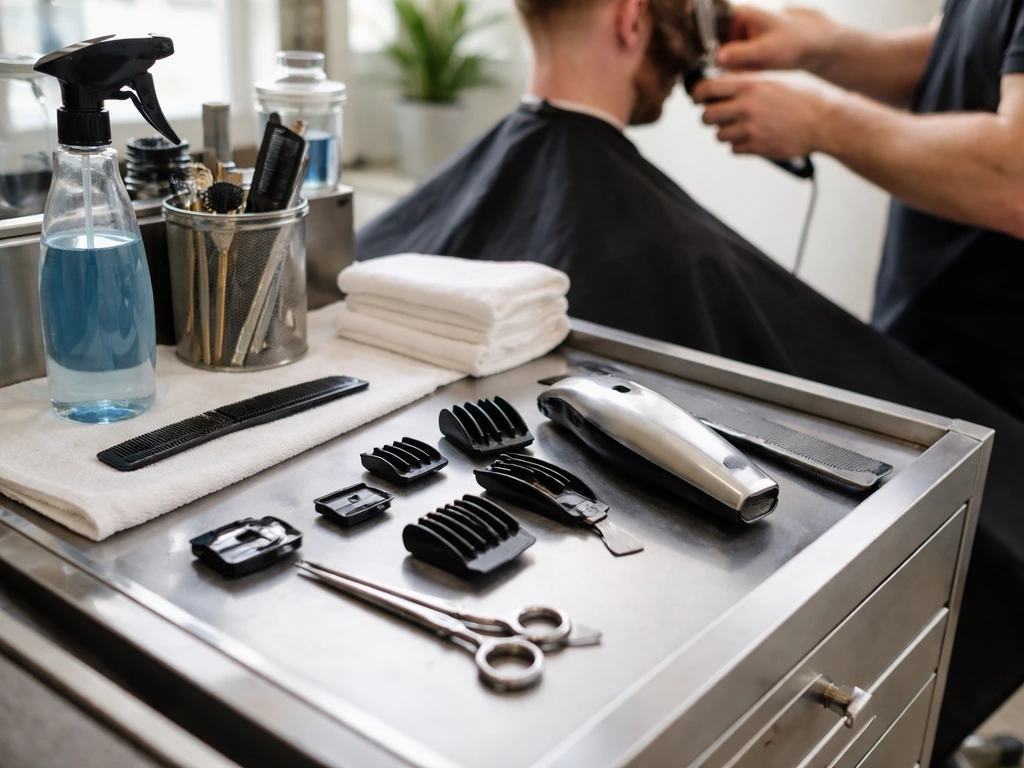
Barber fundamentals: build your skills and core service set
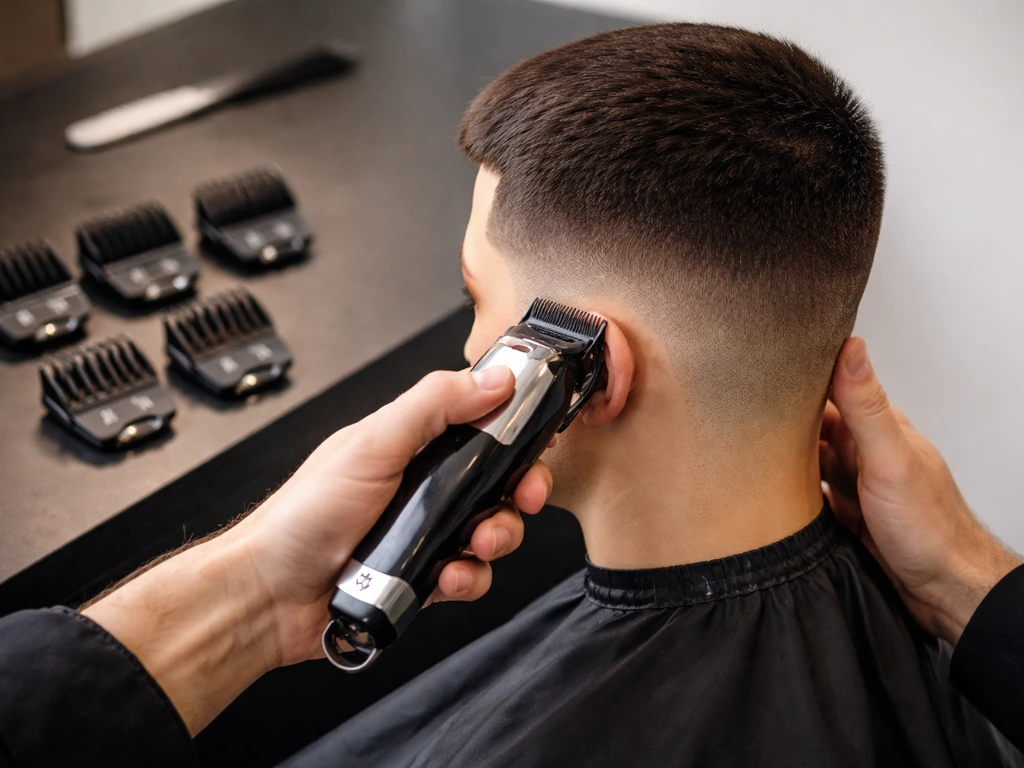
Before anything else, get your hands comfortable with clippers, guards, and shears. The core skills every barber needs are: guard-work fades (high, mid, and low), clipper-over-comb, scissor-over-comb, shear and texturizing shear work, straight razor shaves, line-up/edge work, and beard shaping. These aren't advanced add-ons; they are the everyday menu. If you can't execute a clean skin fade and a natural taper on the same day without hesitation, those are the two things to drill right now.
Blending is where most beginners stall. A fade only looks right when the transition between lengths is invisible, and that comes from understanding how your specific clippers behave at each guard setting on different hair textures. Spend deliberate time learning your tools at each guard length before you try blending between them. National Barber Boards curriculum includes clipper-with-guards, clipper-over-comb, and texturizing shears as distinct hands-on skill sets, and that separation is intentional: each one has its own muscle memory.
Sanitation is not optional paperwork; it is part of the service and part of your professional reputation. Every state board will test you on it. The general rule across states like Georgia, Ohio, Missouri, and Pennsylvania is: brush clippers clean, disinfect with an EPA-registered or hospital-grade broad-spectrum disinfectant, allow full contact time, then place on a clean towel before using on the next client. Headrests get a fresh towel or paper cover for every patron. Any item used on a blood or body-fluid spill goes into a double bag or biohazard container. Build these habits now so they're automatic before you're ever in front of a paying client.
- Fades: skin, low, mid, and high (know the difference and be able to deliver all four)
- Clipper-over-comb and scissor-over-comb transitions
- Shear and texturizing shear work for soft finishes
- Line-ups, edge work, and beard shaping
- Straight razor shave fundamentals
- Sanitation routine: brush, disinfect, contact time, clean towel
How to start growing your barber career: education, licensing, and finding work
Licensing requirements vary by state, but the structure is nearly always the same: complete a set number of training hours, then pass a written (theoretical) exam and a hands-on practical exam. In Pennsylvania, the barber license study or training period must be at least 1,250 hours and at least 9 months before taking the exam, under the statute’s specified training options blank" rel="noopener noreferrer">study or training period of at least 1,250 hours (and at least 9 months) before the exam. blank" rel="noopener noreferrer">Pennsylvania requires 1,250 hours, completed either at a licensed barber school or under a licensed barber teacher/manager in a licensed shop. Massachusetts requires at least 1,000 clock hours of professional training. New York requires both a practical and a written exam before licensing. Check your specific state board first, because the hours and exact exam format differ, but assume you need roughly 1,000 to 1,500 hours and two-part testing almost everywhere in the US.
Barber school programs built around structured curricula (like Milady Standard Barbering) are designed to align directly with licensing exam content, covering barber law, sanitation theory, and all the practical skills boards test. If you're choosing a school, confirm it uses a recognized curriculum and that its pass rates on the state exam are published. A school with a high practical exam pass rate is worth more than one that simply has a convenient location.
Some states allow an apprenticeship path instead of school. Michigan, for example, outlines formal barber college and apprenticeship curriculum requirements that split hours between theory and practical work. If an apprenticeship is available in your state, it can be faster and cheaper than a full school program, but you still sit the same licensing exam. Either way, your goal in the first 30 days is to be enrolled in a path and logging hours.
Once licensed, your first job search should target established barbershops, not independent suites. Working for a shop owner as an employed barber or on commission means you inherit their walk-in traffic, their booking system, and often their product stock. You trade income percentage for built-in clientele exposure. That trade is worth it early on. You will learn faster surrounded by senior barbers than working alone.
Portfolio and customer acquisition: practice, social proof, and marketing
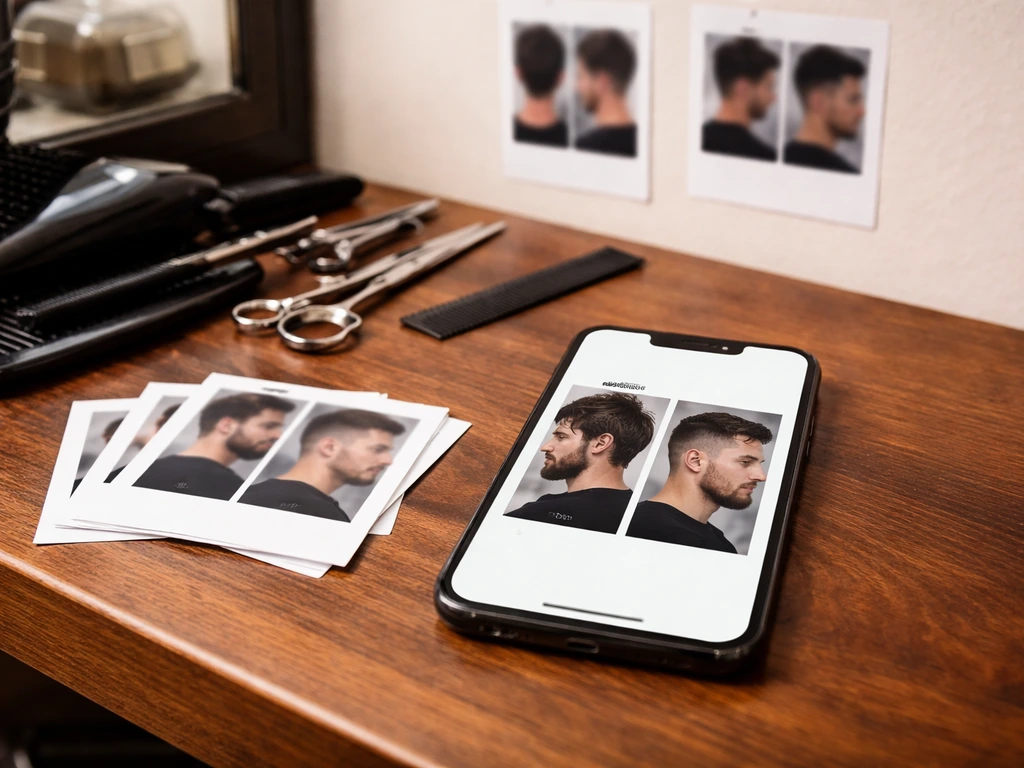
Your portfolio is your most important marketing asset and you start building it before you're even licensed. Practice on friends, family, classmates, and practice mannequins. Every clean result gets photographed: before and after, good lighting, plain background, styled and fresh. You need at least 20 to 30 strong photos before you start marketing yourself anywhere. That's your baseline social proof.
Instagram and TikTok are the two platforms that actually move the needle for barbers right now. Short video of a fade transformation, a line-up progression, or a beard shaping session gets far more reach than a static photo. Post consistently, tag your location, use relevant local hashtags, and show your personality in the content. You don't need professional editing; you need authenticity and steady output. Aim for three to five posts per week during your first 90 days.
Set up a Google Business Profile as soon as you have a physical location to list (your shop address or booth address). Your primary category should be Barber Shop. Add photos of your work, set up a services menu with prices, and connect a booking link. Google Business Profile optimization research is clear that fresh photos, accurate categories, and a booking integration directly improve local search visibility and drive phone calls and clicks. Update your photos at least monthly with new work.
Referrals are still your fastest path to new clients. Tell every person you cut that you're actively growing your book and that you'd appreciate them sending people your way. Offer a small incentive if it feels right: a discount on their next cut for every referral who books. Make it easy by giving people a direct booking link they can text to a friend. Word-of-mouth from a satisfied client is worth more than any paid ad in your first year.
Client retention and service excellence: consultations, communication, and repeat business
Getting someone in the chair once is marketing. Getting them back is skill. Retention starts with the consultation, and most new barbers rush it. Before you touch a client's hair, ask three things: what they want today, what their current routine looks like at home, and what they've hated about past haircuts. That last question is the most important. It tells you what not to do and it makes the client feel heard, which is half the retention battle.
During the service, narrate what you're doing in plain terms. You don't need to lecture, but a quick 'I'm keeping more length on top so you have room to style it' gives the client confidence that you're executing a plan, not just winging it. When you're done, show them the back, confirm they're happy, and tell them when to come back. 'You'll want to come in every three to four weeks to keep this looking clean' is not a sales pitch; it's professional guidance, and most clients appreciate the direction.
Follow-up is underused by most new barbers. A simple text or app notification two to three weeks after a visit reminding a client it's almost time to book does real work. Booking software handles this automatically. Set it up early and let it run. The barbers who grow their books fastest are not always the most talented in the room; they're the ones whose clients never forget to rebook.
Business setup and career growth paths: booth rental vs employment vs starting a shop
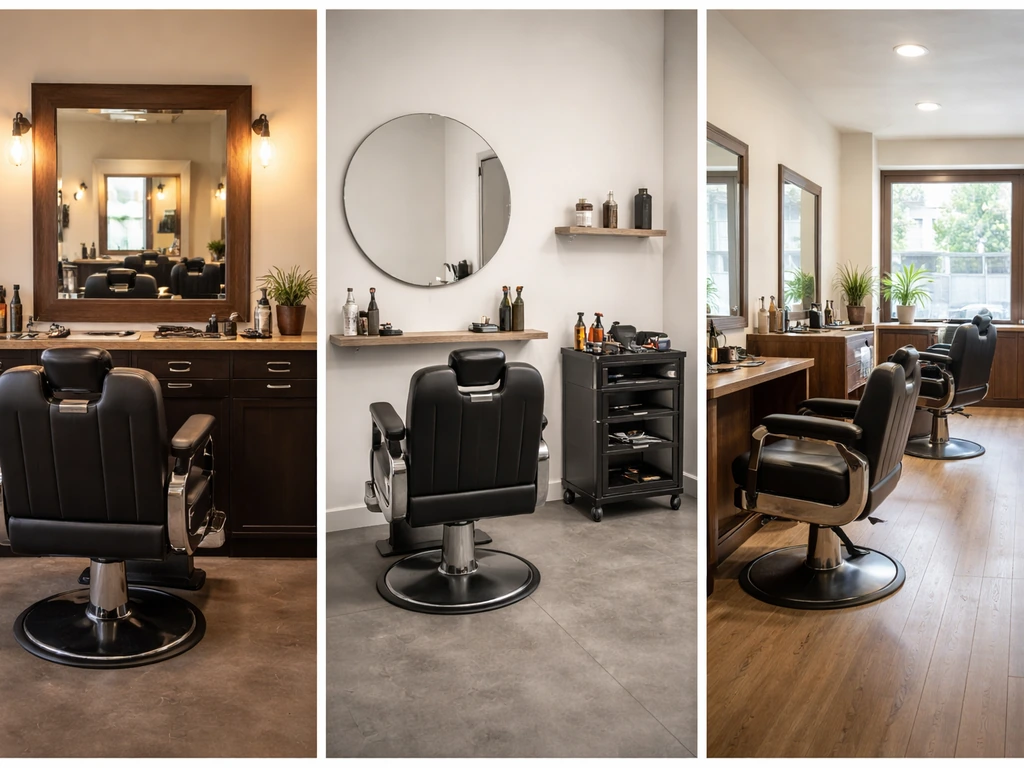
There are three main career structures for barbers, and where you land on this spectrum should match your current client volume and risk tolerance. Here's how they compare:
| Structure | How it works | Income model | Best for | Risk level |
|---|---|---|---|---|
| Employed/commission | Barber works for a shop owner, earns a percentage of service revenue (often 40–60%) | Commission per service | New barbers building clientele | Low |
| Booth/chair rental | Barber pays fixed rent (typically $400–$2,000+ per month or $100–$500+ per week) and keeps all service revenue | Revenue minus fixed rent | Established barbers with a steady book | Medium |
| Own a shop | Barber runs the business, manages staff, pays all overhead | Profit after all costs | Experienced barbers with business skills and capital | High |
The general rule with booth rental is that your chair cost shouldn't exceed 30 to 35 percent of your projected income. If you're cutting 15 clients a week at an average of $30 per cut, that's $450 per week in gross revenue. Paying $200 per week in rent is right at the edge of that ratio. Know your numbers before you sign a rental agreement, and always read the contract carefully for cancellation terms and penalties.
The practical path for most people is: start employed or on commission, build your client list to 40 to 60 regulars, then evaluate booth rental once your weekly revenue is predictable enough to absorb a fixed cost without stress. Opening your own shop is a separate conversation that involves business licenses, overhead, staffing, and management skills beyond barbering. If that's the goal, treat your employed years as paid business school.
It's worth knowing that the business side of growing as a barber overlaps with broader topics like growing a barbershop operation or building clientele as a hairstylist. The retention and marketing principles are largely the same across all of them; the licensing and service set are what's specific to barbering.
Styling and hair-growth mindset: managing client expectations during grow-out phases
One of the most common situations barbers navigate, especially in a shop that sees a variety of clients, is someone who is growing their hair out and doesn't know what to do with it right now. This also applies when clients want to know how to grow bar hair, since the grow-out process needs clear expectations and a plan for styling as it changes grow their hair out. This is where being genuinely helpful builds loyalty fast. The awkward phase is real: hair that's too long to look intentionally short but too short to style easily is genuinely frustrating, and clients who feel stuck will often just chop it off out of impatience rather than staying the course.
Your job in those appointments isn't just to cut; it's to guide. Be honest about the timeline. If someone is growing out a fade or a tight taper, tell them that the most awkward stage is usually weeks four through eight, that it gets easier after the sides pass a certain length, and that small shape-up trims every three to four weeks will keep them looking intentional rather than neglected while the length catches up. That kind of stage-by-stage honesty is exactly what keeps a client coming back instead of giving up.
Recommend specific styling products for each phase. During a grow-out, lightweight pomades, water-based creams, or a small amount of texture spray can make in-between lengths look deliberate. When the top has enough length, show clients how to work with their natural texture rather than against it. Clients who leave your chair with a product recommendation and a styling demo are far more likely to come back and to refer friends.
Managing grow-out expectations is also just good client communication. When someone comes in saying they want to grow their hair long, set honest checkpoints: 'At this length in four weeks we'll start shaping the top differently. In eight weeks we'll start pulling back the sides less aggressively.' That roadmap turns a vague goal into a structured plan, and it gives the client a reason to keep every appointment instead of missing them when things look rough.
Your next 30 to 90 days: what to do first
- Week 1–2: Look up your state board's exact hour and exam requirements. Enroll in a licensed barber school or confirm your apprenticeship path. Start logging hours immediately.
- Week 2–4: Begin drilling fades, clipper-over-comb, and line-ups on practice models and willing friends. Photograph every result you're proud of. Start your photo archive now.
- Week 4–6: Set up an Instagram or TikTok account dedicated to your work. Post three to five times per week. Prioritize before-and-after transformation content and local hashtags.
- Week 6–8: Set up or claim a Google Business Profile if you have a location. Add photos, services, and a booking link. Update photos monthly going forward.
- Week 8–12: Get licensed (or confirm your hours timeline). Apply to employed or commission positions at established barbershops. Accept that the first job is about volume of reps and learning, not maximum income.
- Month 3 and beyond: Build your rebook rate to above 60 percent before you think about booth rental. Track how many clients return within six weeks. That number tells you more about your growth as a barber than anything else.
Growing as a barber is not a single skill; it's a system. Technical skill gets clients in the chair the first time. Communication and consultation keep them coming back. Smart career structure decisions protect the income you build. Work all three at once, and 90 days from now you'll have a real foundation to build on. Once you have that foundation, apply the same retention, marketing, and client workflow ideas to learn how to grow a barbershop. If you want a detailed, step-by-step plan for how to grow your barber business, focus on education, licensing, marketing, and retention in that order.
FAQ
How long should it take before I can consistently do a clean fade and line-up?
Set an expectation of 6 to 12 weeks for noticeable consistency, if you drill guard-work and line-up mechanics every training session. If you’re still seeing obvious “steps” at guard transitions after a month, slow down and standardize your process (same clipper speed feel, same blend order, same pressure). Consistency comes from repeatable technique, not trying new tools every time.
What’s the best way to practice between appointments without wasting clients’ hair or time?
Practice on heads with similar hair density and curl pattern to your typical clients, and build a small “test kit” schedule (for example, one day for fades, one for beard edges, one for clipper-over-comb). Use mannequins for bulk shaping, but use real hair whenever you can, even if it’s friend or classmate practice, because slip and grain change the outcome.
I can cut well on my friends, but my shop cuts look different. Why does that happen?
Most of the difference is environment and workflow: different lighting, different chair height, different time pressure, and different client hair prep. Ask for the same towel pattern and combing approach you used in practice, keep your station setup constant, and run a repeatable workflow (consult, outline, bulk removal, blending, finishing/edge).
How do I price my cuts when I’m new and don’t have a full portfolio yet?
Start with a “range” that matches what nearby barbers charge, then offer a limited intro rate only until you reach 20 to 30 strong photos. Make sure your intro offer does not include longer complex services for the same price, unless you can deliver them within your scheduled time. Your goal is predictable profitability, not just volume.
What should I do if I’m getting walk-ins but they don’t come back?
Treat it as a retention problem, not a marketing problem. Common fixes are: tighten your consultation questions, confirm the haircut plan out loud before you start, and set a specific rebook window (for example, “every 3 to 4 weeks”). Also ask for feedback before the client leaves, and address one issue immediately rather than hoping they accept it.
How many services should I list on my menu at the start?
List a small set you can execute reliably and quickly, typically core options like skin fade, taper, beard shape-up, and straight razor shave (if you actually do it well). Avoid long menus early because they increase time variability and lead to mismatched expectations. Add services only after you can consistently deliver them within your booking slot.
What’s the safest way to handle clients who want a style that isn’t realistic for their hair type?
Give an alternative that matches their goal but fits their hair behavior. For example, if they want an ultra-skin fade but their hair clumps at that length, offer a slightly higher baseline fade and different blending strategy. Keep it honest, then show a clear “before and after” expectation using photos you already took.
How often should I post, if my schedule is busy with school or a new job?
Quality beats volume, but consistency still matters. If 3 to 5 posts per week is hard, aim for 2 posts per week plus one story-style update, so you maintain momentum. Build content from your real workflow, meaning keep a simple routine for filming the haircut process, not only the final reveal.
Do I need a Google Business Profile before I can get clients?
You can start building it as soon as you have a consistent place to serve clients, even if it’s a booth in shared space. If you’re mobile or shifting locations, confirm how your booking location should appear so clients do not get confused. Also add the exact services you offer, because mismatched listings can lead to low satisfaction and fewer rebook attempts.
How do I approach referrals without sounding pushy?
Ask at the right moment: after they approve the final look, or when they express satisfaction. Keep the script simple, “If you know someone who likes this style, I’m booking new clients now, and I’d love an introduction.” If you offer an incentive, make it clear and easy (for example, a discount code applied to the next visit).
What should I do if I miss a rebooking follow-up and clients slip away?
Don’t restart from scratch, recover quickly. Send a short message offering two or three upcoming time windows and one reason to come back soon (for example, “this length needs a tidy-up to keep the shape”). If you use booking software, create an automatic reminder sequence so the gap doesn’t repeat.
How can I help clients who are growing their hair out without creating constant emergency appointments?
Set clear checkpoints and price those shape-ups as planned maintenance, not surprise fixes. Tell them what to expect at the awkward stage, then schedule a “structure reset” cut every 3 to 4 weeks to keep the silhouette intentional. Provide one easy styling routine for each phase, so they’re not returning because they feel stuck.
Is booth rental worth it if I still have some slow weeks?
Only commit when your chair cost can be covered by your weekly baseline revenue, not your best week. Use your earlier chair ratio as a guardrail, then add a buffer for slow weeks (for example, budget for 20 to 30 percent less volume for the first months). Also confirm contract terms like cancellation rules and how many days you can suspend payment if business dips.