
Growing short hair out takes roughly 6 to 12 months to reach chin length from a pixie or buzz cut, and 18 to 24 months to reach shoulder length, based on the average growth rate of about half an inch (1 cm) per month. That math is straightforward. The harder part is surviving the in-between stages without grabbing the scissors or booking an emergency appointment to cut it all off again.
How to Let Short Hair Grow Out: Step by Step Guide

Marcus Vickers
6 May 2026
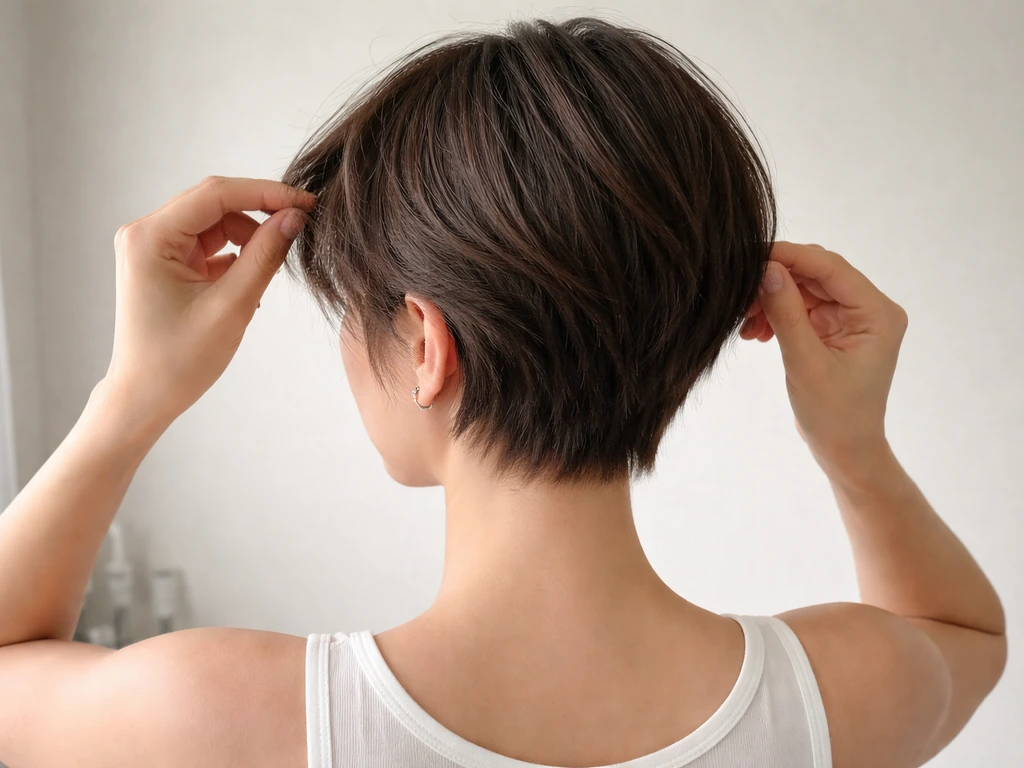
This guide walks you through exactly what to do at each phase: when to trim, how to style what you have, and how to keep things looking intentional rather than abandoned. For more detailed timelines and guidance, use the best way to grow short hair out so you know what to do at every phase.
What 'growing it out' actually looks like: real timelines
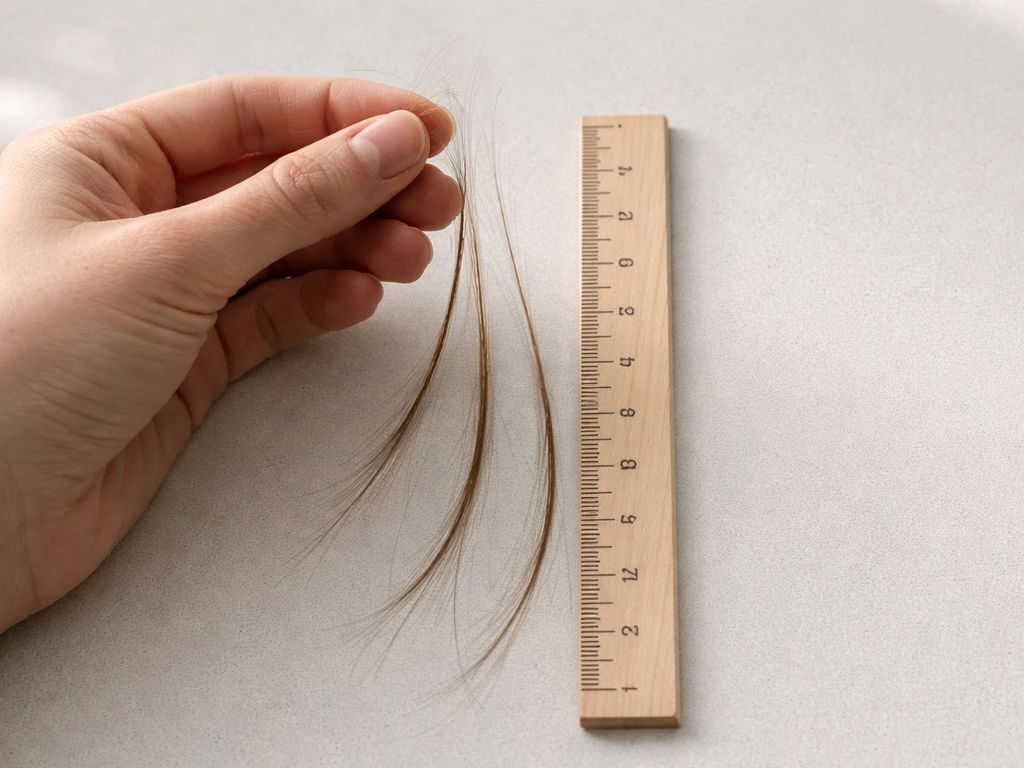
Hair grows about 1 cm per month on average, which works out to roughly 15 cm (6 inches) per year. That said, individual variation is real. Research puts the actual range somewhere between 0.6 cm and 3.36 cm per month depending on your age, genetics, health, and even the season. So while the averages are useful for planning, your personal timeline could be faster or slower.
Another thing worth knowing: not all your hair grows at the same time. Your follicles cycle through anagen (active growth), catagen (a brief 2 to 3 week transition), and telogen (a resting phase that lasts around 3 months). At any given moment, different follicles are at different stages, which is part of why uneven regrowth happens, especially noticeable at undercuts or around the nape.
| Starting point | Time to ear length | Time to chin length | Time to shoulder length |
|---|---|---|---|
| Buzz cut | 3–4 months | 8–12 months | 18–24 months |
| Pixie cut | 2–3 months | 6–10 months | 16–22 months |
| Short bob | Already there | 2–4 months | 10–14 months |
| Bangs only | 3–5 months to blend in | N/A | N/A |
These are rough guides, not promises. Use them to set realistic expectations and to celebrate progress, because month three of a pixie grow-out doesn't look like failure, it looks exactly like month three is supposed to look.
Keep your hair healthy or growth will look worse than it is
Hair that's brittle, dry, or breaking at the ends isn't really growing, or at least it isn't retaining the length it grows. Healthy hair just looks better at every stage of a grow-out, so basic maintenance isn't optional here.
Washing and conditioning

Wash as often as your scalp needs it, but don't over-strip it. If you're washing daily, use a gentle, sulfate-free shampoo. Condition every single time you wash, and actually work the conditioner through the mid-lengths and ends rather than just rinsing it past your head. For short hair especially, a lightweight leave-in conditioner or a few drops of argan oil on damp ends can make a real difference in how soft and cooperative your hair feels during those awkward middle lengths.
Protecting from heat and breakage
Heat styling during a grow-out is fine, but it needs to be managed. Always use a heat protectant spray before any hot tool touches your hair. Try not to go over 180°C (350°F) for fine or damaged hair. When hair is at the awkward stage where it's just long enough to style but just short enough to be annoying, the temptation to over-style it is real, and that's exactly when damage shows up most visibly.
Should you trim while growing it out? Yes, but strategically
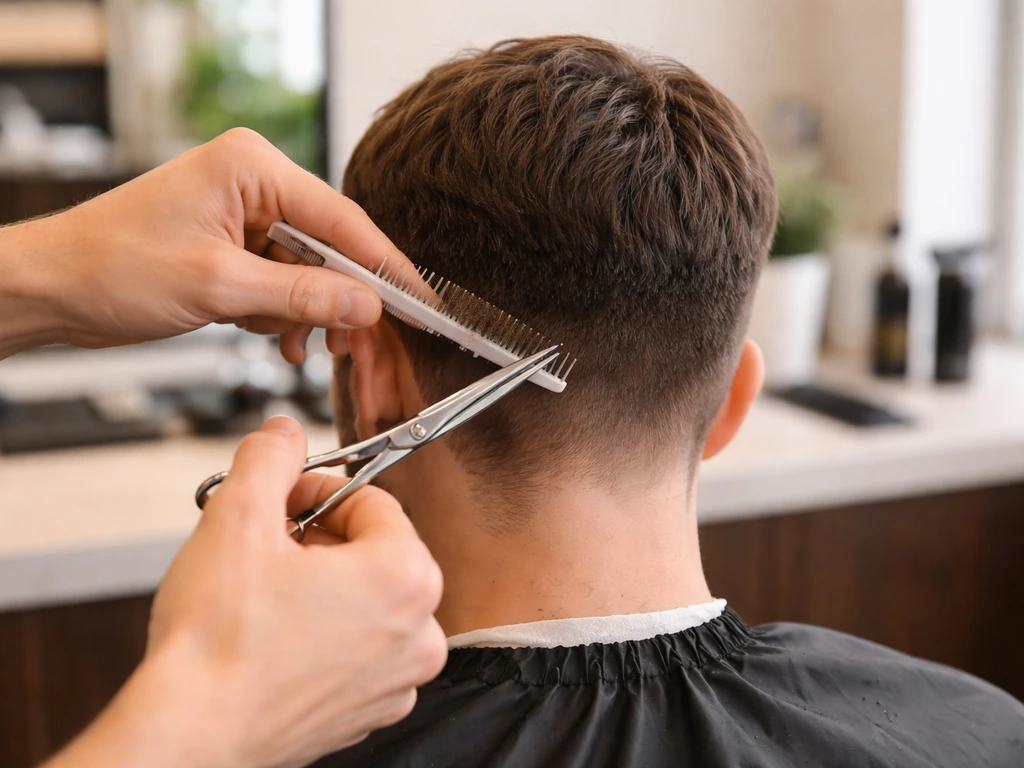
This is the question everyone argues about, and the honest answer is: it depends on what's happening with your specific cut. Trimming does not slow growth. Your hair grows from the scalp, not the ends. But trimming at the wrong time or in the wrong place can absolutely stall your progress toward a specific shape.
The general rule: trim to remove damage and uneven sections, not on a rigid schedule. For most people growing from a pixie or short cut, this means a light dusting (removing just a few millimeters) every 10 to 12 weeks to keep split ends from traveling up the shaft. If you're growing from a layered cut, you may want to go in around the 8-week mark to soften layers that are creating bulk or shelf effects at your jawline.
What you want to avoid is a stylist who reflexively takes off half an inch every visit 'to keep it healthy.' That's fine maintenance advice for someone at their target length. For someone growing out, it can mean treading water for months. Tell your stylist your goal explicitly and ask them to trim only what's necessary to keep the ends clean and the shape moving forward.
Transition cuts that help
Some cuts work with your growth rather than against it. A textured pixie can grow gracefully into a shaggy lob. A French bob is a natural waypoint between a chin-length bob and a shoulder-length cut. If you're at the 'poofy at the sides' stage, a face-framing trim that removes some of the weight without shortening the top can buy you weeks of wearability. These aren't setbacks, they're tools.
How to style each phase without losing your mind
The awkward phase is real, but every length has at least a few decent styling options. Here's what actually works stage by stage.
Buzz cut (months 1–4)
This is actually one of the easier phases because there's very little to manage. Focus on scalp health, massage your scalp a few times a week to stimulate circulation, keep skin moisturized, and let it grow. When it's just long enough to start lying flat in some areas but sticking up in others (usually around the 1 to 2 inch mark), a light pomade or cream pressed through with your fingers will keep it consistent. Hats, beanies, and headbands are completely legitimate styling tools here.
Pixie grow-out (months 2–8)
This is where most people bail, and it's the most manageable phase with the right approach. The sides and back will start to puff out before the top catches up. A bit of texture spray or light mousse scrunched in will make this look intentional rather than overgrown. Headbands (thin elastic or fabric) are genuinely useful here. Bobby pins tucking the sides back can transform a frustrating length into a sleek, styled look in about 90 seconds. Barrettes at the temple work especially well once the sides reach about an inch and a half.
The 'poofy' middle phase (months 4–10)
Around the 3 to 5 inch mark, hair often sits at exactly the wrong length, too short to tie back, long enough to feel heavy and shapeless. This is where a lot of people give up. Don't. A tiny amount of hold cream through the ends and a round brush blowout can make this stage look polished. Finger-coiling sections while diffusing works well for wavy or curly textures. A half-up style with two small sections pulled back from the temples looks deliberate at this length even when the rest isn't cooperating.
Bob length and beyond (months 8–18)
Once you're at chin length, options open up fast. You can start doing small ponytails, buns, and braids. The transition from bob to lob (long bob, usually just above or at the shoulder) is one of the smoother parts of a grow-out because the length is flattering at almost every point. The main issue here is layers, if your original cut had lots of them, some may still be noticeably shorter than the rest. A single trim to soften the shortest layers (without losing the length you've earned) can make a big difference.
Growing out bangs
Bangs that grow out go through a specific, annoying sequence: too short to tuck behind your ear, too long to stay out of your eyes, and eventually long enough to incorporate into the rest of your style. The classic move is side-sweeping them with a clip or barrette as they reach eyebrow length. A small amount of pomade or gel worked through just the bangs can help train them in a new direction. If you're doing a blunt bang grow-out, a zigzag part through that section can add movement and disguise the awkward in-between length.
Undercuts and uneven regrowth: what to actually do
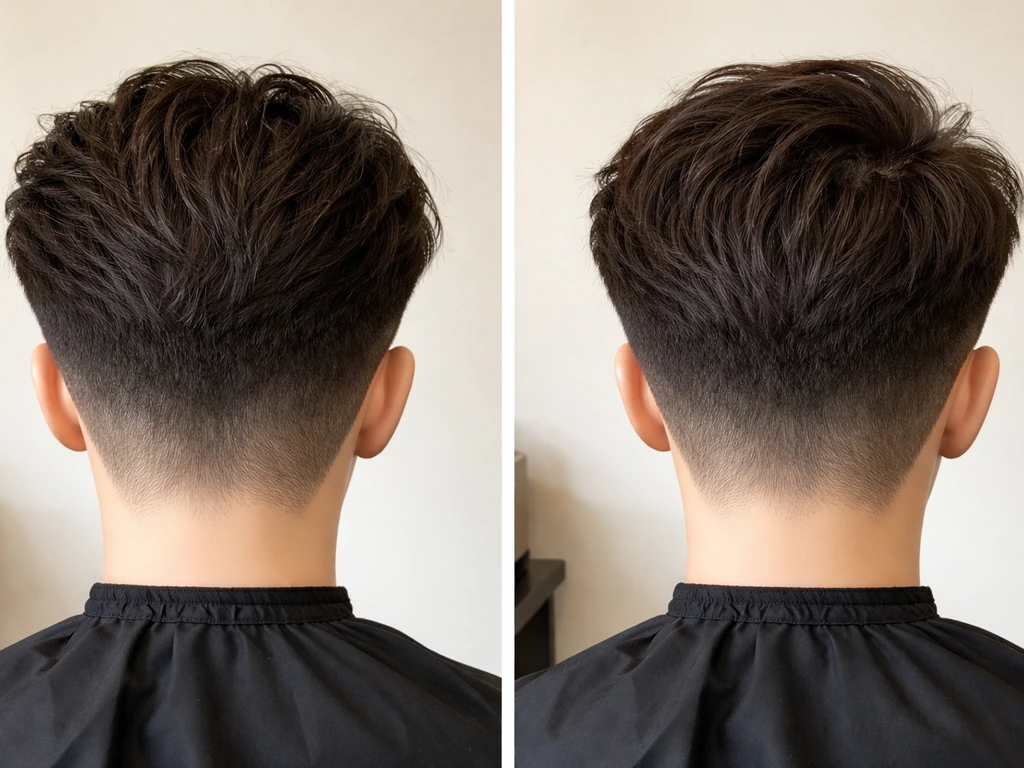
Undercuts are one of the trickiest grow-outs because the shaved or closely clipped sections are visible as they fill in. The contrast between the longer top layers and the short undercut section creates an obvious ridge or 'shelf' effect that can be hard to hide.
The most practical approach: stop trimming the undercut section entirely and let it grow until it blends with the layers above it. This usually takes 4 to 8 months depending on how much contrast there was. During that time, wearing hair down with some layering through the top can cover the transition line. If the undercut is at the nape, wearing hair half-up or in a low bun tucks the contrast away cleanly. Products like thickening spray on the short sections can help reduce the visual contrast between dense regrowth and longer layers.
Uneven regrowth elsewhere, where one section seems to grow faster, or where hair was cut at different lengths at different points, is largely just the hair cycle doing its thing. These hair cycle phases are described as catagen lasting about 2 to 3 weeks and telogen lasting about 2 to 3 months 6 Ways to Make Your Hair Grow Faster and Stronger. Because different follicles are in different phases at the same time, some patches will catch up on their own within a month or two. If you still have a noticeably uneven section after 3 months, one targeted trim to blend that section is the clean fix rather than waiting it out.
Color and texture during a grow-out
If your hair is colored, growing it out adds a second grow-out process on top of the length process. The key is deciding early whether you want to transition to your natural color at the same time or maintain the color throughout.
Maintaining color while growing out
If you're keeping your color, root touch-ups every 4 to 6 weeks for darker dyes (and every 6 to 8 weeks for highlights or balayage) will keep the grow-out looking polished rather than neglected. As the hair gets longer, you'll have more flexibility, highlights and balayage tend to look better as they grow out than solid color does, because the transition is more gradual. Using a color-safe shampoo and minimizing heat styling significantly slows fade, which reduces the frequency of treatments you need.
Transitioning to natural color
If you want to go back to your natural color as you grow, the cleanest approach is to let the natural root grow out and then either do a shadow root (blending the demarcation line with a gloss or lowlight) or gradually cut away the old color over several visits. Doing a full color removal or bleach correction on short hair before it's grown out risks damage during the most important stage of retention, so unless the contrast is really bad, patience is usually the better move.
Texture changes during regrowth
Some people notice their natural texture looks different at the root than in the older, treated portions of their hair. This is normal, it's just the difference between virgin and previously processed hair. As short hair grows out, curly or wavy textures often become more pronounced once the hair has enough weight and length to form a pattern. If you've been chemically straightened, the regrowth may have a noticeably different texture than the relaxed ends, which creates a tricky transition. In that case, a hydrating mask used weekly and very gentle detangling with a wide-tooth comb on wet hair will reduce breakage at the line of demarcation.
Common problems and what to actually do about them
Cowlicks and hair that won't lie flat
Cowlicks are follicle direction patterns that have always been there, you just notice them more during a grow-out when hair isn't long enough to use its own weight to lie flat. The fix: blow-dry in the direction you want the hair to go while it's still damp, using a round brush or your fingers to hold it flat for 30 seconds until it cools. A small dab of light hold gel or pomade on that section while damp, then dried in place, can train it over time. This is a months-long process, not an overnight one.
Too much bulk at the sides or back
When the sides or back outpace the top (very common in pixie grow-outs), you get a look that feels more 'mushroom' than intentional. A targeted point-cut through just the sides, removing weight without removing length, can immediately flatten things out. Ask your stylist specifically for 'point cutting to remove bulk' rather than a trim, so they don't take length from the sections you actually want to keep. A flat iron used vertically through those sections can also temporarily compress and flatten bulk between appointments.
Split ends and breakage
Split ends are the enemy of any grow-out because they travel up the hair shaft if left alone, eventually causing breakage higher up than where the original split was. The practical fix is a light trim every 10 to 12 weeks, not a full cut, just removing the last 5 to 8 mm. Between trims, a bond-building treatment (like an Olaplex-style product used at home) helps maintain the structural integrity of the hair, especially if it's been chemically processed.
Scalp itch and sensitivity during early growth
During the first month or two of growing out a buzz cut, scalp itch is really common as the emerging hair is short enough to poke back into the scalp slightly. This isn't damage, it's just the angle of very short hairs. A gentle scalp scrub used once a week, plus keeping the scalp moisturized with a lightweight oil (jojoba or grapeseed work well), usually resolves it within a few weeks as hair gets longer and softer.
Heat damage that's already happened
If you're dealing with heat-damaged hair mid-grow-out, porosity issues, frizz, ends that feel like straw, a weekly protein-moisture balance routine will help. Alternate between a protein treatment (strengthening) one week and a deep moisture mask the next. Reduce heat styling to once or twice a week maximum and let the new growth come in undamaged. The damaged sections will eventually be cut away as you get more length; your job is to not add to the problem.
Your week-to-week action plan
Growing short hair out isn't one decision, it's a series of small, consistent ones. If you are wondering how to grow out short hair cut styles without losing shape, the plan below shows what to do week by week. The readers who get through it without bailing are the ones who have a loose plan rather than just hoping it looks better next month.
- Months 1–2: Focus entirely on scalp and hair health. Start a gentle wash and condition routine, add a weekly scalp massage, and protect from heat. If you had an undercut or tapered neckline, stop trimming those sections now.
- Months 2–4: Expect the first awkward phase. Use headbands, clips, and texture products to manage sides that are puffing out. Book a very light trim only if there's visible damage or a section that's creating a problem shape.
- Months 4–6: The 'almost there but not quite' phase. Half-up styles and side parts will be your best friends. If you're growing out bangs, they should be sweepable by now. A transition cut to remove bulk (not length) may help here.
- Months 6–10: You're approaching chin length. Start experimenting with small buns and braids. If you have layers, consider one blending trim to soften the transitions. This is when the grow-out starts feeling like a style rather than a situation.
- Months 10–18: Focus shifts to maintaining length and evenness. Regular light trims every 10 to 12 weeks, ongoing moisture treatments, and protecting color if applicable. You're in the home stretch.
The grow-out process is legitimately one of the harder styling challenges, not because anything is going wrong, but because it requires patience during phases that don't feel flattering yet. If you want to go deeper on any particular stage (like the graceful pixie-to-bob transition, or how to handle specific cut types as they grow), there's a lot more detail available on each of those stages and starting points separately. Explore the graceful pixie-to-bob transition for more stage-by-stage styling and cut-type tips. The most important thing is this: if it looks a bit awkward right now, that's not a sign you should cut it. It's a sign you're exactly on track.
FAQ
How often should I trim while I’m letting short hair grow out, and what does “light dusting” actually mean?
Plan on tiny trims based on the condition of the ends, not the calendar (often every 10 to 12 weeks). “Dusting” usually means removing only the very last 5 to 8 mm (a few millimeters) to clear splits and keep the perimeter looking even, so ask for removal of damaged tips, not a length reset.
Does trimming really slow down how fast my hair grows?
Trimming does not change growth rate because hair grows from the scalp. It can change your perceived progress only if you remove more length than necessary (for example, cutting half an inch to “keep it healthy” when you’re not at your target length).
My grow-out is uneven, one side looks longer than the other. Should I wait or fix it?
Wait about 6 to 10 weeks if the difference is mild, because follicles can catch up as they cycle. If you still see a noticeable mismatch after roughly 3 months, request a targeted blend that softens the longest and removes only the excess weight, rather than trimming evenly everywhere.
What should I tell my stylist so they don’t cut off too much during my grow-out?
State your goal length and timeline (for example, “I’m growing from pixie to chin length, please keep as much length as possible”). Ask for point cutting to remove bulk or a small cleanup for split ends, and confirm the exact amount they intend to cut before work starts.
How can I reduce the “mushroom” look when the sides are longer than the top?
Look for bulk removal instead of length cutting, ask specifically for point cutting through the sides or back (to thin and flatten without taking from the top). Styling support helps too, a vertical flat-iron pass through the bulky section can temporarily press it down between appointments.
My ends keep breaking, not just splitting. What’s different from normal split-end maintenance?
Breaking means you likely have structural damage, dryness, or mechanical stress. In that case, focus on gentle detangling (wide-tooth comb on wet hair), conditioning every wash, and consider a bond-building or repair routine between trims, while still doing minimal trims to remove the most damaged ends.
Should I stop heat styling during a grow-out?
You don’t have to quit, but reduce frequency and use protection every time. Keep temperatures moderate (especially for fine or previously colored hair) and prioritize smoothing only where needed, over repeated passes on the same section, to limit damage that shows up as frizz and limp ends.
My scalp itches when my pixie or buzz is growing. Is that normal?
Yes, itch can happen in the first month or two because very short regrowth can poke the scalp. Use a gentle weekly scalp scrub, avoid harsh stripping shampoos, and keep the scalp lightly moisturized with a small amount of lightweight oil until the hairs soften and lengthen.
What’s the best way to style hair at the awkward “can’t tie it back” stage (around 1 to 4 inches)?
Use hold in small areas rather than trying to force a full ponytail. Thin headbands, bobby pins tucked at the sides, and a light mousse or texture spray scrunched in can make puffiness look intentional, and a tiny amount of hold cream worked through the ends can help the shape stay put.
Bangs are growing out and keep falling into my eyes. What’s the fastest low-maintenance way to manage them?
Once they reach eyebrow length, retrain direction with a side-swept clip or barrette and apply a small amount of pomade or gel only to the bang section. If the shape is awkward, a zigzag part through the bang area can add movement so the in-between length blends better.
How do I handle an undercut grow-out without the obvious shelf line?
Stop trimming the undercut section so it can fill in smoothly, and cover the transition with top layering and part placement while it blends. The shelf typically takes a few more months than a standard regrowth, often 4 to 8 months depending on the contrast, and you can reduce visual differences with thicker styling products on the shorter area.
Can I grow out short, colored hair without damaging it, and how do I time touch-ups?
Decide early whether you want to transition to natural color or maintain the current dye. If you’re keeping color, plan touch-ups on a 4 to 6 week rhythm for darker dyes or longer intervals for highlights, and use color-safe shampoo plus less heat as length increases to slow fade and reduce the need for frequent treatments.
My natural texture looks different than the treated ends. Is there a way to make the transition smoother?
Yes, treat the regrowth gently since virgin hair can feel different at the root. Use a weekly hydrating mask and detangle with a wide-tooth comb on wet hair to reduce breakage at the line of demarcation, and consider minimizing heat during the period when both textures are visibly competing.
How long does it take to grow from chin length to shoulder length, realistically?
A common planning estimate is about 1 cm per month on average, which means chin to shoulder is roughly 6 to 12 months depending on your starting point and how much weight and breakage you retain. Individual growth varies by genetics, age, health, and season, so measure progress by the ends’ condition and shape consistency too, not only by time.